RenoHouse

# Tunable White Stretch Ceiling for Circadian Lighting in Toronto Homes
Quick answer. Tunable white stretch ceiling LED systems shift colour temperature continuously across the day — typically 2200K at sleep, 2700K in evening, 4000K mid-morning, 6500K at noon — to mirror natural daylight and support healthy circadian rhythm. In Toronto homes the spec is a two-channel tunable white LED strip (warm white plus cool white) controlled by Lutron RA3, Philips Hue White Ambiance, KNX-DALI, or a generic Zigbee 3.0 controller with time-of-day automation. Premium over fixed-temperature LED is roughly 30% at material level, 25–40% at project level. The wellness benefit is real for sleep latency and morning alertness — supported by Harvard, NIH, and SLEEP Foundation research — though the magnitude is modest compared to actually getting outside in the morning. RenoHouse spec's tunable white for master suites, kitchens, master bathrooms, and home offices that double as evening living space.This article is part of our LED backlit stretch ceiling pillar. For colour temperature basics see our 2700K vs 3000K vs 5000K guide. For broader smart-home context see our Toronto smart home installation pillar.
What Circadian Lighting Actually Does
Human biology evolved with daylight that shifts colour temperature continuously: warm orange at dawn, cool blue mid-day, warm orange at sunset, dark at night. This shift drives melatonin suppression in the morning (wake-up alertness) and melatonin release in the evening (sleep-onset). Modern indoor lighting — fixed-temperature LED, fluorescent, even sunlight filtered through low-E windows — does not replicate this shift. The result is well-documented impacts on sleep quality, daytime alertness, and seasonal mood.
Tunable white LED systems automate the shift indoors. A typical schedule:- 6:00 AM — 2700K, dim ramp from 0 to 30% over 30 min (gentle wake).
- 8:00 AM — 4000K, 80% brightness (alert, productive).
- 12:00 PM — 5000K, 100% brightness (peak daylight).
- 5:00 PM — 3500K, 80% brightness (afternoon shift).
- 8:00 PM — 2700K, 60% brightness (wind-down).
- 10:00 PM — 2200K, 30% brightness (pre-sleep).
- 11:00 PM — 2200K, 10% brightness (sleep transition).
The automation runs in the background; the homeowner does not think about it. Manual scenes (party, movie, dinner) override temporarily.
How Tunable White Strips Work
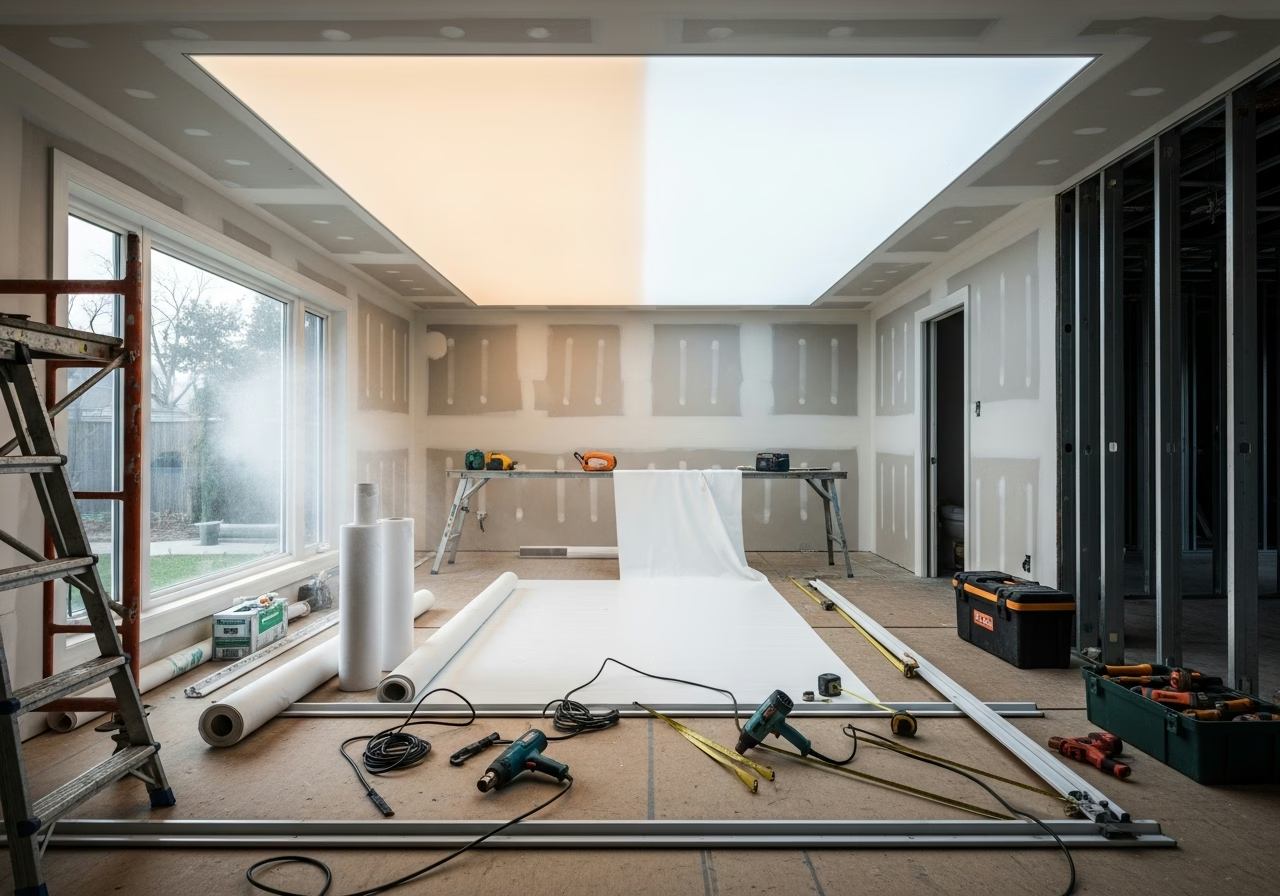
Tunable white LED strips have two parallel channels of LED chips on the same physical strip:
- Warm white channel (typically 2200K or 2700K).
- Cool white channel (typically 5000K, 6000K, or 6500K).
By varying the relative brightness of the two channels, the controller produces any colour temperature in between. Both channels at full = the cool temperature. Warm only = the warm temperature. 50/50 mix = the midpoint (around 3500K for a 2700K + 4500K strip).
Need professional renovation?
Call RenoHouse at 289-212-2345 or get a free estimate today.
Get Free Estimate →Strip specs to look for:
- CRI 90+ on both channels — non-negotiable for residential.
- 2200K low end — best for sleep transition.
- 5000–6000K high end — sufficient for daytime alertness.
- 24V for runs over 5m to avoid voltage drop and colour shift.
- PWM dimming compatible — most controllers use PWM.
Premium picks: Lutron Lumaris TW (works with RA3), Philips Hue White Ambiance Lightstrip (2200K–6500K), MDT or DALI-2 spec strips for KNX builds, GLEDOPTO Pro tunable white (Zigbee 3.0, mid-spec).
Controllers for Tunable White
| Controller | Tunable White Support | Notes |
|---|---|---|
| Lutron Caseta | Limited (two-dimmer trick) | Not ideal for circadian |
| Lutron RA3 + Lumaris | Native | Premium, hard-wired bus |
| Philips Hue White Ambiance | Native | Easy app + automation |
| KNX-DALI gateway | Native | Luxury, hard-wired |
| GLEDOPTO Pro Zigbee | Native | Mid-spec, integrates with Hue/SmartThings |
| Generic 2.4GHz Wi-Fi | Native | Cheapest, less reliable |
For circadian automation the controller needs time-of-day programming, scene transitions, and ideally astronomical clock support (so the schedule shifts with sunrise and sunset across the year). Hue, RA3, KNX-DALI all do this natively.
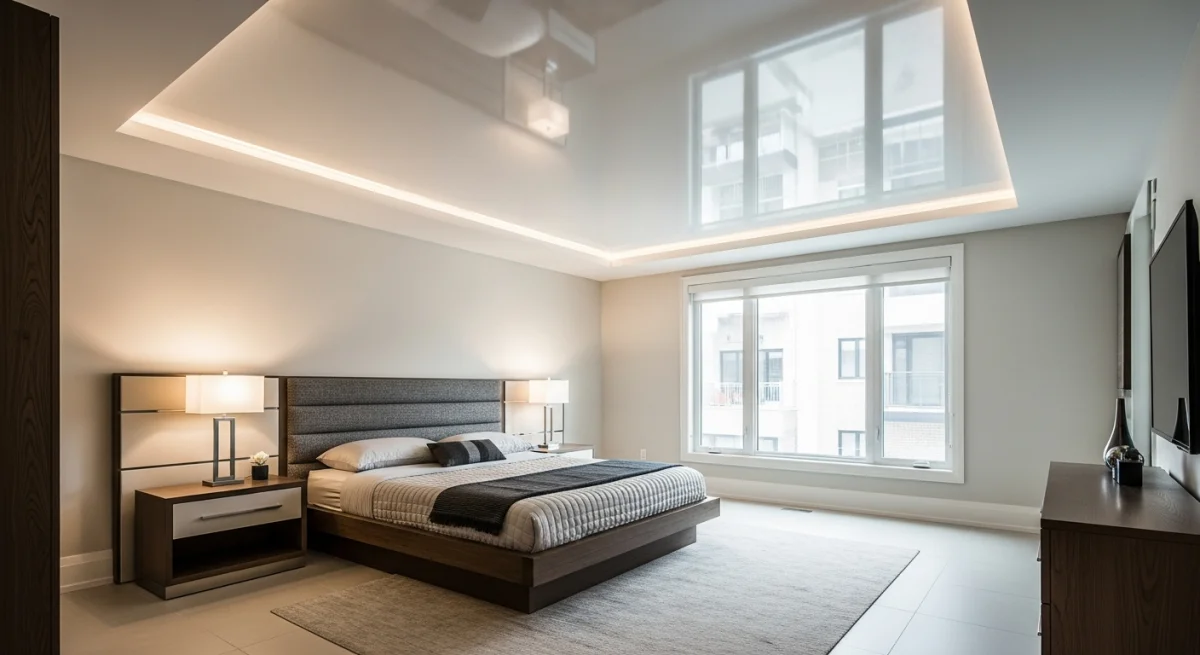
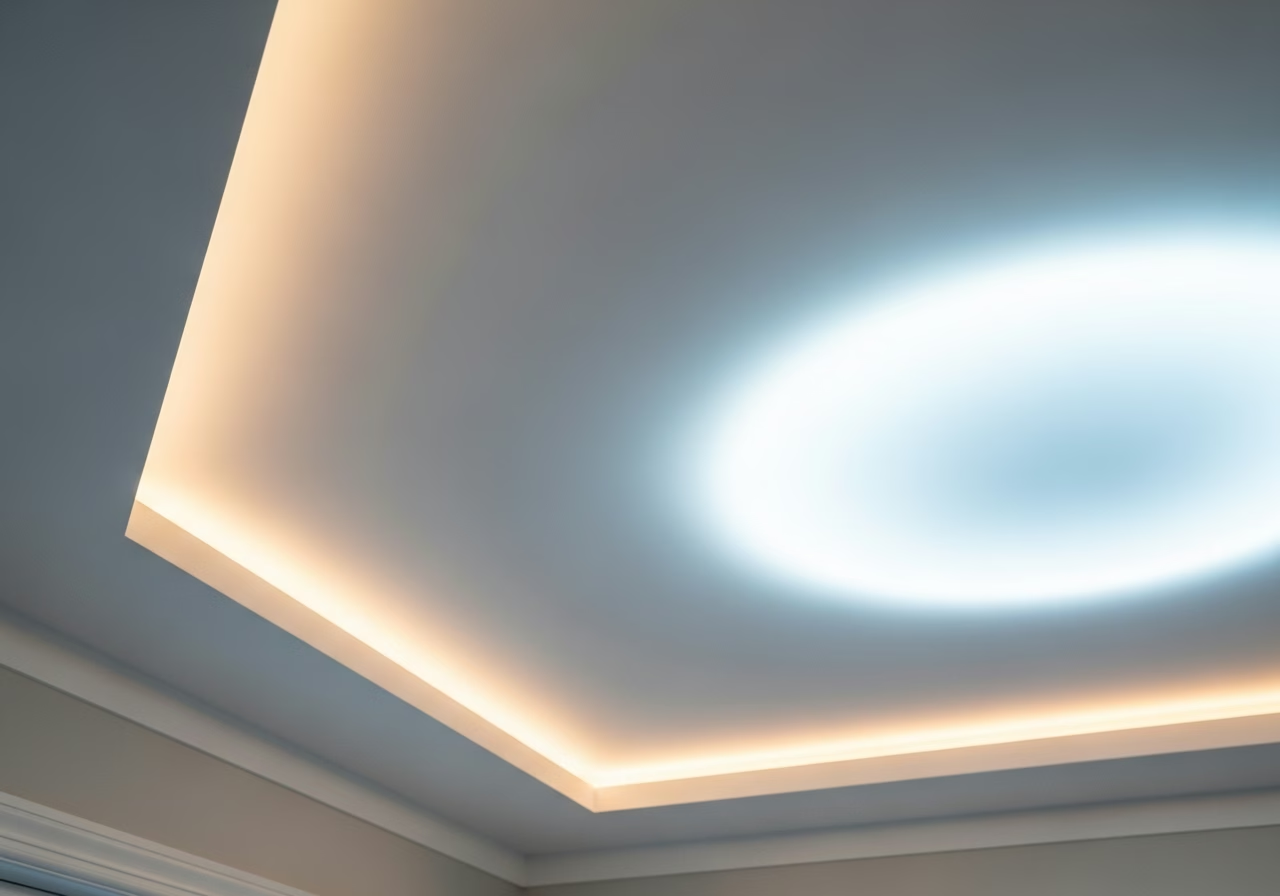
Worked Example — Master Bedroom Tunable White Cove with Hue White Ambiance
| Line Item | Cost |
|---|---|
| 2 × Hue White Ambiance Lightstrip 5m starter | $300 |
| 4 × extension 1m | $120 |
| Hue Bridge | $80 |
| Hue Dimmer Switch + Tap | $80 |
| Aluminium LED channel + frosted lens, 18m | $180 |
| Installer labour | $700 |
| ESA Master Electrician | $300 |
| Circadian schedule programming | $200 |
| All-in cove subtotal | $1,960 |
This is on top of the base stretch ceiling install. For a Lutron RA3 + Lumaris tunable white version of the same project, expect roughly $5,000–$6,500 for the cove layer.
Worked Example — Whole-Home Tunable White on KNX-DALI
For a 4,000 sqft Toronto custom home with tunable white in 8 zones (master suite, his/hers bathrooms, kitchen, dining, living, family, home office):
| Line Item | Cost |
|---|---|
| KNX-DALI gateway + power supply | $2,000 |
| 8 × DALI-2 tunable white drivers | $3,200 |
| Premium tunable white strip (95+ CRI), 80m | $4,800 |
| LED channel + lens, 80m | $800 |
| KNX keypads (8 rooms, engraved aluminium) | $4,800 |
| Installer labour | $5,000 |
| KNX programmer (circadian schedules + scenes) | $8,000 |
| ESA Master Electrician multi-circuit | $4,500 |
| Lighting layer subtotal | $33,100 |
This is the spec we install for Toronto luxury custom builds.
What the Wellness Benefit Actually Is
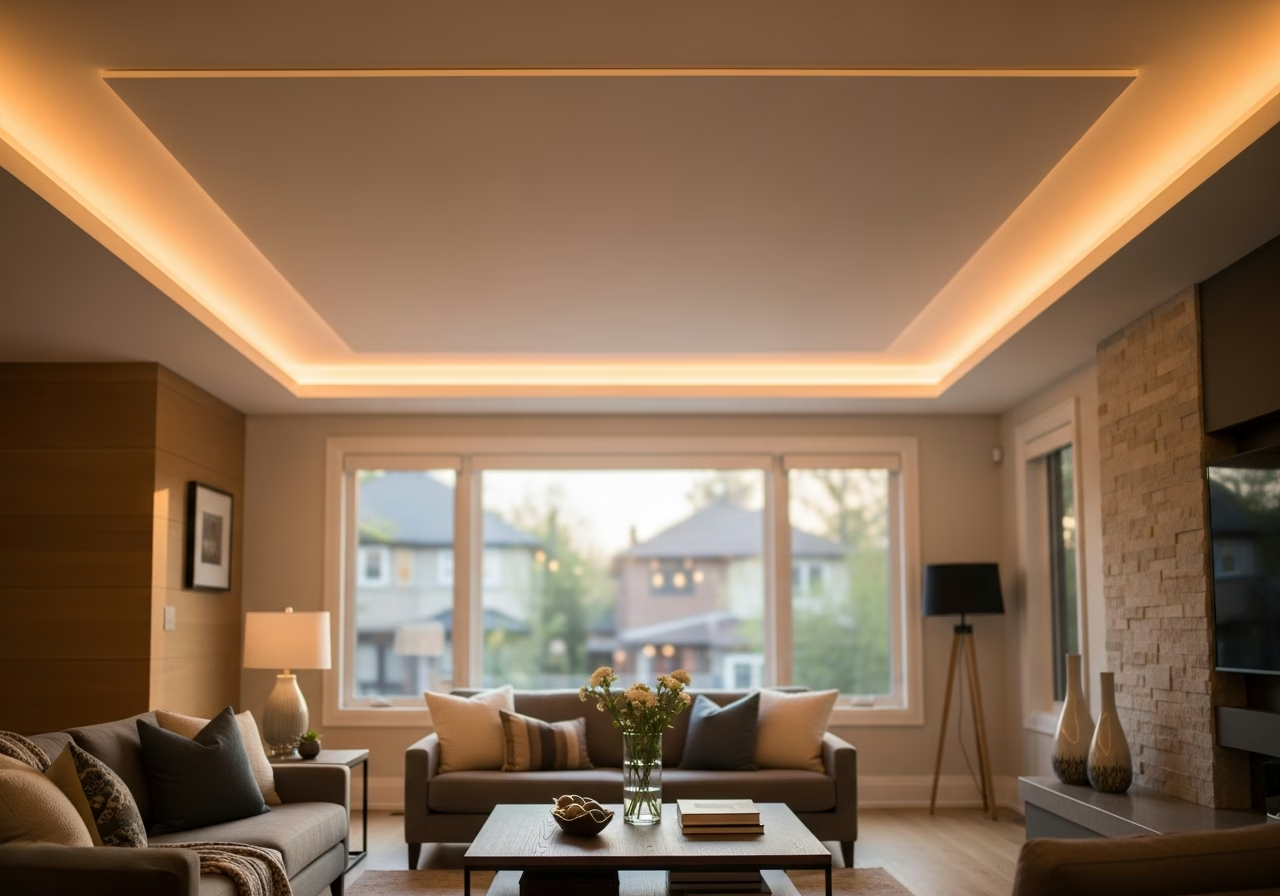
Honesty matters. The published research on circadian lighting:
- Sleep latency — circadian-aware evening light (warmer, dimmer) reduces sleep onset time by an average of 7–15 minutes (NIH meta-analyses).
- Morning alertness — cool morning light improves Karolinska Sleepiness Scale scores by 0.5–1.0 points.
- Seasonal mood — bright cool morning light reduces SAD symptoms; effect size moderate.
- Children's behaviour — small but consistent improvements in homework focus and bedtime resistance.
The effect is real but modest compared to actually getting outside in the morning (which delivers 10,000+ lux versus 200–800 lux indoors). Frame circadian lighting as a wellness assist, not a treatment. We tell Toronto homeowners: "this will help, especially in winter, and the system pays for itself if it improves your sleep by 15 minutes a night."
Common Tunable White Mistakes
- Single-channel strip with software temperature simulation — does not actually shift temperature, just changes brightness. Insist on two-channel tunable white.
- Schedule that ramps too fast — 30-minute transitions feel gentle; 5-minute transitions feel disruptive.
- No manual override — homeowner stuck in "kids party scene" because they cannot exit. Always programme an "Off Schedule" override.
- Mixing tunable white cove with fixed-temperature pot lights — the eye reads the mismatch. Either go all tunable, or accept fixed temperature throughout.
- Cheap strip with two channels but only 80 CRI — circadian benefit lost in poor white quality. Always 90+ CRI.
When Tunable White Is Worth It
Spec tunable white when:
- Master suite — sleep quality is genuinely important.
- Kitchen-dining open plan — different uses across day.
- Home office that doubles as evening living space.
- Aging-in-place client with sleep disturbance.
- Children's bedrooms and homework areas.
- Home theatre — bias lighting plus circadian.
Skip tunable white when:
- Hallway or entry — single warm temperature is fine.
- Dining-only room — 2700K only.
- Powder room — small, low-use space.
Honest Positioning
Tunable white stretch ceiling lighting is a real wellness upgrade with genuine published support, not a marketing gimmick. The system is a measurable 30–40% project premium and delivers proportional value when the room is high-use and the homeowner cares about sleep and alertness. RenoHouse coordinates the vetted installer, the ESA-licensed Master Electrician for the 120V tie-in, and the smart-home programmer for the circadian schedule. We default to Philips Hue White Ambiance for residential single-zone, Lutron RA3 + Lumaris for premium multi-zone, and KNX-DALI for luxury whole-home.
Book a tunable white stretch ceiling consultation and we will spec the right system. For colour temperature basics see our 2700K vs 3000K vs 5000K guide. For full project context see our LED backlit stretch ceiling pillar.