RenoHouse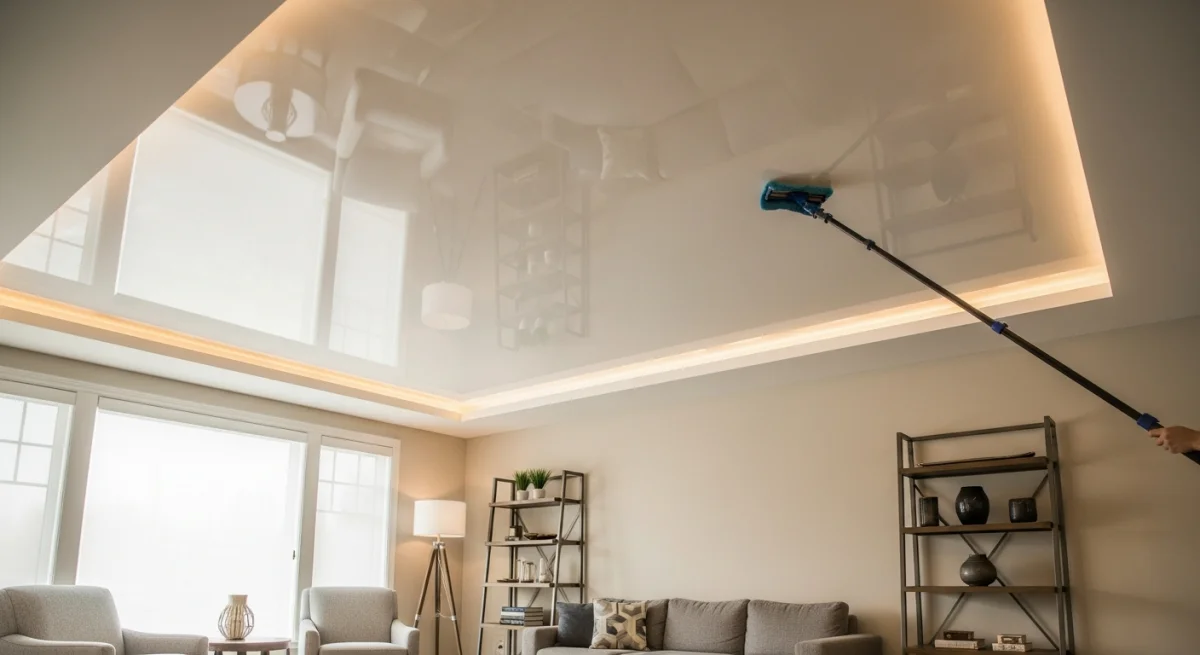

# How to Clean and Maintain a Stretch Ceiling (Glossy, Matte, Fabric)
Quick answer. Glossy PVC needs a damp microfiber wipe every 6 months with mild dish soap. Matte and satin PVC can wait 12 months. Polyester fabric (Clipso, Newmat) is dry-vacuumed with a brush attachment every 12–24 months and spot-cleaned only when stained. Never use abrasives, melamine sponges, solvents, or steam cleaners on any stretch ceiling. Toronto kitchens and bathrooms need an extra perimeter wipe every 3–4 months for grease and hair-product buildup at the trim line.This is one of the easiest building products in your home to maintain. Less effort than hardwood, less effort than tile grout, less effort than painted drywall. Here's the finish-by-finish protocol so you do it right and don't damage anything.
For the broader installation and ownership context, see our installation & care pillar. For damage scenarios and what to do when something goes wrong, see troubleshooting bubbles & stains and water damage recovery.
Why Stretch Ceilings Stay Cleaner Than Drywall
Three reasons:
- 1. Non-porous surface. PVC and coated polyester don't absorb. Dust sits on top instead of becoming embedded.
- 2. Anti-static behaviour. Clean PVC has a slight anti-static character — it sheds rather than attracts dust.
- 3. Sealed perimeter. Drywall ceilings collect dust in the gap where ceiling meets wall (the most-overlooked dust trap in any room). Stretch ceilings don't have that gap — the trim bead seals it.
A matte PVC ceiling in a typical Toronto living room can go 18 months between cleanings before any visible dust shows. The cleaning itself takes 10 minutes per room.
Need professional renovation?
Call RenoHouse at 289-212-2345 or get a free estimate today.
Get Free Estimate →Finish-by-Finish Cleaning Protocol
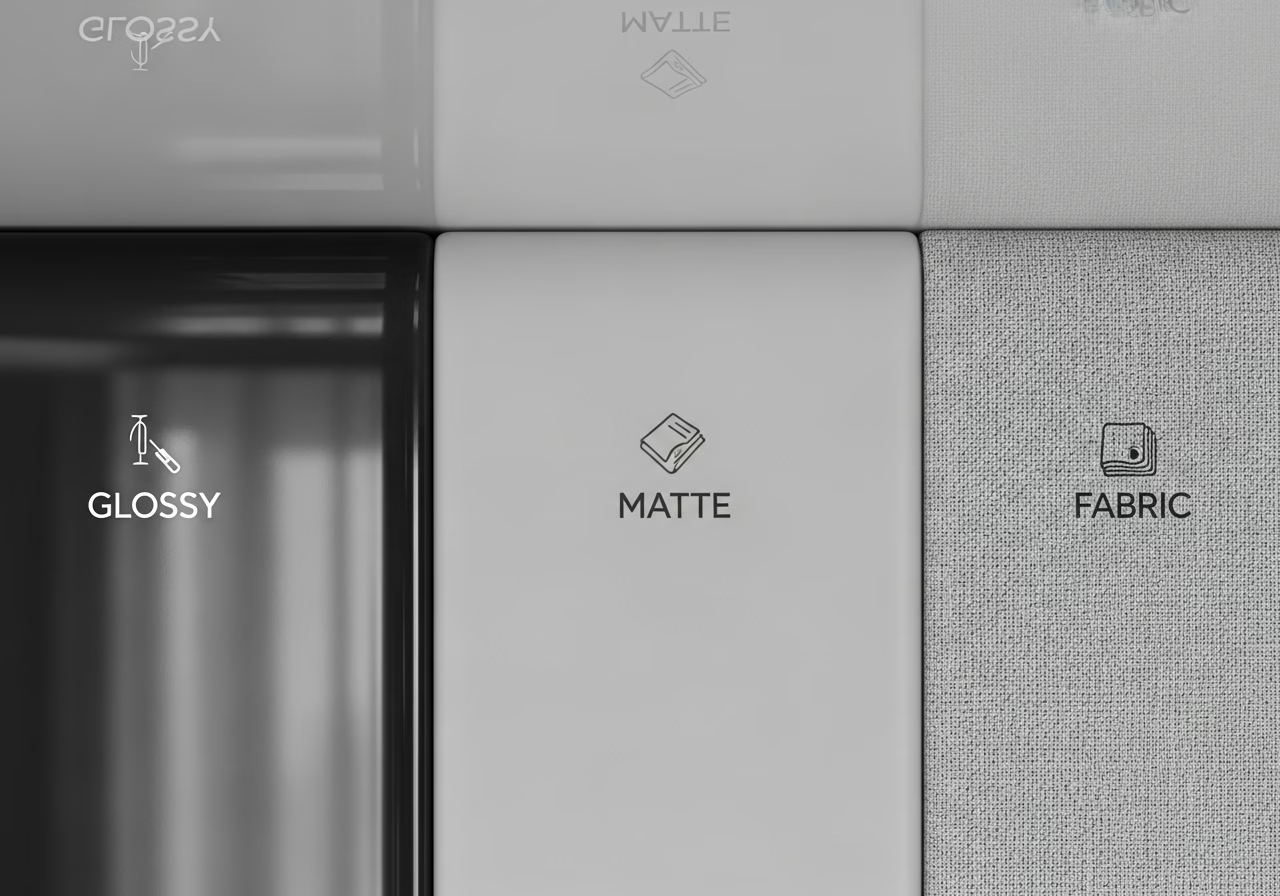
Glossy PVC (Mirror Finish)
Frequency: Every 6 months in normal residential rooms. Every 3 months in kitchens. Every 2 months in bathrooms. Why more often than matte: glossy reveals every fingerprint, dust speck, and water mark. Matte hides them. Same actual dust load; different visibility. Method:- 1. Microfiber cloth — soft, lint-free, fresh out of the wash. Avoid old microfiber that has picked up grit.
- 2. Solution: 1 teaspoon of mild dish soap (Dawn, Mr. Clean, Method) in 1 litre of warm water. Or a 50/50 mix of distilled water and white vinegar for streak-free finish.
- 3. Wring the cloth almost dry — you want damp, not wet. Water dripping into the perimeter gap is a problem.
- 4. Wipe in long straight strokes — same direction. Circular motion shows up as visible swirls in glossy reflections.
- 5. Buff dry with a second clean dry microfiber, same direction.
- 6. Don't press hard. The membrane is under tension; pressing in deflects it briefly and can pop a corner if you push hard near the edge.
Matte and Satin PVC
Frequency: Every 12 months in normal rooms; every 6 months in kitchens. Method: Same as glossy but with less concern about streak direction (matte hides it). A vacuum with a soft brush attachment removes dust without any liquid for routine cleanings; switch to damp microfiber once or twice a year for actual washing. Caution on satin: the slight pearl/sheen finish is sensitive to alkaline cleaners. Avoid baking-soda paste, ammonia-based glass cleaners, and anything containing bleach.Polyester Fabric (Clipso, Newmat, Barrisol-fabric, Descor)
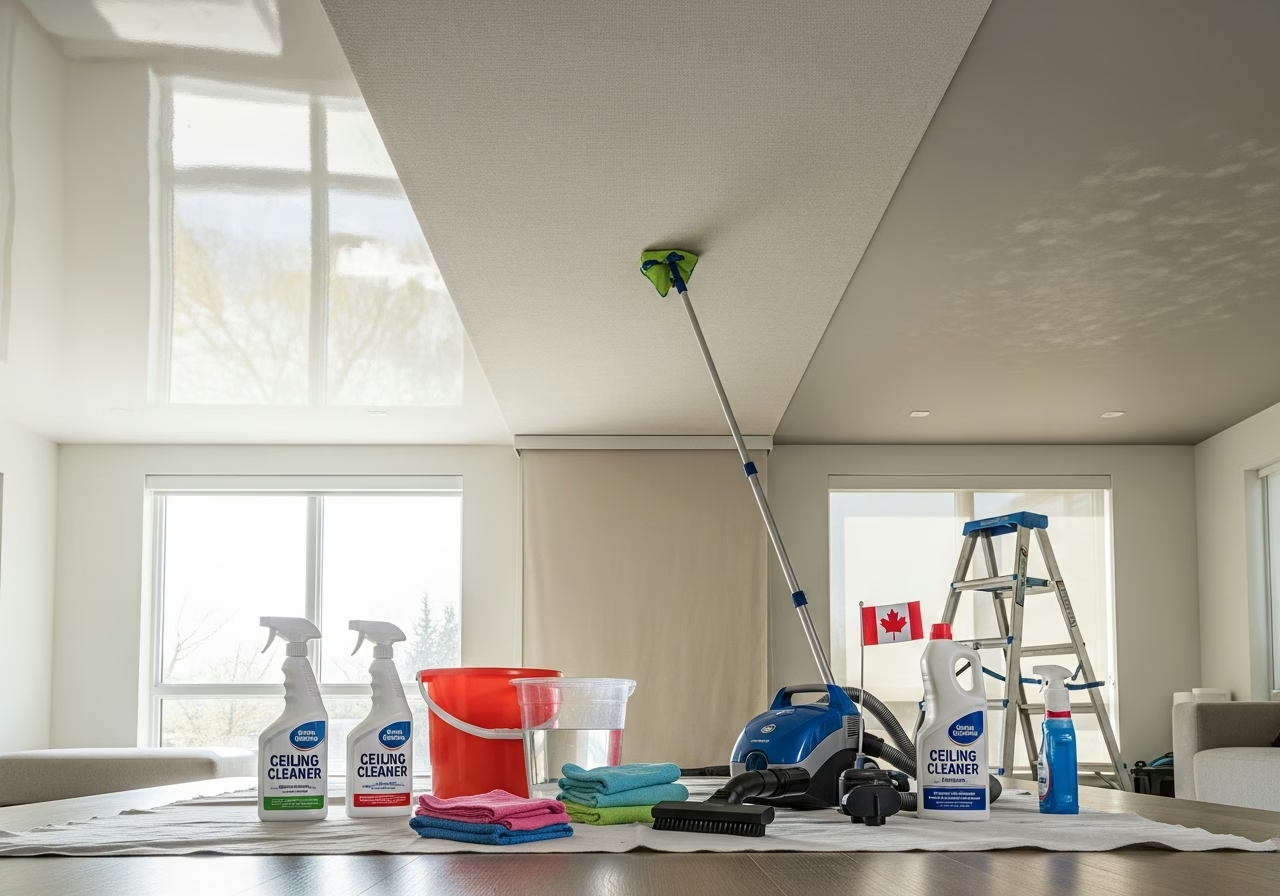
Frequency: Every 12–24 months for full vacuum; spot-clean as needed. Method:- 1. Dry vacuum with a soft brush attachment, low suction setting. This is the primary cleaning. Fabric texture catches more airborne dust than PVC, but the vacuum lifts it cleanly.
- 2. Spot-clean stains with the manufacturer's recommended product (Clipso has a branded cleaner; Newmat sells a specific solution). For mild stains, a barely-damp microfiber with diluted Dawn is acceptable but always test in a corner first.
- 3. Never wet-wash a full fabric ceiling unless it's been pre-treated with a stain-resistant coating (Clipso TS line and equivalent). Water can leave perimeter rings on uncoated fabric.
Toronto-Specific Maintenance Notes
Kitchens. Cooking grease aerosolizes and lands on every horizontal surface in the room. The stretch ceiling itself stays cleaner than drywall (non-porous), but the perimeter trim bead collects a thin grease film that compounds over months. Wipe the perimeter every 3–4 months with a slightly degreasing cleaner (a drop of Dawn, very dilute). Kitchens with frequent stir-frying, deep-frying, or open-flame wok cooking need monthly perimeter wipes. Bathrooms. Hair-product overspray (hairspray, dry shampoo, leave-in conditioner) lands on the ceiling and trim. Wipe every 3–4 months. Steam from showers is fine — the membrane is impermeable — but mineral residue from hard Toronto water can leave faint marks if water droplets dry on glossy. Run the bathroom fan for 10 minutes after showers to keep humidity moving. Toronto winter humidity. Static electricity in cold dry winter air causes more dust to cling. A weekly dust with a long-handled microfiber duster (Swiffer Heavy Duty XL or similar — never the dry electrostatic kind that can scratch) keeps things clean between full washes. Air filtration helps. A bedroom HEPA air purifier reduces ceiling dust loading by 60–80%. Worth the $300 if you have a star sky or backlit ceiling where any dust is visible against the lit surface.What to Never Do
- Abrasive sponges (any green-side scrubbie, scotch-brite). Scratches glossy and satin PVC visibly.
- Melamine sponges (Magic Eraser, Mr. Clean Eraser). The "magic" is mild abrasion; it dulls glossy PVC permanently.
- Solvents (acetone, paint thinner, mineral spirits, nail polish remover). Dissolve PVC plasticizers.
- Bleach or ammonia. Discolour matte and satin finishes.
- Steam cleaners (handheld or upright). Heat distorts the membrane locally and creates a permanent wave.
- Pressure washers. (Yes, people have tried.) Pops the harpoon edge out of the track.
- Stiff brushes of any kind. Even a soft-bristle paintbrush is rough enough to scratch glossy PVC at oblique angle.
- Pointed tools. Broom handles, dusters with hard plastic ends, a lifted arm with a ring on. The membrane is under tension; a point pushes through more easily than you'd expect.
Long-Handled Tools That Are Safe
For high ceilings (over 9 ft), a step ladder is awkward and unsafe. Long-handled options that work:
- Microfiber dust mop (the soft kind — O-Cedar, Bona, or any "hardwood floor" mop). Works for routine dusting.
- Long-pole microfiber pad (Bona Premium Spray Mop with the microfiber pad swap). Slightly damp, works for actual washing.
- Soft-bristle ceiling fan duster (Swiffer Heavy Duty XL extensible). For glossy ceilings between full cleanings.
- Vacuum extension wand with soft brush attachment. For fabric ceilings in particular.
Avoid anything with a stiff handle that could poke through if you slip.
Cleaning the Cove and Perimeter
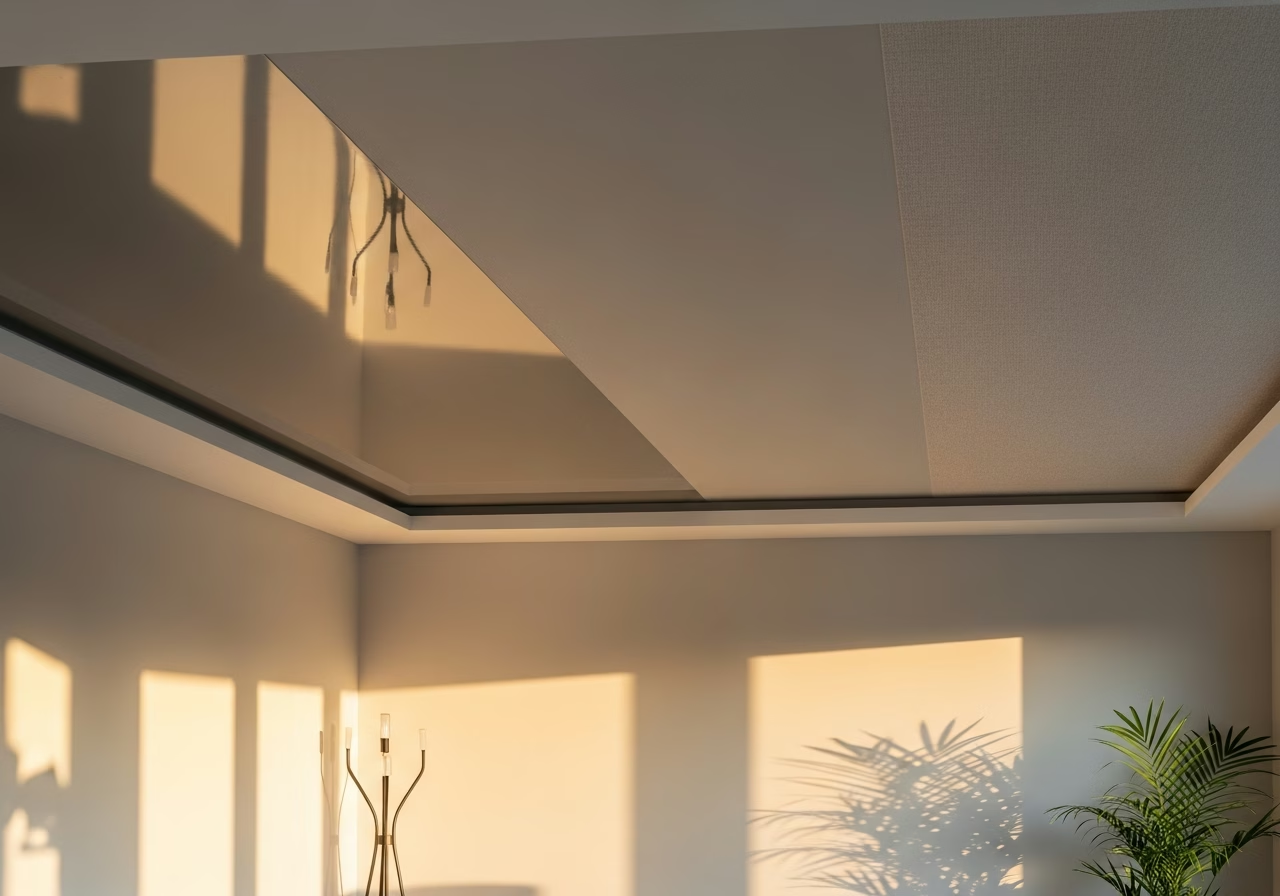
The trim bead and any cove-light shadow gap collect dust over time. Once a year:
- 1. Soft microfiber duster along the trim line.
- 2. Cotton swab (Q-tip) into the cove shadow gap if there's visible dust buildup.
- 3. For perimeter LED strips behind a cove — vacuum with a brush attachment, never damp-clean (the LED strip and its electrical connections need to stay dry).
Annual Inspection (5 Minutes)
Once a year, walk into each room with a stretch ceiling and look at:
- Tension. Is the ceiling still drum-tight? Any visible sag or wave?
- Trim bead. Has any section come loose? (Easy to push back in by hand.)
- Fixture seats. Are any pot light or smoke alarm trim rings sitting away from the membrane?
- Perimeter to wall transition. Any visible gap that wasn't there before?
If everything looks the same as install day, you're done. If something has changed, call us — most issues are 5-minute warranty fixes.
When Stains Won't Come Off
Some stains aren't surface — they've migrated through the membrane or into the fabric. Examples:
- Cooking grease that's been there for years on a kitchen ceiling.
- Cigarette nicotine on a previously-smoked-in room (rare in non-smoking buildings).
- Marker, pen, or paint on a kids' room ceiling (don't ask how).
- Mineral deposits from a long-term roof leak that was finally fixed.
Honest answer: the membrane is replaceable. A single-room replacement runs $300–$600 and the existing track is reused. Sometimes that's the right call rather than aggressive cleaning that risks damaging the surface.
When to Call Us Instead
- Visible water bulge from upstairs — don't poke it. See water damage recovery.
- Membrane has come out of the track at any corner or section — needs re-seating, not cleaning.
- Sag or wave that wasn't there before.
- Yellowing or discoloration — likely a kitchen-grease or smoking-residue issue; we'll diagnose and recommend.
- Puncture or tear of any size.
Get RenoHouse on Speed-Dial
Our installer-network warranty includes free first-year cleaning consultation and emergency drainage in years 1–2 within the GTA service area. For full installation context see our installation & care pillar; for new project quotes, request a free site measurement.
FAQ
Can I clean it myself? Yes — that's the point. The protocol above is straightforward and safe. Call us only for damage or unusual stains. Will the ceiling yellow over time? Premium A+/M1-certified PVC and Clipso fabric are colour-stable for 15+ years. Budget grey-market PVC films (some Halead economy lines) can yellow slightly in 7–10 years, especially in kitchens. Specify A+ on every quote. Is it safe to clean while pregnant or with kids in the room? Yes — no chemicals other than mild dish soap. Standard kitchen cleaning products at sub-cleaning concentrations. Can I repaint a stretch ceiling? No. Paint won't adhere properly to PVC, and the layer changes the membrane's thermal behaviour. If you want a different colour, replace the membrane (track stays, $300–$600 single-room). Is professional cleaning ever needed? Almost never for residential. Commercial spaces with very high grease or smoke exposure (restaurants, cigar lounges) sometimes use professional cleaners with specialty products; we can refer.Continue Reading
- Stretch Ceiling Installation & Care in Toronto: The Complete 2026 Owner
- Star Sky Ceiling Maintenance and Care: 10-Year Owner
- Stretch Ceiling Troubleshooting: Bubbles, Stains, Sag and Other Problems