RenoHouse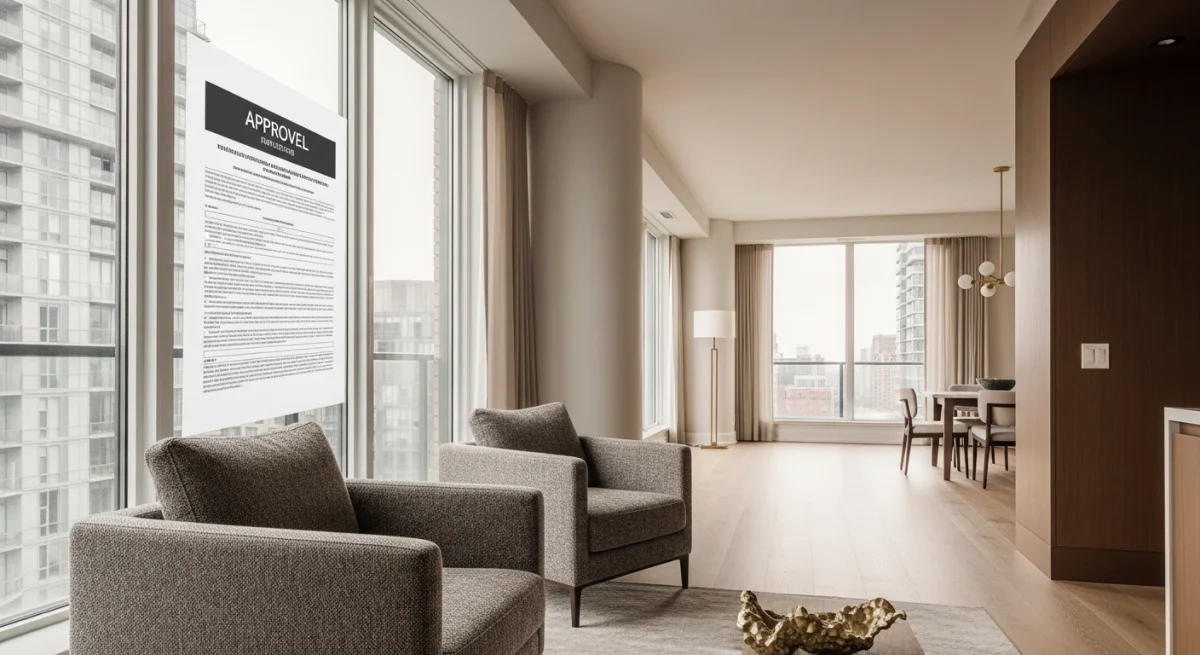

# Window Tint Condo Board Approval in Toronto: The Submission Workflow (2026)
Quick answer. Window glass in a Toronto condo is generally a common element under the Condominium Act, and applying aftermarket film is an alteration that the board has authority to approve or deny. Most boards approve clear or lightly-tinted ceramic films (VLT 50-70%) within 2-4 weeks via informal email submission of the manufacturer spec sheet, photos, and a sample install location. Reflective and dark films require formal board resolution and take 6-10 weeks; some newer towers (several King West, CityPlace, Yorkville buildings) explicitly prohibit reflective alterations and will deny outright. This post is the practical workflow for getting approval — what to submit, expected timelines, and how to handle denials.For the parent context see the pillar Window Tinting & Solar Film Toronto 2026 Complete Guide.
Why Condo Board Approval Applies
Section 97 of the Ontario Condominium Act, 1998 governs alterations to common elements. Window glass is generally classified as a common element in Toronto condo declarations, even though the unit owner has exclusive use of the windows from inside. Applying aftermarket film changes the appearance of the building from the exterior, which is a common-element alteration.
Three approval categories under Section 97:
- Substantial change to common elements: requires owner approval (typically 66.7% vote of all units).
- Modification not substantial: requires board approval only.
- As-of-right alterations: explicitly permitted in the declaration.
Most window film falls into "modification not substantial" — board approval only. Some declarations explicitly permit clear or lightly-tinted film as as-of-right.
The Submission Package — What to Include
A complete submission package contains:
Need professional home renovation?
Call RenoHouse at 289-212-2345 or get a free estimate today.
Get Free Estimate →
- 1. Cover letter explaining the proposed install: which units affected, which exposures, expected timeline.
- 2. Manufacturer spec sheet for the specific film series (3M Prestige PR 50, Llumar Vista VS 50, etc.) showing VLT, TSER, IR rejection, exterior reflectance, neutral colour confirmation.
- 3. Sample install location — ideally a photo or sample chip of the same film already installed in another unit in the same or comparable building. We maintain reference installs across GTA condos and provide photos for board reference.
- 4. Installer credentials — RenoHouse certificate of insurance, WSIB clearance, and the Authorized Dealer or SelectPro certification of the install partner.
- 5. IGU compatibility chart confirmation showing the film is approved for your building's glass type.
- 6. Removal/restoration commitment in writing — film is removable at end-of-life with no permanent glass alteration; the unit owner commits to remove and restore at owner's expense if required by future board action.
- 7. Indemnification language — standard clause indemnifying the corporation against any damage caused by the film install.
We prepare the full submission package as part of the project scope. Most boards review and approve in 2-4 weeks for clear/light ceramic; 6-10 weeks for darker or reflective.
Approval-Likely vs Denial-Likely Films
Based on hundreds of Toronto condo board submissions:
Approval-likely (>90% approval rate):- Clear ceramic VLT 60-70% (3M Prestige PR 70, Llumar Vista VS 70, Crystalline 70)
- Light ceramic VLT 50-60% (PR 50, VS 60)
- Frosted decorative for bathroom only
- Mid-VLT ceramic 35-50%
- Lightly-reflective dual-reflective dual VLT 35
- Dark VLT 15-25%
- Reflective metallized exterior
- Mirror films
- Mirror exterior on building façade
- Strongly reflective dual-reflective on visible exposures
Buildings With Specific Restrictions
We track condo declaration specifics across major GTA buildings. Patterns we have seen in 2026:
Several King West / Liberty Village towers (built 2015-2020): explicit prohibition on reflective alterations. Mirror and metallized dark films will be denied. Clear and lightly-tinted ceramics are approved. CityPlace buildings: generally permissive for ceramic at VLT 50-70; reflective requires formal board resolution. Yorkville luxury towers (Four Seasons, One Bloor, etc.): premium ceramic and 3M Prestige typically approved; dark and reflective films sometimes denied based on architectural review. Older Yorkville mid-rises (1970s-1990s): more permissive due to age of building and varied existing window appearance. Distillery / Canary buildings: generally permissive for ceramic; case-by-case for reflective. Mimico / Humber Bay south-facing waterfront towers: permissive for solar film due to severe heat problem; reflective sometimes approved on south face. North York / Yonge corridor mid-rises: mixed; varies by board composition.We can pull the declaration for your specific building before quoting and tell you the likely approval pattern.
Expected Timelines
Clear ceramic, informal email submission: 2-4 weeks. The board chair or property manager reviews, often approves via email without a formal resolution. Mid-tier ceramic or larger install scope: 4-6 weeks. Board may discuss at next regular meeting before approving. Darker or reflective film, formal board resolution: 6-10 weeks. Goes on the board agenda; may require architectural review committee input. Reflective film in a building with explicit prohibition: denial usually within 2-4 weeks. We do not waste your time submitting — we tell you upfront the proposed film will be denied and propose an alternative.Handling a Denial
If the board denies the proposed film:
Skipping Board Approval — The Risk
Some condo owners install film without board approval, betting that the board will not notice. Risks:
Order to remove and restore. Section 97 violations can result in board orders requiring film removal at owner expense. Removal cost: $200-$600 plus the original install cost lost. Status certificate impact. A pending Section 97 violation may show on the unit's status certificate, complicating sale. Chargeback liability. The board can chargeback the unit owner for any costs of enforcement, including legal fees.We do not recommend skipping board approval. The few weeks of submission time is cheap insurance against future enforcement action.
What We Handle
RenoHouse prepares the full board submission package as part of project scope:
- Cover letter customised to your building
- Manufacturer spec sheets and reference photos
- IGU compatibility documentation
- Installer credentials and indemnification language
- Follow-up with property management
The board submission service is included in the install fee for premium-tier installs; lower-tier installs include it as a $200-$400 line item.
Get a Submission-Inclusive Quote
Book a free in-home solar film consultation through the window tinting and solar film service page — we pull your building declaration and prepare the board submission as part of the project. Read the pillar Window Tinting & Solar Film Toronto 2026 Complete Guide, or siblings Will Window Film Crack My Condo Windows Toronto, Mirror Window Film Toronto Condo Ground Floor. For broader context see Window Film Installation Toronto 2026 Complete Guide.
Continue Reading