RenoHouse

Toronto basements are the hardest space to design a ceiling for. Older homes (pre-1970) often have original basement ceilings under 7 feet. Joists, ductwork, plumbing, and electrical drop the effective height further. By the time a finished basement project gets to the ceiling decision, every centimetre matters \u2014 and the wrong call can drop the room below Ontario Building Code's 6 foot 5 inch minimum for habitable space, which kills the basement's resale value.
This article covers exactly how stretch ceilings fit into low-headroom Toronto basements, the OBC 9.10 minimums you need to defend, the false-skylight pattern that adds drama without sacrificing height, and what 2026 installed pricing looks like.
The OBC 9.10 Minimum
Ontario Building Code 9.10 sets the minimum ceiling height for finished basement habitable rooms at 6 feet 5 inches (1.95 metres) over 75 percent of the floor area. Habitable rooms are bedrooms, dens, recreation rooms, and home offices. Bathrooms, mechanical rooms, and laundry rooms have lower minimums (6 feet 1 inch / 1.85 m).
The ceiling height is measured from the finished floor to the lowest point of the finished ceiling. If you have a duct or beam dropping below this minimum across less than 25 percent of the floor area, you are still legal. If the entire ceiling is below the minimum, the basement is non-habitable for permit purposes \u2014 which means you cannot legally market it as a bedroom or rec room when you sell.
This is why every centimetre matters. A traditional drywall drop ceiling steals 8 to 12 cm. A T-bar ceiling steals 10 to 15 cm. A stretch ceiling at single-level steals only 2.5 to 4 cm. In a basement starting at 6 feet 8 inches, only the stretch ceiling keeps you legal.
Single-Level PVC: 5 cm Drop
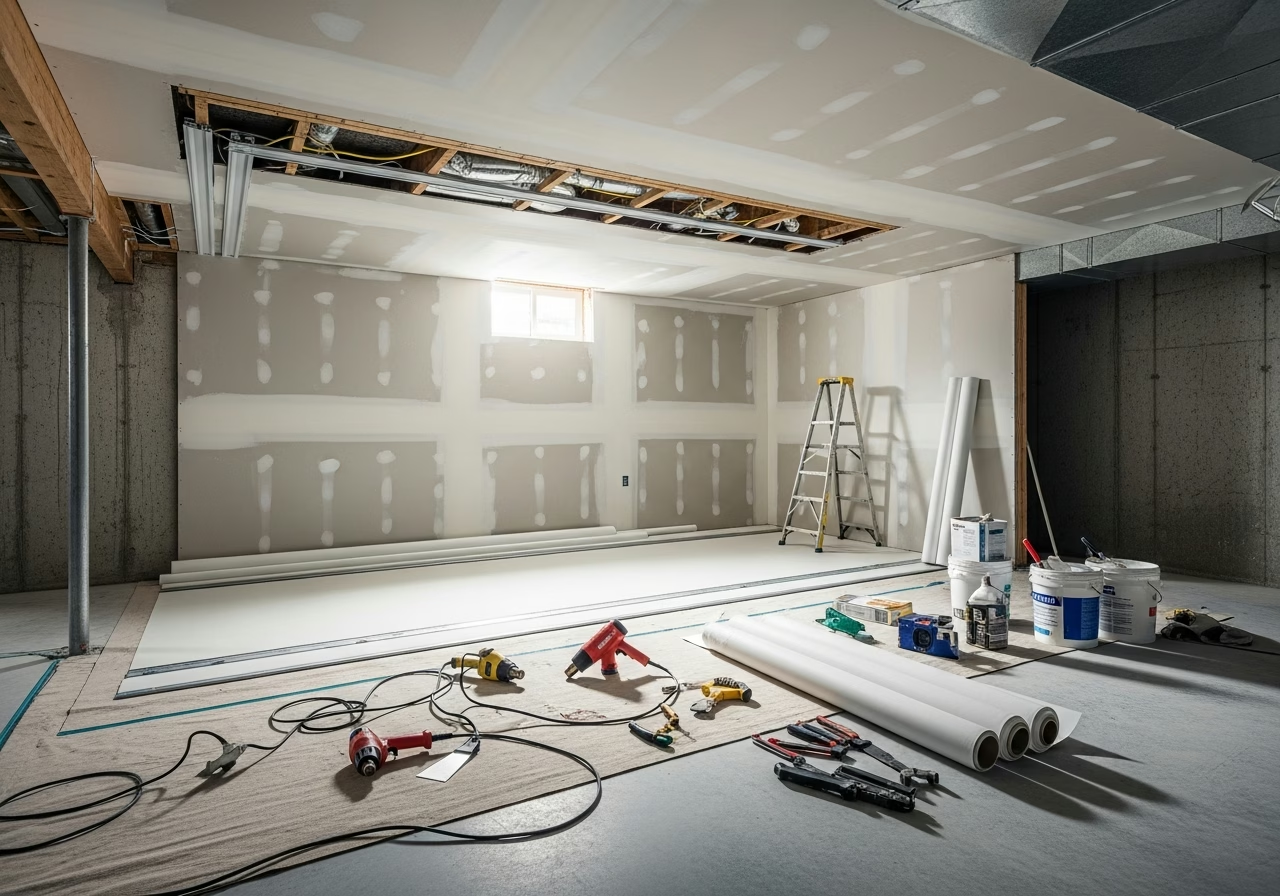
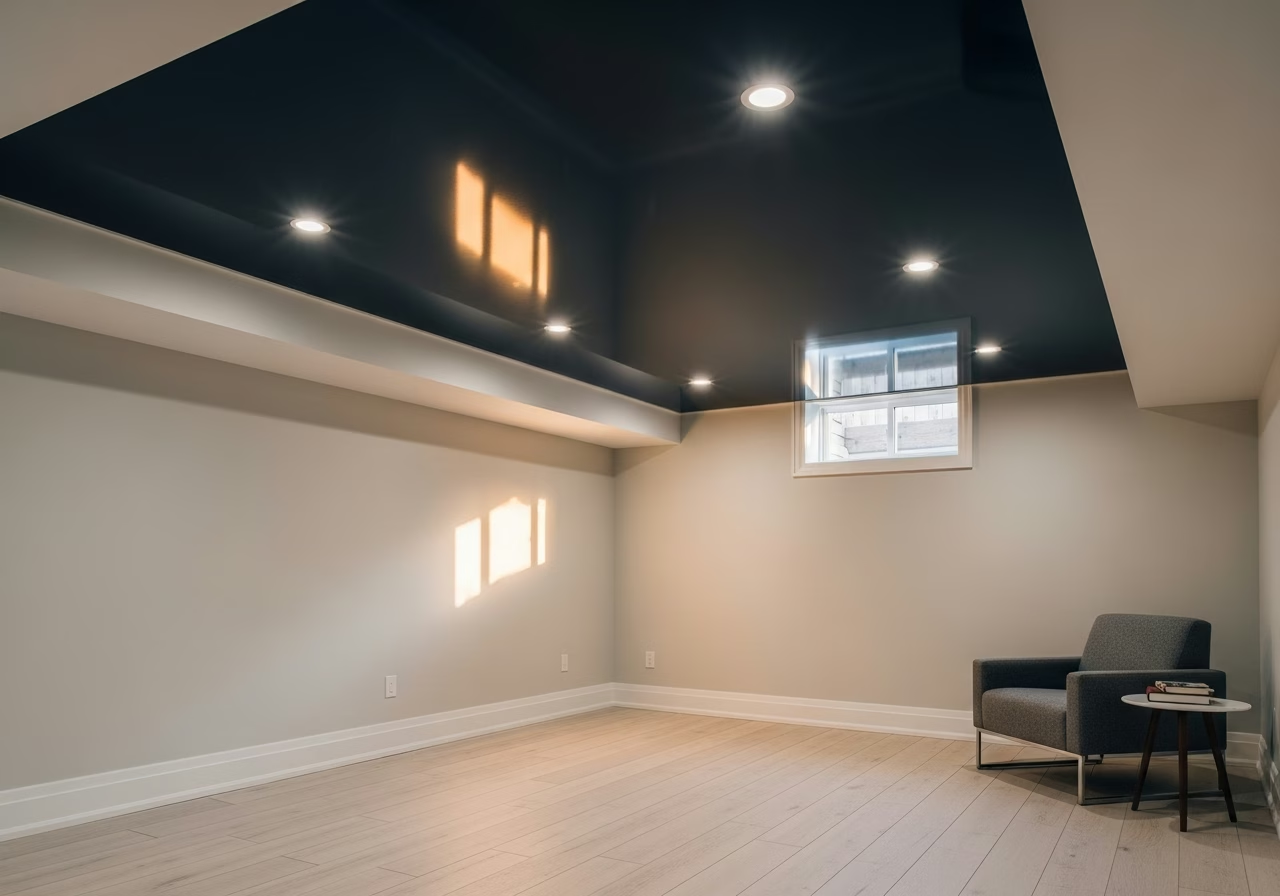
The default Toronto basement stretch ceiling install is single-level PVC, mounted on aluminum perimeter profile 25 to 40 mm below the existing ceiling (drywall, joists, or popcorn). This is the lowest-impact ceiling finish available for low-headroom situations.
What this looks like in practice:
- Original basement ceiling 6'8": Final finished height 6'5.5" to 6'6". Just over OBC minimum.
- Original basement ceiling 7'0": Final finished height 6'9.5" to 6'10". Comfortable.
- Original basement ceiling 7'6": Final finished height 7'3.5" to 7'4". Generous.
We use this single-level pattern in roughly 80 percent of our Toronto basement installs because it is the only ceiling finish that does not threaten OBC compliance.
Finish: matte or satin PVC, bright white or warm cream. Glossy is generally wrong in basements because basement lighting is usually warm 2700 to 3000 K, and the gloss reflects every light source as a hot spot, making the room feel low-quality. Matte recedes visually, making the ceiling height feel taller than it is. Counterintuitive but consistent across our installs.
False-Skylight Backlit Panel
The premium upgrade for finished Toronto basements is a localized backlit translucent stretch ceiling panel that mimics a real skylight. A typical pattern: 4 by 6 foot rectangular panel of translucent PVC, lit from above by a 5000 K LED panel array (daylight color temperature), positioned over the seating area or kitchenette. Surrounding ceiling is matte PVC at standard single-level drop.
Need professional renovation?
Call RenoHouse at 289-212-2345 or get a free estimate today.
Get Free Estimate →This delivers daylight illusion in a windowless room without sacrificing ceiling height across the whole space. The skylight panel zone drops 30 to 50 cm but only in that one area \u2014 the rest of the basement keeps its 5 cm drop. We position the skylight panel away from the main walking paths to keep headroom open where it matters.
False-skylight pricing 2026: $1,800 to $4,500 for a 4x6 foot panel including LED panel, dimming control, and translucent membrane. The visual effect is striking; this is one of the most-photographed details in our basement portfolio.
If you are also considering a basement sauna in addition to a finished living space, see our Toronto basement sauna installation guide \u2014 the headroom math for a sauna is even tighter than a habitable room because saunas typically have a low ceiling for steam efficiency.
Hiding Basement Ductwork and Pipes
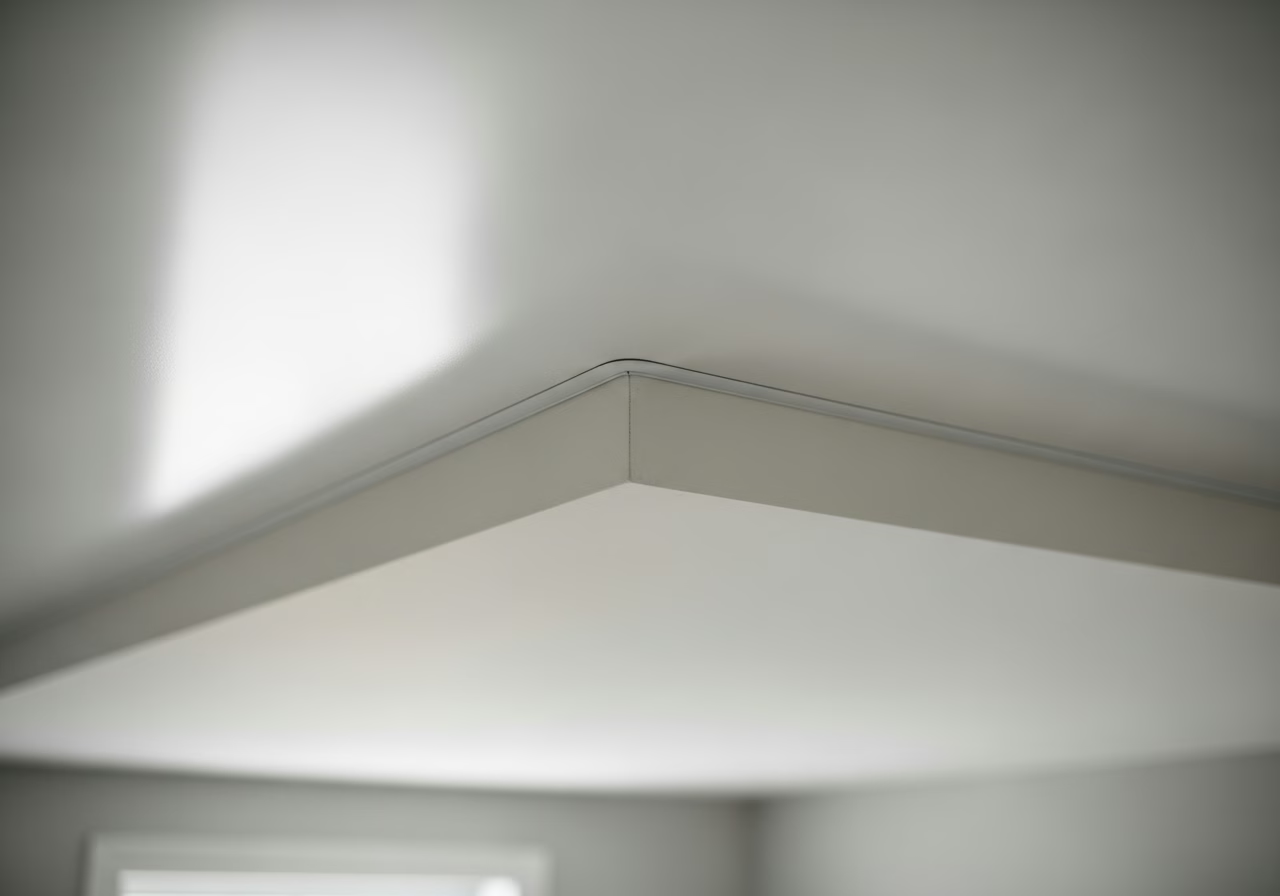
Basements are full of ductwork drops, plumbing stacks, and electrical conduit. Single-level stretch ceiling cannot hide these \u2014 the membrane has to clear the lowest obstacle. If your basement has a duct dropping 30 cm below the joists, the stretch ceiling has to be mounted at 30 to 35 cm drop, which destroys the headroom advantage.
The fix is selective bulkheads. We frame a small drywall soffit around the duct (just enough to enclose it), then run the stretch ceiling membrane at the joist level around the soffit. The soffit is the localized obstruction; the rest of the ceiling stays high. Cost for soffit framing and finishing: $300 to $800 per soffit depending on size.
Alternative: re-route the duct. This is more expensive ($800 to $2,500 for HVAC work) but yields a flat ceiling with no soffits. Worth it for premium basement renovations where the soffits would otherwise dominate the visual.
Pot Lights in Low-Profile Form
Standard Halo HLB6 recessed pot lights have a 6-inch housing depth that extends above the stretch ceiling membrane into the joist cavity. In an unfinished joist cavity this is fine; in a finished basement with insulation between joists, the housing collides with insulation.
The fix: ultra-thin LED puck lights with 1-inch profile (Halo HLB Slim, Lithonia Wafer LED). These mount flat against the original ceiling, with no plenum housing, then pass through the stretch ceiling using a standard plastic ring. Total drop including the puck: under 5 cm. Same color temperature options (2700 K to 5000 K) and dimming compatibility.
Slim puck pricing: $60 to $120 each (vs $30 to $60 for standard pot light). Worth the upgrade in any low-headroom basement.
Dehumidifier and Sump Pump Considerations
Toronto basements run dehumidifiers in the summer and have sump pumps for occasional water intrusion. Both produce vibration and heat. Neither directly affects the stretch ceiling \u2014 the membrane is dimensionally stable across normal basement operating conditions \u2014 but the sump pump alarm should remain audible through the membrane (PVC dampens sound by 5 to 8 dB, fabric by 10 to 15 dB).
If your basement has a history of sump pump alarms saving you from flooding, do not install acoustic perforated fabric \u2014 the alarm becomes too muffled. Single-level PVC is the right call for sump-pump-equipped basements.
2026 Installed Pricing
For a typical Toronto basement stretch ceiling install:
- Small finished basement 300-500 sqft, matte PVC, 8-12 pot lights: $2,400 to $4,200.
- Medium basement with kitchenette and rec room 500-800 sqft: $4,000 to $7,500.
- Large finished basement 800-1,200 sqft with multiple zones: $6,500 to $11,000.
- Add false-skylight backlit panel: $1,800 to $4,500.
- Add bulkhead/soffit framing: $300 to $800 per soffit.
- Slim LED pucks instead of standard pot lights: $60 to $120 each.
What to Avoid
- Glossy PVC in basements without daylight. Reflects warm bulb light as hot spots; cheapens the look. Stay with matte or satin.
- Backlit panel covering most of the ceiling in a sub-8-foot original basement. Headroom math fails; you drop below OBC minimum.
- Acoustic perforated fabric in sump-pump basements. Alarm is too muffled.
- Standard 6-inch pot lights in insulated joist cavities. Housing collides with insulation. Use slim pucks.
- Drywall ceiling instead of stretch in low-headroom basements. Drywall steals 1.5 to 2 cm more than stretch and offers nothing in return.
Honest Install Trade-Offs
Basement install raises ambient temperature to 50 to 70 degrees Celsius during the heat phase. Mandatory ventilation; this is harder in basements (small windows or none). We open the basement door, run a fan to push air to the upstairs, and confirm CO and combustion safety \u2014 propane heat guns produce CO and require fresh-air supply or external venting.
If your basement has no openable windows and no exterior door, we will not run a propane heat gun in it. The alternative is an electric resistive heater (slower, takes 60 to 90 minutes vs 30 to 45 minutes propane) which is safer for closed spaces but adds 1 to 2 hours to the total install time. Cost is the same.
Total install for a 500 sqft basement: 5 to 7 hours including profile mount, heat phase, stretch in 2 to 3 sections, pot light pass-throughs, and trim. Single-day completion for most basements.
Related Reading
For the full room-by-room pillar, see the stretch ceiling by-room guide. For Toronto basement sauna pairing, see our basement sauna installation guide. For home office installs in basement spaces (a common combination), see the home office stretch ceiling guide. For home gym installs which are often basement-located, see the home gym stretch ceiling guide.
Get a Basement Stretch Ceiling Quote
We coordinate vetted Russian-Canadian and English-speaking installer crews across Toronto, North York, Etobicoke, Scarborough, Vaughan, Richmond Hill, Markham, Oakville, and Mississauga. Free in-home laser measurement including ductwork mapping, transparent 2026 pricing, $2M general liability and WSIB on every crew, A+ certified PVC films only.
Request a basement stretch ceiling quote.