RenoHouse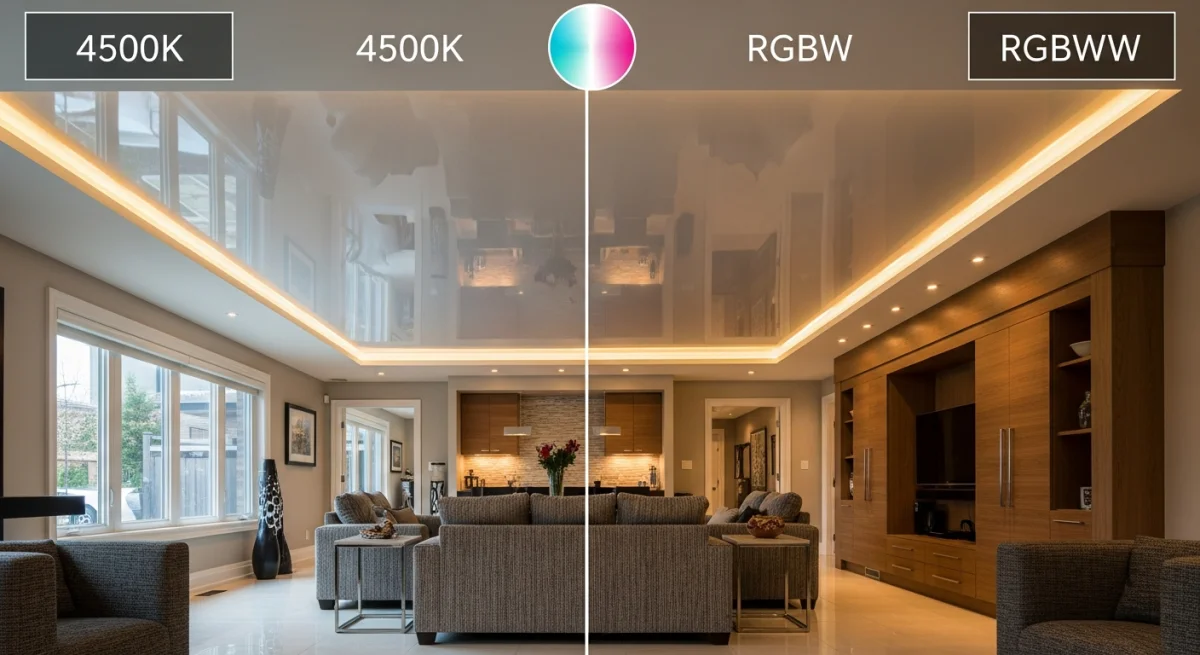

# RGB vs RGBW vs RGBWW for Stretch Ceiling LED: Which Strip to Spec in Toronto
Quick answer. For stretch ceiling cove and accent lighting in Toronto, RGB is the cheapest and worst choice for any space where you actually want clean white light. RGBW (RGB plus a dedicated white channel) is the practical residential default. RGBWW or RGBCCT (RGB plus warm white plus cool white) is the premium spec for tunable circadian-style installations and high-end smart-home homes. Material cost difference between RGB and RGBWW is roughly $8–15/m versus $25–45/m, but installed it works out to a 25–40% project premium for RGBWW over plain RGB. RenoHouse defaults to RGBW for residential cove projects and RGBWW for any project that includes Lutron RA3, KNX, or full circadian-rhythm tuning.This article is part of our LED backlit stretch ceiling pillar. For costs of LED strips by length, see our Toronto LED strip stretch ceiling cost guide. For the broader smart-home integration story see our Toronto smart home installation pillar.
What the Letters Actually Mean
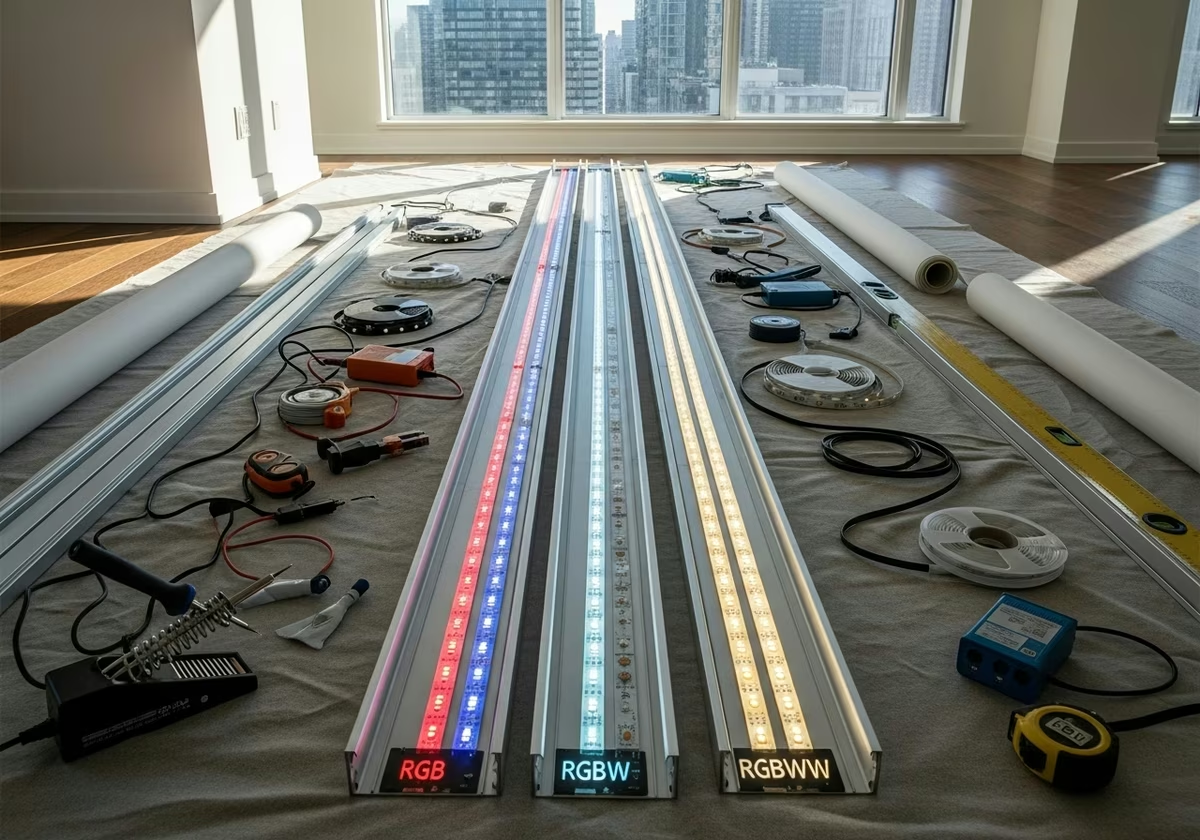
LED strips are named by their colour channels — each channel is an independent LED chip on the strip.
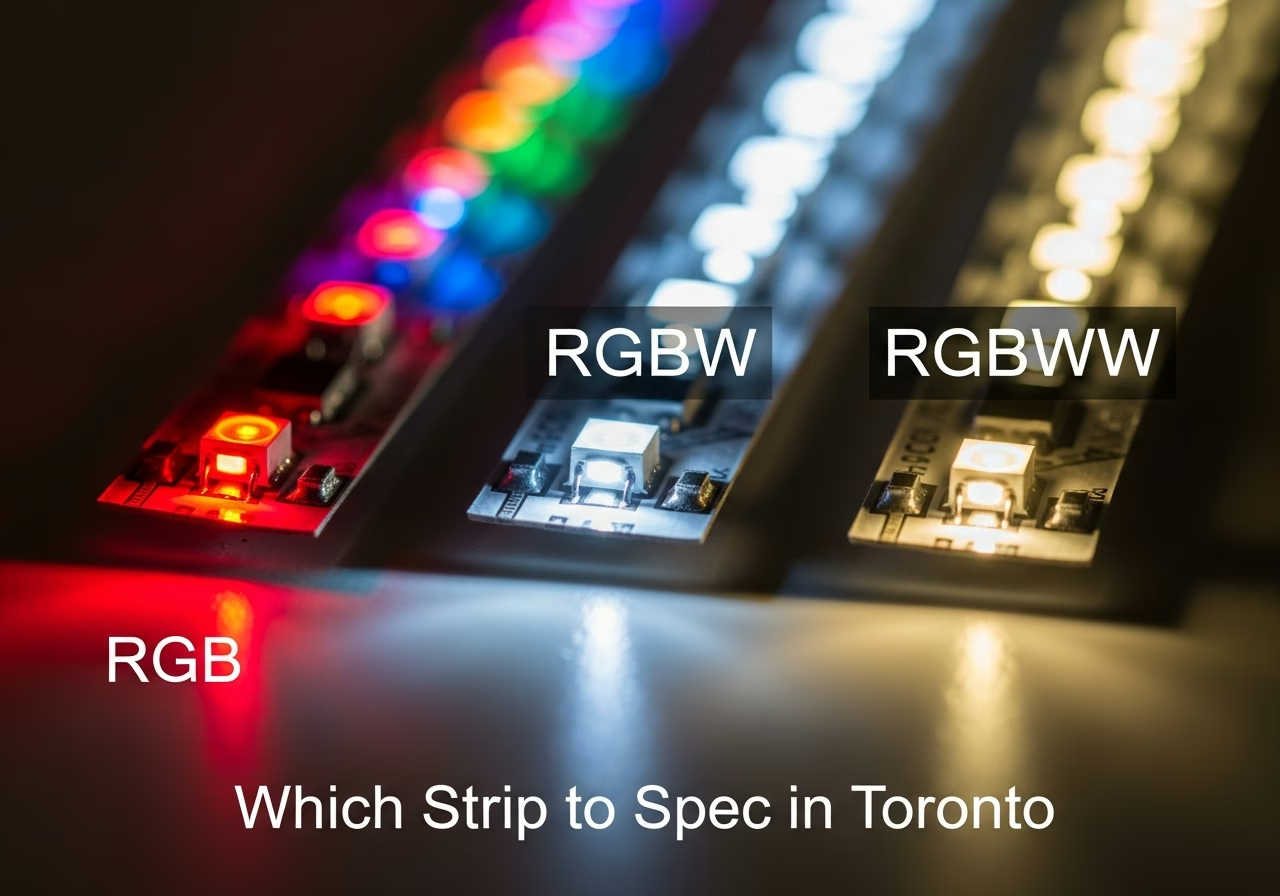
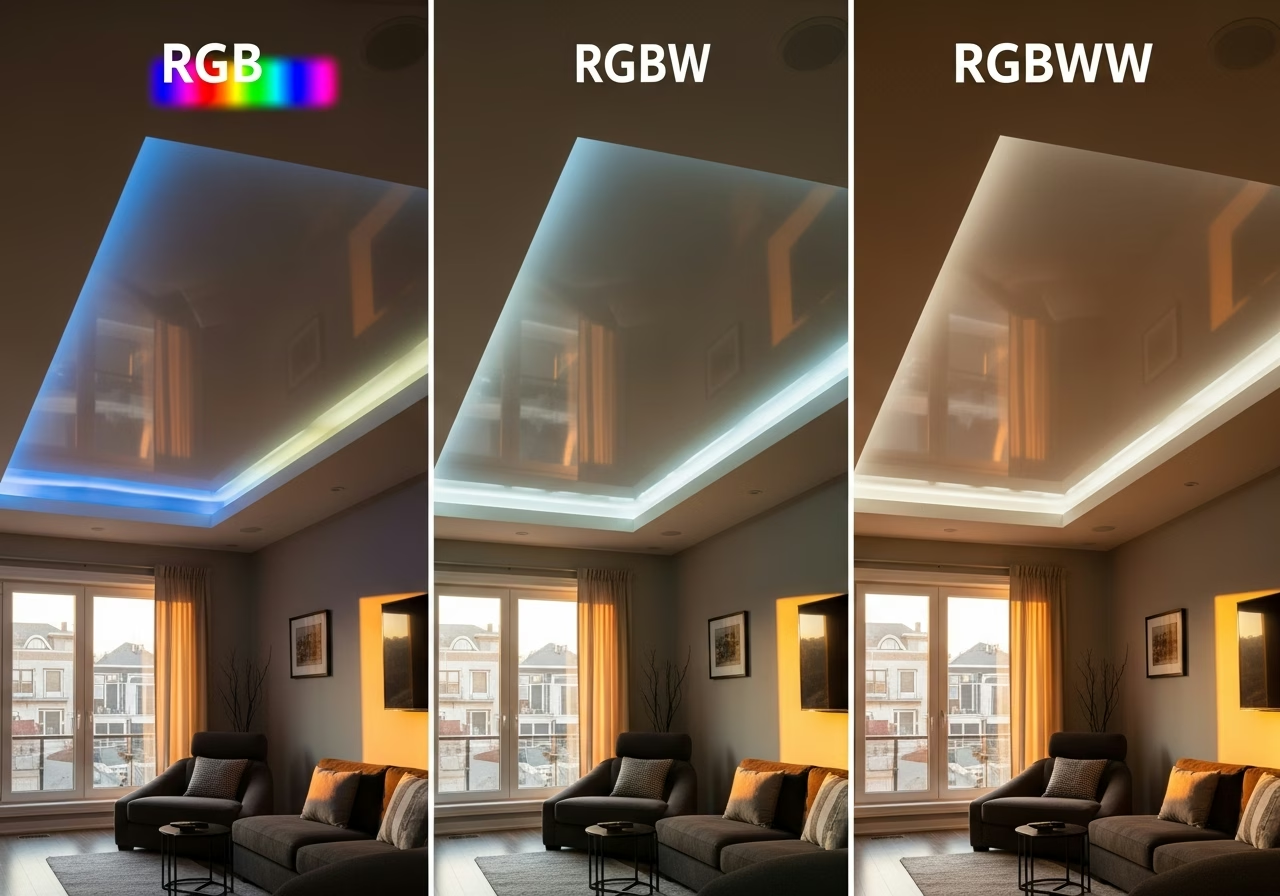
- RGB — three channels: Red, Green, Blue. Mixes any colour including a "white" that is actually a balanced RGB blend. The white is greenish, low CRI, and not pleasant to live with.
- RGBW — four channels: Red, Green, Blue, plus a dedicated White chip (usually 3000K warm or 4000K neutral, fixed at manufacture). The white channel produces actual white light from a dedicated phosphor LED.
- RGBWW — five channels: Red, Green, Blue, plus Warm White (typically 2700K), plus another Warm/Cool channel (typically 6000K). Sometimes labelled RGBCCT (RGB plus Correlated Colour Temperature). True tunable white plus full RGB.
- RGBCW — alternate naming for RGBWW, used by some manufacturers. Cool White and Warm White separately.
Why RGB Alone Is Bad for Stretch Ceilings
RGB strips can mathematically produce "white" by lighting all three channels equally. The problem: the human eye is far more sensitive to colour quality than to colour mix accuracy.
- CRI (Colour Rendering Index) of RGB-derived white is typically 60–75. Skin tones look flat, food looks unappealing, art looks wrong. Residential drywall finishes typically need CRI 90+ to look right.
- Colour temperature is uncontrollable — any drift in driver current shifts the perceived white to green, pink, or magenta.
- No memory of "warm versus cool" — homeowners struggle to dial in a consistent white from RGB.
If you want white perimeter cove lighting (and 95% of Toronto homeowners do, even when they also want occasional colour for parties or kids' rooms), do not spec RGB alone.
Why RGBW Is the Toronto Residential Default
RGBW adds a dedicated white-phosphor LED. The white is typically 3000K, 4000K, or 6000K depending on the strip model.
- CRI 90+ is widely available on RGBW strips at modest premium ($25–35/m versus $8–15/m for RGB-only).
- Stable white that does not shift with current variations.
- One channel of true colour — for accents, holiday lighting, or RGB scenes.
- Single driver, four-conductor wire keeps installation simple.
The drawback: the white is fixed at manufacture. If you spec 3000K RGBW, you cannot shift to 4000K cool morning light. For most residential cove applications this is fine — pick one warm white, live with it.
Why RGBWW Is Premium
RGBWW (or RGBCCT) adds a fifth channel: a second white at a different colour temperature. With independent control of warm and cool white, you can blend any temperature from 2700K all the way to 6500K — full tunable white.
Need professional renovation?
Call RenoHouse at 289-212-2345 or get a free estimate today.
Get Free Estimate →- Circadian rhythm support — cool morning, warm evening, automated through Lutron RA3, KNX, or Hue with timing rules.
- Smart-home integration depth — every premium controller (RA3, KNX-DALI, Hue) supports five-channel strips natively.
- CRI 95+ available on premium RGBWW strips.
- Cost — $25–45/m material plus a five-channel controller. Wiring is six-conductor (or seven with a separate dimmable channel).
For luxury master suites, home theatres, and any project where the homeowner wants morning light to feel different from evening light, RGBWW is the right answer. We integrate RGBWW most often with Lutron Lumaris (their tape product designed for RGB+TW) controlled by RA3, or with KNX-DALI for European-style luxury builds.
Channel Count and Wiring
| Strip Type | Conductors | Driver | Controller Outputs |
|---|---|---|---|
| RGB | 4 | Constant voltage 12V or 24V | 3 PWM |
| RGBW | 5 | Constant voltage 24V | 4 PWM |
| RGBWW / RGBCCT | 6 | Constant voltage 24V | 5 PWM |
For runs over 5m, 24V is mandatory to avoid voltage drop and colour shift along the strip. For runs over 10m we inject power at both ends of the strip and split the run into two zones.
Which to Pick by Room Type
Master Bedroom
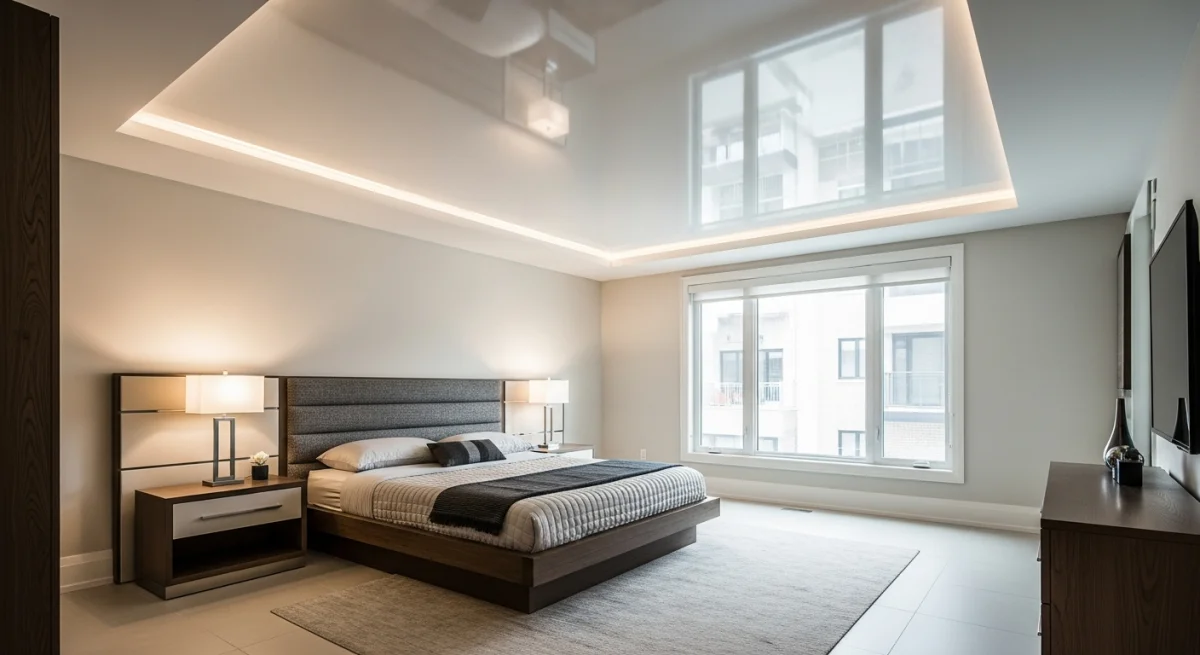
RGBW with 3000K white is the residential default. Add Lutron Caseta dimming and you get a comfortable warm cove for everyday use plus occasional RGB for ambience. Step up to RGBWW if you are also installing a tunable white circadian system.
Kids' Room
RGBW with 3000K is fine, but if you have a Philips Hue household this is where Hue Lightstrip Plus (RGBW) earns its place — kids love the app control and colour scenes. See our Philips Hue stretch ceiling integration guide.
Kitchen
RGBW with 3000K or 4000K. The white channel matters because food rendering needs CRI 90+. Skip plain RGB.
Living Room and Home Theatre
RGBWW for premium homes. The home theatre use case is where bias lighting (a cool white during day, warm dim during movies, occasional colour for ambience) genuinely benefits from tunable white plus colour.
Bathroom Master Suite
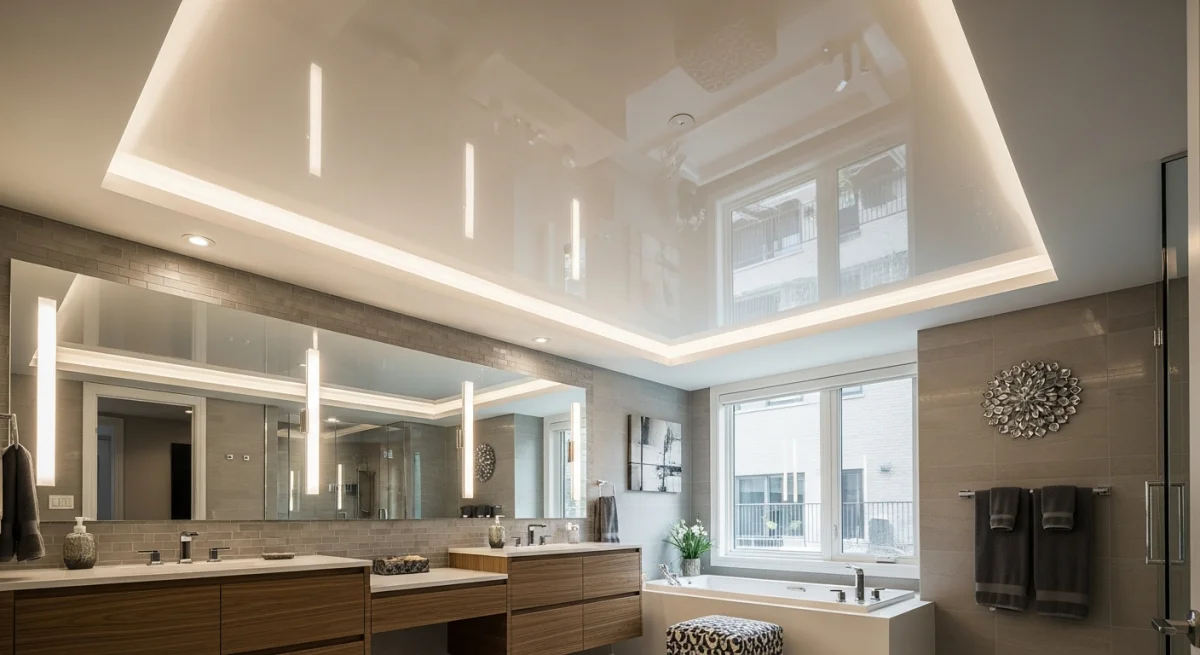
RGBW with 3000K is conservative and reliable. Go RGBWW if you are spec'ing tunable white throughout the suite.
Hallway and Entry
Single-color tunable white (no RGB) is often the right answer here — perimeter cove around a stretch ceiling without the colour distraction.
Driver Selection by Strip Type
For an 18m perimeter at 14W/m on RGBW:
- Total nominal wattage: 252W.
- Apply 1.2 safety factor: 302W.
- Spec 350W constant-voltage driver — typically Mean Well HLG-350H-24A or Magnitude equivalent.
- For RGBWW at 18W/m, total is 324W nominal, 389W after safety factor — spec two 240W drivers in parallel for redundancy.
The driver lives in the plenum on a dedicated junction box; the 120V feed must be wired by an ESA-licensed Master Electrician.
Controller Choice by Strip Type
| Smart Hub | RGB | RGBW | RGBWW |
|---|---|---|---|
| Lutron Caseta | No (white-only) | Limited (via Lumaris) | Limited |
| Lutron RA3 + Lumaris | No | Yes | Yes |
| Philips Hue | Yes | Yes (Lightstrip Plus) | Limited |
| KNX-DALI | Yes | Yes | Yes |
| Generic Zigbee (GLEDOPTO Pro) | Yes | Yes | Yes |
For RGBW we usually spec Philips Hue or GLEDOPTO Pro. For RGBWW we spec Lutron RA3 + Lumaris or KNX-DALI.
Honest Cost Comparison — 18m Perimeter
| Strip | Material | Driver | Controller | Install Labor | All-in Toronto |
|---|---|---|---|---|---|
| RGB only, no-name | $200 | $80 | $50 | $600 | $930 |
| RGBW, 90+ CRI premium | $550 | $150 | $200 | $700 | $1,600 |
| RGBWW, 95+ CRI Lumaris | $1,400 | $400 | $600 | $900 | $3,300 |
| RGBWW with RA3 integration | $1,400 | $400 | $1,800 | $1,400 | $5,000 |
Add $250–500 for the ESA Master Electrician 120V tie-in.
Mistakes We Fix on Toronto Projects
- RGB strip spec'd for primary white living room cove — replaced with RGBW after homeowner complains about green-tint white.
- 5V or 12V strip on long perimeter — voltage drop, colour shift at far end. Always 24V for runs over 5m.
- Single driver for 30m run, no power injection — flicker and dim ends. Inject at both ends, two drivers.
- Hue Bridge with 4 strips on 1 controller — exceeds Bridge limits. One Hue Lightstrip per controller for stable behaviour.
Verdict
For 80% of Toronto residential stretch ceiling cove projects, RGBW with 3000K is the right answer. For the other 20% — luxury homes, home theatres, circadian-aware spaces, KNX or Lutron RA3 backbones — RGBWW is worth the premium. Plain RGB belongs only in dedicated colour-accent zones (kids' play areas, party rooms) where white quality genuinely does not matter.