RenoHouse

# Stretch Ceiling Harpoon Track: Aluminum vs PVC Profile (Toronto Buyer's Guide)
Quick answer. Aluminum harpoon track ($4–7 per linear foot) is rigid, holds tension indefinitely, supports re-installation if the ceiling is ever drained, and is what every premium installer specifies. PVC profile track ($2–3 per linear foot) is flexible, cheaper, and acceptable on short walls and budget jobs — but on long walls (>4 m) or on installs where the membrane will be drained for a leak, PVC profile can deflect and produce a saggy result over 5+ years. RenoHouse defaults to aluminum on every project unless the homeowner explicitly chooses the budget option.The track is invisible after install. It's hidden by the trim bead. But it's the single most consequential structural piece in your ceiling — the membrane lives or dies by it. Here's the honest comparison.
For the bigger picture, see our installation & care pillar. For the install process showing how the track is mounted, see step-by-step install. For the choice between hot and cold stretch (which determines which profile family you'll use), see heat-gun vs cold install.
What the Track Actually Does
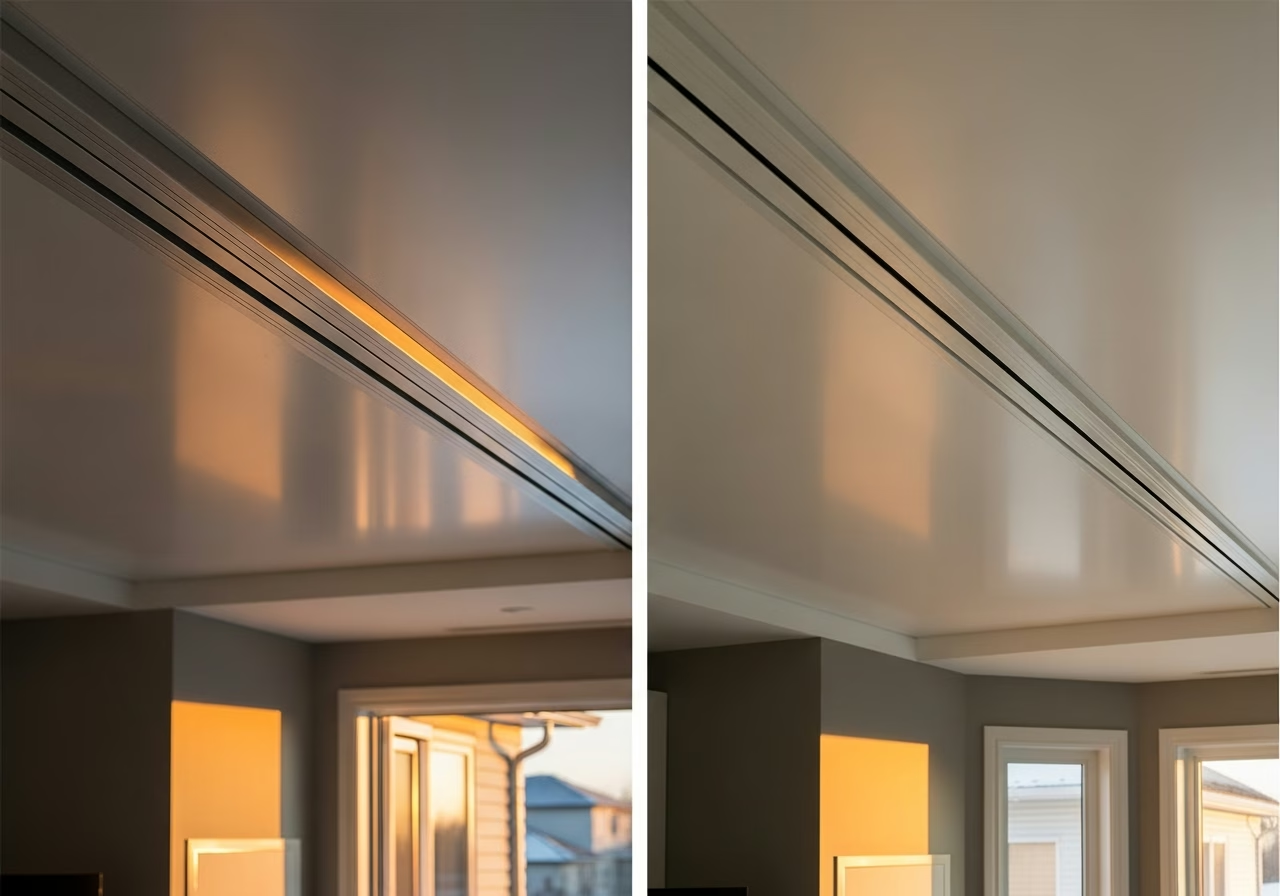
The track (also called *baguette*, *profile*, or *rail*) runs around the entire perimeter of the room, mounted to the wall just below the existing ceiling. The membrane's harpoon edge — a small flexible polymer hook welded around the perimeter of the film — clicks into a groove in the track. Tension is held by the geometry of the hook locked into the groove.
A few facts about the forces involved:
Need professional renovation?
Call RenoHouse at 289-212-2345 or get a free estimate today.
Get Free Estimate →- A 200 sqft membrane under thermal-shrink tension exerts roughly 40–80 N per linear meter of perimeter pull (varies by film thickness and temperature delta).
- That pull is continuous — it never relaxes for the entire life of the ceiling.
- Multiplied across an 18 m perimeter: roughly 720–1,440 N total inward pull — about the weight of a small car distributed around the perimeter.
- The track has to resist this without flexing, the anchors have to hold without pulling out, and the wall has to take it without cracking.
The track is not a decorative trim. It's a structural element.
Aluminum Harpoon Track: The Premium Choice
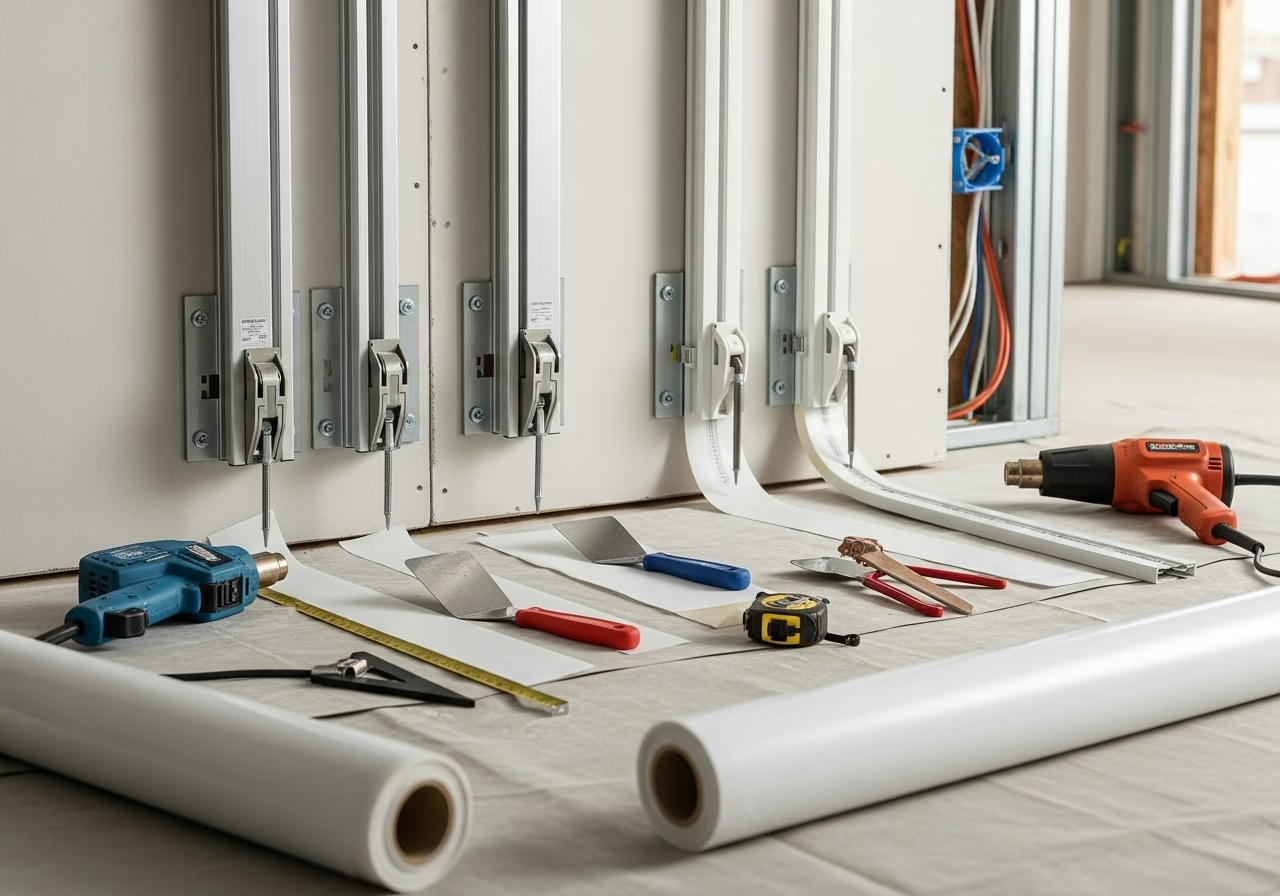
- Yashar (Russian-origin, dominant in Russian-community installs)
- Dilov (Russian / Belarusian, premium tier)
- ProFix (German)
- Eurokraj (European mid-tier)
- Laqfoil-branded (Toronto-manufactured, used in Laqfoil installs)
- Rigid. Doesn't flex under the membrane's continuous tension. Doesn't develop micro-waves over years.
- Indefinite tension life. A properly anchored aluminum track will hold its first-day flatness in year 15.
- Re-installable. If the ceiling is drained for an upstairs leak (a routine Toronto event in older condos — see water damage recovery), the same track is reused. PVC profile sometimes deforms during membrane removal and needs replacement.
- Supports curved walls. Aluminum can be precision-bent at a fab shop for curved condo walls, dome features, and feature ceilings. PVC profile bends, but inconsistently.
- Better for long spans. On walls over 4 m, aluminum stays flat. PVC begins to bow inward under tension.
- Stronger anchor pull-through resistance. The aluminum web doesn't tear if a screw is overtightened.
- Costs roughly $1.50–$3 more per linear foot than PVC.
- Requires a chop saw or aluminum-rated hand miter to cut on site (pros have one; the ceiling looks slightly more "professional" because mitered corners are crisp).
- Slightly heavier (irrelevant once mounted but adds a half-pound to a typical room's track package).
PVC Profile Track: The Economy Choice
Material: Rigid PVC, extruded into a profile shape similar to aluminum but in plastic. Common brands:- Bauf (Russian / Belarusian budget)
- Saros budget line
- Halead-branded PVC profile (often sourced from China through Russian-community installer channels)
- Short walls, small rooms. A 10×10 ft bedroom (perimeter ~12 m) doesn't stress the track much. PVC works fine here.
- Curved walls / odd shapes. PVC bends easily without a fab shop, useful for one-off curved features.
- Genuine budget jobs where the homeowner has explicitly chosen economy throughout (Halead film + PVC profile + minimal LED).
- Temporary installs. Rental properties where the ceiling is expected to come out in 3–5 years anyway.
- Walls over 4 m. PVC begins to deflect inward over years, and the membrane develops a slight wave that's visible at oblique angles.
- Toronto condos with overhead leak risk. If the ceiling is ever drained, removing the membrane can warp the PVC profile and the track has to be replaced — defeating the cost savings.
- Premium glossy films. The slightest profile waviness shows in glossy reflections. Glossy + PVC profile is a common 5-year regret in budget Russian-community installs.
- Backlit translucent. The LED panels expose any track imperfection as a visible dark line. Always specify aluminum for backlit.
- Star sky. The fiber-optic strands sit close to the membrane; any drift in the track translates to a star drifting out of position. Always aluminum.
Anchoring: The Detail That Matters More Than the Track
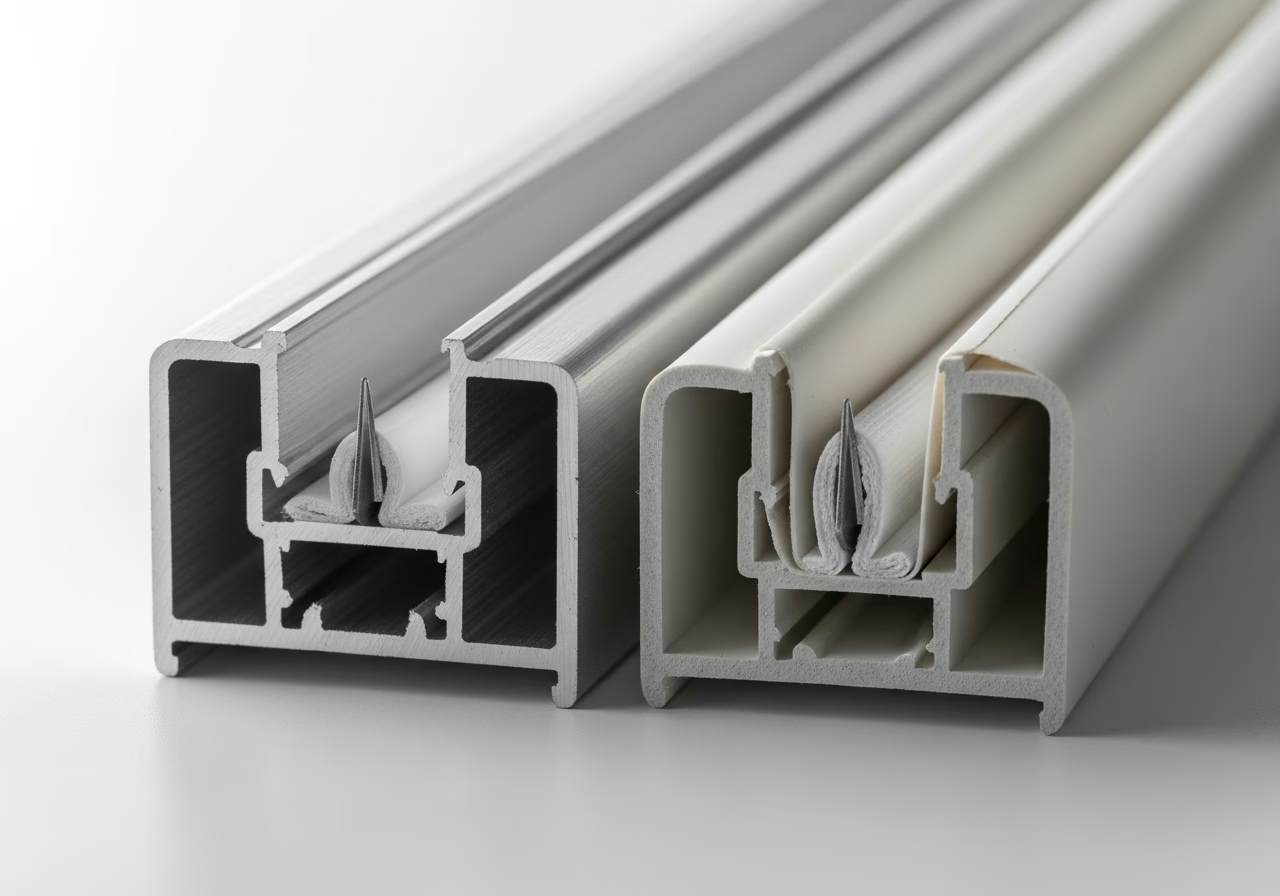
A premium aluminum track screwed into drywall with bare drywall screws is *worse* than PVC profile properly anchored into wood studs. The anchor matters as much as the track itself.
Toronto wall types and recommended anchors:| Wall type | Common in | Recommended anchor | Spacing |
|---|---|---|---|
| Drywall + wood studs (16" OC) | Detached homes | #8 × 1¼" wood screws into studs; Hilti plastic anchors between studs | 150 mm |
| Drywall + steel studs | Newer condos, commercial fitouts | Self-tapping #8 metal screws; toggle bolts only as last resort | 150 mm |
| Concrete (poured slab walls) | Condo perimeter walls | Tapcon 3/16" × 1¾" or Hilti HUS-EZ; pre-drilled 5/32" carbide | 200 mm |
| Existing tile (bathroom retrofits) | Bathroom installs | Diamond-bit pre-drill, Tapcon into substrate behind tile | 200 mm |
| Plaster on lath (heritage homes) | Cabbagetown, Riverdale, Old Toronto | Wood screws into lath; structural epoxy reinforcement on suspect sections | 100 mm |
- Butterfly toggles in drywall. Pull through under tension over years. Visible profile droop at year 3–5.
- Drywall screws alone. Drywall paper is the only thing holding the screw — it tears, the profile drops, the membrane sags.
- No anchor every 150 mm. Spacing too wide on long walls allows the profile to flex between anchors. The membrane develops a scalloped wave matching the anchor pattern.
A reputable installer counts anchors. A budget installer eyeballs spacing. The difference shows in year 3.
What RenoHouse Specifies
We default to:
- Aluminum harpoon track (Yashar or Dilov) on every project regardless of budget tier.
- Wood screws into studs every 150 mm on drywall walls with framing.
- Hilti or Tapcon anchors every 200 mm on concrete condo walls.
- PVC profile only on explicit homeowner request after they understand the long-span trade-off.
The cost difference between aluminum and PVC profile on a typical 200 sqft room (perimeter ~18 m): $95 to $235. On a $2,400 mid-tier install, that's 4–10% of the bill. We can't recommend saving 4–10% in exchange for a worse 10-year outcome.
For projects where the budget is genuinely tight, we'd rather drop the film tier (MSD economy instead of Pongs mid) than drop the track tier. The film is replaceable; the track wears the wall.
How to Verify on a Quote
When you receive a stretch ceiling quote in Toronto, ask three questions:
- 1. What track brand and material? A clear answer ("Yashar aluminum harpoon" or "Dilov aluminum profile") is reassuring. A vague answer ("standard track included") often means PVC profile by default.
- 2. What anchor pattern and spacing? "150 mm spacing into studs and Tapcon to concrete" is the right answer. "We'll figure it out on site" is not.
- 3. Is the track included or extra? Most reputable quotes bundle track into the per-sqft price. If it's broken out as an extra, verify the spec.
If the installer dodges these questions, that's a signal. The good ones explain the spec without prompting.
Get an Honest Quote with Aluminum Track Standard
Request a free stretch ceiling quote — RenoHouse defaults to aluminum harpoon and code-spec anchoring on every project. The line item is itemized so you can see exactly what you're getting. For broader cost context across systems and brands, see our cost guide. For condo-specific install considerations, see our condo board approval guide and the broader condo renovation cost reference.FAQ
Can I see the track after install? No. The trim bead covers it. The track and the harpoon edge of the membrane are completely hidden behind a colour-matched plastic bead. Does aluminum track ever corrode? In a normal residential interior, no. In a long-term high-humidity environment (a pool room, an unventilated bathroom), aluminum is still better than steel but powder-coated aluminum is the right spec. What about wedge / clip track for fabric? Cold-stretch fabric uses a different track family — wedge or clip, not harpoon. Same aluminum-vs-PVC question applies; same answer (aluminum is the durable choice). Can I reuse the track during a re-install? Yes — that's a major advantage of aluminum. The membrane is drained and unhooked in 30–60 minutes; a new membrane is hooked into the same track. PVC profile sometimes survives re-install but failures are common. Why do Russian-community cash-job installers default to PVC profile? It's cheaper, faster to cut on site (no chop saw needed), and lets them quote a lower number to win the bid. The trade-off shows up in year 5+ when the original installer is no longer in business.Continue Reading
- Stretch Ceiling Installation & Care in Toronto: The Complete 2026 Owner
- Stretch Ceilings Toronto: The Complete 2026 Homeowner
- PVC vs Fabric Stretch Ceiling: Which Is Right for Your Toronto Home?