RenoHouse

# Stretch Ceiling Removal & Replacement in Toronto: The Reversibility Advantage
Quick answer. A trained installer can non-destructively remove a single-room stretch ceiling in 30 to 60 minutes by detaching the harpoon from the perimeter track. The original track stays mounted. A new membrane (or the same one, if undamaged) is re-installed by reversing the original install. Removal alone runs $250–$450; removal plus a new membrane runs $400–$700 — roughly 25–40% less than a fresh install because the track work is already done.This is the single most-underrated advantage of stretch ceilings over drywall: the ceiling is fully reversible. Drywall ceilings are demolished with a hammer and replaced with a 3-day mud-and-paint cycle. A stretch ceiling comes out in an hour, the work behind it gets done, and a new (or the same) ceiling goes back. Here's what that actually looks like in a Toronto home.
For the broader install context, see our installation & care pillar. For the original install process this reverses, see step-by-step installation. For water-damage scenarios specifically, see water damage recovery.
When Removal Makes Sense
Drywall repair above the ceiling. An upstairs leak was fixed at the source (plumbing repaired, drywall above patched), and now the ceiling needs to come down so the plenum can be inspected, dried, and any residual damage repaired. Common in Toronto condos with shared bathroom plumbing stacks. Recessed-light retrofit. Adding pot lights to a room that didn't originally have them. The plenum needs access for housing installation, junction boxes, and wire routing. HVAC modification. Adding a new diffuser, relocating an existing one, or running a new duct branch through the plenum. Electrical re-wiring. Knob-and-tube replacement (heritage homes), adding circuits, installing a smart-home wiring backbone. Sprinkler retrofit. Toronto Fire Code occasionally requires sprinkler additions in older condo buildings; access is required. Water damage to the membrane itself. A puncture, an impact, a stain that won't clean — replacing the membrane is sometimes cheaper than aggressive repair. Pre-sale staging. Some Anglo-buyer transactions in Old Toronto, Cabbagetown, and Riverdale prefer drywall ceilings for resale appeal. Removing the stretch ceiling and revealing the original (often-restorable) drywall is sometimes part of staging. Renovation behind the ceiling. A whole-room renovation where the existing ceiling layer needs access — re-insulation, vapor barrier replacement, structural repair.What Removal Looks Like (30–60 Minutes Per Room)
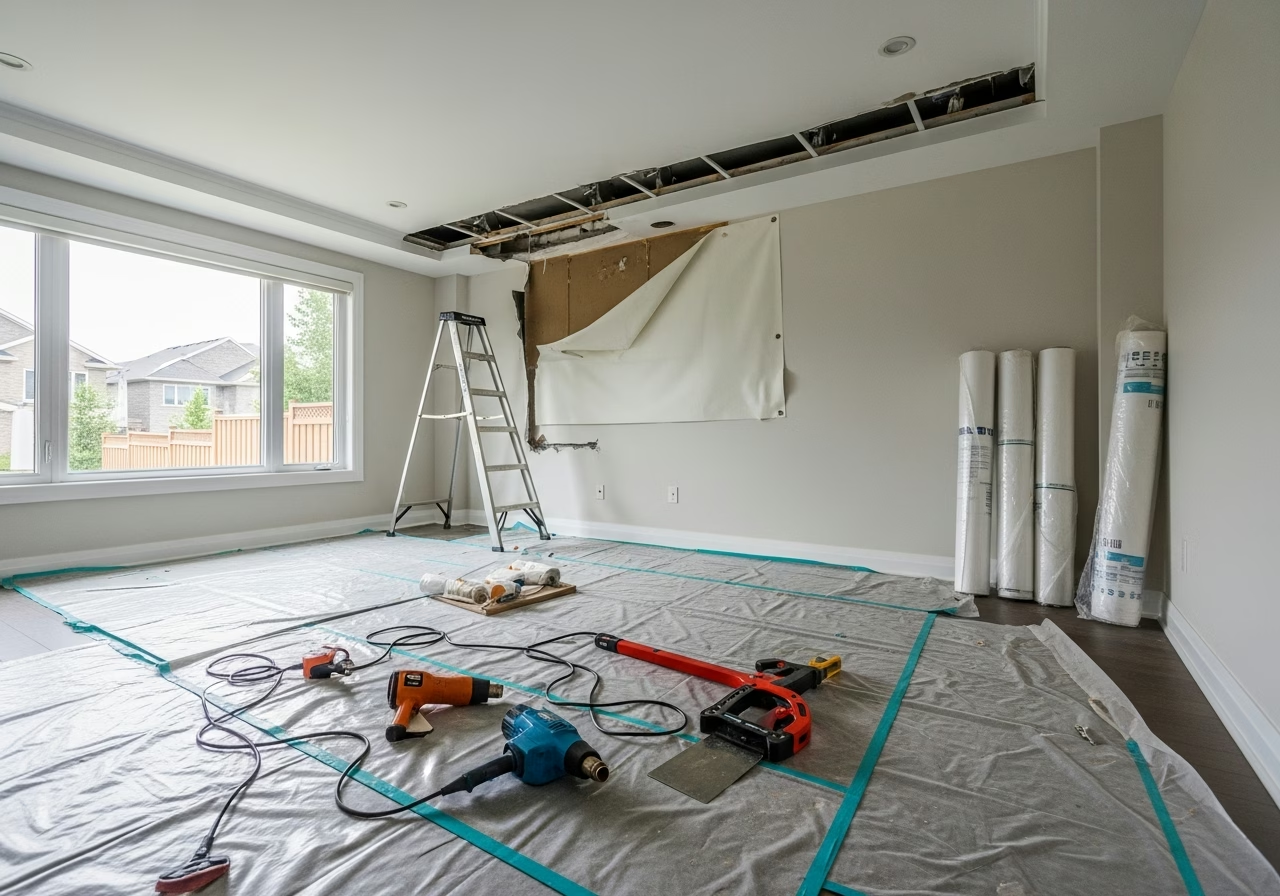
Single-room PVC stretch ceiling, two-person crew:
| Step | Time | Detail |
|---|---|---|
| Floor & furniture protection | 10 min | Drop cloths, centre-stack, mask walls |
| Trim bead removal | 10 min | Plastic trim pulled out by hand around perimeter |
| Membrane unhooking | 15–25 min | Yashar reverse spatula pulls harpoon out of track groove |
| Membrane fold-down | 5 min | Lower the membrane to floor level |
| Walkthrough | 5 min | Confirm track and anchors are intact for re-install |
| Total (removal only) | 45–55 min |
For fabric (cold-stretch) ceilings the wedge profile is different but the time is similar — roughly 50–70 minutes because trimming is reversed (fabric is unhooked from wedge clips and folded down).
Need professional renovation?
Call RenoHouse at 289-212-2345 or get a free estimate today.
Get Free Estimate →Reusing the Original Membrane vs Replacing
Reuse if:- The membrane is undamaged and clean.
- It hasn't been heat-damaged from a past repair attempt.
- It's still under warranty and the homeowner wants to preserve it.
- The reason for removal is access (plumbing, electrical) rather than membrane failure.
- The membrane is over 8–10 years old (typical PVC service life is 10–15 years; replacement avoids a second removal soon).
- The membrane has any visible stains, yellowing, or surface damage.
- The homeowner wants to change colour or finish.
- The original was budget Halead or Bauf — upgrading to Pongs, MSD premium, or Clipso while everything is open is a smart spend.
- Remove and re-install original membrane: $350–$550 (track stays, membrane reused).
- Remove and replace with new mid-tier membrane: $1,400–$2,000 (track stays, ~30% savings vs fresh install).
- Remove and replace with premium fabric: $3,800–$5,000.
Track Reuse: Why It Saves So Much
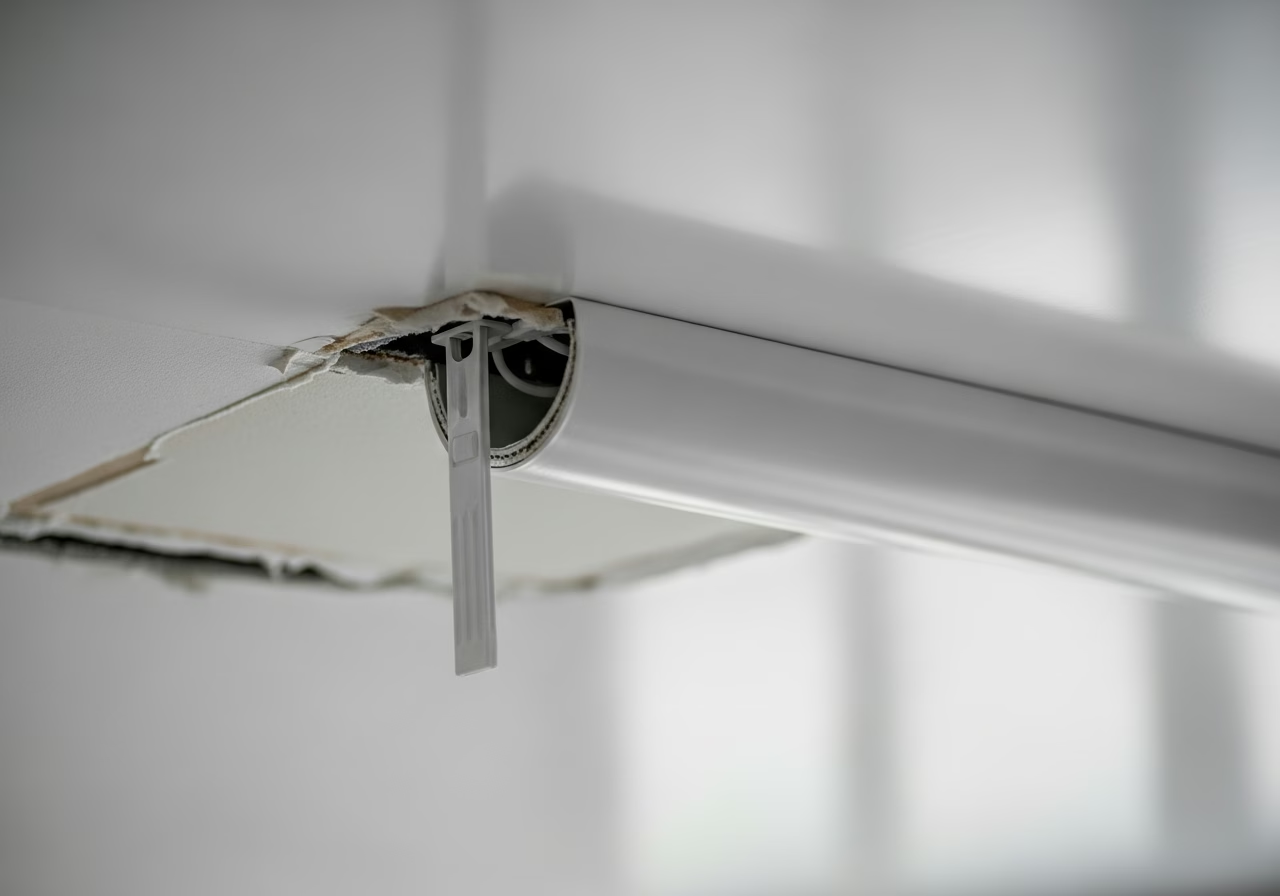
The aluminum harpoon profile costs $4–$7 per linear foot plus the labor to mount it (anchor every 150 mm, level laser, 30–45 minutes for a 200 sqft room). On a fresh install that's roughly $300–$500 of the total bill for a typical bedroom.
When the track is reused on a re-install, all of that work is skipped. The crew arrives, the track is already on the wall, the new membrane snaps in. This is why removal-and-replace runs 25–40% cheaper than a fresh install on the same room.
PVC profile track is less reusable — it can deform during membrane removal and sometimes needs replacement. This is one of the reasons we specify aluminum on every project.
Common Toronto Removal Scenarios
Scenario 1: Upstairs leak, source repaired, now the ceiling needs to come down for drywall and insulation drying above.- Day 1: Insurance adjuster documents. Plumber repairs source. Source-side drywall patched.
- Day 2: RenoHouse installer drains and removes the membrane (membrane folded and stored in original box). Plenum accessed; insulation inspected, dried with industrial fans for 48–72 hours.
- Day 5: Insulation confirmed dry. Installer returns. If membrane was undamaged, re-installed (1.5–2 hours). If damaged, new membrane already on order from factory.
- Total cost: $250–$450 removal, $400–$600 re-install, $1,400–$2,000 if new membrane needed.
- Day 1: Electrician roughs in junction boxes and wiring above the existing membrane (sometimes possible without removal if access is via the wall or attic). If not possible: membrane removal scheduled.
- Day 2: Membrane removed. Electrician installs pot light housings, wires through plenum.
- Day 3: Membrane re-installed with pot light cut-outs at new positions (factory-pre-marked or on-site cut).
- Total cost: $250–$450 removal, $400–$600 re-install + electrical separately, plus $80–$120 per fixture pass-through.
- Day 1: Stretch ceiling and aluminum track removed (membrane discarded or kept by seller). Track unscrewed; small drywall patches at anchor holes.
- Day 2: Drywall mud, sand, prime, paint cycle (3–5 days total).
- Total cost: $400–$600 stretch removal + $800–$1,500 drywall finishing per room.
What Doesn't Work
Specific Toronto-Condo Considerations
Sprinkler heads. When the membrane comes out, the sprinkler head trim ring stays. The sprinkler is not disturbed; the membrane is cut away from it. Re-install requires a new ring (or the same ring re-glued). Concrete-anchored profile. On Tapcon-anchored aluminum profiles in concrete walls, removing and reinstalling the profile (rare, only if the homeowner is fully demolishing the install) leaves anchor holes that need patching. Most condo reinstalls keep the profile in place. Smoke alarms. Hardwired alarms can usually stay live during removal — the membrane is cut around them. Battery-only alarms come down for the duration of the work. Condo board notice. Removal-and-replace with the same configuration is generally not noticeable to the building and doesn't require a fresh approval. If you're changing the system (PVC to fabric, or adding star sky / backlit features), file an updated notice. See condo board approval and the broader condo renovation cost guide.When Replacement Beats Repair
A 3-cm tear in the membrane: replace.
A coffee-stain ring that won't come out: replace if visible.
A corner that has popped out of the harpoon track three times: re-install with new harpoon weld.
A 10-year-old budget Halead ceiling that's started yellowing: replace and upgrade.
A perfect 6-month-old ceiling above which a leak just occurred: drain, dry, re-install (definitely don't replace).
What RenoHouse Manages on Replacement Projects
Coordination. Removal, plenum work (electrical, plumbing, HVAC), and re-install scheduled in the right sequence so trades aren't waiting on each other. Insurance documentation. Photos of plenum condition before removal, after access work, and after re-install — this is what your adjuster will want for the claim file. (For full water-damage workflow, see our Water Damage Emergency 24-Hour Response playbook.) Membrane storage. If the original membrane is being preserved for re-install, we store it in our partner's North York warehouse (rolled or carefully folded in a clean box) — not in the homeowner's garage where it can pick up dust or get damaged. Same crew. The installer who originally hung the ceiling typically performs the removal and re-install. They know the room, the fixture positions, and the quirks.Get a Removal Quote
Request a free removal & replacement quote — site visit, scope assessment, and coordination with electrical/plumbing/HVAC trades on combined projects. For broader cost context, see our stretch ceiling cost guide.FAQ
Can the same membrane be re-installed multiple times? Yes — typically 3–5 times before the harpoon weld fatigues. Most ceilings are removed and re-installed at most twice in their life. Will re-install look identical to the original? Yes, if the same membrane is reused. If a new membrane is being installed, the cut-outs for fixtures are remade and the trim bead is fresh. Does removal damage the trim bead? The bead is reusable but often replaced with new bead at re-install for $30–$60 per room of materials. What if the original installer is no longer in business? Common in the Russian-community small-installer market. RenoHouse handles re-install regardless of who originally did the work, provided the track is in serviceable condition. Is partial removal possible? Yes — sometimes only a section of membrane is unhooked at one wall to access a localized issue. Same hourly cost-rate as full removal but typically completes in 20–30 minutes.Continue Reading
- Stretch Ceiling Installation & Care in Toronto: The Complete 2026 Owner
- Stretch Ceiling vs Drywall Cost in Toronto 2026: The Honest Side-by-Side
- Stretch Ceilings Toronto: The Complete 2026 Homeowner