RenoHouse

The New Landscape: Toronto's Multiplex Bylaw and Your Basement Apartment
If you're a Toronto homeowner, you've likely heard the buzz around the city's housing crisis and the official response: encouraging gentle density. The landmark "Multiplex Bylaw" passed in 2023 was a game-changer, effectively allowing homeowners to create up to four residential units on most residential lots. This has supercharged the interest in creating an Accessory Residential Unit (ARU), most commonly in the form of a legal basement apartment.
But turning a damp, dark basement—whether it's in a 1960s Etobicoke bungalow or a Cabbagetown Victorian—into a safe, legal, and profitable living space is not a weekend DIY project. It's a complex undertaking governed by the Ontario Building Code (OBC) and municipal regulations. Getting it wrong means fines, orders to undo work, and a potentially unsafe environment for your tenants.
This guide cuts through the noise. As contractors working across the GTA, we'll walk you through the absolute must-know legal requirements for a basement apartment in Toronto for 2026, from permits to fire separation, so you can plan your project with confidence.
First Things First: Is Your Property Even Eligible?
Before you start pricing out quartz countertops, you need to confirm your property is eligible. Thanks to the new multiplex rules, the answer is *probably yes*, but you must verify.
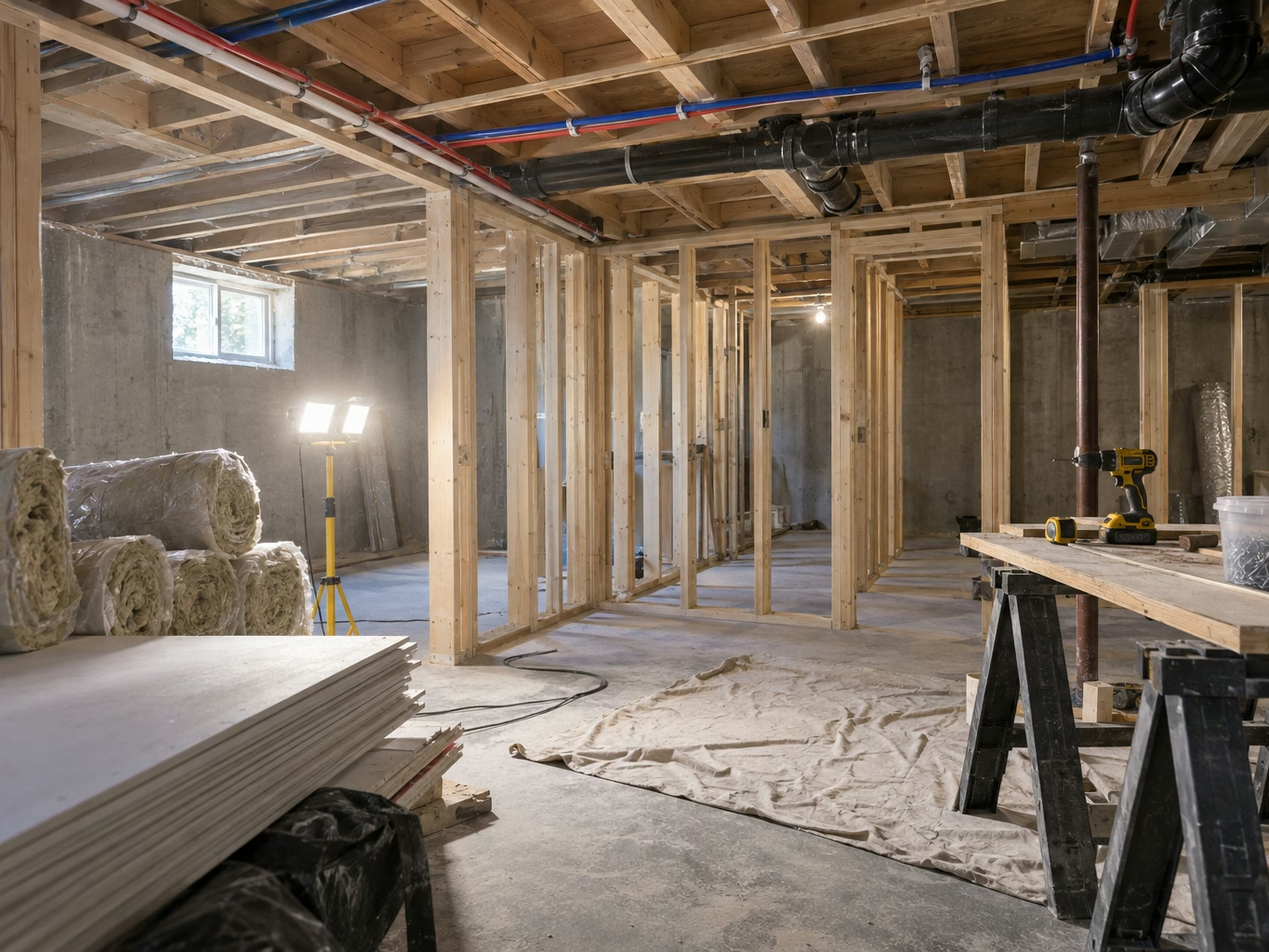
- 1. Zoning Permission: The Multiplex Bylaw permits ARUs in most residential zones (R, RD, RS, RT, RM) across Toronto. This was a massive shift, eliminating the patchwork of old rules that varied from Etobicoke to Scarborough. You can use the City of Toronto's interactive zoning map to confirm your property's designation.
- 2. Age of Home: The OBC has slightly different, more lenient rules for apartments in houses that are more than five years old. Most renovations will fall under these existing-house rules, which is helpful for things like ceiling height.
- 3. Property Specifics: Are there any easements or restrictions on your property? Is there a logical place to add a separate entrance without impacting the main house's functionality or violating property line setbacks?
While the new bylaw opens the door for most, it's always the first box to tick. A quick consultation with a designer or knowledgeable contractor can confirm your eligibility before you invest significant time or money.
The Core Four: Non-Negotiable Ontario Building Code (OBC) Requirements
Once you've confirmed zoning, you must meet the core physical requirements of the Ontario Building Code. These are the big-ticket items that often determine if a project is feasible.
- 1. Ceiling Height: For existing homes (over 5 years old), the minimum ceiling height is 6 feet 5 inches (1950 mm). This height must be maintained over at least 75% of the main living area. Beams, pipes, and ductwork can dip below this, but not in main pathways. In many older Toronto homes, this is the first major hurdle. If your ceiling is too low, the only solution is underpinning—a major structural project involving digging out the foundation footings section by section. It's effective but can add $50,000-$100,000+ to your budget.
- 2. Separate Entrance: The basement apartment must have its own entrance. Tenants cannot pass through the main dwelling to get to their unit. This is usually a separate side door or a dedicated walk-out. Adding a new entrance involves cutting into the foundation, which requires engineering, permits, and proper waterproofing.
- 3. Unit Size: The ARU must be smaller than the principal dwelling unit. While there isn't a strict minimum size in the OBC for older homes, practicality dictates a bachelor should be at least 300 sq. ft. and a one-bedroom at least 450-500 sq. ft. to be desirable on the rental market.
- 4. Natural Light & Ventilation: Windows are required. The total window area must be at least 5% of the living/dining area floor space and 2.5% for bedrooms. This ensures a habitable space and is a key reason why a proper basement egress window installation is often a part of the plan.
Egress Windows: The Most Critical Safety Feature (OBC 9.9.10)
We're giving egress windows their own section because they are arguably the most important—and most frequently misunderstood—safety requirement. An egress window is a window large enough for a person to escape through in a fire.
If the basement apartment has a bedroom, that bedroom MUST have an egress window.Here are the specific requirements from OBC 9.9.10:
- Minimum Unobstructed Opening: The window must open to at least 0.35 square metres (3.8 sq. ft.).
- Minimum Dimension: No single dimension of that opening (height or width) can be less than 380 mm (15 inches).
- No Obstructions: It must open easily from the inside without any special tools, keys, or knowledge.
- Window Well: If the window opens into a window well, the well must extend at least 760 mm (30 inches) out from the foundation wall to give someone room to climb out. If the well is deeper than 1 metre, it needs a permanent ladder.
Installing an egress window is a structural job. It involves cutting a large opening in your concrete foundation, installing a steel lintel to support the house above, and ensuring the entire assembly is waterproofed. This is not a handyman job; it requires a skilled crew and a permit. In some cases, you may need a second egress window for an ARU depending on the layout.
Fire & Sound: Creating Safe and Separate Living Spaces
Separating the two units is about more than just privacy; it's about life safety. The OBC requires specific measures to slow the spread of fire and smoke between the main house and the basement apartment.
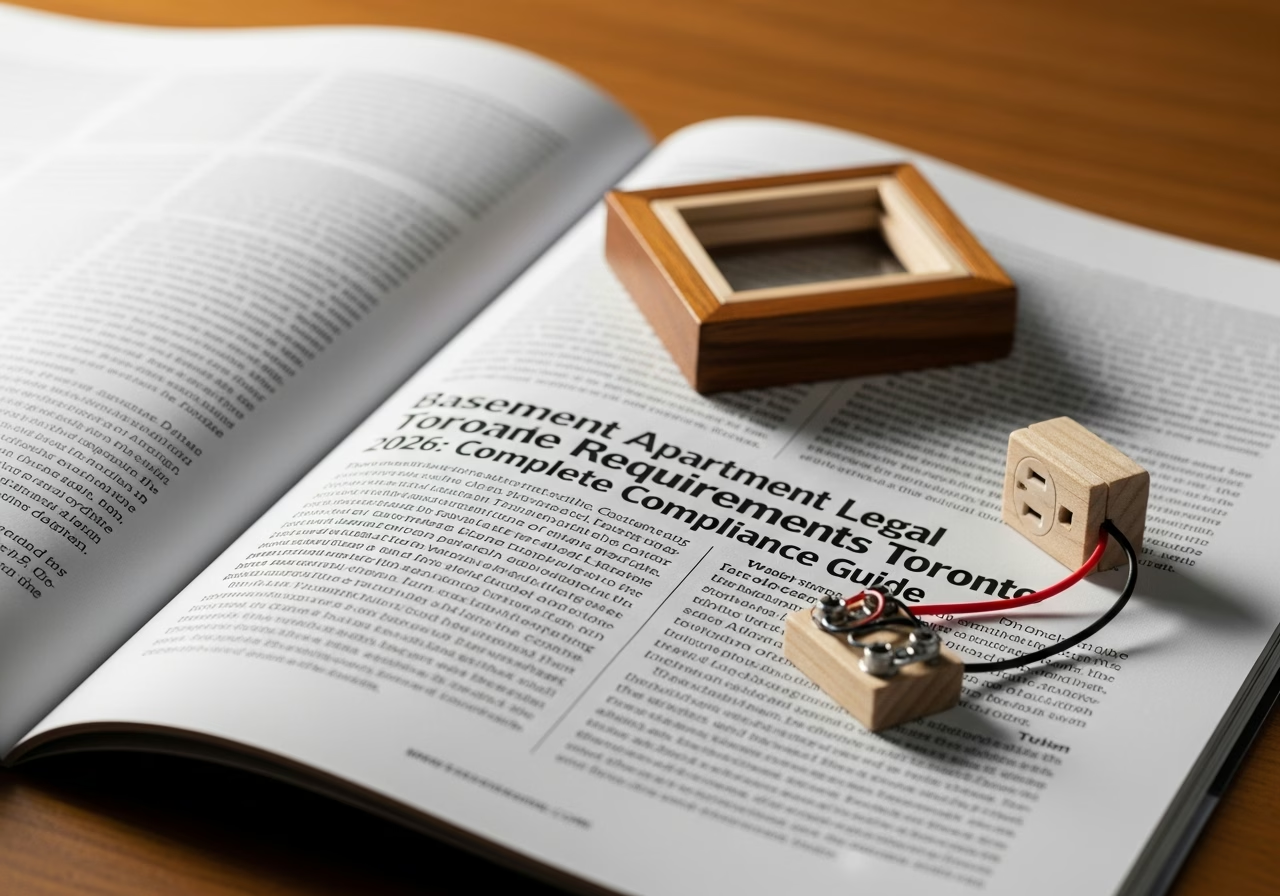
Fire Separation
The goal is to create a 30-minute fire-resistance rating between the units. This is typically achieved in the ceiling of the basement apartment.
Need professional renovation?
Call RenoHouse at 1-289-212-2345 or get a free estimate today.
Get Free Estimate →- Drywall: This usually means installing 5/8" Type X fire-rated drywall. All joints must be properly taped and mudded. You can't just screw it up and walk away.
- Sealing Penetrations: Every hole for pot lights, plumbing, or wiring must be sealed with fire-rated caulking (fire stop). This is a critical detail inspectors check carefully.
- Doors: Any door connecting the units (e.g., in a shared laundry/utility room) must be a solid wood or metal door at least 45mm thick with a self-closing device.
- Smoke & Carbon Monoxide Alarms: Alarms must be hardwired and interconnected. If one goes off in the basement, the ones in the main house must also sound, and vice-versa. This ensures everyone is alerted, regardless of where a fire starts.
Sound Separation
While the OBC's soundproofing requirements are minimal, building to code minimum is a recipe for unhappy tenants and homeowners. Good sound separation is one of the best investments you can make.
- Insulation: Use specialized sound-dampening insulation like Rockwool Safe'n'Sound in the ceiling joist cavities.
- Resilient Channels: These metal channels are screwed to the joists, and the drywall is then screwed to the channels. This decouples the drywall from the framing, drastically reducing the transfer of impact noise (like footsteps).
- Caulking: Use acoustical sealant around the perimeter of the drywall and around all penetrations.
Investing an extra few thousand dollars in proper basement soundproofing installation will pay for itself in tenant retention and your own peace of mind.
Essential Systems: HVAC, Plumbing, and Electrical Compliance
Each utility needs to be addressed to ensure safety, comfort, and code compliance.
- HVAC (Heating, Ventilation, Air Conditioning): The basement unit cannot share ductwork with the main house unless a special fire damper is installed where the ducts connect. This is expensive and complex. More common solutions are:
* Hydronic Heating: Use a boiler to run in-floor radiant heat or slim radiators.
You also need a dedicated exhaust fan in the bathroom and kitchen.
- Plumbing: All plumbing work requires a permit and must be done by a licensed plumber. Key requirements include:
* Proper Venting: All fixtures must be properly vented to prevent sewer gas from entering the apartment.
* A proper basement bathroom rough-in is the foundation for a functional and compliant space.
- Electrical: All electrical work must be done by a Licensed Electrical Contractor who will file for a permit with the Electrical Safety Authority (ESA). An ESA certificate of inspection is required to close your building permit.
* Load Calculation: Your contractor must ensure your home's main electrical service (e.g., 100A or 200A) can handle the additional load of a full apartment with an oven, laundry, and other appliances.
The Permit Maze: What You Need and How to Get It
Navigating the City of Toronto's permit process is a job in itself. You cannot legally build a basement apartment without a Building Permit. Attempting to do so can result in a stop-work order, fines, and having to tear out completed work.
Here's the typical permit sequence:
- 1. Drawings: Hire a designer or architect to create a full set of drawings. These must include floor plans, elevations, fire separation details, and structural plans for any new openings.
- 2. Building Permit Application (BIA): Submit the drawings and application to the city. The city will review them for compliance with the OBC and local zoning.
- 3. Trade Permits: Your plumber and HVAC contractor will apply for their own trade-specific permits.
- 4. ESA Permit: Your electrician files this with the Electrical Safety Authority.
Throughout the project, a city inspector will visit at key milestones (e.g., after framing, after insulation, final) to ensure the work matches the approved plans. Only after passing the final inspection will your permit be closed, and your apartment be officially legal.
Realistic Timelines and Budgets for a Toronto ARU
Building a legal basement apartment is a significant investment. Be wary of contractors offering quotes that seem too good to be true. Quality work that meets code costs money.
Timeline:- Design & Permitting: 2 - 4 months. This is often longer than homeowners expect.
- Construction: 3 - 5 months, depending on complexity.
- Total Project Duration: Expect 5 to 9 months from the first design meeting to tenant move-in.
Costs can vary wildly based on the existing condition of your basement, the level of finishes, and whether major work like underpinning is needed. Here is a realistic breakdown for a turnkey project in the GTA.
| Item | Low-End Cost (Good Quality) | High-End Cost (Premium Finishes) | Notes |
|---|---|---|---|
| Design & Permits | $8,000 - $15,000 | $15,000 - $25,000 | Includes architectural drawings, engineering, city fees. |
| Underpinning (if needed) | $30,000 - $70,000+ | $70,000 - $120,000+ | Per-linear-foot cost. The biggest budget variable. |
| Egress Window Installation | $4,000 - $7,000 | $7,000 - $10,000 | Includes concrete cutting, window, well, and drain. |
| Plumbing & Electrical | $15,000 - $25,000 | $25,000 - $40,000 | Includes new bathroom, kitchen rough-in, panel work. |
| HVAC System | $5,000 - $10,000 | $10,000 - $18,000 | Depends on tying in vs. a separate system like a mini-split. |
| Framing & Insulation | $10,000 - $18,000 | $18,000 - $25,000 | Includes fire/sound insulation (e.g., Rockwool). |
| Drywall, Paint & Finishes | $20,000 - $40,000 | $40,000 - $70,000 | Kitchen cabinets, countertops, flooring, paint (Benjamin Moore), etc. |
| Total (No Underpinning) | ~$80,000 | ~$200,000 | Turnkey estimate. |
| Total (With Underpinning) | ~$120,000 | ~$300,000+ | A major structural project. |
Conclusion: Your Next Steps to a Legal, Profitable Basement Apartment
Creating a legal basement apartment in Toronto is one of the smartest investments a homeowner can make. It can generate significant monthly income, increase your property value, and contribute to the city's housing supply.
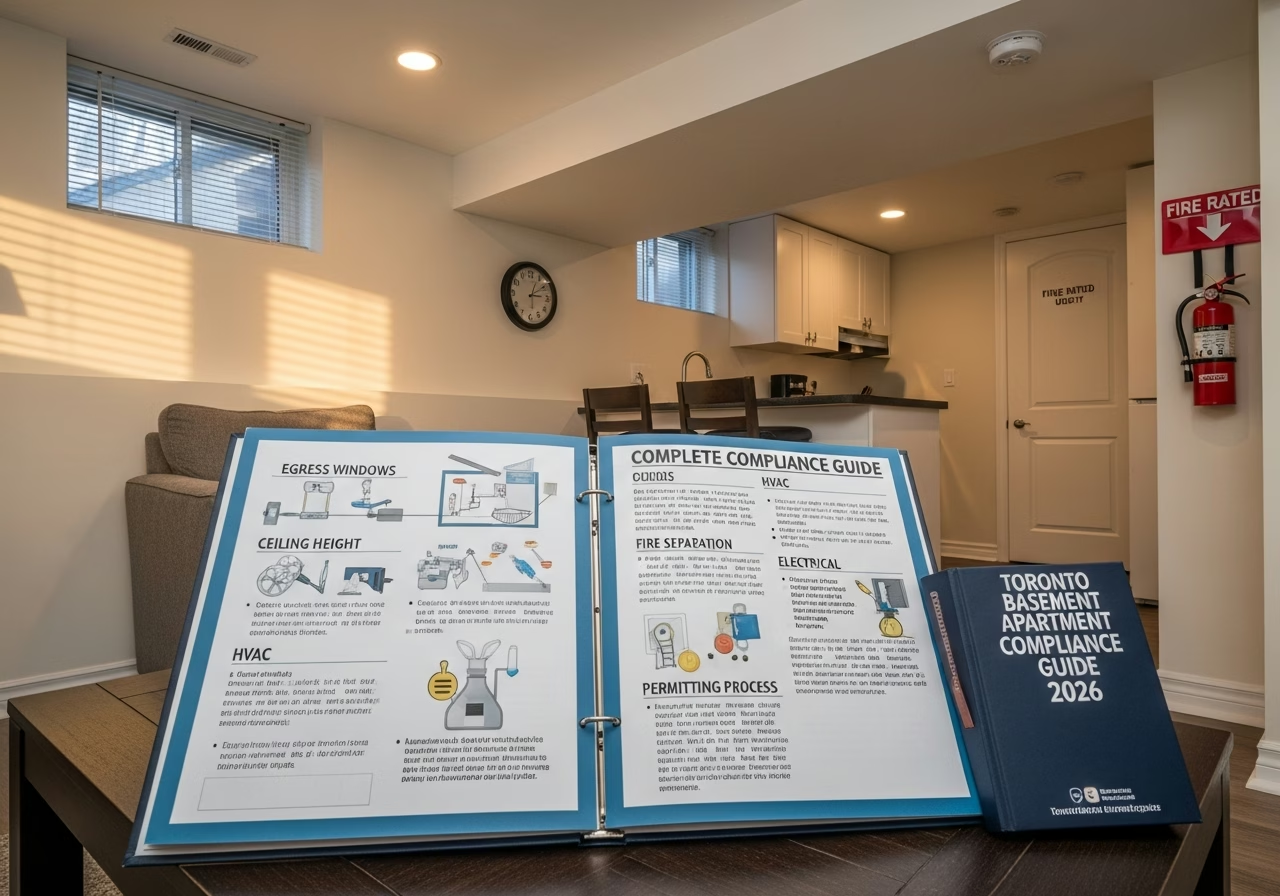
However, the path to compliance is paved with strict rules and regulations. The key takeaways are:
- Verify Eligibility: Start with zoning and a realistic assessment of your basement's physical constraints, especially ceiling height.
- Safety First: Egress windows and fire separation are non-negotiable safety requirements that protect both you and your tenants.
- Permit Everything: A building permit is your proof of legality and your assurance that the work was done to code.
- Hire Professionals: This is not a DIY job. You need a team that includes a designer, licensed trades, and an experienced general contractor who understands the specific challenges of Toronto basement apartment legal requirements.
At RenoHouse, we specialize in legal basement apartment conversions across the GTA . We understand the code, we know the permit process, and we believe in transparent, honest communication.
Ready to explore the potential of your basement? Send us a few photos of your space on WhatsApp, and we can provide a detailed budget estimate within an hour. Let's build it right.