 RenoHouse
Legalize Your Existing Basement Apartment in Toronto
Professional basement apartment permit prep services in Toronto and the Greater Toronto Area. Licensed, insured, and trusted by homeowners across the GTA.
Projects Completed
Years Experience
Client Satisfaction
Google Rating
How It Works
A simple, stress-free process from start to finish.
Send Your Request
Call or WhatsApp us 24/7. Send photos, video, comments about what needs to be done, and your location.
Remote Estimate
We review everything, discuss details, and provide a clear estimate — often within hours, no visit needed.
Repair Process
Our licensed team arrives on the agreed date and completes your basement apartment permit prep to the highest standards.
Handover & Warranty
Final walkthrough with you, full cleanup, and warranty documentation provided.
Send Your Request
Call or WhatsApp us 24/7. Send photos, video, and a description of the work + your location.
Remote Estimate
We review everything, clarify details, and give you a price — often within hours.
Repair Process
Licensed team arrives on schedule and completes your basement apartment permit prep professionally.
Handover & Warranty
Final walkthrough, full cleanup, and warranty documentation.
Basement Apartment Permit Prep in Toronto GTA
Basement apartment permit prep is the structured retrofit of an existing unpermitted or partially-finished basement into a fully legal, code-compliant Toronto basement apartment ready for Building Permit issuance and Final Occupancy. Following Toronto's adoption of as-of-right second-suite zoning under By-law 569-2013 and the provincial framework of Bill 23 (More Homes Built Faster Act), legalizing an existing basement apartment has become the single most common ARU project in the GTA. The scope covers OBC 9.5.3 ceiling-height verification, OBC 9.9 means of egress, OBC 9.10.4 fire separation, OBC 9.32 mechanical ventilation, OBC 9.36 envelope upgrades, ESA electrical review (typically a 200A subpanel), 306A plumbing review, interconnected smoke and carbon-monoxide alarms per Ontario Fire Code, and final inspection coordination with Toronto Municipal Licensing & Standards for second-suite registration. RenoHouse delivers permit-prep as a defined scope: pre-permit audit, code-deficiency report with prioritized remediation, full permit drawings, construction supervision, inspections, and the M&LS registration filing. Typical 2026 GTA budget is $35,000 to $115,000 with a 4 to 8 month timeline.
# Basement Apartment Permit Prep in Toronto: The 2026 Compliance Deep-Dive
Most Toronto basement apartments built before 2018 were never permitted. Many were finished by previous owners or amateur contractors without ESA inspection, without 306A plumber sign-off, without OBC 9.10.4 fire-rated demising assemblies, and without a Final Occupancy permit. They are rented today, generate income today, but live in a legal grey zone where insurance can be voided in a claim, where Municipal Licensing & Standards can issue an order to comply, and where any sale or refinancing requires disclosure that the suite is not legal.
Basement apartment permit prep is the structured remediation of these suites into fully legal, Building Permit-compliant units, registered as second suites with Toronto Municipal Licensing & Standards. With Bill 23 (More Homes Built Faster Act) having locked in as-of-right second-unit zoning across Ontario, and Toronto's continuing emphasis on legalizing existing housing stock, permit-prep has become the single most common ADU project RenoHouse delivers. It is also the highest-leverage spend on the property: a $65,000 retrofit can move a $1,950/month grey-market suite into a $2,400/month legal suite, while protecting the entire property's insurance and resale value.
Why Most Existing Basement Apartments Are Not Legal
The typical pre-2018 Toronto basement apartment fails 4 to 7 separate code requirements:
- Ceiling height under OBC 9.5.3 minimum (1.95 m under beams, 2.1 m in primary rooms). Many measure 1.7 to 1.85 m and need underpinning.
- Egress windows in bedrooms below OBC 9.9.10 minimum (0.35 m² openable, 380 mm clear opening dimension, sill not more than 1.0 m above floor). Most existing basement windows fail all three criteria.
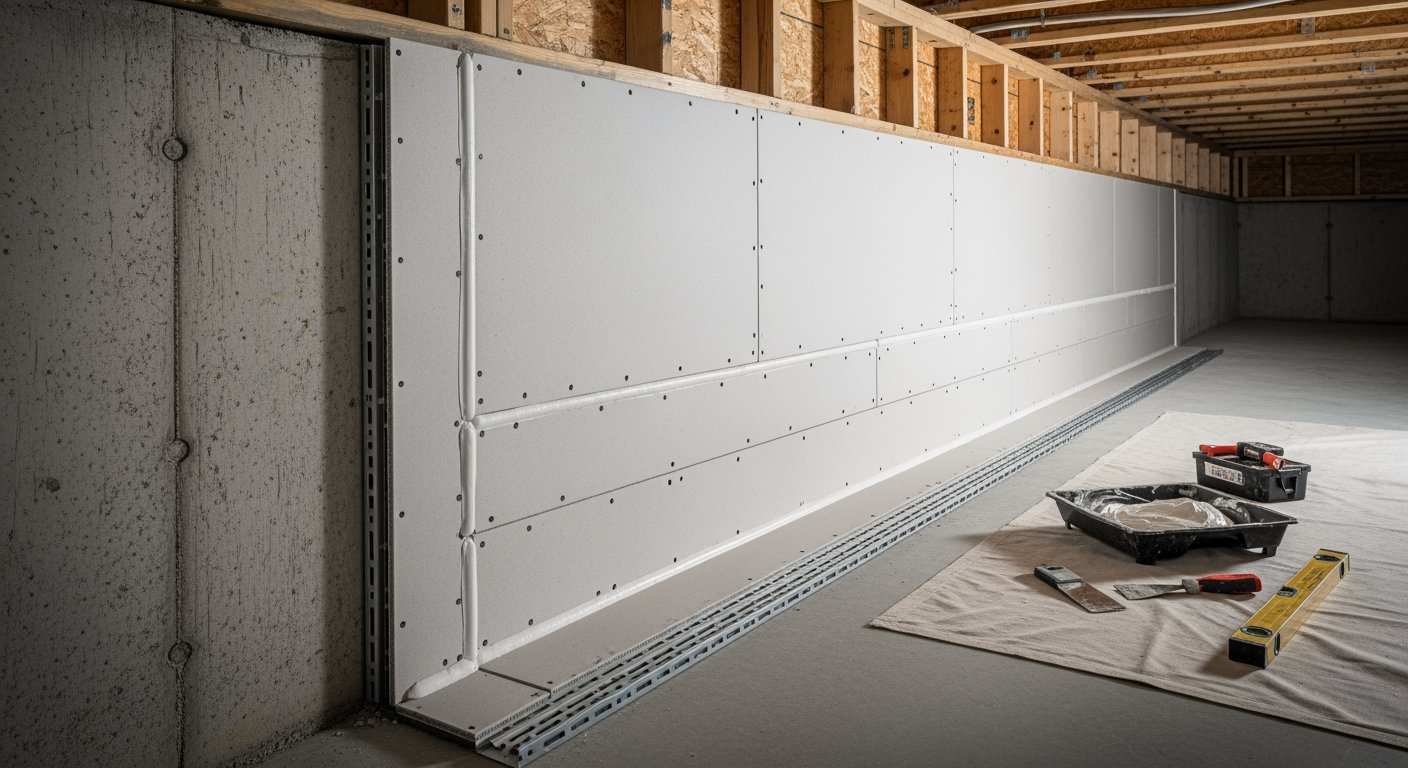
- Fire separation between suite and main house below OBC 9.10.4 45-minute rating. Most basements have unfaced drywall ceilings with no Type X, no acoustic batt, no resilient channel.
- Means of egress non-compliant. Single egress (front door of house) is permissible if it discharges directly outside without passing through another dwelling unit — but most basement suites enter through a shared staircase to the main floor, which is not a compliant arrangement.
- Electrical not ESA-inspected, no separate sub-panel, knob-and-tube or aluminum wiring present.
- Plumbing stack additions not permitted, drain venting non-compliant, undersized supply lines.
- Smoke alarms not interconnected between suite and main house per Ontario Fire Code.
- CO alarm missing where required (suite has fuel-burning appliance or attached garage).
- Mechanical ventilation inadequate — no HRV, no kitchen exhaust to exterior, bathroom exhaust ductworked to attic.
- No second-suite registration with Municipal Licensing & Standards.
Permit prep is the structured process of identifying which of these apply to a specific suite, prioritizing remediation by cost and risk, executing the work under a single Building Permit, and registering the legal suite with M&LS.
The 2026 Toronto Regulatory Landscape
Bill 23 and By-law 569-2013
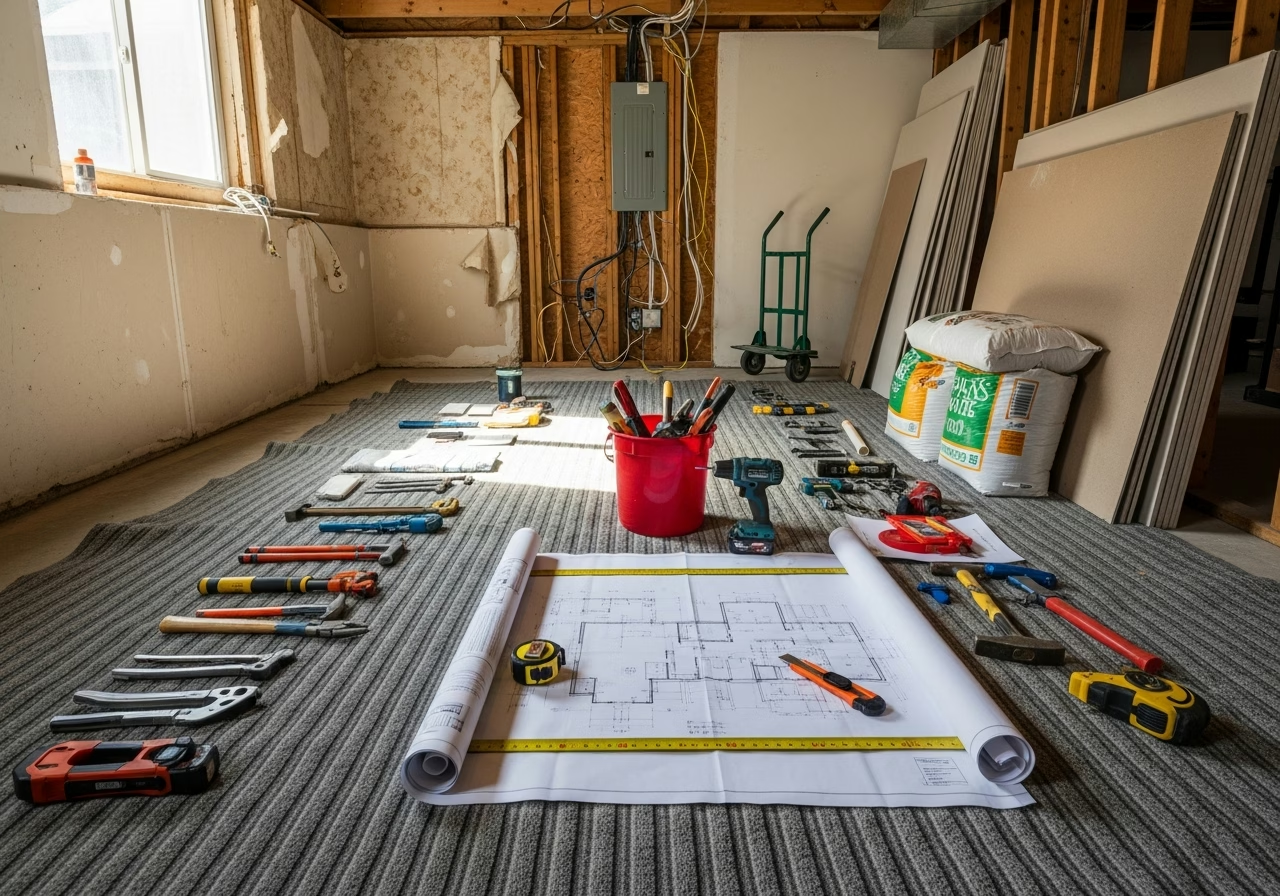
Bill 23 (More Homes Built Faster Act, 2022) mandated that all Ontario municipalities permit as-of-right two-unit (and now three-unit) residential per lot. Toronto already permitted second suites before Bill 23, but Bill 23 prevents future Council backsliding and reduces development charges. The operative Toronto zoning rule is By-law 569-2013, Section 150.10, permitting a second dwelling unit (basement apartment) within the principal dwelling as-of-right in all R-zones.
Ontario Building Code Reference Sections
The primary OBC sections for basement apartment compliance:
- OBC 9.5.3 — Room Heights. Minimum 1.95 m under beams, 2.1 m in primary rooms (living, dining, kitchen, bedroom).
- OBC 9.9 — Means of Egress. Every suite needs an exit; every bedroom needs an egress window or door.
- OBC 9.9.10 — Egress Windows. 0.35 m² openable area, 380 mm minimum clear opening, sill not more than 1.0 m above floor.
- OBC 9.10.4 — Fire Separation. 45-minute fire-resistance rating between dwelling units (45-min for typical detached; 1-hour in specific configurations).
- OBC 9.10.14.4 — Wall openings near lot lines. May apply if the suite's egress door or window is close to a lot line.
- OBC 9.10.17 — Flame-Spread Rating. Wall and ceiling finishes in shared corridors must meet ULC S102 flame-spread 150 or less.
- OBC 9.11 — Sound Transmission. STC 50 minimum between dwelling units; 9.11 applies to floor-ceiling assemblies between stacked units.
- OBC 9.32 — Ventilation. Continuous principal ventilation (HRV preferred), point-source exhaust at kitchen and bathroom.
- OBC 9.36 — Energy Efficiency. Prescriptive R-values or performance-path compliance for new or modified envelope.
Ontario Fire Code (O.Reg 213/07)
Mandatory regardless of whether a Building Permit is sought. The Fire Code mandates:
- Smoke alarms in every sleeping room, outside each sleeping area, on every storey, interconnected between suite and main house.
- CO alarm outside each sleeping area in units with fuel-burning appliances or attached garages.
- Fire-rated doors and assemblies maintained per OBC 9.10.4 ratings.
- Self-closing doors at unit entries.
Municipal Licensing & Standards bylaw enforcement officers can issue orders under the Fire Code without a Building Permit application — non-permitted basement apartments have been ordered to comply with fire code even where the owner had no intent to legalize.
Second-Suite Registration
Toronto requires registration of every legal second suite with Municipal Licensing & Standards under By-law 197-2004 (and subsequent updates). Registration generates a unique unit number, allows separate utility billing where elected, and is the document insurers and lenders ask for. Registration follows the Final Occupancy permit and costs approximately $250.
Site Plan Control and COA
Basement apartment permit-prep within the existing building envelope is as-of-right and does not require Committee of Adjustment. It does not trigger Site Plan Control. The only zoning rule that can fail is lot-coverage if a window well is being added in a yard already at coverage maximum — rare.
The Permit-Prep Process — Phase by Phase
Phase 1: Pre-Permit Audit (1 to 2 weeks)
RenoHouse's permit-prep audit:
- Measure ceiling heights at 8 points throughout the suite.
- Measure egress window dimensions and sill heights in every bedroom.
- Inspect existing fire separation: drywall thickness, joint detail, acoustic content.
- Inventory electrical: panel size, wire type, GFCI/AFCI coverage.
- Inspect plumbing: stack venting, fixture connections, drainage paths.
- Smoke/CO alarm count and interconnection state.
- Mechanical: HRV presence, kitchen and bathroom exhaust paths.
- Egress: count, condition, and code compliance of exit paths.
- Suite-to-main-house door type and self-closure.
Deliverable: a code-deficiency report ranking failures by remediation cost and risk priority. Cost of audit: $850 to $1,650.
Phase 2: Remediation Design + Permit Drawings (3 to 5 weeks)
Covers items requiring permit:
- Floor plans showing new partition walls.
- Fire-separation assembly details (ULC W301 or equivalent).
- Electrical riser diagram, sub-panel sizing, ESA Section 8 plan.
- Plumbing isometric, stack venting, fixture schedule.
- Mechanical layout showing HRV, kitchen/bathroom exhaust, supply registers.
- OBC matrices for 9.5.3, 9.9, 9.10.4, 9.32, 9.36.
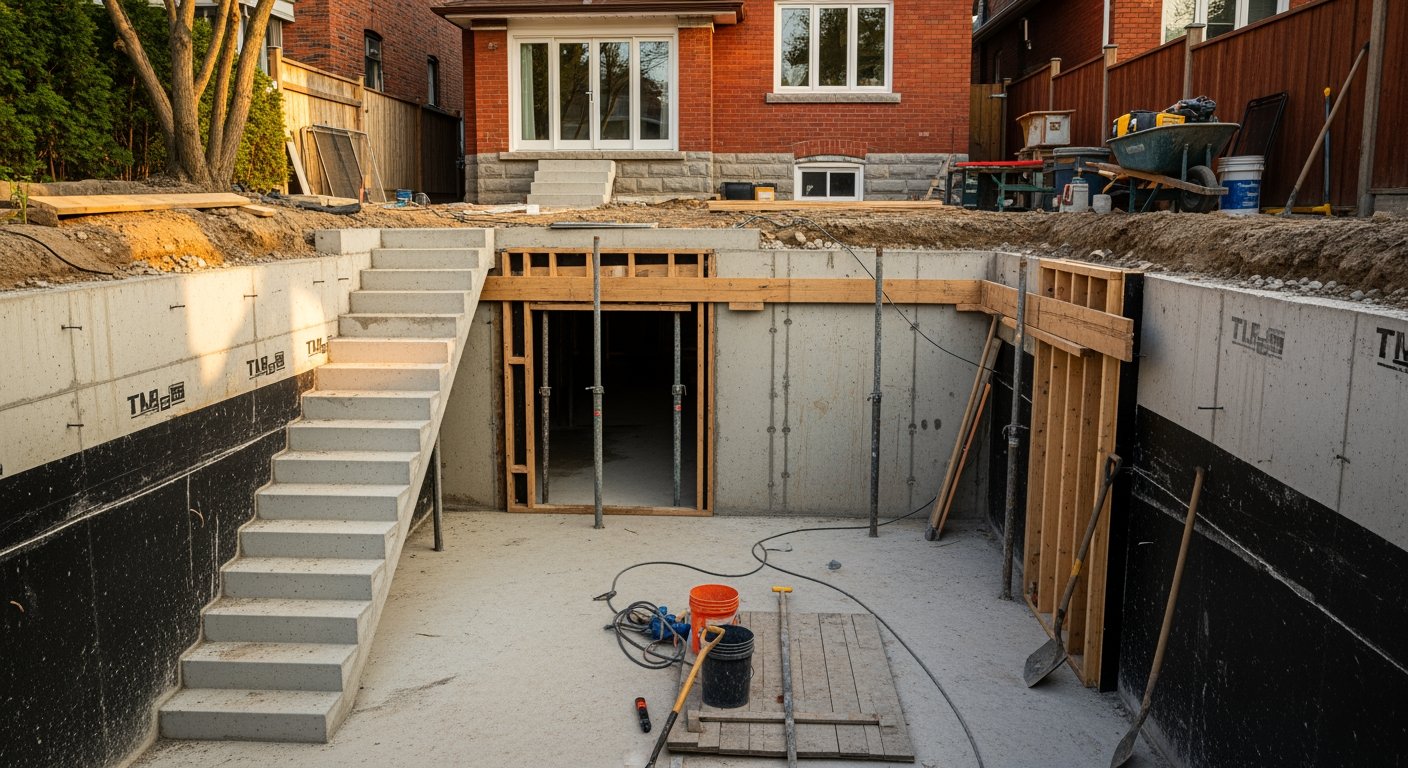
- Egress window well details if new wells are being added.
Phase 3: Toronto Building Permit Review (4 to 8 weeks)
As-of-right second-suite permits are reviewed in the Toronto Building Division's residential queue. Typical turnaround 4 to 6 weeks for a clean submission, 6 to 8 weeks if one round of plans-examiner comments.
Phase 4: Construction (8 to 16 weeks)
Standard order of operations:
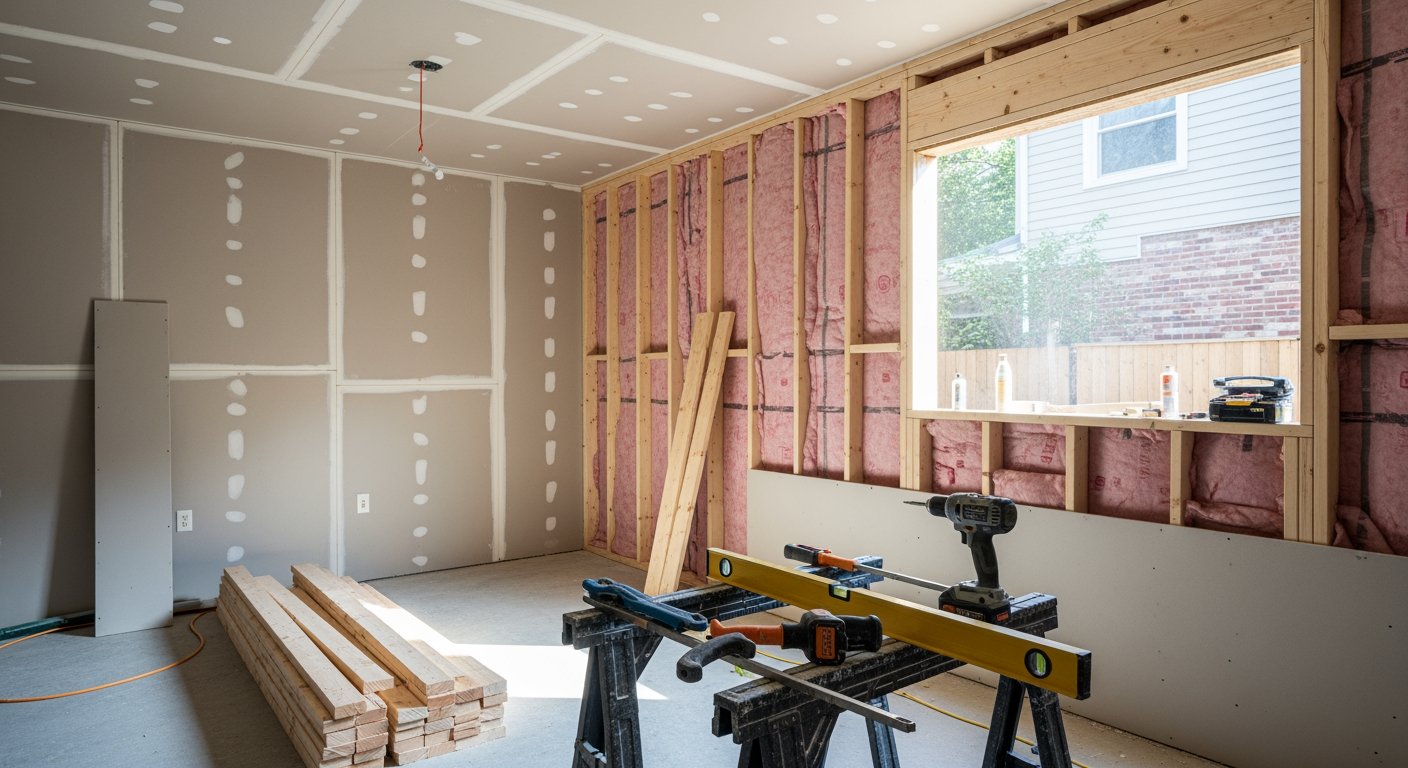
- Selective demo of non-compliant finishes.
- Egress window installation (cut concrete, install window well, frame and waterproof).
- Electrical rough-in (sub-panel, branch circuits, ESA inspection).
- Plumbing rough-in (stack additions, vent compliance, 306A inspection).
- Mechanical rough-in (HRV, ducting, exhausts).
- Fire separation framing and drywall (Type X both sides on resilient channel where required).
- Acoustic insulation if STC retrofit required.
- Insulation and vapour barrier (OBC 9.36).
- Drywall finishing.
- Finishes (flooring, paint, kitchen, bathroom).
- Final smoke and CO alarm interconnection.
- Self-closing door installation between suite and main house common.
Phase 5: Inspections and Registration (2 to 3 weeks)
- ESA final inspection.
- 306A plumbing final.
- Toronto Building Division framing inspection (mid-project).
- Toronto Building Division final and occupancy.
- Municipal Licensing & Standards second-suite registration filing.
- Insurance broker notification with occupancy certificate.
2026 GTA Pricing Tiers
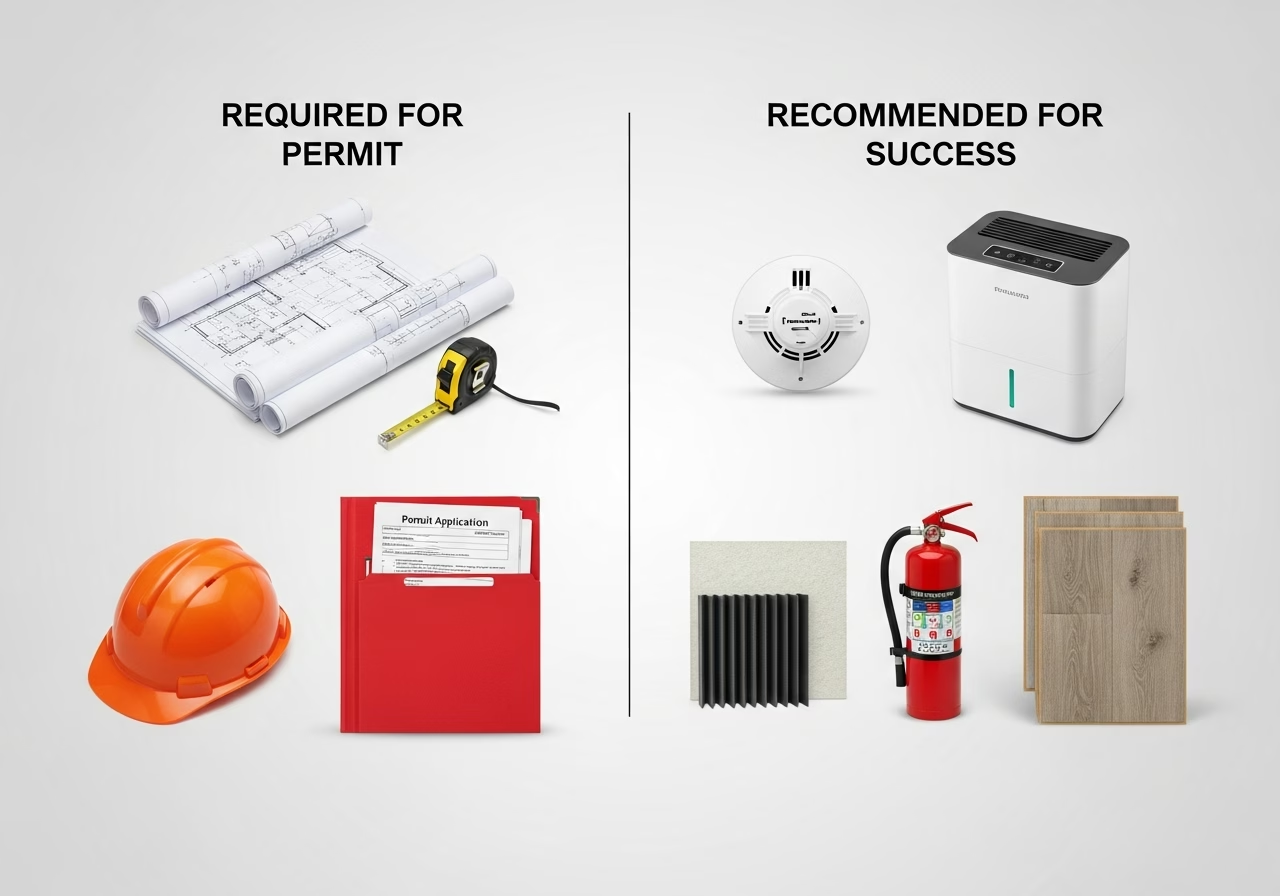
Permit prep pricing depends almost entirely on which deficiencies apply. RenoHouse uses three tiers.
Floor Tier — $35,000 to $55,000
Applies to a suite already mostly compliant, needing only:
- 1 to 2 egress window upgrades.
- Fire separation drywall upgrade (Type X over existing).
- Smoke/CO alarm interconnection.
- Self-closing door between suite and main house.
- HRV addition.
- ESA inspection and minor electrical correction.
- Building Permit and final inspections.
No ceiling-height work, no major plumbing alteration, no structural change.
Standard Tier — $55,000 to $85,000
Applies to a suite needing moderate remediation:
- All Floor-tier items.
- 2 to 4 new egress windows with window wells.
- New 200A sub-panel and re-wiring of suite.
- New plumbing stack additions, 306A involvement.
- New acoustic floor-ceiling assembly (resilient channel, Type X, acoustic batt).
- Kitchen and bathroom rough-in upgrades.
- New finishes (flooring, paint, partial kitchen cabinet refresh).
No ceiling-height correction (suite already meets OBC 9.5.3).
Premium Tier — $85,000 to $115,000
Applies to a suite needing extensive remediation including ceiling height (but not underpinning):
- All Standard-tier items.
- Lower-slab demo and re-pour to gain 75 to 150 mm of ceiling height (where underpinning is not feasible or not desired).
- Full new kitchen and full new bathroom.
- New windows throughout for OBC 9.36 envelope compliance.
- Architect-led design where layout is being significantly reconfigured.
- Premium finishes for higher rent positioning.
*If the suite needs underpinning to meet OBC 9.5.3, that is a separate scope. See our [Basement Underpinning](/services/home-renovation/basement-underpinning) page.*
Realistic Project Timeline
| Phase | Duration | Notes |
|---|---|---|
| Pre-permit audit + code-deficiency report | 1 to 2 weeks | $850 to $1,650 stand-alone deliverable |
| Remediation design + permit drawings | 3 to 5 weeks | Owner sign-off on scope |
| Toronto Building Permit review | 4 to 8 weeks | As-of-right second suite queue |
| Construction | 8 to 16 weeks | Depends on Floor/Standard/Premium tier |
| Inspections + M&LS registration | 2 to 3 weeks | ESA, plumbing, building, occupancy, registration |
| Total | 4 to 8 months | Excluding underpinning, which adds 4 to 6 months |
Common Permit-Rejection Gotchas (Permit Prep Specific)
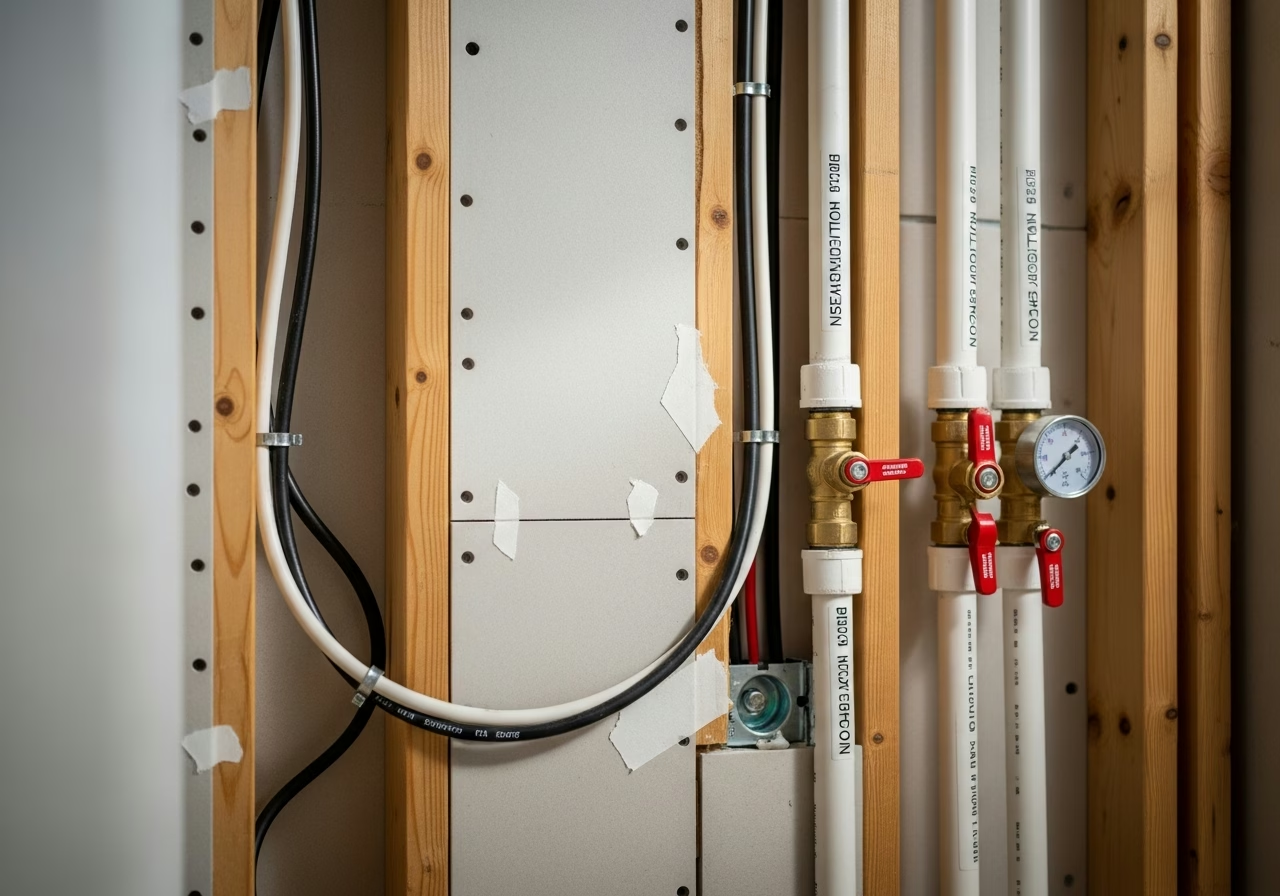
- Egress window opening below 380 mm clear even though area is 0.35 m². Both criteria must be met simultaneously. Solution: spec window with both openable area and clear opening dimension.
- Window well projection below 760 mm with sill more than 1.0 m above floor — escape path inadequate per OBC 9.9.10. Solution: properly-sized well, code-compliant ladder if depth requires.
- Fire separation drywall stops at attic floor, leaving a continuous attic shared between units. Solution: extend assembly to underside of roof deck OR install fire-rated stop at attic floor with appropriate detailing.
- CO alarm placed inside the furnace room rather than outside sleeping areas. Detector must be in the corridor outside sleeping rooms, not at the appliance. Solution: correct placement.
- Smoke alarm interconnect via wireless module that hasn't been listed under ULC S531. Use only listed devices. Solution: hardwired interconnect or ULC-listed wireless.
- Self-closing door on the suite-side of a shared corridor that is itself not fire-rated. Self-closer is correct but the corridor needs to be a public corridor per OBC 9.9.5. Solution: rate the corridor walls or change egress strategy.
- Kitchen exhaust ducted to attic. OBC 9.32 requires exhaust to exterior. Solution: re-duct to soffit or roof penetration.
- HRV intake within 1.0 m of an exhaust outlet per OBC 9.32. Solution: re-locate one.
Insurance Disclosure — The Hidden Liability
The single most important reason to permit-prep an existing basement apartment is insurance. Standard home insurance policies in Ontario contain a "material change in risk" clause. Renting an unpermitted basement apartment is a material change. Failing to disclose voids coverage at claim time. This is not theoretical — denied claims for fire damage and water damage in unpermitted basement apartments are common.
Once permit-prep is complete and Final Occupancy is granted, RenoHouse provides:
- The Final Occupancy permit certificate.
- The Municipal Licensing & Standards registration confirmation.
- A one-page summary letter for the owner's broker.
The broker will re-rate the property as owner-occupied two-unit residential — premium increase typically $400 to $900/year. This is the single best ROI insurance spend in any GTA renovation.
Five-Submarket Considerations
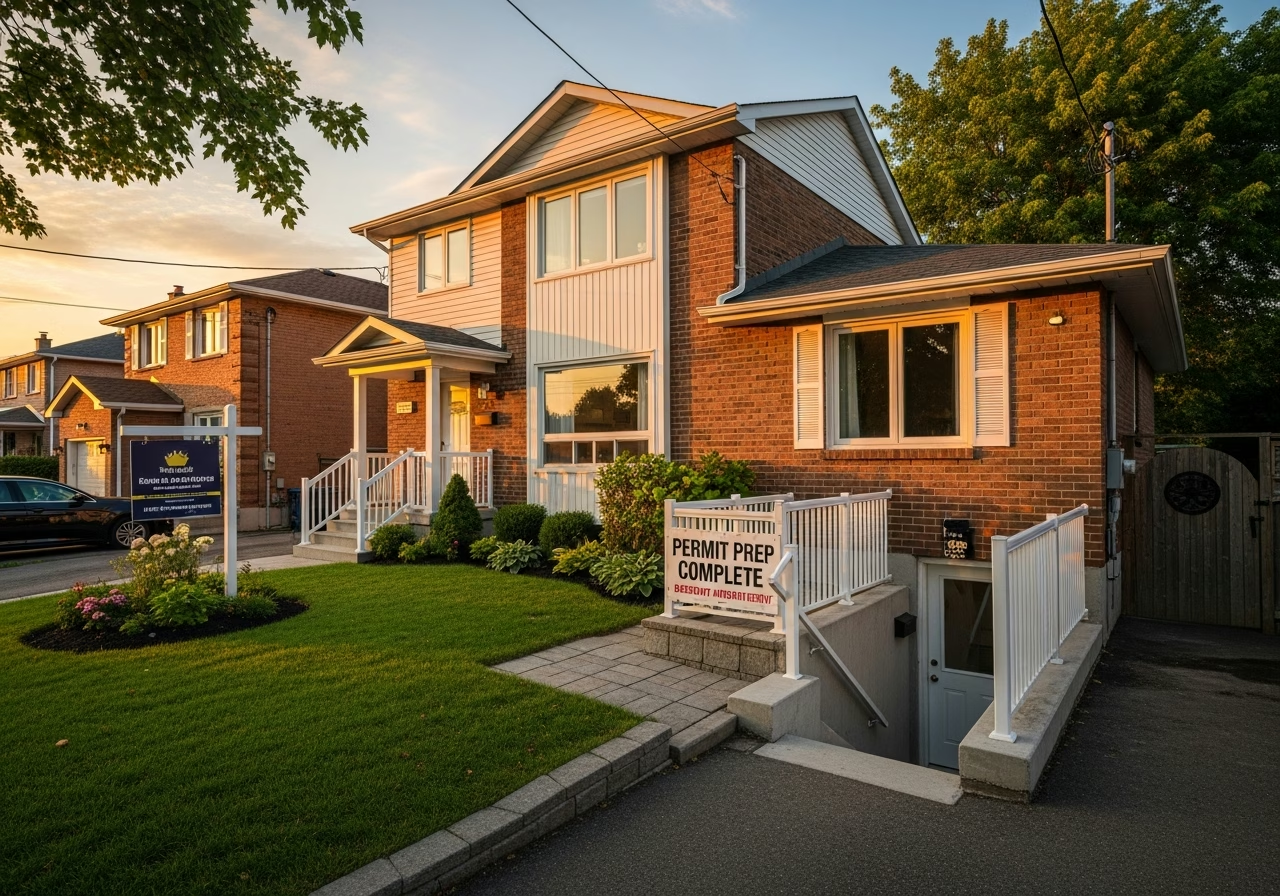
Toronto Old City
The vast majority of pre-1955 basement apartments. Most need at least Standard-tier remediation; many need underpinning before permit-prep is even possible. Rent uplift after legalization typically $300 to $500/month due to broader tenant pool (renters who want a legal lease).
North York / Scarborough / Etobicoke
Larger lots, newer housing stock — many existing basement apartments already meet OBC 9.5.3 ceiling height and only need Floor or Standard tier remediation. High volume of permit-prep projects here.
Inner Suburbs (East York, York)
1940s-50s housing stock. Frequent need for Premium tier or underpinning-first sequencing.
905 (Mississauga, Brampton, Vaughan, Markham)
Mississauga has a robust second-suite registration program. Brampton has been the GTA epicentre of unpermitted basement apartments and is now actively requiring legalization. Costs run 10 to 15% below Toronto Old City.
Heritage Districts
Permit-prep is entirely interior and rarely triggers Heritage Permit. The only exception is when egress window installation requires a new window well that visibly alters the streetscape (basement front-yard window) — Heritage may require specific cladding for the well.
ROI Math for the Owner
Using Standard Tier permit-prep at $70,000 on an existing already-rented suite:
| Submarket | Pre-prep rent | Legal rent | Marginal monthly | Years to payback | Insurance value (avoided claim risk) |
|---|---|---|---|---|---|
| Leslieville | $2,100 | $2,500 | $400 | 14.6 | Critical |
| Scarborough | $1,650 | $1,900 | $250 | 23.3 | Critical |
| Mississauga | $1,500 | $1,750 | $250 | 23.3 | Critical |
The direct rent uplift case is modest. The real value is two-fold:
- Avoided insurance denial risk — a single major water or fire claim on an unpermitted suite is typically $80,000 to $250,000 of denied coverage. Permit-prep is direct risk reduction.
- Property value uplift at sale — appraised value of a legal basement apartment is $85,000 to $185,000 higher than the same suite as an "unfinished basement" because lenders only credit legal income for mortgage qualification.
When valued correctly, permit-prep typically returns 3 to 5x its cost on first refinance or sale.
Compliance Checklist — Fully Legal Toronto Basement Apartment
- Building Permit issued with Final Occupancy.
- ESA electrical inspection certificate for the suite sub-panel.
- Plumbing rough-in and final inspection signed by 306A plumber.
- OBC 9.5.3 ceiling height verified at 1.95 m under beams, 2.1 m primary rooms.
- OBC 9.9 egress: code-compliant exit + every bedroom has compliant egress window.
- OBC 9.10.4 fire separation (45-minute) between suite and main house.
- OBC 9.32 mechanical ventilation: HRV or principal exhaust, kitchen + bathroom exhaust to exterior.
- OBC 9.36 energy compliance for new envelope.
- Interconnected smoke alarms (suite + main house) per Ontario Fire Code.
- CO alarm outside each sleeping area (where required).
- Self-closing 20-minute door between suite and main house common.
- Municipal Licensing & Standards second-suite registration on file.
- Insurance broker notified, policy re-rated as multi-unit residential.
- Suite has a unique unit number for civic address and Canada Post delivery.
Ready to evaluate your basement apartment for permit-prep? Send us a basement floor plan or sketch, recent photos of the suite, the year of construction, and approximate ceiling height. We will return a written feasibility note within 5 business days indicating which tier applies and the likely permit-prep budget.
Why Choose RenoHouse?
Same-Day Service Available
We respond quickly to basement apartment permit prep requests. Most projects start within 24-48 hours of your call.
Licensed Professionals
Every technician on our team is fully licensed, insured, and background-checked. We maintain strict quality standards on every job.
Upfront Pricing
Honest quotes for basement apartment permit prep with no surprises. Free estimates, flexible payment options.
Sound Familiar?
These are the most common problems our clients face.
Need professional help with this?
Not sure where to start?
Want quality results the first time?
Tired of putting it off?
Looking for a reliable contractor?
Want a free, no-obligation estimate?
Ready to get started?
Free estimate, no obligation. We respond within 1 hour.
What Our Clients Say
“RenoHouse replaced all our windows in just two days. The new windows are beautiful, energy-efficient, and the team left everything spotless. Highly recommend!”

Michael R.
Oakville
“New windows transformed our home. Quieter, warmer, and our energy bill dropped noticeably. Excellent installation crew.”

David K.
Vaughan
“Professional from start to finish. They replaced 8 windows in one day and cleaned up perfectly. Highly recommend RenoHouse!”

Sandra W.
Burlington
Our Basement Apartment Permit Prep Work
Professional basement apartment permit prep results from RenoHouse projects across the Toronto GTA.
Basement Apartment Permit Prep
Toronto GTA
Quality Workmanship
Licensed & Insured
Like what you see? Let's talk about your project.
🧮 Basement Apartment Permit Prep Services — Cost Estimator
GTA / Ontario — 2026 market pricing
📊 Where the cost goes (typical breakdown)
📋 What affects your price:
💡 Estimates use 2026 GTA/Ontario market data. Actual cost depends on site conditions, material selections, and project scope. Book a free in-home quote for a precise number.
Frequently Asked Questions About Basement Apartment Permit Prep
It means obtaining a Toronto Building Permit and Final Occupancy certificate for the suite, registering it as a second suite with Municipal Licensing & Standards under By-law 197-2004, and bringing it into compliance with Ontario Building Code Part 9 (sections 9.5.3, 9.9, 9.10.4, 9.32, 9.36) and the Ontario Fire Code. The suite then has a unique civic unit number, generates legal rental income recognized by lenders, and is fully insurable.
Usually no, at least for the construction phase. Most permit-prep involves opening fire-rated assemblies, installing egress windows (concrete cuts), and rewiring — work that requires the tenant to vacate. Provide proper N12 or N13 notice under the Residential Tenancies Act with appropriate compensation. Some tenants accept a 60 to 90-day temporary relocation; structure this in writing. Floor-tier projects with only smoke alarm and door work can sometimes be done with tenant in place.
Yes. When you file for permit-prep, the plans-examiner reviews all existing conditions disclosed in the drawings. A framing/rough-in inspection during construction reveals what is behind walls. Final inspection looks at finished assemblies, alarms, and life-safety items. Pre-existing non-compliant work that was concealed gets caught at framing inspection. The honest approach is to disclose all existing conditions on the permit drawings and address them in scope.
Floor-tier permit prep ($35K-$55K), which addresses life-safety items without major structural or finish changes. This applies only when the suite already has adequate ceiling height (OBC 9.5.3), reasonable existing electrical, and intact plumbing. The audit ($850-$1,650 stand-alone) tells you whether your suite qualifies for Floor tier.
Not without ceiling-height work. OBC 9.5.3 requires 1.95 m minimum under beams and 2.1 m in primary rooms. The remediation paths are: (1) underpinning, which lowers the foundation and produces 2.4 to 2.7 m ceilings (best for premium rent); (2) lower-slab re-pour without full underpinning, which gains 75 to 150 mm of height (works when starting ceiling is 1.85 to 1.90 m); or (3) accept that the suite cannot be made legal and use the basement for owner-storage instead. Many Toronto pre-1955 homes fall into case (1).
No. Basement apartments within the existing building envelope are as-of-right under Toronto By-law 569-2013, regardless of when the original house was built. The only COA trigger would be if you are simultaneously adding a window well in a yard that is already at lot-coverage maximum — very rare.
Three risks: (1) insurance claim denial — a single fire or water claim can be denied based on undisclosed material change in risk, potentially $80K-$250K of out-of-pocket loss. (2) Municipal Licensing & Standards order to comply — if neighbours complain or M&LS audits, you can be ordered to bring the suite up to code or vacate it, with fines. (3) Property valuation at sale — appraisers and lenders only credit legal rental income for mortgage qualification, reducing buyer pool and sale price by $85K-$185K. Permit prep is direct risk mitigation against all three.
After Final Occupancy, you file a registration package with M&LS under By-law 197-2004: the occupancy permit, a site plan, suite floor plan, electrical and plumbing certificates, and a $250 fee. M&LS issues a registration confirming the suite is a legal second dwelling unit. This document is what your insurance broker and any future lender will ask for. We file the registration for you as the final step of permit-prep.


You Might Also Need
Customers who looked at basement apartment permit prep also asked us about these complementary services.



We Serve All GTA
Professional basement apartment permit prep services available across the Greater Toronto Area.
“RenoHouse delivered our 2-bedroom garden suite on a tight Roncesvalles lot in 11 months from contract to occupancy. Final cost within 4% of quote — rare in this market.”
— Daniel & Priya R., Roncesvalles, Toronto
Get a Free Basement Apartment Permit Prep Estimate
Contact us today for a free, no-obligation quote for your basement apartment permit prep project in Toronto GTA. We'll get back to you within 1 hour.