 RenoHouse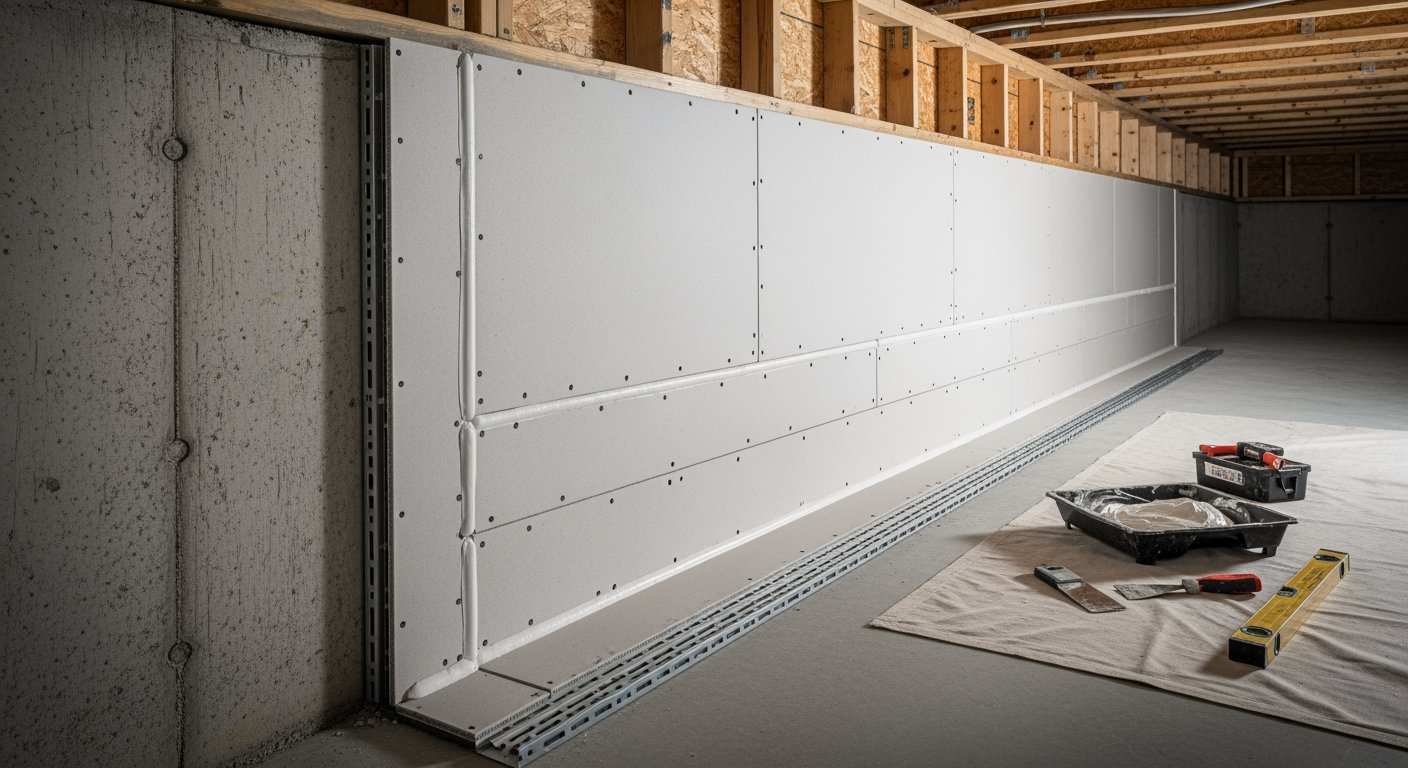
ULC-Listed Fire Separation for Basement Apartments
Professional fire separation for basement apartment services in Toronto and the Greater Toronto Area. Licensed, insured, and trusted by homeowners across the GTA.
Projects Completed
Years Experience
Client Satisfaction
Google Rating
How It Works
A simple, stress-free process from start to finish.
Send Your Request
Call or WhatsApp us 24/7. Send photos, video, comments about what needs to be done, and your location.
Remote Estimate
We review everything, discuss details, and provide a clear estimate — often within hours, no visit needed.
Repair Process
Our licensed team arrives on the agreed date and completes your fire separation for basement apartment to the highest standards.
Handover & Warranty
Final walkthrough with you, full cleanup, and warranty documentation provided.
Send Your Request
Call or WhatsApp us 24/7. Send photos, video, and a description of the work + your location.
Remote Estimate
We review everything, clarify details, and give you a price — often within hours.
Repair Process
Licensed team arrives on schedule and completes your fire separation for basement apartment professionally.
Handover & Warranty
Final walkthrough, full cleanup, and warranty documentation.
Fire Separation for Basement Apartment in Toronto GTA
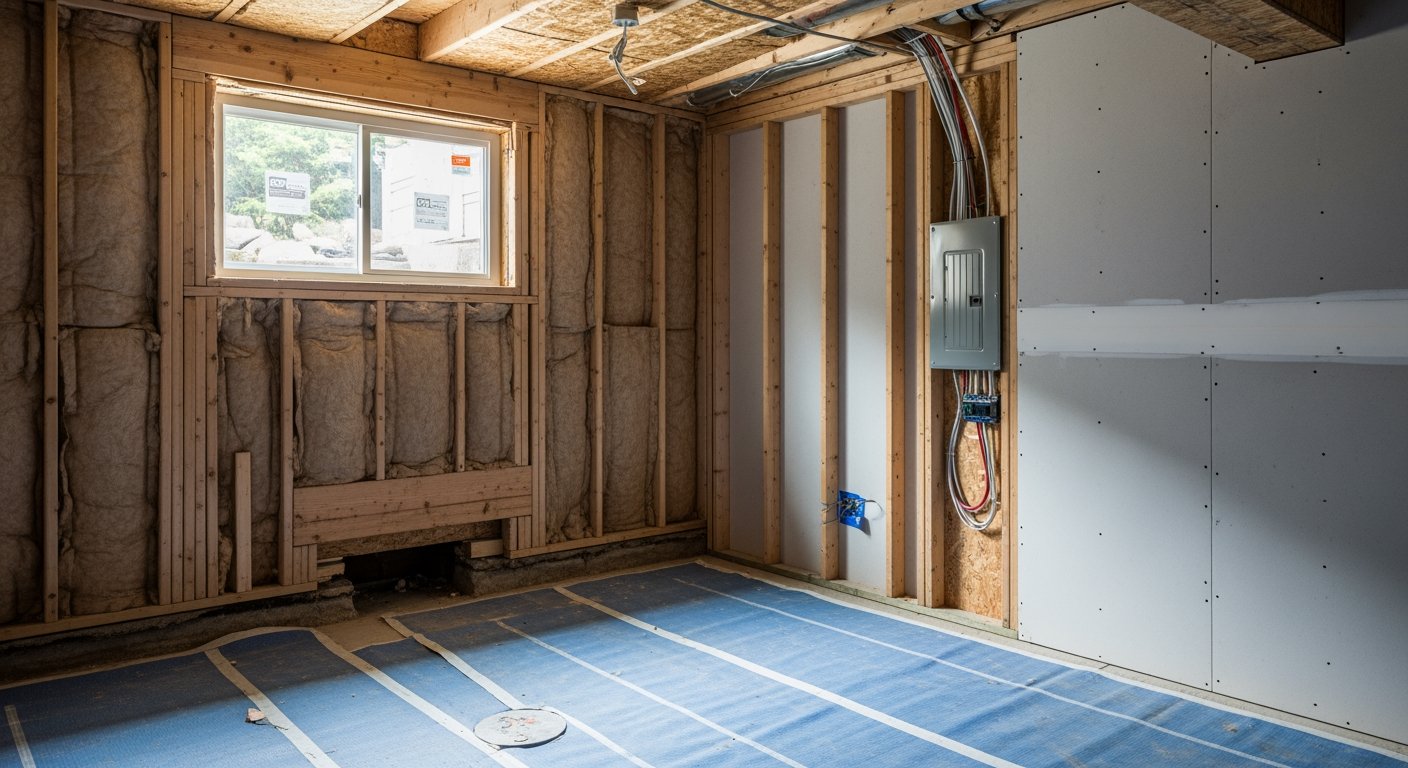
Fire separation between a basement apartment and the main dwelling is the single most heavily-inspected, most-litigated, and most-misunderstood compliance item in Toronto ARU work. Under Ontario Building Code 9.10.4, every dwelling unit must be separated from adjacent dwelling units by a fire separation with a minimum 45-minute fire-resistance rating, achieved with listed ULC S101-tested assemblies (typically W301 or equivalent) of 5/8-inch Type X drywall on resilient channel with continuous acoustic insulation. The Ontario Fire Code (O.Reg 213/07) cross-references these ratings as a continuing duty — non-compliance is grounds for an immediate order to comply by Municipal Licensing & Standards or Toronto Fire Services. RenoHouse delivers fire-separation upgrades as a discrete scope: ULC-listed wall and floor-ceiling assemblies, ULC S115-tested through-penetration firestop systems at every MEP penetration, ULC S102-rated finishes in shared corridors, self-closing 20-minute doors at unit entries, and interconnected smoke alarms throughout. 2026 GTA budgets run $14,500 to $42,000 with 3 to 6 week timelines. This work is mandatory for any legal basement apartment and is the foundation of every insurance underwriting decision on a multi-unit property.
# Fire Separation for Basement Apartments in Toronto: The 2026 Code Deep-Dive
Fire separation is the structural, code-driven, and insurance-mandatory barrier between the basement apartment and the rest of the dwelling. It is not optional, it is not negotiable, and it is the single life-safety system most commonly missing or compromised in unpermitted Toronto basement apartments. Under Ontario Building Code Section 9.10.4 and the parallel ongoing obligations of the Ontario Fire Code (O.Reg 213/07), every dwelling unit in a multi-unit residential building must be separated from adjacent dwelling units by a fire separation with a minimum 45-minute fire-resistance rating.
For a typical Toronto detached or semi-detached home being converted to a duplex (main floor + basement apartment), this means the entire floor-ceiling assembly between the two units, plus any walls enclosing a shared egress corridor or mechanical room, must achieve the 45-minute rating using an assembly tested under ULC S101 (the Canadian standard for fire-resistance testing) and listed in the Canadian Construction Materials Centre (CCMC) catalogue or by the assembly manufacturer.
This page is RenoHouse's complete reference on fire separation for basement apartments: what the code requires, which assemblies satisfy it, how penetrations and openings are detailed, and how the work is delivered, inspected, and documented.
What Fire Separation Actually Does
A 45-minute fire separation is designed to contain a fire to its room of origin for at least 45 minutes — long enough for occupants of the adjacent dwelling unit to:
- Be alerted by interconnected smoke alarms.
- Discover the fire situation.
- Egress the building via a code-compliant exit.
- Allow Toronto Fire Services to arrive (average GTA response 4 to 8 minutes) and begin attack.
Fire separation does NOT prevent fire spread indefinitely. It buys time. The 45-minute rating in OBC 9.10.4 is calibrated against typical Toronto fire-service response times and the alarm-detection-to-evacuation timeline.
The 2026 Toronto Regulatory Framework
Ontario Building Code 9.10.4 — Fire Separations
OBC 9.10.4.1 requires a fire separation between each dwelling unit and:
- Other dwelling units in the same building.
- Public corridors serving more than one unit.
- Common service rooms (mechanical, electrical, storage).
- Stairs serving more than one unit.
For a typical duplex (basement apartment under main-floor owner unit):
- Floor-ceiling assembly between units: 45-minute rating.
- Demising walls at any point where the basement unit shares a wall with the main floor unit: 45-minute rating.
- Stairway serving both units: 45-minute rating with enclosed corridor, OR fire-rated door at top and bottom of stair if treated as a public corridor per 9.9.5.
- Mechanical/electrical room shared by units: 1-hour rating if it contains a fuel-burning appliance serving both units.
- Suite-to-corridor door: self-closing, 20-minute rating per OBC 9.10.13.
OBC 9.10.4.1 — Continuity of Fire Separations
The most-missed code requirement: a fire separation must be continuous from concrete slab to underside of roof deck (or to the next horizontal fire separation). Stopping the demising wall at the attic floor leaves a continuous shared attic between units — a common path for fire spread and a frequent permit rejection.
OBC 9.10.14 — Penetrations of Fire Separations
Every MEP penetration through a fire separation (electrical wires, plumbing pipes, ducts, conduit) must be sealed with a ULC S115-tested through-penetration firestop system, with system number documented on the permit drawings or in a firestop inventory.
OBC 9.10.13 — Doors in Fire Separations
Doors in fire separations need a 20-minute fire-protection rating (lower than the wall's 45-minute rating, due to differing test methods) and a self-closing device (door closer). The door must also have a tight-fitting threshold and smoke-seal weatherstripping.
OBC 9.10.17 — Flame-Spread Rating
Interior finishes in public corridors (the shared stair or corridor between units) must have a flame-spread rating of 150 or less on walls and ceilings per ULC S102. Painted drywall typically meets this rating; combustible wall coverings (wood paneling, vinyl wallpaper in some cases) may not.
OBC 9.11 — Sound Transmission
While not strictly a fire-separation rule, the demising floor-ceiling assembly must also meet STC 50 minimum per OBC 9.11. The acoustic and fire-resistance requirements are met simultaneously by the same assembly (resilient channel + Type X drywall + acoustic batt + dense subfloor underlay). RenoHouse's assemblies target STC 55 in basement apartment work — meaningfully quieter than code minimum and significantly improving tenant satisfaction.
Ontario Fire Code (O.Reg 213/07)
The Ontario Fire Code is a continuing-obligation cousin to the Building Code. Fire Code Section 9 covers residential life-safety. Key rules for basement apartments:
- Smoke alarms in every sleeping room, outside each sleeping area, on every storey, interconnected between suite and main house.
- CO alarms outside each sleeping area in dwellings with fuel-burning appliances or attached garages.
- Fire separations maintained at the rating shown in the Building Permit; alterations that compromise rating must be re-permitted.
- Self-closing doors in fire separations functioning at all times.
- Fire extinguisher in public corridor of properties with 3+ units (not required for basement apartment in detached duplex).
Municipal Licensing & Standards bylaw enforcement officers and Toronto Fire Services inspectors can issue orders under the Fire Code even without a Building Permit application.
ULC Ratings Demystified
The alphabet soup of ULC standards trips up most homeowners. Here is the practical translation:
- ULC S101 is the test method for fire-resistance of assemblies (walls, floors, columns). When you see a wall assembly labeled "45-minute fire rating per ULC S101," it means a sample of that exact assembly was built in a lab, exposed to a calibrated fire on one side, and resisted collapse and flame penetration for 45 minutes. Common assemblies: ULC W301 (45-minute wall, 5/8" Type X each side on resilient channel), ULC F501 family (45-minute floor-ceiling, wood joists + Type X ceiling).
- ULC S102 is the test method for surface flame-spread. It tests how quickly fire spreads ACROSS a finish material's surface. The Canadian Construction Materials Centre rates materials; painted drywall scores well, glossy enamel or some vinyl wallcoverings score poorly.
- ULC S115 is the test method for through-penetration firestop systems. A firestop is the sealant + backer rod + intumescent material at each pipe, conduit, or duct passing through a fire-rated assembly. Each combination of pipe type, hole size, and sealant is a separate listed "system" with a unique number (e.g., "3M FB-3000 sealant + mineral wool + 75 mm copper pipe through 5/8" Type X assembly = listed system #FB-WL-0148").
- ULC S531 lists smoke alarms acceptable for residential use in Canada. Hardwired interconnect or listed wireless modules.
Standard Fire Separation Assemblies in RenoHouse Basement Apartment Work
Floor-Ceiling (Between Units) — 45-Minute, STC 55 Target
From basement looking up:
- Existing main-floor subfloor (typically 3/4" plywood + finish).
- Existing 2x10 floor joists.
- R-19 mineral wool acoustic batt fully filling joist cavity.
- Resilient channel (RC-1 or RC-DLX) at 16" o.c. on underside of joists.
- Two layers of 5/8" Type X drywall, joints staggered, taped and mudded.
Result: 45-minute rating per ULC F501 family, STC 55+ when properly detailed at perimeter (decoupled flanking paths).
Demising Wall (Suite to Main House, Where Walls Touch) — 45-Minute
- 2x4 stud wall (or two 2x4 walls with 25 mm gap for premium acoustic).
- R-13 mineral wool batt in stud cavity.
- 5/8" Type X drywall both sides.
- (Premium: resilient channel on suite side, third layer of 5/8" Type X.)
Result: 45-minute rating per ULC W301, STC 45-55 depending on configuration.
Suite Entry Door — 20-Minute Self-Closing
- Pre-hung solid-core door, 1-3/4" thick, labeled 20-minute fire rating.
- Heavy-duty hinges, surface or concealed self-closing device.
- Tight-fitting frame, intumescent smoke seal in stops.
- Door knob and deadbolt with thumb-turn from suite side (no key required for egress).
Stairway Enclosure (If Treated as Public Corridor)
- 45-minute walls on both sides of stair from basement to main floor.
- 20-minute self-closing doors at top and bottom of stair.
- No combustible finishes in stair (painted drywall walls and ceiling, suitable flooring).
Penetrations and Firestopping
Every MEP penetration through a fire separation needs a ULC S115-listed firestop system. Common penetrations and standard solutions:
- Electrical wire bundles through Type X drywall: mineral wool backer + 3M FireBarrier 1000NS sealant. Listed system varies by wire count and conduit type.
- Copper or PEX water lines through floor-ceiling: mineral wool annular pack + intumescent sealant. Hilti CP 606 or 3M IC-15WB common products.
- Cast iron or ABS drain stack through floor-ceiling: intumescent collar (Hilti CP 642 or 3M PPD ProductivE) clamped around pipe, plus annular sealant.
- HVAC supply or return duct penetration: UL- or ULC-listed fire damper installed in the duct at the penetration plane.
- Plumbing trap arm penetration through demising wall: mineral wool + sealant per listed system.
RenoHouse's permit drawings include a firestop schedule listing each penetration type, the listed system number, and the manufacturer product. Inspectors check installed firestops against this schedule.
When 1-Hour Rating Is Required (Not Just 45-Minute)
Most basement apartments in detached or semi-detached homes meet life-safety with 45-minute separations. 1-hour ratings are required when:
- The building has 5 or more dwelling units (rare in single-lot multiplex projects).
- A fuel-fired heating appliance serves more than one unit and is in a shared mechanical room.
- A common attic or unfinished basement portion serves both units.
- The municipality (some 905 cities) chooses to apply enhanced ratings.
For 1-hour rating, the assembly typically adds a second layer of Type X drywall on each side and ups the joist depth requirements. Cost premium is 30 to 60% over 45-minute.
The Permit and Inspection Process
Fire-separation work is included in the basement apartment Building Permit. The drawing set must include:
- Floor-ceiling assembly section with all layers labeled.
- Demising wall section with all layers labeled.
- Reference to ULC S101 listed assembly (W301, F501 family member, etc.).
- Firestop schedule listing all penetrations.
- Door schedule showing 20-minute rating and self-closer.
- OBC 9.10.4 matrix showing required vs provided rating at each separation.
Inspections:
- Framing inspection (mid-construction): verifies resilient channel installation, batt presence, and stud spacing.
- Insulation/vapour barrier inspection: verifies acoustic and thermal batt is in place before drywall.
- Final inspection: visual confirmation of all fire-rated finishes, firestop completion, self-closing doors, alarm interconnection.
2026 GTA Pricing Tiers
Floor Tier — $14,500 to $22,000
Applies when existing structure is adequate (good acoustic batt already in joists) and only finish-side work is needed:
- Single layer of 5/8" Type X over existing ceiling drywall.
- New resilient channel on demising walls where needed.
- 1 self-closing 20-minute door.
- Firestop at 4 to 6 MEP penetrations.
- Smoke alarm interconnect retrofit.
- 500 to 750 sq ft basement footprint.
Standard Tier — $22,000 to $32,000
Applies to most basement apartment projects:
- Strip existing basement ceiling drywall.
- Install R-19 mineral wool in joists.
- Resilient channel.
- Two layers of 5/8" Type X.
- Full demising wall reframe with R-13 batt + Type X each side.
- 1 or 2 self-closing 20-minute doors.
- Firestop at 8 to 14 MEP penetrations.
- Hardwired interconnect smoke + CO alarm.
- 750 to 1,100 sq ft basement footprint.
Premium Tier — $32,000 to $42,000
Applies to acoustic-priority projects or 1-hour ratings:
- Double-wall (decoupled) demising assembly.
- Two layers Type X with damping compound (Green Glue or equivalent) between layers.
- Premium 6 GHz interconnected smoke + CO alarms.
- Architectural acoustic detailing at perimeter and flanking paths.
- 1-hour rated assembly where required by code or owner spec.
- 1,100 to 1,500 sq ft basement footprint.
Realistic Timeline
Fire-separation work runs concurrent with basement apartment permit-prep or new construction. As a stand-alone scope:
- Demolition and prep: 3 to 5 days.
- Acoustic batt installation: 1 to 2 days.
- Resilient channel: 1 to 2 days.
- Drywall (two layers if Standard or Premium): 4 to 6 days.
- Tape and finish: 5 to 8 days.
- Firestopping: 1 day across project (typically done at MEP rough-in stage).
- Doors and hardware: 1 to 2 days.
- Inspections: 3 to 5 days elapsed (waiting for inspectors).
Total: 3 to 6 weeks on site.
Common Code-Compliance Gotchas
- Demising wall stops at attic floor. Most-frequent permit rejection. Solution: extend assembly to underside of roof sheathing or install fire-rated horizontal stop at attic floor with documented assembly.
- Single layer 1/2" drywall used instead of 5/8" Type X. A renovation crew uses standard 1/2" board and assumes it is fire-rated. It is not. Solution: 5/8" Type X minimum, listed.
- Resilient channel installed backwards or with screws too long. Resilient channel only works when the drywall does not short-circuit to the joist through too-long screws. Solution: 1-1/4" or 1-5/8" screws specifically into the channel flange, never into the joist.
- Self-closing door without proper smoke seal. A 20-minute door without intumescent stop seal leaks smoke even when closed. Solution: factory-applied or field-installed S-rated smoke seal.
- Firestop sealant only — no backer rod or mineral wool. Sealant alone in a large penetration is not a listed system. Solution: listed system per penetration.
- Recessed light fixtures penetrating the rated ceiling. Standard recessed cans break the rating. Solution: fire-rated IC-AT-rated cans listed for installation in rated ceilings, OR surface-mounted fixtures only.
- Bathroom exhaust fan with no fire damper through demising assembly. Required at penetration. Solution: listed fire damper.
- Doorbell wire, telecom wire, or alarm wire run through assembly without firestop. Even low-voltage penetrations need listed firestop. Solution: comprehensive firestop schedule.
Insurance and Liability
Fire separation is the single most-scrutinized item in any multi-unit insurance underwriting. Insurance brokers and underwriters require:
- A copy of the Building Permit referencing the fire-separation drawings.
- The Final Occupancy certificate confirming the work was inspected.
- Sometimes: a separate written statement from the contractor confirming assembly types and ULC ratings.
Failing a fire-separation inspection during a claim — for example, after a fire in the suite — typically results in full claim denial against both property and liability coverage. RenoHouse's permit-prep documentation package includes the drawings, the firestop schedule, and a one-page insurer summary letter as standard handover.
Five-Submarket Notes
Fire-separation work is uniform across submarkets — same OBC sections, same ULC assemblies, same inspector expectations. Pricing variation is minimal (10 to 15% above Toronto Old City pricing in remote 905 due to truck-time and supply runs). The only true submarket-specific variant is heritage districts where the demising assembly may need to maintain existing plaster on one side (substantially more work) or use lime-based finishes for compatibility.
Compliance Checklist
- ULC S101-listed assembly used for floor-ceiling and demising walls (45-minute rating min).
- Demising assembly continuous from slab to underside of roof deck (or to listed horizontal stop).
- 5/8" Type X drywall (not standard 1/2" or 5/8" Regular).
- R-13 batt min in demising walls; R-19 batt min in floor-ceiling cavities.
- Resilient channel installed correctly with 1-1/4" to 1-5/8" screws into channel only.
- 20-minute self-closing door at suite entry, with intumescent smoke seal.
- ULC S115-listed firestop systems at every MEP penetration, documented in firestop schedule.
- Recessed lights, if used, are fire-rated IC-AT-rated cans listed for rated ceilings.
- HVAC penetrations have listed fire dampers.
- ULC S102 flame-spread 150 or less on all corridor finishes.
- Interconnected smoke alarms (suite + main house) per Ontario Fire Code.
- CO alarm outside each sleeping area.
- Building Permit Final Occupancy certificate referencing fire-separation drawings.
- Insurance broker letter on file.
Ready to evaluate your basement apartment's fire separation? RenoHouse offers a fire-separation audit ($650) as a stand-alone deliverable: we inspect existing assemblies, identify ULC compliance gaps, and provide a remediation scope with budget. Useful before listing a property, before adding a tenant, or before the first insurance renewal on a newly-rented unit.
What Makes Us Different
Flexible Scheduling
Book fire separation for basement apartment appointments that fit your life. Evening and weekend slots available.
Quality Guaranteed
We don't cut corners. Every project follows industry best practices with premium materials and meticulous attention to detail.
No Hidden Fees
Straightforward pricing for fire separation for basement apartment. What we quote is what you pay — guaranteed.
Sound Familiar?
These are the most common problems our clients face.
Need professional help with this?
Not sure where to start?
Want quality results the first time?
Tired of putting it off?
Looking for a reliable contractor?
Want a free, no-obligation estimate?
Ready to get started?
Free estimate, no obligation. We respond within 1 hour.
What Our Clients Say
“RenoHouse replaced all our windows in just two days. The new windows are beautiful, energy-efficient, and the team left everything spotless. Highly recommend!”

Michael R.
Oakville
“New windows transformed our home. Quieter, warmer, and our energy bill dropped noticeably. Excellent installation crew.”

David K.
Vaughan
“Professional from start to finish. They replaced 8 windows in one day and cleaned up perfectly. Highly recommend RenoHouse!”

Sandra W.
Burlington
Our Fire Separation for Basement Apartment Work
Professional fire separation for basement apartment results from RenoHouse projects across the Toronto GTA.
Fire Separation for Basement Apartment
Toronto GTA
Quality Workmanship
Licensed & Insured
Like what you see? Let's talk about your project.
🧮 Fire Separation for Basement Apartment Services — Cost Estimator
GTA / Ontario — 2026 market pricing
📊 Where the cost goes (typical breakdown)
📋 What affects your price:
💡 Estimates use 2026 GTA/Ontario market data. Actual cost depends on site conditions, material selections, and project scope. Book a free in-home quote for a precise number.
Frequently Asked Questions About Fire Separation for Basement Apartment
Yes — and it has been required by OBC 9.10.4 for over 30 years. Many existing basement apartments lack proper fire separation because the work was done without a Building Permit. The Ontario Fire Code applies regardless of whether a permit was pulled, meaning Toronto Fire Services or Municipal Licensing & Standards can issue an order to comply at any time. More critically, insurers can deny claims when fire-separation is absent and the suite was rented. Retrofitting is straightforward and the highest-leverage life-safety spend in any unpermitted basement apartment.
No. The ULC S101 listed assemblies that achieve the 45-minute rating are tested with specific Type X drywall thicknesses (typically 5/8" Type X) on specific framing and channel configurations. Substituting thinner or non-Type-X drywall invalidates the assembly listing and the inspector will reject it. The cost difference between 1/2" regular and 5/8" Type X is roughly $0.30 per square foot — not worth the rejection.
Sometimes. If the existing ceiling is unfinished or single-layer 1/2" drywall with no acoustic batt, you typically strip back to the joists, install batt, install resilient channel, install two layers of Type X. If the existing ceiling already has full acoustic batt and 5/8" Type X from a prior permitted job, you may be able to add one more layer of 5/8" Type X over it (Floor tier, $14.5K-$22K). The audit determines which path applies.
Resilient channel is a hat-shaped metal strip that mechanically decouples the drywall ceiling from the floor joists above. It dramatically improves Sound Transmission Class (STC) — typical floor-ceiling assembly goes from STC 38 (no channel) to STC 50+ (with channel). It is critical for acoustic separation between units and is part of most ULC-listed 45-minute floor-ceiling assemblies. Install it incorrectly (screws too long, channel direction wrong) and you lose all the acoustic benefit while still keeping the fire rating.
Only IC-AT-rated, ULC-listed pot lights specifically designed for installation in fire-rated assemblies. Standard recessed cans break the rating. For most basement apartments, RenoHouse defaults to surface-mounted LED fixtures or wafer-style lights with a fire-rated junction box — they preserve the rating without the cost of specialty IC-AT cans.
A firestop is a listed sealant + backer rod + intumescent material at each pipe, conduit, duct, or wire penetration through a fire-rated assembly. Without it, fire and smoke pass through the holes around penetrations even when the wall or ceiling itself is rated. Each combination of pipe type + hole size + sealant is a separate ULC S115-listed system; the schedule documents which listed system is used at each penetration so the inspector can verify compliance. Penetrations typically number 8 to 20 in a basement apartment.
Significantly. Properly-detailed fire separation also delivers acoustic separation. STC 55 (Standard tier with R-19 batt, resilient channel, two layers Type X) is meaningfully quieter than typical Toronto basement apartments and reduces tenant complaints about footfall and conversation noise from the main floor. Premium tier (decoupled double-wall, Green Glue damping) reaches STC 60+, comparable to purpose-built apartment buildings.
Insurance underwriters typically require a copy of the Building Permit referencing the fire-separation drawings, plus the Final Occupancy certificate, to issue or renew multi-unit coverage. Brokers also commonly request a one-page contractor letter confirming the ULC-listed assemblies used. Without these documents, many insurers refuse coverage or claim non-disclosure during a fire loss. RenoHouse provides the full documentation package as standard handover.


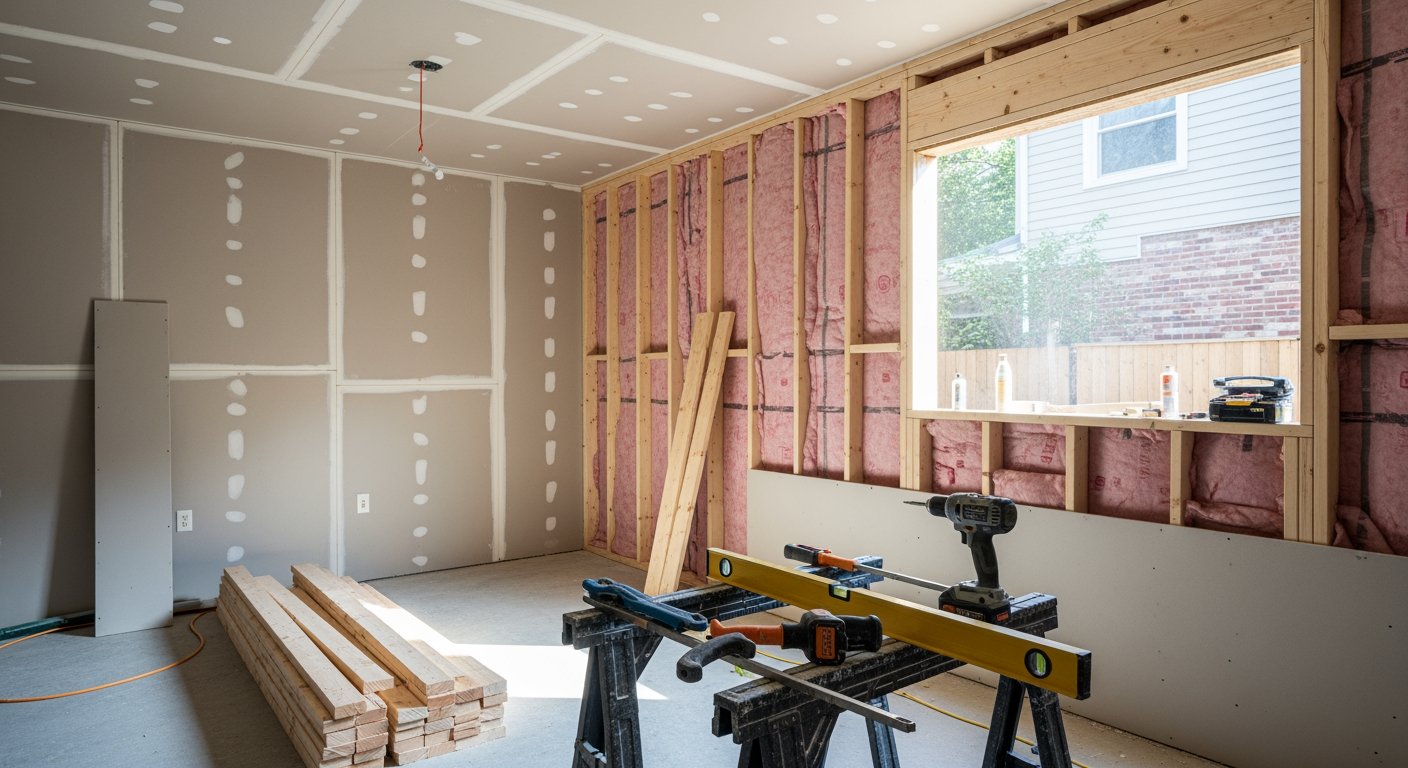
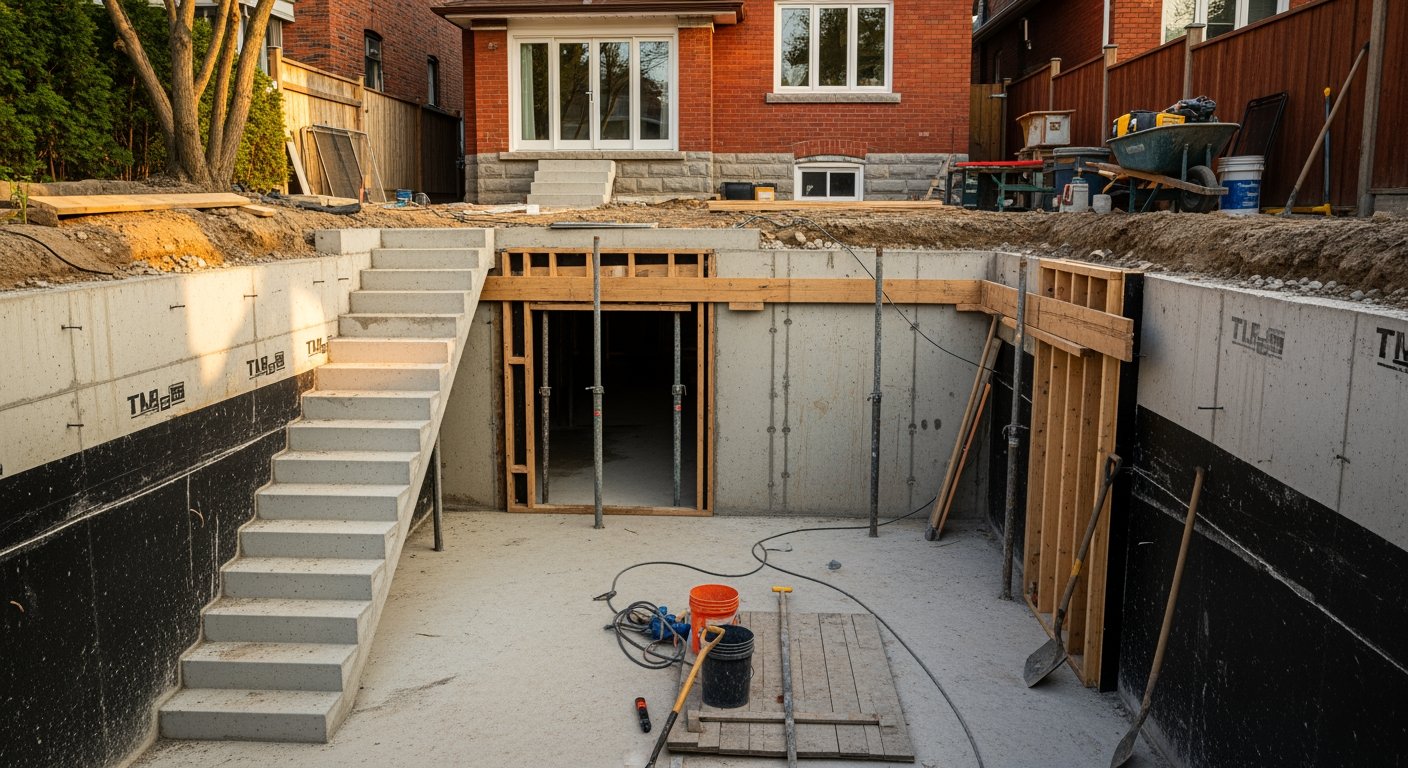
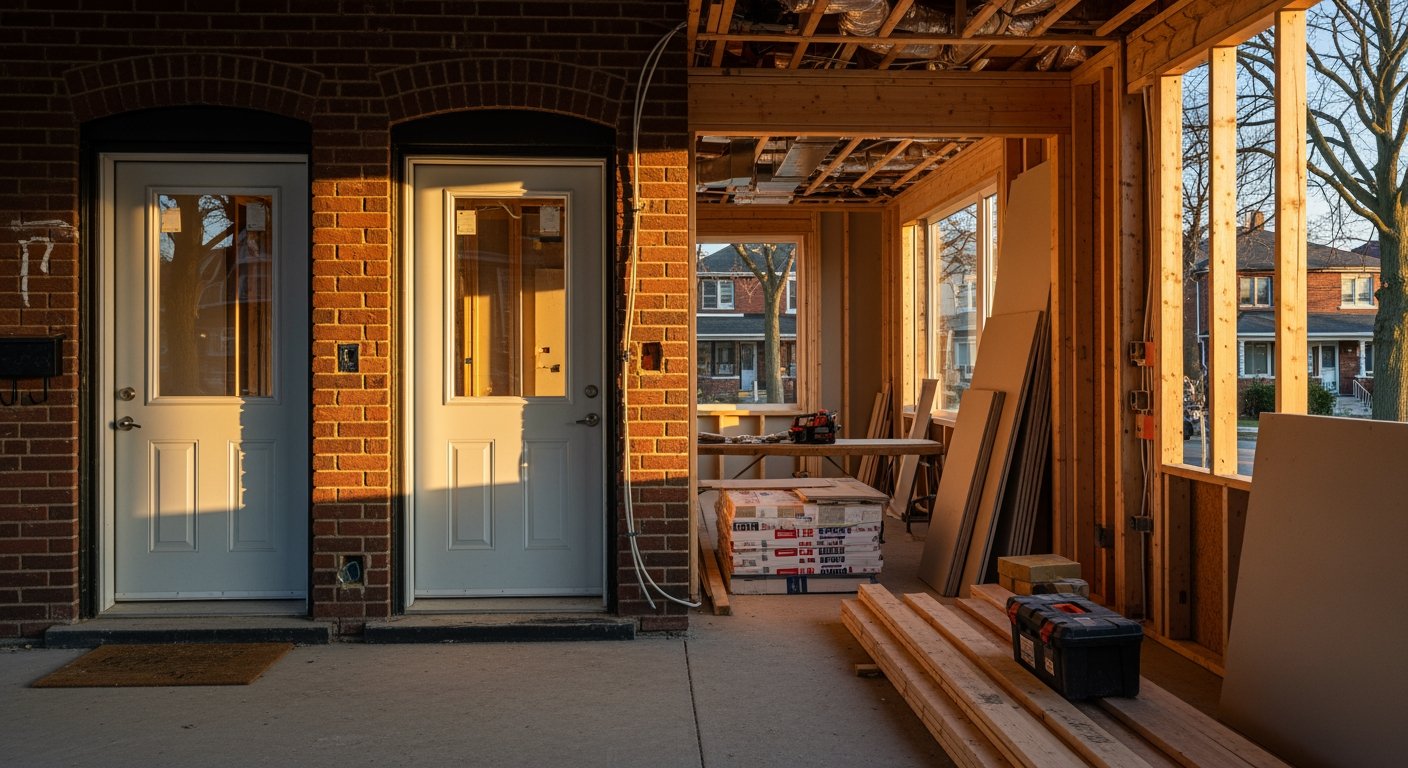
You Might Also Need
Customers who looked at fire separation for basement apartment also asked us about these complementary services.


We Serve All GTA
Professional fire separation for basement apartment services available across the Greater Toronto Area.
“RenoHouse delivered our 2-bedroom garden suite on a tight Roncesvalles lot in 11 months from contract to occupancy. Final cost within 4% of quote — rare in this market.”
— Daniel & Priya R., Roncesvalles, Toronto
Get a Free Fire Separation for Basement Apartment Estimate
Contact us today for a free, no-obligation quote for your fire separation for basement apartment project in Toronto GTA. We'll get back to you within 1 hour.