 RenoHouse
Code-Compliant Second Exit for Toronto Basement Apartments
Professional second egress for basement apartment services in Toronto and the Greater Toronto Area. Licensed, insured, and trusted by homeowners across the GTA.
Projects Completed
Years Experience
Client Satisfaction
Google Rating
How It Works
A simple, stress-free process from start to finish.
Send Your Request
Call or WhatsApp us 24/7. Send photos, video, comments about what needs to be done, and your location.
Remote Estimate
We review everything, discuss details, and provide a clear estimate — often within hours, no visit needed.
Repair Process
Our licensed team arrives on the agreed date and completes your second egress for basement apartment to the highest standards.
Handover & Warranty
Final walkthrough with you, full cleanup, and warranty documentation provided.
Send Your Request
Call or WhatsApp us 24/7. Send photos, video, and a description of the work + your location.
Remote Estimate
We review everything, clarify details, and give you a price — often within hours.
Repair Process
Licensed team arrives on schedule and completes your second egress for basement apartment professionally.
Handover & Warranty
Final walkthrough, full cleanup, and warranty documentation.
Second Egress for Basement Apartment in Toronto GTA
A second (or independent) means of egress is the single highest-impact life-safety upgrade for a Toronto basement apartment that currently exits only through a shared interior stairway to the main floor. Under Ontario Building Code 9.9 (Means of Egress) and 9.9.10 (Egress Windows and Doors), every basement apartment must have either (a) a direct exterior exit not passing through another dwelling unit, or (b) a code-compliant egress window or door from every sleeping room. The most common second-egress solution is a properly-engineered exterior stairway with concrete or aluminum retaining sides, code-compliant rise-and-run geometry, frost-protected footings, weather-sealed door, and tied-in drainage — discharging directly to the rear or side yard. RenoHouse delivers second-egress as a discrete scope: structural design (P.Eng-stamped for any retaining wall over 1.0 m), engineering of foundation opening, waterproofing, stair construction, and final building permit inspection. 2026 GTA budgets run $22,500 to $58,000 with 6 to 10 week timelines. This work is the regulatory backbone of legalizing many existing Toronto basement apartments and unlocks the substantial rent premium of an independent-entry suite.
# Second Egress for Basement Apartment in Toronto: The 2026 Deep-Dive
A second means of egress is the single most-important compliance and rentability upgrade for a Toronto basement apartment. Under Ontario Building Code Section 9.9, every dwelling unit must have a means of egress (a path from any point in the unit to the exterior of the building) that does NOT pass through another dwelling unit. For the typical Toronto basement apartment that currently exits up an interior stair into the main-floor owner's hallway, this single rule is the most-cited reason existing suites cannot be legalized. The remedy is a second egress: either a properly-engineered exterior stairway and door, or compliant egress windows in every bedroom paired with at least one direct exterior exit.
For a homeowner aiming to legalize an existing basement apartment under Toronto's as-of-right second-suite framework (anchored by Bill 23 — More Homes Built Faster Act and By-law 569-2013), creating a second egress is often the highest-leverage single spend on the project. It unlocks code compliance, dramatically improves marketability and rent, and enables independent tenant entry — which most modern tenants now expect as a baseline for any basement rental in 2026.
This page is RenoHouse's complete reference on second egress: what the code requires, what designs satisfy it, the engineering and permit process, and the realistic budget and timeline.
What Counts as a Second Egress
The OBC framework distinguishes between two distinct concepts:
- Means of egress (OBC 9.9 generally). A continuous path of travel from any room in the dwelling unit to a public way (street, lane, or grade-level open space). The path can include doors, corridors, and stairs.
- Egress window or door (OBC 9.9.10 specifically). A window or door from a sleeping room directly to the exterior or to a window well, large enough for a person to escape and for a firefighter to enter in protective equipment.
For a basement apartment, OBC requires:
- One unobstructed means of egress to the exterior that does not pass through another dwelling unit (9.9.5). Most existing suites fail this because the only exit is via the main-floor unit's stairway.
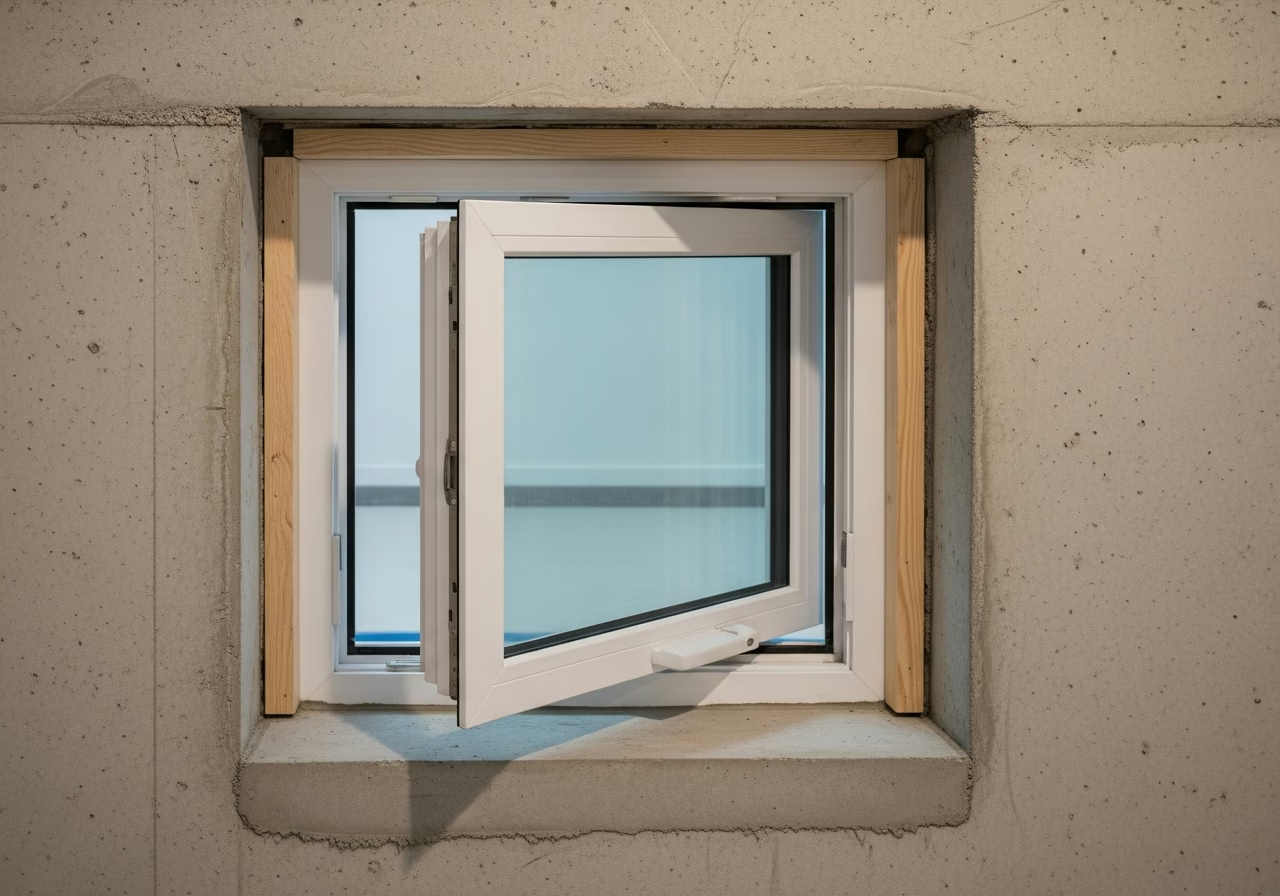
- An egress window OR exterior door from every bedroom (9.9.10). A first-floor or above bedroom can use a window meeting 0.35 m² openable, 380 mm clear opening minimum dimension, sill not more than 1.0 m above floor. Basement bedrooms must additionally have a window well of certain dimensions if the window is below grade.
The two requirements can be satisfied jointly: a direct exterior door from the basement (e.g., a walkout or walk-up exterior stair to grade) satisfies BOTH the unit-egress and bedroom-egress rules if the bedrooms have direct access to the egress path. Alternatively, every bedroom can have its own egress window AND the suite has at least one direct exit to the exterior (typically a walk-up exterior stair).
Design Options for Second Egress
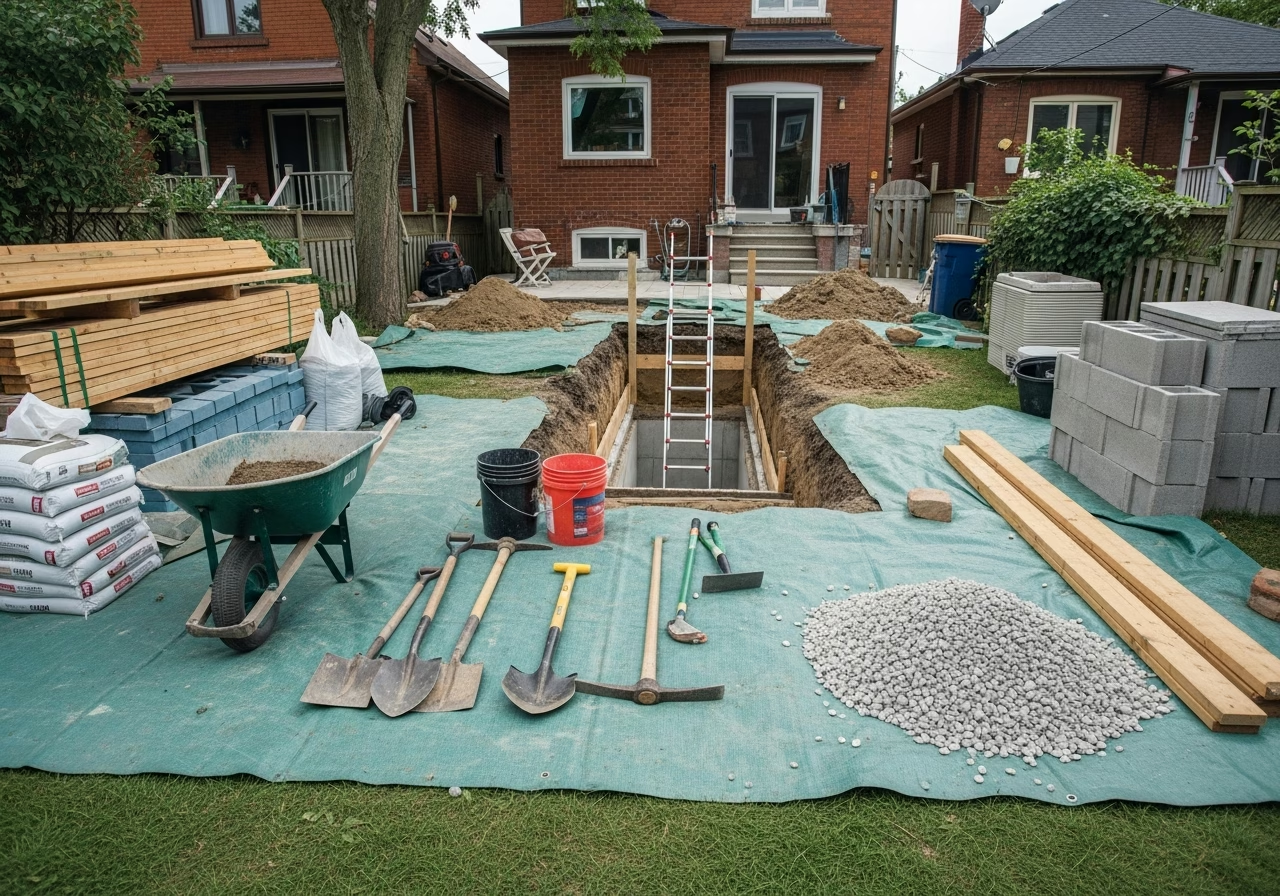
Three distinct architectural approaches:
Option A: Exterior Walk-Up Stairs to Rear or Side Yard
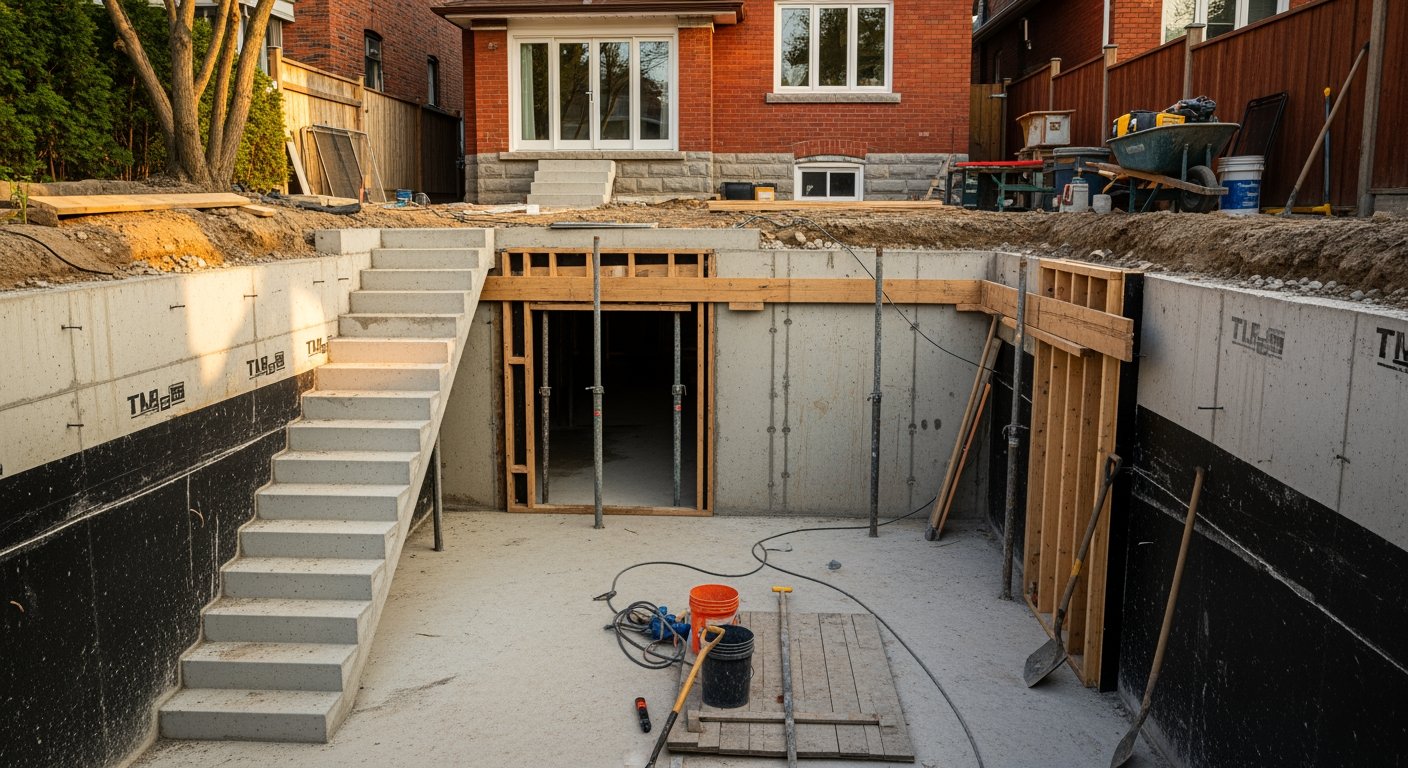
The most common second-egress solution. A new opening is cut through the basement foundation wall (typically rear or side), a frost-protected concrete or aluminum retaining-wall stair pit is built, and a code-compliant stair runs from basement floor to grade. The exterior door swings into the suite at the bottom of the stair. The stair is uncovered or covered with a clear bulkhead.
Pros: works on virtually any lot with adequate rear or side yard, no second-storey work, modest cost ($22,500 to $42,000).
Cons: visible exterior structure, requires excavation, somewhat exposed to snow/rain in winter without bulkhead.
Option B: Walkout Basement (See Separate Service)
If the rear yard slopes substantially, a true walkout is possible — basement floor level matches rear-yard grade with a full-height door directly outside. This is a higher-tier project (see [Walkout Basement Creation](/services/multi-unit-aru-conversions/walkout-basement-creation)) but produces a far better suite.
Option C: Egress Windows in Every Bedroom + Direct Exterior Door
Where a stair to grade is constrained (narrow side yard, lot-line setback issues), the suite can satisfy OBC 9.9 by combining:
- A direct exterior door (typically a small walk-up or walkout door even in a corner) for unit egress.
- A separate code-compliant egress window in every bedroom for bedroom egress.
Most Toronto inner-city projects use Option A. RenoHouse advises on the right approach as part of the audit.
The 2026 Toronto Regulatory Framework
Ontario Building Code Sections
- OBC 9.9 — Means of Egress. General requirements for paths of travel.
- OBC 9.9.5 — Public Corridors. When a corridor serves more than one dwelling unit, it must be a fire-rated public corridor.
- OBC 9.9.7 — Doors in Means of Egress. Width, swing, hardware, threshold rules.
- OBC 9.9.8 — Stairs. Rise 125-200 mm (5"-7-7/8"), run 230 mm minimum (9" min), headroom 2.05 m (6'9") minimum.
- OBC 9.9.10 — Egress Windows. 0.35 m² openable area, 380 mm minimum clear opening, sill not more than 1.0 m above floor. Window well 1.05 m² area, 760 mm horizontal projection if below grade.
- OBC 9.9.11 — Outdoor Stairs. Frost-protected footings, non-combustible (or fire-rated) treads, code-compliant guards and handrails.
- OBC 9.14.6 — Grading. Positive slope away from foundation, applies to second-egress pit drainage.
- OBC 9.20.16 — Retaining Walls. P.Eng required for exposed face over 1.0 m.
Ontario Fire Code (O.Reg 213/07)
The Fire Code applies a continuing obligation to maintain the means of egress unobstructed at all times. A second egress that becomes blocked (snow accumulation, stored items in stair, broken door hardware) generates an order to comply.
Building Permit Required
Any second egress that cuts a new opening through a foundation wall requires a Building Permit. The permit package includes:
- Structural drawings for the foundation opening (lintel sizing, bearing).
- Retaining wall design (P.Eng if over 1.0 m exposed face).
- Stair section showing rise/run/headroom compliance.
- Drainage plan for the stair pit.
- Waterproofing detail at foundation penetration.
- Door schedule and hardware.
Setbacks and Lot Line Issues
An exterior stair encroaching into a side-yard setback below the zoning minimum (typically 1.2 m to 1.5 m in Toronto R-zones) triggers a Committee of Adjustment minor variance. Encroachments under 0.6 m may qualify for an exemption under By-law 569-2013 specific allowances. Most second-egress stairs in 18 ft frontage Toronto Old City lots need a variance.
Heritage
In Heritage Conservation Districts, any visible exterior change — new stair, exterior door, retaining wall — requires Heritage Permit review. Heritage Preservation Services typically requires the stair to use materials consistent with the district (stone, brick, traditional railings) rather than concrete-block or aluminum.
Engineering Details — What the P.Eng Designs
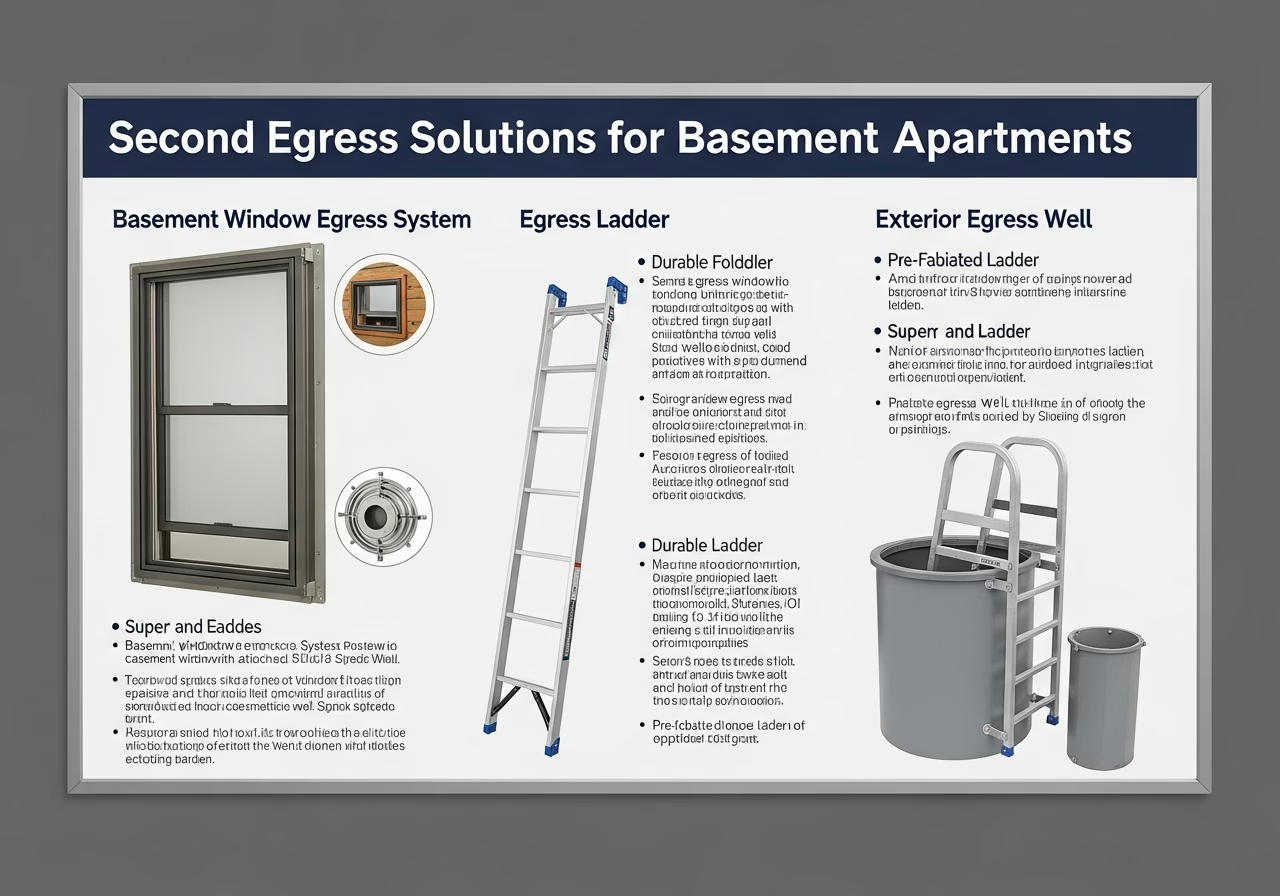
Foundation Opening
Cutting a new door opening through a poured-concrete or block foundation wall requires:
- Lintel sizing based on tributary load above the opening (floor and roof loads).
- Bearing detail at each end of the lintel (typically 200 mm bearing on existing concrete or new bearing pad).
- Saw-cut sequence (vertical cuts first, then horizontal, with shoring of the building above during cut).
- Waterproofing transition at the new opening to existing foundation waterproofing.
Retaining Wall (Stair Pit Sides)
For a stair pit 1.2 to 2.4 m deep, the sides of the pit are retaining walls. Per OBC 9.20.16, walls with exposed face over 1.0 m need P.Eng design. Typical configurations:
- Poured concrete with reinforcement, tied to footing — best for permanent installations.
- Segmental block (Allan Block, Versa-Lok) — possible up to 1.8 m; faster install, lower cost.
- Aluminum or galvanized steel pre-fab (Bilco-style) — common for shallow pits up to 1.2 m, factory engineered.
Stair Geometry per OBC 9.9.8
- Rise: 125 mm minimum, 200 mm maximum (5" to 7-7/8"). Most exterior stairs use 175 to 195 mm rise.
- Run: 230 mm minimum (9"). Typical 230 to 255 mm.
- Nosing projection: 19 to 38 mm.
- Headroom: 2.05 m minimum measured at any point.
- Stair width: 860 mm minimum.
- Landing: 860 mm by 860 mm minimum at bottom of stair (in front of door).
- Handrails: required on both sides if more than 3 risers.
- Guard: 900 mm minimum height at any drop greater than 600 mm.
Drainage and Waterproofing
A stair pit is a giant water-collection hole. Without proper drainage:
- Perimeter drain at base of pit tied to existing weeping tile or new sump.
- Gravel base under landing for capillary break.
- Self-adhered membrane at foundation cut, integrated with existing damp-proofing.
- Sloped landing pad (1:50 minimum away from threshold).
- Optional curtain drain intercepting groundwater upstream of the pit.
- Optional bulkhead cover keeping snow and rain out.
A poorly-drained stair pit can pump groundwater into the basement through the new opening — the #1 reason poorly-built second egress projects fail in winter.
2026 GTA Pricing Tiers
Floor Tier — $22,500 to $32,000
Applies to shallow stair pits (under 1.5 m deep) with simple geometry:
- 1.0 to 1.5 m deep stair pit, segmental block or pre-fab aluminum retaining sides.
- 4 to 6 risers, simple landing.
- Standard exterior door (insulated steel, 6-panel).
- Perimeter drain tied to existing weeper.
- P.Eng letter for foundation opening.
- Building Permit and inspections.
- No COA hearing.
Standard Tier — $32,000 to $45,000
Applies to typical Toronto inner-city projects:
- 1.5 to 2.2 m deep stair pit, poured concrete or segmental block retaining sides with P.Eng design.
- 6 to 9 risers, full landing, code-compliant guards and railings.
- Premium exterior door (insulated, full-glass-lite for natural light into stair).
- Perimeter drain + curtain drain.
- P.Eng letter for both foundation opening and retaining wall.
- COA application and hearing (variance for side-yard encroachment).
- Building Permit and inspections.
Premium Tier — $45,000 to $58,000
Applies to deep pits, heritage districts, or premium aesthetic:
- 2.2+ m deep stair pit, full poured concrete retaining walls.
- Bulkhead cover (powder-coated aluminum + glass, or polycarbonate) for weather protection.
- Architect-stamped drawings, premium hardware, custom railings.
- Heritage Permit application (where applicable).
- Full drainage system with sump pump backup.
- Heated stair treads (electric or hydronic) for ice prevention.
- Decorative cladding to match house exterior.
Realistic Project Timeline
| Phase | Duration | Notes |
|---|---|---|
| Survey, design, P.Eng drawings | 3 to 5 weeks | Geotechnical if soil is question |
| Committee of Adjustment (if variance needed) | 12 to 16 weeks | Skip if encroachment acceptable |
| Toronto Building Permit | 4 to 8 weeks | Faster for as-of-right |
| Excavation and retaining wall | 2 to 3 weeks | Weather-dependent |
| Foundation cut and lintel | 1 week | High-risk phase; daily progress photos |
| Door installation, weatherproofing | 1 week | |
| Stair construction (treads, railings, landing) | 1 to 2 weeks | |
| Drainage tie-in, final waterproofing | 1 week | |
| Inspections | 1 to 2 weeks | Framing, foundation, final |
| Total | 6 to 10 weeks on site | 4 to 8 months including permit and (if needed) COA |
Common Permit-Rejection and Site Gotchas
- Stair rise/run combination outside OBC 9.9.8 limits. Common error: 8" rise (203 mm — fails) paired with 8" run (203 mm — fails). Solution: design with 180 mm rise, 250 mm run.
- Retaining wall over 1.0 m without P.Eng stamp. Permit immediately rejected. Solution: P.Eng involved from project start.
- Foundation opening lintel undersized. P.Eng must size based on tributary load, not generic table. Solution: engineering calculation per opening.
- Side-yard encroachment without COA. Plans-examiner cross-references zoning. Solution: COA application early in design.
- No drainage in stair pit. Inspector will reject final without visible drain. Solution: documented perimeter drain installation in inspection.
- Door swings into stairway (instead of into suite). OBC 9.9.7 requires egress doors to swing in the direction of travel. Solution: door must swing INTO the suite from the stair (i.e., when leaving the suite, you pull the door open toward you).
- No guardrails at top of stair pit. Drop greater than 600 mm requires guard per OBC 9.8.8. Solution: proper guard with picket spacing.
- Heritage Permit not obtained in HCD. Solution: Heritage Permit before any visible exterior work.
- Door hardware not openable without key from suite side. OBC 9.9.7 prohibits keyed lockset on egress doors from inside. Solution: deadbolt with thumb-turn, not key on inside.
- Stair landing too small. OBC 9.9.8.5 requires 860 mm by 860 mm minimum landing at bottom. Solution: extend pit dimensions or move door.
Door Specification — A Frequently-Overlooked Detail
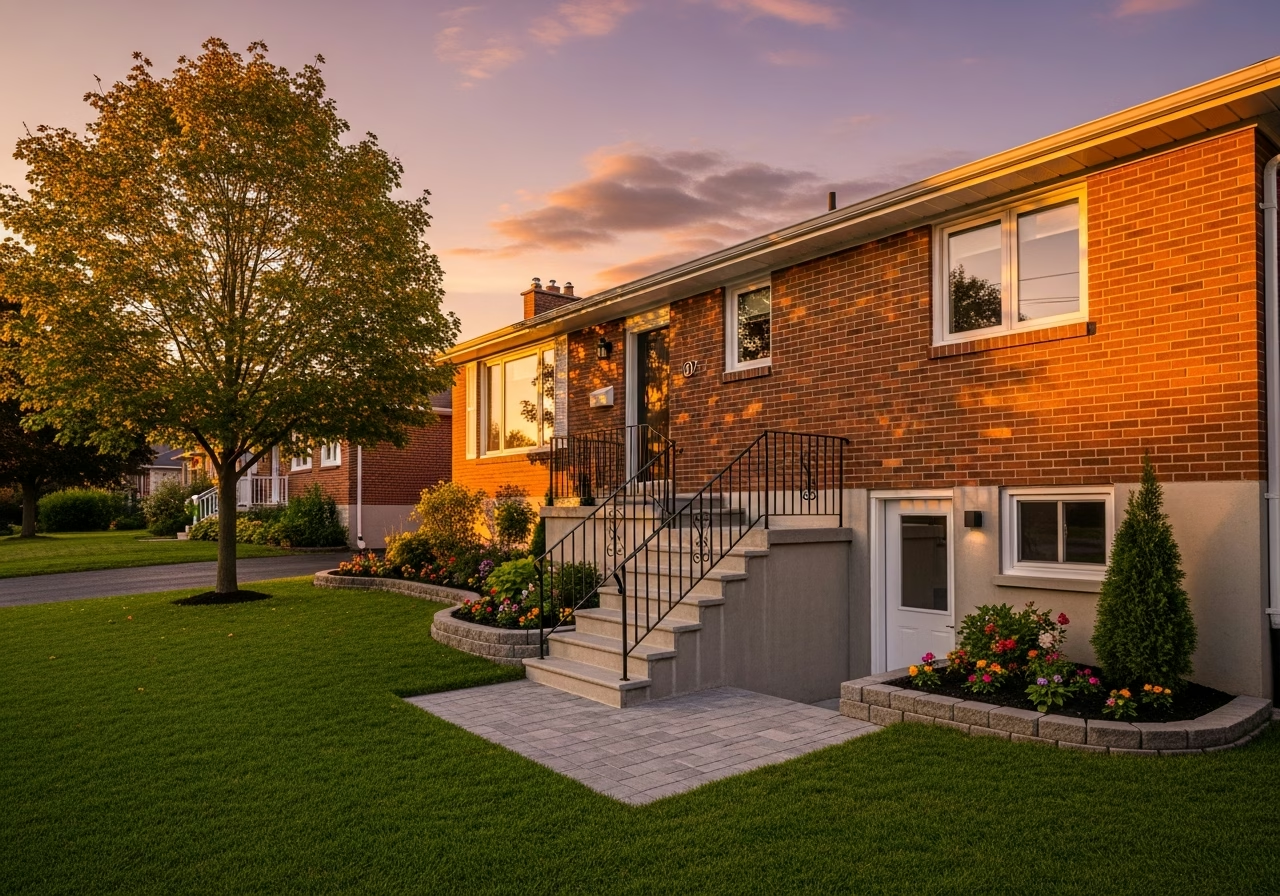
The exterior door at the bottom of a second-egress stair is a critical compliance item:
- Insulated steel or fiberglass for energy and security.
- Self-closing if required (not typically for unit-egress doors, but yes for fire-rated separations).
- Hardware: lever or knob with deadbolt; thumb-turn on inside, no key required.
- Weatherstripping and sweep at threshold for energy compliance per OBC 9.36.
- Glass-lite (where allowed) brings natural light into the basement stair, making the suite feel less subterranean.
- Tight-fitting frame, properly shimmed and insulated, with backer rod and sealant at all interior gaps.
- Threshold raised 25 mm minimum above landing surface to prevent water intrusion.
- No screen door swinging outward into a stair runner — this is a common deficiency.
Ontario Fire Code Maintenance Obligations
Once the second egress is built and inspected, the Ontario Fire Code requires ongoing maintenance:
- Path of travel must be kept clear of obstructions at all times.
- Snow removal from stair treads and landing is the landlord's responsibility (or by lease assignment to tenant).
- Door hardware must remain operable.
- Lighting at stair must function (typically an exterior fixture controlled from inside the suite, with photo-cell backup).
- Drainage must remain functional (sump pump tested, weeper tile clear).
Failure to maintain triggers Fire Code orders.
Five-Submarket Considerations
Toronto Old City
Narrow lots create lot-line setback issues; COA variance is the norm for second-egress stairs on 18-25 ft frontage lots. Soil is typically clay with perched water — drainage scope matters. Standard tier dominates. Rental uplift of $300 to $500/month over a no-second-egress suite due to independent entry.
North York / Scarborough / Etobicoke
Wider lots ease setback issues; second egress is often as-of-right. Sandier soil simplifies drainage. Floor and Standard tier dominate.
Inner Suburbs (East York, York)
1940s-50s housing stock with shallow basements; second egress is often combined with underpinning and/or walkout creation as part of a comprehensive basement legalization package.
905 (Mississauga, Brampton, Vaughan, Markham)
Newer housing stock often has near-walkout configurations from original construction; second egress may already exist as an unfinished basement door. When it must be added, costs run 10 to 15% below Toronto Old City. Brampton enforcement on second-suite egress is particularly active.
Heritage Districts
Any visible stair pit needs Heritage Permit. HPS typically requires stone, brick, or wrought-iron treatment. Add $12,000 to $22,000 to budget and 10 to 14 weeks to timeline.
ROI Math for the Owner
Second egress is rarely a stand-alone investment — it accompanies basement apartment permit-prep or new ARU creation. Considered as a marginal spend:
- Construction cost (Standard tier): $38,000.
- Rent uplift from independent entry: $300 to $500/month versus shared-entry suite = $3,600 to $6,000/year.
- Marketability uplift: independent-entry suites lease 50 to 70% faster than shared-entry, reducing vacancy losses.
- Property value uplift: appraised value of legal independent-entry basement apartment is $50,000 to $80,000 higher than shared-entry.
- Insurance benefit: required for full legal compliance, which protects entire policy.
Payback on the second-egress increment alone is 6 to 10 years; combined with the rent uplift and resale uplift, the effective ROI is 18 to 25% IRR.
Compliance Checklist
- P.Eng-stamped structural drawings for foundation opening lintel.
- P.Eng-stamped retaining wall design (if exposed face over 1.0 m).
- Toronto Building Permit issued with final inspection sign-off.
- Committee of Adjustment decision (if minor variance was required for setback).
- Heritage Permit (if in Heritage Conservation District).
- OBC 9.9.8 stair geometry: rise 125-200 mm, run 230 mm min, headroom 2.05 m min, width 860 mm min.
- OBC 9.9.8.5 landing: 860 mm by 860 mm minimum at bottom of stair.
- OBC 9.9.7 door: swings into suite, no key required from inside.
- Guards 900 mm min at top of pit; handrails on both sides of stair.
- Perimeter drain at base of pit tied to weeper or sump.
- Self-adhered membrane at foundation opening, properly transitioned.
- Threshold raised 25 mm above landing for water exclusion.
- Exterior light fixture at stair functional.
- Path maintained clear, drainage maintained, hardware operable (ongoing Fire Code duty).
Ready to evaluate second-egress feasibility? Send us a basement floor plan, exterior photos of all four sides of the house, and a recent property survey. RenoHouse returns a written feasibility note within 5 business days indicating the recommended stair location, the appropriate pricing tier, whether COA or Heritage Permit are required, and a preliminary budget.
Why Trust RenoHouse
On-Time Completion
We respect deadlines for second egress for basement apartment projects. 95% of jobs finish on or ahead of schedule.
Certified & Insured
Proper licensing, full insurance coverage, and WSIB protection. Your property and our team are completely protected.
Satisfaction Guarantee
We're not done until you're 100% happy with your second egress for basement apartment. That's our promise.
Sound Familiar?
These are the most common problems our clients face.
Need professional help with this?
Not sure where to start?
Want quality results the first time?
Tired of putting it off?
Looking for a reliable contractor?
Want a free, no-obligation estimate?
Ready to get started?
Free estimate, no obligation. We respond within 1 hour.
What Our Clients Say
“RenoHouse replaced all our windows in just two days. The new windows are beautiful, energy-efficient, and the team left everything spotless. Highly recommend!”

Michael R.
Oakville
“New windows transformed our home. Quieter, warmer, and our energy bill dropped noticeably. Excellent installation crew.”

David K.
Vaughan
“Professional from start to finish. They replaced 8 windows in one day and cleaned up perfectly. Highly recommend RenoHouse!”

Sandra W.
Burlington
Our Second Egress for Basement Apartment Work
Professional second egress for basement apartment results from RenoHouse projects across the Toronto GTA.
Second Egress for Basement Apartment
Toronto GTA
Quality Workmanship
Licensed & Insured
Like what you see? Let's talk about your project.
🧮 Second Egress for Basement Apartment Services — Cost Estimator
GTA / Ontario — 2026 market pricing
📊 Where the cost goes (typical breakdown)
📋 What affects your price:
💡 Estimates use 2026 GTA/Ontario market data. Actual cost depends on site conditions, material selections, and project scope. Book a free in-home quote for a precise number.
Frequently Asked Questions About Second Egress for Basement Apartment
Ontario Building Code 9.9.5 requires every dwelling unit to have an unobstructed means of egress that does not pass through another dwelling unit. The typical existing Toronto basement apartment exits up an interior stair into the main-floor unit's hallway, which violates this rule. A second egress (exterior stair to grade, or a walkout door) creates a code-compliant exit path. It is also a life-safety must — if the main-floor unit has a fire blocking the interior stair, the basement tenant needs another way out.
Egress windows in bedrooms (OBC 9.9.10) satisfy the bedroom-egress rule but do NOT satisfy the unit-egress rule under 9.9.5. The suite still needs a direct exterior exit. So while egress windows in every bedroom are required, you ALSO need either a walkout door or a walk-up exterior stair somewhere in the suite. The two requirements are stacked, not alternatives.
Not required by OBC. However, an uncovered stair fills with snow and rain. Premium-tier projects include a polycarbonate or aluminum bulkhead cover to keep the stair clear, prevent ice buildup, and reduce drainage load. RenoHouse strongly recommends a cover in any project where the suite faces a busy rental market and tenant retention matters.
Often, on narrow Toronto Old City lots. Side-yard setback requirements (typically 1.2 to 1.5 m minimum) are difficult to satisfy when adding a stair pit to a 5-foot side yard. Most projects on 18 to 25-foot frontage lots need a minor variance, which adds 12 to 16 weeks. Wider lots (35+ ft frontage) typically accommodate the stair within setback as-of-right. RenoHouse handles the COA application as part of Standard tier.
Not if drainage is properly designed. The standard RenoHouse spec includes a perimeter drain at the base of the pit (tied to existing weeper or new sump), a curtain drain intercepting upstream groundwater, a sloped landing pad with positive drainage away from the door, and self-adhered membrane on the foundation cut. Poorly-built projects (no perimeter drain, no curtain drain, no membrane) routinely flood — this is the most common second-egress failure mode and the reason we never skip these details.
Yes. Most second-egress projects are retrofitted to existing basement apartments as part of permit-prep. The work is primarily exterior; interior impact is limited to demolishing finishes around the new door opening and re-finishing those few square feet. The tenant can typically remain in the suite during construction except for the 1-week foundation cut phase.
OBC 9.9.8 limits a single stair flight without a landing to roughly 14 risers. At a typical 195 mm rise, that's 2.7 m of vertical drop. Most basement floors sit 1.5 to 2.4 m below grade, so a single straight flight handles all common configurations. Deeper pits (over 2.4 m drop) require an intermediate landing midway.
Most Toronto R-zones require 1.2 to 1.5 m side-yard setback for principal-building elements. A second-egress stair pit must either fit within the side yard (typically 1.5 m wide for the pit including retaining walls) or apply for a minor variance via Committee of Adjustment. A pit under 0.6 m wide may qualify for the encroachment exemption under By-law 569-2013. The audit confirms the specific zoning rule for your property.


You Might Also Need
Customers who looked at second egress for basement apartment also asked us about these complementary services.



We Serve All GTA
Professional second egress for basement apartment services available across the Greater Toronto Area.
“RenoHouse delivered our 2-bedroom garden suite on a tight Roncesvalles lot in 11 months from contract to occupancy. Final cost within 4% of quote — rare in this market.”
— Daniel & Priya R., Roncesvalles, Toronto
Get a Free Second Egress for Basement Apartment Estimate
Contact us today for a free, no-obligation quote for your second egress for basement apartment project in Toronto GTA. We'll get back to you within 1 hour.