RenoHouse

What a Full Home Renovation Costs in Etobicoke (2026 Prices)
Etobicoke's housing stock is dominated by 1950s–1970s bungalows, backsplits, and two-storeys built to standards far below what modern buyers and inspectors expect. When you renovate one top-to-bottom, you're often replacing electrical panels, galvanized water supply lines, outdated HVAC, and single-pane windows before you ever pick a tile colour.
The table below breaks down typical cost ranges for each major trade or scope in a whole-home project, based on 2026 GTA contractor pricing:
| Scope | Typical Range (CAD) |
|---|---|
| Kitchen renovation (mid-range) | $28,000 – $65,000 |
| Bathroom renovation (per room) | $12,000 – $30,000 |
| Basement finishing | $35,000 – $80,000 |
| Electrical panel upgrade + rewire | $8,000 – $22,000 |
| Plumbing replacement / rough-in | $10,000 – $28,000 |
| Whole-home flooring (1,500 sq ft) | $14,000 – $35,000 |
| Window replacement (10–14 windows) | $16,000 – $42,000 |
| Drywall, taping, and painting | $18,000 – $38,000 |
| HVAC replacement | $10,000 – $22,000 |
| Full gut renovation (1,500–2,000 sq ft) | $150,000 – $300,000 |
The square footage of your home is a major cost driver, but so is the condition of what's behind the walls. Older Etobicoke homes in Mimico, Long Branch, Alderwood, and the Kingsway often conceal knob-and-tube wiring and cast-iron drain stacks. Once a wall opens up, those discoveries add to the budget. Building in a 15–20% contingency before you start is standard practice on any full renovation here.
General contractor overhead and project management typically adds 15–25% on top of trade costs. For a full renovation, hiring a licensed general contractor to coordinate permits, inspections, and subtrades is worth the fee — the alternative is coordinating six or more independent trades yourself, usually while living elsewhere.
The Etobicoke Full Home Renovation Process: Permits, Trades, and Timeline
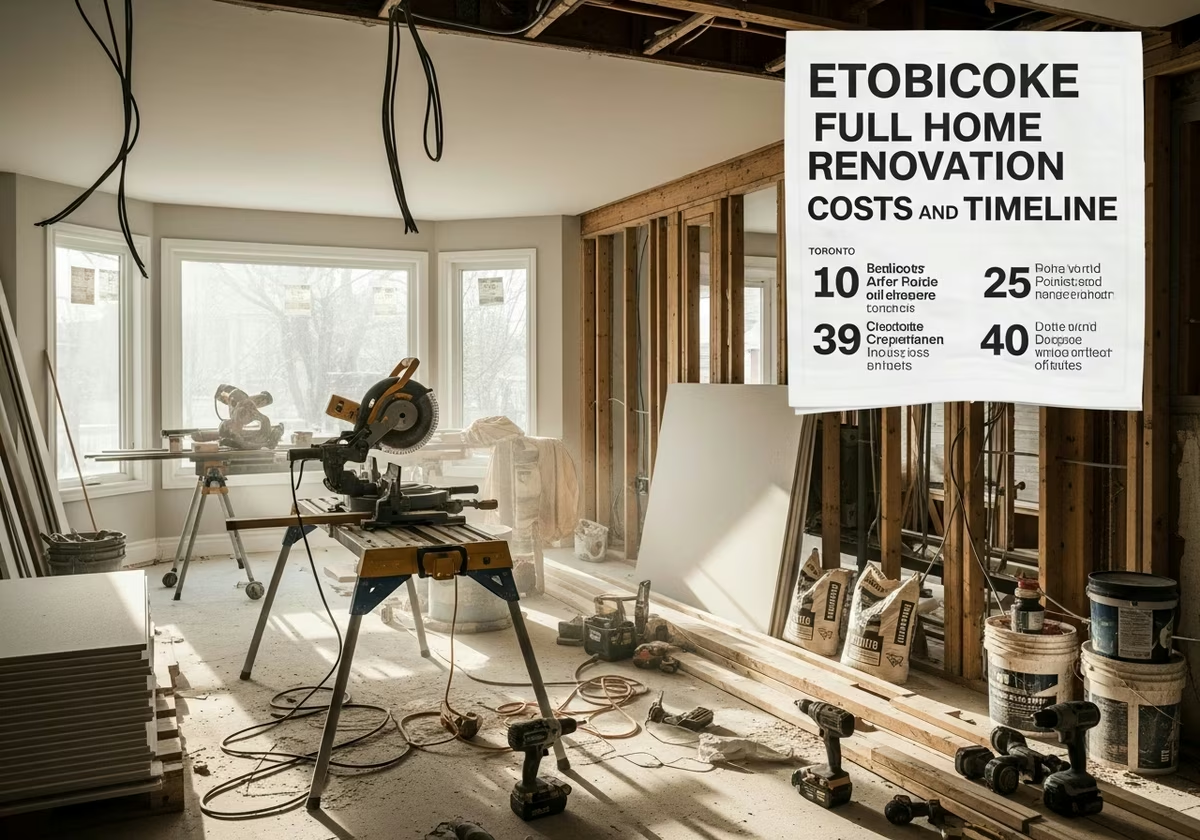
A full home renovation in Etobicoke falls under City of Toronto jurisdiction and requires building permits for structural changes, additions, basement underpinning, and significant interior alterations. Cosmetic work — replacing flooring, painting, swapping fixtures — does not need a permit. The moment you touch load-bearing walls, move plumbing stacks, add a bathroom, or alter the structure, you need City of Toronto building permit approval.
Need professional renovation?
Call RenoHouse at 1-289-212-2345 or get a free estimate today.
Get Free Estimate →- 1. Pre-construction assessment. A licensed contractor walks the property, identifies structural issues, checks the electrical panel (100A vs 200A service), assesses the plumbing material (copper, galvanized, or PVC), and reviews the foundation condition. This is where actual scope gets defined — not from photos or a walkthrough video.
- 2. Design and drawings. Structural changes require stamped engineering drawings. Kitchen and bathroom layouts involving plumbing relocation need drawings submitted with the permit application.
- 3. City of Toronto permit application. Building permits for a full renovation typically take 4–10 weeks to approve through the City's ePlans portal. Factor this into your project start date — contractors who offer to skip permits to save time create legal and insurance liability that you carry as the homeowner.
- 4. Demolition. Walls come down, old flooring is removed, outdated mechanicals are stripped. A full gut of a 1,500 sq ft home generates 3–5 dumpster loads of debris — budget $600–$1,200 per haul for disposal.
- 5. Rough-in work: structural, electrical, and plumbing. All electrical work in Ontario must be performed or supervised by a licensed electrician and inspected by the Electrical Safety Authority (ESA) at rough-in stage before walls close. Plumbing rough-ins are inspected by the City. Neither step can be skipped or deferred.
- 6. Insulation and drywall. Exterior walls in older Etobicoke homes typically carry R-7 or less. Upgrading to R-20 or higher during a full reno is significantly cheaper than treating it as a standalone project later.
- 7. Finishing trades: tile, cabinetry, flooring, trim, and doors. This phase generates the visible transformation. Interior door replacements are frequently bundled into full renovation scopes — the door installation and replacement guide covers hardware grades and typical cost benchmarks. For homes with attached garages, garage door repair and replacement is worth reviewing as a separate line item.
- 8. Final inspections. The City inspector signs off on structural and mechanical work; ESA issues a certificate for electrical. Without these sign-offs, your home insurance and future resale can both be affected.
A full gut renovation of an average Etobicoke bungalow runs 4–8 months from permit approval to occupancy. Projects with additions, underpinning, or complex structural work can reach 10–14 months. Budget $2,500–$5,000 per month for temporary accommodation if you need to vacate.
How to Evaluate Contractors and Avoid Costly Mistakes
Getting three quotes is standard advice. The more useful step is knowing what to compare. A $180,000 quote and a $240,000 quote for the same scope are not interchangeable — the difference usually lies in what is excluded, which subtrades are licensed, and whether permits are factored into the contract price.
Red flags in a renovation contract:- No permit line item for a project that clearly needs one. If a contractor offers to skip permits to save money, you absorb the liability — including having to undo completed work if the City orders it.
- Payment schedules demanding 40–50% upfront before work begins. Standard practice is a 10–20% deposit with progress payments tied to verified, inspected milestones.
- No mention of ESA certification for electrical work. Electrical work not inspected by the ESA is non-compliant with the Ontario Electrical Safety Code and creates problems for home insurance and future sales.
- Vague material allowances. Cabinets, tile, flooring, and fixtures can swing a budget by $30,000–$60,000 depending on grade. Every allowance needs a defined dollar figure and written specification.
For projects that touch the foundation, the foundation crack repair guide for Toronto covers what to expect in Etobicoke's clay soil. Projects that include window replacement should reference the window installation guide for Toronto for Ontario energy-code requirements and product grades. Interior scopes with significant drywall work can benchmark against 2026 drywall costs for Toronto.
Frequently Asked Questions
Do I need a building permit for a full home renovation in Etobicoke?
Most full home renovations require at least one City of Toronto building permit. Structural changes, basement conversions, new bathrooms, and significant electrical or plumbing work all require permits. Cosmetic updates — paint, flooring, cabinet swaps without plumbing changes — do not. A licensed contractor identifies what is required during the pre-construction assessment and submits applications on your behalf. Skipping permits creates liability at resale and can void a home insurance claim related to unpermitted work.
How long does a full home renovation in Etobicoke take?
From permit approval to final inspection, a full gut renovation of a 1,500–2,000 sq ft home in Etobicoke takes 4–8 months. Add 4–10 weeks for City of Toronto permit review before work begins. Projects involving structural additions, basement underpinning, or heritage designations can extend to 10–14 months. Realistic timelines also account for material lead times — custom cabinetry typically runs 8–12 weeks from order — and the scheduling realities of coordinating multiple licensed trades.
Should I move out during a full home renovation in Etobicoke?
For a full gut renovation, vacating the property is strongly advisable. Dust levels, noise, lack of a functional kitchen and bathrooms, and hazards from open floors and active electrical work make the home impractical to occupy for extended stretches. Partial occupancy is possible during phased renovations where one section of the home stays intact and functional. Discuss this clearly with your contractor before signing. Temporary accommodation costs in the GTA run $2,500–$5,000 per month depending on unit type and neighbourhood.
What return on investment can I expect from a full renovation in Etobicoke?
Renovated detached homes in Etobicoke's Mimico, New Toronto, and Alderwood neighbourhoods consistently command $300,000–$600,000 more at resale than comparable unrenovated properties, depending on lot size and finish quality. ROI depends on not over-improving relative to the street — a $350,000 renovation on a block of $900,000 homes recovers less than the same spend in a neighbourhood where comparable properties sell for $1.4M–$1.8M. A contractor with extensive GTA renovation experience can help calibrate scope to the local market before you commit.
Need a quote in the GTA?
For an accurate renovation budget, the starting point is always a proper on-site assessment — numbers without a site visit are guesses. Call 289-212-2345 or request a free quote at renohouse.ca to schedule a walkthrough of your property.