 RenoHouse
Heritage Renovation of Annex Queen Anne and Romanesque Revival Homes
Professional annex victorian & queen anne renovation services in Toronto and the Greater Toronto Area. Licensed, insured, and trusted by homeowners across the GTA.
Serving the GTA
In-Home Estimates
Workmanship Warranty
Projects Completed
How It Works
A simple, stress-free process from start to finish.
Send Your Request
Call or WhatsApp us. Send photos, video, comments about what needs to be done, and your location.
Remote Estimate
We review everything, discuss details, and provide a clear estimate — often within hours, no visit needed.
Repair Process
Our licensed team arrives on the agreed date and completes your annex victorian & queen anne renovation to the highest standards.
Handover & Warranty
Final walkthrough with you, full cleanup, and warranty documentation provided.
Send Your Request
Call or WhatsApp us. Send photos, video, and a description of the work + your location.
Remote Estimate
We review everything, clarify details, and give you a price — often within hours.
Repair Process
Licensed team arrives on schedule and completes your annex victorian & queen anne renovation professionally.
Handover & Warranty
Final walkthrough, full cleanup, and warranty documentation.
Annex Victorian & Queen Anne Renovation in Toronto GTA
Renovation of Annex Queen Anne Revival and Annex Style houses — Edward James Lennox's hybrid of Romanesque and Queen Anne. East Annex HCD (1994), West Annex Madison Avenue HCD (2015, LPAT 2019). Brick spotting, sandstone restoration, leaded glass, turret roofing, replicated trim profiles.
The Annex, 1880s industry of architects
The Annex was subdivided in the 1880s and built out in a single intense decade — roughly 1888 to 1898. The neighborhood is the most concentrated showcase in Canada of late-Victorian residential architecture, and it is the birthplace of one Toronto-specific style: the Annex Style, coined by architectural historian Patricia McHugh to describe the Queen Anne / Richardsonian Romanesque hybrid pioneered by Edward James Lennox (architect of Old City Hall and Casa Loma) starting around 1888.
If you own an Annex house, you almost certainly own a piece of Lennox's, Eden Smith's, or Langley & Burke's portfolio — three of the most influential Toronto architectural practices of the 1880s and 1890s. That ancestry sets the renovation standard.
Architectural styles that define the Annex
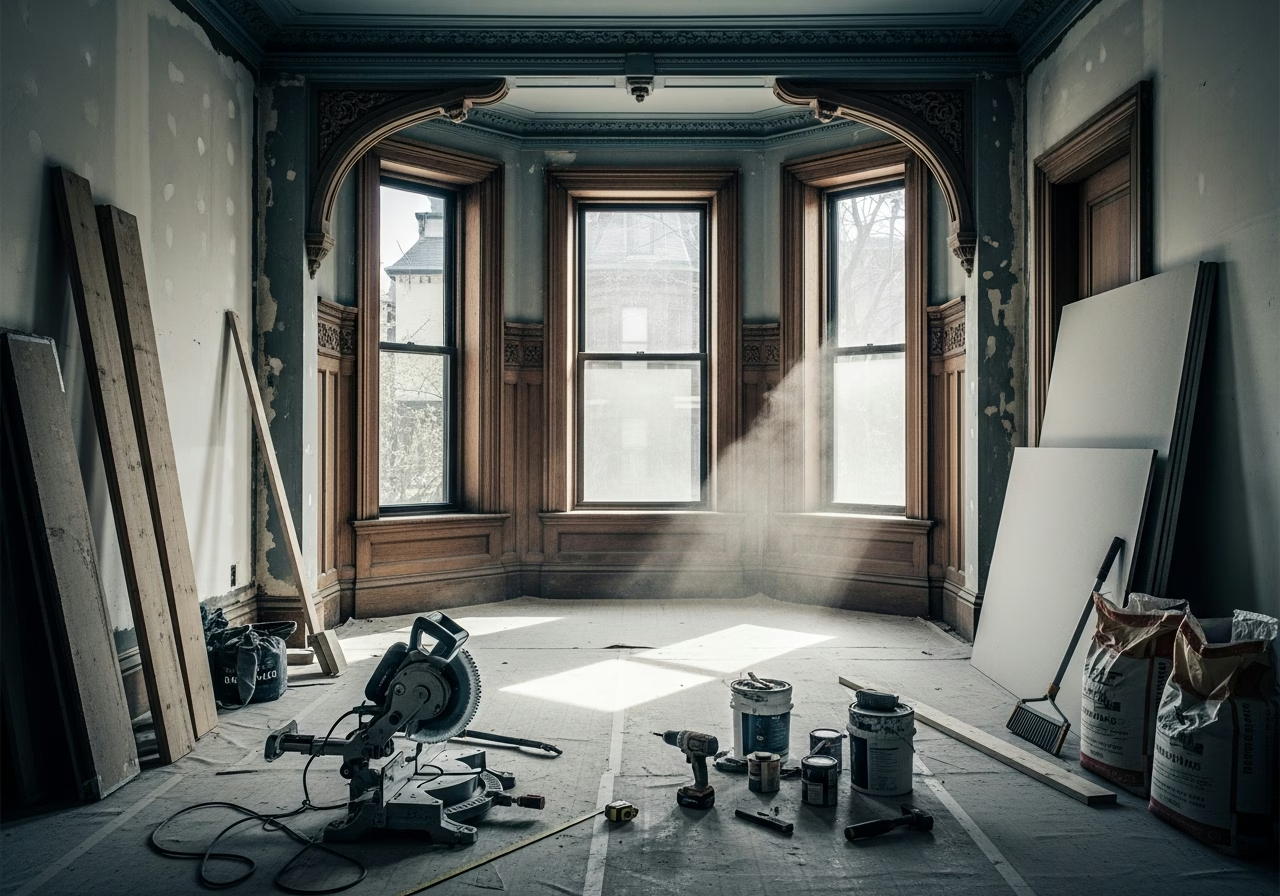
Queen Anne Revival (1885-1900). Asymmetric massing, prominent corner turrets with conical roofs, wraparound porches, gable ends with decorative shingle work, double-hung windows with multi-light upper sash. The classic Annex house silhouette. Howland Avenue, Lowther Avenue, and St. George Street are dense with Queen Anne.
Annex Style (1888-1900) — the Lennox hybrid. Combines Queen Anne's asymmetry and decorative shingle work with Richardsonian Romanesque's massive rounded entrance arches, rough-faced sandstone (often Credit Valley brownstone), and squat squared turrets. The 37 and 69 Madison Avenue houses are textbook examples. Walmer Road and Madison Avenue have the highest concentration.
Richardsonian Romanesque (1885-1895). Heavy rusticated stone, rounded arches, deeply recessed entries, asymmetric towers. Less common than the Queen Anne or Annex Style, but landmark examples — like the houses on Admiral Road — are major pieces of Toronto architectural history.
Edwardian (1900-1915). A later layer of infill on lots that were vacant or destroyed by fire. Three-storey brick rectangles, hipped roofs, restrained Classical Revival trim. Common on the southern edge of the neighborhood near Bloor Street.
Eden Smith English Arts and Crafts (1895-1915). The Toronto architect Eden Smith built a series of stucco-and-tile-roofed Arts and Crafts houses in the Annex, most clustered on Walmer Road and Madison Avenue. Distinguishable by their English-cottage simplicity in a neighborhood otherwise dominated by Victorian ornament.
Rooming-house era alterations (1940s-1970s). Most Annex houses were sub-divided into rooming houses or apartments during and after WWII. Renovation today typically involves un-doing those alterations: removing dropped ceilings, restoring stair runs, opening up subdivided rooms, recovering original plaster cornices buried behind drywall.
The Annex HCDs: dates and scope
Two separate HCDs cover most of the neighborhood:
- East Annex HCD — designated 1994, one of the City's earliest HCDs. Boundaries roughly Bedford Road east to Avenue Road, Prince Arthur north to just below Dupont. Covers the densest concentration of Queen Anne and Annex Style.
- West Annex Phase 1: Madison Avenue HCD — designated 2015, with LPAT (Local Planning Appeal Tribunal) approval in 2019. Encompasses properties fronting onto Madison Avenue from Dupont south to just north of Bloor.
- West Annex Phase II HCD — currently in development as of 2026.
Properties outside the two designated HCDs but inside the broader Annex (Brunswick Avenue, Howland Avenue west of Madison, parts of Major Street) are governed by Heritage Register listings on individual properties plus zoning controls. Many are individually Part IV designated.
The East Annex HCD Plan is administered by Heritage Planning out of City Planning. Reviews are detailed; the neighborhood association (Annex Residents' Association, the ARA) engages on every significant application.
Common Annex renovation projects and 2026 pricing
| Project | Typical Annex spend |
|---|---|
| De-converting rooming house back to single family | $385,000 – $1.1M |
| Kitchen renovation in main floor of Queen Anne | $145,000 – $345,000 |
| Heritage bathroom (clawfoot, marble subway, brass) | $58,000 – $135,000 |
| Turret roof restoration (slate or copper) | $48,000 – $115,000 |
| Front porch reconstruction with turned spindles | $68,000 – $145,000 |
| Sandstone front entry restoration | $35,000 – $95,000 |
| Third-floor renovation (sloped ceilings, original) | $185,000 – $385,000 |
| Rear addition (≤30% GFA) | $445,000 – $980,000 |
| Full-house Queen Anne restoration | $850,000 – $2.8M |
| Leaded-glass window restoration package | $42,000 – $135,000 |
| Brick spotting + sandstone cleaning, full elevation | $35,000 – $85,000 |
Annex projects are smaller in dollar value than Rosedale or Forest Hill on a per-house basis (housing stock is smaller, lots are tighter), but the labour content is higher: more decorative detailing per square foot, more wood and stone work, more turning and carving.
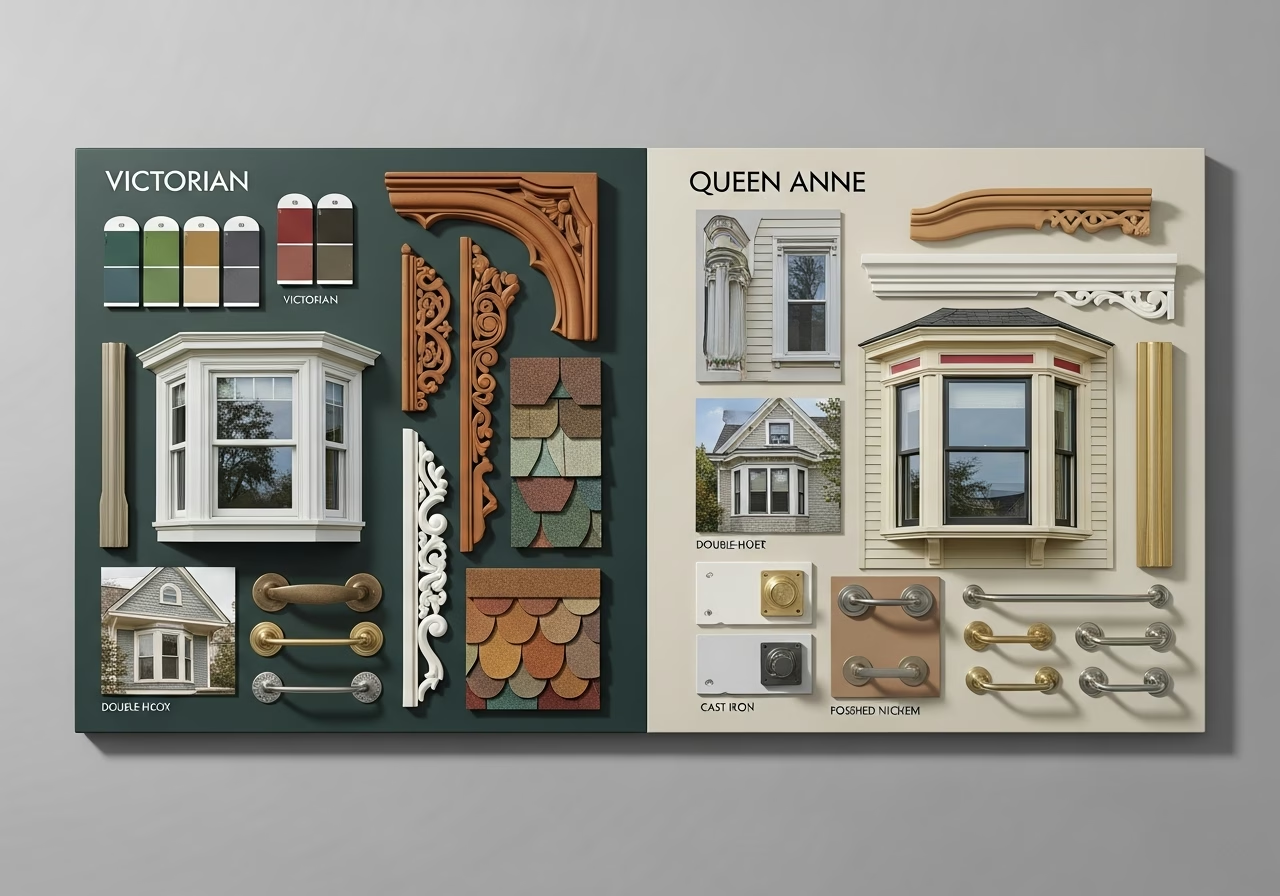
Material specifics for Queen Anne and Annex Style
For Queen Anne Revival:
- Roofing: Slate (original on landmark houses) or hand-split cedar shake. Conical turret roofs are almost always slate or copper.
- Brick: Original Annex brick is hard red-orange Toronto common; replacement runs from Cherokee Brick & Tile or Glen-Gery. Type N mortar; rake joints to match original.
- Sandstone: Credit Valley brownstone is the original specification. Suppliers today include Owen Sound Ledgerock and Credit Valley Stone. Restoration techniques include patching with NHL-based mortar, consolidant treatment for spalling faces, and careful pressure-washing — *never* sandblasting.
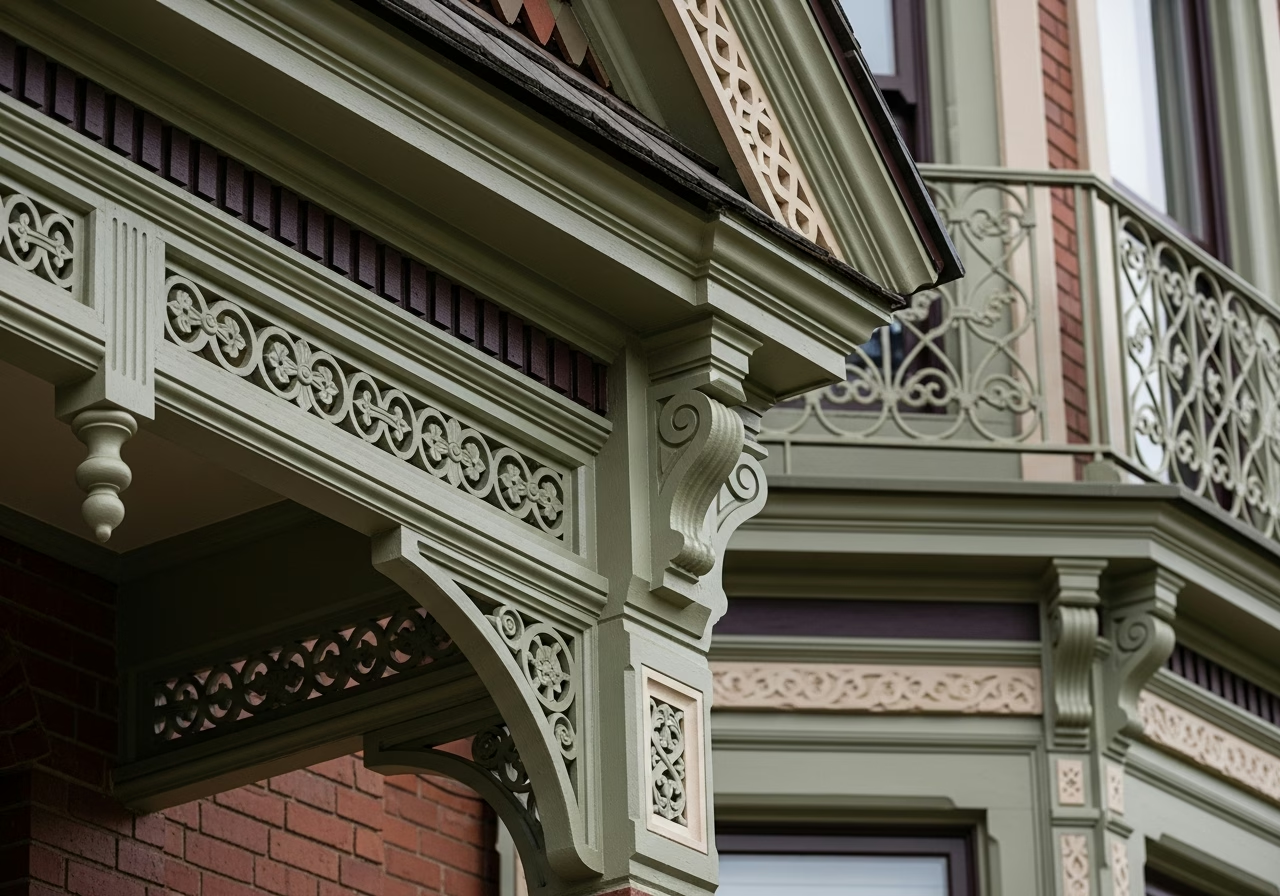
- Wood trim: Turned columns, decorative spindlework, fish-scale shingle gables. Eastern white pine for paintable elements; oak or mahogany for entry doors.
- Windows: Original sash where survivable; restored with new glazing and weatherstripping. Replacement: Marvin Ultimate double-hung with stained-glass or restoration-glass upper sash.
- Leaded glass: Many Annex houses still have original leaded transom windows, leaded stair-landing windows, and decorative side lights. Restoration is a specialized trade — we use two Toronto stained-glass studios for this work.
For Annex Style (Lennox hybrid):
- Rusticated sandstone arches: Credit Valley brownstone matched and reset; original tooling preserved.
- Turret detailing: Slate or copper roofing, replicated decorative shingle bands, original window patterns retained.
- Door surrounds: Carved sandstone or limestone; carving is specialized work, typically commissioned from one of two Toronto stone-carving firms.
- Roofing: Slate strongly preferred on Lennox-designed houses; the HCD Plan flags asphalt as inappropriate on landmark properties.
Heritage Permit process in the Annex
East Annex HCD files are reviewed by Heritage Planning at City Planning Division. Madison Avenue HCD files follow the same workflow with the additional context that the HCD itself was contested at LPAT through 2019 — reviewers tend to be more cautious about precedent-setting decisions.
Timeline: 10-16 weeks from pre-consult to permit-in-hand for routine work; 16-26 weeks for additions or third-floor work requiring Toronto Preservation Board review.
Common rejection reasons in the Annex:
- Vinyl windows in any visible location — instant refusal
- Removal or relocation of decorative shingle work in gables
- Modern porch railings to current code height without a guard-rail variance
- Sandblasting or aggressive pressure-washing of sandstone (causes irreversible surface damage)
- Replacement of original front door with a contemporary slab — even fiberglass faux-wood is regularly refused
- Conversion of original wraparound porches to glassed-in sunrooms visible from the street
- Removal of original cast-iron stair railings or fencing
Five micromarkets inside the Annex
East Annex core (Bedford / Lowther / Admiral, inside the 1994 HCD). Highest-value blocks; densest landmark stock; tightest design review. Detached sales 2026: $2.8M–$5.5M (smaller lots than Rosedale).
Madison Avenue (inside the 2015 HCD). Lennox-designed Annex Style stock; sandstone-and-brick landmarks at 37 and 69 Madison. Sales $2.4M–$4.8M.
Walmer Road and Brunswick Avenue (mostly outside HCDs but with individual designations). Mix of Queen Anne, Annex Style, and Eden Smith Arts and Crafts. Significant rooming-house era stock pending restoration. Sales $1.9M–$3.8M.
Howland Avenue / Albany Avenue (north of Bloor, west of Bathurst). Edwardian and Queen Anne mix; smaller scale; more rental-converted stock. Often the value entry point into Annex heritage ownership. Sales $1.6M–$2.9M.
Major Street and around Harbord Village (south-west corner). Overlap with the Harbord Village HCDs (Phase 1: 2005, Phase 2: 2011) — different heritage planner roster, different HCD Plan, similar architecture. Often grouped with the Annex in MLS but technically a separate market. Sales $1.5M–$2.8M.
Resale value impact
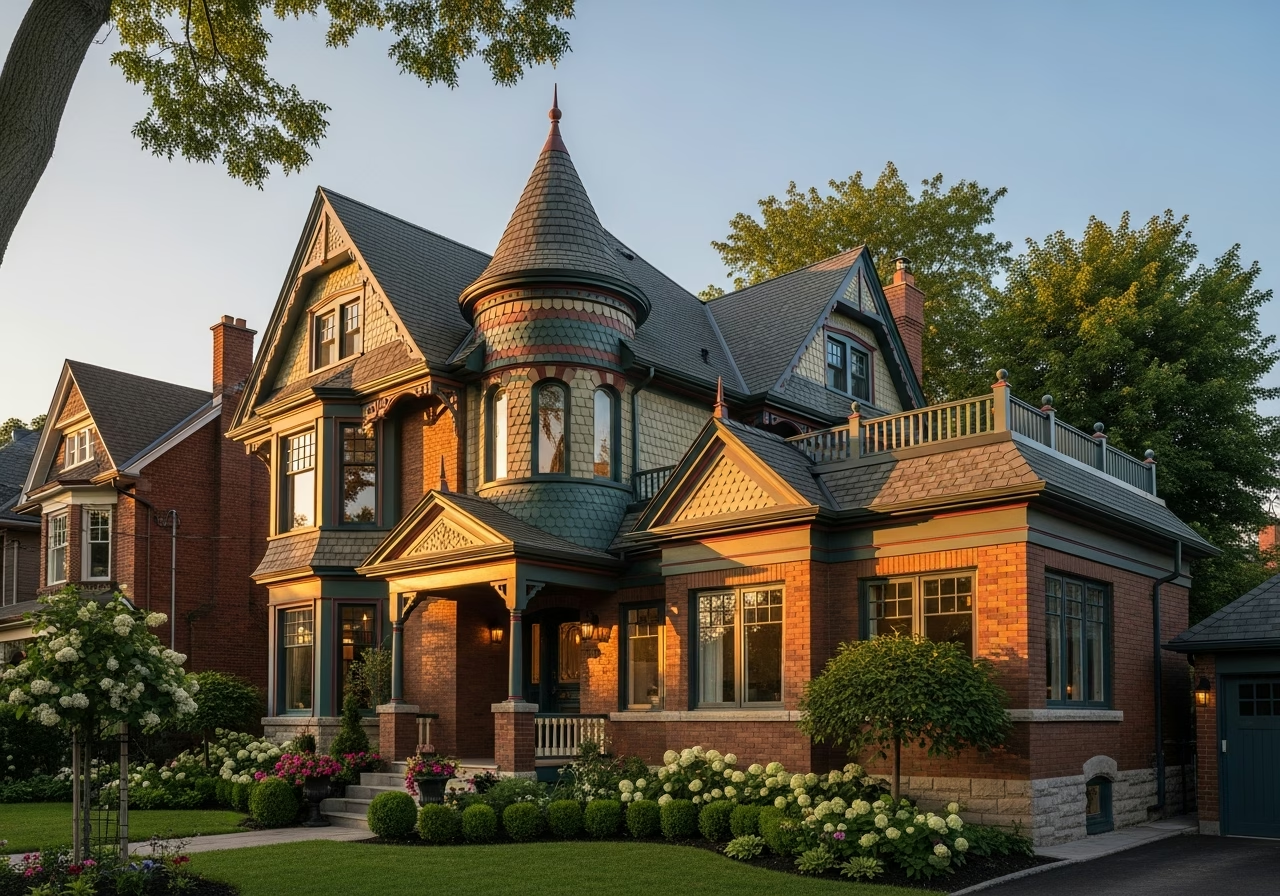
A properly restored Annex Queen Anne — original sash retained, slate or cedar roof, sandstone repaired without sandblasting, decorative shingle work intact, leaded glass repaired in-situ — sells at an 11-17% premium over comparable Annex housing stock with modern replacements. The Annex resale market specifically values authenticity: realtor photography in the Annex focuses on original detail (newel posts, fireplace mantels, leaded transoms, plaster ceiling medallions) far more than in newer Toronto neighborhoods. Un-doing rooming-house era alterations — restoring stair runs, opening original parlors, recovering plasterwork — is often the single highest-ROI work in the entire renovation budget.
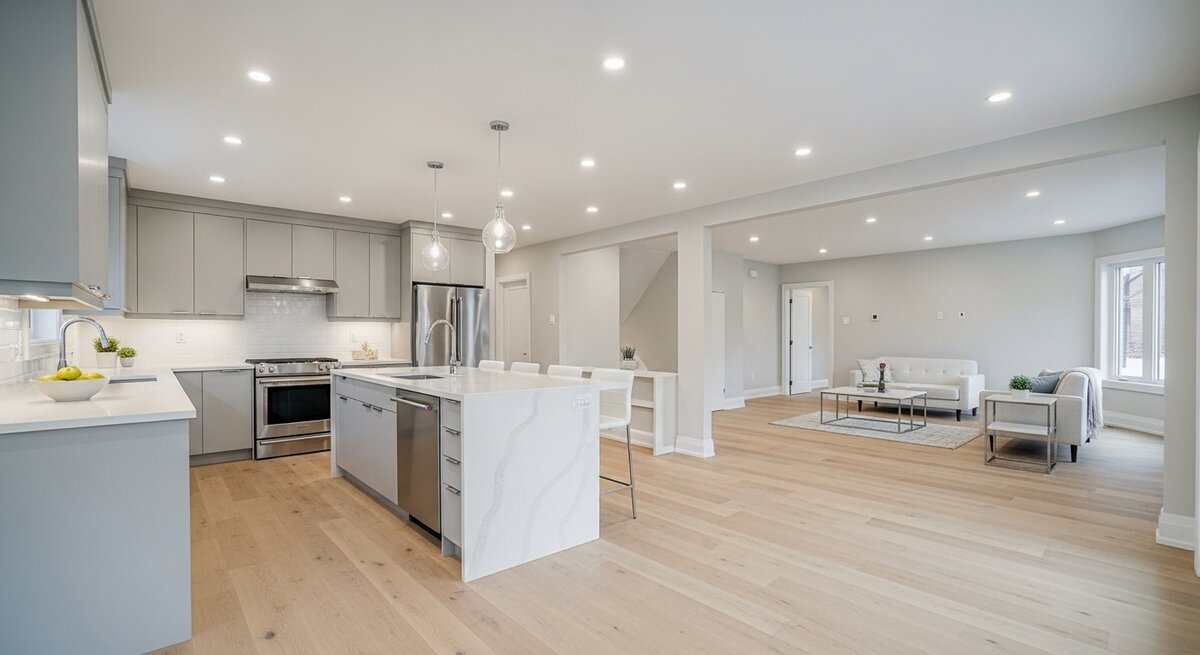
Conversely, modern interventions that read as inauthentic (vinyl windows, asphalt-over-slate, gutted-and-flipped interiors with shaker cabinets and quartz waterfall counters) consistently underperform restored equivalents at resale by 6-12%. The Annex buyer wants Annex *character*, not generic GTA renovation.
Bottom line
The Annex is the architecturally densest residential neighborhood in Toronto. Two HCDs, dozens of individually designated properties, the Patricia McHugh / Edward James Lennox cultural inheritance, and an engaged Residents' Association together create a renovation environment that rewards careful work and punishes shortcuts. Lennox's Annex Style is not generic Queen Anne — it has specific architectural signatures (rounded sandstone arches, squared turrets, asymmetric Romanesque massing) that must be respected in any replacement detailing. We work in the Annex regularly, and our standard approach is to begin with archival research: original architect's drawings if available (some Lennox plans survive at the City Archives), historic photographs from the City of Toronto Archives Fonds 1244 and 1257, and any salvage from the property itself. That research drives the materials and detailing spec, which drives the Heritage Permit application, which drives the construction.
What Makes Us Different
Flexible Scheduling
Book annex victorian & queen anne renovation appointments that fit your life. Evening and weekend slots available.
Quality Guaranteed
We don't cut corners. Every project follows industry best practices with premium materials and meticulous attention to detail.
No Hidden Fees
Straightforward pricing for annex victorian & queen anne renovation. What we quote is what you pay — guaranteed.
Sound Familiar?
These are the most common problems our clients face.
Need professional help with this?
Not sure where to start?
Want quality results the first time?
Tired of putting it off?
Looking for a reliable contractor?
Want a free, no-obligation estimate?
Ready to get started?
Free estimate, no obligation. We respond within 1 hour.
Our Annex Victorian & Queen Anne Renovation Work
Professional annex victorian & queen anne renovation results from RenoHouse projects across the Toronto GTA.
Annex Victorian & Queen Anne Renovation
Toronto GTA
Quality Workmanship
Licensed & Insured
Like what you see? Let's talk about your project.
🧮 Annex Victorian & Queen Anne Renovation Services — Cost Estimator
GTA / Ontario — 2026 market pricing
📊 Where the cost goes (typical breakdown)
📋 What affects your price:
💡 Estimates use 2026 GTA/Ontario market data. Actual cost depends on site conditions, material selections, and project scope. Book a free in-home quote for a precise number.
Frequently Asked Questions About Annex Victorian & Queen Anne Renovation
A hybrid of Queen Anne Revival and Richardsonian Romanesque, pioneered by Edward James Lennox starting around 1888 in the Annex neighborhood. The term was coined by architectural historian Patricia McHugh. Signature elements: large rounded sandstone arches at the entrance, asymmetric massing, decorative shingle work in the gables, squared rather than round turrets, and rough-faced Credit Valley brownstone. The houses at 37 and 69 Madison Avenue are textbook examples.
It depends on the street. The East Annex HCD (designated 1994) covers Bedford Road east to Avenue Road, Prince Arthur north to Dupont. The West Annex Madison Avenue HCD (designated 2015, LPAT 2019) covers properties on Madison Avenue. Streets like Brunswick Avenue, Howland Avenue west of Madison, and Major Street are mostly outside the HCDs but contain many individually designated properties. We do a desktop check at first consultation.
Yes, and it is one of the most common Annex renovation projects in 2026. The work involves removing 1940s-1970s partition walls and dropped ceilings, restoring original stair runs and parlors, recovering plaster cornices and ceiling medallions buried behind drywall, and updating mechanicals to modern standards within the heritage envelope. Typical cost range $385,000 to $1.1M depending on original detailing surviving.
Sandblasting destroys the original tooled surface of Credit Valley brownstone permanently and accelerates spalling. The correct approach is gentle low-pressure water washing combined with mild chemical cleaners (D/2 Biological Solution is HCD-approved), patching of damaged areas with NHL-based mortar matched in colour and texture, and consolidant treatment for friable zones. We work with two Toronto stone-restoration specialists on this work.
Almost always yes, on landmark or HCD properties. Original wood sash from the 1880s-1900s — properly weatherstripped with bronze interlocking weatherstripping, fitted with low-E storm windows on the exterior, and re-glazed where needed — outperforms most modern replacement units thermally and aesthetically. Restoration runs roughly $1,200-$2,800 per unit versus $2,400-$5,200 per unit for a wood-clad replacement. The math favors restoration on Annex stock.
East Annex HCD and West Annex Madison HCD files are reviewed by Heritage Planning staff at City Planning Division. Routine alterations with delegated authority do not go to the Toronto Preservation Board; additions, demolitions, and precedent-setting interventions do. The Annex Residents' Association also engages on most significant applications — coordinating with them informally before submission usually accelerates the file.
Harbord Village (HCD Phase 1: 2005, Phase 2: 2011) sits south-west of the Annex, with similar Victorian housing stock but a different HCD Plan and a different heritage planner roster. Properties on Major Street, Bathurst Street, and Borden Street that some realtors list as 'Annex' actually fall under Harbord Village HCD rules. We confirm which HCD Plan applies at the first consultation — the design guidelines and material standards differ in meaningful ways between the two.



You Might Also Need
Customers who looked at annex victorian & queen anne renovation also asked us about these complementary services.


We Serve All GTA
Professional annex victorian & queen anne renovation services available across the Greater Toronto Area.
“Renovated our entire main floor — kitchen, living room, flooring, paint, lighting. They coordinated everything perfectly. One contractor for the whole project.”
— Anthony G., North York
Get a Free Annex Victorian & Queen Anne Renovation Estimate
Contact us today for a free, no-obligation quote for your annex victorian & queen anne renovation project in Toronto GTA. We'll get back to you within 1 hour.