 RenoHouse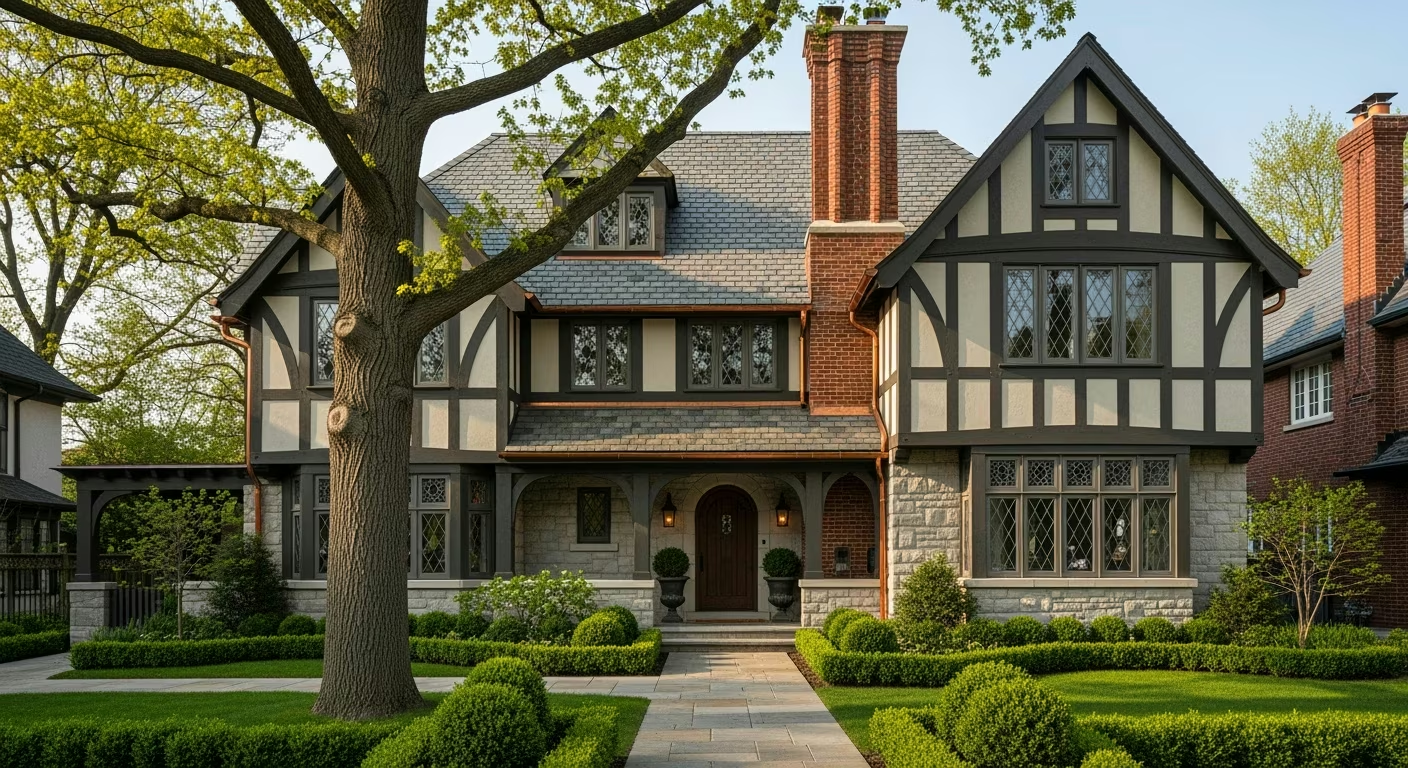
Architect-Required Heritage Renovation in Upper and Lower Forest Hill
Professional forest hill home renovation services in Toronto and the Greater Toronto Area. Licensed, insured, and trusted by homeowners across the GTA.
Serving the GTA
In-Home Estimates
Workmanship Warranty
Projects Completed
How It Works
A simple, stress-free process from start to finish.
Send Your Request
Call or WhatsApp us. Send photos, video, comments about what needs to be done, and your location.
Remote Estimate
We review everything, discuss details, and provide a clear estimate — often within hours, no visit needed.
Repair Process
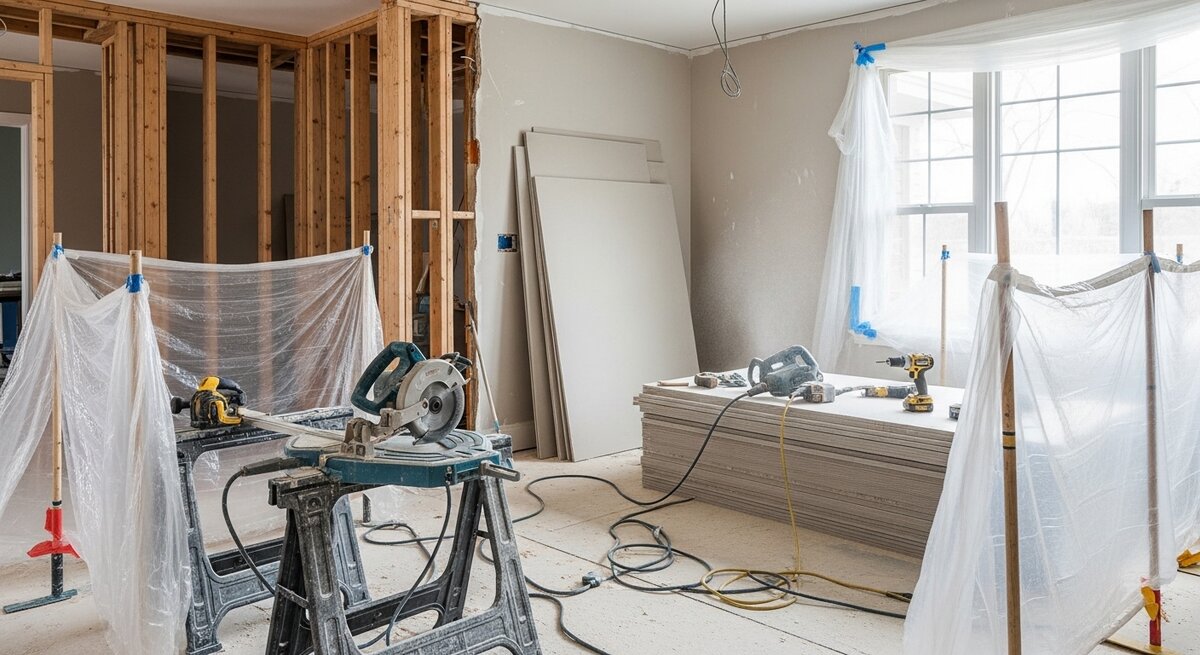
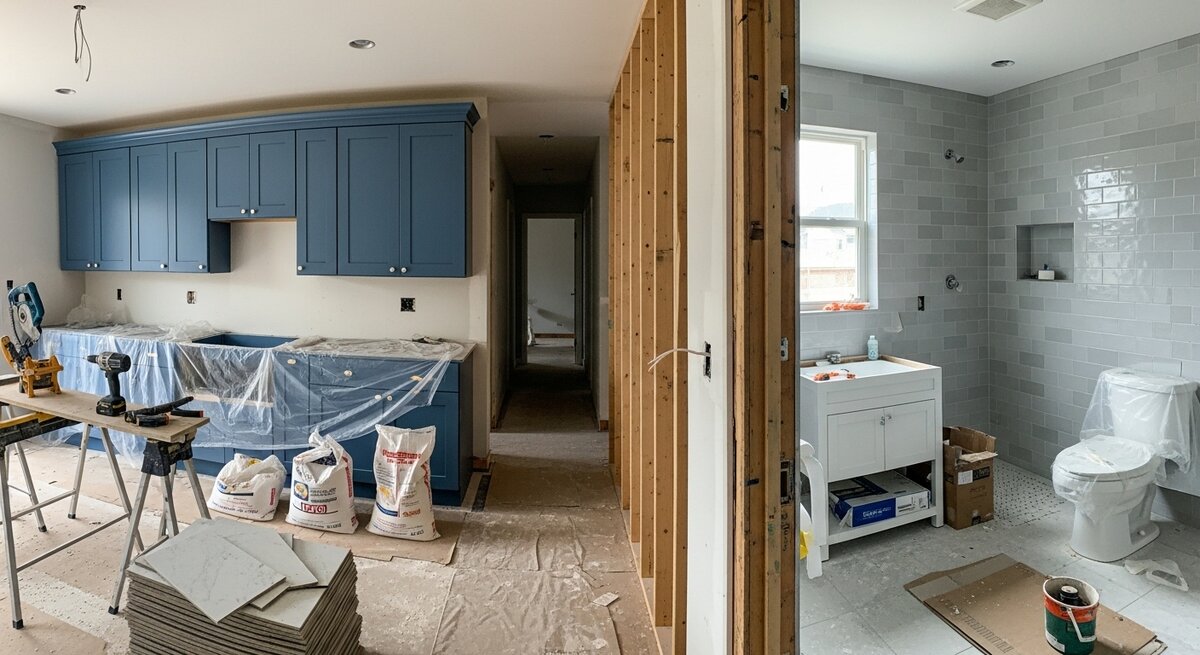
Our licensed team arrives on the agreed date and completes your forest hill home renovation to the highest standards.
Handover & Warranty
Final walkthrough with you, full cleanup, and warranty documentation provided.
Send Your Request
Call or WhatsApp us. Send photos, video, and a description of the work + your location.
Remote Estimate
We review everything, clarify details, and give you a price — often within hours.
Repair Process
Licensed team arrives on schedule and completes your forest hill home renovation professionally.
Handover & Warranty
Final walkthrough, full cleanup, and warranty documentation.
Forest Hill Home Renovation in Toronto GTA
Renovation in Forest Hill — English Cottage, Tudor Revival, Georgian Revival, French Provincial. Not a Heritage Conservation District but heavily protected: 1923 Village of Forest Hill character bylaws, Heritage Register listings (15 Forest Hill Village properties added in recent years), Zoning By-law 569-2013, Committee of Adjustment scrutiny.
Forest Hill, the architect-required village
Forest Hill is a paradox: arguably Toronto's most architecturally controlled neighborhood, and yet not a designated Heritage Conservation District. The protection runs through three parallel mechanisms instead — the 1923 bylaws of the former Village of Forest Hill (amalgamated into Toronto in 1967), individual Heritage Register listings (15 Forest Hill Village properties were added to the Register in recent years), and the height/massing restrictions of Zoning By-law 569-2013 with the heritage overlay where applicable.
The 1923 Village of Forest Hill bylaws are the cultural DNA: every house in the original village had to be designed by a registered architect, and a tree had to be planted in front of every property. Those rules are no longer enforced as bylaw, but they set the standard the neighborhood still maintains. A renovation that doesn't read as architect-designed gets noticed immediately on Russell Hill Road or Vesta Drive.
Architectural styles that define Forest Hill
English Cottage (1920s). Steep slate or asphalt roofs, prominent stone or brick chimneys, leaded-glass casement windows, asymmetric massing, often with a rounded "eyebrow" dormer. The Cotswold influence is direct. Russell Hill Road, Old Forest Hill Road, and Vesta Drive are dense with cottage stock.
Tudor Revival (1920s-1930s). Half-timbering on stucco, steep gables, oak or stone door surrounds, leaded windows in diamond patterns. Larger and grander than the English Cottage but in the same architectural family. Concentrated on Forest Hill Road, Dunloe Road, and Strathearn Boulevard.
Georgian Revival (1920s-1940s). Symmetrical brick facades, hipped roofs, multi-light double-hung sash, centered fanlight. The default style for Forest Hill's largest 1930s-era mansions on Glenayr Road and Warren Road.
French Provincial (1930s-1950s). Mansard or hipped roofs, stucco or limestone facades, arched dormers, curved iron railings. Less common but distinctive — concentrated on Russell Hill Road and around Forest Hill Village proper.
Modernist (1955-1980). A meaningful minority — perhaps 8% of Forest Hill housing stock. Often architect-designed (Irving Grossman, Macy DuBois, Klein & Sears) and increasingly seen as heritage in their own right. Modernist Forest Hill houses are now appreciating faster than the period Tudors.
Contemporary (2005-present). Forest Hill has seen aggressive teardown-and-rebuild over the last two decades, with new builds in pastiche-Georgian or pastiche-Tudor. Quality is uneven; the best new builds are designed by Toronto firms like Audax, Belzberg, and Richard Wengle.
Forest Hill's heritage framework: dates and scope
Key dates and instruments:
- 1923 — Village of Forest Hill bylaws: architect-required, tree-required, height restrictions, no commercial uses outside Forest Hill Village.
- 1967 — Village amalgamated into the City of Toronto. The 1923 bylaws survived as character guidelines.
- 2013 — Zoning By-law 569-2013 consolidates city-wide rules; Forest Hill retains tightened maximum height (typically 9.5m) and lot coverage limits.
- 2020-2024 — Heritage Register listings added for 15 Forest Hill Village properties (Spadina Road between Montclair Avenue and Strathearn Boulevard, plus 327 Lonsdale Road). 171 Old Forest Hill Road — the William Moore House, an important Regency Cottage — is individually Part IV designated.
What this means in practice: if your property is on the Heritage Register, alterations trigger a 60-day demolition delay and the City reviews any major application. If you are not individually listed, you are governed by Zoning By-law 569-2013, the Committee of Adjustment (for variances), and the strong neighborhood expectations enforced through the Forest Hill Residents' Association.
In Forest Hill, the neighborhood association is almost as influential as the Heritage Planning department. Every variance application gets reviewed; major rebuilds attract organized opposition. We have been through that process on multiple projects.
Common Forest Hill renovation projects and 2026 pricing
| Project | Typical Forest Hill spend |
|---|---|
| Kitchen renovation (Upper Forest Hill grade) | $215,000 – $495,000 |
| Master bath renovation (limestone + brass) | $95,000 – $195,000 |
| Tudor front door + entry rebuild | $58,000 – $120,000 |
| English Cottage roof replacement (slate or cedar) | $185,000 – $385,000 |
| Third-floor master suite | $285,000 – $545,000 |
| Rear addition (under ZBL 569-2013 envelope) | $620,000 – $1.6M |
| Full-house renovation, English Cottage | $1.4M – $4.5M |
| Pool + cabana installation | $245,000 – $585,000 |
| Stone facade restoration | $85,000 – $245,000 |
| Leaded-glass casement window package | $115,000 – $245,000 |
Forest Hill clients ask less about price-per-square-foot and more about whose drawings the project is built from, who is supervising the millwork, and which masons are doing the stone. The 1923 expectation of architect involvement is still cultural, even when no longer legally required.
Material specifics for Forest Hill homes
For English Cottage:
- Roofing: Slate (preferred, especially Welsh blue and Vermont sea-green), hand-split cedar shake (Class C minimum), or high-end architectural asphalt in slate-grey for budget compromises.
- Stone: Indiana limestone, Algonquin limestone, or Credit Valley stone — the same quarries that supplied the 1920s building boom. Avoid Owen Sound limestone for repairs on Indiana-limestone houses; the colour mismatch is visible.
- Windows: Loewen Tradition casement or Kolbe Heritage in leaded-glass patterns. Wood interior, painted exterior (Benjamin Moore HC-77 or similar earth tones).
- Chimneys: Original brick relaid with Type O mortar; cap stones replaced like-for-like; chimney pots from heritage suppliers (Sandkühl, Maple Leaf Pottery).
For Tudor Revival:
- Half-timbering: True oak structural-grade timber; never applied trim. Three-coat lime stucco for the field.
- Stone surrounds: Carved Indiana limestone for door surrounds; hand-laid Credit Valley field stone for chimneys and partial-height stone walls.
- Windows: Leaded diamond-pattern casement, lead came not vinyl-applied. Cathedral or restoration glass for accurate light play.
- Doors: Solid white oak, fumed and oiled, with hand-forged iron strap hinges (Sun Valley Bronze or Rocky Mountain Hardware).
For Georgian Revival:
- Brick: Hand-formed brick in soft red — Glen-Gery Hanley Series, Belden Brick Watercolor Series, or salvaged 1920s Toronto stock. Type N mortar.
- Windows: Marvin Ultimate or Pella Architect Reserve double-hung, 6-over-6 or 9-over-9 SDL configuration.
- Doors: Solid mahogany, six-panel, with fanlight and sidelights in restoration glass.
- Cornice and crown: Solid pine or hardwood, profiled to original drawings; no MDF.
Renovation process in Forest Hill
Forest Hill files route differently depending on whether the property is Heritage Register-listed:
Listed property: Application includes Heritage Planning review; Chapter 103 permit may be required. Timeline 10-18 weeks.
Not listed: Zoning-only review; Committee of Adjustment if variances are required (height, lot coverage, side yards). Timeline 8-14 weeks for variance hearings, 4-8 weeks for as-of-right Building Permits.
Residents' Association engagement. The Forest Hill Residents' Association reviews major applications. Their objection alone won't stop a permit, but it materially affects the Committee of Adjustment hearing outcome. We coordinate informal consultation early — usually saving 4-8 weeks at hearing.
Common rejection reasons in Forest Hill:
- Height variance beyond 1m of the 9.5m baseline — almost always refused without architectural justification
- Lot coverage above the 35-40% baseline (varies by zoning sub-district)
- Front-yard parking expansions that remove the original lawn-and-tree setback
- Pool placement that violates the rear-yard depth requirement
- New builds that read as pastiche without architectural rigor — informally policed but real
Five micromarkets inside Forest Hill
Forest Hill Village (the original 1923 village core, around Spadina Road and Lonsdale Avenue). Densest concentration of Heritage Register listings; smallest lots; highest sensitivity to alterations. Detached sales 2026: $4.2M–$8.5M.
Upper Forest Hill (north of Eglinton, between Bathurst and Avenue Road). Larger lots, post-1930 housing, more Georgian Revival and French Provincial. Sales $4.8M–$15M+.
Lower Forest Hill (south of St. Clair, around Russell Hill Road). 1920s English Cottage and Tudor stock; the most architecturally significant blocks. Russell Hill Road and Vesta Drive are landmark streets. Sales $5.5M–$22M.
Forest Hill South (between St. Clair and the rail corridor). Mixed inter-war and post-war, smaller lots, more renovation-and-rebuild activity. Sales $3.2M–$6.5M.
Cedarvale / Forest Hill North (west of Bathurst, north of Eglinton). Often grouped with Forest Hill but technically separate; 1920s-1950s mix, smaller premium. Sales $2.4M–$4.8M.
Resale value impact
A Forest Hill English Cottage with original slate retained, leaded windows restored, and stone facade repointed correctly sells at a 10-16% premium over a same-sized house on the same street with asphalt shingle, vinyl-clad replacement windows, and modernized stone. The neighborhood pays for architect-designed work; the photo-driven listing market in Forest Hill makes the difference visible from the first slide. Conversely, a teardown-and-rebuild in pastiche-Tudor — common in the 2010s — often *underperforms* a restored period house at resale because buyers in this band are increasingly value-conscious about authenticity.
Bottom line
Forest Hill is not an HCD, but that does not make it less protected — it makes the protection different. Heritage Register listings, the 1923 architect-required culture, ZBL 569-2013 height controls, Committee of Adjustment scrutiny, and the Forest Hill Residents' Association together form a stronger de facto framework than many of Toronto's actual HCDs. Renovate accordingly: hire an architect (the neighborhood expects one), spec materials at the level of the original 1920s build, engage the Residents' Association early on any visible alteration, and budget for the permit cycle that comes with $4M-$15M housing stock.
The RenoHouse Difference
Experienced Trades
Hands-on expertise in forest hill home renovation. We've seen it all and know how to handle any challenge.
Warranty Protected
All work comes with comprehensive warranty coverage. We stand behind our craftsmanship and use quality materials that last.
Competitive Rates
Fair pricing on forest hill home renovation without compromising quality. We match or beat competitor quotes.
Sound Familiar?
These are the most common problems our clients face.
Need professional help with this?
Not sure where to start?
Want quality results the first time?
Tired of putting it off?
Looking for a reliable contractor?
Want a free, no-obligation estimate?
Ready to get started?
Free estimate, no obligation. We respond within 1 hour.
Our Forest Hill Home Renovation Work
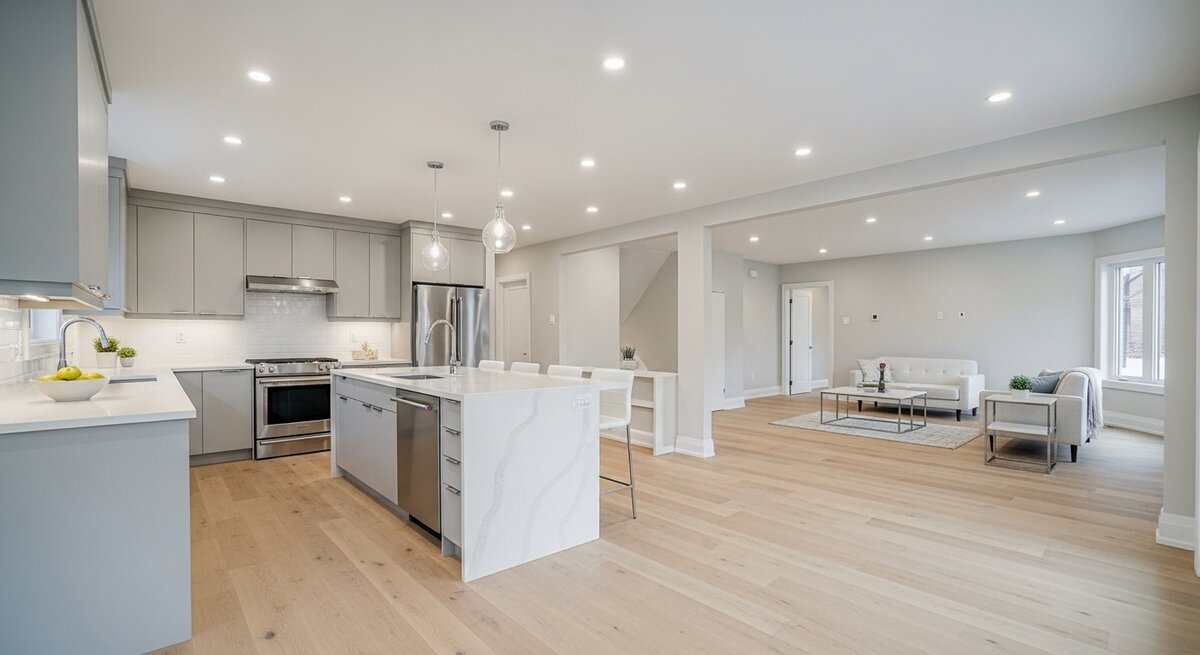
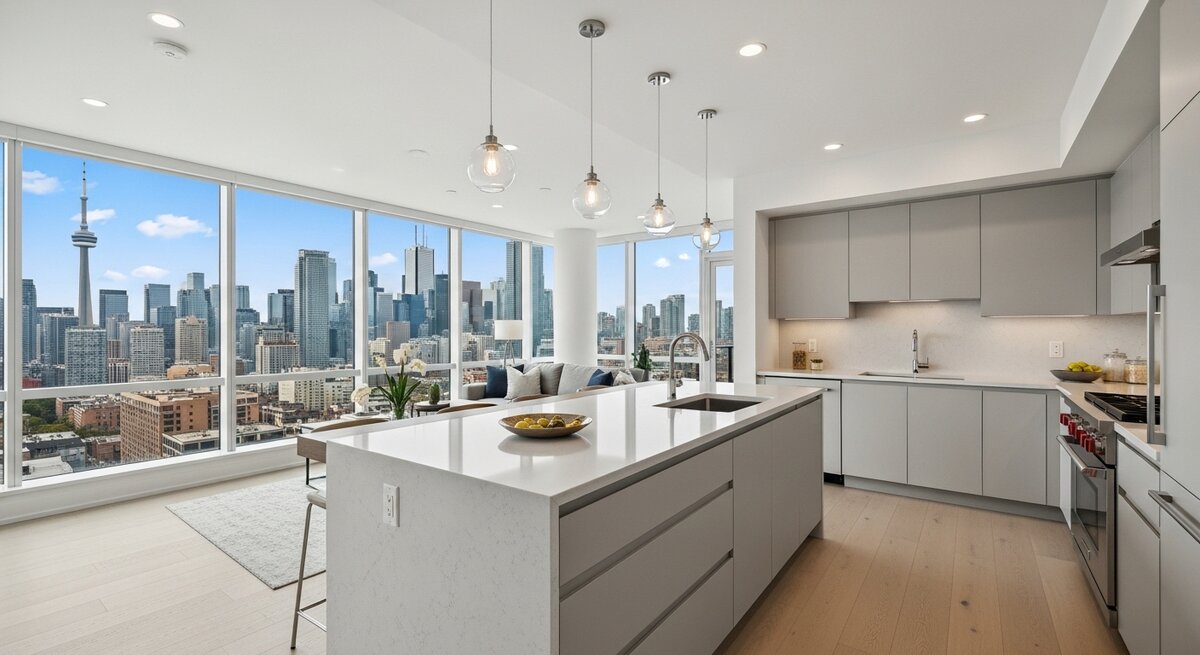
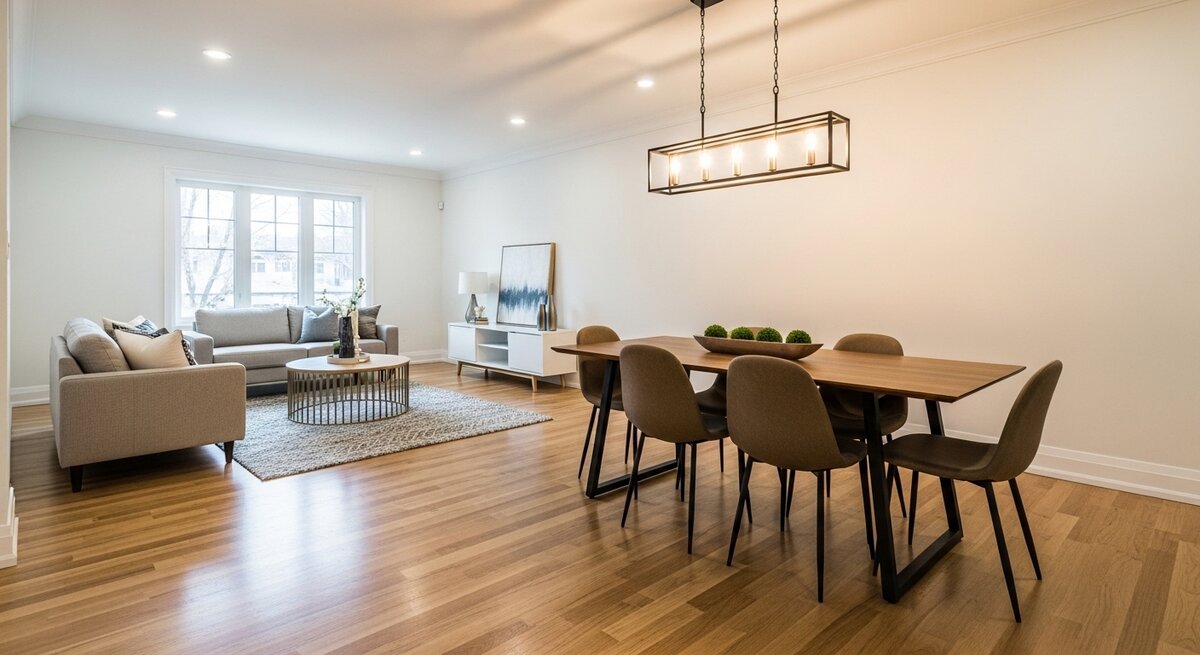
Professional forest hill home renovation results from RenoHouse projects across the Toronto GTA.
Forest Hill Home Renovation
Toronto GTA
Quality Workmanship
Licensed & Insured
Like what you see? Let's talk about your project.
🧮 Forest Hill Home Renovation Services — Cost Estimator
GTA / Ontario — 2026 market pricing
📊 Where the cost goes (typical breakdown)
📋 What affects your price:
💡 Estimates use 2026 GTA/Ontario market data. Actual cost depends on site conditions, material selections, and project scope. Book a free in-home quote for a precise number.
Frequently Asked Questions About Forest Hill Home Renovation
No. Forest Hill is *not* a designated HCD under Part V of the Ontario Heritage Act. Protection runs through the 1923 Village of Forest Hill character bylaws, individual Heritage Register listings (15 properties added recently in Forest Hill Village), Zoning By-law 569-2013, and strong Residents' Association engagement. The de facto level of architectural control is comparable to an HCD, but the legal mechanisms are different.
Only if your property is on the Heritage Register or individually Part IV designated under the Ontario Heritage Act. Most Forest Hill properties are not, but a 10-minute desktop check confirms status. If listed, exterior alterations trigger Chapter 103 review; if not listed, you are governed by Zoning By-law 569-2013 and the Committee of Adjustment for variances.
It is no longer enforced as bylaw — Forest Hill was amalgamated into Toronto in 1967 and the rule lapsed. But it set the cultural expectation. Neighborhood resale, Residents' Association engagement, and Committee of Adjustment outcomes all favor architect-designed renovations. We work with several Toronto architects who specialize in Forest Hill: Audax, Richard Wengle, and Belzberg are routinely on Forest Hill projects.
If the house is not Heritage Register-listed and not individually designated, yes — subject to ZBL 569-2013 and Committee of Adjustment. The Residents' Association will engage, often vigorously, on any teardown-and-rebuild visible from the street. We coordinate that engagement and build it into the project schedule. Plan on 12-20 weeks of permitting before construction can start.
Their formal role is consultation, not approval. But the Committee of Adjustment weights neighborhood objections heavily, and a coordinated Residents' Association opposition can either delay a variance hearing by months or force project revisions. Early informal engagement — usually a presentation to the Association's planning committee — saves time and reduces friction at hearing.
Forest Hill Village is the original 1923 village core around Spadina Road and Lonsdale Avenue. It has the highest concentration of Heritage Register listings (15 properties added recently), the smallest lots, the densest commercial frontage at Spadina/Lonsdale, and the strictest informal review of any alteration. Properties outside the Village — Upper Forest Hill, Lower Forest Hill, Forest Hill South — have more latitude but still face strong neighborhood norms.
Vinyl windows on any street-facing elevation. Composite trim on Tudor or English Cottage facades. Asphalt shingle as a substitute for slate on landmark houses. Modern brick that doesn't match the original colour and texture. Polished chrome or brushed nickel on heritage front doors. These are the items the neighborhood notices and the resale market penalizes.



You Might Also Need
Customers who looked at forest hill home renovation also asked us about these complementary services.


We Serve All GTA
Professional forest hill home renovation services available across the Greater Toronto Area.
“Renovated our entire main floor — kitchen, living room, flooring, paint, lighting. They coordinated everything perfectly. One contractor for the whole project.”
— Anthony G., North York
Get a Free Forest Hill Home Renovation Estimate
Contact us today for a free, no-obligation quote for your forest hill home renovation project in Toronto GTA. We'll get back to you within 1 hour.