 RenoHouse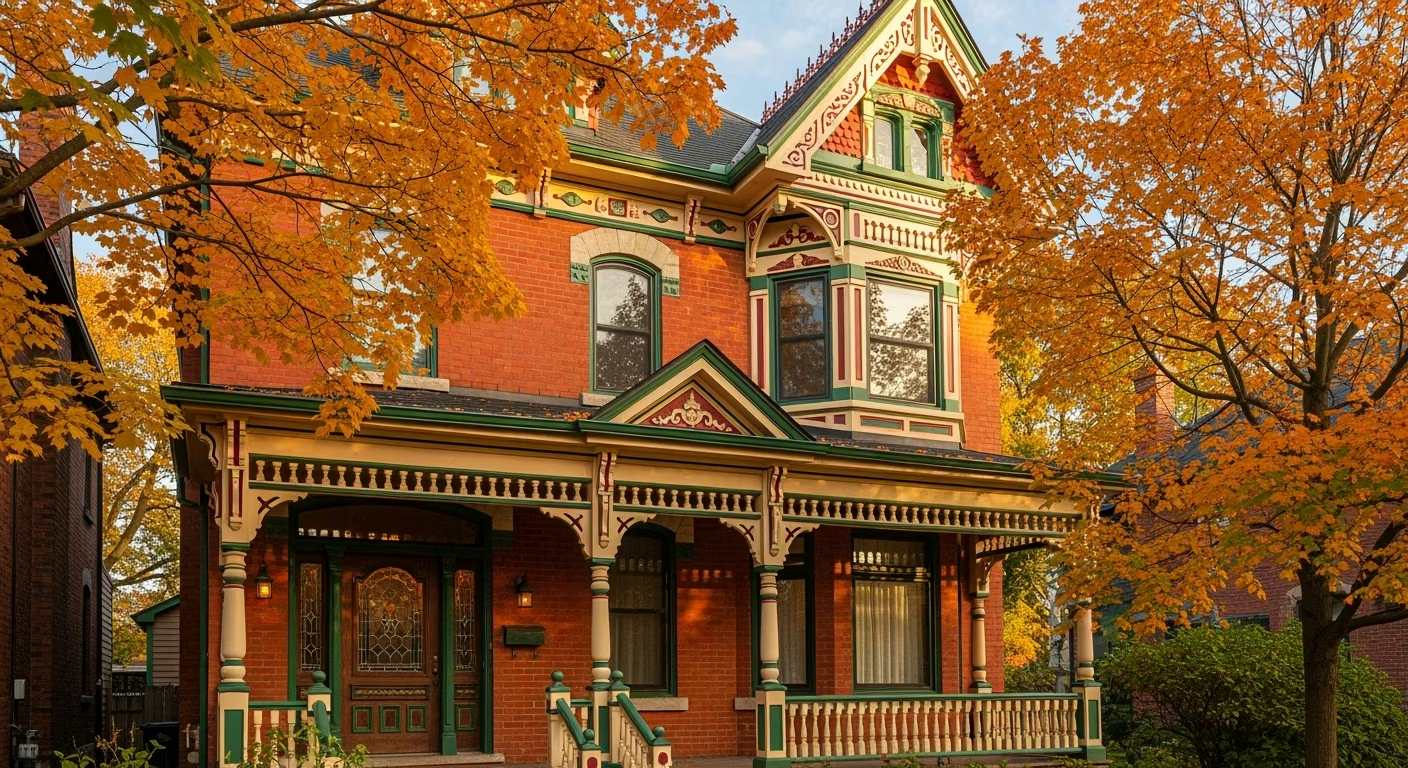
Heritage Home Renovation Across Toronto's 27 Conservation Districts
Professional heritage home renovation toronto services in Toronto and the Greater Toronto Area. Licensed, insured, and trusted by homeowners across the GTA.
Projects Completed
Years Experience
Client Satisfaction
Google Rating
How It Works
A simple, stress-free process from start to finish.
Send Your Request
Call or WhatsApp us 24/7. Send photos, video, comments about what needs to be done, and your location.
Remote Estimate
We review everything, discuss details, and provide a clear estimate — often within hours, no visit needed.
Repair Process
Our licensed team arrives on the agreed date and completes your heritage home renovation toronto to the highest standards.
Handover & Warranty
Final walkthrough with you, full cleanup, and warranty documentation provided.
Send Your Request
Call or WhatsApp us 24/7. Send photos, video, and a description of the work + your location.
Remote Estimate
We review everything, clarify details, and give you a price — often within hours.
Repair Process
Licensed team arrives on schedule and completes your heritage home renovation toronto professionally.
Handover & Warranty
Final walkthrough, full cleanup, and warranty documentation.
Heritage Home Renovation Toronto in Toronto GTA
Heritage-permit-aware renovation across all of Toronto's 27 Heritage Conservation Districts — Rosedale, the Annex, Cabbagetown, Wychwood Park, Yorkville-Hazelton and beyond. Wood-clad windows, matching mortar mix, copper standing-seam, replicated trim profiles. Ontario Heritage Act Part IV and Part V experienced.
Heritage renovation in Toronto, 2026
Toronto protects roughly 1,800 properties in Rosedale alone, and tens of thousands more across the city, through two parallel mechanisms in the Ontario Heritage Act: Part IV individual designations and Part V Heritage Conservation Districts (HCDs). If your house sits inside one of the city's 27 designated HCDs — or is individually listed on the Heritage Register under Chapter 103 of the Municipal Code — every visible exterior alteration triggers a Heritage Permit before a Building Permit can even be issued. Replacement windows, a new roof, repointed brick, a front-door swap, even a porch railing detail: all of it routes through Heritage Planning first.
This is the world we work in. Our heritage practice handles permit-stage drawings, material specs that satisfy Toronto Preservation Board reviewers, and contractor coordination for trades who actually know the difference between Type N and Type O mortar.
The full Toronto HCD list (27 designated, 4 in development)
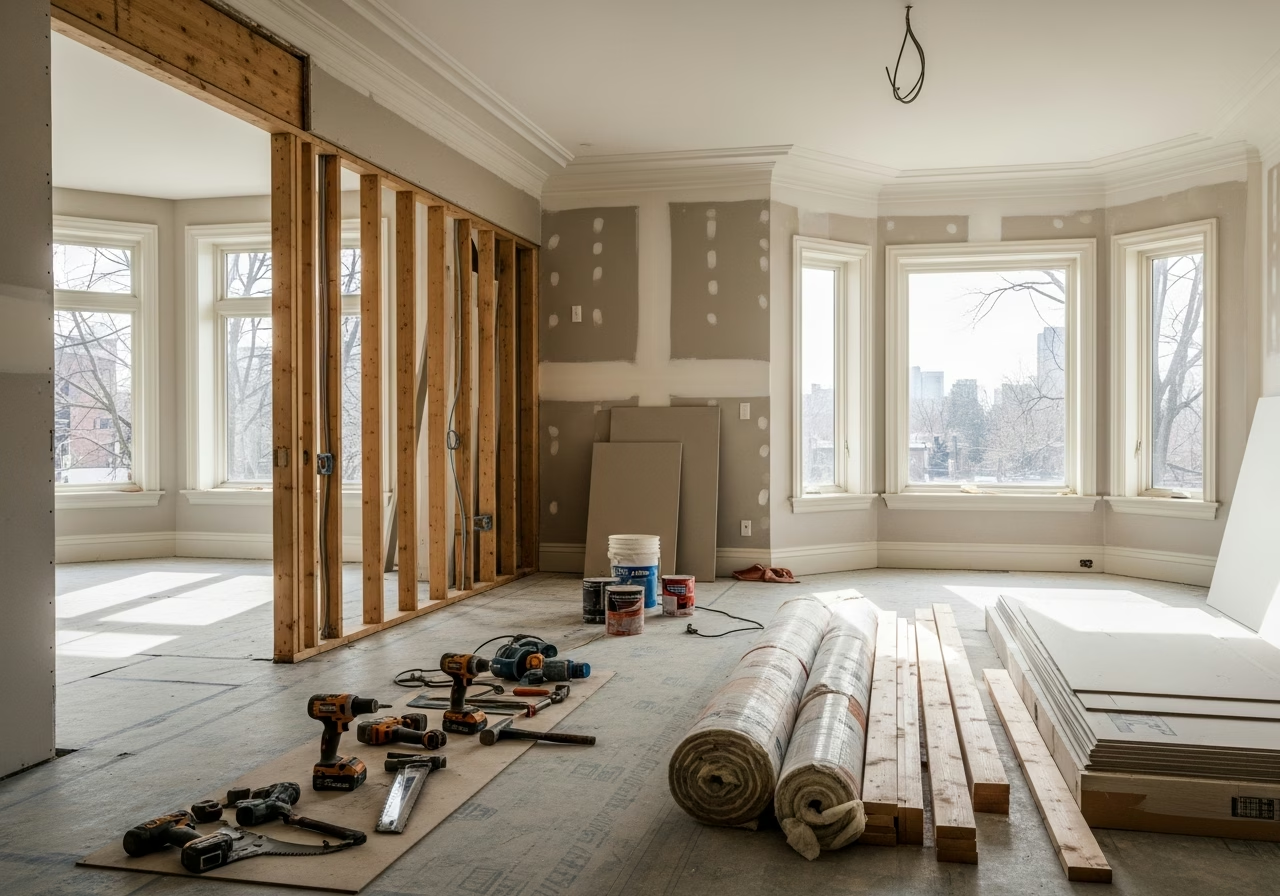
As of 2026, the City of Toronto lists 27 designated Heritage Conservation Districts. Knowing which one your property sits inside determines the HCD Plan you must comply with, the design guidelines that apply, and which Heritage Planner is assigned to review your file.
Designated HCDs (in chronological order):
- Fort York (1985)
- Wychwood Park (1985)
- East Annex (1994)
- Draper Street (1999)
- Rosedale North (2002)
- Rosedale South (2002)
- Yorkville-Hazelton (2002)
- Cabbagetown North (2002)
- Cabbagetown South (2005)
- Blythwood Road (2005)
- Harbord Village Phase 1 (2005)
- Union Station (2006)
- Weston Phase 1 (2006)
- Lyall Avenue (2006)
- Queen Street West (2007)
- Cabbagetown Northwest (2007)
- Cabbagetown Metcalfe (2008)
- Riverdale (2008)
- Kingswood Road South (2010)
- Harbord Village Phase 2 (2011)
- West Annex Phase 1: Madison Avenue (2015, LPAT 2019)
- Historic Yonge Street (2016, OLT 2024)
- Garden District (2017, OLT 2021)
- King-Spadina (2017, OLT 2024)
- St. Lawrence Neighbourhood (2020)
- Parkdale Main Street (2022, in force 2024)
- Cabbagetown Southwest (2024)
- Teiaiagon-Baby Point (2025)
Under appeal: Kensington Market, West Queen West. In development: Junction Phase I, West Annex Phase II.
Not every premium Toronto neighborhood is HCD-designated. Forest Hill, for example, is *not* a Heritage Conservation District — it is protected through a combination of individually listed properties (Forest Hill Village had 15 properties added to the Heritage Register in recent years), the 1923 Village of Forest Hill character bylaws, and Zoning By-law 569-2013. That distinction matters for permitting workflow.
Heritage Permits and Chapter 103 of the Municipal Code
Heritage permitting in Toronto is governed by Chapter 103 of the Toronto Municipal Code (consolidated April 3, 2023) and the Ontario Heritage Act. The trigger and process:
What triggers a Heritage Permit:
- Any alteration that affects heritage attributes on a Part IV designated property
- Any exterior alteration, demolition, or new construction inside an HCD
- Replacement windows, doors, roofing materials, exterior cladding
- Porches, fences higher than the HCD Plan's permitted height, accessory structures
- Tree removal in some districts (Wychwood Park, Rosedale North)
Process and timeline:
- Pre-consultation with Heritage Planning (recommended, 2-4 weeks)
- Application submission via email with drawings, specifications, materials list, and supporting heritage rationale
- Notification of Completeness (Notice of Receipt) issued by the City once the submission meets Chapter 103 requirements
- Statutory 90-day decision window under the Ontario Heritage Act — Council (or delegated Chief Planner) must approve, approve-with-conditions, or refuse. If no decision in 90 days, the permit is *deemed granted*.
- Building Permit follows, with Heritage Planning sign-off on stamped drawings
Delegated authority under s.33(15), s.34(15) and s.42(16) of the Ontario Heritage Act means many routine heritage permits never reach the Toronto Preservation Board — staff approve them directly. That works in our favor when the application package is clean.
Typical real-world timelines from intake to permit-in-hand: 8 to 16 weeks, depending on completeness of the submission and whether your file needs a Preservation Board hearing. Refusals can be appealed to the Ontario Land Tribunal.
City contact: Heritage Planning, City Planning Division, Toronto City Hall (heritage@toronto.ca).
Material specifications — what passes Heritage Planning review
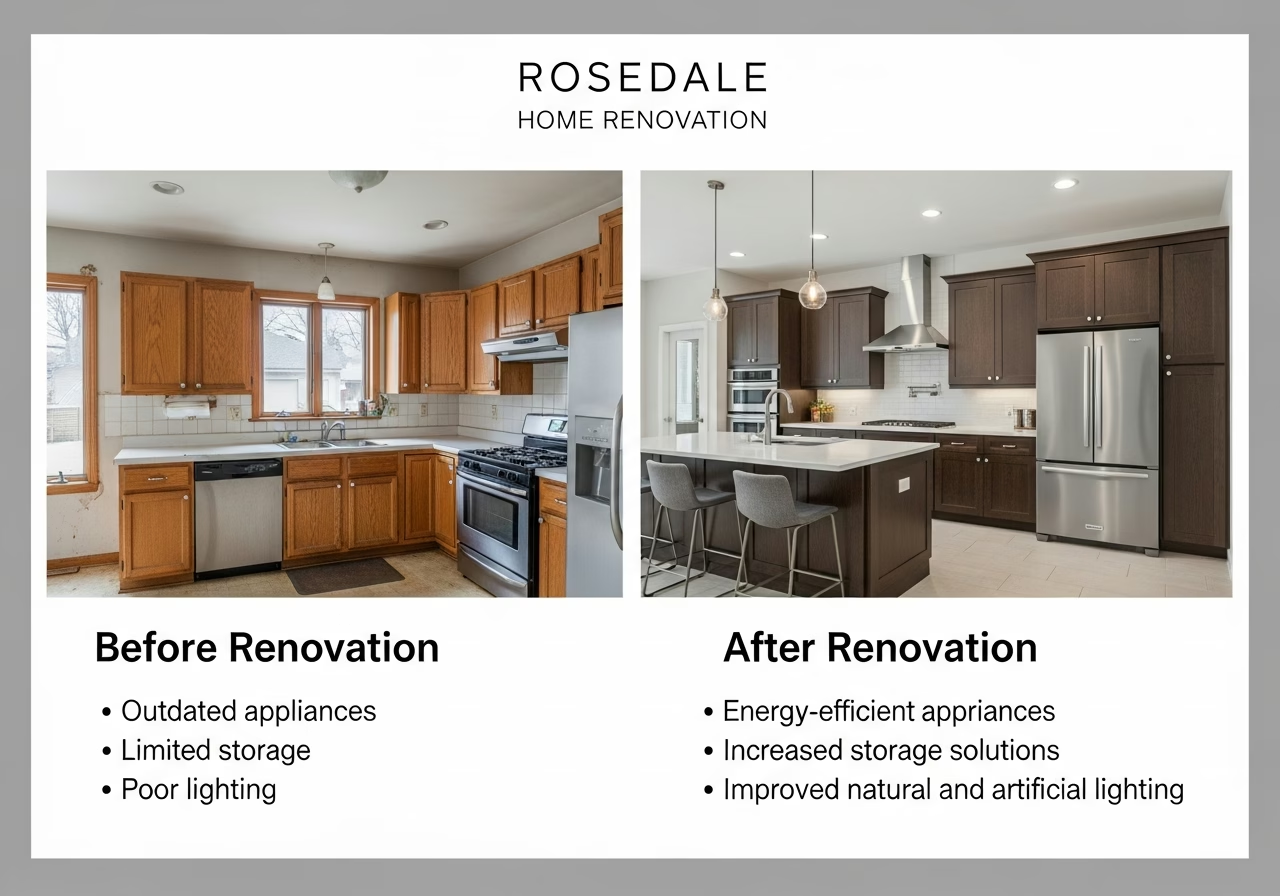
The single fastest way to get a Heritage Permit refused is to spec contemporary off-the-shelf product. HCD Plans for districts like North Rosedale, East Annex, and Cabbagetown North are explicit about acceptable materials. Here is the working spec sheet we build from:
Windows (the most-rejected item):
- *Acceptable:* Wood-clad casement and double-hung from Marvin Ultimate, Pella Architect Reserve, Andersen 400 E-Series, Loewen Tradition, and Kolbe Heritage Series. Putty-glazed sash with simulated divided lites (SDLs) bonded to the exterior surface, not flat between-glass grilles.
- *Banned in most HCDs:* Vinyl, aluminum-only, flat between-glass grilles, anything that reads as "replacement window" from the street.
Roofing:
- *Acceptable:* Western red cedar shake (Class C minimum), natural slate (Vermont, Welsh, or Spanish), copper standing-seam, terne-coated stainless steel, and EPDM on flat sections where invisible from the street.
- *Restricted:* Asphalt shingle is permitted in many districts but must be architectural-grade in a heritage color palette (slate-grey, charcoal, weathered brown). Modified-bitumen roll roofing is banned in Wychwood Park and parts of Rosedale.
Masonry:
- *Brick replacement:* Salvaged Toronto common brick first; if unavailable, Cherokee Brick & Tile (Georgia), Glen-Gery (Pennsylvania), Watsontown Brick, and Belden Brick all maintain colour and texture lines that match late-Victorian and Edwardian Toronto stock.
- *Mortar:* Type O lime-rich mortar for soft historic brick (1850s-1900); Type N for harder Edwardian brick (1900-1920). Never Type S for historic walls — the Portland cement content is too high and it spalls the brick face. Lafarge Lime, Mortar Net Solutions, and St. Astier NHL (natural hydraulic lime) are the suppliers HCD reviewers know.
- *Pointing:* Brick spotting (replacing individual bricks) and tuckpointing must match original joint width (typically 3/8") and tooling profile (concave, V-joint, or struck).
Exterior trim:
- *Acceptable:* Solid hardwood — oak, maple, mahogany, sapele, and Spanish cedar for painted millwork. Eastern white pine for replication of original window casings and cornices.
- *Banned for exterior:* MDF, finger-jointed pine, PVC trim, composite "wood-look" boards in most HCDs. Cellular PVC is sometimes accepted for invisible flashings but never for visible profiles.
Hardware:
- *Acceptable:* Solid brass (lacquered or living-finish), aged bronze, oil-rubbed bronze. Baldwin Estate, Emtek Heritage, Rocky Mountain Hardware, and Sun Valley Bronze are HCD-friendly.
- *Banned:* Polished chrome, brushed nickel, and satin-stainless on heritage front doors. They read as 1990s suburban.
2026 GTA heritage pricing tiers
Heritage work costs more than generic renovation, always — because the materials cost more, the trades are specialized, and the permit cycle adds time. These are realistic ranges for 2026:
| Project type | Floor | Standard | Premium |
|---|---|---|---|
| Kitchen renovation (heritage cabinetry, period-correct millwork) | $85,000 | $145,000 | $260,000+ |
| Bathroom renovation (clawfoot/console sink, subway tile, brass) | $42,000 | $78,000 | $135,000+ |
| Full-house heritage restoration (1,800–3,500 sq ft) | $480,000 | $850,000 | $1.8M+ |
| Heritage-permit-compliant addition (rear, ≤30% GFA) | $310,000 | $580,000 | $1.1M+ |
| Front porch reconstruction (full replication) | $48,000 | $85,000 | $160,000+ |
| Window package — full house (12-18 wood-clad units) | $58,000 | $95,000 | $185,000+ |
| Cedar shake or slate roof (3,000 sq ft footprint) | $72,000 | $130,000 | $245,000+ |
| Brick repointing + spotting (full elevation) | $28,000 | $52,000 | $95,000+ |
*Premium tier* reflects work in North Rosedale, South Rosedale, Yorkville-Hazelton, and Wychwood Park — where original detailing is intact, replication is meticulous, and finish expectations match the resale price band ($3M-$15M+).
Five sub-neighborhoods we work in
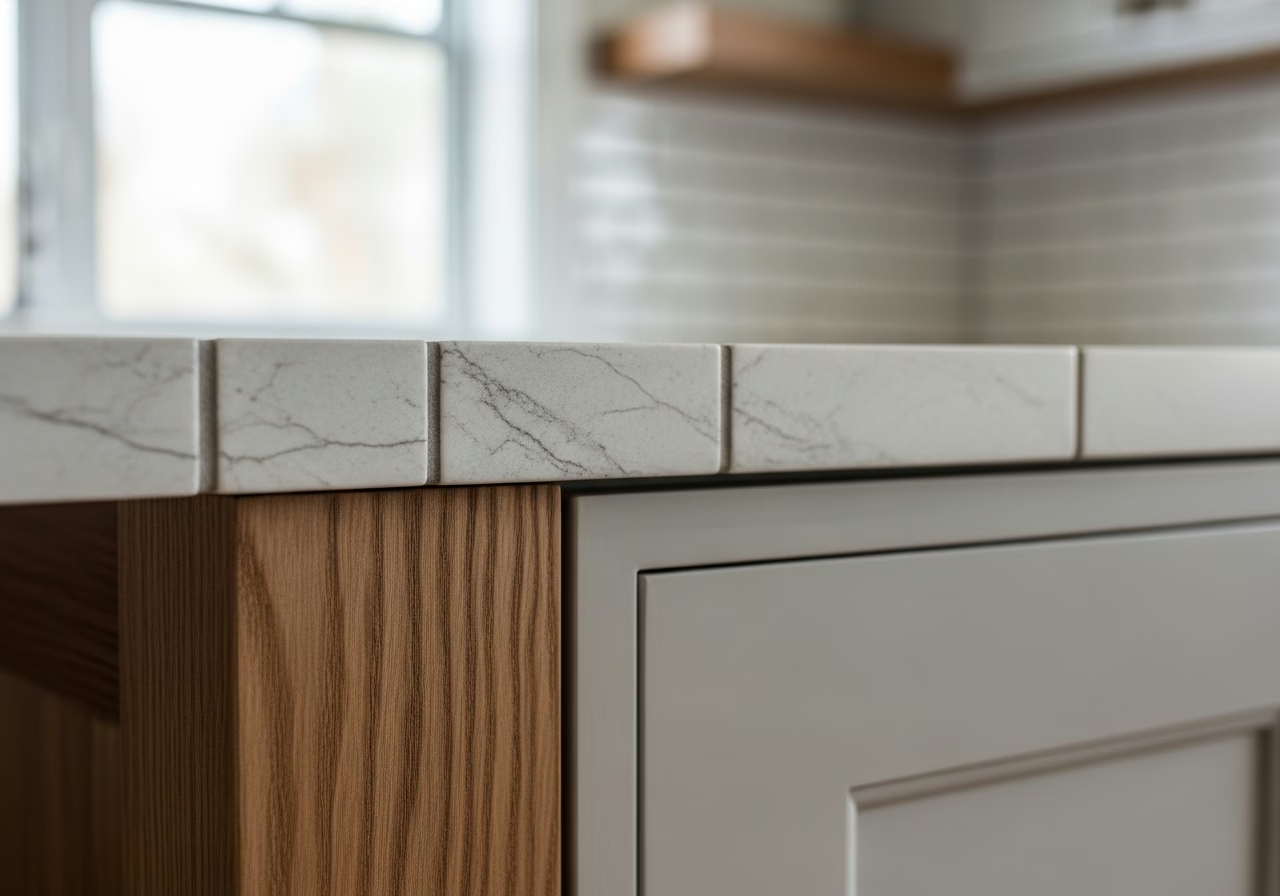
Rosedale (North + South HCDs, 2002). Combined 1,800 properties — the largest HCD in Ontario. Edwardian (1900-1915) and Tudor Revival (1920s) dominant. Average detached sale 2026: ~$4.8M.
Forest Hill (not HCD; protected via Heritage Register listings + 1923 character bylaws + ZBL 569-2013). English Cottage, Tudor Revival, Georgian Revival. The 1923 Village of Forest Hill bylaw required every house be designed by a registered architect — a rule that defined the neighborhood's character even though it is no longer enforced.
Lawrence Park (no formal HCD; some Blythwood Road HCD coverage 2005). Garden suburb planned 1910 by Walmsley Brothers; Cotswold and Tudor Revival 1920s-1930s. Premium of $3.5M-$8M.
The Annex (East Annex HCD 1994; West Annex Madison Phase 1 HCD 2015). Queen Anne Revival and the unique "Annex Style" — a Romanesque-Queen Anne hybrid coined by historian Patricia McHugh. Edward James Lennox is the defining architect.
Cabbagetown (4 separate HCDs — North 2002, South 2005, Northwest 2007, Metcalfe 2008, Southwest 2024). Mid-to-late Victorian (1860s-1890s), bay-and-gable terraces, Second Empire mansards on north-side streets. Largest contiguous Victorian streetscape in North America.
Why this matters
A heritage renovation done correctly *adds* value disproportionate to the build cost: a properly restored Rosedale Edwardian front facade can lift comparable resale by 8-14% over a generic-modern equivalent on the same street. Done badly — vinyl windows on a 1908 brick Edwardian, the wrong mortar mix, MDF trim painted to fake hardwood — and the same property carries a *discount* against neighbors. Heritage work is one of the few areas in renovation where the right contractor pays for themselves on paper.
If your property is HCD-located or individually listed, request a heritage consult before you commission *any* drawings. Drawings done without the HCD Plan in hand almost always get rewritten.
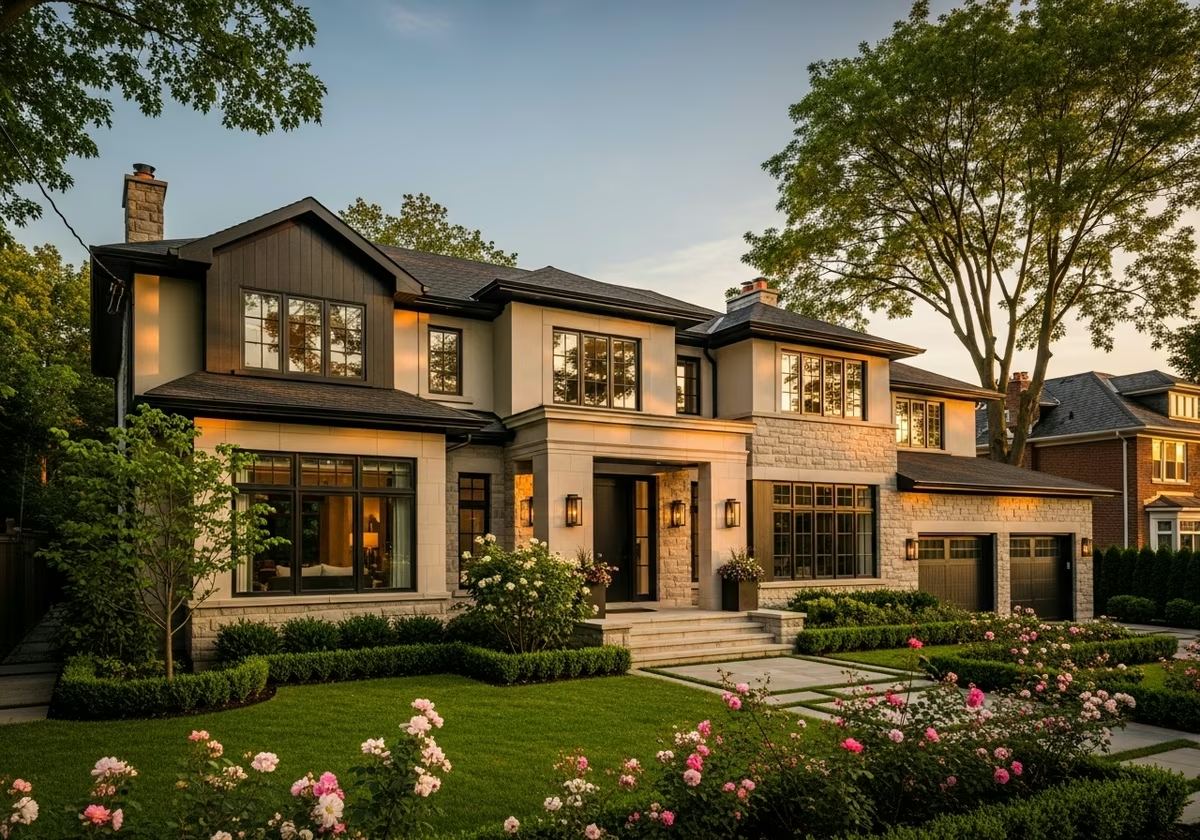
The RenoHouse Difference
11+ Years Experience
Over a decade of expertise in heritage home renovation toronto. We've seen it all and know how to handle any challenge.
Warranty Protected
All work comes with comprehensive warranty coverage. We stand behind our craftsmanship and use quality materials that last.
Competitive Rates
Fair pricing on heritage home renovation toronto without compromising quality. We match or beat competitor quotes.
Sound Familiar?
These are the most common problems our clients face.
Need professional help with this?
Not sure where to start?
Want quality results the first time?
Tired of putting it off?
Looking for a reliable contractor?
Want a free, no-obligation estimate?
Ready to get started?
Free estimate, no obligation. We respond within 1 hour.
What Our Clients Say
“RenoHouse replaced all our windows in just two days. The new windows are beautiful, energy-efficient, and the team left everything spotless. Highly recommend!”

Michael R.
Oakville
“New windows transformed our home. Quieter, warmer, and our energy bill dropped noticeably. Excellent installation crew.”

David K.
Vaughan
“Professional from start to finish. They replaced 8 windows in one day and cleaned up perfectly. Highly recommend RenoHouse!”

Sandra W.
Burlington
Our Heritage Home Renovation Toronto Work
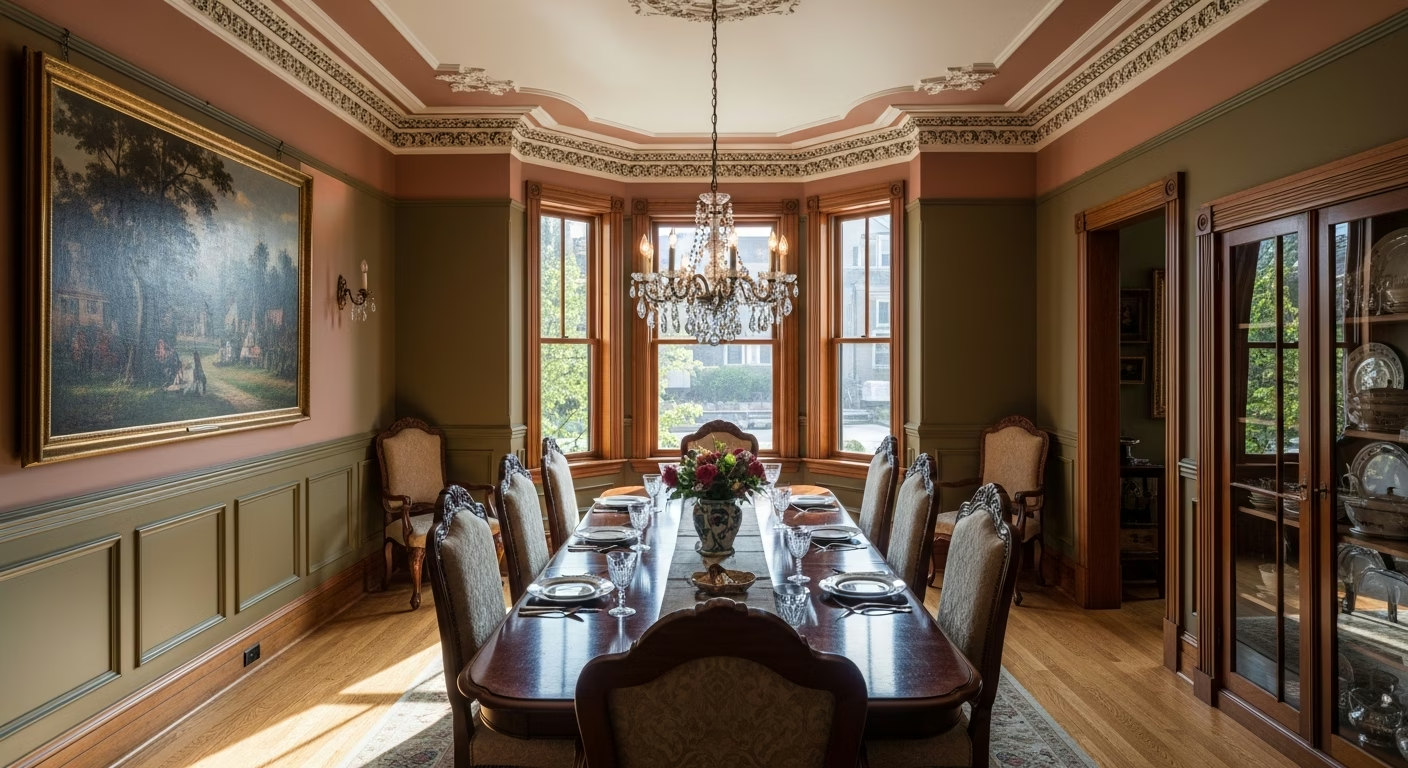
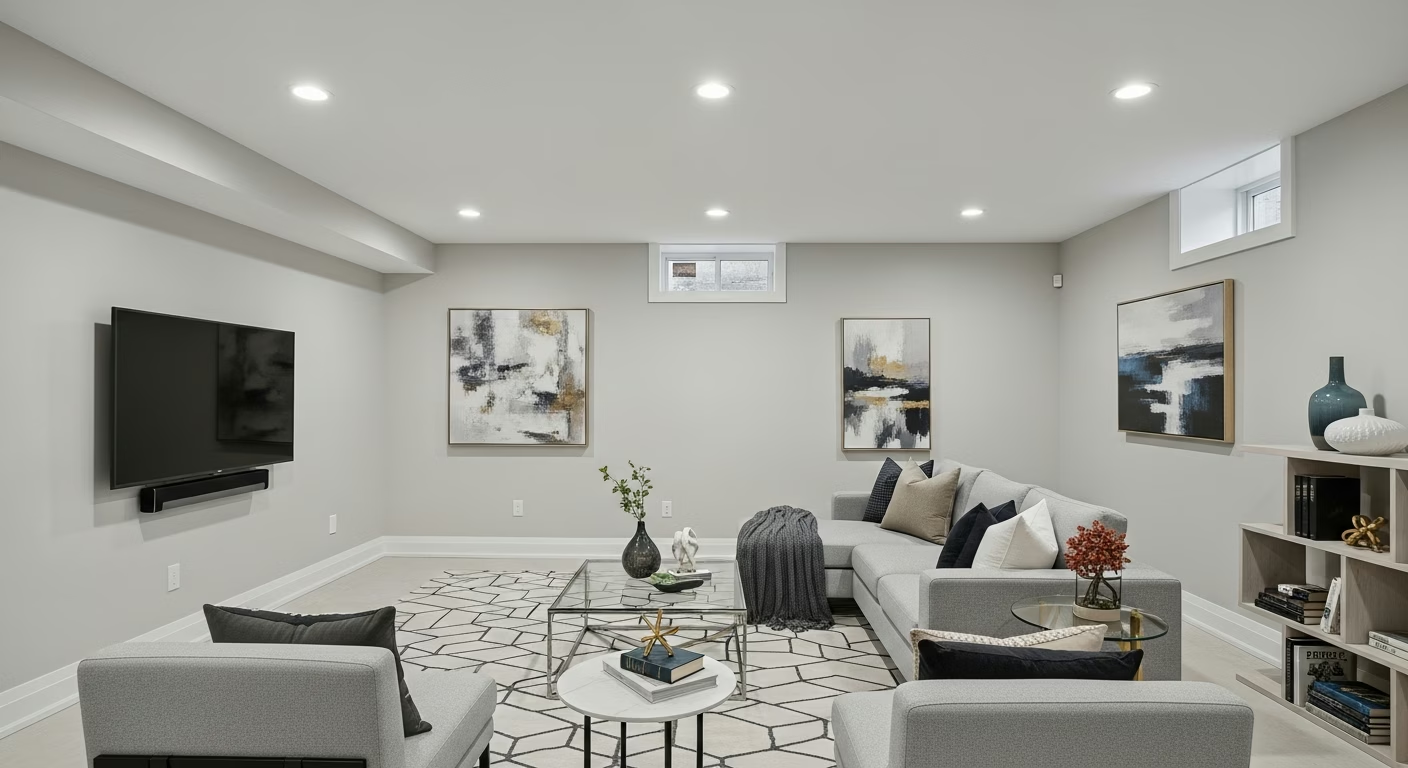
Professional heritage home renovation toronto results from RenoHouse projects across the Toronto GTA.
Heritage Home Renovation Toronto
Toronto GTA
Quality Workmanship
Licensed & Insured
Like what you see? Let's talk about your project.
🧮 Heritage Home Renovation Toronto Services — Cost Estimator
GTA / Ontario — 2026 market pricing
📊 Where the cost goes (typical breakdown)
📋 What affects your price:
💡 Estimates use 2026 GTA/Ontario market data. Actual cost depends on site conditions, material selections, and project scope. Book a free in-home quote for a precise number.
Frequently Asked Questions About Heritage Home Renovation Toronto
Listing on the Heritage Register (without Part IV designation) does not automatically require a Heritage Permit, but it triggers a 60-day delay on any demolition application and signals that the City may move to designate. We treat listed-only properties as if they were designated when planning material specs — it future-proofs the work.
No. Every published HCD Plan in Toronto prohibits vinyl windows on street-facing elevations, and most prohibit them entirely. Acceptable substitutes are wood-clad casement and double-hung from Marvin, Pella, Andersen 400, Loewen, or Kolbe — all of which manufacture lines specifically for heritage applications.
The statutory window is 90 days from Notice of Receipt under the Ontario Heritage Act. Real-world end-to-end timing — including pre-consult, drawings, application prep, and Building Permit issuance — is 8 to 16 weeks for delegated-authority files, longer if the application goes to the Toronto Preservation Board.
Part IV designates an individual property under the Ontario Heritage Act — typically a specific building of architectural or historic value. Part V designates a Heritage Conservation District (HCD) — a whole neighborhood. The two often overlap: a property can be both individually Part IV-designated and inside a Part V HCD, with both sets of rules applying.
Historic Toronto brick (1850s-1910s) is soft and porous. It needs lime-rich Type O mortar that flexes with the brick. Modern Type S mortar — standard for new construction — is too hard, traps moisture inside the brick, and causes the brick face to spall off in winter freeze-thaw cycles. Re-pointing a Rosedale Edwardian with the wrong mortar has destroyed thousands of historic facades across the city.
Often yes, with constraints. Most HCD Plans permit additions provided they (a) sit behind the original roofline so they are invisible from the street, (b) cap the gross floor area increase at roughly 30%, (c) use materials and detailing consistent with the original. Rear additions are routinely approved; visible third-floor additions are routinely refused.
Yes — heritage is one specialization within our GTA-wide practice. We work the same way on a 2010-build in Vaughan as we do on an 1898 Annex Queen Anne; the technical demands are just very different. Most clients come to us *because* of the breadth — heritage capability is rare among general contractors who can also handle a kitchen reno in Mississauga.
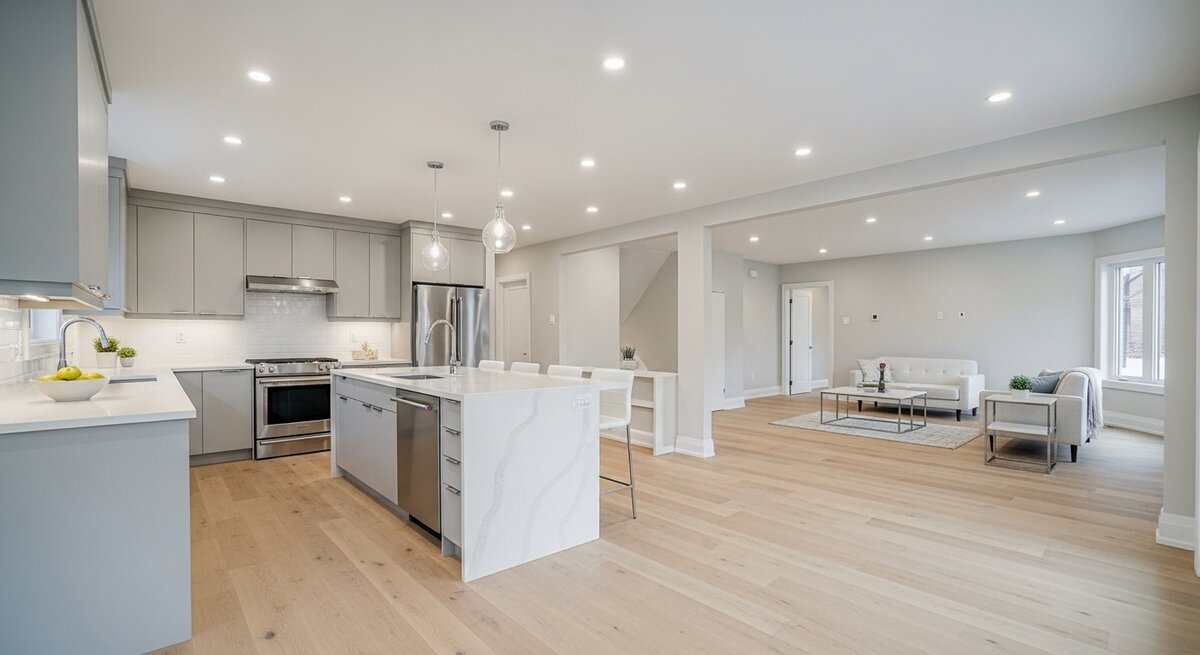
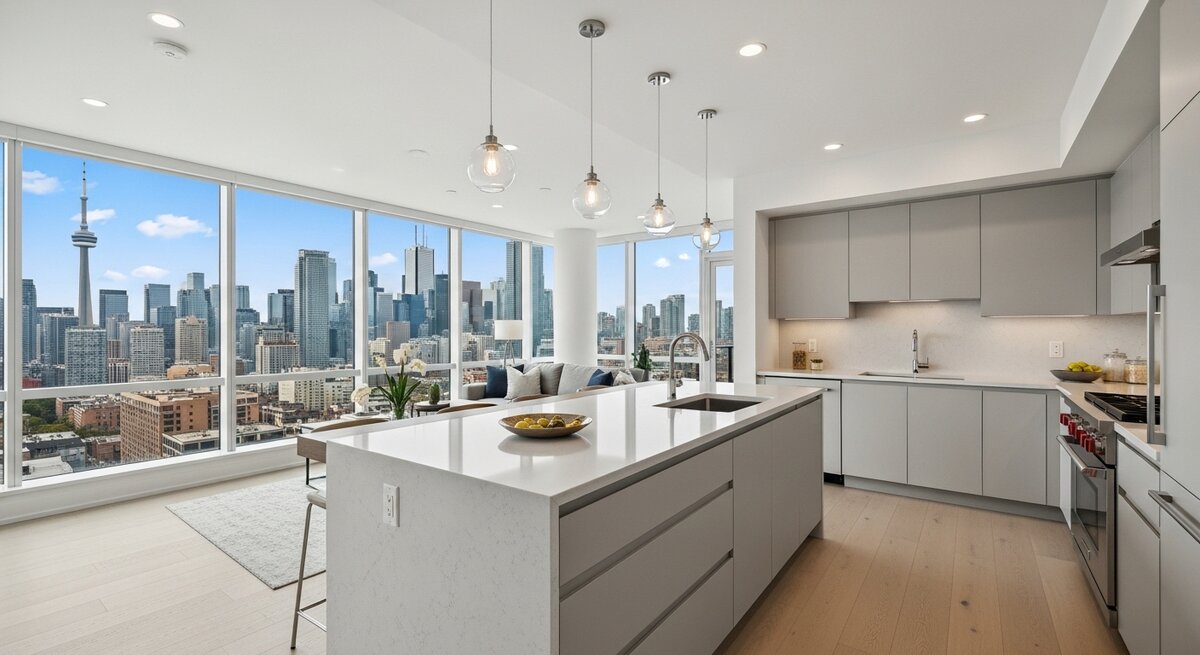

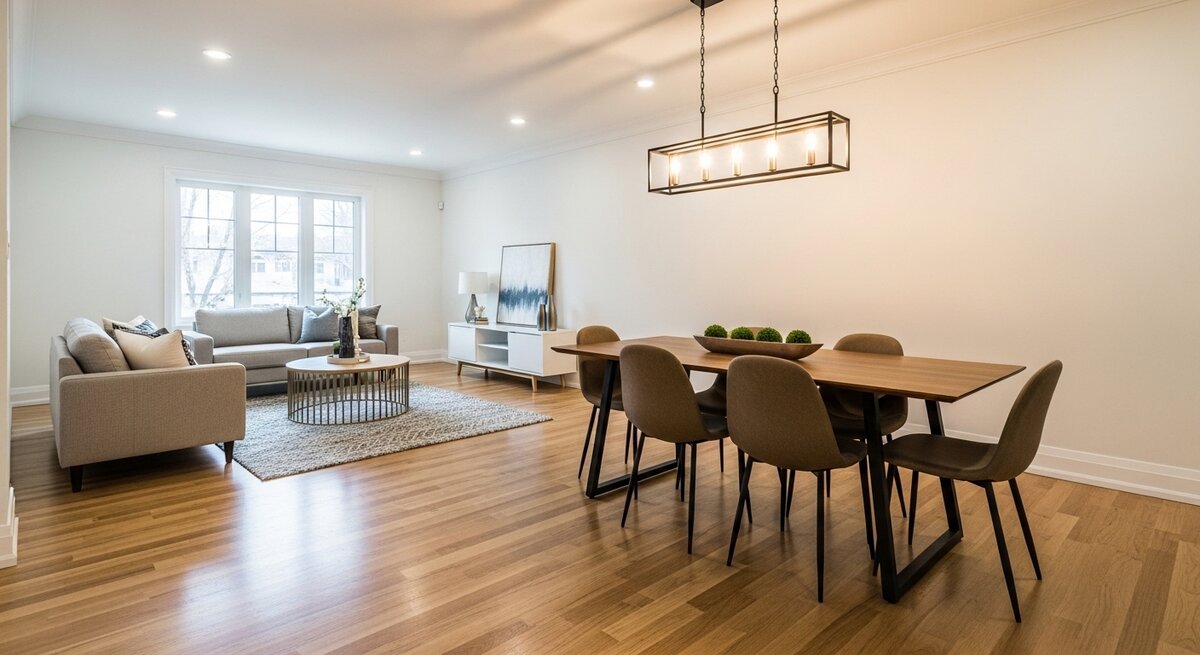


You Might Also Need
Customers who looked at heritage home renovation toronto also asked us about these complementary services.
We Serve All GTA
Professional heritage home renovation toronto services available across the Greater Toronto Area.
“Renovated our entire main floor — kitchen, living room, flooring, paint, lighting. They coordinated everything perfectly. One contractor for the whole project.”
— Anthony G., North York
Get a Free Heritage Home Renovation Toronto Estimate
Contact us today for a free, no-obligation quote for your heritage home renovation toronto project in Toronto GTA. We'll get back to you within 1 hour.