 RenoHouse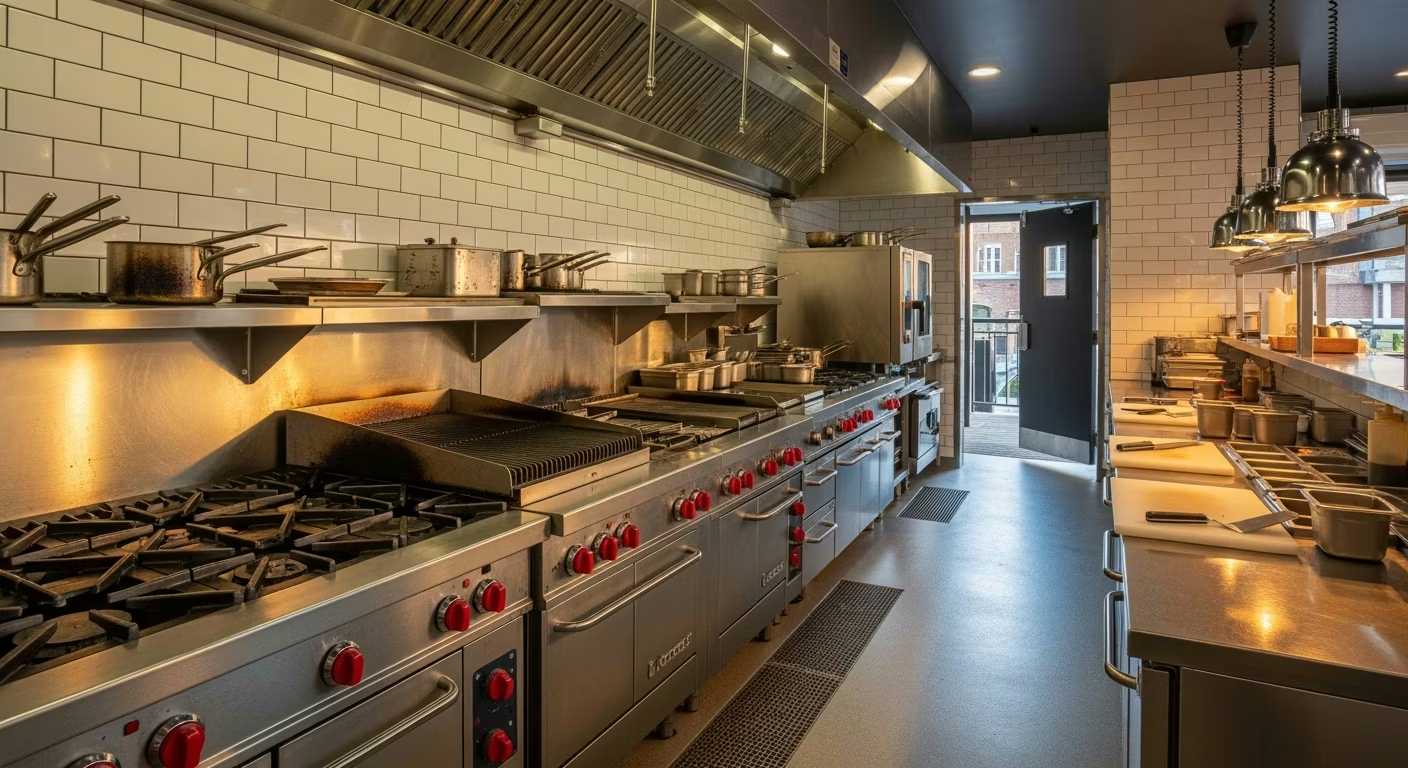
Code-Compliant Restaurant Buildouts. Hood-To-Floor, Permit-To-Pass.
Professional restaurant kitchen buildout services in Toronto and the Greater Toronto Area. Licensed, insured, and trusted by homeowners across the GTA.
Projects Completed
Years Experience
Client Satisfaction
Google Rating
How It Works
A simple, stress-free process from start to finish.
Send Your Request
Call or WhatsApp us 24/7. Send photos, video, comments about what needs to be done, and your location.
Remote Estimate
We review everything, discuss details, and provide a clear estimate — often within hours, no visit needed.
Repair Process
Our licensed team arrives on the agreed date and completes your restaurant kitchen buildout to the highest standards.
Handover & Warranty
Final walkthrough with you, full cleanup, and warranty documentation provided.
Send Your Request
Call or WhatsApp us 24/7. Send photos, video, and a description of the work + your location.
Remote Estimate
We review everything, clarify details, and give you a price — often within hours.
Repair Process
Licensed team arrives on schedule and completes your restaurant kitchen buildout professionally.
Handover & Warranty
Final walkthrough, full cleanup, and warranty documentation.
Restaurant Kitchen Buildout in Toronto GTA
Toronto/GTA restaurant kitchen buildouts — Type I hoods, Ansul suppression, OBC 6.2 makeup-air, Toronto Public Health DineSafe compliance. $75-$350/sf turnkey.
Restaurant kitchen buildouts in the GTA in 2026 are operating in the highest-cost, highest-scrutiny environment the city has ever seen. Toronto Public Health failure rates on first-time DineSafe inspections of new buildouts are running ~28%, food-service vacancy on King W. and Ossington hit 11.4% in Q1, and the average independent operator now budgets $180-$220/sf for a code-compliant kitchen — up roughly 35% since 2023. Project AOV typically lands $280K (quick-service refit) to $1.6M (full-service from grey-shell).
What makes this work fundamentally different from residential is that you are pulling permits under OBC Part 3 (if the building is >3 storeys or >600 m²) rather than Part 9, dealing with a landlord's base-building MEP capacity, and signing off against three regulators that don't talk to each other: Toronto Building, Toronto Public Health (DineSafe), and TSSA (gas).
2026 GTA Pricing Tiers
Floor — $75-$110/sf ($180K-$320K project) Ghost-kitchen, takeout-only, or QSR refit of a previously-licensed space where hood, grease trap, and 200A panel are already in place. Equipment package leans on True T-series reach-ins, Pitco fryers, Vulcan ranges, and a re-certified Captive-Aire ND-2 hood. No dining room finish.
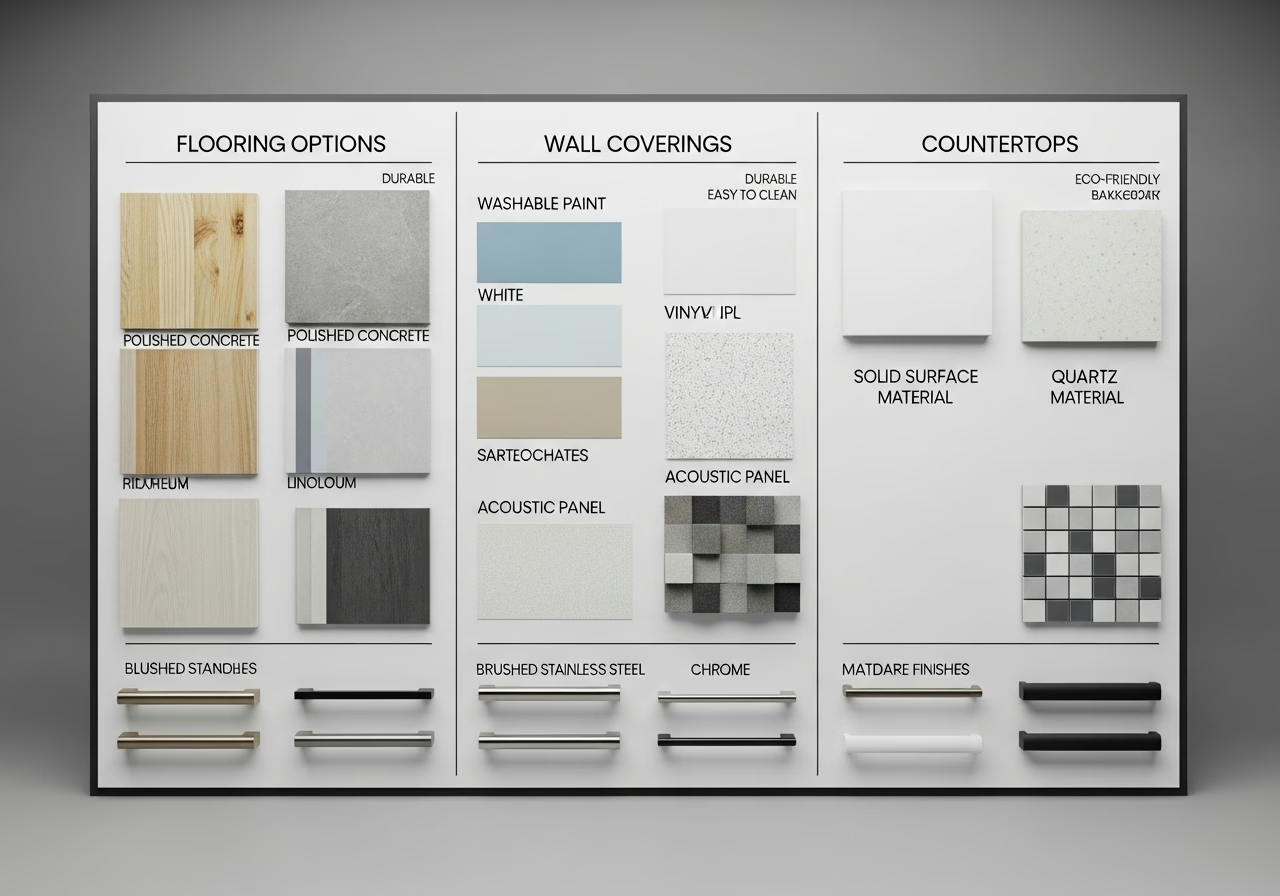
Standard — $140-$210/sf ($600K-$1.1M project) Full-service neighbourhood restaurant, 60-90 seats, grey-shell start. Captive-Aire ND-2 or Aerocaptor 250 hood with PCC-2 utility cabinet, Ansul R-102 wet-chemical suppression, Greaseshield GS-50 hydromechanical interceptor, 400A 3-phase service upgrade, 6" makeup-air unit balanced to within 10% of exhaust per OBC 6.2.1.3. Front-of-house gets quartz bar, terrazzo or polished concrete floor, designer lighting.
Premium — $260-$350/sf ($1.4M-$2.4M project) Chef-driven concept, open kitchen, wood-fired or charbroiler line, 100+ seats. Halton M.A.R.V.E.L. demand-controlled hood with VFD exhaust ($45-70K hood alone), Pyro-Chem Kitchen Knight II suppression on solid-fuel cooking, Big Dipper W-250-IS automatic grease recovery, dedicated 600A service, full glycol bar refrigeration loop, acoustic ceiling cloud to STC-50 between dining and open kitchen.
Code & Regulatory Compliance
This is where 80% of buildouts blow their schedule. The non-negotiables:
- OBC Part 3 vs Part 9 — most King/Queen/Bloor strips are Part 3 buildings; your interior fit-up still falls under Part 3 fire separation rules (1-hr demising walls minimum, 2-hr if separating from residential above).
- OBC Section 6.2 — exhaust must be designed by a P.Eng with stamped drawings; makeup air must be tempered to within 6°C of indoor design temp; minimum 0.25 m/s capture velocity at hood face.
- Toronto Public Health DineSafe — separate plan review BEFORE permit issuance. Requires 3-compartment sink + handwash + mop sink minimums, NSF-certified equipment, FRP or stainless to 1.2m on all wet walls, coved base.
- Ontario Fire Code (O. Reg. 213/07) — Ansul or Pyro-Chem suppression certified annually, manual pull within 3m of exit path, fusible links rated 232°C over fryers.
- TSSA gas appliance certification — every gas-fired piece needs an individual permit and pressure test; one missed appliance and the whole opening slips two weeks.
- AODA s. 80.27 barrier-free — washroom + path-of-travel + service counter accessibility; a single 32mm rise at the entrance threshold can fail final inspection.
- Grease interceptor sizing — Toronto Sewer Use Bylaw 681 requires Schier GB-3 or larger for any kitchen >40 fixture units; hydromechanical preferred over gravity for footprint reasons.
5-Micromarket Considerations
Downtown core (King W. / Queen W. / Bloor / Yorkville) — Part 3 high-rise context; expect 6-10 week board approval BEFORE permit application even starts. Freight elevator booking windows 11pm-6am only, hoarding bonds $25-50K, dust-protection plans approved by property management. Hood ducting often has to run 30+ floors to roof — vertical chase coordination is the single biggest risk.
North York / Scarborough / Etobicoke commercial strips — Mostly Part 9 or smaller Part 3 buildings, 60s-80s strip mall stock. Landlord MEP capacity is the bottleneck — many older strips only have 200A/120-208V service to a unit. Budget $40-80K for service upgrade alone. After-hours work less of an issue.
Mississauga / Brampton (905) business parks — Newer construction (post-2005), better base-building HVAC and electrical capacity, but Peel Region signage bylaws are strict and franchise mods (Tim Hortons, Popeyes) need corporate spec packages turning city review into 2-pass minimum.
East York / Riverside / Leslieville — Heritage-designated facade preservation often required even on interior buildouts. Carlaw and Queen E. strips have aging panels (FPE / Federal Pioneer being replaced), and TPH is particularly aggressive about grease interceptor sizing on the older sanitary mains.
905 north (Vaughan / Richmond Hill / Markham) — Newer commercial corridors at Highway 7 and 16th; often franchise refit. Vaughan plan review is faster than Toronto (4-6 weeks vs 8-12) but development charges are higher. Plaza landlords typically offer $40-80/sf TI.
Project Timeline (Typical)
- Week 0-3: Design + P.Eng mechanical drawings + DineSafe pre-consult
- Week 3-10: Permit application (Toronto Building + TPH + TSSA parallel)
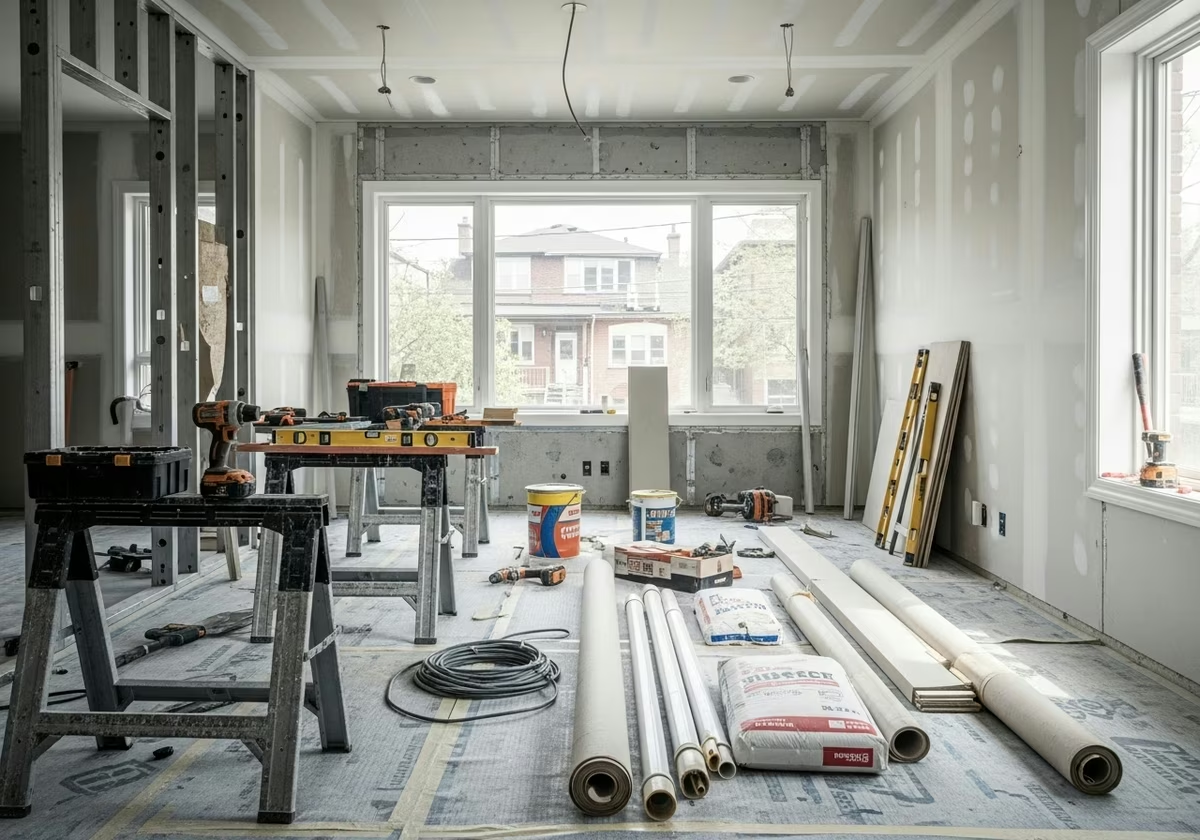
- Week 10-12: Demo + abatement (asbestos in pre-1990 buildings near-certain)
- Week 12-18: MEP rough-ins, hood and makeup-air installation, framing
- Week 18-19: Mechanical / electrical / plumbing inspections
- Week 19-22: Drywall, FRP, equipment delivery, FF&E
- Week 22-24: Equipment commissioning, TSSA gas certification, Ansul certification
- Week 24-26: Final building inspection, DineSafe inspection, occupancy
A realistic grey-shell-to-open timeline is 22-28 weeks. Anyone promising 16 weeks on a full-service buildout is either skipping permits or has a connection to the inspector pool that you don't want to inherit.
Common timeline traps: (1) hood and curb procurement runs 10-14 weeks lead time — Captive-Aire ND-2 with 4-week air-balance commissioning at the back end is the most common critical-path miss; (2) TSSA gas appliance inspections are scheduled per-appliance, not per-project, and one missed gas line on a wok burner can hold opening by 8-12 business days; (3) DineSafe and Building final inspection don't share calendars, so a 24-hour DineSafe slip rarely lines up with a Building re-inspection slot — budget 5-10 buffer days at the close.
TI Allowance & Landlord Coordination
For restaurants, landlord TI in 2026 is running:
- Downtown core: $40-$120/sf, amortized into rent over 7-10 yr lease
- Suburban strip: $20-$50/sf, often with 3-6 months free rent in lieu
- Premium AAA (Yorkville, CF Sherway): $80-$150/sf but with personal guarantee and use restrictions
Key landlord-side risk items: base-building gas capacity (often need to negotiate sub-meter), exhaust riser availability (some landlords charge $30-60K to dedicate a chase), grease interceptor location, after-hours HVAC charge for opening late. Always pull base-building drawings BEFORE signing.
Specialty Equipment & Trade Coordination
A full-service buildout coordinates 9-12 specialty trades that don't show up in residential work: hood fabricator (Captive-Aire, Aerocaptor, Halton), fire suppression (Ansul or Pyro-Chem certified installer), makeup-air balancer (TAB report mandatory for OBC 6.2 sign-off), grease interceptor (Schier, Greaseshield, Big Dipper), commercial refrigeration (True, Beverage-Air, Continental, with R-290 hydrocarbon refrigerants now standard post-Kigali Amendment), gas piping (TSSA certified contractor only), commercial dishwasher (Hobart, Champion, CMA), water filtration (3M Aqua-Pure for ice + coffee), exhaust fan and roof curb (Greenheck or Loren Cook), kitchen ventilation hood cleaner (NFPA 96 quarterly cleaning contract). Sequencing matters: hood + fire system + makeup-air are commissioned together, gas appliances after that, then everything else.
Bottom Line
A Toronto restaurant buildout in 2026 lives or dies on three things: (1) a P.Eng-stamped mechanical drawing that passes TPH and Building on first review, (2) a hood, suppression, and makeup-air package that matches your menu (don't size for chicken if you'll add a charbroiler in year two), and (3) a contractor who's been through DineSafe pre-consult enough times to spot the 32mm threshold before the inspector does. Skipping any one of these typically costs 4-8 weeks and $40-80K in rework.
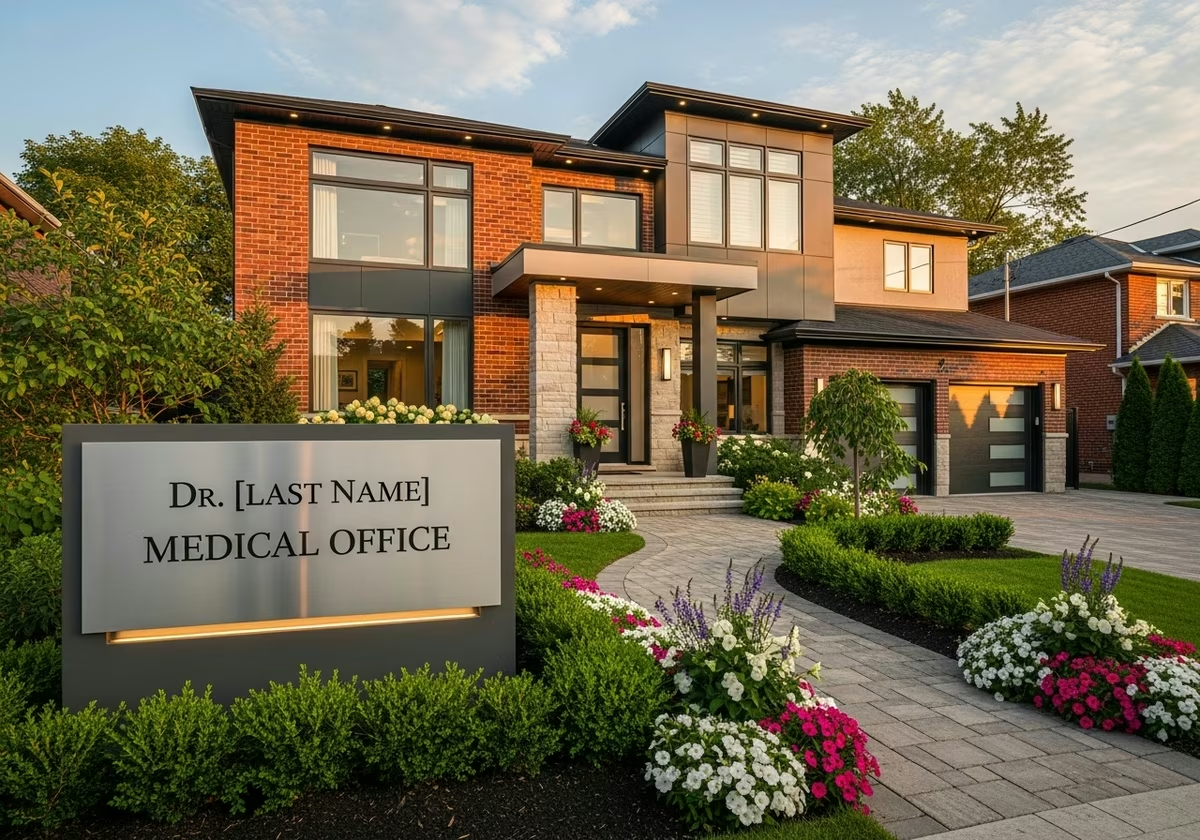
Why Trust RenoHouse
On-Time Completion
We respect deadlines for restaurant kitchen buildout projects. 95% of jobs finish on or ahead of schedule.
Certified & Insured
Proper licensing, full insurance coverage, and WSIB protection. Your property and our team are completely protected.
Satisfaction Guarantee
We're not done until you're 100% happy with your restaurant kitchen buildout. That's our promise.
Sound Familiar?
These are the most common problems our clients face.
Need professional help with this?
Not sure where to start?
Want quality results the first time?
Tired of putting it off?
Looking for a reliable contractor?
Want a free, no-obligation estimate?
Ready to get started?
Free estimate, no obligation. We respond within 1 hour.
What Our Clients Say
“RenoHouse replaced all our windows in just two days. The new windows are beautiful, energy-efficient, and the team left everything spotless. Highly recommend!”

Michael R.
Oakville
“New windows transformed our home. Quieter, warmer, and our energy bill dropped noticeably. Excellent installation crew.”

David K.
Vaughan
“Professional from start to finish. They replaced 8 windows in one day and cleaned up perfectly. Highly recommend RenoHouse!”

Sandra W.
Burlington
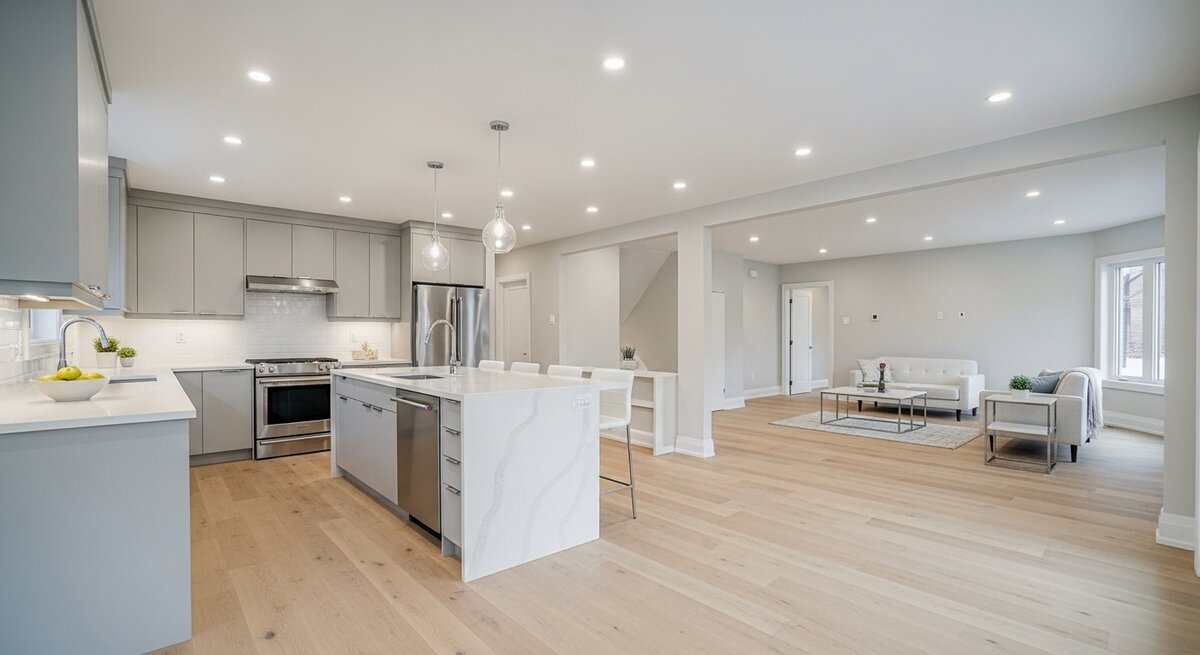
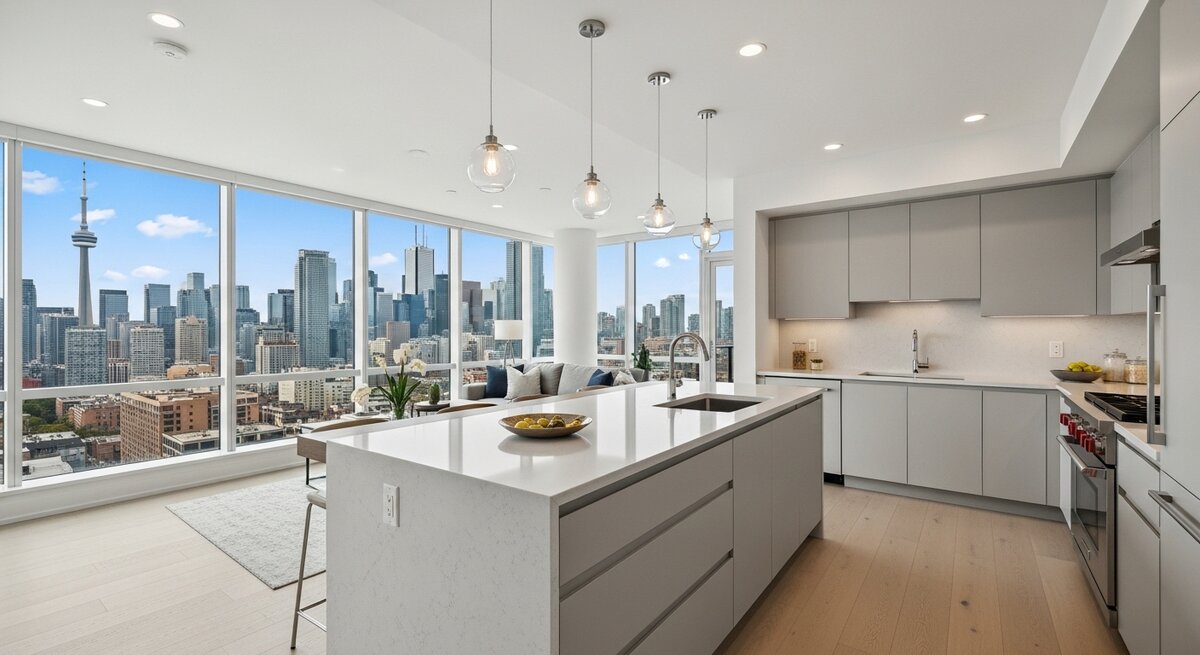
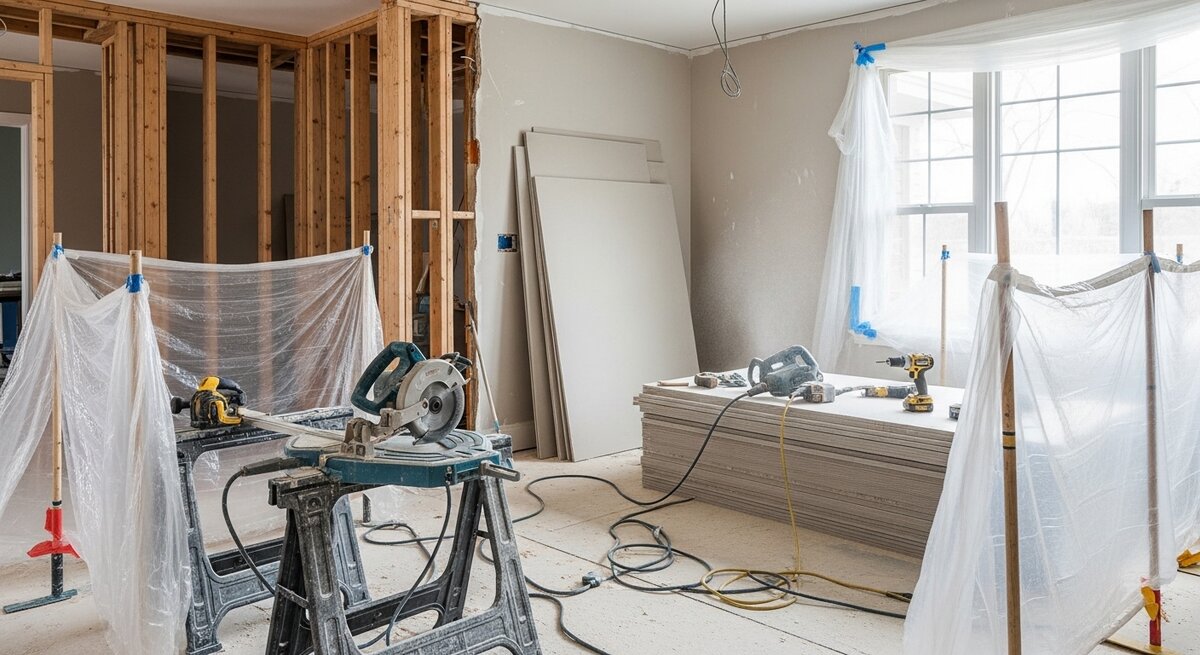
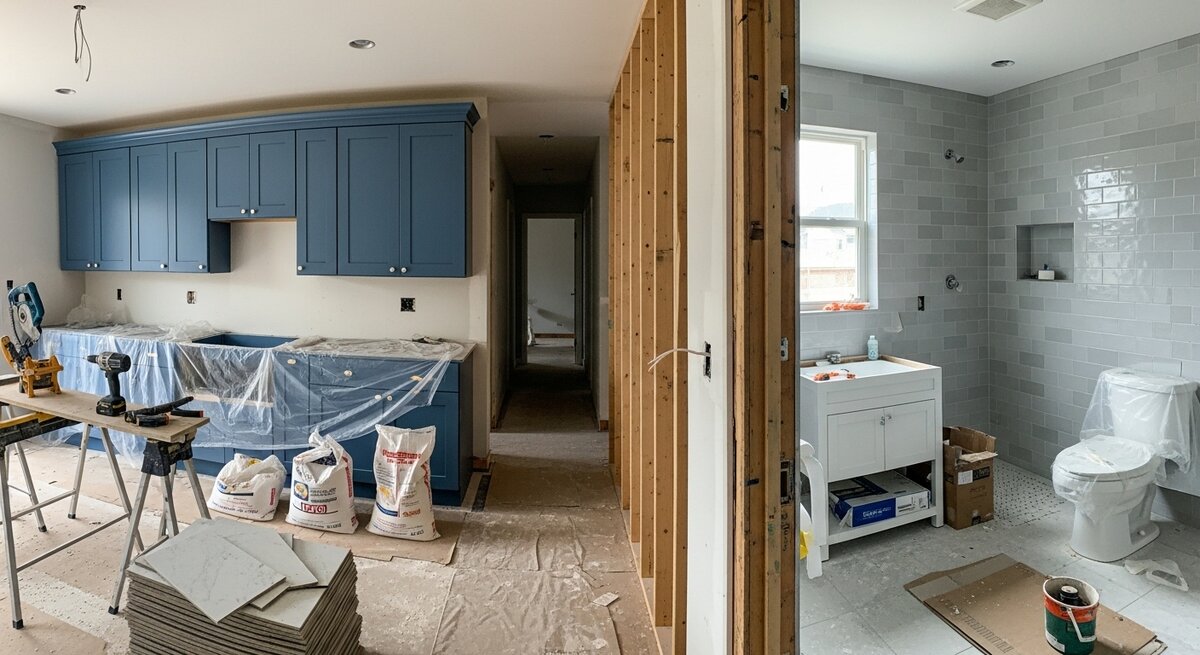
Our Restaurant Kitchen Buildout Work
Professional restaurant kitchen buildout results from RenoHouse projects across the Toronto GTA.
Restaurant Kitchen Buildout
Toronto GTA
Quality Workmanship
Licensed & Insured
Like what you see? Let's talk about your project.
🧮 Restaurant Kitchen Buildout Services — Cost Estimator
GTA / Ontario — 2026 market pricing
📊 Where the cost goes (typical breakdown)
📋 What affects your price:
💡 Estimates use 2026 GTA/Ontario market data. Actual cost depends on site conditions, material selections, and project scope. Book a free in-home quote for a precise number.
Frequently Asked Questions About Restaurant Kitchen Buildout
Grey-shell to DineSafe-approved opening runs 22-28 weeks for a full-service concept, 14-18 weeks for a QSR refit on a previously-licensed space. The permit phase alone is 6-10 weeks because Toronto Public Health, Toronto Building, and TSSA review in parallel but don't share files.
Toronto Sewer Use Bylaw 681 sizes by fixture units. A typical 80-seat full-service kitchen with 3-comp sink, prerinse, dishwasher, mop sink, and 2 handwashes lands around 50-75 GPM, which is a Schier GB-3 or Greaseshield GS-50. Hydromechanical units are preferred over inground gravity for footprint and pumpout cost.
Type I (grease) is required for any cooking that produces grease-laden vapors — fryers, ranges, broilers, woks. Type II (heat/vapor only) covers ovens and steamers. Almost every restaurant kitchen needs at least one Type I; suppression (Ansul R-102 or Pyro-Chem) is mandatory on Type I, optional on Type II.
Yes, if the building has no existing exhaust riser or roof penetration capacity, or if structural loading won't take the rooftop fan. This is the single most common deal-killer on new locations — always pull base-building mechanical drawings during the LOI phase, not after signing.
Downtown core $40-$120/sf amortized over a 7-10 year lease; suburban strip $20-$50/sf often paired with 3-6 months free rent. Premium AAA centers go to $150/sf but require personal guarantee and tight use clauses.



You Might Also Need
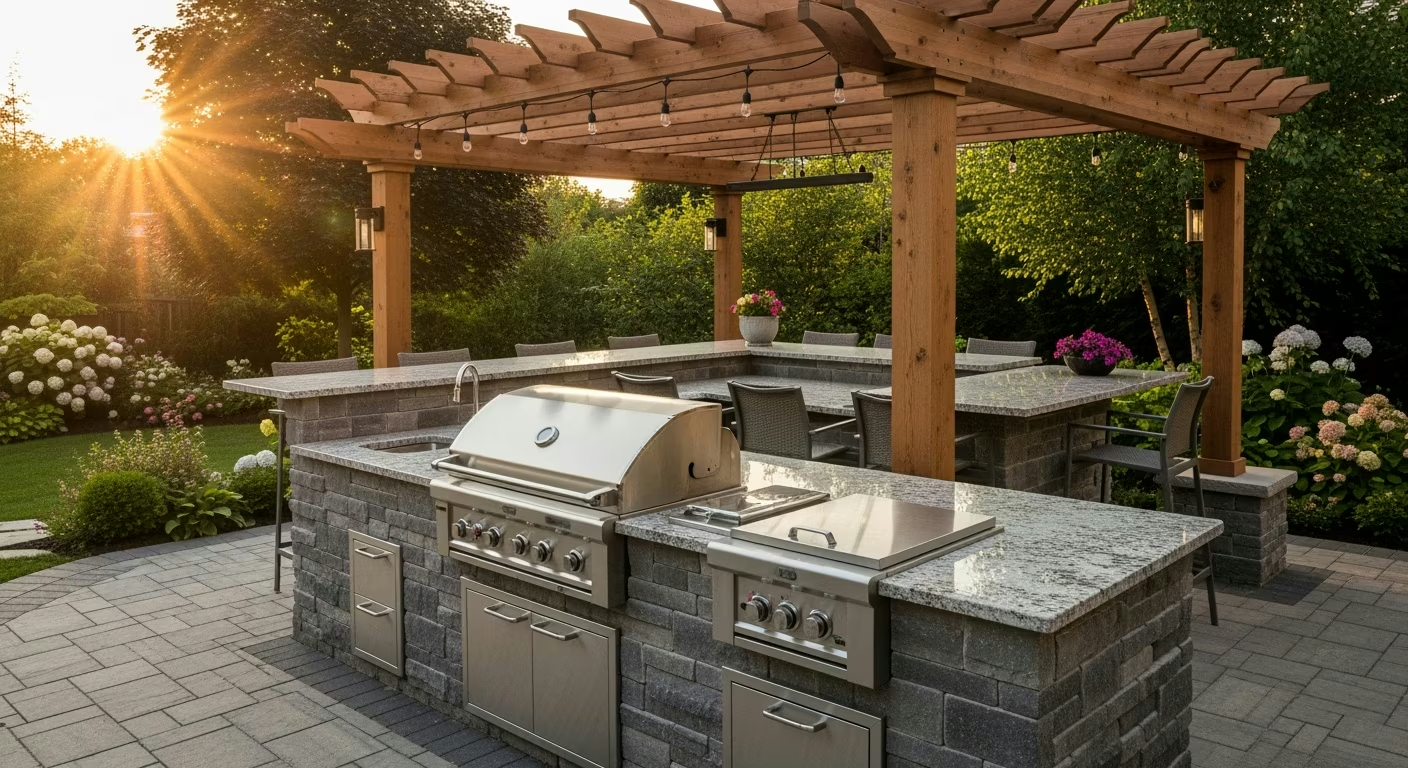
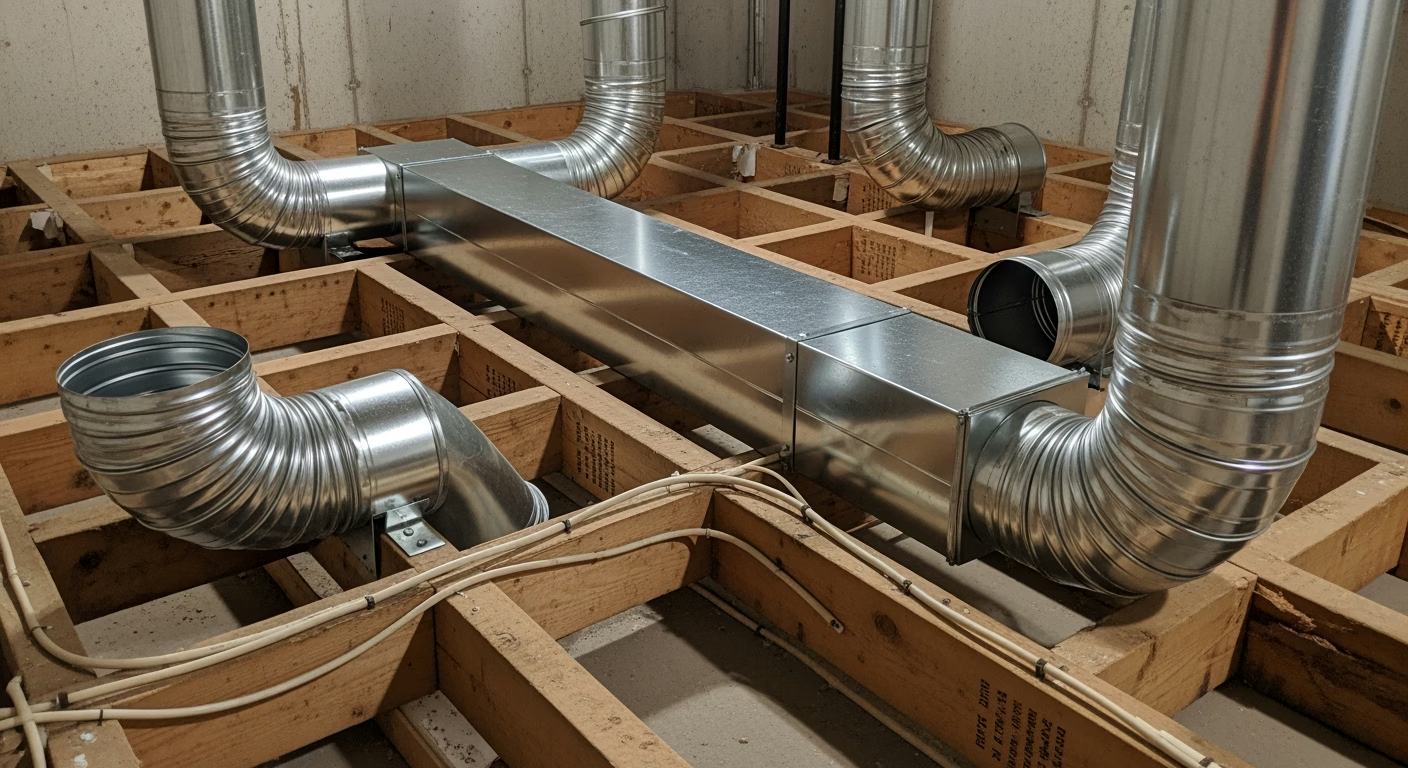
Customers who looked at restaurant kitchen buildout also asked us about these complementary services.
We Serve All GTA
Professional restaurant kitchen buildout services available across the Greater Toronto Area.
“Renovated our entire main floor — kitchen, living room, flooring, paint, lighting. They coordinated everything perfectly. One contractor for the whole project.”
— Anthony G., North York
Get a Free Restaurant Kitchen Buildout Estimate
Contact us today for a free, no-obligation quote for your restaurant kitchen buildout project in Toronto GTA. We'll get back to you within 1 hour.