 RenoHouse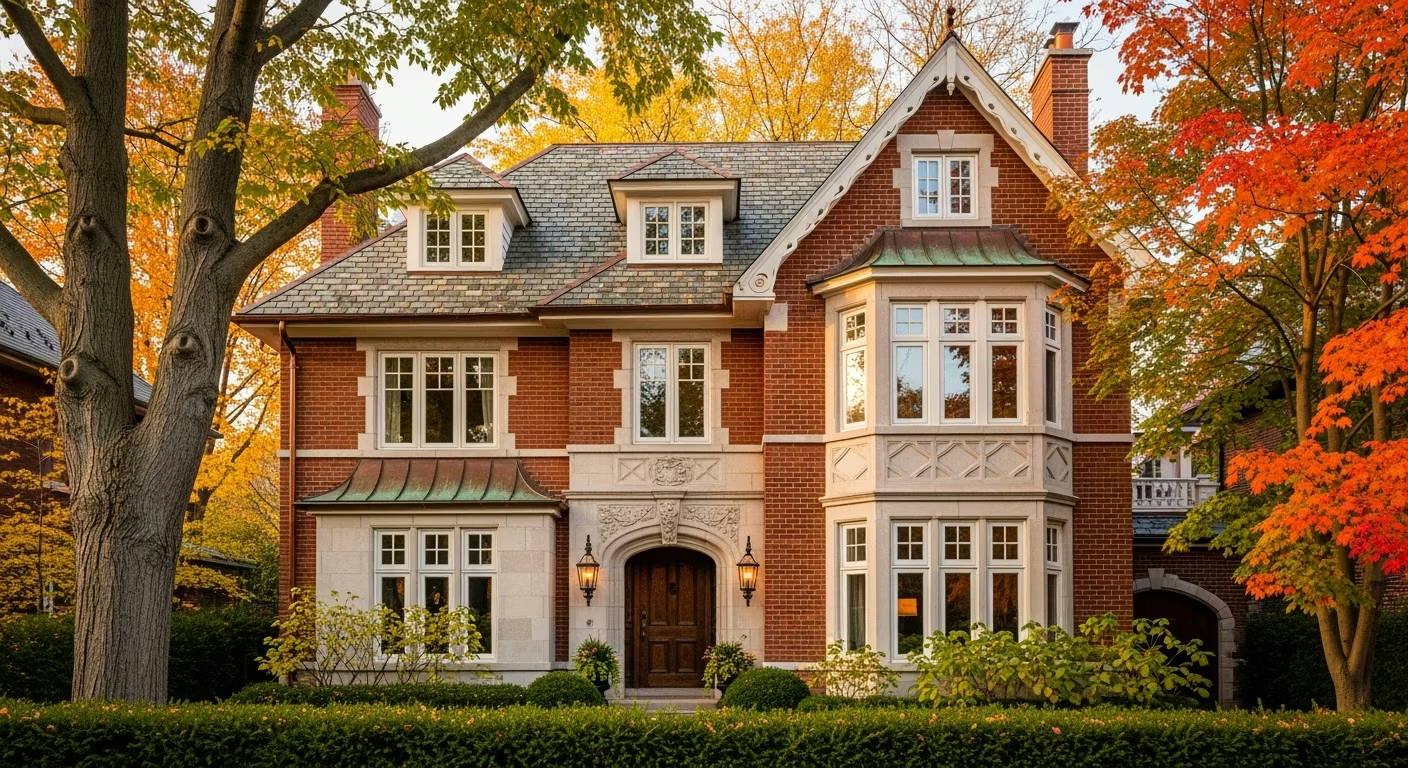
Heritage Renovation in North and South Rosedale's Conservation Districts
Professional rosedale home renovation services in Toronto and the Greater Toronto Area. Licensed, insured, and trusted by homeowners across the GTA.
Serving the GTA
In-Home Estimates
Workmanship Warranty
Projects Completed
How It Works
A simple, stress-free process from start to finish.
Send Your Request
Call or WhatsApp us. Send photos, video, comments about what needs to be done, and your location.
Remote Estimate
We review everything, discuss details, and provide a clear estimate — often within hours, no visit needed.
Repair Process
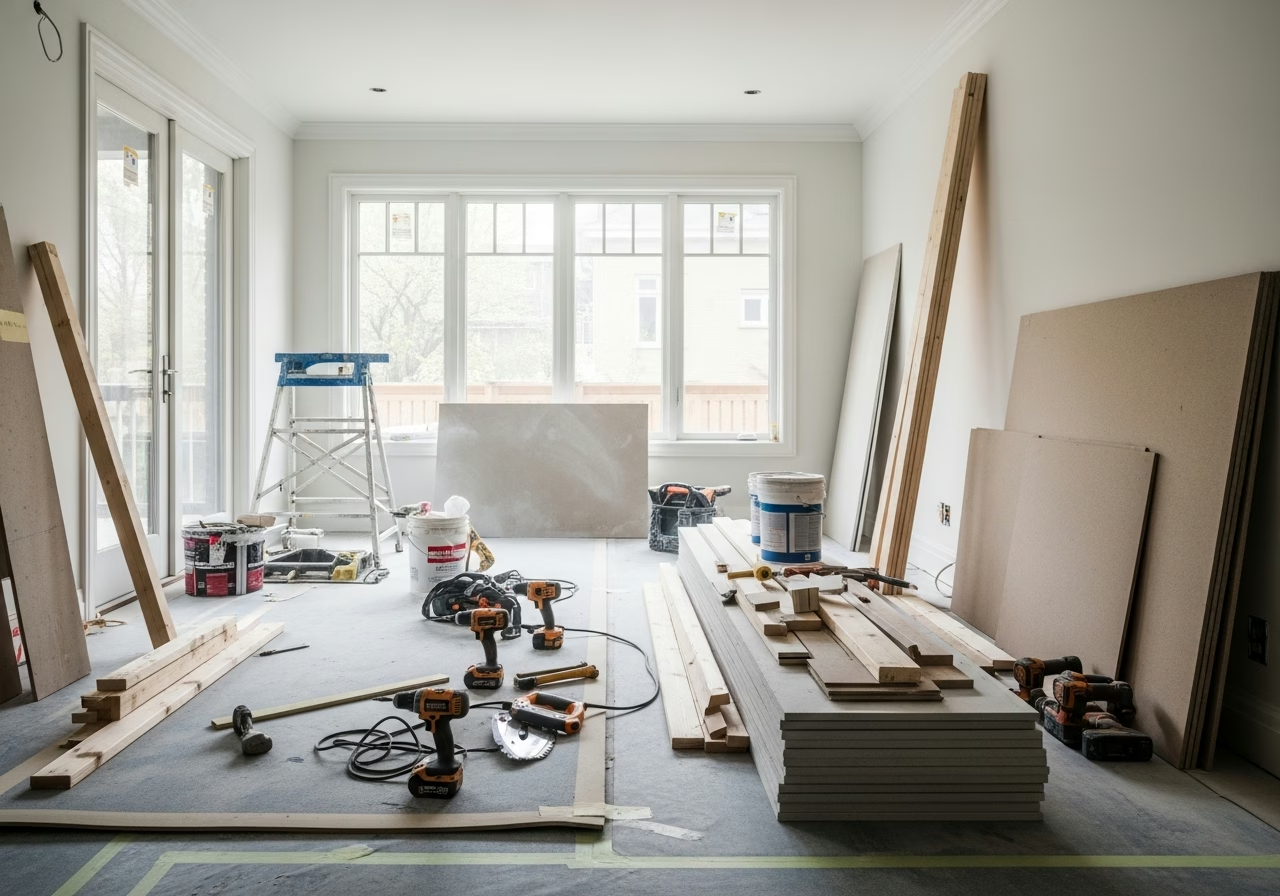
Our licensed team arrives on the agreed date and completes your rosedale home renovation to the highest standards.
Handover & Warranty
Final walkthrough with you, full cleanup, and warranty documentation provided.
Send Your Request
Call or WhatsApp us. Send photos, video, and a description of the work + your location.
Remote Estimate
We review everything, clarify details, and give you a price — often within hours.
Repair Process
Licensed team arrives on schedule and completes your rosedale home renovation professionally.
Handover & Warranty
Final walkthrough, full cleanup, and warranty documentation.
Rosedale Home Renovation in Toronto GTA
Renovation in Rosedale's two Heritage Conservation Districts (Rosedale North 2002, Rosedale South 2002). Edwardian, Tudor Revival, Georgian Revival. Heritage Permits under Chapter 103, matching mortar mix, replicated trim, wood-clad windows. Old Rosedale, South Rosedale, Moore Park micromarket experience.
Rosedale, 1860s to today
Rosedale began as the country estate of William Botsford Jarvis in the 1820s, was subdivided in the 1860s and 1870s, and grew into the gold standard for residential Toronto by the turn of the 20th century. Two Heritage Conservation Districts now cover virtually the entire neighborhood: Rosedale North HCD (designated 2002) and Rosedale South HCD (designated 2002). The combined district contains approximately 1,800 properties, making it the largest HCD in Ontario.
You cannot replace a window, repoint a chimney, or strip your front porch in Rosedale without a Heritage Permit. We have worked these streets long enough to draft submissions that pass on the first review cycle, which matters when a Crescent Road renovation is sitting at 16 weeks of permitting and the family is paying rent on a Yorkville condo.
Architectural styles that define Rosedale
Edwardian (1900-1915) — dominant in South Rosedale. Three-storey brick rectangles, hipped or pyramidal roof, restrained Classical Revival trim, dentil cornices, transom windows over front doors, often a sleeping porch on the second floor. Streets like Crescent Road, Cluny Drive, and Elm Avenue are textbook Edwardian.
Tudor Revival (1920s) — dominant in North Rosedale. Half-timbering on stucco, steep slate or asphalt roofs, leaded-glass windows, prominent stone chimneys, oak front doors with iron strap hinges. Beaumont Road, Highland Avenue, and Park Road have the densest concentration.
Georgian Revival (1910s-1930s). Symmetrical five-bay facades, hipped roofs, multi-light double-hung sash, centered fanlight or pediment over the door. Distinct from Edwardian by its strict symmetry.
Late Victorian / Queen Anne survivors (1880s-1895). A handful of original Rosedale houses pre-date the Edwardian wave — irregular massing, towers, asymmetric porches. Concentrated near South Drive and the Glen Road bridge.
Modernist intrusions (1955-1975). Roughly 60 mid-century houses sit inside both HCDs. Their treatment under the HCD Plan is contested: they are not contributing properties, but they cannot be replaced with pastiche either. We have done four modernist Rosedale renovations under permit.
The Rosedale HCD designation: dates and scope
Both HCDs were designated under Part V of the Ontario Heritage Act in 2002:
- Rosedale North HCD — boundaries roughly Park Road to Mount Pleasant, MacLennan Avenue to the Rosedale Ravine. HCD Plan prepared by ERA Architects.
- Rosedale South HCD — boundaries roughly Yonge Street to Sherbourne, Bloor Street to the CPR rail corridor. HCD Plan adopted from a Heritage Preservation Services report dated May 14, 2002.
Every alteration visible from the public realm is subject to the HCD Plan's design guidelines. Heritage Planning's Rosedale file is reviewed by senior heritage planners; smaller alterations (windows, trim, paint colour, porch repairs) are typically delegated and approved at staff level without going to the Toronto Preservation Board.
Common Rosedale renovation projects and 2026 pricing
| Project | Typical Rosedale spend |
|---|---|
| Edwardian front-porch reconstruction (replicated) | $95,000 – $180,000 |
| Kitchen renovation in main floor of Edwardian | $185,000 – $420,000 |
| Heritage bathroom (clawfoot, marble, brass) | $78,000 – $165,000 |
| Third-floor master suite within existing envelope | $240,000 – $480,000 |
| Rear addition (≤30% GFA, glass-and-stone) | $580,000 – $1.4M |
| Full-house heritage restoration | $1.1M – $4.2M |
| Window package — full Edwardian (16-22 units) | $98,000 – $215,000 |
| Slate roof replacement (Vermont or Welsh) | $145,000 – $310,000 |
| Brick repointing + spotting (4 elevations) | $58,000 – $135,000 |
| Coach-house or garage rebuild | $385,000 – $850,000 |
Rosedale clients are not price-shoppers, but they are *value*-shoppers in a specific way: they pay premium for craft and material, and zero tolerance for cut corners. A Cherokee or Glen-Gery brick that doesn't match the original colour will get noticed by the neighbor across the street, and that neighbor's opinion carries weight.
Material specifics for the dominant Rosedale styles
For Edwardian houses:
- Windows: Marvin Ultimate double-hung or Pella Architect Reserve, with simulated divided lites in a 1-over-1 or 2-over-2 configuration depending on original photos. Putty-glazed appearance on the exterior.
- Roofing: Slate (preferred, Vermont grey-green or Welsh blue) or architectural asphalt in slate-grey. Copper standing-seam on porch roofs and bay-window tops.
- Brick: Salvaged Toronto common brick first. Cherokee Brick & Tile or Glen-Gery for replacement runs. Type N or Type O mortar depending on hardness.
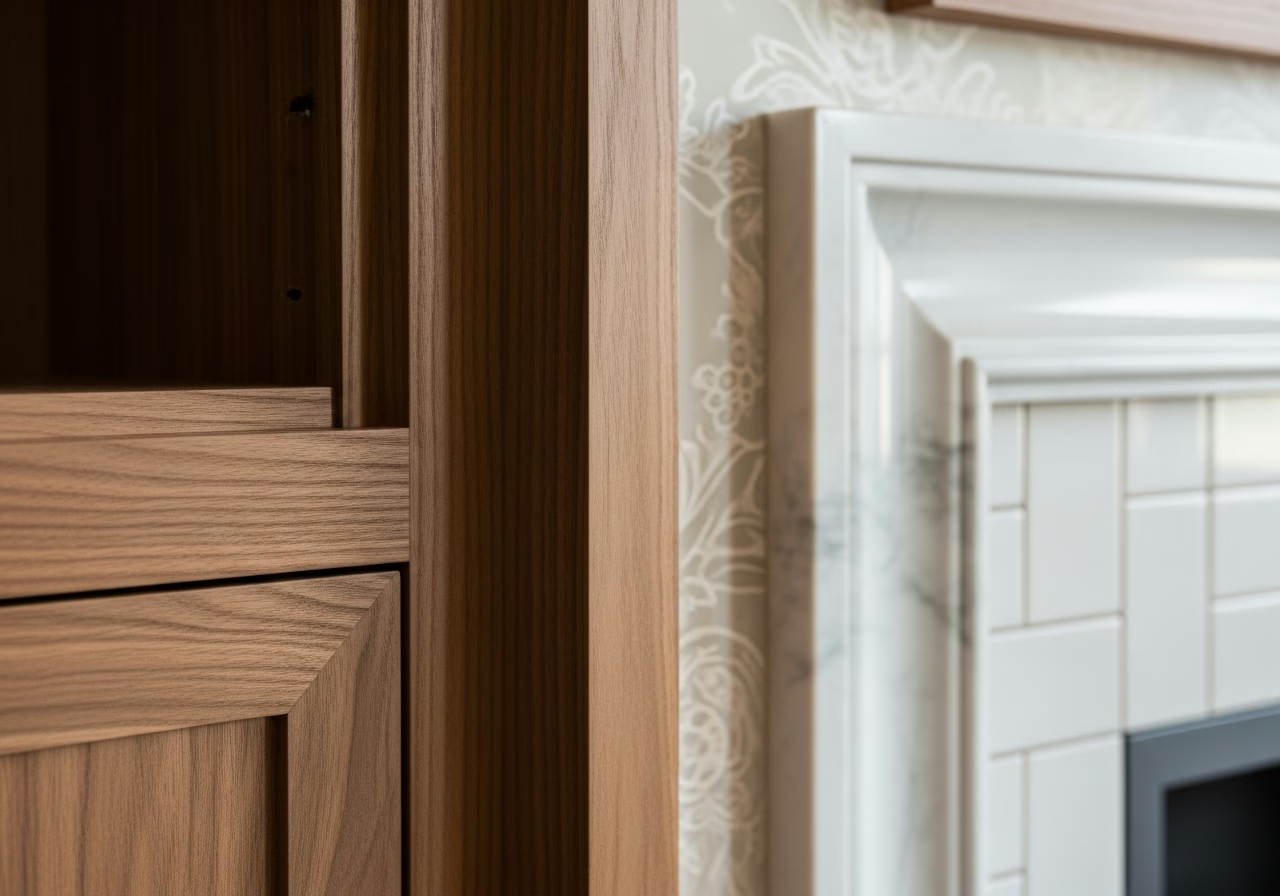
- Trim: Eastern white pine for cornices, soffits, and window casings. Solid mahogany for entry doors.
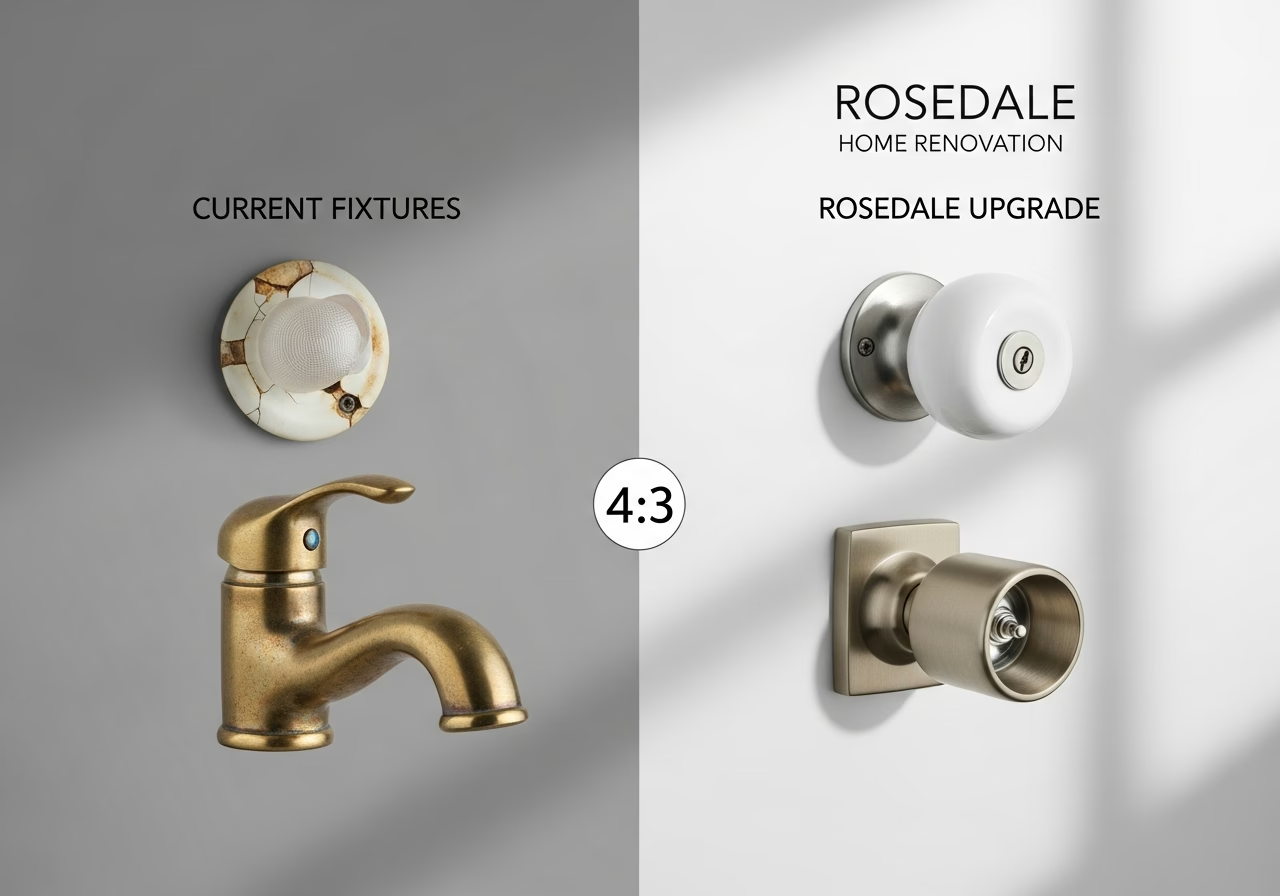
- Hardware: Baldwin Estate or Emtek Heritage in oil-rubbed bronze or aged brass.
For Tudor Revival houses:
- Half-timbering: True oak timber, not applied trim. Stucco field with traditional three-coat lime stucco.
- Roofing: Slate (always) or hand-split cedar shake. Asphalt is permitted but flagged in HCD Plan reviews.
- Windows: Leaded casement, divided lites in diamond or rectangular patterns. Loewen Tradition and Kolbe Heritage both make accurate Tudor casements.
- Front door: Solid oak, often with iron strap hinges and an oak surround. Custom local millwork shops handle these — no off-the-shelf option works.
Heritage Permit process in Rosedale specifically
Rosedale files are reviewed by Heritage Planning's senior staff out of the City Planning Division at Metro Hall / City Hall. Typical timeline from pre-consult to permit-in-hand: 10 to 18 weeks, longer for additions or third-storey work that requires Toronto Preservation Board review.
Most common rejection reasons we see in Rosedale submissions:
- Vinyl or aluminum windows specified instead of wood-clad
- Modern brick used for replacement courses (wrong colour, wrong texture, wrong size)
- Front porch railings to current building code height with no heritage justification — solved by submitting a guard-rail variance to maintain original 30" height
- Asphalt shingle proposed where original was slate or cedar
- Skylights, solar arrays, or HVAC condensers visible from the street
- Garage doors swapped to modern carriage-style without checking the HCD Plan's specific door specifications
- Front-yard landscaping changes (driveway widening, mature tree removal) treated as exempt when they are not
Our Rosedale submissions average first-cycle approval at staff delegated level when the package is built correctly.
Five micromarkets inside Rosedale
Old Rosedale (north of Roxborough Drive, around Crescent Road and South Drive). Original 1880s-1900s subdivisions. The Crescent Road / Cluny block has the most-photographed Edwardian streetscape in the city. Average detached sale 2026: $4.8M–$8.5M.
South Rosedale (south of Bloor, east of Sherbourne). Earlier and denser; more 1880s Victorians survived. Glen Road, Castle Frank Crescent, Drumsnab Road. Heavier on Queen Anne and Second Empire than the rest of the neighborhood. Sale range $3.2M–$6.8M.
North Rosedale (Beaumont Road north to St. Clair). 1920s Tudor Revival heartland. The Beaumont Road / Highland Avenue corner is the densest Tudor block in Toronto. Larger lots, $5.5M–$12M.
Moore Park (often grouped with Rosedale; technically its own HCD-adjacent area but mostly outside HCD). Edwardian and inter-war housing, smaller lots, generally not under Heritage Permit but subject to Heritage Register listings on certain streets (Glen Road, Welland Avenue). Sales $2.8M–$5.5M.
Governor's Bridge (between North Rosedale and Bayview). Inter-war Tudor and English Cottage on curving streets. Not currently HCD but adjacent — many properties individually Part IV-listed. Sales $4.5M–$9.5M.
Resale value impact
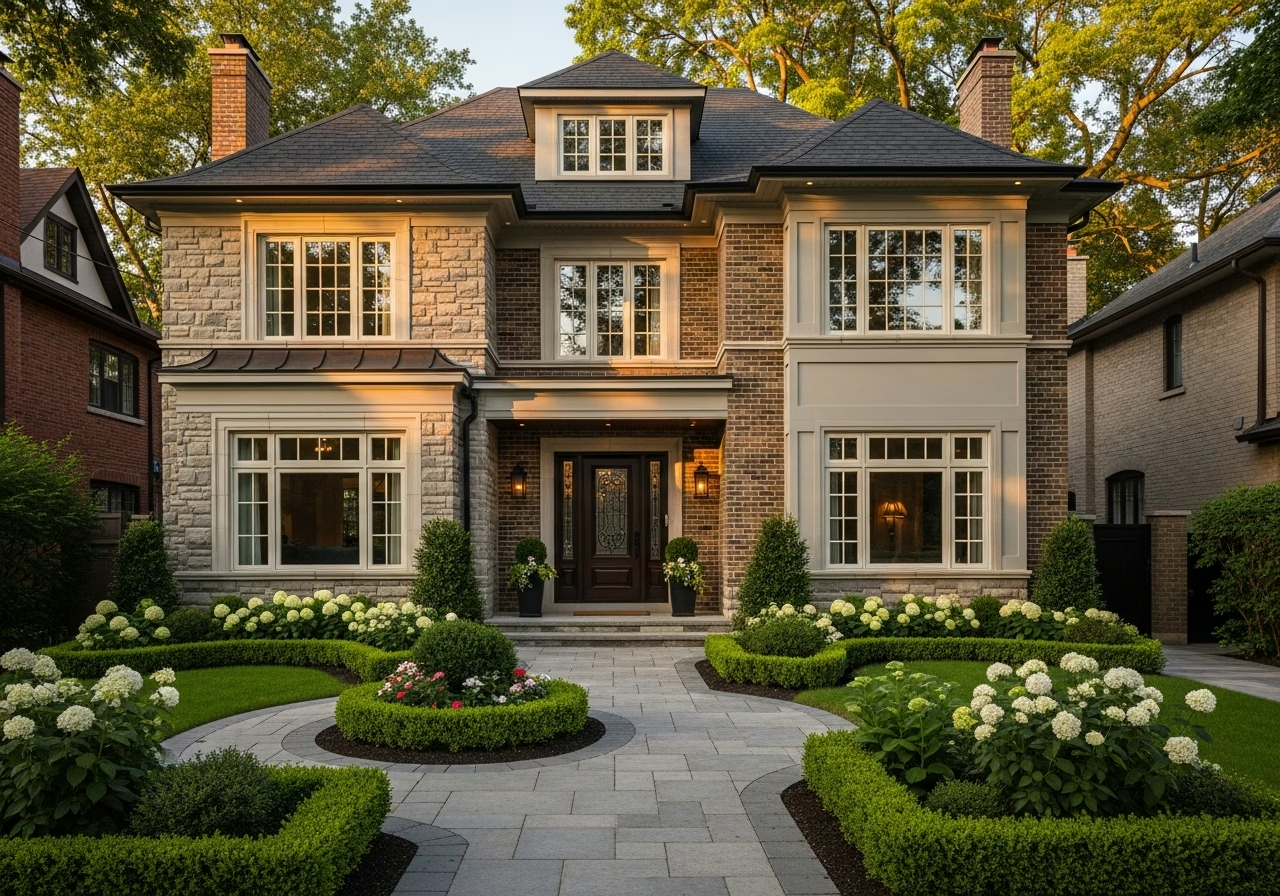
A Rosedale Edwardian properly restored — original windows replaced with accurate wood-clad sash, slate roof retained or replaced like-for-like, mortar repointed correctly, replicated front porch — sells at a 12-18% premium over the same-sized house with generic modern replacements on the same street. Conversely, the same house with vinyl windows, asphalt over slate, and a contemporary aluminum-and-glass front door carries a 4-9% discount against neighbors, and longer days-on-market. Rosedale realtors know this market mechanic; their listing photos always linger on the wood window detailing and the original front door.
Working with us on a Rosedale project
Our Rosedale workflow is built around the realities of the HCD Plan and the senior heritage planner who will review your file. The default sequence:
1. Property check and HCD analysis (week 1). We pull the property file from the City's Heritage Register, confirm whether the property is contributing or non-contributing under the relevant HCD Plan (Rosedale North or Rosedale South), and flag any individual Part IV designation overlay. We also pull historic photographs from the City of Toronto Archives where the property is on a documented street.
2. Pre-consult with Heritage Planning (weeks 2-4). Informal meeting with the assigned Heritage Planner to confirm the project envelope is achievable. Saves an enormous amount of rework versus submitting drawings cold and absorbing the feedback at week 8.
3. Drawings, materials spec, heritage rationale (weeks 4-10). Architect-led for additions and full restorations; in-house for window packages, roofing, and porch work. The materials spec is the single most-scrutinized document; we build ours to the published HCD Plan standards as a default.
4. Application submission and the 90-day window (weeks 10-22). Heritage Permit application under Chapter 103, followed by Building Permit. The 90-day Ontario Heritage Act decision window starts at Notice of Receipt.
5. Construction (months 6-24). Phased to keep finish trades sequenced correctly — heritage carpentry and stone work cannot be rushed without showing the rush in the finished product.
The trades on our Rosedale roster — masons, carpenters, stone restorers, leaded-glass studios, slate roofers — are the same crews that work on Yorkville and Cabbagetown projects. There are perhaps 30 trades people in the GTA who do this work at the level Rosedale requires, and we have working relationships with most of them.
Bottom line
Rosedale is the most demanding market in the GTA for renovation, and the least forgiving of generalist contractors. The HCD Plan, the senior heritage planner roster, and the material standards are not optional. If you own a Rosedale property and are planning anything more than interior cosmetic work, book a heritage consult before drawings. We will tell you exactly what the HCD Plan will and will not allow, what the realistic permit timeline looks like for your specific street, and which trades on our roster handle Rosedale-grade work.
The RenoHouse Difference
Experienced Trades
Hands-on expertise in rosedale home renovation. We've seen it all and know how to handle any challenge.
Warranty Protected
All work comes with comprehensive warranty coverage. We stand behind our craftsmanship and use quality materials that last.
Competitive Rates
Fair pricing on rosedale home renovation without compromising quality. We match or beat competitor quotes.
Sound Familiar?
These are the most common problems our clients face.
Need professional help with this?
Not sure where to start?
Want quality results the first time?
Tired of putting it off?
Looking for a reliable contractor?
Want a free, no-obligation estimate?
Ready to get started?
Free estimate, no obligation. We respond within 1 hour.
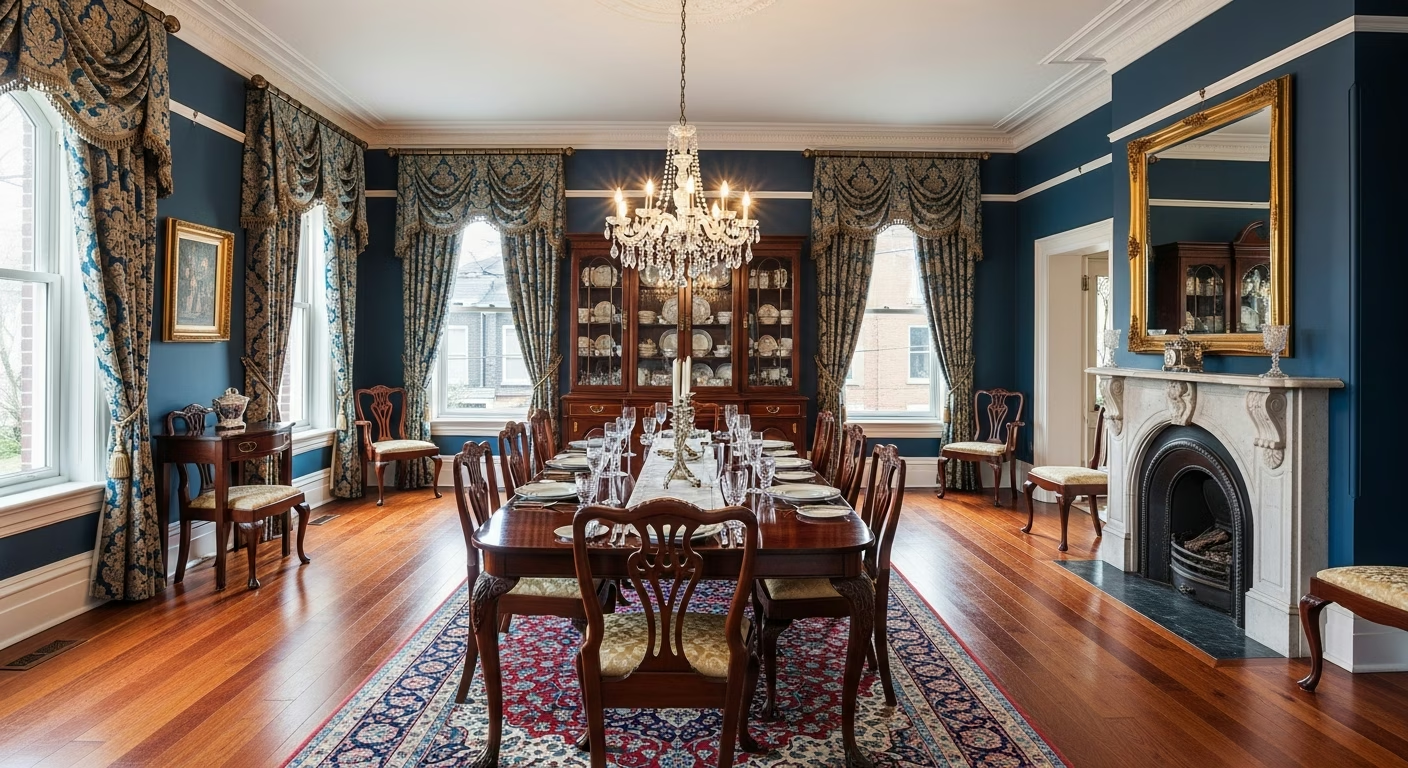
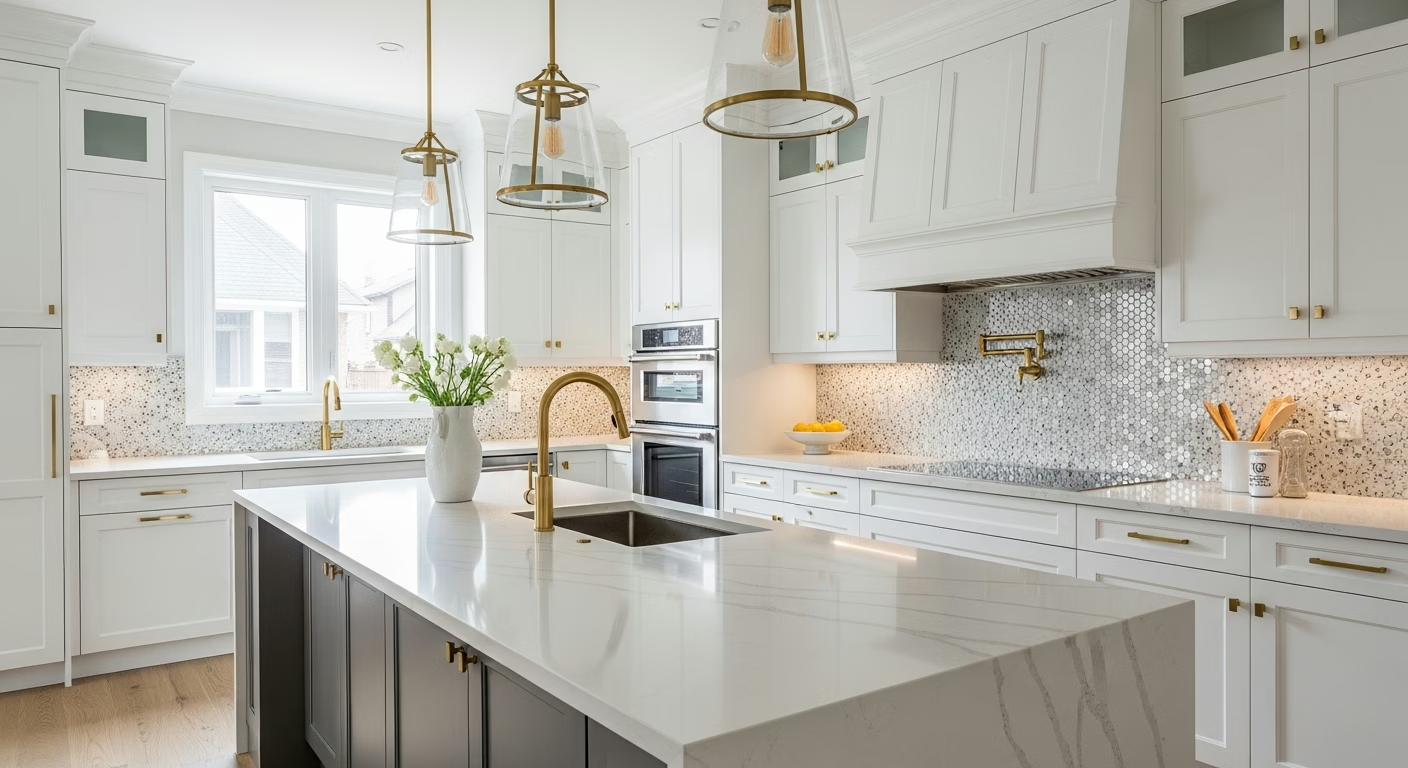
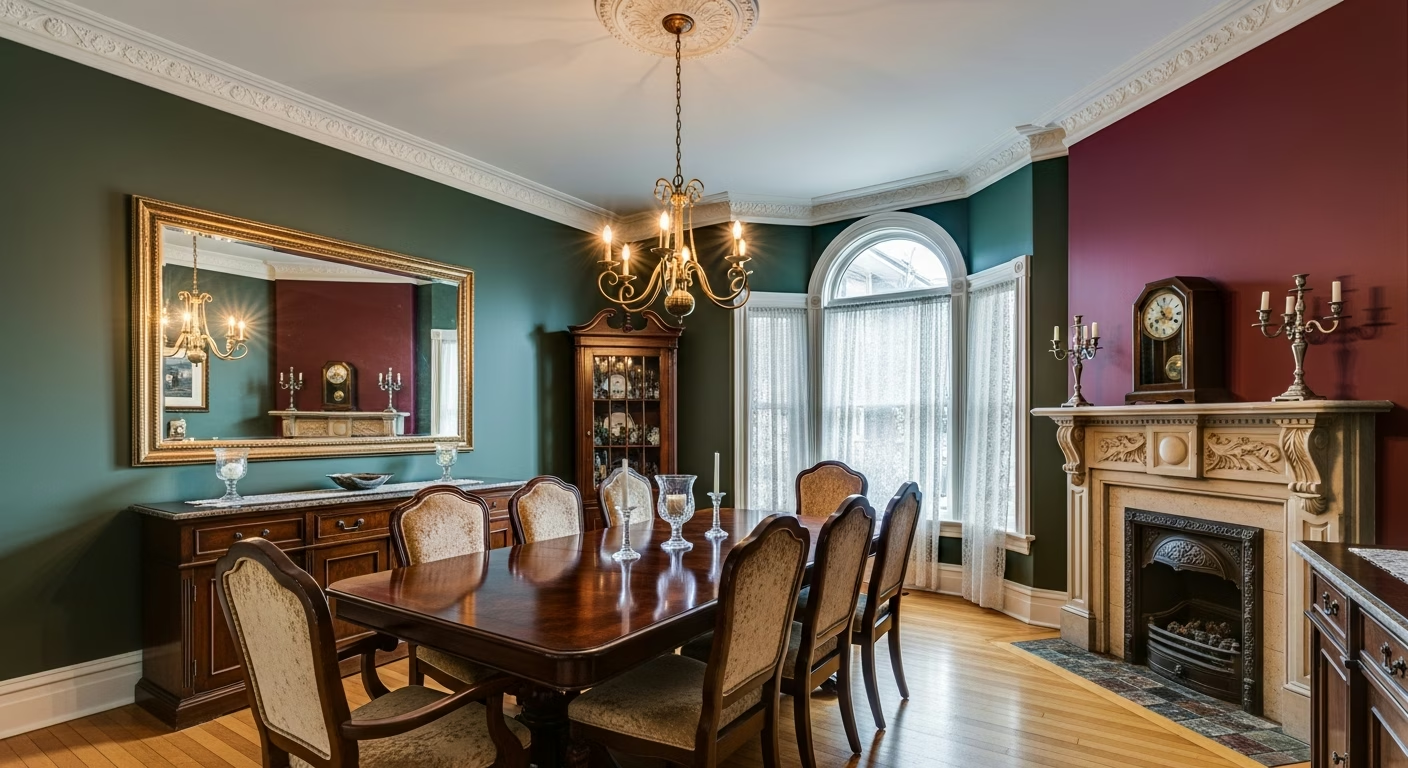
Our Rosedale Home Renovation Work
Professional rosedale home renovation results from RenoHouse projects across the Toronto GTA.
Rosedale Home Renovation
Toronto GTA
Quality Workmanship
Licensed & Insured
Like what you see? Let's talk about your project.
🧮 Rosedale Home Renovation Services — Cost Estimator
GTA / Ontario — 2026 market pricing
📊 Where the cost goes (typical breakdown)
📋 What affects your price:
💡 Estimates use 2026 GTA/Ontario market data. Actual cost depends on site conditions, material selections, and project scope. Book a free in-home quote for a precise number.
Frequently Asked Questions About Rosedale Home Renovation
If your property sits inside the Rosedale North or Rosedale South HCD boundaries — and the vast majority of detached Rosedale houses do — then yes, exterior alterations require a Heritage Permit under Chapter 103. We can pull the City's HCD GIS layer for your specific address and confirm in a 10-minute desktop check.
Almost never inside the HCD. Demolition of a contributing heritage property is the single most-refused application type in Rosedale. The 60-day notice provisions of the Ontario Heritage Act apply, the file goes to Toronto Preservation Board and Council, and refusal is the default outcome. Mid-century non-contributing houses are a different conversation.
The HCD Plan classifies every property as either contributing (built within the period of significance, retaining original heritage attributes) or non-contributing (built outside the period or substantially altered). Contributing properties have the strictest review; non-contributing have more latitude but still face HCD Plan design guidelines for any new construction.
Possibly, with constraints. The HCD Plan permits solar where it is not visible from the public realm — typically on south-facing rear roof slopes, set back from the ridge, and using black-on-black low-profile arrays. Front-elevation solar is consistently refused. The exception process exists but is slow.
Old Rosedale (the original 1880s subdivision around Crescent and South Drive) has older housing stock and tighter design controls — every detail tends to get scrutinized. South Rosedale is denser, with more Victorian survivors and a wider tolerance for replication-style work because so much was rebuilt in the 1920s and again in the 1980s. North Rosedale's Tudor stock has its own pattern: oak half-timbering, slate, leaded glass.
Yes. Our standard scope on Rosedale projects includes pre-consult coordination with Heritage Planning, drawings to Chapter 103 submission standard, materials specification, supporting heritage rationale, and shepherding the file through the 90-day statutory window. Most clients also want us to handle the subsequent Building Permit, which integrates the Heritage Planning sign-off.
Heritage Permit: 10-18 weeks. Building Permit (after heritage sign-off): 4-10 weeks. Construction start to substantial completion: 9-18 months for kitchens and additions, 14-30 months for full restorations. Rosedale projects are slow projects. Anyone promising faster is cutting corners somewhere — usually in the permit package, which catches up at inspection.



You Might Also Need
Customers who looked at rosedale home renovation also asked us about these complementary services.
We Serve All GTA
Professional rosedale home renovation services available across the Greater Toronto Area.
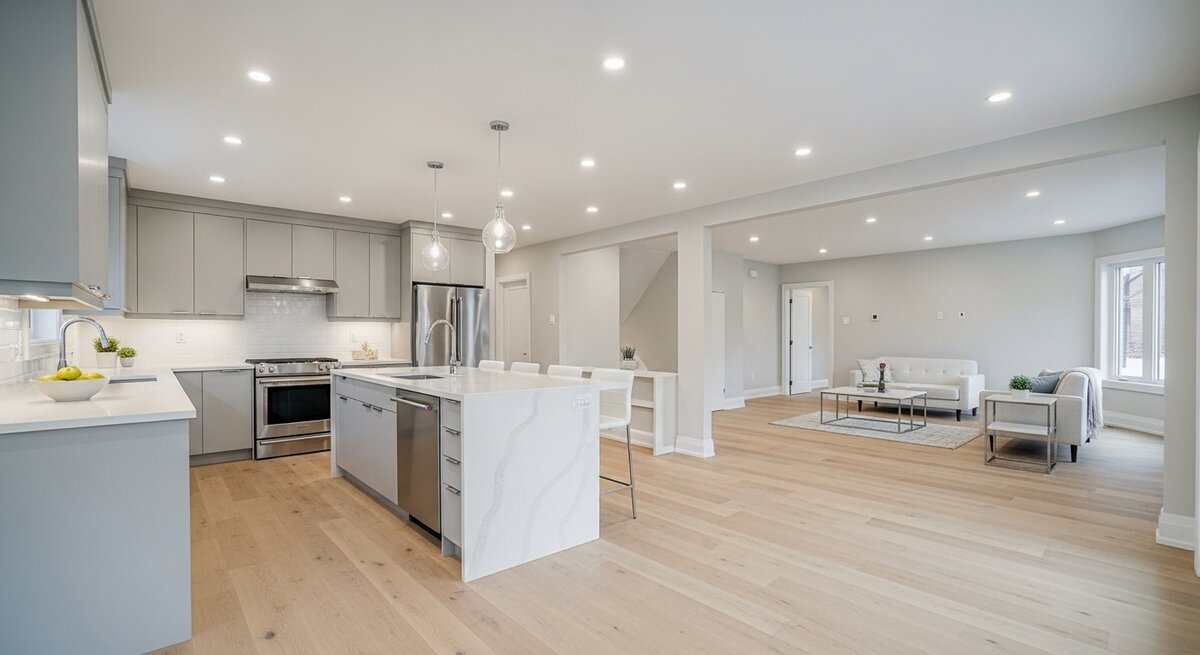
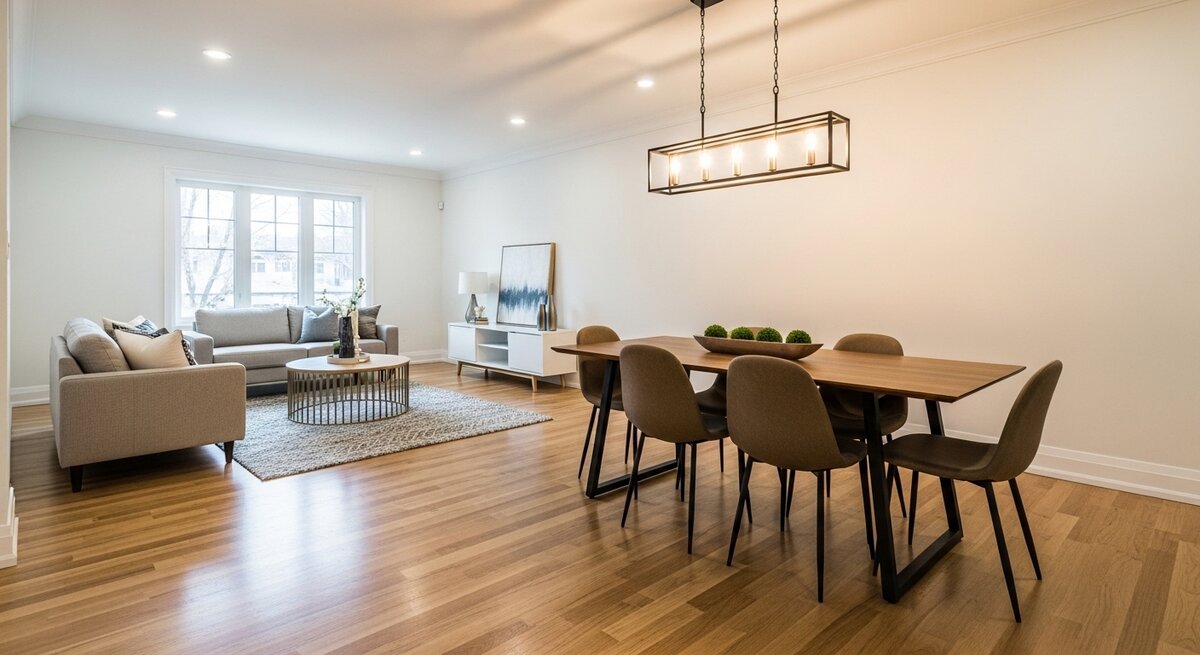
“Renovated our entire main floor — kitchen, living room, flooring, paint, lighting. They coordinated everything perfectly. One contractor for the whole project.”
— Anthony G., North York
Get a Free Rosedale Home Renovation Estimate
Contact us today for a free, no-obligation quote for your rosedale home renovation project in Toronto GTA. We'll get back to you within 1 hour.