RenoHouse

# Can You Tile on Top of Tiles in a Toronto or GTA Home?
Quick answer. Yes — tiling over existing tiles is legal and structurally sound in most Toronto and GTA homes, provided the existing surface is flat, fully bonded, and the added thickness won't create height conflicts at doors, drains, or transition strips. In 2026 GTA prices, expect $8–$18 per sq ft installed for tile-on-tile work, versus $12–$25 per sq ft when full demo and disposal are included.The Real Cost Difference: Tiling Over vs. Full Demo
The main reason homeowners in Etobicoke, Mississauga, and Scarborough consider tiling over existing tile is straightforward: demo costs money and time. Tile removal runs $2–$5 per sq ft in labour, and disposal fees for a standard bathroom floor add another $150–$350 depending on haul loads to a GTA transfer station.
Skipping demo eliminates that line item and shortens the project by one to three days. For a typical Toronto main bathroom — roughly 50–80 sq ft of floor tile — the savings can land between $400 and $800 on a straightforward project.
Here is a breakdown of what each approach typically costs in the GTA in 2026:
| Approach | Labour | Materials | Disposal | Typical Total (80 sq ft) |
|---|---|---|---|---|
| Tile over existing tile | $5–$10/sq ft | $3–$8/sq ft | $0 | $640–$1,440 |
| Remove old tile, re-tile | $7–$12/sq ft | $3–$8/sq ft | $150–$350 | $950–$1,910 |
| Full floor rebuild (cement board + new tile) | $10–$18/sq ft | $4–$10/sq ft | $150–$450 | $1,100–$2,560 |
Prices vary by tile format, pattern complexity, and site access. Large-format porcelain (24x24 or bigger) costs more to set because of the precision required. Mosaic tile runs higher on labour. Standard ceramic subway tile remains the most budget-friendly option at most GTA tile suppliers.
Need professional renovation?
Call RenoHouse at 289-212-2345 or get a free estimate today.
Get Free Estimate →One cost factor that catches homeowners off guard: polymer-modified thinset is mandatory for tile-on-tile work, and it costs roughly $5–$8 more per bag than standard grey thinset. For a small bathroom, that adds $20–$40 to the material budget — worth factoring into your estimate before work starts.
How to Tile Over Existing Tiles: Step by Step
Step 1 — Assess the existing tile. Use a rubber mallet or the back of a key and tap across the entire floor in a grid pattern. A hollow sound indicates the tile has debonded from the substrate below. If more than 10–15% of the existing floor sounds hollow, demo is the right call. Loose tiles flex under the new layer and break the thinset bond, guaranteeing failure within a year.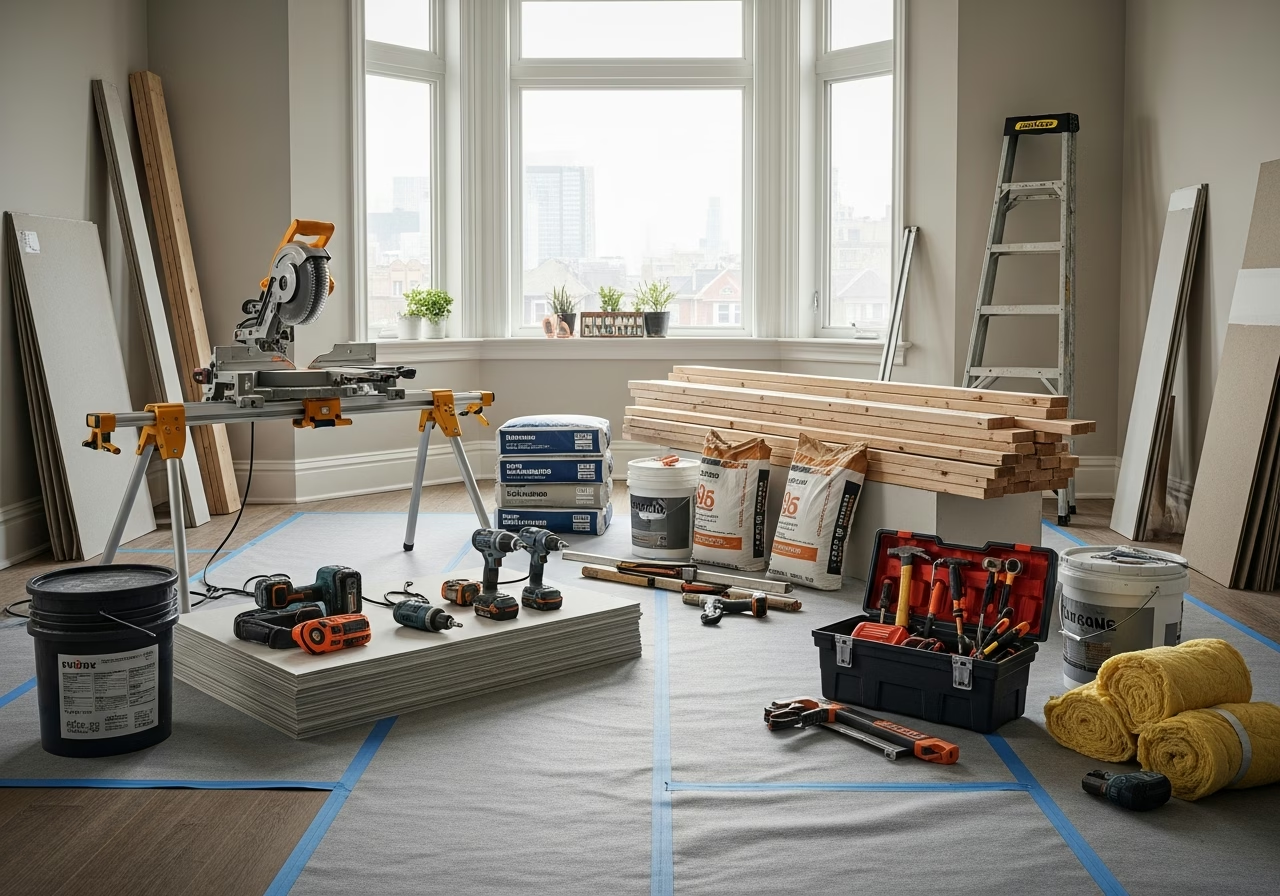
No building permit is required in Toronto or anywhere in the GTA for straightforward tile replacement — it falls under maintenance and repair. If the project involves relocating a drain or adding an electric radiant floor mat, a plumbing permit or an ESA-certified electrical inspection is required through the relevant municipality before the work is covered up.
When Tiling Over Existing Tile Is the Wrong Call
Tile-on-tile has real limits. Ignoring them turns a $1,200 re-tile into a $4,000 floor rebuild six months down the road.
Frequently Asked Questions
Can you tile on top of tiles in a shower?
Yes, with conditions. Shower walls are generally good candidates because weight and height constraints are less critical than on floors. Every existing wall tile must be fully bonded first — re-adhere or remove any hollow tiles before proceeding. On shower floors, check drain height before ordering material. Adding 12–15 mm to the shower floor can leave the drain rim recessed, which traps water and defeats a properly sloped pan.
How many layers of tile can you have on a floor?
Two layers is the accepted maximum on wood-frame subfloors in Ontario. The concern is cumulative weight and the resulting subfloor deflection — ceramic and porcelain tile have no tolerance for flex. Concrete subfloors, common in Scarborough and North York condos and in basement slabs, can handle more load structurally, but height at transitions and drain flanges usually becomes the practical limiting factor before structural capacity does.
Do I need a permit to retile in Toronto?
No permit is required for straightforward tile replacement in Toronto or anywhere in the GTA — it is classified as maintenance. Permits are required if the project involves moving walls, relocating plumbing or drains, or adding an electric radiant floor circuit, which must be inspected by an ESA-certified electrician. If tiling is part of a larger bathroom renovation involving any of those trades, pull the applicable permits before work begins.
What thinset should I use for tile on tile?
Always use polymer-modified thinset — not standard grey thinset and not mastic. Look for products rated for non-porous or tile-over-tile substrates. In Canada, Mapei Ultraflex 2, Custom Building Products FlexBond, and Laticrete 254 Platinum are widely stocked at GTA tile distributors and perform reliably in wet and dry applications. Avoid mastic in any wet area; it re-emulsifies with sustained moisture exposure and will eventually fail.
Need a quote in the GTA?

RenoHouse works across Toronto, Etobicoke, Mississauga, Scarborough, Vaughan, Brampton, Oakville, and surrounding communities for tile installation, bathroom renovations, and flooring projects. If you are unsure whether your existing floor is a solid candidate for tile-on-tile or needs a full demo first, a site visit takes the guesswork out entirely. Call 289-212-2345 or submit a free quote request online — with 12+ years of GTA renovation experience and a 4.9-star track record across nearly 500 reviews, you will get a straight answer based on what is actually there.