RenoHouse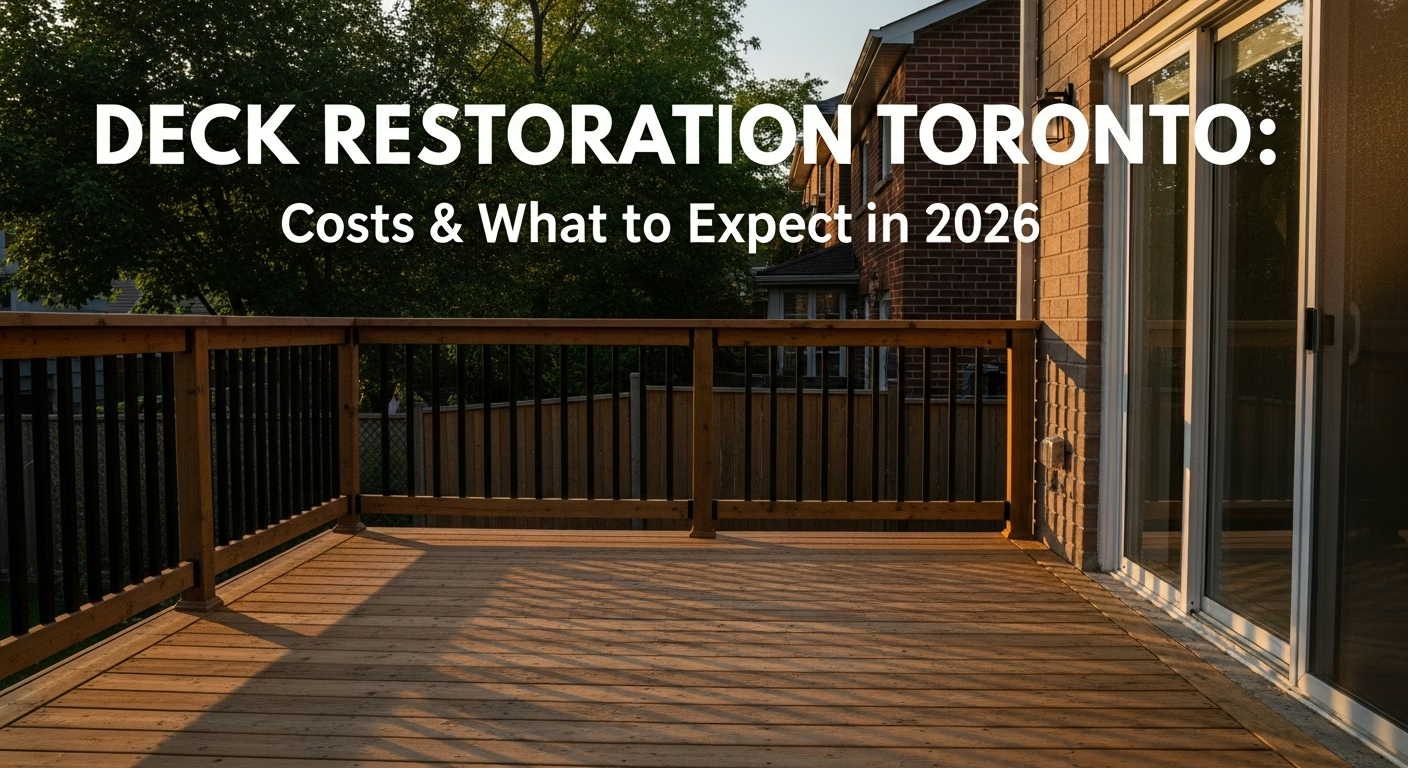

# Deck Restoration Near Me: Toronto & GTA Costs for 2026
Quick answer. Deck restoration in the Toronto and GTA area typically runs $800–$6,500 depending on deck size, wood species, and how much structural repair is needed alongside the cosmetic work. A standard 200 sq ft pressure-treated deck — cleaning, sanding, and two-coat staining — lands between $1,200 and $2,800 in 2026. Boards that have started to rot or go soft push the price higher.What Deck Restoration Costs in the GTA in 2026
Deck restoration pricing in Toronto, Mississauga, Etobicoke, and the surrounding 905 belt breaks into three tiers based on scope.
Tier 1 — Clean, Sand, and Seal ($800–$1,800)This covers power-washing, light hand-sanding to open the grain, and one or two coats of penetrating oil or semi-transparent stain. It is the right choice for a structurally sound deck that has simply faded or gone grey. A 150–250 sq ft deck in Brampton or Pickering falls comfortably in this range. Add $150–$300 for a second topcoat applied 24 hours later for better longevity.
Tier 2 — Full Restoration with Minor Repairs ($1,800–$4,500)When several boards have surface checks, end splits, or early soft spots, the restoration needs to include targeted board replacement before any finish goes down. Labour for replacing individual deck boards in the GTA runs $80–$120 per board including fasteners. If the deck also has a failing rail or soft joists, expect the quote to climb toward the top of this range. This scope is common on decks that are 8–15 years old in areas like Scarborough, Richmond Hill, or Oakville.
Tier 3 — Structural Restoration + Refinish ($4,000–$9,500+)Once rot reaches the frame — joists, beams, or posts — you are looking at partial structural reconstruction alongside the finish work. This is the borderline case between restoration and replacement. A full rebuild on an elevated deck in North York or Vaughan, where the deck serves a second-storey walk-out, requires a City of Toronto or municipal building permit for any structural work on a deck more than 600 mm above grade or exceeding 10 m². Structural restoration at this level starts at $4,000 and can reach $9,500 or more for a 300–400 sq ft elevated deck.
| Scope | Typical GTA Price (2026) | Best For |
|---|---|---|
| Clean, sand, seal | $800–$1,800 | Sound deck, cosmetic aging |
| Restoration + minor repairs | $1,800–$4,500 | 8–15 yr old deck, a few bad boards |
| Structural restoration + refinish | $4,000–$9,500+ | Rot in frame, loose posts, bad joists |
| Full deck replacement | $12,000–$28,000 | Structural failure beyond repair |
Material choices also shift the number. Pressure-treated pine is the most economical substrate to work with — stains take well and sanding is fast. Older cedar decks in Markham or King City neighbourhoods often have better bones but require more careful prep to avoid raising grain. Composite decks generally do not need staining, but they do need periodic deep-cleaning and sometimes surface scratch repair, which is a separate service category.
The Deck Restoration Process Step by Step
A professional deck restoration in the GTA follows a predictable sequence. Shortcuts at any stage cut years off the finish life.
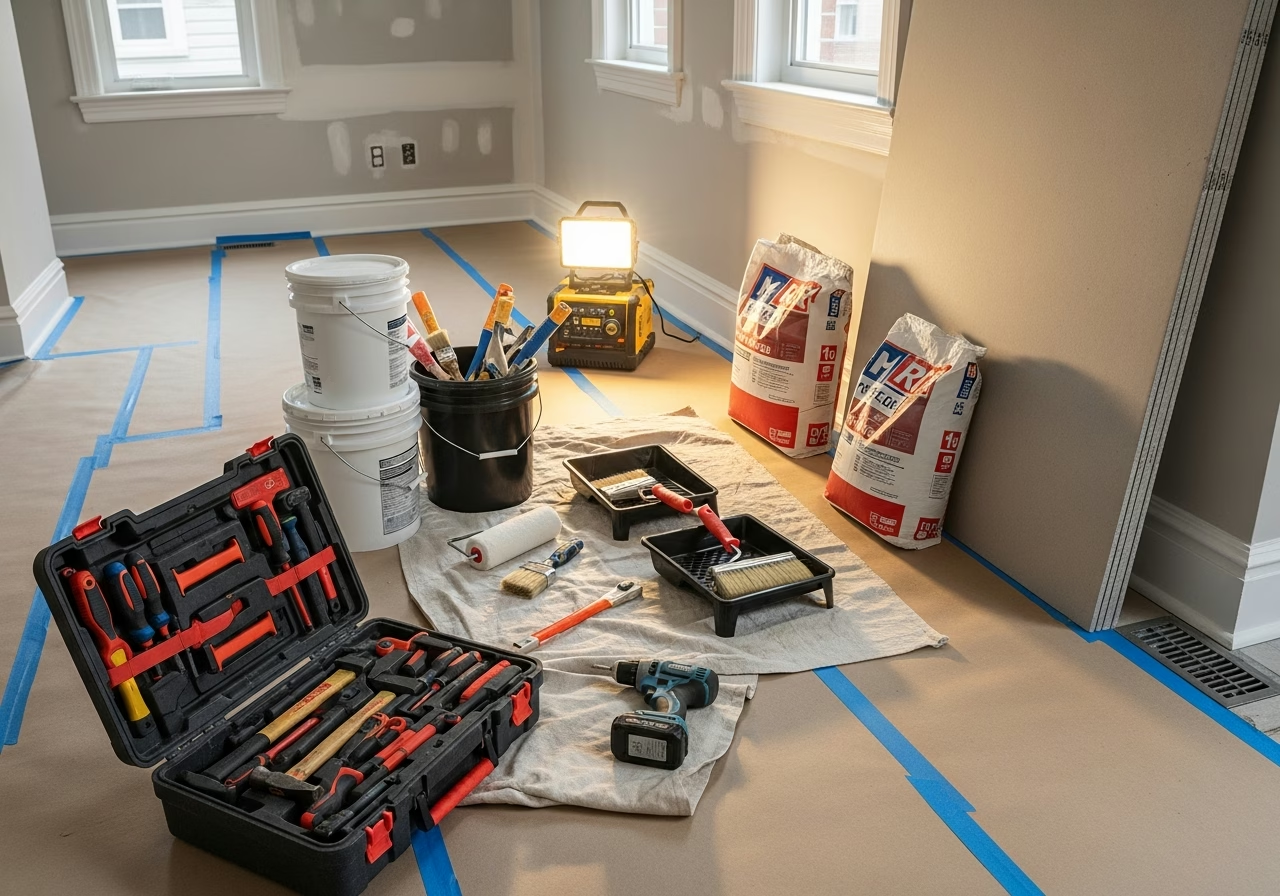
A proper job starts with a full structural inspection: probe every board for soft spots, check joist hangers for rust, examine ledger board flashing where the deck meets the house, and assess post-base connections at grade. Moisture infiltrating at the ledger is the single most common source of concealed rot in Toronto-area homes. Structural deficiencies need to be fixed before cosmetic work starts — not after.
Need professional renovation?
Call RenoHouse at 289-212-2345 or get a free estimate today.
Get Free Estimate →The deck gets a thorough pressure wash at 1,500–2,500 PSI using a fan tip to avoid furring the grain. A wood brightener or oxalic-acid wash follows to neutralize the grey oxidation layer and restore the wood to a consistent pH that accepts stain evenly. This step is skipped by a lot of cheaper operators — and it is the reason those re-stains look patchy three months later.
Step 3 — Drying periodPressure-treated lumber and cedar need 48–72 hours of dry weather before any penetrating oil or stain goes down. In Toronto's climate, that means scheduling around the forecast. Rushing this step with a moisture reading above 18–20% causes the finish to peel within one season.
Step 4 — Sanding60 or 80-grit orbital sanding opens the grain, removes remaining grey wood fibre, and smooths rough checks. For decks with a previous film-forming sealant — polyurethane or solid-colour paint — more aggressive sanding or chemical stripping is needed first. This is why water-based semi-transparent penetrating stains are a better long-term choice than film-forming products on horizontal surfaces.
Step 5 — Stain and seal applicationTwo coats of penetrating oil-based or water-based stain go down with back-brushing or rolling between passes. End-grain on cut boards gets an extra coat. For decks in Whitby, Ajax, or Clarington where the surface faces south and west, a UV-inhibitor formula makes a meaningful difference in how long the finish holds before the next maintenance cycle.
Step 6 — Electrical and lighting additionsAdding or replacing low-voltage deck lighting, receptacles, or ceiling fans on a covered deck in Ontario is ESA-regulated electrical work. Any new circuits, outlets, or hardwired fixtures require an ESA permit and inspection regardless of municipality — whether the deck is in Georgetown, Caledon, or downtown Toronto. ESA-certified electricians are the only people who should be doing that work.
Step 7 — Final walkthrough and cure timeA quality job includes a walkthrough before the crew leaves. Keep foot traffic off the deck for 24–48 hours while the finish cures. Full hardness takes up to 72 hours depending on temperature and humidity.
Restoration vs. Replacement: How to Read the Situation
The most common question contractors get on deck calls is whether the money is better spent on a full replacement. Here is a straightforward way to read it.

- Skipping the wood brightener step after pressure washing
- Applying stain within hours of washing instead of waiting for moisture content to drop
- Using solid-colour paint on horizontal deck boards — it peels fast and traps moisture underneath
- No written inspection report on structural condition before quoting
- Quoting over the phone without seeing the deck
- No discussion of building permits for elevated or attached decks where one is required
Toronto's municipal requirements — and those in Mississauga, Brampton, Vaughan, and other GTA municipalities — are clear: decks attached to the house, more than 600 mm above grade, or over 10 m² require a building permit. A contractor who waves that off is not doing you a favour.
Frequently Asked Questions
How long does deck restoration take in Toronto?
For a standard 200–300 sq ft pressure-treated deck, plan on two to three days of active work: one day for pressure washing and drying, one for sanding and the first coat, and a follow-up day for the second coat. Structural repairs add time on top of that. Mandatory drying periods between stages often spread the job across a full week on the calendar given Toronto's unpredictable spring and fall weather.
Does deck restoration require a permit in Toronto?
Cosmetic work — cleaning, sanding, staining — does not require a permit. Structural repairs that change load-bearing elements, replace posts or beams, or add a new section to an existing deck attached to the house generally do. The City of Toronto and most 905 municipalities require building permits for structural deck work above 600 mm grade or on decks larger than 10 m². Confirm with your municipality before any structural repairs begin.
What is the best time of year to restore a deck in the GTA?
Late spring through early fall — May through September — gives the best results. Stains and penetrating oils need consistent temperatures above 10°C and 48–72 hours of dry weather before and after application. The main risk in Toronto summers is scheduling around rain. Avoid late October and November applications because curing slows significantly and early freeze-thaw cycles can disrupt a finish that has not fully hardened.
How often does a GTA deck need to be re-stained?
With a quality penetrating oil or semi-transparent stain, most decks in Toronto and the GTA need maintenance every 2–4 years depending on sun exposure, wood species, and foot traffic. South and west-facing decks in open lots — common in newer Brampton, Vaughan, and Ajax subdivisions — fade faster than shaded decks. A light clean and topcoat at the 2–3 year mark extends the original job significantly and costs far less than a full restoration cycle.
Need a Quote in the GTA?

Renohouse serves Toronto, Etobicoke, Mississauga, Brampton, Vaughan, Oakville, Markham, Richmond Hill, Scarborough, North York, Whitby, Ajax, Clarington, Georgetown, Caledon, and across the GTA. With 12-plus years of local renovation experience and a 4.9-star rating across 498 reviews, the team can inspect your deck, walk through the restoration versus replacement question honestly, and provide a written quote at no charge. Call 289-212-2345 or request a free quote online to get a professional assessment before the summer season runs out.