RenoHouse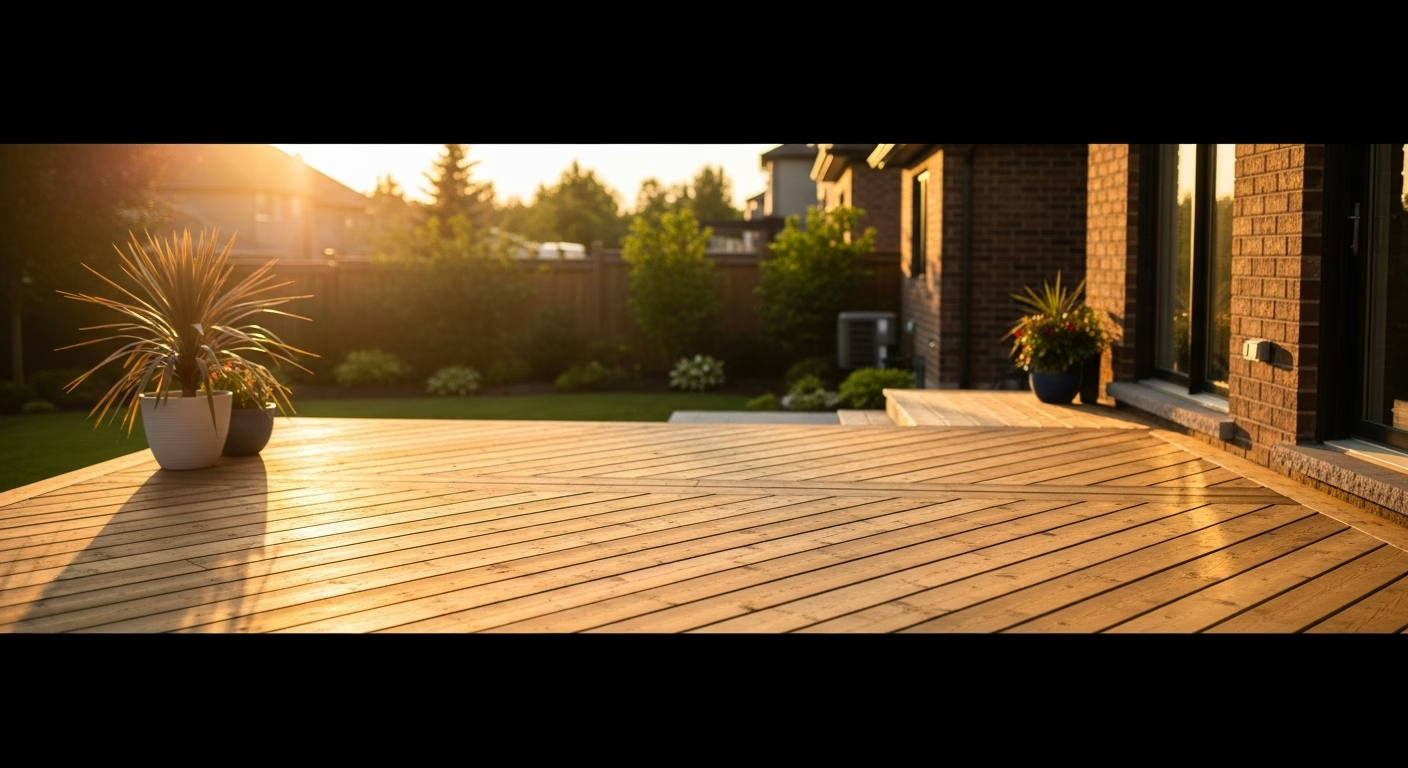

# Decking Installation Richmond Hill: Costs and What to Expect (2026)
Quick answer. Decking installation in Richmond Hill runs $18–$28 per square foot for pressure-treated wood, $35–$55 per square foot for mid-grade composite, and $55–$75 per square foot for premium composite, all-in with labour and materials for 2026. A standard 300-square-foot attached deck typically costs $6,000–$22,500 depending on material, height, and site conditions — and a building permit is required in most cases.What Decking Installation Costs in Richmond Hill (2026)
Richmond Hill sits in York Region, and deck pricing here reflects GTA labour rates alongside material costs that have stayed elevated through 2025 and into 2026. The spread between the cheapest and most expensive build is wide, and the material you choose drives most of that difference.
Pressure-treated (PT) pine remains the most affordable structural option at $18–$28 per square foot installed. Cedar runs $25–$40 per square foot — it looks better from day one and resists rot without chemical treatment, but it requires regular sealing to hold up through Richmond Hill winters. Composite decking dominates the mid-to-upper market: mid-grade products (Trex Select, TimberTech Edge) come in at $35–$55 per square foot, while premium lines (Trex Transcend, Fiberon Horizon) with grooved boards, hidden fasteners, and matching fascia run $55–$75 per square foot. Hardwood species like Ipe or Cumaru land at $45–$70 per square foot installed — effectively permanent if maintained, but the most labour-intensive to work with.
Height is the second-biggest cost variable. A ground-level deck under 600 mm above grade has straightforward footing requirements. Once the elevation increases — common on Richmond Hill lots where grade drops toward a ravine or rear yard — you need taller posts, diagonal bracing, and larger concrete footings drilled to below the frost line (roughly 1.2–1.5 m in this part of Ontario). Budget an additional $1,500–$4,000 for an elevated build compared to a flat-site deck of the same footprint.
Upgrades compound quickly. Built-in benches, pergolas, privacy screens, and cable or glass railing systems add $150–$400 per linear foot on top of the base deck price. Composite railing alone on a 40-foot perimeter can run $6,000–$10,000.
| Material | Installed Cost / sq ft | Lifespan | Maintenance |
|---|---|---|---|
| Pressure-treated pine | $18–$28 | 15–25 years | Stain/seal every 2–3 years |
| Cedar | $25–$40 | 20–30 years | Seal every 2–3 years |
| Mid-grade composite | $35–$55 | 25–30 years | Annual cleaning only |
| Premium composite | $55–$75 | 30+ years | Annual cleaning only |
| Ipe / tropical hardwood | $45–$70 | 40+ years | Annual oiling |
For a 300 sq ft attached deck — a size that suits the standard 40–50 ft lots across Bayview Hill, Doncrest, and Langstaff — budget $5,400–$8,400 for PT wood, $10,500–$16,500 for mid-grade composite, or $16,500–$22,500 for premium composite with upgraded railing. These ranges assume standard grade and a single stair run to grade.
The Decking Installation Process: Permits to Final Inspection
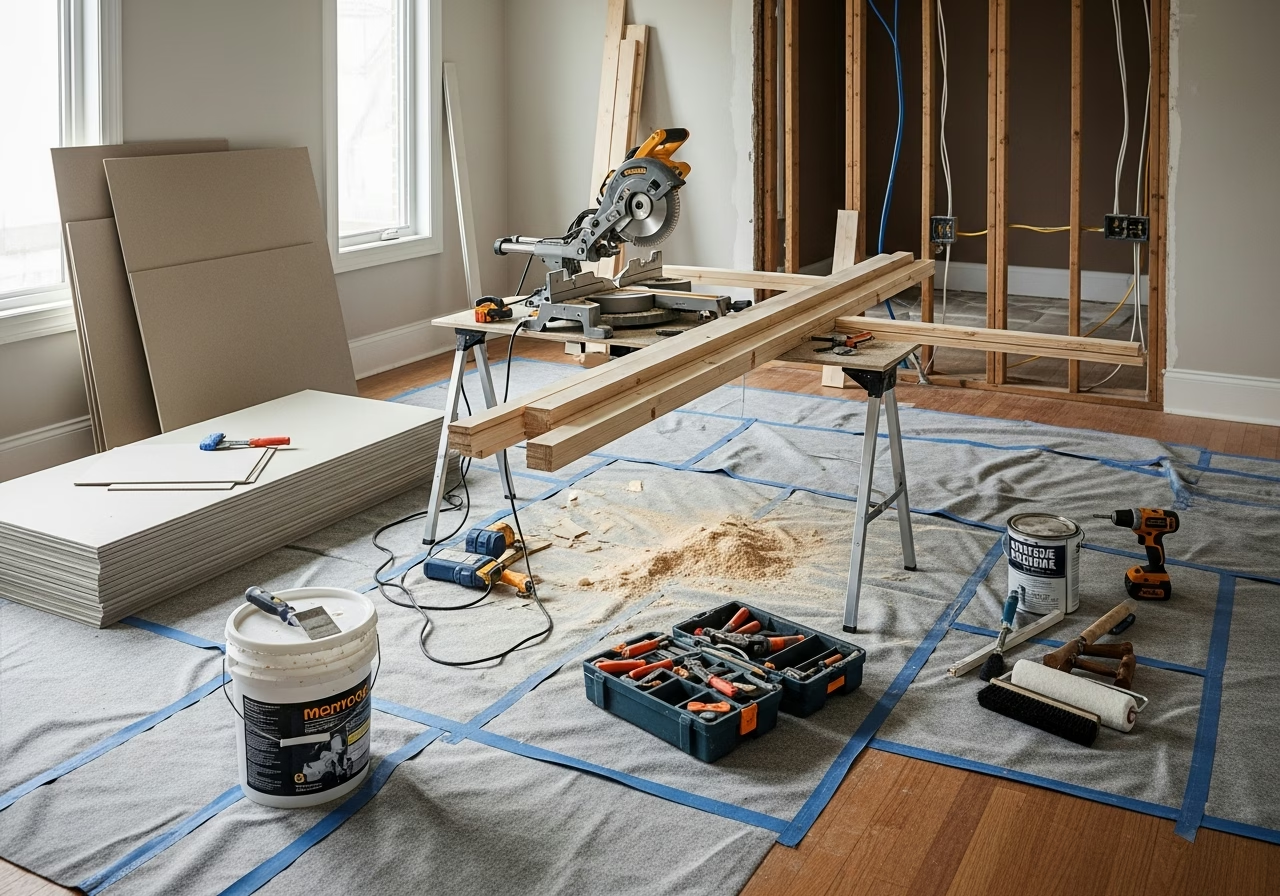
Decking installation in Richmond Hill is not a permit-free project in most cases. Under the Ontario Building Code and the City of Richmond Hill's building bylaw, a building permit is required for any deck attached to the house and for any freestanding deck more than 600 mm (roughly 24 inches) above grade. Applications go through Richmond Hill Building Services and currently cost $150–$400 for a residential deck, depending on declared construction value.
Skipping the permit is a documented risk at resale. Home inspectors flag unregistered structures routinely, and buyers' lawyers in the GTA search for open or missing permits before closing. An unpermitted deck is one of the most common pre-listing issues identified in the York Region market — it can stall a sale or force a price reduction that exceeds what the permit would have cost. It also creates insurance exposure: a liability event on an uninspected structure is a difficult position with your home insurer.
Need professional renovation?
Call RenoHouse at 289-212-2345 or get a free estimate today.
Get Free Estimate →The permit application requires a site plan showing setbacks from property lines (decks in Richmond Hill residential zones typically must maintain 1.5–2.4 m from side and rear lot lines) and structural drawings for elevated or complex builds. Once the permit is issued, installation follows this sequence:
- 1. Layout and footing excavation. Batter boards establish the deck footprint. Holes are augered to below frost line — 1.2–1.5 m in Richmond Hill. Hand-digging through the clay subsoil common in York Region is not practical; a power auger is standard.
- 2. Concrete footings and post installation. Sonotube forms are set, concrete is poured, and post bases or embedded posts are positioned. Allow a minimum 48-hour cure before loading.
- 3. Ledger and framing. For attached decks, the ledger board is lagged directly into the house rim joist with through-bolts or structural screws, with membrane flashing installed behind it to prevent water intrusion. Beams span between posts; joists run at 16" o/c for standard decking patterns, 12" o/c for diagonal board layouts.
- 4. Mandatory framing inspection. Richmond Hill Building Services inspects before any decking is applied. The inspector verifies footing dimensions, joist sizing per span tables, connector hardware, and ledger attachment. Book this 2–3 business days in advance.
- 5. Decking and fasteners. Boards go down with manufacturer-specified gapping for drainage and thermal expansion. Composite products with grooved edges use hidden fastener clips; visible screws require colour-matched plugs on premium lines.
- 6. Railing and stairs. The Ontario Building Code requires guardrails on any deck surface more than 600 mm above grade. Minimum height is 900 mm for decks under 1.8 m elevation, 1,070 mm above that. Baluster spacing must prevent a 100 mm sphere from passing through.
- 7. Final inspection. The city inspector signs off on the completed structure. Keep this document with your home records.
Total timeline from permit application to final inspection in Richmond Hill runs 6–12 weeks: roughly 3–4 weeks for permit processing, 3–5 days of active construction, and intermittent inspection scheduling.
Pressure-Treated, Composite, or Cedar: What Holds Up in Richmond Hill
Richmond Hill's climate is the primary variable. Freeze-thaw cycles run from November through March, summers push into the mid-30s°C with high humidity, and UV exposure is consistent enough to fade and dry out wood year-round. These three forces shorten the life of a neglected deck regardless of material.
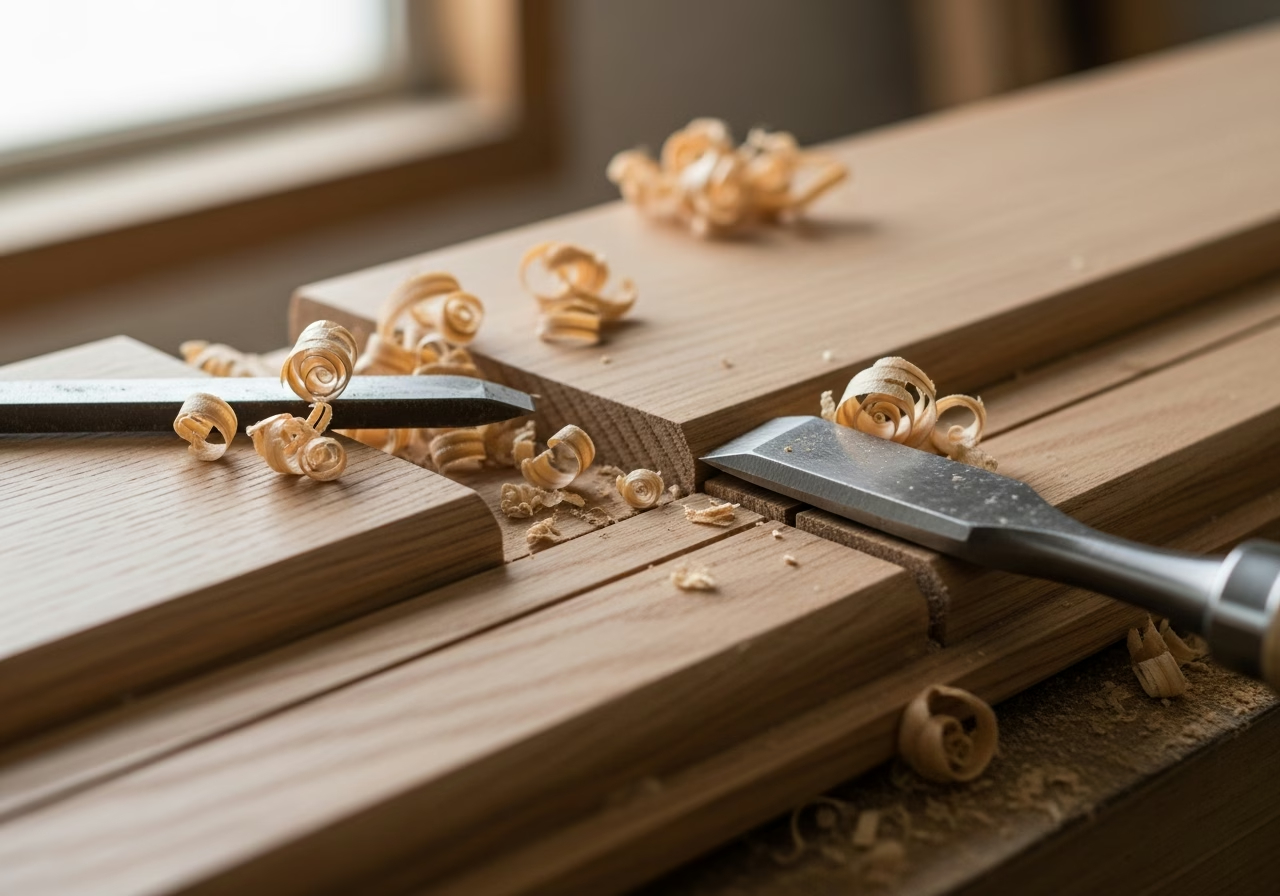
Pressure-treated lumber holds up structurally for 15–25 years, but it warps, checks (surface cracking along the grain), and grays if not maintained. The ACQ or MCA preservative in current PT products protects against rot and insects but does nothing for surface condition. Factor in $500–$1,000 for a professional stain application every 2–3 years if you want it to look maintained — that recurring cost adds up meaningfully over a decade.
Cedar is a preferred natural-wood choice across Richmond Hill, particularly in established neighbourhoods like Mill Pond and Oak Ridges where homeowners want a traditional look. It's more dimensionally stable than PT, resists cupping better, and the natural tannins provide some rot resistance. The trade-off is price — cedar has increased significantly since 2020 — and it still needs sealing every 1–2 years to hold colour and repel moisture.
Composite has become the default on mid-to-upper builds across Jefferson, Bayview Hill, and the newer Elgin Mills corridors. The maintenance case is simple: an annual wash with composite deck cleaner. Premium composites carry 25-year fade and stain warranties and handle freeze-thaw cycling without the board separation that plagued first-generation composite products in the early 2000s. The 10- and 20-year total cost of ownership often favours composite when you account for eliminated staining, sealing, and board replacement costs.
One note on structure: regardless of what decking surface you choose, the framing — posts, beams, joists, and ledger — is always pressure-treated lumber or steel. Composite boards sit on top of a PT skeleton. That applies to every elevated build, including second-floor decks on the ravine lots that are common along the Oak Ridges Moraine edge of Richmond Hill.
Frequently Asked Questions
Do I need a permit for a deck in Richmond Hill?
Yes, in most cases. The City of Richmond Hill requires a building permit for any deck attached to the house and for any freestanding deck more than 600 mm above grade. Applications go through Richmond Hill Building Services and take roughly 3–4 weeks to process. A contractor who suggests skipping the permit is saving you a small fee now while creating a documented liability at resale — unpermitted structures are among the most common issues flagged during pre-listing inspections across the GTA.
How long does deck installation take in Richmond Hill?
Most 200–400 sq ft residential decks take 3–5 days of active construction once the permit is issued and materials are staged on site. Concrete footings require a 48-hour cure before framing begins, and the mandatory framing inspection needs to be booked 2–3 business days in advance. From first day on site to the final board installed, expect 7–10 calendar days. Add the 3–4 week permit processing period to your overall project timeline.
What decking material holds up best in the GTA climate?
Modern composite handles GTA freeze-thaw cycling the most reliably. It does not absorb moisture, so it does not expand and contract the way wood does, and it does not check or split after a few seasons. For homeowners who want natural wood, cedar is more stable than pressure-treated and less prone to the checking that develops in PT lumber after the first couple of winters. Regardless of surface material, structural framing should always be pressure-treated lumber.
Does a deck add value to a Richmond Hill home?
A permitted, well-built deck consistently shows positive return in the Richmond Hill resale market. A mid-grade composite deck on a standard lot in Bayview Hill or Doncrest typically recovers 70–85% of its cost in added home value based on current GTA comparables. A deck that lacks a permit, shows structural deficiencies, or uses materials that have deteriorated past their service life does the opposite — it invites price reductions and extended time on market that exceed what building it properly would have cost.
Need a quote in the GTA?
RenoHouse has been building decks across Richmond Hill, Vaughan, Markham, Mississauga, and throughout the GTA for over 12 years. If you're planning a new deck this season — pressure-treated, cedar, or composite — call 289-212-2345 or request a free quote online. Permit application, framing inspection coordination, and build are handled start to finish.