RenoHouse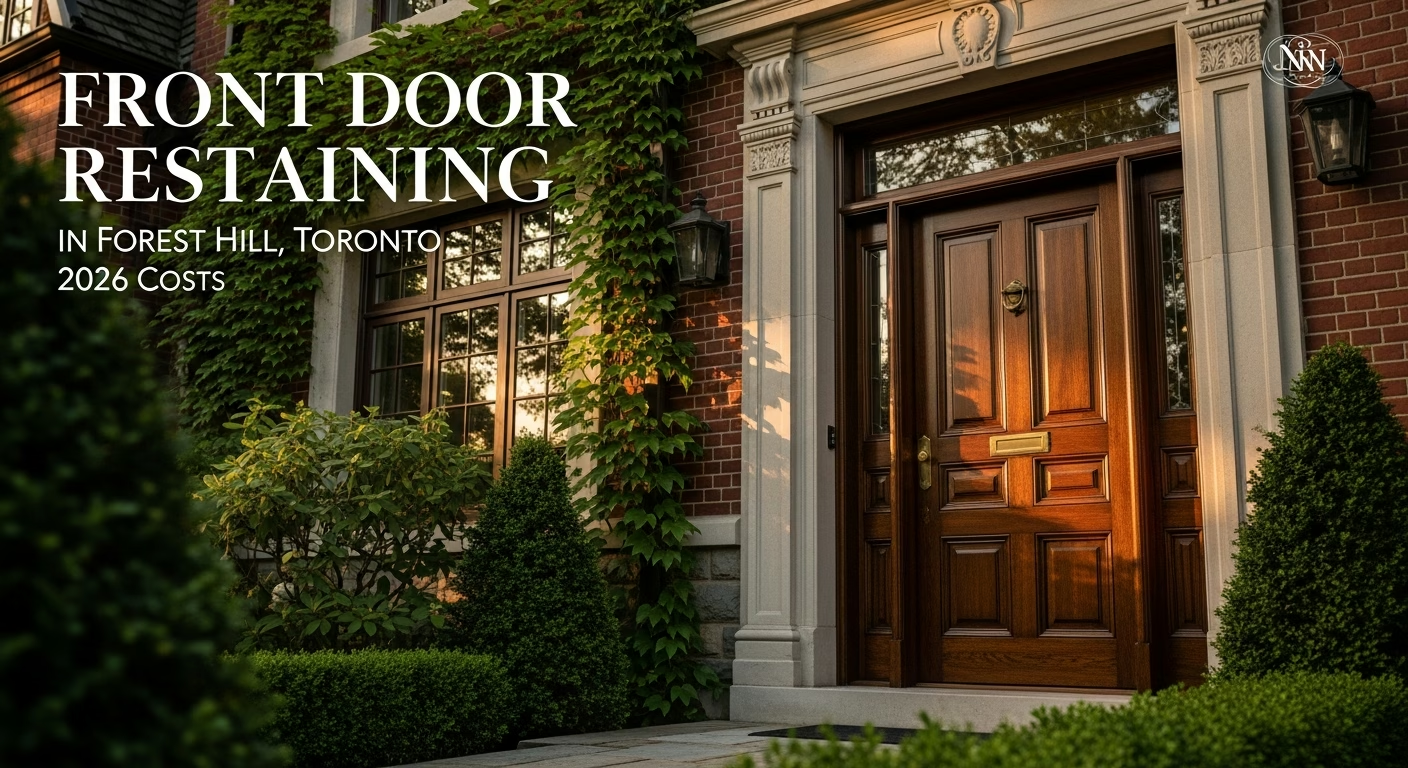

# Front Door Restaining in Forest Hill: Costs and Process
Quick answer. Professional front door restaining in Forest Hill typically runs $350–$800 for a standard single wood door in 2026 GTA pricing, depending on the door's condition, size, and wood species. The work involves stripping the old finish, sanding, applying stain, and sealing — usually completed in one or two days without a building permit.What Front Door Restaining Costs in Forest Hill (2026)
Forest Hill homes present a particular challenge for exterior woodwork. Many of the neighbourhood's older houses — especially those built between the 1920s and 1960s along streets like Old Forest Hill Road, Kilbarry Road, and Lonsdale Road — feature solid wood doors in mahogany, fir, or oak. These doors are worth maintaining, but the Toronto climate puts them through real punishment: UV exposure, freeze-thaw cycles, and summer humidity all break down stain and topcoat faster than most homeowners expect.
For a standard single front door restaining job — meaning full strip, sand, stain application, and two coats of exterior-grade sealant — expect to pay $400–$750 in Forest Hill and the surrounding Midtown Toronto area in 2026. Doors with sidelights, transoms, or ornate carvings add complexity and push pricing toward $700–$1,200. If the door has significant weathering, deep checking (cracks in the grain), or peeling that requires aggressive stripping, labour costs increase by $100–$200.
A few factors that directly affect what you pay:
Door size and configuration. A simple 36-inch single slab is the baseline. Matching sidelights add roughly $150–$300 depending on whether they are stained glass or plain. Transom windows with wood frames add another $100–$200. Condition of the existing finish. A door that was last done two or three years ago and needs only a light sand and refresh coat runs $250–$400. A door untouched for eight years — cracked varnish, grey oxidized wood underneath — needs full chemical stripping or mechanical sanding, which puts the job in the $600–$900 range. Wood species. Mahogany and fir are common in older Forest Hill homes. They absorb stain well and are forgiving to work with. Some newer infill homes on streets like Dunvegan Road or Warren Road have fibreglass doors with a wood-grain emboss that require gel stain rather than penetrating oil stain — pricing is similar but the technique differs.| Door Type and Scope | 2026 GTA Price Range |
|---|---|
| Single door — refresh (light sand and 1 coat) | $250–$400 |
| Single door — full restain (strip, sand, stain, 2 seal coats) | $400–$750 |
| Door with sidelights — full restain | $650–$1,100 |
| Door with transom and sidelights — full restain | $900–$1,400 |
| Fibreglass wood-grain door — gel stain | $350–$650 |
| Deep repair (grain filling, crack repair) plus full restain | $750–$1,200 |
These prices reflect contractor labour and materials for the Greater Toronto Area in 2026. Paint is not part of this scope — restaining refers specifically to transparent or semi-transparent wood finish.
How Front Door Restaining Works
Restaining a front door is not a one-hour job. Done correctly, it takes six hours to a full day of labour, plus cure time between coats. Here is what the process looks like from start to finish.
Need professional renovation?
Call RenoHouse at 289-212-2345 or get a free estimate today.
Get Free Estimate →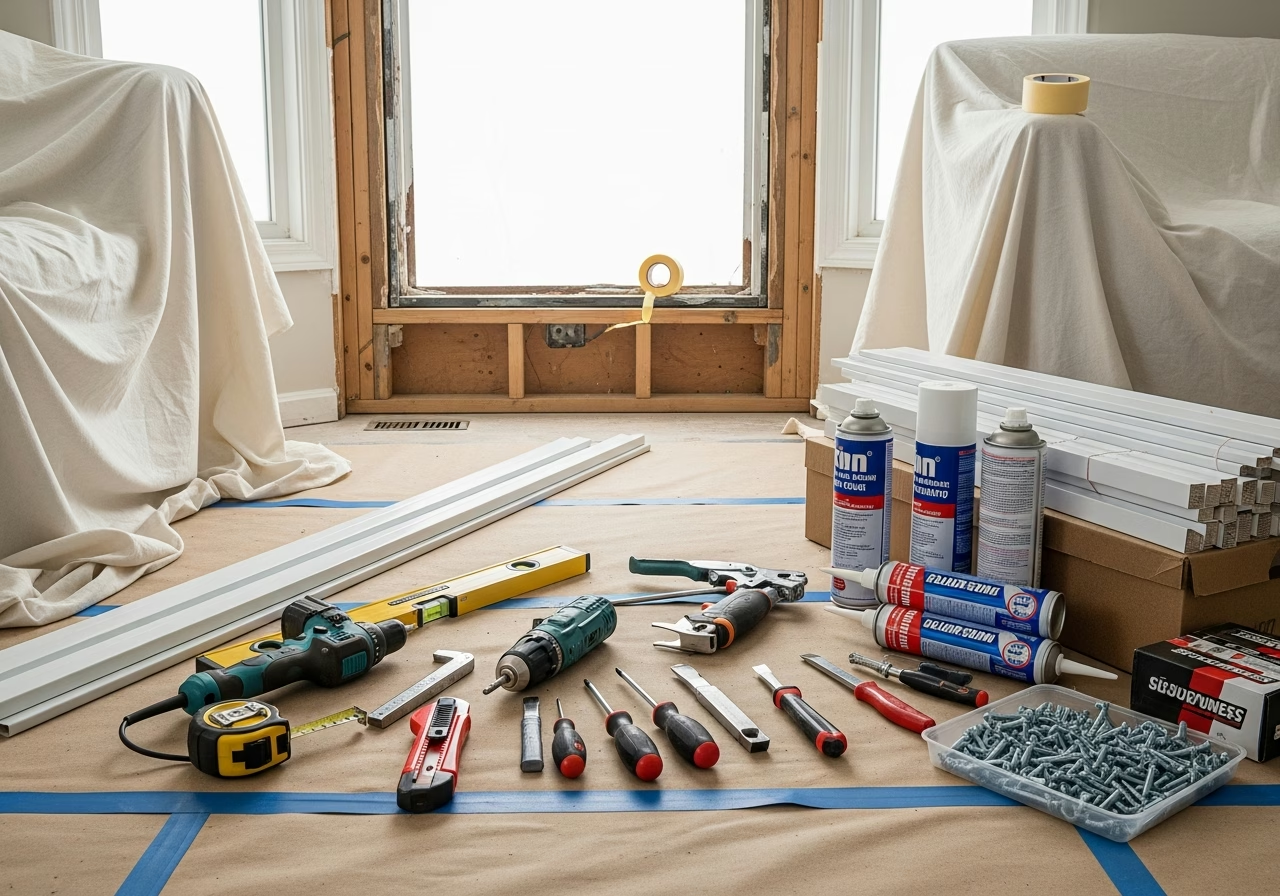
Restaining vs. Replacing: What Forest Hill Doors Actually Need
The most common question is whether to restain or replace. In Forest Hill, the answer is almost always to restain — provided the door itself is structurally sound.
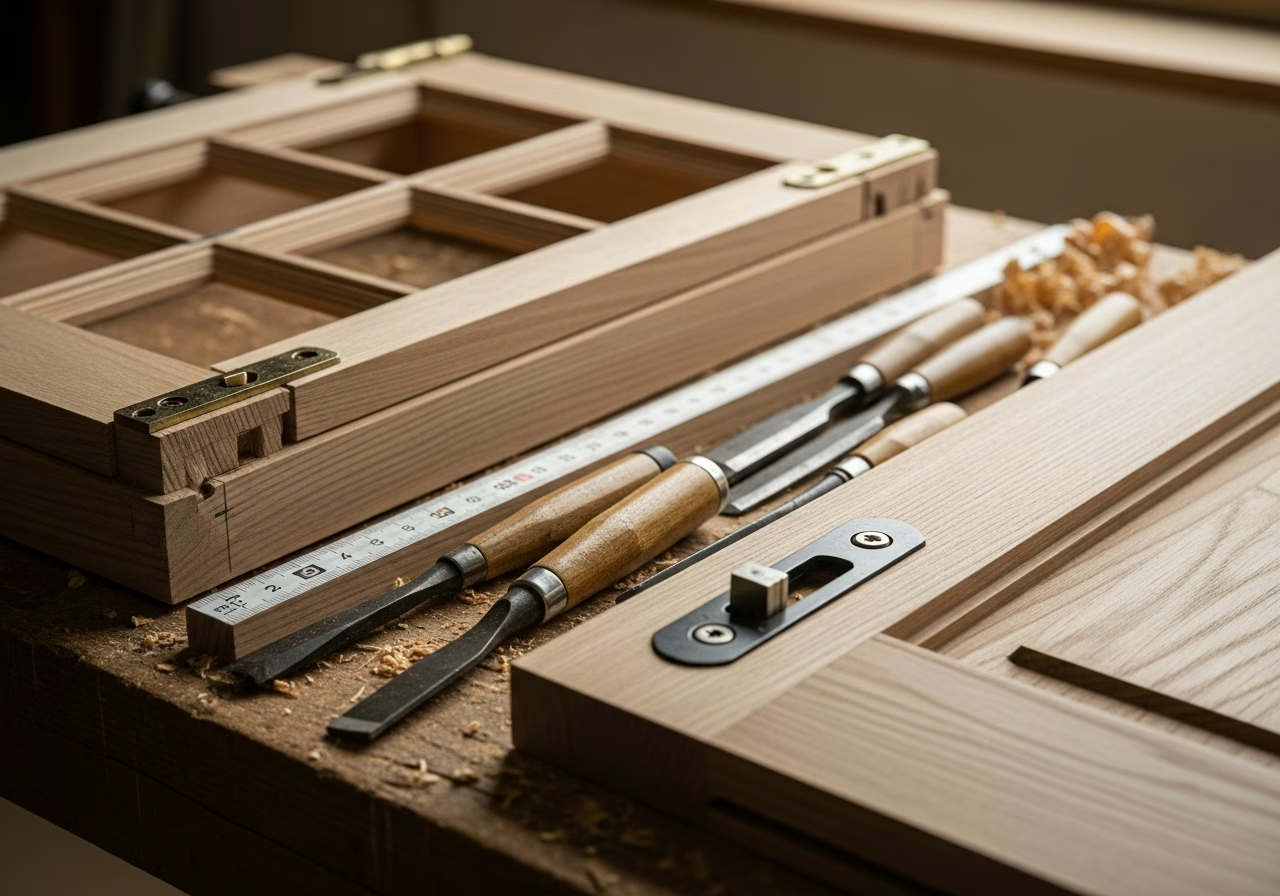
Solid wood doors from the 1930s through 1970s were built to a standard that most modern hollow-core or moulded doors do not match. A door with good bones — square frame, tight joinery, no rot at the base — that simply looks weathered is a straightforward restaining candidate. Replacing that door with a comparable solid-wood custom unit now runs $2,500–$6,000 just for the slab, plus installation. A restain at $500–$800 buys another five to eight years of service. If replacement is genuinely on the table, front door replacement in Toronto covers what that scope of work involves and what drives the cost.
Signs that restaining is the right call:
- The wood is grey and oxidized but still firm to the touch
- The existing stain has peeled or bubbled but the underlying grain is intact
- The door seals and operates correctly
- The last restain was more than four or five years ago
Signs replacement deserves consideration:
- Soft spots when you press on the lower rail or bottom corners (rot)
- Visible light gaps when the door is closed
- Warping that cannot be corrected with hinge shimming
- Damage from a forced entry that compromised the door slab or frame
Timing matters for this work. The practical window in Toronto is May through September, when temperatures stay above 10°C overnight and humidity is stable enough for proper curing. Starting a staining job in November is possible but requires climate control to achieve clean results.
Frequently Asked Questions
How long does a professional restain job last on a wood front door in Toronto?
A properly done restain — full strip, oil stain, and two to three coats of exterior spar urethane — lasts five to eight years on a covered porch, and three to five years on a door with direct sun exposure. South- and west-facing doors in Forest Hill degrade faster because of afternoon UV load. Annual cleaning and a quick inspection of the topcoat between full restains extends the interval considerably.
Does restaining a front door require a permit in the City of Toronto?
No permit is required for restaining a front door under the Toronto Building bylaw — it is considered ordinary maintenance. The exception is heritage-designated properties, where Heritage Preservation Services may need to review exterior changes. If you are unsure whether your Forest Hill property is heritage-designated, you can search the City of Toronto's Heritage Register online before starting any work.
Can a fibreglass door be restained to look like wood?
Yes. Fibreglass doors with a wood-grain texture accept gel stain well, and a skilled applicator can produce results that are difficult to distinguish from real wood at normal viewing distance. The process differs from restaining genuine wood — you are layering translucent gel colour rather than penetrating the grain — but the appearance is comparable. Many newer infill homes in Forest Hill have fibreglass doors that benefit from this treatment when the factory finish fades.
What stain colours work best for Forest Hill homes?
Forest Hill architecture tends toward traditional and transitional styles — Georgian, Tudor Revival, and Edwardian designs predominate on the older streets. Medium walnut, dark mahogany, golden teak, and deep ebony finishes see the most use. Natural or honey-toned finishes work on newer craftsman-style builds. The neighbourhood does not impose colour restrictions the way a heritage district might, but the surrounding context strongly favours classic deep tones over lighter Scandinavian-influenced palettes.
Need a Quote in the GTA?
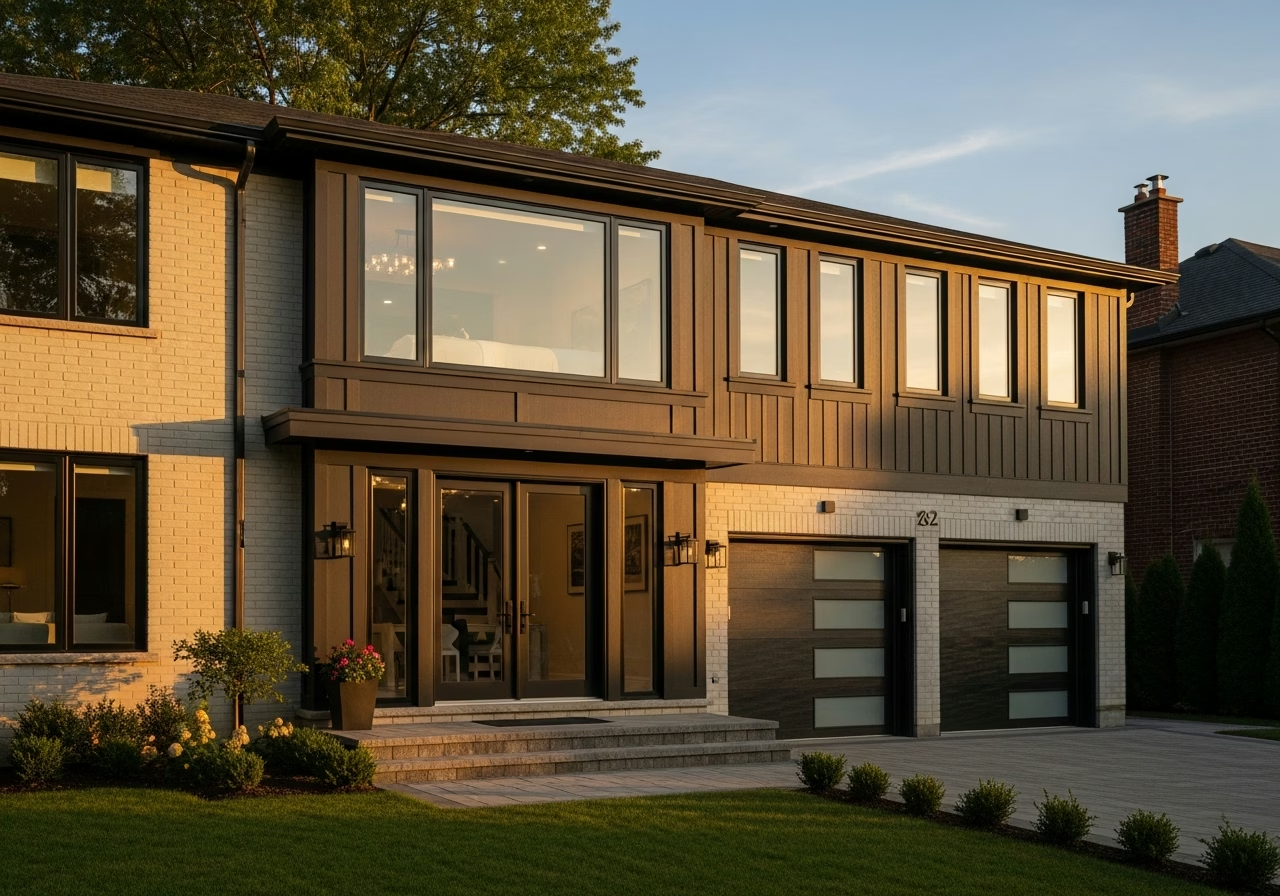
RenoHouse has served Forest Hill and Midtown Toronto — along with Etobicoke, North York, Scarborough, Mississauga, and communities across the GTA — for exterior door restoration and full replacement for over 12 years. If your front door finish is peeling, grey, or well past its last treatment, a site visit and free quote takes about 20 minutes. Call 289-212-2345 or use the contact form on the site to get on the schedule.