RenoHouse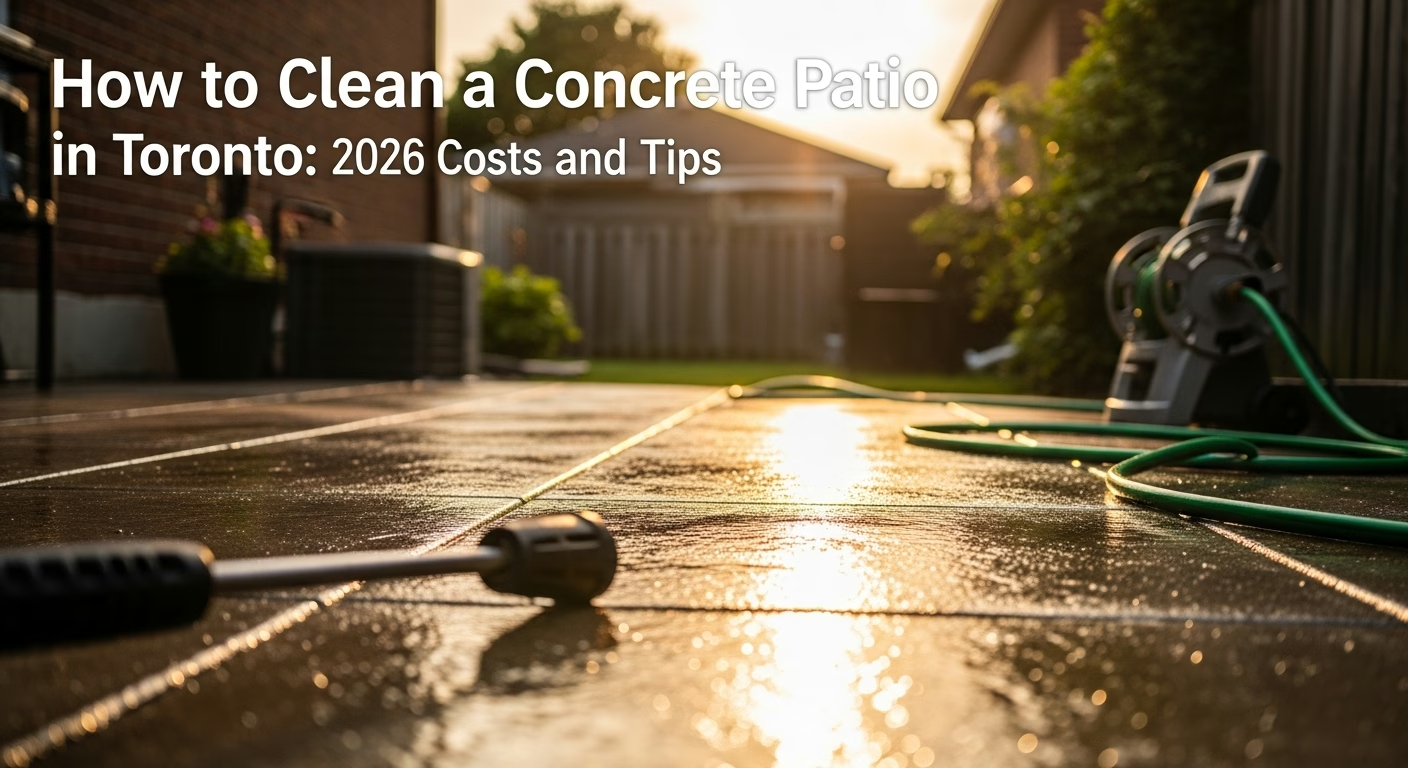

# How to Clean a Concrete Patio: Steps, Costs and GTA Tips
Quick answer. Most GTA homeowners can deep-clean a concrete patio for $50–$150 in supplies and a half-day of work; hiring a professional power-washing crew in Toronto or Mississauga runs $150–$400 for a typical 200–400 sq ft slab in 2026. The right method depends on the stain type — oil, efflorescence, algae, and rust each require a different treatment before a pressure washer enters the picture.What It Costs to Clean a Concrete Patio in the GTA (2026)
Cleaning a concrete patio falls into two budget categories: doing it yourself with rented or purchased equipment, or hiring a contractor to handle the full job. For a standard backyard patio in Etobicoke, Scarborough, or Brampton — roughly 200–400 sq ft — here is what the numbers look like in 2026.
DIY costs are modest if you already own a pressure washer. A concrete degreaser, trisodium phosphate (TSP), muriatic acid for stubborn efflorescence, and a stiff deck brush will run $50–$120 at any GTA hardware store. If you need to rent a pressure washer, add $60–$100 per day from equipment rental shops across Mississauga, North York, or Ajax. Total DIY spend: $50–$220.
Professional power washing is the most common service homeowners hire for patios. A contractor with a commercial-grade hot-water pressure washer strips years of grime, mildew, and road-salt residue in a fraction of the time. Expect to pay $150–$300 for a straightforward wash on a standard patio. If the crew applies a concrete sealer afterward — which protects against Toronto's freeze-thaw cycles — budget $350–$600 all in.
Heavily stained patios require more than water pressure. Oil or grease stains from a barbecue or parked vehicle, rust stains from patio furniture, and deep efflorescence (the white mineral bloom that appears every spring across Oakville, Richmond Hill, and the rest of the GTA) each need chemical pre-treatment and sometimes light grinding. Professional stain removal adds $100–$250 to the base cleaning cost depending on stain type and coverage area.
| Service | Typical GTA cost (2026) | Best for |
|---|---|---|
| DIY wash (own equipment) | $50–$120 in supplies | Light dirt, annual maintenance |
| DIY wash (rented pressure washer) | $110–$220 total | Moderate grime, one-off clean |
| Professional power wash | $150–$300 | Annual deep clean, mildew, algae |
| Professional wash + seal | $350–$600 | Post-winter restoration, long-term protection |
| Stain removal (oil, rust, efflorescence) | $200–$500 | Targeted problem areas |
| Full cleaning + crack repair + seal | $500–$1,200 | Neglected slabs, pre-sale prep |
How to Clean a Concrete Patio Step by Step
The process matters as much as the products. Skipping pre-treatment or using the wrong pressure-washer nozzle can etch the surface, drive stains deeper, or spread algae spores across a larger area. The following method works on most standard GTA residential slabs.
Need professional renovation?
Call RenoHouse at 289-212-2345 or get a free estimate today.
Get Free Estimate →
DIY vs. Professional Cleaning: When to Hire Out
Cleaning a concrete patio is one of the more accessible home-maintenance tasks, but there are situations where hiring a professional is the faster and ultimately cheaper choice over the full job lifecycle.
DIY makes sense when the patio has light to moderate dirt and seasonal mildew, you have access to a pressure washer, and the slab is structurally sound. Annual spring cleaning after GTA winters is a manageable weekend project for most homeowners in Brampton, Whitby, or Markham who are comfortable handling cleaning chemicals safely and disposing of rinse water properly.
Hire a professional when the slab has deep oil stains, heavy efflorescence across large areas, widespread algae growth, or visible cracking. A crew with commercial hot-water pressure washing equipment — capable of temperatures that kill algae spores and emulsify grease far more effectively than cold water — will produce results a homeowner rental unit simply cannot match. It also makes sense to hire out when the patio exceeds 500 sq ft, is elevated with drainage concerns, or sits adjacent to finished stone, wood, or composite decking that requires careful chemical containment.
Watch for these warning signs during cleaning that indicate a structural problem rather than a cleaning problem: concrete spalling at the edges, cracks wider than 3–4 mm that have grown year over year, sections that shift underfoot indicating sub-base failure, or a surface that continues to flake and scale even after thorough cleaning. A wash will not fix any of these conditions. At that point, the question shifts from how to clean to whether to resurface or replace — a more involved assessment covered in our restoration vs. replacement guide for Toronto homeowners. If you are approaching a property sale, common pre-listing renovation mistakes to avoid covers when cosmetic fixes add real value versus when structural work is the smarter investment.
Frequently Asked Questions
Can I use bleach to clean a concrete patio in Toronto?
Diluted household bleach (one part bleach to three parts water) works against mildew and algae but has real drawbacks on concrete. It can discolour stamped or coloured finishes, and chlorine runoff harms nearby plants and can run afoul of Toronto's stormwater management bylaws if it enters street drains untreated. A dedicated oxygenated concrete cleaner is the safer default for most GTA patios. Reserve bleach for isolated mould spots, apply it carefully, and rinse thoroughly before it can reach garden beds or paved runoff channels.
How often should I clean and seal a concrete patio?
For a typical GTA backyard patio exposed to Toronto winters, cleaning once per year in spring is a sound routine — enough to clear road-salt residue, winter grime, and early algae growth before it sets deeply into the surface. Sealing is generally needed every two to four years depending on foot traffic, sun exposure, and how well the previous coat held up. A simple bead test tells you when resealing is due: pour water on the slab — if it soaks in rather than beading on the surface, the sealer has worn out.
Will a pressure washer damage my concrete patio?
It can if used incorrectly. A zero-degree nozzle, a wand held too close, or pressure exceeding 3,500 PSI on older residential concrete will etch and pit the surface permanently. For standard backyard slabs in Etobicoke, Scarborough, and Mississauga, a 25-degree nozzle at 2,000–2,500 PSI held 8–12 inches from the surface is the safe operating range. Stamped or exposed-aggregate concrete needs lower pressure still — around 1,200–1,500 PSI — and a wider fan tip to avoid blasting out the aggregate or erasing stamp detail.
Does cleaning a concrete patio in Toronto require a permit?
No. Routine cleaning and sealing of an existing concrete patio does not require a permit anywhere in the GTA. Permits become relevant when you are adding to, replacing, or structurally altering the patio — for example, demolishing the existing slab and pouring a new one in a location that changes lot grading or drainage. If your project is closer to full replacement than maintenance, the City of Toronto building division or a licensed contractor can quickly confirm whether a permit applies to your specific situation.
Need a Quote in the GTA?

RenoHouse handles concrete patio cleaning, sealing, crack repair, and full patio restoration for homeowners across Toronto, Etobicoke, Mississauga, Brampton, Vaughan, Markham, Richmond Hill, Scarborough, Oakville, and the wider GTA. If your slab needs more than a basic wash — or you want the job done properly without sourcing chemicals and renting equipment — call 289-212-2345 or request a free quote at renohouse.ca. With 12 years of GTA exterior experience and a 4.9-star rating across 498 reviews, the on-site assessment is straightforward and comes with no obligation to proceed.