RenoHouse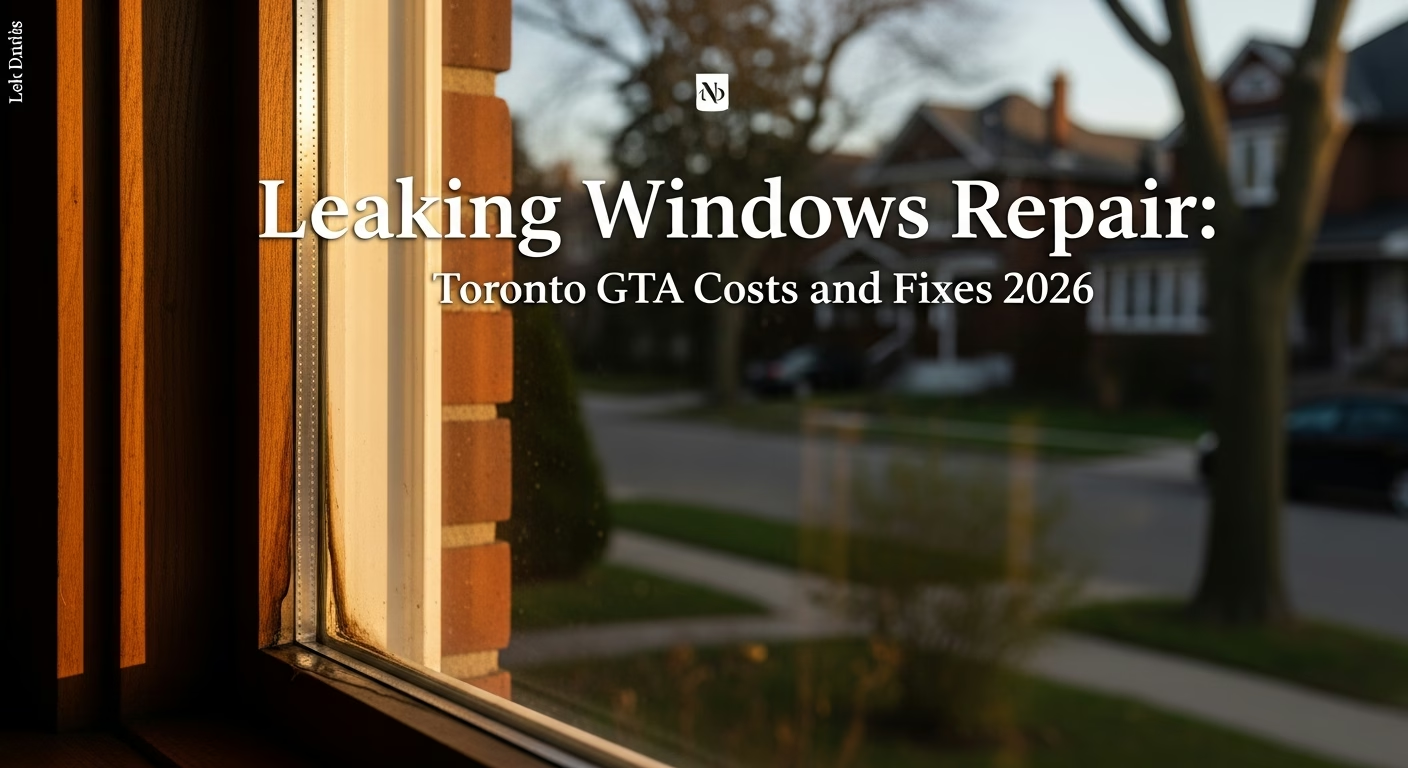

# Leaking Windows Repair: Costs and Fixes in Toronto
Quick answer. Repairing a leaking window in the GTA typically costs $150–$800, depending on whether the issue is failed caulking ($150–$300 per window), compromised flashing or weatherstripping ($300–$600), or a broken glass seal ($400–$800). When rot or structural damage is involved, replacement is the more economical long-term move at $900–$2,800 per window installed in 2026.What Leaking Window Repairs Cost in the GTA (2026 Prices)
The cost of fixing a leaking window in Toronto, Mississauga, Etobicoke, or anywhere across the GTA depends heavily on the source and severity of the leak. A window that has simply lost its exterior caulk bead is the cheapest scenario — a contractor will charge $150–$300 per window to strip the old sealant, prep the surface, and apply a fresh bead of polyurethane or silicone caulk rated for Canadian climate extremes.
Weatherstripping failure costs more to address: $200–$450 per window. Weatherstripping compresses and hardens over time, especially on casement and double-hung windows that see heavy seasonal use. Labour is straightforward but the sweep or foam tape must be matched exactly to the frame profile, which takes experience on older homes in neighbourhoods like Scarborough, North York, and the older bungalow stock throughout Etobicoke.
Flashing failures are costlier and more common than most homeowners expect. When the metal or membrane flashing around the window rough opening is cracked, lifted, or was installed incorrectly, water tracks behind the brick or cladding and shows up on interior drywall — sometimes far from the window itself. Diagnosing and repairing flashing runs $400–$900 per window, depending on cladding type. Brick, stucco, vinyl siding, and fibre cement all carry different labour rates.
A failed insulated glass unit (IGU) — the double- or triple-pane sealed glass assembly — shows as persistent fogging or condensation between the panes. The seal itself cannot be repaired; the IGU must be replaced. A glass shop can often swap out just the glass unit without replacing the entire window frame, costing $300–$700 per unit for standard sizes. Custom or oversized units in newer homes in Vaughan, Oakville, or Richmond Hill can push that to $900 or more.
| Repair Type | Typical GTA Cost (2026) | Best For |
|---|---|---|
| Exterior recaulking | $150–$300 / window | Minor gap, dried-out sealant |
| Weatherstripping replacement | $200–$450 / window | Drafts, light water infiltration at sash |
| Flashing repair | $400–$900 / window | Brick or stucco penetration leaks |
| IGU (glass seal) replacement | $300–$900 / unit | Fog between panes |
| Full window replacement | $900–$2,800 / window | Rotted frame, structural failure |
How a Leaking Window Gets Diagnosed and Fixed
Finding where a window leaks is not always obvious. Water obeys gravity but it also follows paths of least resistance through wall assemblies, so a wet drywall patch below a window may be fed by a flashing gap two feet above it. A proper diagnosis starts outside during or after rain, or with a controlled water test using a garden hose.
Need professional renovation?
Call RenoHouse at 289-212-2345 or get a free estimate today.
Get Free Estimate →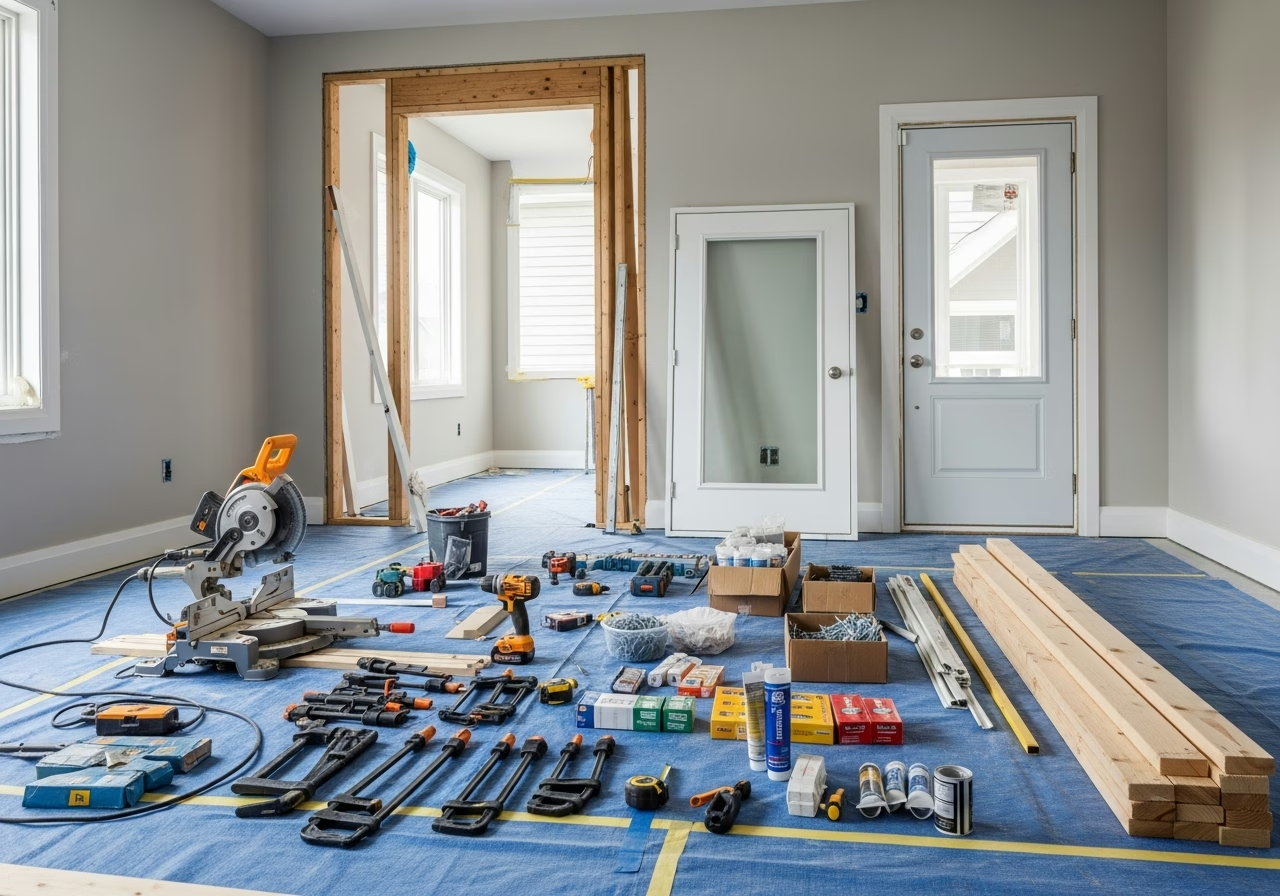
Permits are not typically required for window repairs in Toronto or the GTA. Replacing a window in its existing rough opening with no structural changes does not require a building permit under the Ontario Building Code. However, if the opening is being enlarged or the lintel modified, a permit is required from the City of Toronto or the relevant municipality. ESA involvement applies only where electrical wiring is routed near or around the window — for example, baseboard heaters or ventilation fans requiring a licensed electrician.
Repair vs. Replace: When a Window Is Beyond Fixing
Some leaking windows can be patched efficiently; others are signalling they have reached the end of their service life. Knowing the difference saves money and prevents spending $400 on a repair that fails again within six months.

Clear signs a window needs full replacement rather than repair: the wood frame or sill is soft and punky from rot, the vinyl frame is warped or cracked at the corners, the window no longer locks or seals completely when closed, or condensation appears on the interior glass surface rather than between the panes — indicating the frame has lost its thermal break. If all of these are present together, investing in new sealant is money wasted.
Age matters across the GTA's housing stock. Many homes in Brampton, Ajax, Whitby, and Pickering built in the 1980s and 1990s have original windows approaching or past 30–35 years — the practical end of life for most vinyl units. If a window already needs a significant repair and is over 25 years old, replacement is usually the smarter financial decision. A new energy-efficient window reduces heat loss and may qualify for Enbridge or municipal rebate programs available in 2026.
The cost crossover is worth understanding before committing to a repair. A complicated flashing repair at $800 combined with an IGU replacement at $600 approaches the $900–$1,400 range for a basic replacement window installed. At that point, replacement typically wins unless the existing window has heritage or aesthetic value — more common in older Toronto neighbourhoods or in homes in King City, Caledon, or Georgetown. For a full breakdown of replacement costs, the door replacement cost guide covers similar exterior envelope work in detail. One thing worth stating plainly: if you open a wall around a leaking window and find mold, that is remediation work under Ontario guidelines, not a drywall patch. A slow, undetected window leak can generate significant mold growth across multiple stud bays after just one or two winters.
Frequently Asked Questions
How long does window caulking last in Toronto's climate?
Quality silicone or polyurethane exterior caulk lasts 10–20 years under good conditions, but GTA winters compress that timeline. Joints on north- and west-facing windows that experience repeated freeze-thaw cycling often need attention at the 7–10 year mark. Inspect caulk each fall — look for cracks, shrinkage where the bead pulls away from the frame, or sections that feel hard and brittle. Catching it early keeps the repair at $150–$300 per window rather than $3,000 or more in wall damage.
Can I fix a leaking window myself?
Exterior recaulking is a manageable DIY task if you fully remove the old sealant first and use a quality exterior-rated product. Anything involving flashing, wall cavities, or structural rot is not DIY territory — a botched flashing repair can make water infiltration worse by blocking drainage paths inside the wall assembly. For anything beyond a clean, accessible caulk joint, a qualified contractor is the safer call. The $200–$400 in labour is cheap insurance against a $5,000 remediation job.
Does a leaking window cause mold?
Yes, and faster than most homeowners expect. Wood framing and drywall can begin supporting mold growth within 24–48 hours of sustained saturation. A slow window leak that goes undetected for one or two winters can result in growth spreading across multiple stud bays. If you notice a musty smell near a window, paint bubbling around the frame, or drywall that feels soft to the touch, treat it as urgent — the window repair is only part of the work that will be needed.
Do I need a permit to replace a leaking window in Toronto?
Replacing a window in its existing rough opening — same size, no structural modifications — does not require a building permit in Toronto or most GTA municipalities. If the rough opening is enlarged, the sill height changed for egress compliance, or structural members are altered, a permit is required. For basement windows in sleeping areas, egress requirements under the Ontario Building Code may apply. When in doubt, check with the local building department or ask your contractor before work begins.
Need a quote in the GTA?
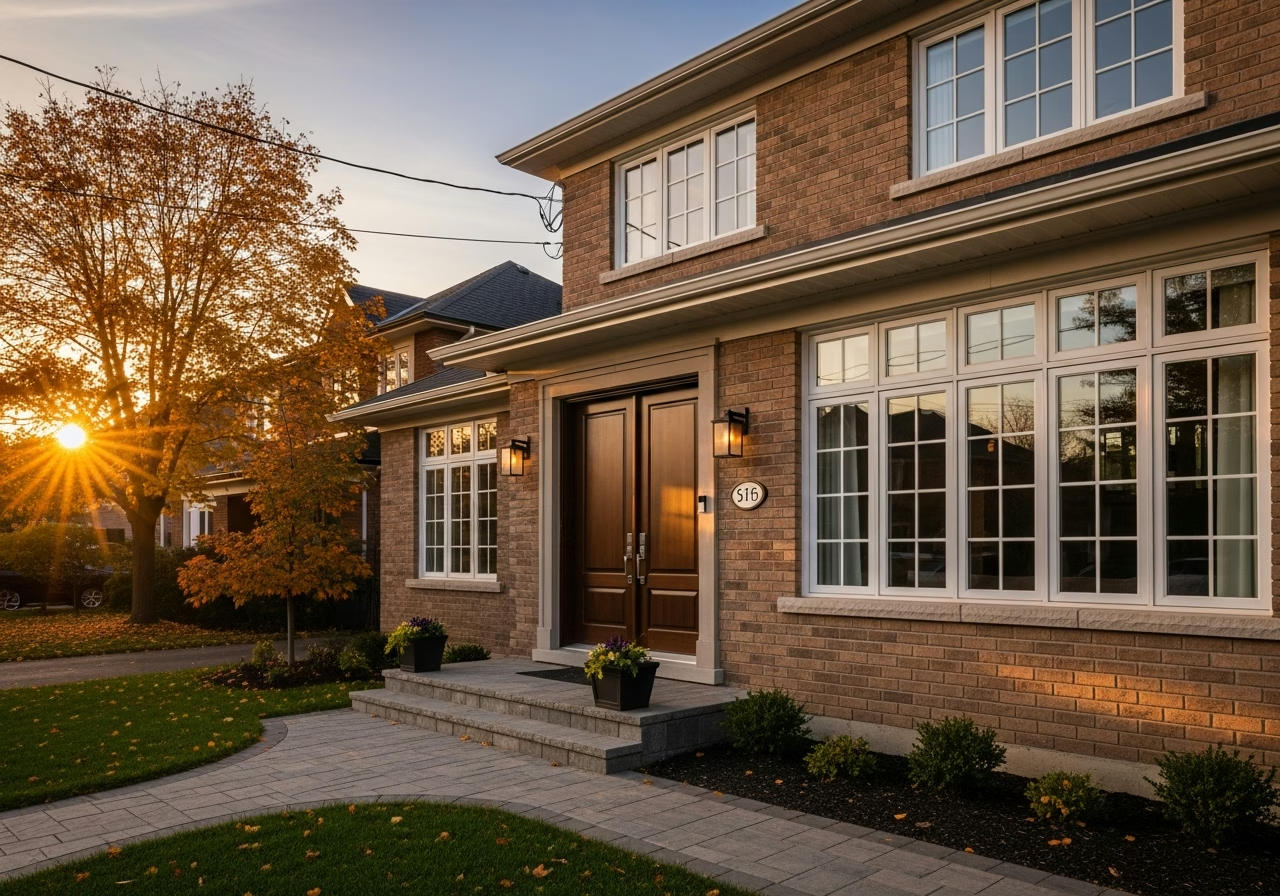
Renohouse.ca handles leaking window diagnosis, caulking, flashing repair, and full window replacement across Toronto, Etobicoke, Mississauga, Vaughan, Markham, and the broader GTA. With 12 or more years of experience working on the local housing stock and a 4.9-star reputation across nearly 500 reviews, the diagnosis is always honest — the recommendation will be to repair when repair makes financial sense, and to replace when the numbers say otherwise. Call 289-212-2345 or request a free quote online.