RenoHouse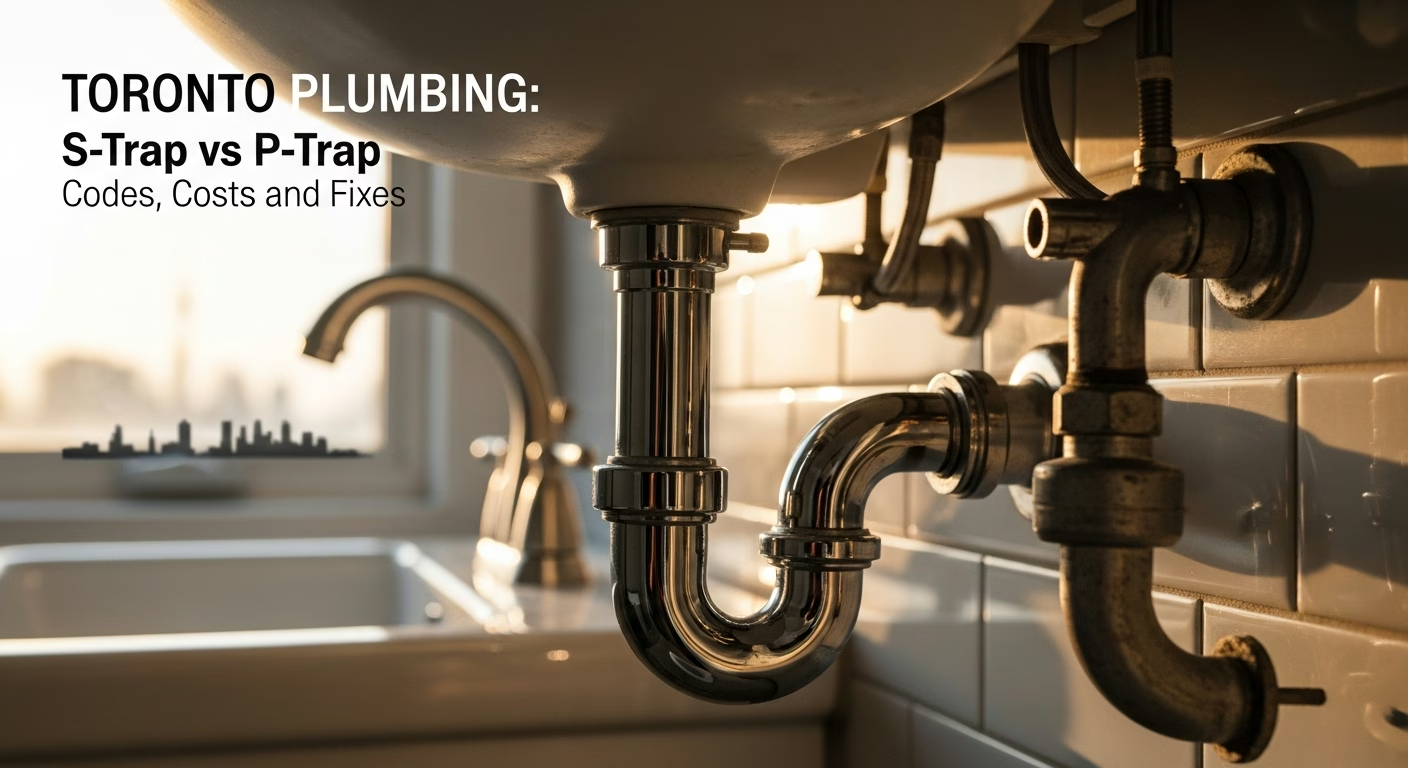

# Plumbing S-Trap vs P-Trap: What Toronto Homeowners Need to Know
Quick answer. S-traps are no longer permitted under the Ontario Building Code for new plumbing installations and turn up regularly in GTA homes built before the 1970s. A licensed plumber can replace a non-compliant S-trap with a code-compliant P-trap for $200–$600 in most situations, though rerouting a floor drain to a wall drain can push costs to $800–$1,500.What It Costs to Replace an S-Trap with a P-Trap in the GTA (2026 Prices)
The price range for this work depends on one key factor: where your drain exits — through the floor or through the wall. P-traps require the drain to exit horizontally into the wall. If your current drain already exits that way, swapping the trap is straightforward and inexpensive. If it exits through the floor, as most S-trap setups do, the drain line itself needs to be rerouted.
For a simple trap swap where the drain is already wall-vented, expect to pay $150–$350 in the GTA for labour and materials in 2026. This is a one- to two-hour job for a licensed plumber. The trap assembly itself costs $20–$60 in parts.
If the drain runs through the floor and needs to be redirected to the wall, costs climb to $600–$1,500 depending on how accessible the floor joists are, whether the wall cavity needs to be opened, and whether a new vent stack connection is required. Basement sinks and laundry tubs are often in this category and tend to cost more to bring up to code.
| Scenario | Estimated Cost (GTA, 2026) |
|---|---|
| Swap trap only (wall drain already exists) | $150 – $350 |
| Reroute drain from floor to wall, standard access | $600 – $1,000 |
| Reroute drain, limited access (finished walls or ceiling) | $1,000 – $1,500 |
| Full bathroom rough-in with P-trap included | $2,500 – $5,000 |
These prices include labour and standard PVC or ABS materials. Copper drain lines or cast-iron connections in older Etobicoke, North York, or Scarborough homes can add $100–$300 to any of these figures due to transition fittings and extra prep time.
Permits are not typically required for a like-for-like trap replacement at the same location, but if the drain line is being rerouted, Toronto and most GTA municipalities — including Mississauga, Brampton, and Vaughan — require a plumbing permit under the Ontario Building Code. A reputable plumber will advise you on this before any work begins.
Need professional renovation?
Call RenoHouse at 289-212-2345 or get a free estimate today.
Get Free Estimate →How S-Traps and P-Traps Work — and Why the Difference Matters
Both trap types serve the same purpose: they hold a small amount of water in a curved section of pipe that acts as a barrier against sewer gases — hydrogen sulfide, methane, and other gases that can enter your home through the drain. Without a working trap seal, those gases have a direct path from the sewer line into your living space.

You will find S-traps in homes built or last renovated before approximately 1975 across the GTA — Brampton, Mississauga, older parts of Toronto, Scarborough, and Etobicoke in particular. Many homeowners in these areas discover S-traps during kitchen or bathroom renovations, and some only find out when a home inspection flags one before a sale.
Not every S-trap siphons on every use. The rate at which water flows, the length and diameter of the trap, and the distance to the vent stack all affect how frequently the seal breaks. Some S-traps in GTA homes have operated for decades without causing noticeable odour problems — but that does not make them code-compliant or safe. Sewer gas exposure, even at low concentrations, is a recognized health risk. Ontario Building Code Division B, Part 7 prohibits S-trap installation in any new or permitted plumbing work. If you are selling your home, a buyer's inspector will flag it as a deficiency. If you are doing any permitted plumbing work nearby, the city inspector will require it to be corrected at the same time.
Warning Signs Your Trap Has Failed
The most obvious sign of a failed trap seal is a sewer smell — a rotten egg or sulphur odour rising from a drain. If you notice this at a sink or floor drain that rarely gets used, the water may have simply evaporated. Running the fixture for 30 seconds will refill it. If the smell returns shortly after using the fixture, siphoning is the likely cause, and an S-trap is a strong candidate.
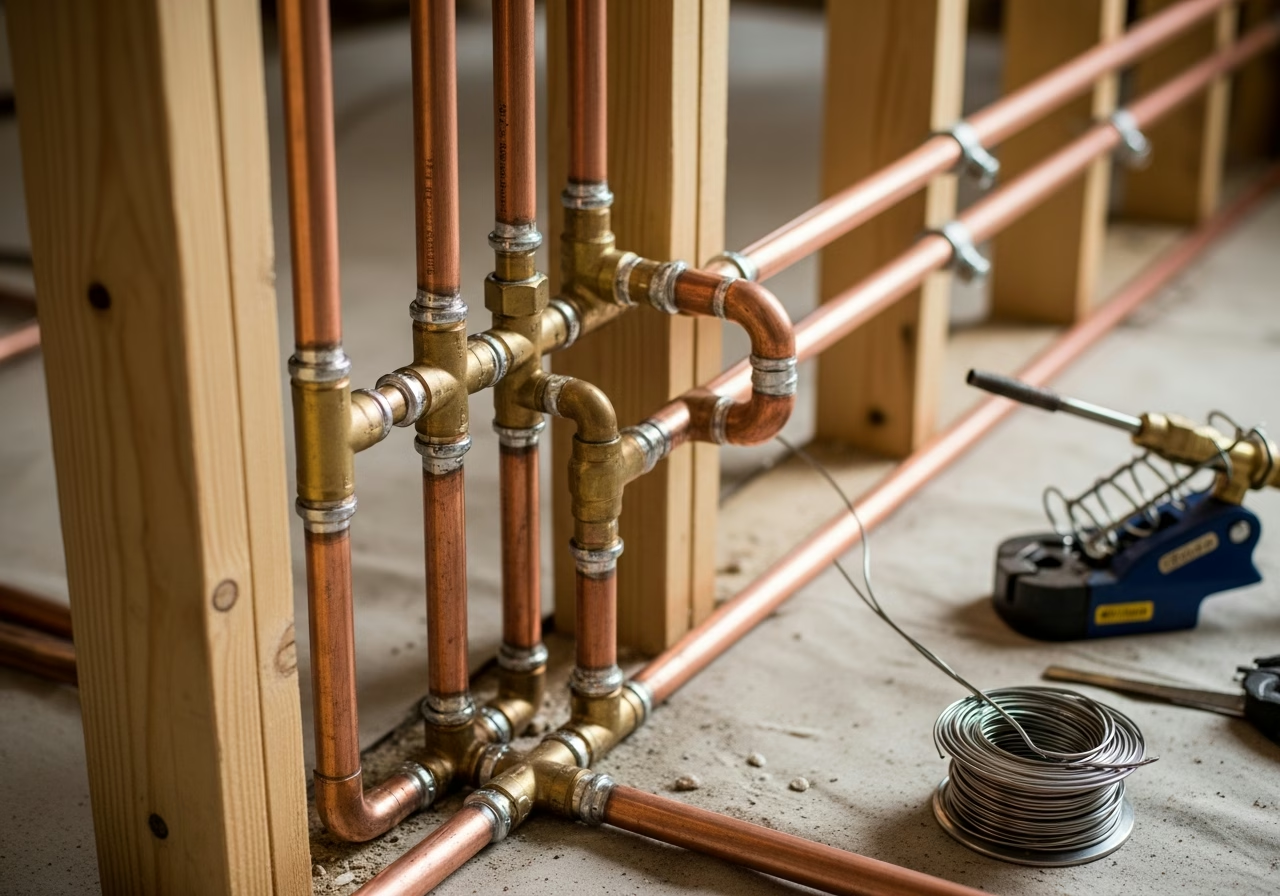
One more scenario specific to older GTA homes: drum traps. These are cylindrical metal traps that were common in bathtubs before P-traps became standard, particularly in pre-1960 homes in Etobicoke, North York, and East York. They are also prohibited under the OBC and carry the same seal-loss risks as S-traps. Our GTA plumbing guide covers what to expect in older Toronto homes and what to budget for when updating ageing drain systems.
Frequently Asked Questions
Is an S-trap illegal in Toronto?
S-traps are prohibited for new plumbing installations under the Ontario Building Code, which applies across the GTA including Toronto, Mississauga, Brampton, and Vaughan. Existing S-traps in older homes are not subject to retroactive enforcement unless a permit-required renovation triggers an inspection. They will be flagged during a home sale inspection and should be corrected whenever drain or plumbing work is being done in the same area of the house.
Can I replace an S-trap myself?
Swapping one trap for another at the same location without rerouting any pipe is within reach for a careful DIYer comfortable with basic plumbing. However, if the drain needs to move from the floor to the wall — which is the common fix for a true S-trap correction — you are dealing with drain line modifications and potentially new venting. That scope of work should be done by a licensed plumber. In Toronto and most GTA cities, rerouting a drain line requires a plumbing permit and a city inspection to close it.
Will having an S-trap affect my home insurance in Ontario?
Most Ontario home insurance policies do not explicitly list S-traps as an exclusion. However, if a sewer gas incident or moisture-related claim arises and an inspection reveals non-compliant plumbing, an insurer may use that finding as grounds to reduce or dispute the claim. The more immediate concern for most homeowners is resale: buyers and their lenders in the GTA increasingly require documented plumbing deficiencies to be corrected before a deal closes, particularly in Oakville, Markham, and Pickering.
How long does it take to replace an S-trap with a P-trap?
For a straightforward swap at a bathroom or kitchen sink where the drain already exits through the wall, a licensed plumber can complete the work in one to two hours. If the drain needs to be rerouted from the floor to the wall, plan for a half-day to full-day visit depending on wall construction and access. In older homes in Scarborough, Etobicoke, or North York with cast-iron drain stacks, the transition from cast iron to ABS or PVC can add an hour or more to the total job time.
Need a Quote in the GTA?
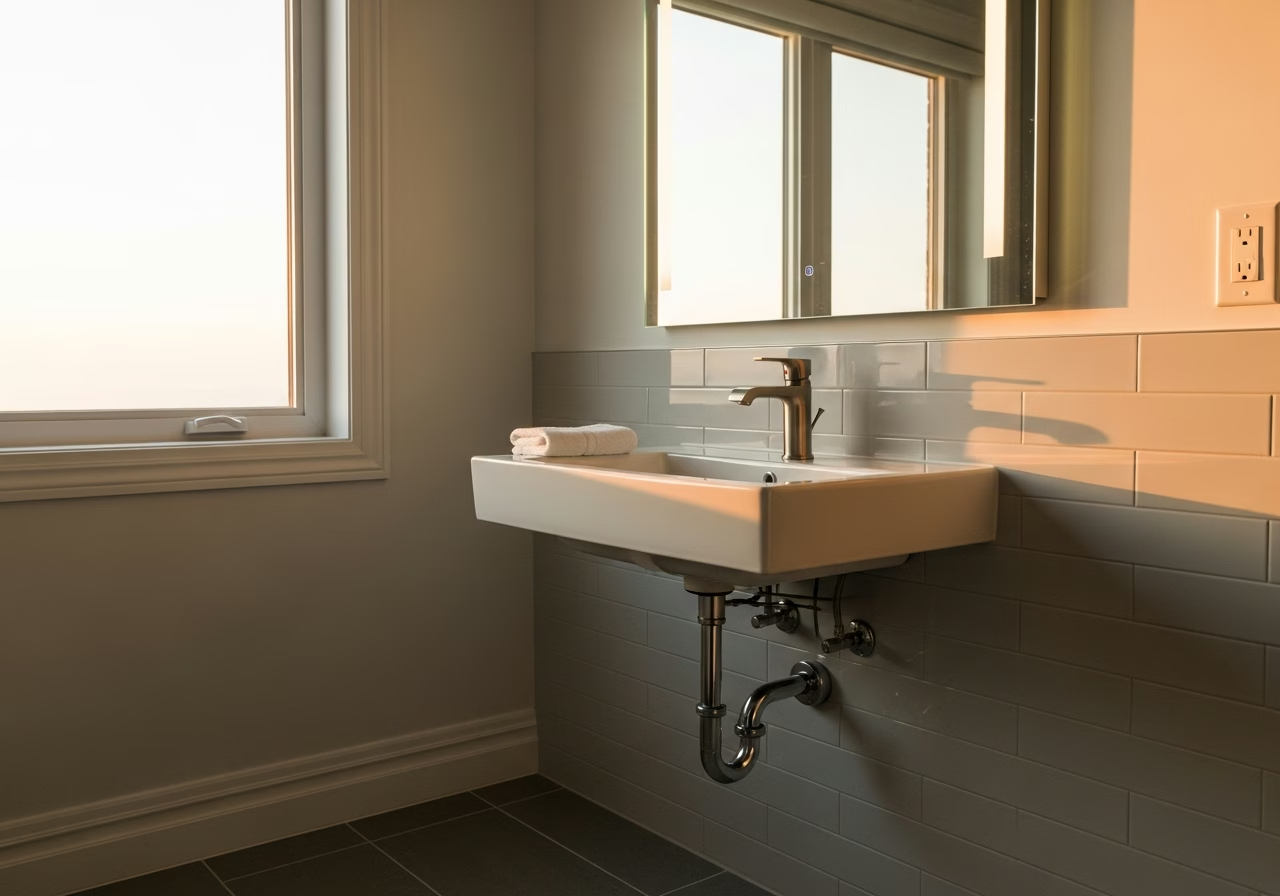
If you have an S-trap, a recurring sewer smell, or a plumbing deficiency flagged on a home inspection report, RenoHouse can assess the situation and give you a straight answer on what it will take to bring things up to code. With over 12 years serving Toronto, Etobicoke, Mississauga, Brampton, Vaughan, Markham, and the broader GTA, we are licensed and insured for all residential plumbing work. Call 289-212-2345 or request a free quote online — you will know exactly what needs to happen and what it will cost before any work begins.