RenoHouse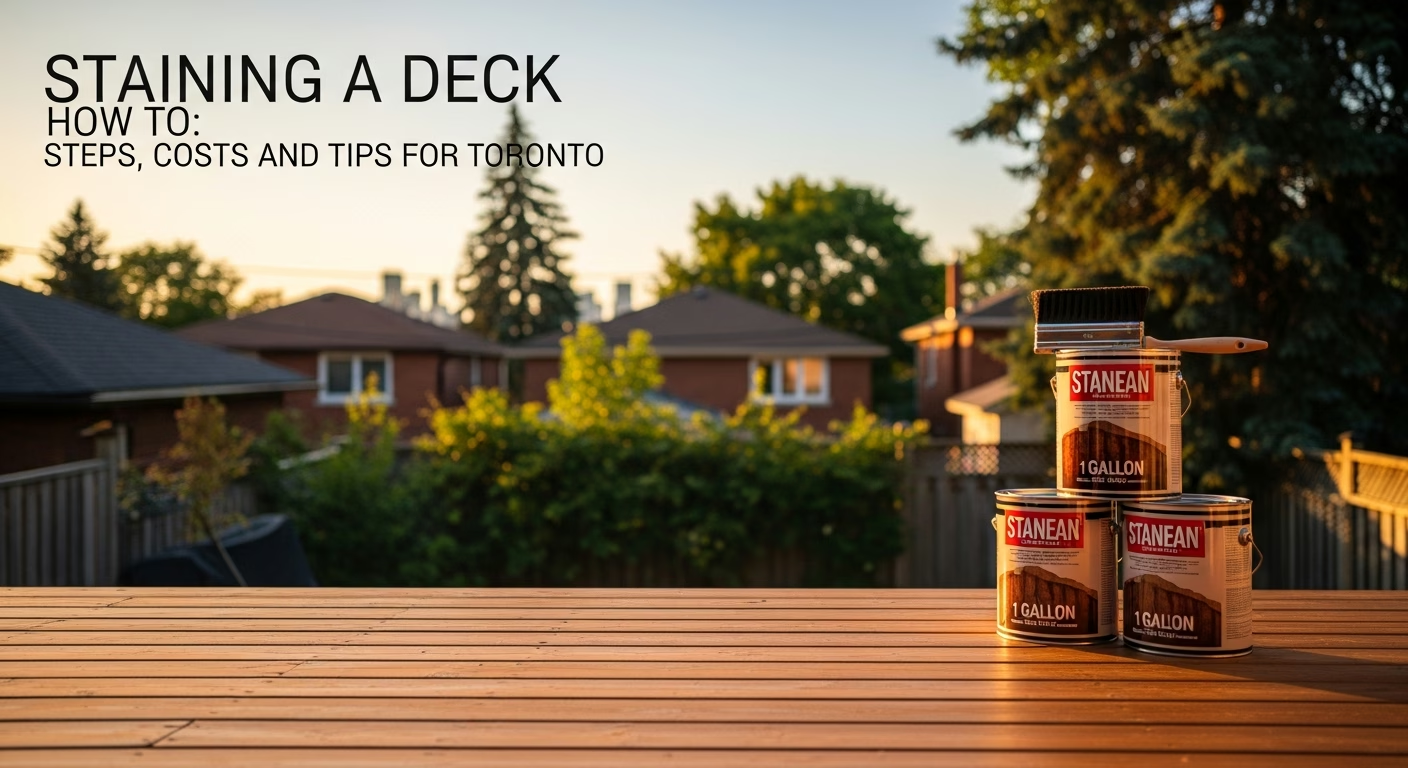

# Staining a Deck How To: Do It Right for Toronto Weather
Quick answer. Professional deck staining in the GTA runs $500–$1,800 for a typical 200–400 sq ft deck in 2026, cleaning and prep included. DIY material costs sit at $150–$400. The job takes a minimum of two full days — one for cleaning and drying, one for application — and proper surface prep is what separates a stain job that lasts four seasons from one that peels by Thanksgiving.Deck Staining Costs in Toronto and the GTA (2026 Prices)
Deck staining costs across Toronto, Mississauga, Oakville, and surrounding areas vary based on deck size, wood condition, and finish type. For a contractor-applied job on a standard residential deck, here are realistic 2026 ranges:
| Deck Size | Condition | Estimated Cost (CAD) |
|---|---|---|
| Small (under 150 sq ft) | Good — light cleaning only | $400–$700 |
| Medium (150–300 sq ft) | Average — cleaning + light sanding | $700–$1,200 |
| Large (300–500 sq ft) | Weathered — full strip and prep | $1,200–$2,000 |
| Large (300–500 sq ft) + railings | Weathered | $1,600–$2,500 |
These numbers assume pressure-treated pine or cedar, which are the two most common deck materials across the GTA. Composite decking generally cannot be stained and is priced differently for cleaning services.
The biggest cost variable is prep. A deck in Scarborough or Brampton that has not been maintained in five years may need chemical stripping, brightening, and sanding before a drop of stain goes on — that process alone can add $300–$600 to the job. Contractors quoting less than $400 for a medium-sized deck are almost certainly skipping these steps, and you will see the results within a season.
For DIY projects, a quality exterior stain (Armstrong Clark, Defy, TWP 100 series) runs $60–$110 per gallon, and you will need roughly one gallon per 150–200 sq ft of deck surface for a first coat on bare or stripped wood. Add $40–$80 for cleaner and brightener, plus roller covers, brushes, and a pump sprayer, and you are looking at $150–$400 total for a mid-sized deck. The labour saving is real, but so is the learning curve — the steps below matter.
How to Stain a Deck Step by Step
Toronto's climate punishes decks harder than most homeowners expect. The city cycles through 40 or more freeze-thaw events per winter, UV exposure is intense from June through August, and spring rain arrives fast. None of the following prep steps are optional — they are what separates a stain job that lasts four seasons from one that peels within the year.

New pressure-treated lumber should dry for at least 60–90 days before staining. If your deck was built this spring in Vaughan or Richmond Hill, wait. A simple moisture meter should read below 15% before you apply anything. Staining wet wood is the single most common cause of premature failure across GTA decks, and no amount of good product will compensate for it.
Step 2: Clean the deck thoroughlyUse a dedicated deck cleaner — not household bleach, which raises wood grain and degrades the fibres. Apply with a garden sprayer, scrub with a stiff brush, and rinse thoroughly. Follow with a deck brightener (oxalic acid solution) to open the wood pores and restore the natural pH. This step makes a visible difference in how evenly the stain absorbs, particularly on cedar that has started to grey.
Need professional renovation?
Call RenoHouse at 289-212-2345 or get a free estimate today.
Get Free Estimate →Power washing is acceptable but keep the pressure below 1,200 PSI and use a fan tip, not a pinpoint nozzle. High-pressure washing damages soft grain and creates a fuzzy surface texture that will telegraph through the finished stain.
Step 3: Sand and spot-repairOnce dry — allow 48 hours minimum, longer in humid weather — sand rough spots with 60–80 grit paper and hand-sand spindles and rails. Replace split or cupped boards before you stain anything. Staining over structural damage hides a problem that will cost considerably more to address later. Boards on north-facing properties in Etobicoke and North York that stay damp from shade degrade faster than south-facing decks and often need targeted replacement.
Step 4: Apply your stainApply stain on a dry day with temperatures between 10°C and 30°C — no rain in the forecast for at least 24 hours. In Toronto, the reliable application windows are mid-May through late June and late August through early October. July and August can work but afternoon humidity often causes lap marks on horizontal surfaces.
Apply with a brush, roller, or pump sprayer, working with the grain. Back-brush sprayed areas immediately to work the stain into the wood rather than leaving it pooled on the surface. Two thin coats consistently outperform one thick coat. Let the first coat dry to the touch — typically 2–4 hours for oil-based stain and 1–2 hours for water-based — before applying the second.
Step 5: Protect the area and clean upTape or cover any concrete, composite areas, or adjacent siding before starting. Oil-based stains are very difficult to remove from concrete once dry. Dispose of oil-soaked rags carefully — lay them flat outside to dry completely before putting them in the garbage, as bunched oil rags present a genuine fire risk.
No building permit is required for deck staining in Toronto or any GTA municipality. However, if staining reveals structural problems that require replacing sections of decking or rebuilding railings, a permit may be required depending on the scope of work. The City of Toronto's building division can confirm requirements for specific jobs at no cost.
Solid Stain vs Semi-Transparent: Choosing the Right Finish
This is where many homeowners in Pickering, Ajax, Whitby, and Clarington make a choice they later regret.

- Boards that are soft or spongy underfoot indicate rot below the surface
- Ledger board shows dark staining or any separation from the house wall
- Post bases sitting in standing water or buried in soil without proper footings
- Railings that move more than 1 cm when pushed laterally
- Joists with significant checking or cracking visible from below the deck
These are structural issues that require repair before any finish coat is applied. In Toronto, deck railings must meet Ontario Building Code height and load requirements. A cosmetic stain job on a deck with non-compliant railings is a liability, not an improvement.
Frequently Asked Questions
How long does deck stain take to dry before walking on it?
Most water-based stains are dry to foot traffic in 24–48 hours under normal GTA conditions (15–25°C, moderate humidity). Oil-based stains typically need 48–72 hours before foot traffic and up to 7 days to fully cure. Avoid placing furniture back on the deck for at least 72 hours regardless of stain type. Applying in direct afternoon sun speeds surface drying but can actually prevent full penetration into the wood fibres.
Can I stain over old stain without stripping it?
It depends on what is already on the deck. If the existing coating is a penetrating semi-transparent stain and it has simply faded with no peeling, a clean-and-recoat with the same product is often sufficient. If the existing stain is peeling, flaking, or was a solid film-forming product, stripping is required before recoating. Applying new stain over peeling old stain produces peeling new stain — typically within a single season.
Should I stain or paint my deck in Toronto?
Stain is almost always the better choice for horizontal deck surfaces in the GTA. Paint forms a film on top of the wood that traps moisture as the wood expands and contracts through Toronto's temperature swings, and peeling follows within 2–3 years on flat surfaces. Penetrating stains move with the wood. Paint is more appropriate for vertical surfaces like railings and fascia where water drains away rather than pooling.
Do I need a permit to stain a deck in Toronto?
No permit is required for staining, sealing, or routine cosmetic deck maintenance anywhere in Toronto or across the GTA. Permits are required when structural work is involved — replacing substantial portions of decking, rebuilding stairs, expanding the deck footprint, or altering railing height. If maintenance work evolves into a partial rebuild, confirm requirements with the City of Toronto Building Division or your local municipal office before proceeding.
Need a quote in the GTA?

If your deck needs professional cleaning, prep, and staining — or if you have found structural issues that need attention before refinishing — renohouse.ca offers free, no-obligation quotes across Toronto, Etobicoke, Mississauga, Oakville, Vaughan, Markham, Brampton, and the wider GTA. With 12+ years of exterior work and a 4.9-star rating across 498 reviews, the assessment is straightforward and the pricing is honest. Call 289-212-2345 or request a quote online.