 RenoHouse
Crawl Space Encapsulation — Toronto GTA
Professional crawl space encapsulation services in Toronto and the Greater Toronto Area. Licensed, insured, and trusted by homeowners across the GTA.
Projects Completed
Years Experience
Client Satisfaction
Google Rating
How It Works
A simple, stress-free process from start to finish.
Send Your Request
Call or WhatsApp us 24/7. Send photos, video, comments about what needs to be done, and your location.
Remote Estimate
We review everything, discuss details, and provide a clear estimate — often within hours, no visit needed.
Repair Process
Our licensed team arrives on the agreed date and completes your crawl space encapsulation to the highest standards.
Handover & Warranty
Final walkthrough with you, full cleanup, and warranty documentation provided.
Send Your Request
Call or WhatsApp us 24/7. Send photos, video, and a description of the work + your location.
Remote Estimate
We review everything, clarify details, and give you a price — often within hours.
Repair Process
Licensed team arrives on schedule and completes your crawl space encapsulation professionally.
Handover & Warranty
Final walkthrough, full cleanup, and warranty documentation.
Crawl Space Encapsulation in Toronto GTA
RenoHouse delivers crawl space encapsulation projects for Toronto and GTA homeowners — sealing damp, mold-prone, pest-vulnerable crawl spaces under older detached and bungalow homes with vapour barrier, foam-board insulation, and dedicated dehumidification. Our scope is end-to-end construction performed in-house: cleanup and debris removal, mold and pest remediation coordination (where required), 20-mil reinforced poly vapour barrier installation, R-10 to R-15 foam board insulation on rim joists and walls, dehumidifier installation, sump pit installation if standing water is present, sealed crawl-space access door, and condition-monitoring sensors. Crawl space encapsulation is standard renovation work — no specialist licensing required — performed by our carpentry and waterproofing crews.
Where Toronto crawl spaces are concentrated
Older East York, Beaches, Junction, Long Branch, Mimico, Roncesvalles, High Park, Leaside, and parts of Etobicoke-Centre have substantial 1900s–1950s housing stock built on partial-basement-with-crawl-space or full-crawl-space foundations. These crawl spaces were typically vented to outside air (a 1950s-era best practice now disproven), have no vapour barrier (just exposed clay or soil), and accumulate moisture year-round from soil evaporation, condensation, and groundwater seepage. Common conditions on first inspection: musty odour rising into living space above, visible white mold on floor joists, rotted band joists, raccoon or rat nests, brittle or missing fibreglass batt insulation falling onto the soil, standing water in low spots after spring melt. Encapsulation is the modern standard fix.
The encapsulation system explained
Step 1: Cleanup and debris removal — old fibreglass batts pulled out, animal nests removed (with pest-control coordination if active), debris bagged and hauled. Step 2: Mold remediation if present — Type 1 or Type 2 abatement scope per Ontario Ministry of Labour Reg. 278/05 if mold square-footage triggers it; smaller affected areas treated with antimicrobial. Step 3: Standing-water management — if water is present, install a sump pit with submersible pump (Zoeller M53 or similar) and battery backup. Coordinate with our backwater-valve-sump-pump-bundle service if Toronto's flood subsidy applies. Step 4: 20-mil reinforced polyethylene vapour barrier — overlapped 12 inches at seams, taped with butyl tape, mechanically fastened to walls and rim joists, sealed at all penetrations (plumbing, electrical, support posts). The 20-mil thickness is the residential standard (commercial uses 30–60 mil); 6-mil and 10-mil products are NOT durable enough for foot-traffic crawl spaces. Step 5: Foam board insulation — 2 inches of XPS (R-10) or 3 inches (R-15) on the perimeter walls and rim joists, taped seams, mechanically fastened. Some installs add R-19 mineral wool batts above for total R-29. Step 6: Dehumidifier — 80-pint Aprilaire E080 or Santa Fe Ultra-Aire 70H, ducted condensate to the sump or exterior, automatic humidistat targeting 50–55% RH year-round. Step 7: Sealed access door with weatherstripping. Step 8: Optional moisture and temperature sensors (SensorPush, Govee) for ongoing monitoring.
Why encapsulation works (and why old vented crawl spaces fail)
A vented crawl space in Toronto's climate is wrong for two reasons: (1) Summer humid air entering at 25°C / 75% RH cools when it contacts cool soil and joist surfaces (~15°C), which raises relative humidity to 85–95% — perfect mold conditions. (2) Winter cold air entering pulls moisture out of the basement plenum and into the soil, creating a vapour drive that degrades insulation and rots joists. Encapsulation closes the air boundary — the crawl space becomes a conditioned interior space, dehumidified to 50% RH, with no air exchange to outside. Energy bills drop 5–15% from reduced heat loss; living-space comfort improves; mold and pest pressures collapse.
Project value
Small crawl space (300–500 sqft, dry, no major remediation): $4,000–$7,000. Standard crawl space (500–800 sqft, light cleanup, vapour barrier + insulation + dehumidifier): $6,500–$9,500. Larger or wetter crawl space (800–1,200 sqft, sump pit installation, mold remediation, full encapsulation): $9,000–$12,000. Coordinated with abatement (asbestos pipe-wrap, mold over 100 sqft requiring Type 2 abatement): +$2,000–$5,000 for the abatement scope. Coordinated with foundation repair or basement waterproofing: bundled discount typical 10–15%.
Honest scope and coordination
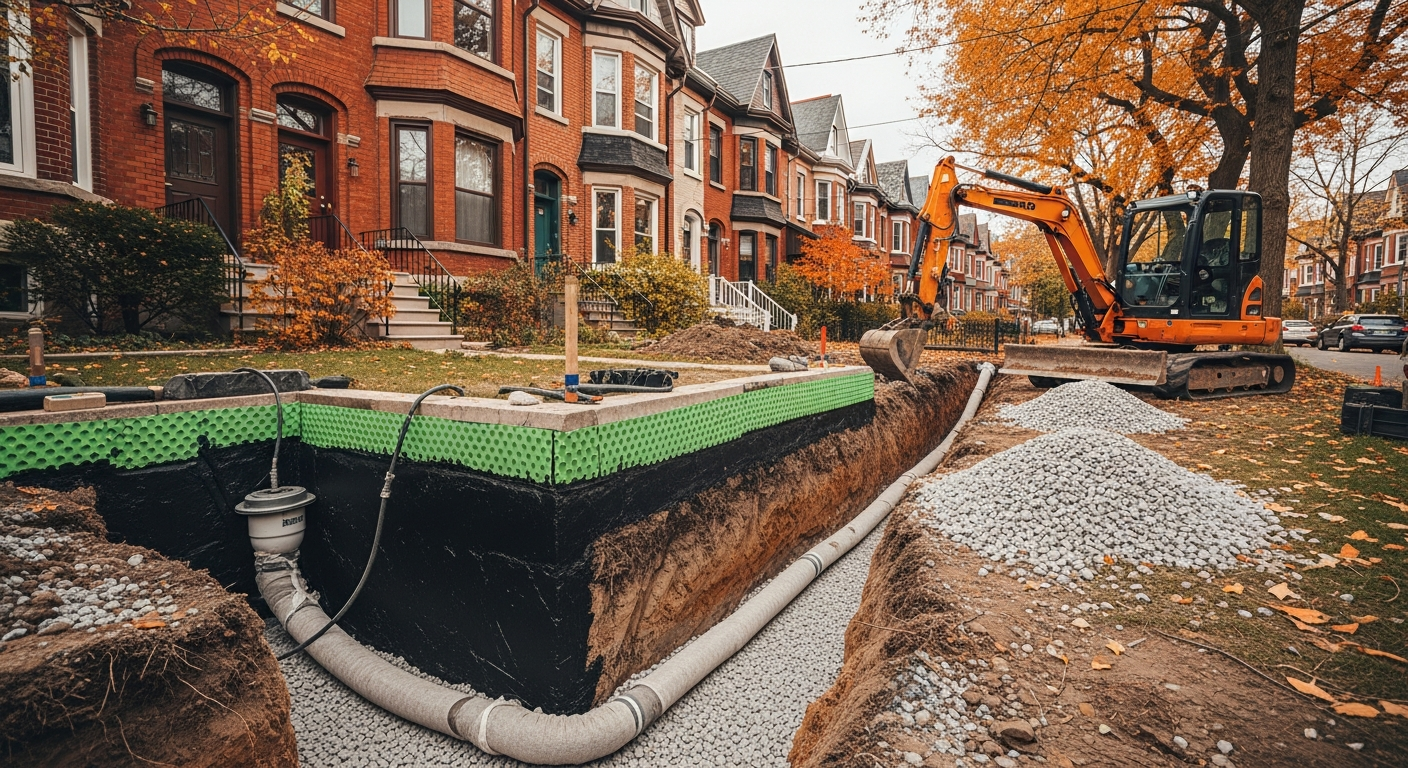
Standard encapsulation work is performed by RenoHouse self-perform crews — no specialist licensing required for vapour barrier, insulation, drywall, and finish trades. When mold is present at greater-than-Type-1 quantity (>10 sqft to >100 sqft depending on Ministry of Labour designation) we coordinate with a HCRA-licensed mold abatement contractor BEFORE the encapsulation begins. When asbestos pipe-wrap, vermiculite, or asbestos-containing flooring is found in the crawl space (common in pre-1990 Toronto stock), we coordinate with a HCRA-licensed asbestos abatement contractor (Type 1, 2, or 3 depending on quantity and friability). When the crawl space has standing water from groundwater intrusion, we may recommend exterior weeping tile and waterproofing membrane work BEFORE encapsulation — encapsulating over an active groundwater problem traps moisture rather than solving it.
Pairing with other work
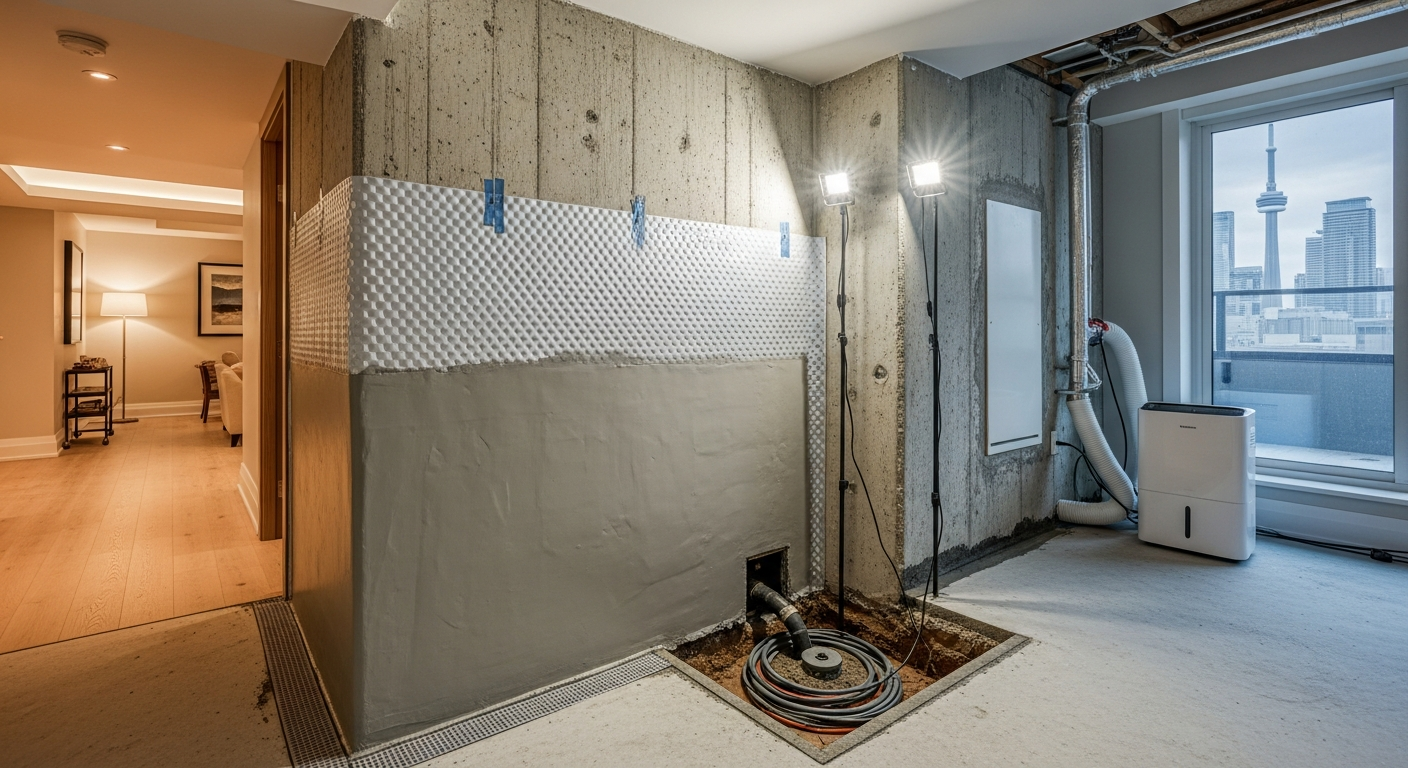
Encapsulation pairs well with: backwater-valve and sump-pump bundle (Toronto's 80% subsidy applies to the sump portion if eligible), basement-waterproofing (exterior membrane work and weeping tile), basement-finishing (encapsulation creates a dry conditioned space ready for finish work in the level above), pest-exclusion and mouse-proofing (sealed envelope eliminates rodent entry routes), and radon mitigation (the sealed slab/perimeter is a key part of radon control). We typically scope multiple items in a single project where conditions warrant.
Serving Toronto, Mississauga, Brampton, Vaughan, Markham, Richmond Hill, Oakville, Burlington, Etobicoke, Scarborough, North York, and all GTA communities. Call 289-212-2345 for a free crawl-space-encapsulation consultation.

Why Your Toronto Crawl Space Is the Hidden Problem in Your House
A typical pre-2000 GTA detached or semi-detached home with a dirt-floor or partial-slab crawl space runs at 80 to 95 percent relative humidity year-round. Toronto's high water table, freeze-thaw differential moisture, and seasonal hydrostatic pressure push ground moisture up through the slab and walls. Within months that moisture condenses on cold rim joists, fuels Stachybotrys chartarum and Aspergillus mould proliferation, accelerates wood rot in floor framing, and rises through stack effect into the living space — the "sick crawl space" diagnosis that explains 35 to 45 percent of unexplained indoor air quality complaints in older GTA homes. Encapsulation is the single highest-ROI fix on the entire envelope, restoring a stable under-55 percent relative humidity year-round and protecting the floor framing above for the remaining life of the structure. RenoHouse handles full Stego-Wrap-grade encapsulation across Toronto, Mississauga, Brampton, Vaughan, Markham, Richmond Hill, Oakville, Burlington, Scarborough, North York, and Etobicoke.
The "Sick Crawl Space" Symptom Pattern
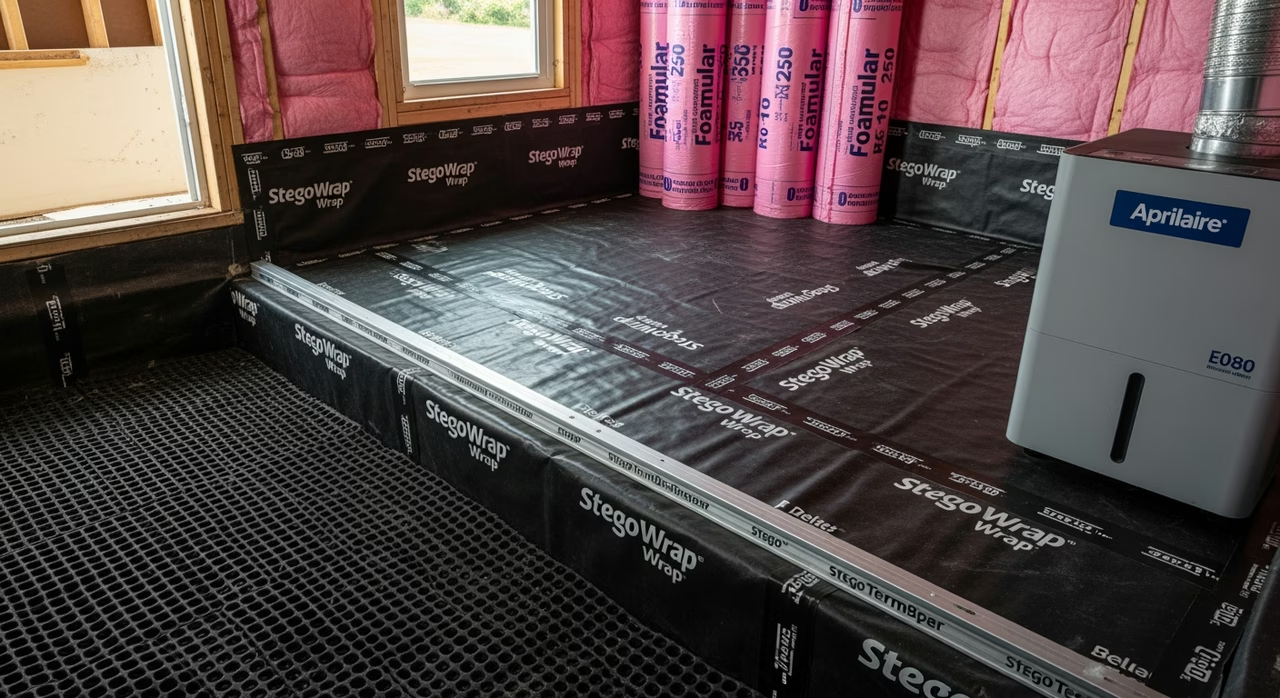
Homeowners typically arrive at encapsulation by way of a symptom chain: musty smell on the first floor in summer, persistent allergy or asthma symptoms that improve when away from the home, cupped or buckled hardwood flooring, visible mould around the rim joist, condensation droplets on cold-water pipes in summer, or a Health Canada radon test return that came back above 200 Bq/m³. Eighty percent of those symptoms trace back to the crawl space — close it off, dehumidify it, and the rest of the house behaves.
The mechanism: warm, humid summer air contacts cool foundation walls and dewpoints to liquid water. That water feeds mould on wood framing and migrates upward via stack effect. The fix is not ventilation (older code-required venting actually makes it worse in our summer dewpoint regime) — it is full encapsulation plus a dedicated dehumidifier sized for the cavity volume.
OBC SB-12 and the Encapsulation Mandate
OBC SB-12 sets R-22 effective below-grade walls full-height for new construction. Retrofit encapsulation is voluntary but captures Greener Homes and HRS rebate eligibility. OBC 9.25 governs vapour barrier and air leakage detail. OBC 9.36 (Energy Efficiency) allows whole-envelope tradeoff calculations — a properly-encapsulated crawl space is equivalent thermally to a finished basement, and dramatically improves the EnerGuide HOT2000 model score.
CAN/ULC S705.1 governs closed-cell SPF Type 2 used on perimeter walls in premium-scope encapsulation; CAN/ULC S711.1 requires fire-block detail at interior exposure. Ontario Reg 232/07 spray-foam installer licensing is mandatory before any SPF lift.
The Three Scope Tiers — What You Get for the Price
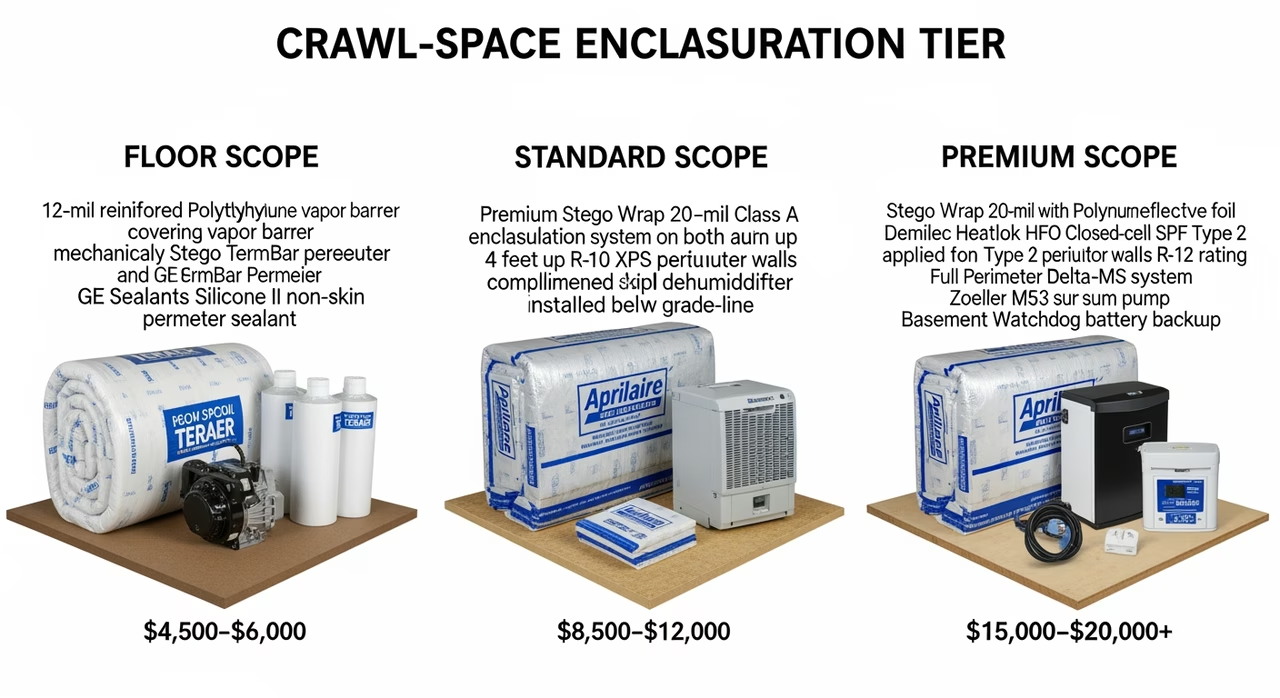
Floor scope at $4,500 to $6,000 covers a 12-mil reinforced polyethylene vapour barrier laid on the existing dirt or gravel floor, mechanically attached to perimeter foundation walls with Stego TermBar termination bar, all seams 12-inch overlapped and sealed with Stego StegoTape, and perimeter sealed with non-skin GE Sealants Silicone II. This handles the "stop the moisture migration" problem on a healthy crawl space with no flooding history and reasonable existing rim-joist insulation. It does not address dehumidification or perimeter-wall insulation.
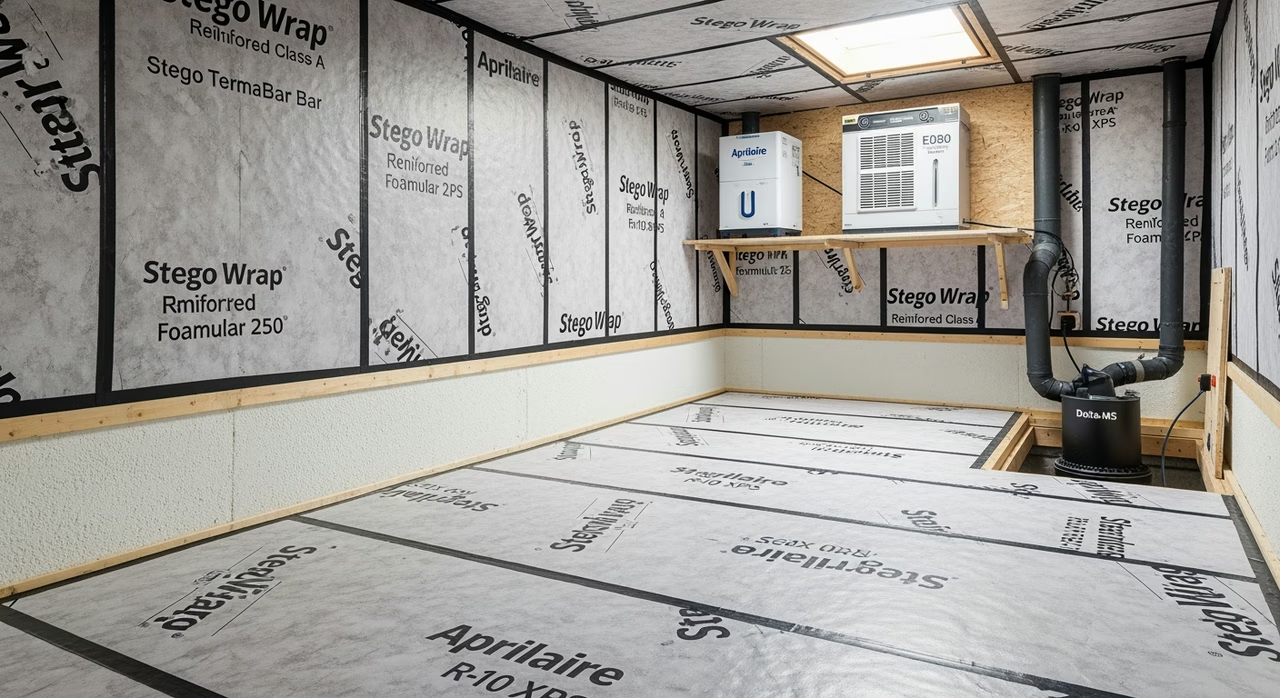
Standard scope at $8,500 to $12,000 upgrades to premium 20-mil reinforced Stego Wrap Class A vapour barrier across floor and four feet up perimeter walls, adds Owens Corning Foamular 250 R-10 XPS rigid foam board on perimeter walls below grade-line for OBC SB-12 thermal compliance, installs an Aprilaire E080 dedicated dehumidifier with condensate pump or gravity drain to a sump, and lays Delta-MS dimpled HDPE drainage matt under the vapour barrier to handle any incidental moisture migration to the perimeter sump. This is the right scope for the vast majority of GTA homes.
Premium scope at $15,000 to $20,000 and up adds Polynum Pure reflective foil over the Stego Wrap for a 10 percent thermal upgrade, applies Demilec Heatlok HFO closed-cell SPF Type 2 to perimeter walls for R-12 vapour-tight insulation, lays Delta-MS drainage matt at full perimeter with a new Zoeller M53 sump pump and Basement Watchdog Big Dog battery backup, and installs a Santa Fe Ultra98H crawl-space-rated dehumidifier with HEPA pre-filter. This scope handles flood-prone, asbestos-affected, or chronically-wet crawl spaces with full integrated drainage and mitigation.
The Stego Wrap Standard — Why 20-mil Class A Matters
Cheap encapsulation jobs use 6-mil polyethylene from a hardware store. It tears, punctures, slips off termination bars, and degrades under UV exposure inside ten years. The industry standard is Stego Wrap 20-mil reinforced Class A polyethylene — a tri-laminate with reinforced scrim, ASTM E1745 Class A certified, 50-year warranted against permeability degradation. Polyguard 650RA and Aquaproof CB-12 are comparable alternatives at similar price.
Stego TermBar is the perimeter termination — a 1.5-inch aluminum bar mechanically anchored to the foundation wall with Hilti HUS-EZ powder-actuated fasteners or stainless self-tappers. The vapour barrier extends behind the termination bar; perimeter sealant (GE Silicone II non-skin, Sashco BigStretch) provides the air-and-moisture seal. Stego StegoTape on every seam, Tescon Vana airtight tape at penetrations, Henry 700 BlueSeal at floor-to-wall transitions.
The Asbestos and Vermiculite Question
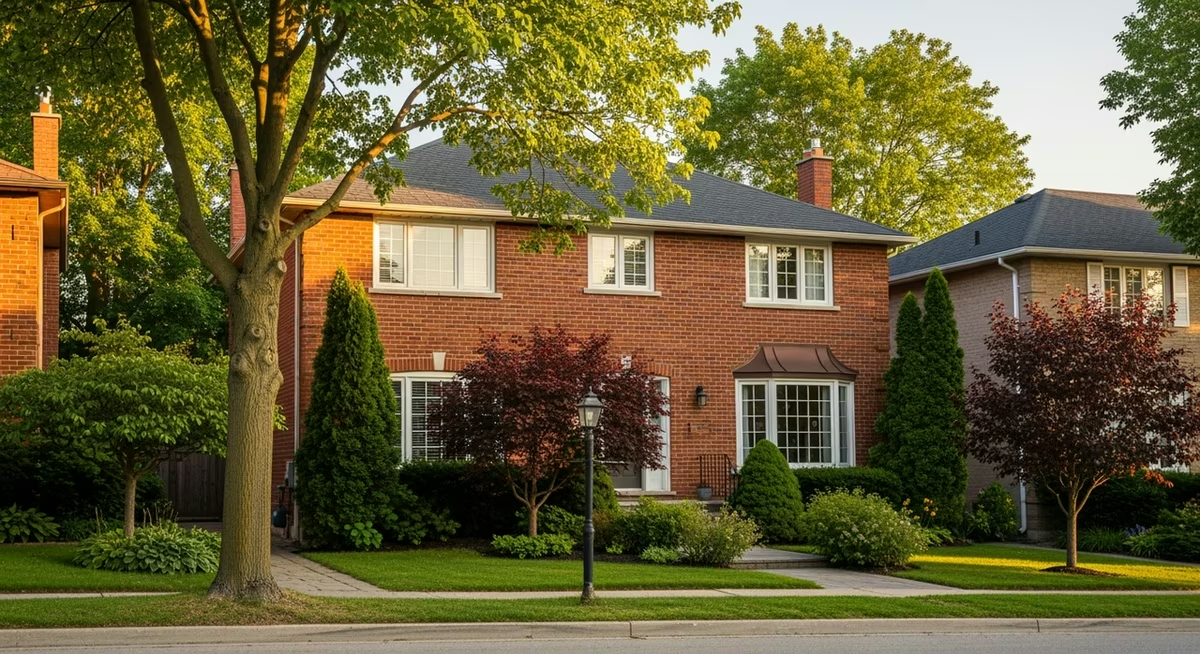
Pre-1990 crawl spaces with vermiculite floor insulation (Zonolite from Libby Montana, contaminated with tremolite and actinolite asbestos at 1 to 5 percent) require Ontario Reg 278/05 Designated Substance Survey before any disturbance. Pre-1990 pipe insulation in crawl spaces is typically 5 to 25 percent chrysotile asbestos and triggers the same DSS requirement. Sampling runs $200 to $500 per sample at an accredited polarized-light microscopy lab. A positive triggers Type 2 abatement at $10 to $25 per square foot before encapsulation can proceed: full containment with 6-mil poly, HEPA negative-pressure ventilation at four air changes per hour, wet methods only, sealed double-bag disposal, post-removal air clearance testing.
Federal Reg 90/2024 (RRP Rule) applies to any pre-1978 lead-paint disturbance over six square feet — relevant if interior basement-side painted joists or beams must be cut for SPF prep.
Dehumidification Sizing and Performance
Aprilaire E080 (80 pints per day at 80°F/60% RH) handles up to a 1,500-square-foot crawl space with reasonable vapour-barrier integrity. Aprilaire E100 (100 pints per day) for 1,500 to 2,400 square feet. Santa Fe Compact70 is the crawl-space-rated alternative at 70 pints per day with built-in MERV-13 filtration. Santa Fe Ultra98H is the premium option at 98 pints per day with HEPA pre-filter for asbestos-impact recovery or post-mould remediation cavities. AlorAir Sentinel HD55 and HD90 cover the consumer end with built-in pump and 5-year warranty.
Condensate management: a built-in pump drains to a perimeter sump or to an upper-floor laundry drain via 1/4-inch tubing. Gravity drain to a perimeter sump is preferred where the slope allows it. Target post-encapsulation: under 55 percent relative humidity year-round, stable plus or minus 5 percent, no condensation on rim joists below 60°F.
Rebates and ROI
Ontario HRS pays up to $7,500 per household envelope upgrade — encapsulation qualifies as it improves the EnerGuide HOT2000 model envelope performance. Canada Greener Homes Grant pays up to $5,600 for basement and crawl-space air-sealing and insulation post-EnerGuide audit. The Greener Homes Loan adds up to $40,000 interest-free for retrofit envelope work. Encapsulation also captures the basement-flooding portion of the resilience program in flood-prone neighbourhoods (Toronto rivers and ravine streets).
Typical 1,200-square-foot crawl space at standard scope ($10,000 net of rebates around $4,500 to $6,000) pays back inside seven to twelve years on combined HVAC savings (less air conditioning load), avoided hardwood replacement, and protected floor framing value.
Frequently Asked Questions
How do I know if my crawl space needs encapsulation? Check for visible moisture on the dirt floor, condensation on cold pipes in summer, musty smell in the first-floor rooms above, visible mould on rim joists, or relative humidity readings above 60 percent on an Airthings Wave or Hygrometer Pro. Any one of those signals starts the conversation; two or more makes encapsulation a near-certainty.
Will encapsulation make my crawl space usable for storage? Yes — post-encapsulation the crawl space stays clean, dry, and stable enough for off-season storage of holiday decor, sports equipment, and household overflow. Floor-scope encapsulation gives a clean dry surface; standard and premium scope add full perimeter wall finish.
What about the existing vents in my crawl space — do they stay open? No — encapsulation seals all foundation vents. Older OBC code required vents for moisture management; current best practice (and OBC 9.25 air-tightness principles) recognizes that vents make summer dewpoint problems worse in our climate. Vent blocks (closed-cell foam plugs sealed with Sashco BigStretch) come standard on every install.
Can encapsulation help with my radon levels? Marginally — encapsulation reduces but does not eliminate soil-gas migration. The proper radon fix is sub-slab depressurization with a C-NRPP-certified mitigation contractor; see our Radon Mitigation service. Encapsulation paired with SSD radon mitigation is the gold-standard combination.
How long does the install take? Floor scope runs two to three days. Standard scope runs four to six days. Premium scope with full perimeter SPF and integrated drainage runs seven to ten days. Asbestos abatement scope adds five to eight days for containment, abatement, and air clearance testing.
What warranty comes with encapsulation? RenoHouse provides a 10-year workmanship warranty on installation; Stego Wrap 20-mil Class A carries a 50-year permeability warranty from the manufacturer; Aprilaire and Santa Fe dehumidifiers are 5-year manufacturer-warranted; Demilec Heatlok HFO SPF is 25-year limited warranty per CAN/ULC S705.1.
Will I notice a difference in the house immediately? Yes — most homeowners report the musty smell disappears inside one week, hardwood floor cupping starts to reverse inside one month, and first-floor humidity stabilizes inside two to four weeks. The biggest effect: summer air conditioning load typically drops 10 to 18 percent because the AC is no longer fighting crawl-space moisture migration.
What insurance and licensing should my encapsulation contractor carry? Ontario Reg 232/07 spray-foam installer license (if SPF scope), WSIB clearance, $2 million general liability, $1 million property damage, Federal Reg 90/2024 EPA-Lead-Safe-Certified Renovator (if any pre-1978 lead-paint), and IICRC S520 mould remediation certification (if mould scope). RenoHouse carries all six. Call 289-212-2345 for your free crawl-space encapsulation audit today.
Toronto/GTA neighborhood considerations
- Forest Hill / Rosedale / Lawrence Park (heritage): Pre-1940 stone/rubble-foundation crawl spaces — 36-48" headroom typical. Strip existing rotted poly + lay 12-mil reinforced Stego Wrap (ASTM E96 vapour permeance 0.03 perm) over 4" closed-cell SPF on stone walls. Heritage homes also need radon mitigation (Toronto Health Reg 91/14) — sub-slab depressurization $2.8K-$4.8K.
- North York / Scarborough / Etobicoke (60s-70s): 1960s-70s crawl space — 80% of original 6-mil poly is brittle/torn. Full re-encapsulation $6.40-$10.20/sqft turn-key (12-mil reinforced + sealed seams + dehu drain). Common scope 600-900 sqft = $4.4K-$9.4K.
- Mississauga / Brampton / Vaughan (90s+): Most 90s+ stock has full basement (no crawl), but post-2010 GTA infill bungalow market: crawl-space encapsulation increasingly spec'd at build. ASHRAE 160 humidity control: dedicated sub-floor dehu (Aprilaire E080 / Santa Fe Compact70) $2.2K-$3.4K.
- Caledon / King City / Aurora (rural large-lot): Rural farmhouse crawls — 5-7 ft head-height with dirt-floor + rock outcrop. Full encap + spray-foam-stone-wall + dedicated dehu + radon mitigation $14K-$32K. Rural radon levels often 200-800 Bq/m³ (Health Canada 200 Bq/m³ action level).
- Downtown condos: N/A (no crawl spaces in concrete-slab high-rise).
Standards + health: ASHRAE 160-2021 indoor humidity 60% max for mould resistance. Health Canada radon action level 200 Bq/m³ (1 in 4 GTA homes exceed). OBC 9.13 Dampproofing + Waterproofing. Vapour-barrier material spec: ≥ 10-mil reinforced polyethylene, ASTM E96 perm rating ≤ 0.06. Closed-cell SPF on rim joist + stone wall minimum R-20 per OBC 9.36.2.
The RenoHouse Difference
11+ Years Experience
Over a decade of expertise in crawl space encapsulation. We've seen it all and know how to handle any challenge.
Warranty Protected
All work comes with comprehensive warranty coverage. We stand behind our craftsmanship and use quality materials that last.
Competitive Rates
Fair pricing on crawl space encapsulation without compromising quality. We match or beat competitor quotes.
Sound Familiar?
These are the most common problems our clients face.
Musty smell rising from the crawl space into your living room?
Old East York / Beaches / Junction bungalow with exposed soil and mold on floor joists?
Vented crawl space with summer humidity at 85-95% RH and growing mold?
Rotted band joists and brittle fibreglass falling onto the soil?
Raccoon or rat activity in the crawl space and need a sealed envelope?
Want a 20-mil vapour barrier plus dehumidifier before finishing the basement above?
Ready to get started?
Free estimate, no obligation. We respond within 1 hour.
What Our Clients Say
“RenoHouse replaced all our windows in just two days. The new windows are beautiful, energy-efficient, and the team left everything spotless. Highly recommend!”

Michael R.
Oakville
“New windows transformed our home. Quieter, warmer, and our energy bill dropped noticeably. Excellent installation crew.”

David K.
Vaughan
“Professional from start to finish. They replaced 8 windows in one day and cleaned up perfectly. Highly recommend RenoHouse!”

Sandra W.
Burlington
Our Crawl Space Encapsulation Work
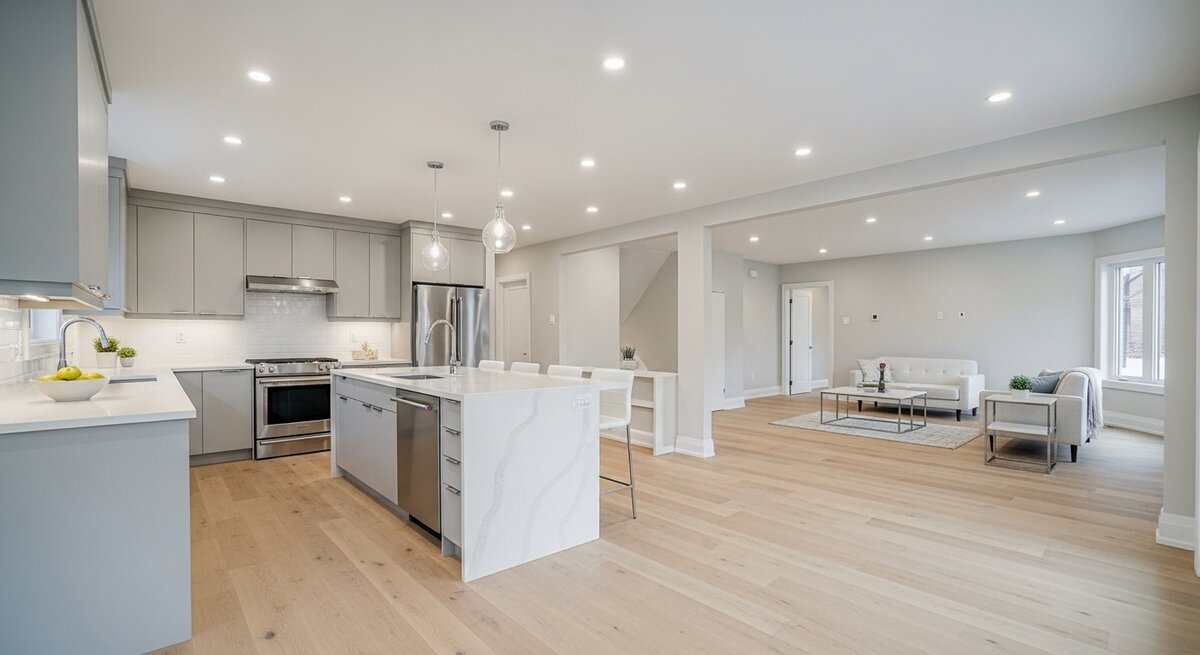
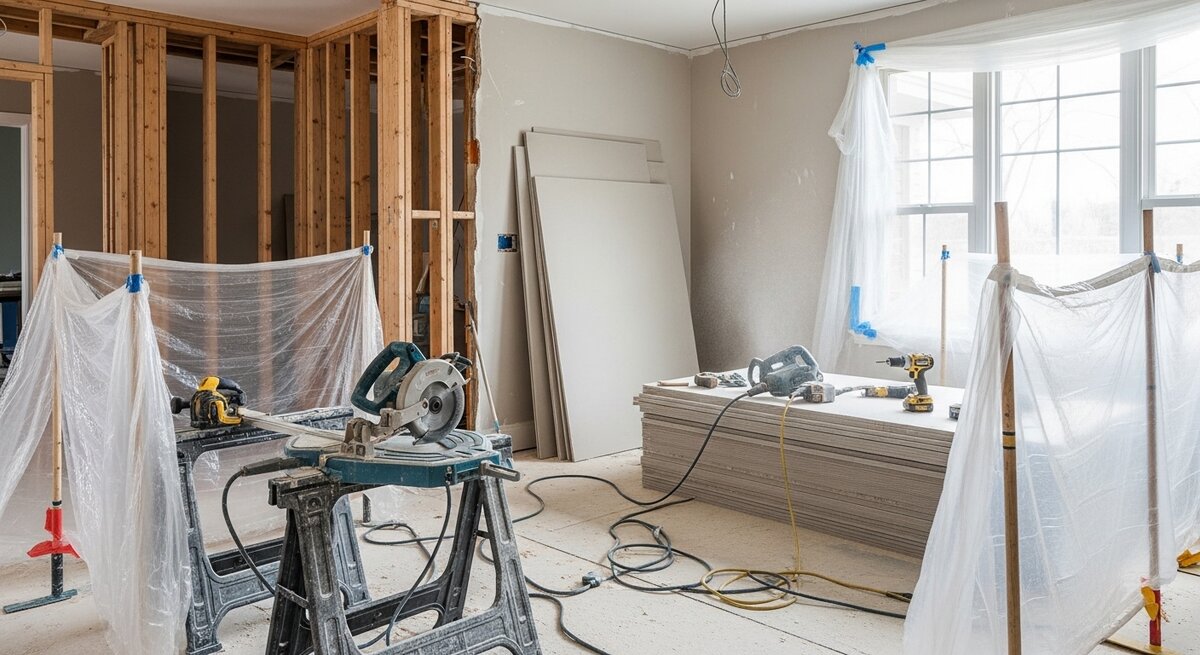
Professional crawl space encapsulation results from RenoHouse projects across the Toronto GTA.
Crawl Space Encapsulation
Toronto GTA
Quality Workmanship
Licensed & Insured
Like what you see? Let's talk about your project.
🧮 Crawl Space Encapsulation — Cost Estimator
GTA / Ontario — 2026 market pricing
⚙️ Add-ons & Options
📊 Where the cost goes (typical breakdown)
📋 What affects your price:
💡 Estimates use 2026 GTA/Ontario market data. Actual cost depends on site conditions, material selections, and project scope. Book a free in-home quote for a precise number.
Frequently Asked Questions About Crawl Space Encapsulation
Small crawl space (300–500 sqft, dry, no major remediation): $4,000–$7,000. Standard (500–800 sqft, vapour barrier + insulation + dehumidifier): $6,500–$9,500. Larger or wetter (800–1,200 sqft, sump pit, mold remediation, full encapsulation): $9,000–$12,000. Coordinated abatement (asbestos pipe-wrap, mold over 100 sqft Type 2): +$2,000–$5,000. Bundled with foundation repair or basement waterproofing: 10–15% discount typical.
20-mil reinforced polyethylene — the residential durable-vapour-barrier standard. 6-mil and 10-mil products are construction-grade poly and not durable enough for crawl spaces with foot traffic, storage, or mechanical equipment access. 20-mil reinforced poly is overlapped 12 inches at seams, taped with butyl tape, mechanically fastened to walls and rim joists, and sealed at all penetrations. For commercial or extreme conditions some installers go to 30–60 mil; 20-mil is the residential right answer for Toronto.
A vented crawl space in Toronto's climate is wrong for two reasons. (1) Summer: humid air entering at 25°C / 75% RH cools when it contacts cool soil and joist surfaces (~15°C), raising relative humidity to 85–95% — perfect mold conditions. (2) Winter: cold air entering pulls moisture out of the basement plenum and into the soil, creating a vapour drive that degrades insulation and rots joists. Encapsulation closes the air boundary — the crawl space becomes a dehumidified interior space at 50% RH, with no exchange to outside. Energy bills drop 5–15% and mold/pest pressures collapse.
Aprilaire E080 (80 pints/day, ENERGY STAR rated, ducted condensate, automatic humidistat) or Santa Fe Ultra-Aire 70H (70 pints/day, premium build, MERV 11 filter). Both target 50–55% RH year-round, condensate is ducted to the sump pit or exterior. Smaller crawl spaces (under 600 sqft, dry) sometimes use the Aprilaire E060 (60 pints). Plug-in stand-alone basement dehumidifiers (Frigidaire, GE) are NOT recommended for encapsulation — they cycle on/off too aggressively and pump bucket overflows are a problem.
2 inches of XPS rigid foam board (R-10) or 3 inches (R-15) on the perimeter walls and rim joists, taped seams (Tuck Tape or Tyvek tape), mechanically fastened to the foundation and joists. Some installs add R-19 mineral wool batts above for total R-29 — particularly when the floor above is uninsulated. We do NOT install fibreglass batts directly against the vapour barrier (they trap moisture). XPS is preferred over EPS for moisture-resistance and over polyiso for low-temperature R-value retention.
RenoHouse self-performs encapsulation work but coordinates with HCRA-licensed specialty contractors for: (1) Mold over Type-1 quantity thresholds (>10 sqft to >100 sqft depending on Ministry of Labour Reg. 278/05 designation) — abatement before encapsulation begins. (2) Asbestos pipe-wrap, vermiculite (Zonolite) attic insulation that has filtered into the crawl space, asbestos-containing flooring or mastic — Type 1, 2, or 3 abatement per OHSA and Reg. 278/05. (3) Active rodent infestation — pest-control coordination before encapsulation. We scope and budget for these on the inspection visit.
No — encapsulation is the wrong solution for active groundwater intrusion. If standing water is present from groundwater, the fix is exterior weeping tile, foundation membrane, downspout extensions, and sometimes interior sub-floor drainage tied to a sump pit. Encapsulating over an active groundwater problem traps moisture rather than solving it. We may install a sump pit and pump as part of encapsulation when seasonal moisture is present, but persistent standing water requires waterproofing remediation FIRST. Inspection visit determines the correct sequence.
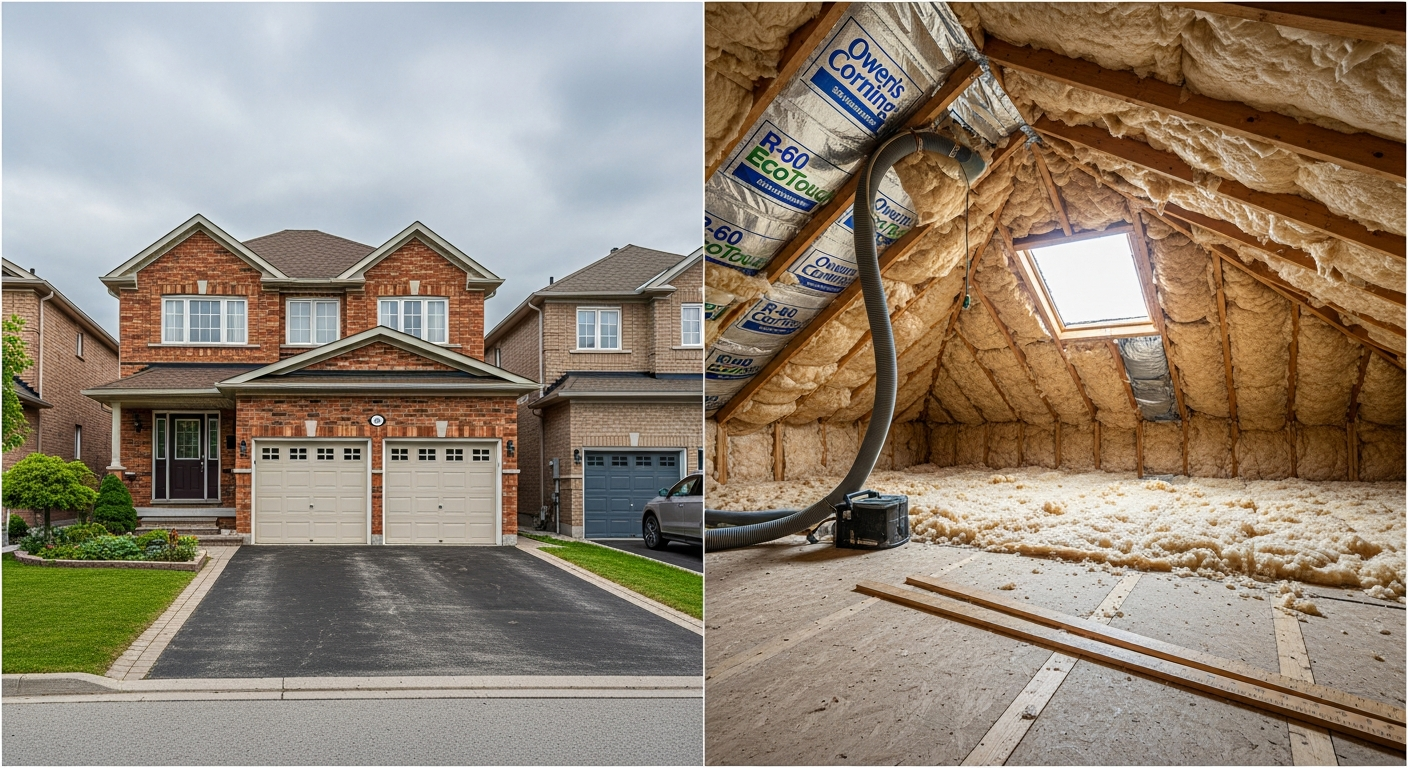
Modestly, yes. Toronto homes with vented crawl spaces typically see a 5–15% heating-bill reduction after encapsulation, depending on how much heat was being lost through the floor above. The bigger benefits are comfort (warmer floors above), durability (no more rot, no more rusting plumbing), indoor air quality (no more musty smell, no more mold spores rising through floor cracks), and pest control (sealed envelope eliminates rodent entry). Pair with attic insulation top-up and air sealing for compounding effects.
Small crawl space (300–500 sqft, dry): 2–3 days. Standard (500–800 sqft, light cleanup): 3–5 days. Larger or wetter (800–1,200 sqft, sump pit, mold/asbestos remediation): 5–10 days plus 2–5 days for the abatement scope. Mold or asbestos abatement adds permit and Ministry of Labour notification lead time (5–10 business days) before encapsulation can begin. Scope is finalized at the inspection visit.
Often yes — even partial encapsulation of a problem crawl space (mold smell, dampness, pest activity) can transform indoor air quality and basement-above usability. Partial-basement homes (typical Toronto bungalow with full-basement under main floor and crawl space under addition or kitchen extension) commonly have moisture problems concentrated in the crawl space portion. Encapsulating just that section while leaving the full basement as-is is a valid scope at $3,000–$5,000 typical. The boundary between encapsulated and non-encapsulated must be sealed — we engineer the transition.



You Might Also Need
Customers who looked at crawl space encapsulation also asked us about these complementary services.


We Serve All GTA
Professional crawl space encapsulation services available across the Greater Toronto Area.
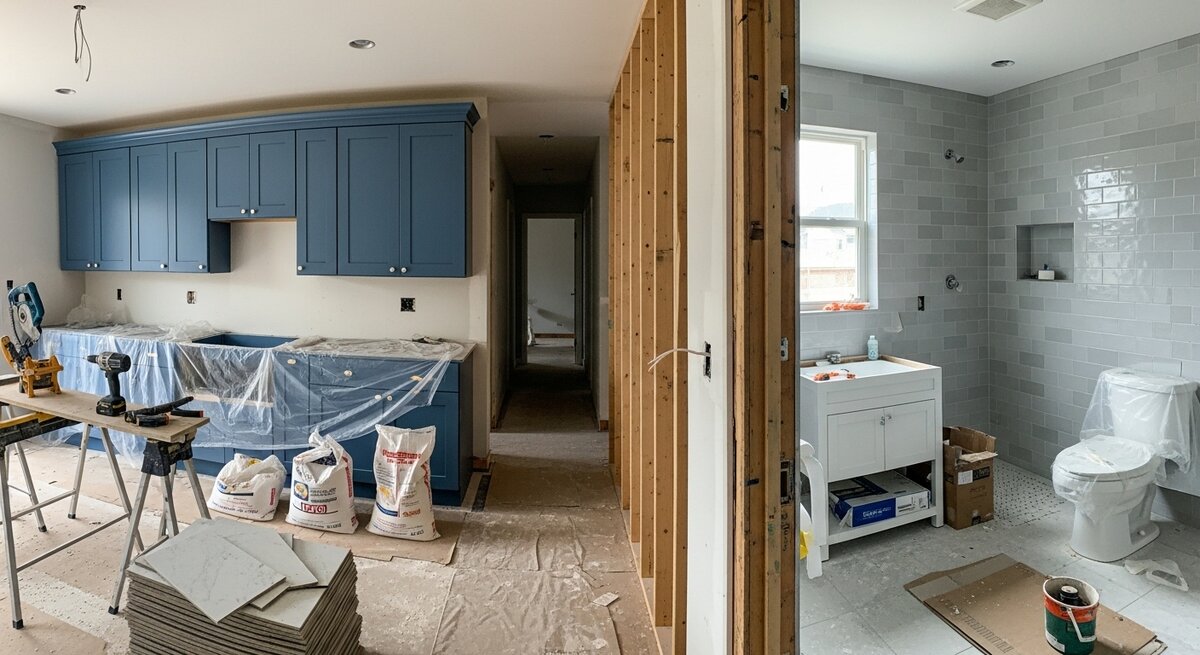
“Renovated our entire main floor — kitchen, living room, flooring, paint, lighting. They coordinated everything perfectly. One contractor for the whole project.”
— Anthony G., North York
Get a Free Crawl Space Encapsulation Estimate
Contact us today for a free, no-obligation quote for your crawl space encapsulation project in Toronto GTA. We'll get back to you within 1 hour.