RenoHouse

Engineered hardwood and laminate are the two most frequently confused flooring types — and the two most often compared by Toronto homeowners planning a renovation. They look similar from across the room, they're in overlapping price ranges, and they both install as floating click-lock floors. But beneath the surface, they're fundamentally different products with different strengths. For a complete look at all flooring options, see our Complete Home Flooring Guide Toronto 2026.
This guide puts them head-to-head on every metric that matters — cost, durability, moisture, look, feel, resale value — and tells you exactly which one is better for your specific situation.
---
At a Glance Comparison
| Feature | Engineered Hardwood | Laminate |
|---|---|---|
| Top layer | Real wood veneer (2–6 mm) | Printed photograph under resin |
| Core | Plywood or HDF | HDF (High-Density Fiberboard) |
| Waterproof? | ❌ No (moisture-resistant) | ❌ No (some "waterproof" models) |
| Can be refinished? | ✅ Yes (1–3 times) | ❌ No |
| Lifespan | 20–50+ years | 10–25 years |
| Cost (installed) | $8–$18/sqft | $4–$10/sqft |
| Feel underfoot | Warm, natural wood | Slightly hollow, plastic |
| Sound | Quiet, solid | Can sound "clicky" |
| Resale value impact | 🟢 Positive | 🟡 Neutral |
| Radiant heat? | ✅ Yes (most products) | ⚠️ Some products |
| Installation | Click-lock, glue, or nail | Click-lock floating |
---
Cost Comparison
Cost is often the deciding factor. Here's what you'll pay in the GTA in 2026:
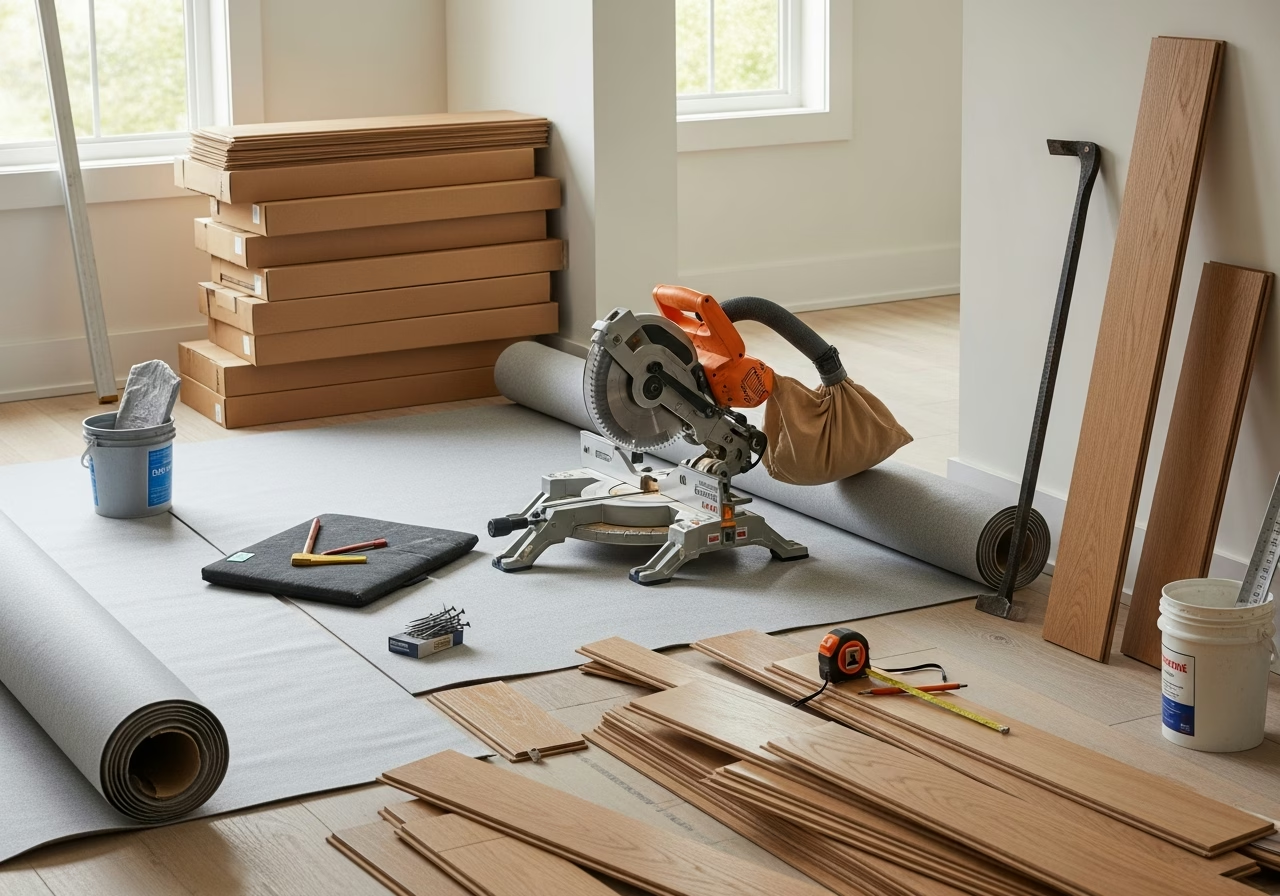
Material Costs
| Tier | Engineered Hardwood (CAD/sqft) | Laminate (CAD/sqft) |
|---|---|---|
| Budget | $4.00–$6.00 | $1.50–$3.00 |
| Mid-range | $6.00–$10.00 | $3.00–$5.00 |
| Premium | $10.00–$15.00+ | $5.00–$8.00 |
Installation Costs
| Service | Engineered (CAD/sqft) | Laminate (CAD/sqft) |
|---|---|---|
| Click-lock floating | $2.00–$4.00 | $1.50–$3.00 |
| Glue-down (engineered only) | $3.00–$5.00 | N/A |
| Nail-down (on plywood subfloor) | $3.00–$5.00 | N/A |
| Underlayment | $0.50–$1.00 | $0.30–$0.75 |
Total Installed
| Level | Engineered Hardwood | Laminate |
|---|---|---|
| Budget | $6.00–$10.00 | $3.00–$6.00 |
| Mid-range | $8.00–$14.00 | $4.50–$8.00 |
| Premium | $13.00–$20.00+ | $6.00–$10.00 |
---
Durability & Lifespan
Engineered Hardwood
- Lifespan: 20–50+ years (depending on wear layer thickness and maintenance).
- Scratch resistance: Moderate. Real wood surfaces scratch — that's the trade-off for natural beauty. Harder species (oak, hickory, maple) resist scratches better than softer species (walnut, cherry).
- Dent resistance: Moderate. Heavy impacts leave marks in real wood.
- Refinishing: The key advantage. When the surface shows wear, it can be sanded and refinished. A 4 mm wear layer allows 2–3 refinishes, effectively doubling or tripling the floor's life.
- Fading: Real wood changes colour with sunlight exposure — oak darkens, cherry deepens. Some people love this natural aging; others find it uneven (especially where rugs block light).
Laminate
- Lifespan: 10–25 years depending on wear rating.
- Scratch resistance: Superior to real wood. The melamine resin wear layer is harder than most wood species. Some products carry AC5 commercial ratings.
- Dent resistance: Very good. The HDF core resists impacts better than wood.
- Refinishing: Not possible. When laminate wears through the image layer, the floor must be replaced. Damaged boards can be individually replaced, but colour matching is difficult if the original product is discontinued.
- Fading: Resistant to UV fading — the printed image layer doesn't change colour over time.
Verdict
Laminate wins on day-to-day scratch and dent resistance. Engineered hardwood wins on total lifespan because it can be renewed through refinishing. If you have large dogs, active kids, or heavy traffic, laminate holds up better in the short term. If you're thinking long-term (20+ years), engineered hardwood is the better investment.
---
Moisture & Humidity
Toronto's climate creates a unique challenge: summer humidity can push indoor levels above 60%, while winter heating drops them below 25%. This seasonal swing expands and contracts flooring materials.
Engineered Hardwood
- Humidity tolerance: Good. The cross-ply construction resists expansion/contraction better than solid hardwood. Rated for 35–55% relative humidity.
- Water resistance: Poor. Standing water damages real wood — stains, swelling, and warping occur within hours. Not recommended for bathrooms or laundry rooms.
- Basement suitability: Possible with caveats. The concrete must test dry, and the space must be properly waterproofed. See our basement flooring guide for details.
Laminate
- Humidity tolerance: Moderate. HDF cores absorb moisture and can swell if humidity is consistently high. Standard laminate is not waterproof despite marketing claims.
- Water resistance: Traditional laminate swells permanently when water reaches the core through seams. "Waterproof laminate" products (with sealed seams and wax-treated cores) handle spills better but are not comparable to vinyl.
- Basement suitability: Not recommended unless using a waterproof-rated product with vapour barrier underlayment. For basements, LVP is the safer choice.
Verdict
Neither is waterproof. For moisture-prone areas (basements, kitchens, bathrooms), choose vinyl plank instead. For dry main-floor living areas with controlled humidity, both perform well in Toronto conditions.
---
Need professional flooring installation?
Call RenoHouse at 1-289-212-2345 or get a free estimate today.
Get Free Estimate →Look & Feel
This is where the real difference between these products becomes apparent.
Engineered Hardwood
- Visual: Real wood grain — because it is real wood. Every plank is unique with natural grain variations, knots, and colour shifts. Wide-plank white oak is currently the most popular choice in Toronto.
- Touch: Warm, solid, natural. Textured finishes (wire-brushed, hand-scraped) add tactile depth.
- Sound: Quiet and solid underfoot. Feels substantial — particularly glue-down or nail-down installations.
- Smell: New hardwood has a pleasant, subtle natural wood scent.
Laminate
- Visual: Printed photograph of wood. Modern laminate has improved dramatically — premium products are very convincing in photos and from standing height. But up close, the repeating pattern (every 6–10 planks) is visible, and the surface lacks the depth of real wood.
- Touch: Smooth, slightly plastic. You can feel it's not real wood, especially with bare feet. Textured laminate helps but doesn't fully replicate wood grain.
- Sound: Hollow. Click-lock laminate on an HDF core produces a distinctive "click" when walked on. Quality underlayment reduces this, but the hollow sound never fully disappears.
- Smell: New laminate has a chemical off-gas smell that dissipates over days to weeks.
Verdict
Engineered hardwood wins decisively on look and feel. It's real wood — and you can see, feel, and hear the difference. Premium laminate narrows the gap, but the gap remains.
---
Resale Value
If you're renovating with future sale in mind, this matters:
Engineered Hardwood
Toronto real estate agents consistently list hardwood floors (engineered or solid) as a top-5 feature that buyers look for. "Hardwood throughout" appears in almost every premium listing. Engineered hardwood delivers the same perceived value as solid hardwood to buyers — most can't tell the difference.
Estimated value impact: Positive $5,000–$15,000 on a typical Toronto home sale.
Laminate
Laminate is viewed neutrally by most buyers — it doesn't hurt, but it doesn't excite. Experienced buyers and real estate agents can identify laminate, and while it's acceptable in a moderately priced home, it can detract from a premium listing.
Estimated value impact: Neutral to slightly negative vs. hardwood. No measurable positive impact on sale price.
Verdict
If resale value matters, engineered hardwood is the better investment. The cost difference often pays for itself at sale — particularly in Toronto's competitive market where hardwood is a buyer expectation.
---
Which Is Best for Your Home?
Choose Engineered Hardwood When:
- ✅ You want the look and feel of real wood
- ✅ Resale value matters
- ✅ You plan to stay 10+ years (and will benefit from refinishing)
- ✅ You have a generous renovation budget
- ✅ You're installing in living rooms, dining rooms, and bedrooms
- ✅ You want to match existing hardwood elsewhere in the home
Choose Laminate When:
- ✅ Budget is the primary consideration
- ✅ You have large dogs or very active children (better scratch resistance)
- ✅ The space is a rental property (cost-effective and easily replaced)
- ✅ You're renovating a secondary area (playroom, home office)
- ✅ Short-term renovation (selling in 2–5 years — the cost savings outweigh the resale difference)
Choose Neither When:
- ❌ The area is moisture-prone (bathroom, laundry, kitchen) → choose LVP
- ❌ You're finishing a basement → choose LVP or porcelain tile
- ❌ You want maximum durability with zero maintenance → choose porcelain tile
---
FAQ
Is engineered hardwood worth the extra cost over laminate?
Yes, for most Toronto homeowners. The real-wood surface, refinishing ability, and positive impact on resale value justify the higher cost — especially in the main living areas of your home. The exception is budget renovations, rental properties, and secondary spaces where laminate's lower cost and scratch resistance make it the practical choice.
Can laminate look as good as engineered hardwood?
Premium laminate is visually impressive from standing height and in photos. Up close, the difference is noticeable — laminate lacks the natural grain depth, individual plank uniqueness, and tactile warmth of real wood. Most Toronto buyers and real estate agents can identify the difference.
How long does engineered hardwood last vs laminate?
Engineered hardwood lasts 20–50+ years because it can be refinished when the surface wears down. Laminate lasts 10–25 years before it needs full replacement. Over a 30-year period, one engineered hardwood floor with one refinish ($3–6/sqft) costs less than two laminate installations.
Can you put engineered hardwood in a basement?
Yes, with caveats. The basement must be properly waterproofed, the concrete slab must pass a moisture test, and you must accept that a flood event means replacement. For most Toronto basements, vinyl plank is the safer and more cost-effective choice.
Does engineered hardwood increase home value more than laminate?
Yes. Engineered hardwood adds an estimated $5,000–$15,000 to a typical Toronto home sale, comparable to the impact of solid hardwood. Laminate has a neutral to slightly negative impact on perceived home value. For homeowners in Toronto's competitive real estate market, this difference often justifies the cost premium.
Sources & References
Authoritative sources cited in this guide:
- Ontario Building Code 9.30 — Flooring standards
- ENERGY STAR Canada — Underlay efficiency
Continue Reading
- Home Flooring Guide Toronto
- Flooring Guide Toronto— Types, Costs, Installation & Best Options
- Engineered Hardwood Flooring Guide Toronto
Related Services