RenoHouse

Hardwood floors are one of Toronto's most valued home features — and one of the most common. From century homes in The Annex and Cabbagetown to 1970s-era splits in Scarborough and Etobicoke, hardwood has been Toronto's default flooring material for generations. The good news: unlike other flooring types, hardwood can be brought back to life through refinishing. For a full comparison of all flooring options, see our Complete Home Flooring Guide Toronto 2026.
Refinishing your existing hardwood is almost always cheaper and faster than replacing it — and with the right contractor, the result looks brand new. This guide covers real 2026 costs, the step-by-step process, finish options, and how to know when refinishing isn't enough.
---
How Much Does Refinishing Cost?
Hardwood floor refinishing in Toronto costs $3.00 to $6.00 per square foot in 2026, depending on the condition of the floors, the finish you choose, and the contractor's experience.
Cost Breakdown
| Service | Cost/Sq Ft (CAD) |
|---|---|
| Basic refinish (sand, 1 coat stain, 2 coats poly) | $3.00–$4.50 |
| Premium refinish (sand, stain, 3 coats poly) | $4.00–$6.00 |
| Dustless refinishing | $4.50–$7.00 |
| Oil finish (Rubio Monocoat or similar) | $5.00–$8.00 |
| Staircase refinishing | $25–$50 per step |
| Board replacement (damaged sections) | $8–$15 per sqft |
Total Project Cost Examples
| Home Area | Square Footage | Estimated Cost (CAD) |
|---|---|---|
| Condo (1-bed) | 500–700 sqft | $1,500–$4,200 |
| Townhouse (main floor) | 600–900 sqft | $1,800–$5,400 |
| Detached (main + upper) | 1,200–2,000 sqft | $3,600–$12,000 |
What Affects the Price
- Condition: Heavily damaged floors with deep scratches, stains, or warping require more sanding passes and possibly board replacement.
- Species: Softer woods (pine, fir — common in older Toronto homes) need gentler sanding and more care. Harder woods (oak, maple) are more forgiving.
- Stain colour changes: Going from dark to light (or vice versa) requires deeper sanding to remove the existing stain.
- Access difficulty: Tight rooms, closets, stairs, and areas around fireplaces increase labour time.
- Floor area: Larger projects get better per-sqft pricing due to setup efficiency.
---
The Refinishing Process
A professional hardwood floor refinish follows these steps:
Step 1: Preparation (Day 1 Morning)
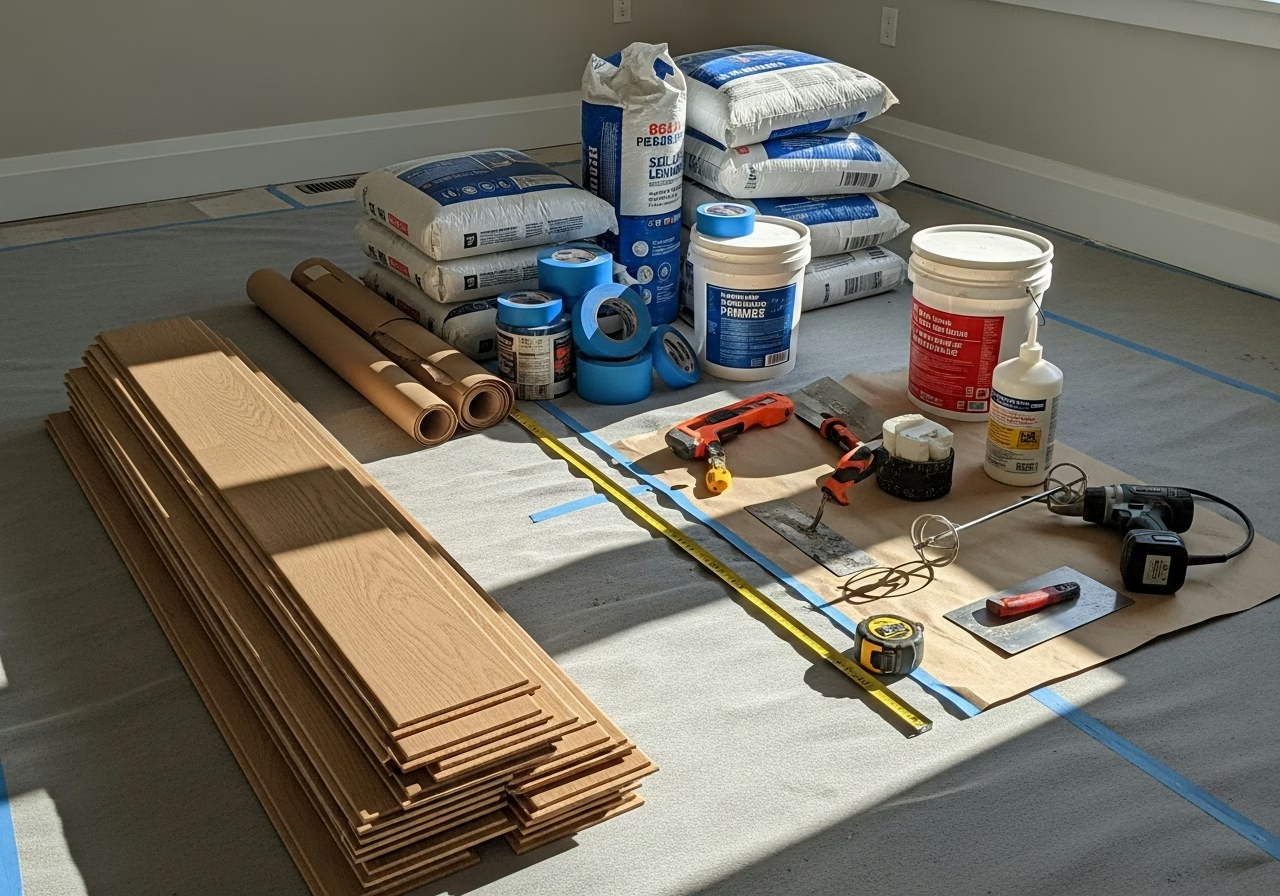
- Move all furniture out. Remove or protect baseboards. Counter-sink protruding nails.
- Seal doorways with plastic sheeting to contain dust.
Step 2: Sanding (Day 1)
Three progressively finer grits (36→60→100+) remove old finish and create a smooth surface. Edge sander handles perimeter; hand scraper works corners.
Step 3: Staining (Day 1–2)
If you're changing the colour, stain is applied after sanding. The stain penetrates the raw wood, giving it the desired tone. Common choices in Toronto homes:
- Natural: No stain — showcases the wood's natural colour. Popular for white oak.
- Golden/honey: Classic warm look. Common in 1990s-era Toronto homes.
- Grey/weathered: Modern trend, especially in downtown condos.
- Dark walnut/espresso: Rich, dramatic look. Hides imperfections well.
- Custom mix: A good refinisher can blend stains to match a specific colour.
Stain dries for 4–8 hours before the first coat of finish.
Step 4: Finishing (Day 2–3)
Two to three coats of finish are applied, with light sanding (screening) between coats. Each coat dries for 2–4 hours before the next is applied.
Step 5: Curing (Day 3–5)
The floor is walkable in socks after the final coat dries (typically 24 hours). Full cure — when you can place furniture and rugs — takes 3 to 5 days for polyurethane and up to 7 days for oil finishes. Avoid shoes, heavy furniture, and area rugs during the curing period.
Need professional flooring installation?
Call RenoHouse at 1-289-212-2345 or get a free estimate today.
Get Free Estimate →Total Timeline
Expect the area to be off-limits for 3 to 5 days from start to furniture replacement. Plan accordingly — many Toronto homeowners schedule refinishing during a vacation or stay with family.
---
Oil vs Polyurethane
This is the biggest decision you'll make after choosing to refinish. Both have devoted fans — here's the honest comparison.
Polyurethane (Water-Based)
- Appearance: Clear, glossy to satin finish. Does not yellow over time (unlike oil-based poly).
- Durability: Creates a hard plastic film on the surface. Excellent scratch and wear resistance.
- Drying time: 2–4 hours between coats. Full cure in 3–5 days.
- Odour: Low VOC. Minimal odour during application.
- Maintenance: Easy — sweep and damp mop. The surface film repels moisture and stains.
- Repair: Difficult. Scratches through the finish show as white marks. Spot repair is not seamless — eventually the entire floor needs re-sanding and recoating.
- Cost: $3.00–$6.00/sqft (standard refinishing option).
Oil-Based Polyurethane
- Appearance: Warmer, amber tone that deepens over time. Traditional hardwood look.
- Drying time: 8–24 hours between coats. Full cure 5–7 days.
- Odour: Strong VOC — ventilation essential. Cost similar to water-based.
Hardwax Oil (Rubio Monocoat, Osmo)
- Appearance: Matte, natural look. The wood feels like wood — no plastic film.
- Durability: Penetrates the wood rather than sitting on top. Less scratch-resistant than poly, but damage is less visible.
- Maintenance: Requires periodic refreshing (every 1–3 years in high-traffic areas). Spot repair is possible — just reapply oil to the affected area. No full re-sand needed.
- Odour: Very low VOC. Environmentally friendly.
- Repair: The biggest advantage. Scratches and wear marks can be fixed locally without refinishing the entire floor.
- Cost: $5.00–$8.00/sqft. Higher upfront, but ongoing maintenance is simpler and cheaper.
Which to Choose?
| Priority | Best Choice |
|---|---|
| Maximum durability, low maintenance | Water-based polyurethane |
| Traditional warm look | Oil-based polyurethane |
| Natural feel, easy spot repair | Hardwax oil |
| Low odour / eco-friendly | Water-based poly or hardwax oil |
| Budget | Water-based polyurethane |
---
Dustless Refinishing
Traditional sanding generates enormous amounts of fine wood dust. "Dustless" refinishing uses industrial vacuum systems attached directly to the sanding equipment, capturing 95–99% of dust at the source.
Advantages
- Dramatically less mess: No dust coating every surface in your home.
- Healthier: Less airborne particulate for you and your family.
- Faster cleanup: The contractor finishes and leaves a clean workspace.
The Catch
- Not truly dustless: It's more accurately "dust-reduced." Some fine dust still escapes, particularly during edge sanding and hand scraping.
- Costs more: Expect a 25–40% premium over standard sanding ($4.50–$7.00/sqft vs. $3.00–$5.00/sqft).
- Not always necessary: If the area is empty and sealed off from the rest of the home, standard sanding with proper containment is perfectly fine.
Our Recommendation
For occupied Toronto homes — especially condos where dust spreads easily through HVAC systems — dustless refinishing is worth the premium. For vacant or fully contained spaces, standard sanding saves money without meaningful inconvenience.
---
How Many Times Can You Refinish?
This depends on the type and thickness of your hardwood:
- Solid hardwood (3/4" thick): Can be refinished 8 to 10 times over its lifetime. Each refinish removes approximately 1/32" of wood. With typical use, a 3/4" solid hardwood floor can last 100+ years with periodic refinishing.
- Engineered hardwood: Most products have a 2–4 mm wear layer on top, allowing 1 to 3 refinishes. Thinner wear layers (2 mm) may only support one careful sanding. Check the manufacturer's specifications. For more on engineered hardwood vs. other options, see our comparison guide.
- Thin solid hardwood (3/8"): Only 1 to 2 refinishes before the tongue-and-groove joint is compromised.
How to Tell If Your Floor Can Be Refinished
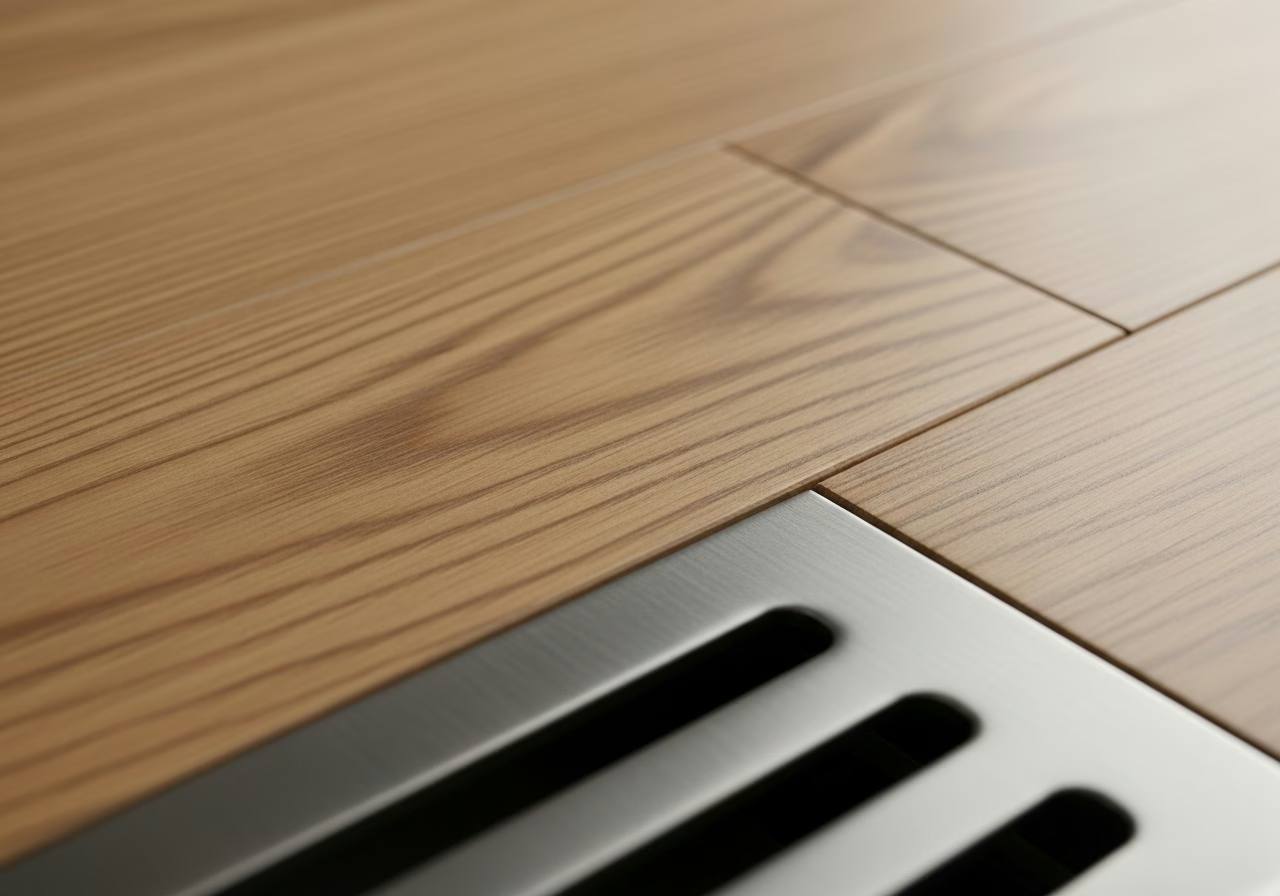
A simple test: remove a floor register (heat vent) and look at the cross-section of the flooring. If you can see significant wood thickness above the tongue, refinishing is safe. If the wear layer looks thin or the tongue is nearly exposed, consult a professional before committing.
---
When to Replace Instead
Refinishing isn't always the answer. Replace your hardwood when:
- 1. Structural damage: Boards are cupping, crowning, or buckling due to moisture damage. Sanding can flatten minor cupping, but severe warping indicates subfloor moisture problems that must be addressed — the boards need replacement.
- 2. Extensive water damage: Dark, blackened boards from prolonged water exposure are damaged beyond refinishing. The staining has penetrated deep into the wood grain.
- 3. Too many refinishes: The floor has been refinished so many times that the nails or tongue-and-groove joints are exposed. Further sanding would compromise the floor's structural integrity.
- 4. Species or style change: You want to switch from narrow-strip oak to wide-plank white oak, or from softwood pine to a harder species. Refinishing can change the colour but not the wood itself.
- 5. Subfloor issues: If the subfloor underneath is uneven, rotting, or compromised, the flooring should be pulled up, the subfloor repaired, and new flooring installed.
---
FAQ
How much does it cost to refinish hardwood floors in Toronto?
Hardwood floor refinishing in Toronto costs $3.00 to $6.00 per square foot CAD in 2026 for a standard sand-and-finish job. Dustless refinishing runs $4.50–$7.00/sqft. Oil finishes (Rubio Monocoat) cost $5.00–$8.00/sqft. A typical 1,000 sqft Toronto home costs $3,000–$6,000 for a full refinish.
How long does hardwood refinishing take?
The process takes 3 to 5 days from start to furniture replacement. Sanding takes 1–2 days, staining and finishing take 1–2 days, and curing requires 1–3 additional days. The area should be off-limits during this time.
Can you refinish hardwood floors without sanding?
"Screen and recoat" applies a new topcoat over the existing finish after a light abrasion (screening). It works only if the existing finish is in good condition with no deep scratches or bare spots. It costs about $2.00–$3.00/sqft and extends the finish life by 3–5 years. It's not a substitute for a full refinish on worn floors.
Is it worth refinishing hardwood floors before selling?
Yes. Freshly refinished hardwood floors are one of the highest-impact, lowest-cost improvements for Toronto home sellers. Real estate agents consistently rank refinished hardwood as a top "must-do" before listing. The $3,000–$6,000 cost typically returns 3–5x in perceived home value.
Sources & References
Authoritative sources cited in this guide:
- Ontario Building Code 9.30 — Flooring standards
- ENERGY STAR Canada — Underlay efficiency
Continue Reading
- Hardwood Floor Refinishing in Toronto: Process, Cost & Tips
- Hardwood Floor Refinish vs Replace: A Cost-Benefit Analysis for Toronto Homes
- Home Flooring Guide Toronto
Related Services