RenoHouse

# Floor Installation King City: 2026 Costs and What to Expect
Quick answer. Floor installation in King City runs $4–$18 per square foot installed in 2026, depending on material — vinyl plank on the low end, solid hardwood or large-format tile on the high end. King City homes are typically larger than the GTA average, so budgeting for the full project — including subfloor prep, trim work, and transitions — matters as much as the per-square-foot rate.What Floor Installation Costs in King City (2026 Prices)
King City sits in King Township, where homes frequently range from 2,000 to over 5,000 square feet. A mid-size family home with 1,500–2,000 sq ft of flooring can easily run $8,000–$30,000 depending on material, subfloor condition, and layout complexity. Here is how each material category breaks down across the GTA in 2026.
Vinyl plank (LVP) is the most affordable installed option. Expect $4–$7 per square foot for mid-grade LVP with a click-lock profile — including labour, underlayment, and transitions. Premium rigid-core LVP with a 6 mm or thicker wear layer sits at $6–$9 per square foot. For a full breakdown of LVP pricing across the GTA, see our vinyl plank flooring cost guide. LVP handles King City's temperature swings well because it expands and contracts less than wood products.
Laminate runs $4–$7 per square foot installed for entry-level 8 mm boards, and $6–$9 for 12 mm AC4 or AC5 rated products. Laminate is sensitive to moisture, so it is a poor choice for basements or laundry areas unless paired with a vapour barrier and proper subfloor prep. If you are deciding between laminate and engineered hardwood, our engineered hardwood vs laminate comparison covers the trade-offs in detail.
Engineered hardwood sits at $8–$14 per square foot installed for domestic species like maple or white oak in 5-inch widths. Wide-plank formats (6 inches and up) or exotic species push into the $12–$18 range. Engineered hardwood is the preferred wood product for King City homes with in-floor radiant heating because of its dimensional stability.
Solid hardwood costs $10–$18 per square foot installed, with white oak, hard maple, and walnut being most common in King Township homes. Solid hardwood requires 3–5 days of acclimation in the space before installation and cannot be used below grade.
Porcelain and ceramic tile run $10–$18 per square foot installed for standard 12x24 or 24x24 formats with a simple grid layout. Large-format tile (48x24 or larger) and herringbone patterns add $3–$6 per square foot in labour. Adding a heated mat or hydronic system under tile adds $12–$20 per square foot for the system itself — separate from tile and installation costs. See our heated floor installation cost breakdown for a full picture of what radiant systems cost in the GTA.
Need professional renovation?
Call RenoHouse at 289-212-2345 or get a free estimate today.
Get Free Estimate →| Material | Installed Cost (2026 GTA) | Best For |
|---|---|---|
| Vinyl Plank (LVP) | $4–$9/sq ft | Basements, high-traffic areas, rental units |
| Laminate | $4–$9/sq ft | Bedrooms, low-moisture living spaces |
| Engineered Hardwood | $8–$14/sq ft | Main floors, rooms with radiant heat |
| Solid Hardwood | $10–$18/sq ft | Main floors, above-grade only |
| Porcelain Tile | $10–$18/sq ft | Kitchens, bathrooms, mudrooms |
| Heated Tile Floor | Add $12–$20/sq ft | Bathrooms, foyers, primary suites |
Subfloor leveling is a common add-on in King City, especially in homes built before 2000 where settling or OSB panel edges create humps and dips. Leveling with self-leveling compound typically adds $2–$5 per square foot for moderate issues. Subfloor replacement — removing and replacing damaged plywood or OSB — runs $3–$6 per square foot in combined material and labour.
How Floor Installation Works in King City: Step by Step
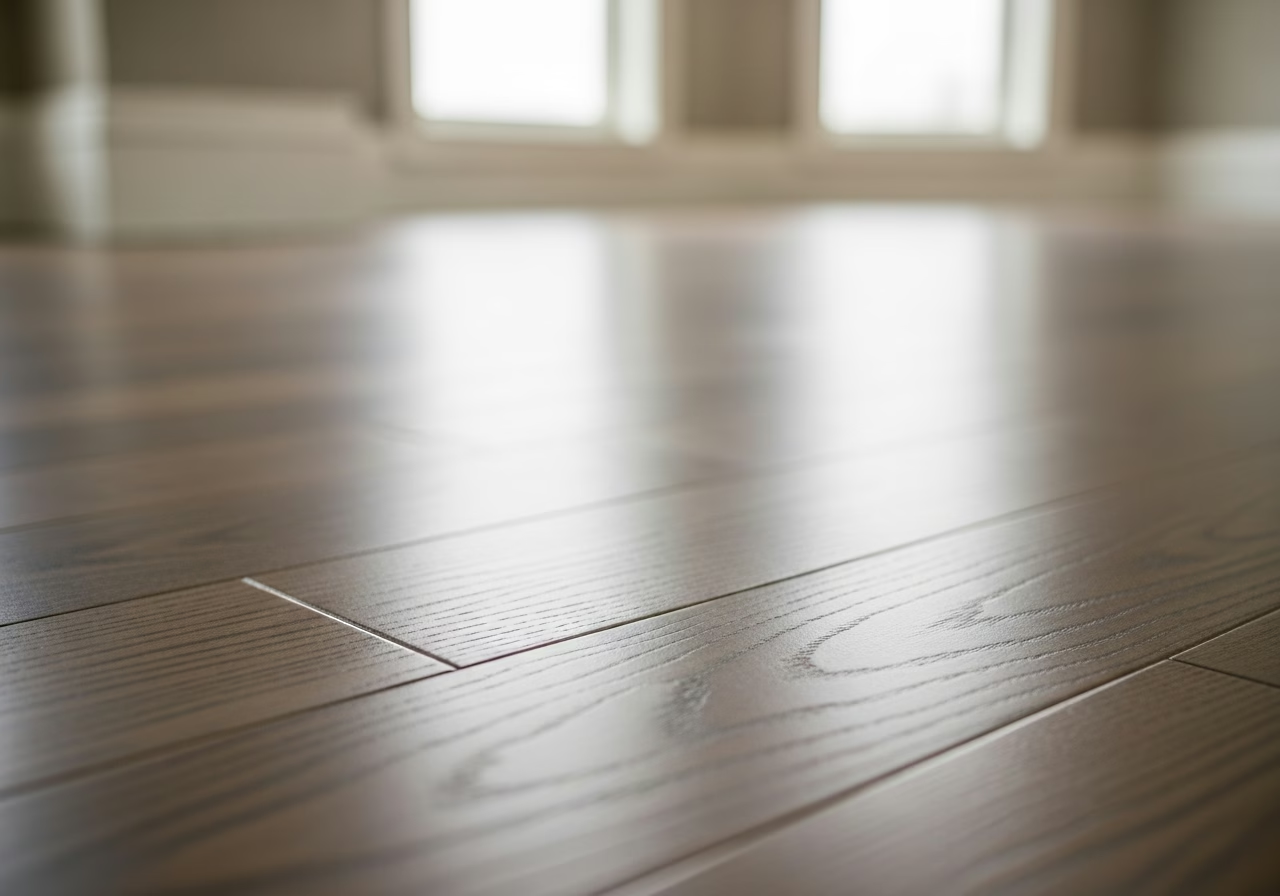
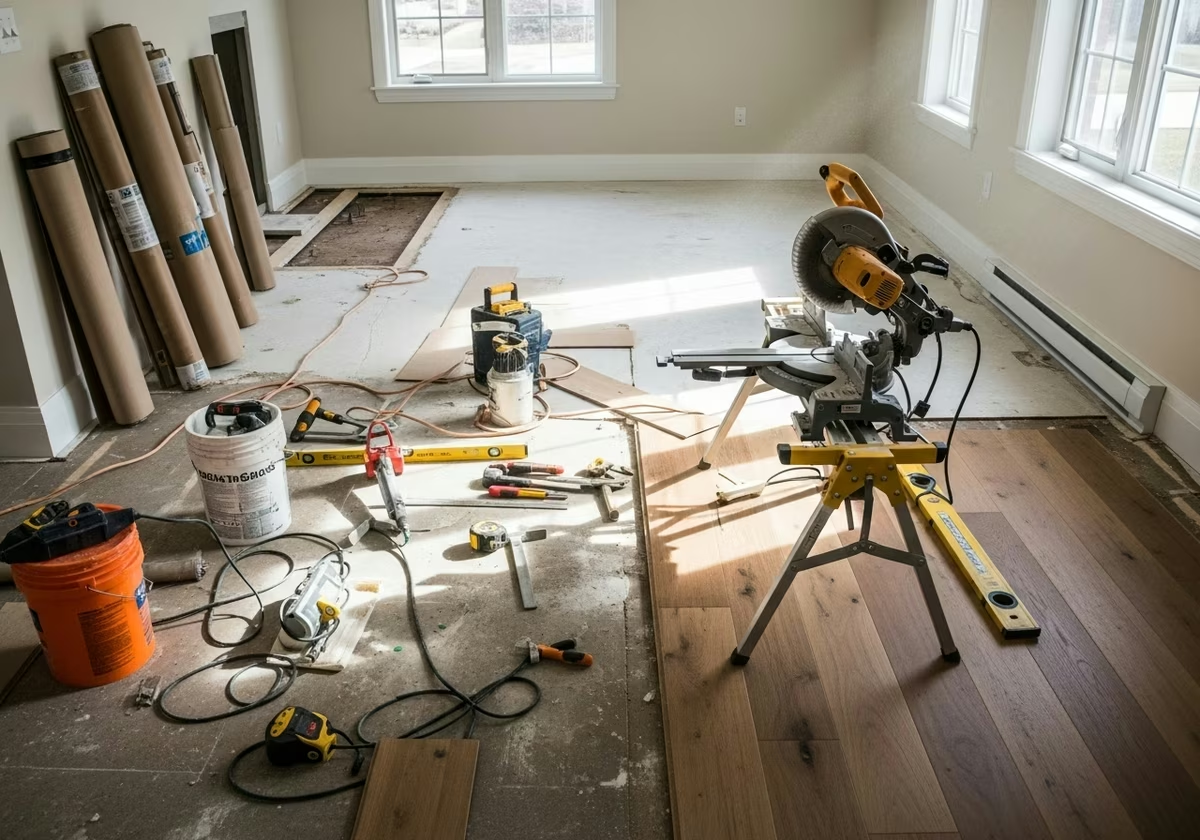
A professional floor installation follows a consistent process. Understanding each phase helps homeowners prepare the space, avoid delays, and know what they are paying for.
Step 1: Site assessment and moisture testing. A flooring contractor visits the property to measure the area, check subfloor condition, and take moisture readings. Moisture levels above 3 lbs per 1,000 sq ft on a calcium chloride test can disqualify some hardwood products and require moisture mitigation before installation proceeds. Step 2: Material acclimation. Solid hardwood and some engineered products need 3–5 days inside the home to reach equilibrium moisture content with the surrounding air. LVP and laminate generally need 24–48 hours. Skipping this step leads to gapping or buckling after installation — a common problem when flooring is delivered on a cold truck and installed during a dry winter heating season. Step 3: Subfloor preparation. The subfloor must be flat to within 3/16 of an inch over 10 feet for floating floors, and 1/8 of an inch for glued or nailed hardwood. High spots are ground down; low spots are filled with self-leveling compound. Damaged OSB or plywood panels are replaced before any flooring goes down. Step 4: Installation. LVP and laminate use a floating click-lock method — boards are not attached to the subfloor and expand and contract as a single assembly. Engineered hardwood can be floated, stapled and nailed, or glue-down depending on the subfloor type and radiant heat setup. Solid hardwood is nailed or stapled through plywood. Tile is set in thinset mortar with grout applied after a minimum 24-hour cure. Step 5: Trim and transitions. Quarter round or shoe moulding covers the expansion gap along walls. Transition strips bridge doorways between different flooring types or heights. This finish work is included in most contractor quotes but worth confirming before signing. Permits and ESA requirements. Standard flooring replacement does not require a building permit in King Township or the City of Toronto. The exception is electric in-floor radiant heating: that electrical work requires a permit and must be completed by an ESA-certified electrician. Hydronic in-floor systems connected to a boiler may also require a mechanical permit. Confirm requirements with King Township's building department before starting any heated-floor project.Choosing the Right Flooring for King City Homes
King City homes face specific conditions: cold winters with forced-air or radiant heat that drops indoor humidity, hot humid summers, and often large open-plan layouts where flooring runs continuously across multiple zones. Material choice matters more in these conditions than in smaller, more climate-controlled urban settings.
LVP is the most dimensionally stable material for Ontario's climate. It tolerates humidity swings from 20% in winter to 70% in summer without gapping or cupping. It is the default choice for basements, mudrooms, and any space with potential moisture exposure. The trade-off is tactile quality — LVP does not replicate the sound or warmth of real wood underfoot, and lower-end products can feel hollow when walked on.
Engineered hardwood is the best-balanced option for King City main floors. A 3-ply or 5-ply engineered board is dimensionally stable enough to handle radiant heat and seasonal humidity changes while looking and feeling like solid wood. It can be refinished once or twice over its lifespan, unlike LVP or laminate. For wide-plank white oak in a King City home, expect to pay $11–$15 per square foot installed. If existing hardwood is worn but structurally sound, refinishing at $3–$5 per square foot is often the better investment — see our hardwood floor refinishing cost breakdown for detail.
Solid hardwood remains appropriate for King City above-grade rooms with stable, conventional HVAC systems. It is not recommended for homes with in-floor radiant heat or for rooms that face prolonged direct southern sun exposure without UV-blocking window film.
Large-format matte porcelain tile — 24x48 or larger — is the current standard in high-end King City foyers and mudrooms. Paired with an electric heated mat, it creates a functional and durable entry that holds up through Ontario winters without absorbing salt or moisture from boots.
Signs a floor needs replacement rather than refinishing. Boards that are cupping (edges raised above the centre), deep gouges below the wear layer, persistent gapping that returns after seasonal adjustment, or squeaking that does not resolve after subfloor fastening all indicate that replacement makes more economic sense. Refinishing solid hardwood is cost-effective when surface damage is above the wood fibre. When boards are excessively thin from prior sandings or structurally compromised, replacement is the right call.Frequently Asked Questions
How long does floor installation take in a King City home?
A 1,000 sq ft LVP or laminate installation takes 1–2 days. Engineered hardwood over the same area runs 2–3 days, including acclimation time. Solid hardwood with sand and finish takes 5–7 days from delivery to final coat. Large-format tile — common in King City foyers and kitchens — takes 3–5 days including thinset cure time. Subfloor issues can add 1–2 days to any project, which is why moisture testing and subfloor assessment happen before materials are ordered.
Do I need a permit for floor installation in King City?
Standard flooring replacement does not require a permit from King Township or the City of Toronto. Electric in-floor heating is the exception: that electrical work requires a permit and must be done by an ESA-certified electrician. Hydronic radiant systems tied to an existing boiler may also need a mechanical permit. Contact King Township's building department at (905) 833-5321 to confirm before starting any heated-floor work.
Can engineered hardwood be installed over radiant heat?
Yes, with conditions. The surface temperature of radiant systems must not exceed 27°C for most engineered hardwood products. The subfloor must be flat and moisture levels verified before installation begins. A floating installation is generally preferred over glue-down for radiant heat applications because it allows for minor movement. Always confirm the specific product's radiant-heat compatibility with the manufacturer before purchasing the flooring.
How do I compare flooring contractors in King City?
Ask for a written quote that breaks out material, labour, subfloor prep, and trim costs separately. Verify WSIB coverage and general liability insurance. Confirm whether the contractor pulls electrical permits for heated-floor work — skipping permits transfers legal risk to the homeowner. Reviews specific to King City, Aurora, Newmarket, or Vaughan are more useful than aggregated GTA ratings. RenoHouse carries all required licences and insurance and has served York Region and the broader GTA for 12-plus years, holding a 4.9-star rating from over 498 verified reviews.
Need a quote in the GTA?
RenoHouse installs all flooring types across King City, Vaughan, Richmond Hill, Aurora, Newmarket, Caledon, and the rest of the GTA. Call 289-212-2345 or submit a free quote request on this site to book a site assessment — typically scheduled within 48 hours. A written, itemized estimate for your floor installation project costs nothing.