RenoHouse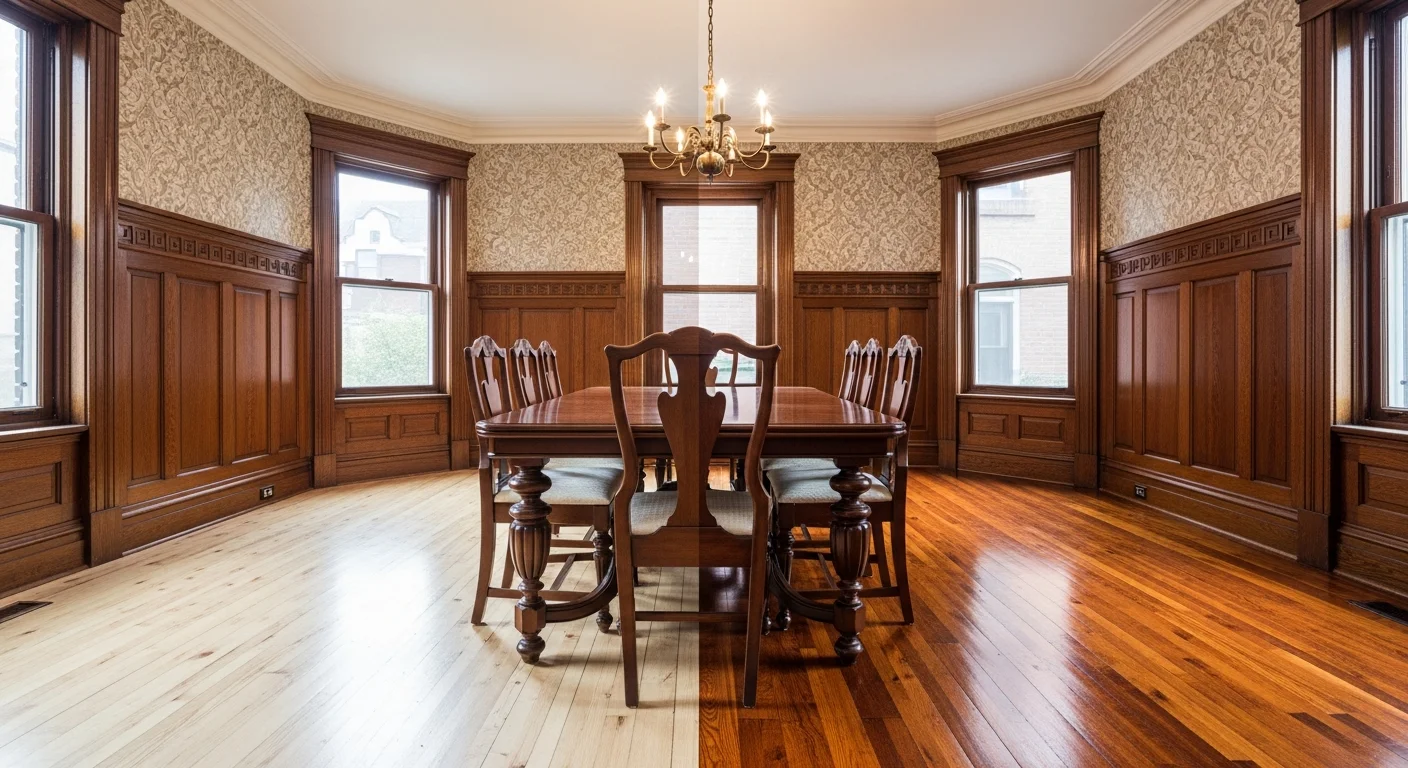

Hardwood Floor Refinish vs Replace: A Cost-Benefit Analysis for Toronto Homes
There's nothing quite like the warmth and character of real hardwood floors. They’re a hallmark of quality in Toronto homes, from century-old Victorians in Cabbagetown to mid-century bungalows in Etobicoke. But over time, life happens. Scratches from pets, dents from dropped toys, and the slow fade from sunlight can leave them looking tired.
This leads to one of the most common questions we get at RenoHouse: should I refinish or completely replace my hardwood floors? It’s a significant decision. The answer isn't always straightforward, but the financial implications are massive. A full replacement can cost more than three times as much as refinishing. In many cases, refinishing can save you up to 70% and deliver a floor that looks brand new.
This guide is our honest, contractor-to-homeowner breakdown. We'll walk you through the costs, the critical factors to assess, and the pros and cons of each option, specifically for the Greater Toronto Area market.
The Financial Breakdown: Refinish vs. Replace Costs in the GTA
Let's get straight to the point: money. The cost difference is the single biggest factor for most homeowners. Here’s a realistic look at what you can expect to pay per square foot in Toronto and the surrounding areas.
| Service | Average Cost per sq. ft. (GTA) | What's Included | Best For |
|---|
| Hardwood Refinishing | $3.50 - $5.00 | Sanding, minor repairs, staining (optional), 2-3 coats of professional finish. | Floors with surface-level wear, scratches, fading. Structurally sound wood. |
| Hardwood Replacement | $9.00 - $14.00+ | Tear-out & disposal of old flooring, new hardwood material, installation, finishing. | Severely damaged floors (water, warping), thin engineered wood, or a desire for a completely new style. |
As you can see, for a 1,000-square-foot space, you’re looking at roughly $4,000 for refinishing versus $11,500 for replacement. That $7,500 difference is significant—it could cover a full bathroom refresh or a new set of high-end kitchen appliances.
The key is determining if your floors are a good candidate for the more affordable option.
Critical Factor #1: What Kind of Hardwood Do You Have?
Before we can even talk about damage, we need to know what we're working with. The construction of your hardwood is the most important factor in determining if it can be refinished.
Need professional renovation?
Call RenoHouse at 1-289-212-2345 or get a free estimate today.
Get Free Estimate →Solid 3/4" Hardwood
This is the classic. Each plank is a solid piece of wood, typically 3/4 of an inch thick. This is the champion of refinishing.
- Sanding Life: Can be sanded and refinished multiple times, often 5 to 7 times over its lifespan.
- How to Check: Carefully remove a floor vent or a threshold trim piece. You should be able to see the cross-section of the plank and measure its thickness.
Engineered Hardwood
Engineered hardwood consists of a multi-ply base with a thin top layer (veneer) of real hardwood. It's stable and versatile, but its refinishing potential is limited by that top layer.
- Sanding Life: Depends entirely on the thickness of the veneer. High-quality engineered floors might have a 3-4mm veneer, allowing for 1, maybe 2, refinishes. Cheaper products might have a veneer as thin as 1mm, which cannot be safely sanded at all.
- The Credit Card Test: A good rule of thumb is to see if the top wood layer is thicker than a credit card. If it is, you can likely get one refinish out of it. If it's paper-thin, replacement is your only option.
If you have solid hardwood, you’re likely in a good position to save money. If you have engineered, a professional assessment from our hardwood flooring team is essential.
Critical Factor #2: Evaluating the Damage
Once you know your floor type, it's time to play detective. The type and severity of the damage will dictate the path forward.
- Surface Scratches: The kind of light scratches from pet claws or furniture being dragged. These exist only in the top finish layer and are easily sanded away.
- Fading & Discolouration: Areas faded by UV light from a window or discoloured under an old area rug will look uniform and new after sanding and a fresh coat of finish.
- Minor Dents and Dings: Everyday wear and tear that hasn't deeply crushed the wood grain can be sanded smooth.
- Finish Wear-Through: High-traffic areas where the protective finish has worn away, leaving the wood dull but not deeply stained.
- Severe Water Damage: This is the number one enemy of hardwood. A leaky radiator in a Riverdale semi or a dishwasher flood can cause the wood to cup (edges rise), crown (centre rises), or turn permanently black. This black staining is often mould and rot that has penetrated deep into the wood fibres, far below what can be sanded off.
- Deep Pet Stains: Urine contains ammonia, which chemically burns the wood and soaks deep into the grain. Like water damage, these deep black or grey stains are almost always permanent.
- Widespread Structural Issues: If you have significant gaps between boards (more than the width of a dime), severe warping, or extensive squeaking, it may point to subfloor issues or improper installation. While a few boards can be replaced, widespread problems often make a full replacement more practical.
- Deep Gouges: A single deep gouge can sometimes be filled or repaired by replacing a single board, but if there are many, the floor may be too damaged to salvage effectively.
The Refinishing Process: What to Expect
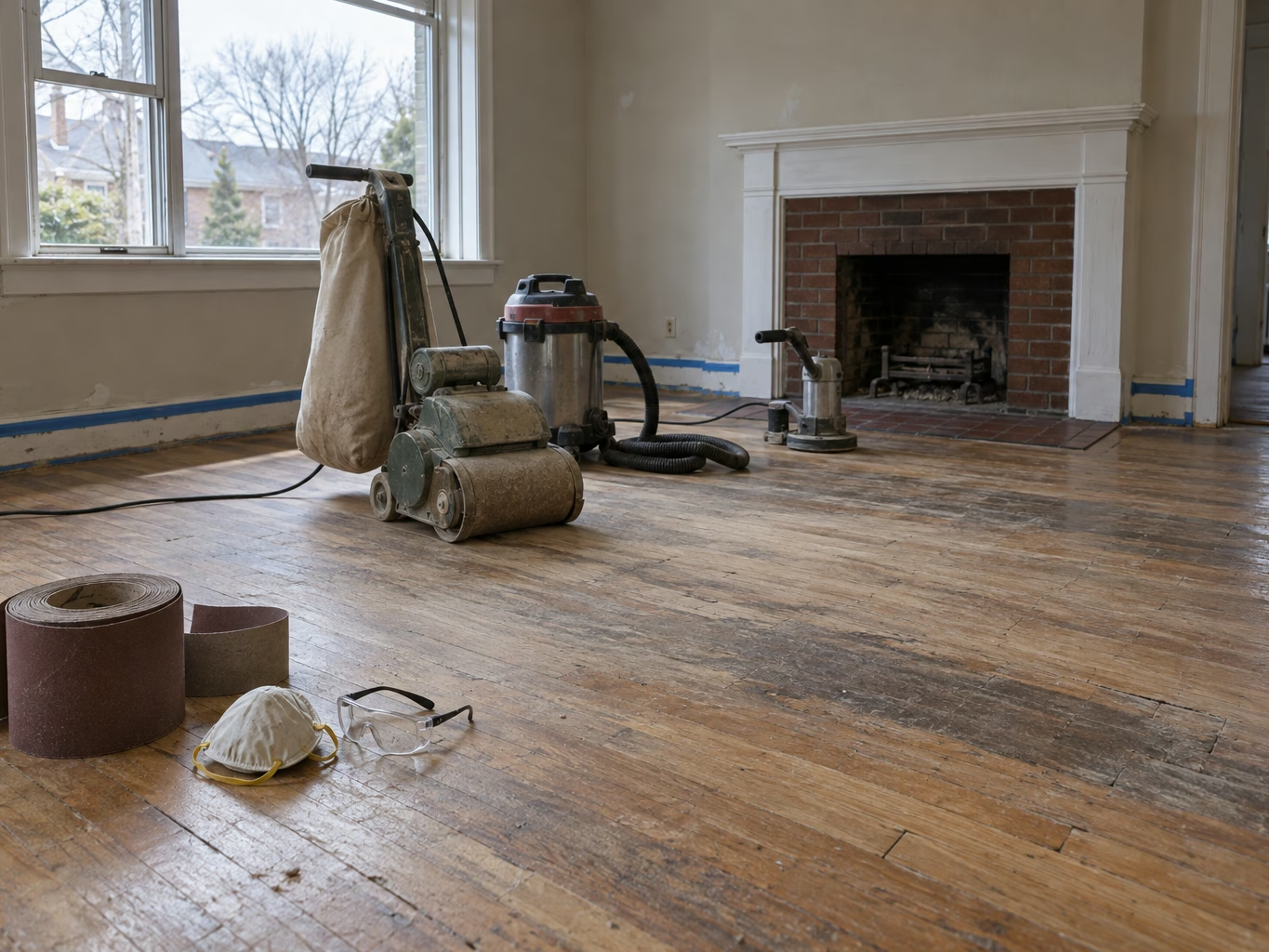
If your floors are a good candidate, the transformation is remarkable. Professional hardwood floor refinishing in Toronto is a multi-step process that requires precision and the right equipment.
- 1. Preparation: All furniture is removed. Baseboards and trim are often removed or carefully protected.
- 2. Sanding: This is the most critical phase. We use professional-grade sanders with dust containment systems to minimize mess. The process starts with a coarse-grit sandpaper to remove the old finish and level the floor, followed by progressively finer grits (e.g., 40, 60, 80, 100) to create a perfectly smooth surface.
- 3. Staining (Optional): If you want to change the colour of your floors, a stain is applied after sanding. This is your chance to go from a dated golden oak to a modern grey or a rich dark walnut.
- 4. Finishing: Several coats of professional-grade polyurethane are applied. This is the protective layer that stands up to foot traffic and spills. Each coat is lightly abraded or 'screened' to ensure the next coat adheres properly.
The Finish Showdown: Bona Traffic HD vs. Oil-Based Polyurethane
Not all finishes are created equal. The choice of topcoat dramatically affects durability, appearance, and your family's convenience. We almost exclusively recommend modern water-based finishes like Bona Traffic HD, but it's important to understand the options.
| Feature | Bona Traffic HD (Water-Based) | Traditional Oil-Based Polyurethane |
|---|
| VOCs & Odour | Very Low | High, strong solvent smell |
| Dry/Cure Time | Dries in 2-3 hours. Light foot traffic in 24 hrs. Furniture back in 3-4 days. | Dries in 8-12 hours. Can take 30 days to fully cure. Lingering odour. |
|---|
| Appearance | Crystal clear, non-yellowing. Preserves the natural colour of the wood. | Ambers over time, giving wood a warm, yellowish glow. |
|---|
| Durability | Exceptional. Commercial-grade resistance to scratches and chemicals. The 'Tesla' of finishes. | Very durable. The 'Ford F-150' of finishes. Can be more prone to scuffing. |
|---|
| Cost | Higher initial cost | Lower initial cost |
|---|
For families and anyone sensitive to chemical smells, the fast cure time and low VOCs of a product like Bona Traffic HD are game-changers. You can get back to living in your home much faster without the harsh fumes.
The RenoHouse Verdict: Our Honest Recommendation
For the vast majority of Toronto homes with original, solid hardwood, refinishing is the smartest investment you can make.
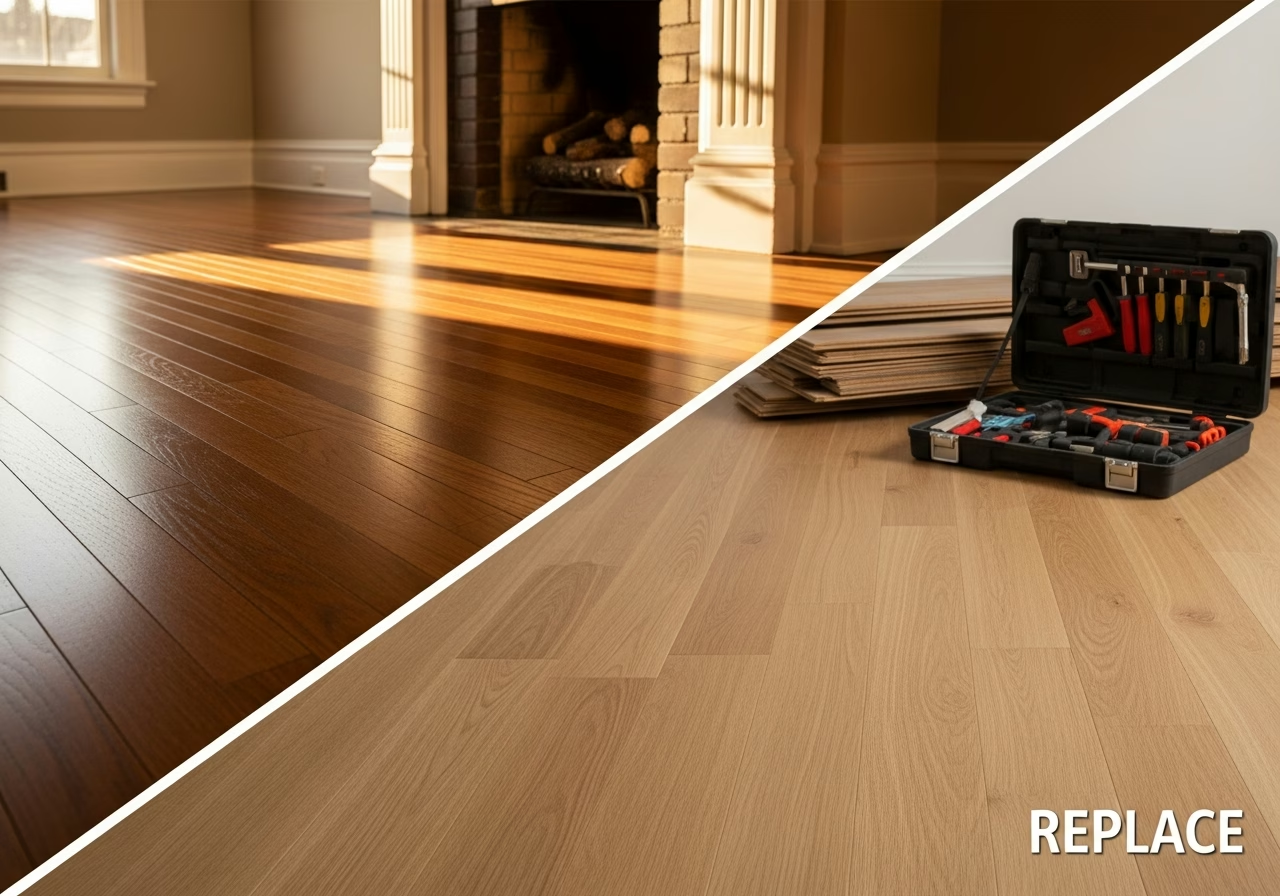
If your floors are structurally sound and free of deep, penetrating damage, you can achieve a factory-new look for a fraction of the cost and environmental impact of a full replacement. The money saved can be reallocated to other parts of your renovation, like a fresh coat of Benjamin Moore paint or upgrading your lighting.
Replacement becomes the necessary choice only when faced with the deal-breakers: a paper-thin engineered wear layer, extensive water damage, or a desire for a fundamental change in your flooring's style (e.g., switching from 2-inch strips to 7-inch wide planks).
The best way to know for sure is with a professional assessment. We can identify your wood type, measure its remaining thickness, and evaluate the damage to give you a clear, honest recommendation.
Ready to restore the beauty of your hardwood floors? Send us a few photos of your project via WhatsApp or our online form for a no-obligation quote, often within the hour. Let's see if we can save you thousands. Learn more about our detailed hardwood refinishing process and let us bring your floors back to life.