 RenoHouse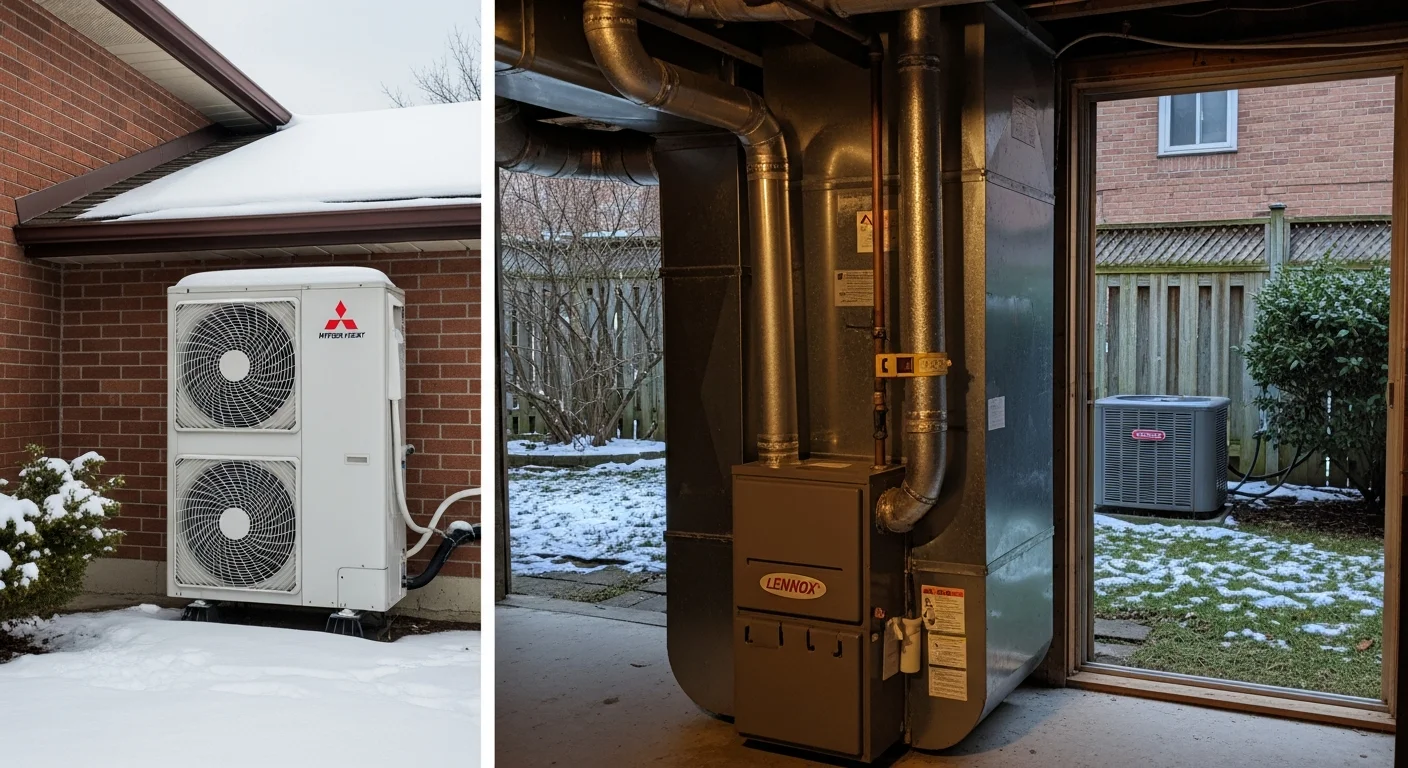

Heat Pump vs Furnace in Toronto: The Ultimate HVAC Showdown
If you're a Toronto homeowner, you know the drill. Our summers are sticky and hot, and our winters can be brutally cold. For decades, the go-to solution has been a reliable natural gas furnace paired with a central air conditioner. It's the system most of us grew up with. But there's a new contender that's changing the game entirely: the cold-climate heat pump.
The big question on everyone's mind is: heat pump vs furnace in Toronto—which is actually better? Is this new technology really up to the task of handling a -25°C cold snap in January? How do the costs stack up, especially with all the talk about government rebates?
As a contractor working on homes across the GTA, from post-war bungalows in Etobicoke to Victorian semis in Cabbagetown, we install both systems. We're not here to sell you one over the other; we're here to give you the straight goods so you can make the best decision for your home and your wallet.
What Exactly is a Cold-Climate Heat Pump?
First, let's clear up a common misconception. A heat pump isn't some magical new invention. In fact, you already have one in your home: your refrigerator. It's a device that moves heat from one place to another.
In the summer, a heat pump works exactly like a standard air conditioner. It pulls heat from inside your house and dumps it outside, leaving your home cool and comfortable.
In the winter, it does something amazing: it reverses the process. Even when it's freezing outside, there is still thermal energy in the air. The heat pump's outdoor unit absorbs this ambient heat and transfers it inside your home. It's not *creating* heat like a furnace does by burning fuel; it's *moving* existing heat, which is incredibly efficient.
The key here is the term "cold-climate." Older heat pumps struggled when temperatures dropped below freezing. But modern units, like the Mitsubishi Zuba (with Hyper-Heat technology) or the Daikin Atmosphera series, are engineered specifically for Canadian winters. These systems can operate at 100% heating capacity down to -15°C and continue to provide efficient heat well below -25°C. The myth that heat pumps don't work in Canada is officially busted.
The Tried-and-True: The Gas Furnace + Central AC Combo
This is the system we all know. A high-efficiency gas furnace, often from trusted brands like Lennox or Carrier, is installed in your basement. It burns natural gas to create very hot air, which is then distributed through your home's ductwork. It's powerful, reliable, and delivers that familiar blast of hot air on a cold day.
Paired with it is a separate central air conditioner unit that sits outside your home. It's a completely independent system that handles the cooling during the summer months.
This two-part system has been the undisputed king of Toronto HVAC for a long time for a reason: it works, and it works well. But the landscape is changing, and what was once the default choice now has a serious competitor.
Upfront Installation Costs: A Head-to-Head Comparison
Let's talk numbers. This is where most homeowners start, and the initial figures can be misleading if you don't have the full picture. The following are typical, all-in costs for a standard 1,500-2,000 sq. ft. home in the GTA.
| System Configuration | Typical All-In Installation Cost (GTA) | Notes |
|---|---|---|
| High-Efficiency Gas Furnace + Central AC | ~$15,000 ($9,000 furnace + $6,000 AC) | Two separate pieces of equipment. Standard, reliable setup. |
| Cold-Climate Air-Source Heat Pump | ~$13,000 - $18,000 | Single integrated system for heating and cooling. Price varies by brand and capacity. |
At first glance, it looks like the traditional setup might be slightly cheaper or on par. A new furnace installation in Toronto combined with an AC seems straightforward. But this is only half the story.
The Game Changer: The Greener Homes Grant & Rebates
This is where the math gets completely flipped on its head. To encourage Canadians to switch to more energy-efficient systems, the federal government, in partnership with provincial bodies like Enbridge Gas (through the Home Renovation Savings Program in Ontario), is offering substantial rebates.
Need professional renovation?
Call RenoHouse at 1-289-212-2345 or get a free estimate today.
Get Free Estimate →
Let's re-run the numbers with the former grant applied, for comparison:
- Furnace + AC Cost: $15,000 - $0 in major rebates = $15,000
- Heat Pump Cost: $13,000 - $6,500 rebate = $6,500
Suddenly, the high-tech, ultra-efficient heat pump is less than half the price of the traditional system. This rebate makes the decision a financial no-brainer for many homeowners. To qualify, you need to have a pre- and post-retrofit energy audit conducted by a registered energy advisor, but the process is straightforward and we can help guide you through it.
Operating Costs: Natural Gas vs. Electricity in Toronto
Upfront cost is one thing, but what will you pay on your monthly bills? This is a more complex comparison, but it's crucial.
- Natural Gas: It's historically cheap in Ontario. A high-efficiency furnace (96% AFUE) is very good at turning that gas into heat.
- Electricity: The per-unit cost is higher than gas. However, a heat pump's efficiency is its superpower.
Instead of measuring efficiency in percentages, heat pumps are rated by a Coefficient of Performance (COP). A COP of 3.0 means that for every 1 kilowatt-hour (kWh) of electricity it consumes, it *moves* 3 kWh worth of heat energy into your home. It's over 100% efficient—in fact, it's often 250-350% efficient even in cold weather.
| Factor | Gas Furnace | Cold-Climate Heat Pump |
|---|---|---|
| Fuel | Natural Gas | Electricity |
| Efficiency | ~96% | 200-400% (COP of 2.0-4.0) |
| Future Costs | Subject to increasing Federal Carbon Tax | Stable, with potential for lower off-peak rates |
Comfort and Performance: How Do They Actually Feel?
Beyond cost, how do these systems affect the feel of your home?
- Furnace Heat: A gas furnace produces blasts of very hot, dry air. This leads to quick temperature recovery but can also cause noticeable temperature swings and a feeling of dryness in the air.
- Heat Pump Heat: A heat pump delivers a more consistent, gentle stream of warm air. The air isn't as intensely hot, but it runs for longer, steadier cycles. This eliminates hot and cold spots and maintains a very stable indoor temperature. Many users report it feels more comfortable and less "stuffy" than furnace heat.
For cooling, both systems are excellent. A heat pump operating in cooling mode is functionally identical to a high-efficiency central air conditioner.
Pros and Cons: The Honest Breakdown
No system is perfect. Here’s a straightforward look at the advantages and disadvantages of each.
Cold-Climate Heat Pump
- Pros:
* Ultra-Efficient: Lower energy consumption and a smaller carbon footprint.
* All-in-One System: One piece of equipment handles both heating and cooling.
* Superior Comfort: Provides consistent, even heating and cooling.
* Future-Proof: Protects you from rising carbon taxes on natural gas.
- Cons:
* Supplemental Heat: In a very old, poorly insulated home, a small electric backup heating element might be needed for the absolute coldest days of the year, though this is increasingly rare with modern units.
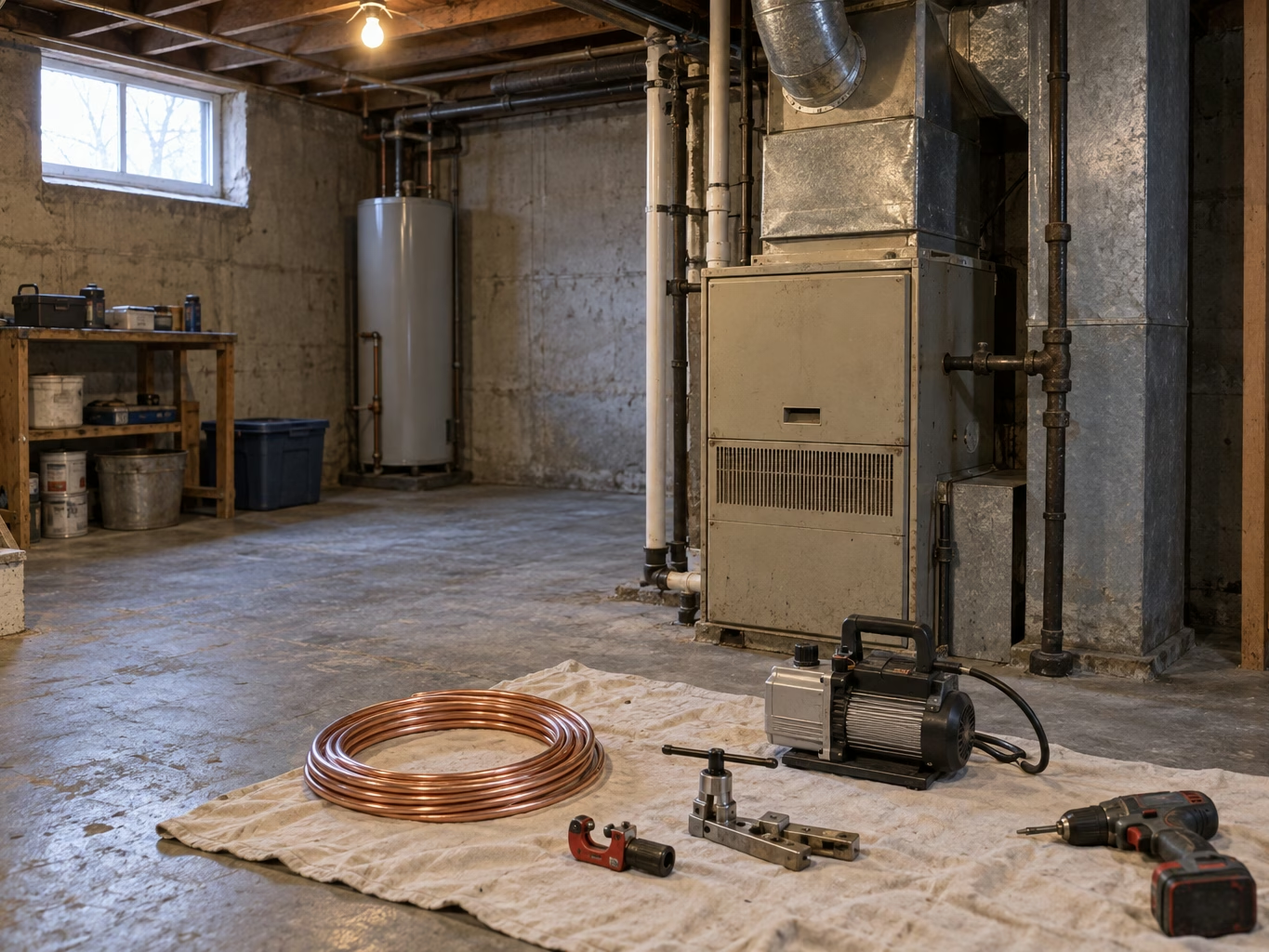
* Requires a Qualified Installer: Installation is more complex than a simple furnace swap. You need a team that understands the technology (like RenoHouse).
Furnace + Central AC
- Pros:
* Familiar Technology: Simple, well-understood, and easy to service.
* Lower Cost (If Replacing Only One Part): If your AC is fine and only your furnace dies, a simple furnace replacement is cheaper than a full system overhaul.
- Cons:
* Fossil Fuel Dependent: Burns natural gas and is subject to ever-increasing carbon taxes.
* Less Efficient: Uses significantly more energy overall for heating.
* Two Systems to Maintain: Double the potential points of failure and eventual replacement costs.
The Final Verdict: What's Right for Your Toronto Home?
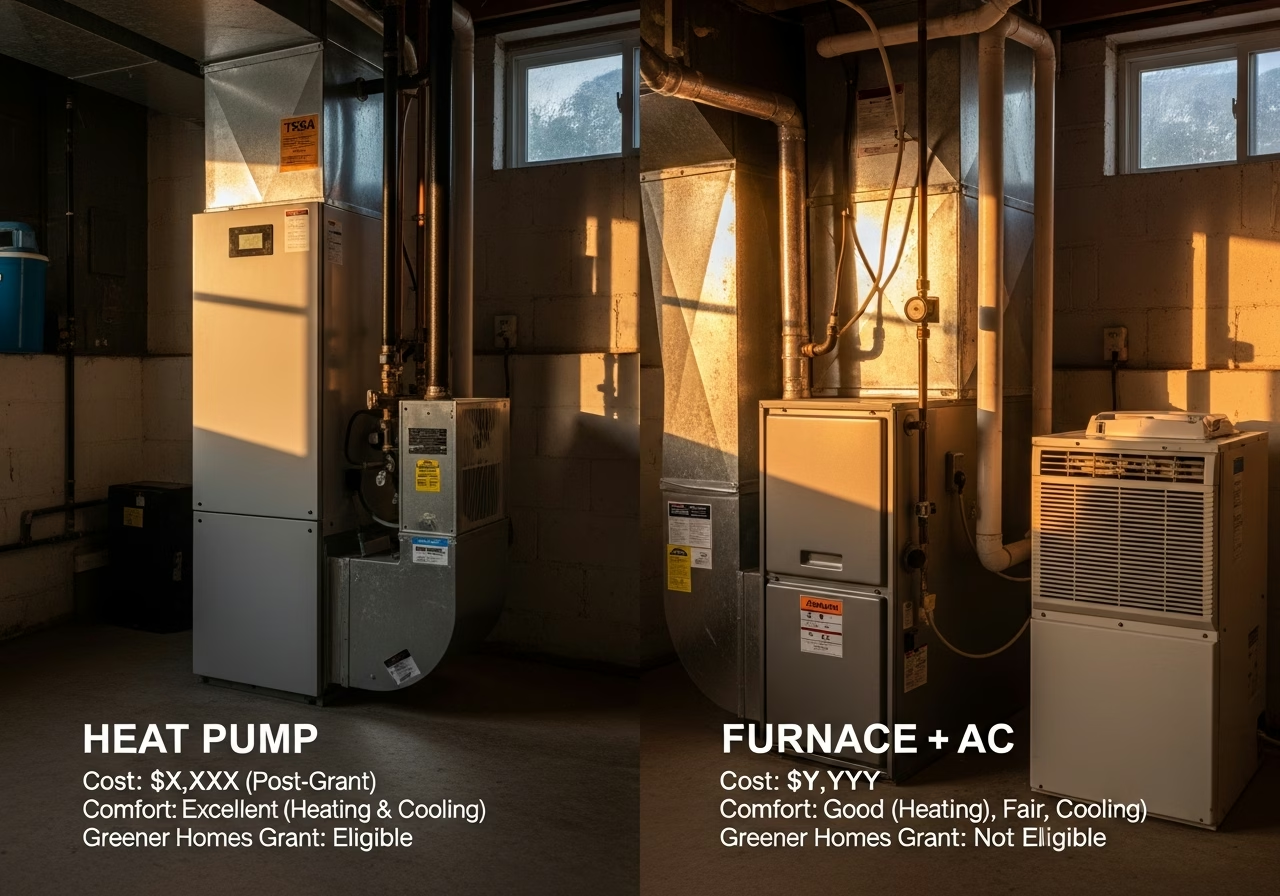
So, after comparing the heat pump vs furnace in Toronto, which one should you choose?
- You are replacing both your furnace and air conditioner at the same time.
- You want to take advantage of the $6,500 rebate to get a superior system for less money.
- You care about lowering your home's carbon footprint and long-term energy bills.
- You are planning to stay in your home for 5+ years and want to future-proof your investment.
- Your air conditioner is nearly new and only your furnace needs replacing.
- You have an extremely tight budget and absolutely cannot wait for the rebate processing time.
- Your home has significant insulation challenges that you do not plan to address.
For the vast majority of Toronto homeowners undertaking an HVAC upgrade, the conclusion is clear. The combination of incredible efficiency, year-round comfort, and the game-changing Greener Homes Grant makes a cold-climate heat pump the smartest, most cost-effective choice for the long term.
Ready to find out what system makes the most sense for your property? At RenoHouse, we specialize in designing and installing the right HVAC solutions for GTA homes. Send us a few photos of your current setup on WhatsApp, and we can get you a detailed quote in about an hour. Let's make your home more comfortable, efficient, and ready for the future.


