RenoHouse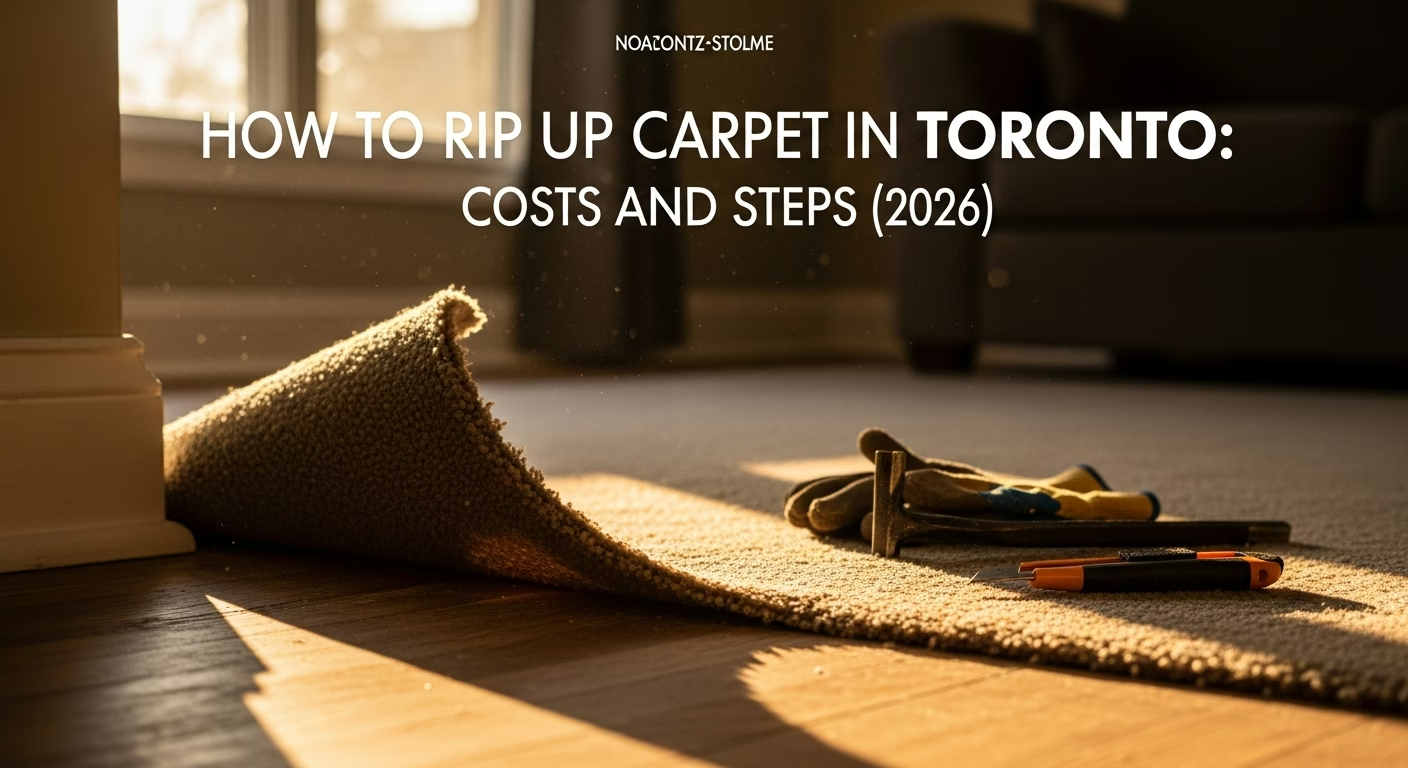

# How to Rip Up Carpet: A Practical GTA Homeowner Guide
Quick answer. Pulling up carpet in a typical GTA home costs $0.75–$2.50 per square foot when hired out, or roughly $150–$350 in disposal fees if you do it yourself. The physical work takes one to two days for an average house; the bigger variable is what you find underneath — subfloor damage, staples, and tack strips all add time, and pre-1990 homes in Etobicoke, Scarborough, or North York may have asbestos-backed underlay that changes the job entirely.What It Costs to Remove Carpet in the GTA (2026 Prices)
Professional carpet removal in Toronto and surrounding municipalities ranges from $0.75 to $2.50 per square foot in 2026, depending on room complexity, the condition of the existing carpet, and what needs to happen with the subfloor afterward. For a 1,000-square-foot bungalow in Mississauga or Brampton, that puts the total between $750 and $2,500 for labour and basic disposal. Add $200–$500 if the subfloor needs patching, levelling, or tack-strip hole filling before new flooring goes down.
Disposal is the cost most homeowners underestimate. Carpet and underlay are bulky and heavy — a 1,000-square-foot pull generates three to five full contractor bags of debris plus rolled sections that won't fit in a standard blue bin. A half-load junk-removal booking in the GTA runs $200–$375 in 2026; a full load $325–$600. Some flooring contractors bundle haul-away into their quote; others charge it separately. Always confirm before signing.
DIY removal cuts labour to zero but doesn't eliminate cost. You'll need a utility knife ($15–$30), a floor scraper or stiff putty knife ($25–$60), a pry bar ($20–$40), and heavy work gloves. Knee pads matter more than most people expect. A dumpster bag (Bagster or similar) runs $50–$80 for the bag plus $175–$275 for pickup in areas like Vaughan, Pickering, or Ajax. Factor disposal honestly before deciding the DIY route costs nothing.
| Scenario | Estimated 2026 GTA Cost |
|---|---|
| DIY removal + junk removal pickup | $225–$400 |
| Pro removal, carpet + underlay, no subfloor work | $750–$2,500 (1,000 sq ft) |
| Pro removal with subfloor patching and levelling | $1,200–$3,500 (1,000 sq ft) |
| Asbestos-backed underlay abatement (licensed) | $1,500–$5,000+ depending on scope |
| Tack strip removal + nail/staple cleanup only | $150–$400 as a standalone service |
Prices vary by municipality. Jobs in downtown Toronto and North York tend to run 10–15% higher than comparable work in Ajax, Whitby, or Clarington, reflecting parking constraints and higher contractor overhead in the core.
How to Rip Up Carpet: Step-by-Step Process
Carpet removal is straightforward physical work. The sequence matters because skipping steps creates problems for whatever flooring comes next.
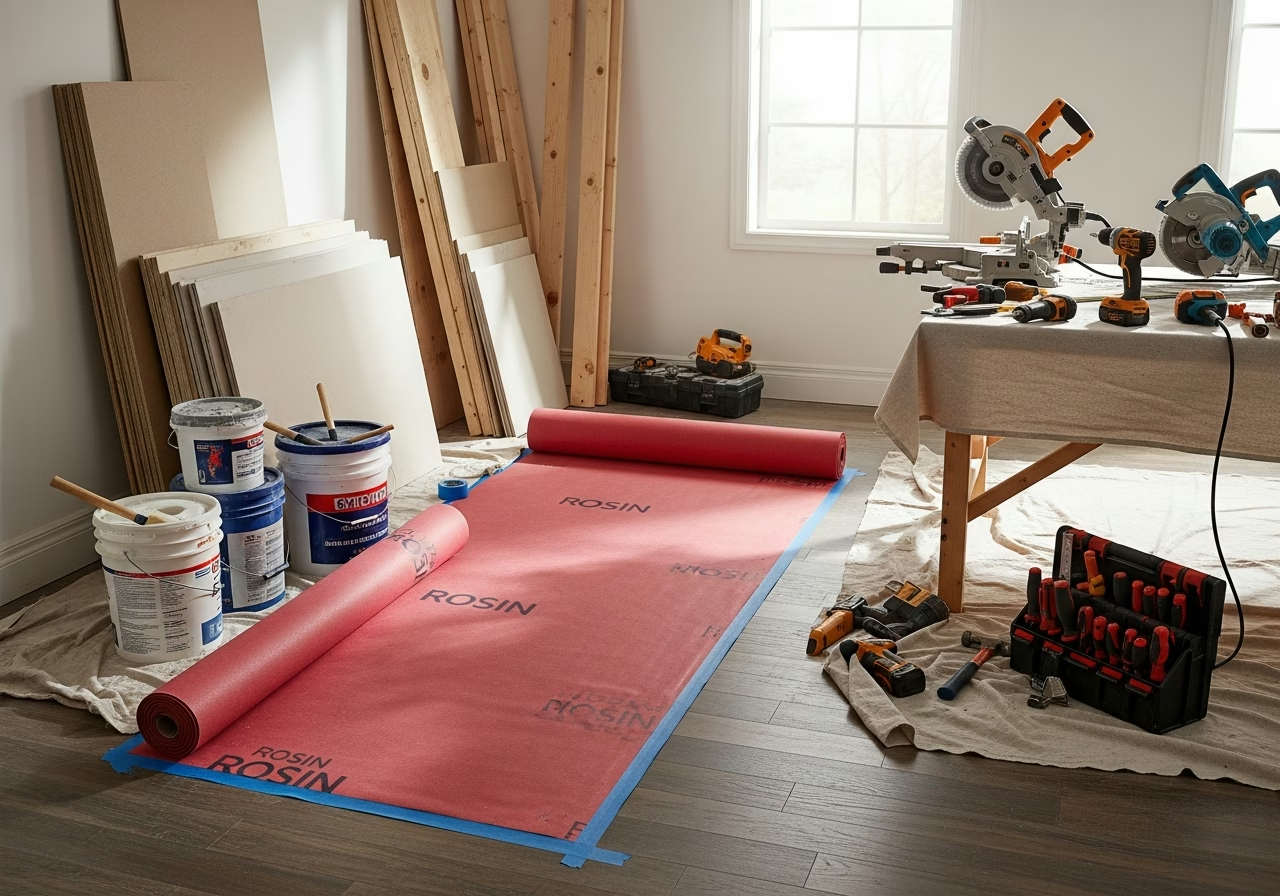
Remove all furniture. If you're dealing with a finished basement in Markham or Richmond Hill, move anything stored along perimeter walls. Take photos of the carpet before pulling — this matters if you're submitting an insurance claim for water or pet damage. Note whether the carpet is glued down (common in basements on concrete) or stretched over tack strips (standard on wood subfloors).
Step 2: Test for asbestos before cutting anything.Homes built before 1990 across the GTA — including post-war bungalows in Etobicoke and Scarborough, 1970s builds in Brampton, and older stock in Georgetown and Caledon — may have asbestos-containing underlay or adhesive beneath the carpet. The visual rule: if the backing or glue is grey, black, or fibrous and the home predates 1990, treat it as a potential hazard. A certified lab test kit costs $30–$80 and returns results in two to five business days. If results come back positive, stop work and call a licensed abatement contractor. Disturbing asbestos underlay without proper controls is a health risk and a potential bylaw violation in the City of Toronto.
Need professional renovation?
Call RenoHouse at 289-212-2345 or get a free estimate today.
Get Free Estimate →Use a sharp utility knife to score the carpet in 3-foot-wide strips parallel to one wall. Don't press the blade all the way through if you're trying to protect hardwood underneath — score lightly, then pull. Cutting into strips makes rolling and removal far easier than wrestling a full-room section out the door.
Step 4: Pull up the carpet.Start at a corner. Use pliers or a pry bar to grab an edge, then pull firmly at a 45-degree angle. Carpet in older GTA homes is often staple-attached along seams, so expect some resistance and work along seams rather than across them. Roll each strip tightly as you go and secure with tape or twine. Rolled strips fit through doorways and down stairs without a fight.
Step 5: Remove the underlay.Foam or rubber underlay typically tears away in sections. It may be stapled, glued, or simply lying loose. On concrete — common in Ajax, Whitby, and Scarborough basements — the underlay is often adhered. A floor scraper removes it, though expect roughly an hour of work per 200 square feet on stubborn adhesive. Bag underlay separately from carpet; some GTA recycling depots accept foam padding but not carpet itself.
Step 6: Pull up tack strips and clean all fasteners.Tack strips run along every perimeter wall and are fastened with nails or screws driven into the subfloor. A pry bar removes most without damaging the floor — slide the bar under the strip and lever upward in short sections. Every nail, staple, and fastener left in the subfloor becomes a problem under new flooring, especially hardwood or LVP. A magnetic sweep and careful visual inspection catch most of what's left behind.
Step 7: Assess and prep the subfloor.This step determines how well your new floor will perform. Check for squeaks, soft spots, water staining, and high or low spots greater than 3/16 of an inch over a 10-foot run. Nail down any loose areas with ring-shank nails or screws. Fill tack-strip holes with wood filler. Use levelling compound for low spots on concrete. Anything beyond minor patching — damaged OSB panels, significant rot, or a heaving concrete slab — warrants a professional assessment before new flooring goes down.
No permit is required in Toronto or anywhere else in the GTA simply to remove carpet. If the removal uncovers electrical or plumbing work that needs doing beneath the floor, those trades will need their own permits, and electrical work requires an ESA-certified electrician.
What to Watch For Underneath Old Carpet
Old carpet in GTA homes hides a range of conditions. Some are straightforward; some change the project significantly.
Frequently Asked Questions
Do I need a permit to remove carpet in Toronto?
No permit is required for carpet removal anywhere in the GTA. It is considered routine maintenance, not construction. If work uncovered during removal — water damage repairs, electrical components flush-mounted in the floor, radiant heat elements — requires a trade permit, those are arranged by the licensed contractor performing that specific scope, not by the carpet removal itself.
Can I install new flooring directly over old carpet?
No. Carpet has too much compression and give to serve as a stable underlayment for hard flooring. Hardwood, LVP, laminate, and tile all require a rigid, flat substrate. Installing hard flooring over carpet causes creaking, joint failure, and surface cracking within months. The carpet always comes out first — there are no workarounds that hold up over time.
How long does carpet removal take for an average GTA home?
A 1,000-square-foot main floor with a wood subfloor takes one experienced person four to six hours for removal, tack strip pull, and fastener cleanup. A basement with glued underlay on concrete can run six to ten hours for the same footprint. Subfloor repairs, disposal runs, and asbestos testing add separate time on top. Plan for a full day, and schedule new flooring installation at least two days later to allow any levelling compound to cure fully.
What should I do if I find asbestos under the carpet?
Stop work immediately and do not disturb the material further. Contact a licensed asbestos abatement contractor — there are several operating across Toronto, Mississauga, Brampton, and Vaughan. Ontario Ministry of Labour regulations require licensed abatement for regulated asbestos-containing materials, and homeowner DIY removal of confirmed asbestos products is not legally permitted. Testing, abatement, and clearance air sampling typically runs $1,500–$5,000 depending on the area affected and the material type.
Need a Quote in the GTA?

Renohouse.ca handles carpet removal, subfloor assessment, and prep work ahead of new flooring installations across Toronto, Etobicoke, Mississauga, Vaughan, Markham, Pickering, and the broader GTA. With 12 years of local renovation experience and a 4.9-star rating across 498 reviews, the crew can tell you quickly whether your subfloor is ready for new material or needs work first. Call 289-212-2345 or request a free quote online to get a straight answer on your specific project.