RenoHouse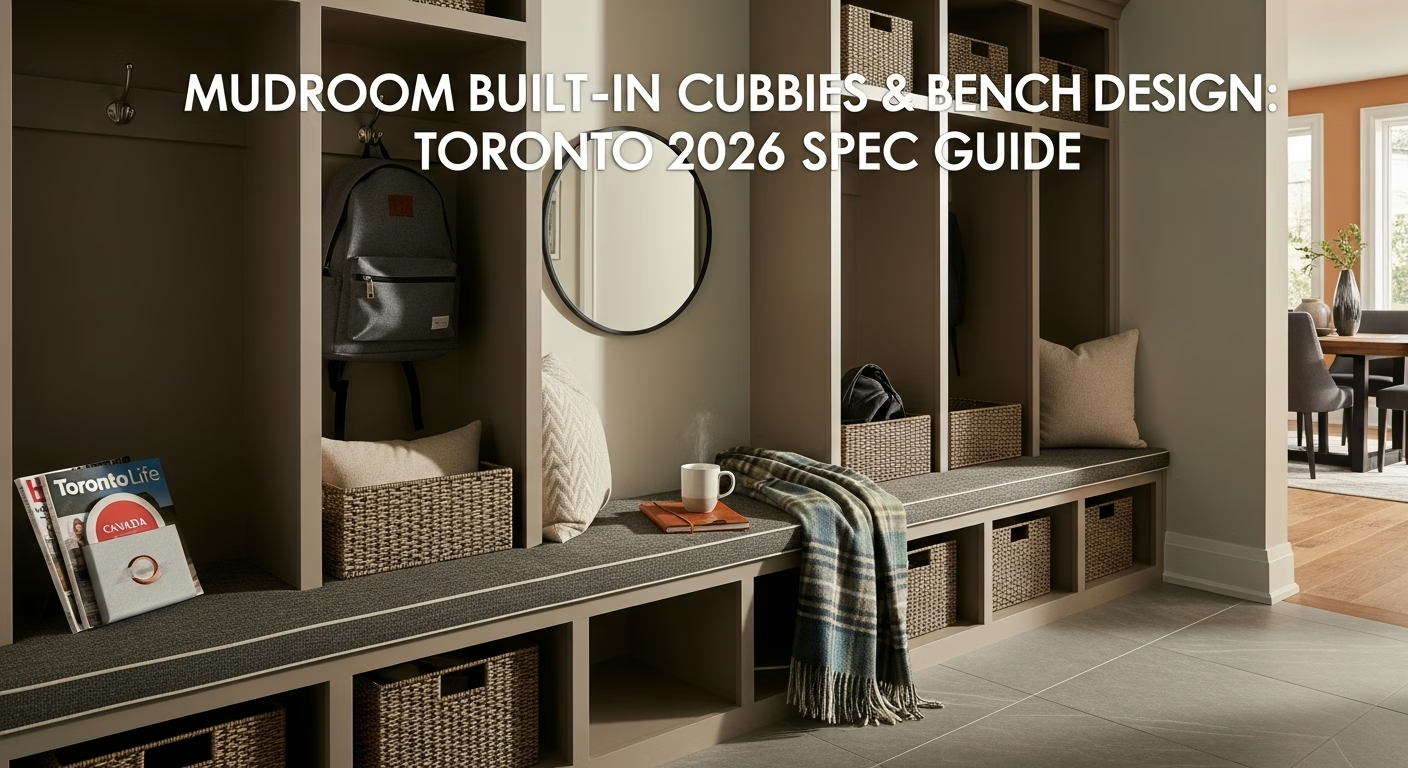

# Mudroom Built-in Cubbies & Bench Design: Toronto 2026 Spec Guide
Quick answer. The bench-and-cubby system is the heart of a Toronto mudroom. Get the dimensions wrong and the room is unusable — get them right and the family stops piling gear in the hallway. This is the dimensions-and-materials-and-hardware spec guide we use on every RenoHouse mudroom build.The bench-and-cubby system is the heart of a Toronto mudroom. Get the dimensions wrong and the room is unusable — get them right and the family stops piling gear in the hallway. This is the dimensions-and-materials-and-hardware spec guide we use on every RenoHouse mudroom build.
For the bigger framework, see our Mudroom Buildout Toronto pillar guide. For the open-vs-closed locker decision, see Mudroom Lockers vs Open Shelving.
Bench Dimensions That Work
The bench is where someone sits to pull boots on and off. Get this dimension wrong and the room fails.
| Dimension | Recommended | Why |
|---|---|---|
| Seat height | 17–18" off finished floor | Comfortable for 5'2"–6'4" range |
| Seat depth (front to back) | 18–20" | Boot pull-off space |
| Seat width per person | 24–28" | Two adults can sit; one adult plus one kid |
| Bench length | 36" min, 48–60" ideal | Family seating, gear staging |
| Toe kick (under bench) | 4" recess, 4" tall | Foot tucks under for boot removal |
| Height under-bench cubby | 10–14" tall | Boot-height clearance |
Common mistakes: 16" deep bench (too shallow, foot dangles), 19" tall (too high for kids), 24" deep (eats traffic space). 18" deep and 17.5" tall is the GTA sweet spot.
Cubby Dimensions
Each cubby holds one person's daily gear. Adults and kids need different dimensions.
| Item | Cubby Width | Cubby Depth | Cubby Height |
|---|---|---|---|
| Adult cubby (single) | 14–18" | 14–16" | 60–72" tall |
| Kid cubby (single) | 12–14" | 12–14" | 48–60" tall |
| Boot cubby under bench (per pair) | 11–14" | 16–18" | 12–14" tall |
| Shoe cubby under bench (per pair) | 10–12" | 14" | 8–10" tall |
| Top open shelf above hooks | full width | 12–14" | 10–14" |
A four-person Toronto family typically needs 4–5 adult/kid cubbies × 16" wide = 64–80" of cubby frontage minimum. Add 24–36" of coat closet for guest coats. Now you understand why a 6-foot-long mudroom feels small.
Hook Heights (Two Levels)
The non-negotiable Toronto mudroom feature: hooks at adult and kid heights.
- Adult hooks: 66–72" off finished floor
- Kid hooks: 42–48" off finished floor (ages 5–10)
- Hook spacing horizontally: 6–9" between hooks
Hooks must be installed into solid blocking — typically a 2x6 horizontal stud-let added behind the drywall during framing. We add blocking on every hook wall regardless of whether the hook count is final, because hook adds and moves are common.
Material Specifications
What we hold contractors to on every RenoHouse mudroom job:
Cabinet Boxes
- 5/8" or 3/4" plywood — Baltic birch is best for paint-grade; pre-finished maple or birch-veneer plywood for stained/clear-finished.
- Avoid particleboard or HDF — they swell with salt water exposure. We have seen IKEA TRONES bottom panels delaminate in 4 winters where the homeowner used them in a busy entry.
- Edge banding on plywood — 0.5mm PVC for paint-grade, 1mm or 3mm for stained.
Bench Top
Three viable choices in Toronto:
| Bench Top | Cost (installed) | Pros | Cons |
|---|---|---|---|
| Solid hardwood (oak, maple, ash) | $250–$700 | Warm, refinishable | Needs annual oil/maintenance |
| Quartz remnant | $400–$1,200 | Indestructible, easy to clean | Cold to sit on |
| Butcher block (maple/walnut) | $300–$700 | Warm, classic look | Needs oil/wax every 6 months |
| Painted MDF or PVC | $150–$400 | Cheap, clean | Wears through in 5–7 years |
Our default is solid hardwood with 3 coats of marine-grade poly (Pettit Captain's Varnish or Epifanes). Holds up to wet boots and re-coats easily.
Need professional home renovation?
Call RenoHouse at 289-212-2345 or get a free estimate today.
Get Free Estimate →Hardware
- Hooks: solid metal — cast iron, brass, stainless. Avoid hollow tube hooks (bend with heavy coats). Brand suggestions: Rejuvenation, Schoolhouse, Lewis Dolin (vintage repro), Restoration Hardware.
- Drawer slides: soft-close, 100-lb rated minimum (Blum Tandem, Salice Future).
- Hinges: soft-close concealed (Blum Compact Clip Top, Salice Air).
- Knobs/pulls: finish should match hooks; size scaled to door (3" pulls on 12" doors, 4–5" on 18–24" doors).
Backsplash Behind Bench
Wall behind the bench gets scuffed by wet snowsuits, kicked boots, and dropped backpacks within weeks. Always specify a finished backsplash, not just paint.
| Backsplash | Cost (4 ft tall, 6 ft wide) | Durability |
|---|---|---|
| Subway tile | $350–$800 | Excellent, easy to clean |
| Beadboard MDF (painted) | $250–$500 | Good — repaint every 5–7 yrs |
| Shiplap (painted) | $300–$700 | Good — repaint every 5–7 yrs |
| Ceramic mosaic | $400–$900 | Excellent |
| Painted drywall only | $0 | Poor — dirty in 8 weeks |
Open Cubbies vs Closed Lockers vs Hybrid
Three approaches:
Open Cubbies
Visible at all times. Best for families with kids 5–12 (kids find their own gear, parents see what's missing). Cheapest to build (no doors). Drys gear faster (good for wet boots). Looks "cluttered" by definition unless the family is tidy.
Closed Lockers
Each locker has a hinged door, hiding contents. Looks clean and tidy at all times. More expensive ($800–$1,800 per locker). Wet gear inside doesn't dry as fast — needs ventilation slots in doors or hidden vent stack. Better for resale-focused builds and adult-only households.
Hybrid (RenoHouse default)
Tall locker for adults (closed door, hides mess), open cubbies for kids (visible, accessible). Adult lockers contain shoes, gear, jackets neatly; kid cubbies show what's where. This is what we recommend on most family builds.
For deeper analysis, see Mudroom Lockers vs Open Shelving: Which Is Right?.
Lighting Integrated into the Built-Ins
Three-layer lighting plan integrated with the millwork:
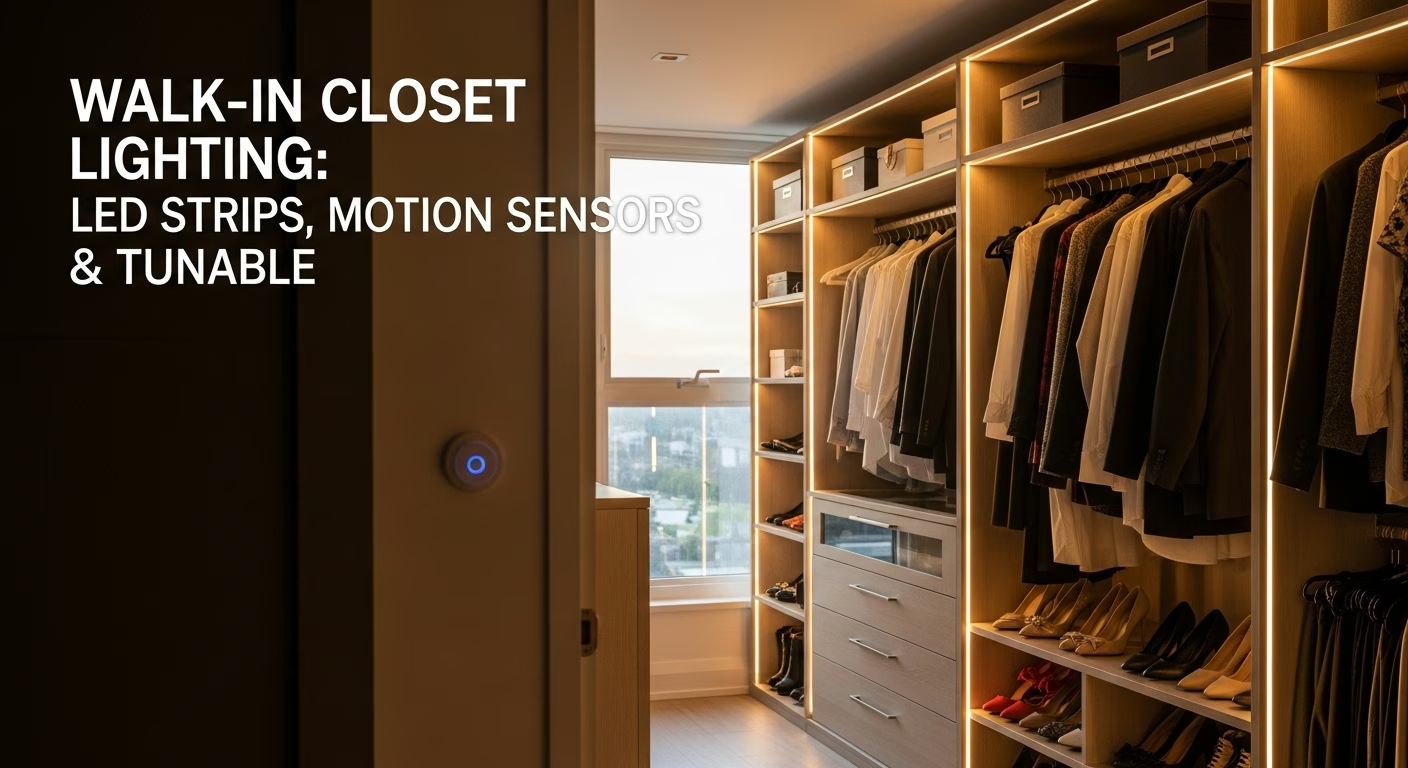
- 1. Under-shelf LED strips — installed in the channel under each upper shelf, casting downward. Hidden from sight. Activates with a motion sensor on the entry door.
- 2. In-locker LED puck lights — battery-powered or hard-wired, activate when door opens (locker tier only).
- 3. Above-cubby continuous LED strip — diffuse light onto the open cubby contents.
Total cost adder for integrated lighting: $400–$1,200 over standard "ceiling fixture only" lighting. Big QoL upgrade in a windowless mudroom.
The Drop Drawer (Killer Detail)
A "drop drawer" is a flip-down or push-to-open drawer at child-shoulder height (32–36"), about 3" deep, intended for car keys, mail, sunglasses. Sits between or above the cubbies. Doubles as a wallet/phone parking spot.
Cost adder: $200–$400 for one drawer mechanism + drawer-front. Hugely loved by clients.
Common Errors We See on Toronto Builds
- Bench too narrow — 14–16" deep instead of 18–20". Boots don't fit; you can't sit while bending forward.
- Cubbies sized for shoes, not for boots — 8" tall instead of 12". Winter boots overflow.
- No shoe drainage — drip water pools and rots the cubby floor. Add a stainless drip tray or sloped tile pan.
- Hooks at one height only — adults can't reach kid hooks, kids can't reach adult hooks. Two heights, always.
- Backsplash painted-only — kicked boots scuff the wall in 6 weeks. Use tile, beadboard, or shiplap.
- No lighting integration — overhead light only. Open cubbies cast their own shadows; you can't see what's inside. LED strips solve this.
- Hardware mounted into drywall — pull-out failure within a winter. Always blocking.
Build Sequence for Cubbies and Bench
- 1. Lay out wall positions, mark stud locations, install backing blocks where hooks and tall lockers will go.
- 2. Install bench frame (typically 2x4 + 1x4 — built site or pre-fab).
- 3. Install cubby frames as a single unit, sized to fit between bench top and ceiling.
- 4. Install bench top (slid in from above, screwed from underneath).
- 5. Install hooks at marked heights into pre-installed blocking.
- 6. Install upper open shelves.
- 7. Install backsplash material.
- 8. Caulk, fill, prime, paint or finish.
- 9. Install hardware (hooks, knobs, pulls) last.
Time on-site for a 6-foot bench-and-cubby unit: 2–3 days for tier 2; 4–5 days for tier 3 with hardwood and premium finish.
For end-to-end project planning, see How to Build a Mudroom in Toronto: 7-Step Plan.
---
Designing custom mudroom built-ins for your Toronto home? RenoHouse offers free design consultations with detailed dimensions, material specs, and 3D renderings. Book yours on our mudroom buildout service page.
Sources & References
Authoritative sources cited in this guide:
- Ontario Building Code — OBC official text
- Toronto Building Permits — City permit portal
- Tarion New Home Warranty — Ontario new-build warranty regulator
- HCRA — Home Construction Regulatory Authority — Ontario builder/vendor licensing
Frequently Asked Questions
How much do mudroom built-in cubbies cost in Toronto?
A complete mudroom bench-and-cubby system in Toronto runs $5,000 to $12,000 for mid-to-high-quality builds. Cost depends on materials (hardwood vs. engineered), finish complexity, and hardware. Simpler systems with ready-made components cost less; fully custom designs with tile benchtops or specialty finishes push higher. Expect $150–$250 per linear foot for installation and materials combined.
What materials hold up best in Toronto mudroom winters?
Benchtop materials matter most in Toronto. Sealed hardwood, tile, and solid surface materials (quartz, Corian) resist moisture from wet boots and melting snow. Avoid unsealed softwood. Paint cubbies and frames with quality water-resistant paint after priming. Use stainless steel hardware to prevent rust. Engineered wood with proper sealing performs well and costs less than solid hardwood alternatives.
What's the right cubby height and depth for mudrooms?
Standard cubby dimensions are 12–16 inches wide, 12–18 inches tall per section (stackable), and 14–16 inches deep. Bench height sits at 16–18 inches from floor, depth 16–18 inches. Coat hooks mount 60–66 inches above the floor. Most Toronto mudrooms work best with 12–14-inch cubbies; wider ones (16") suit bigger homes. These specs maximize storage without blocking traffic flow.
Do I need a permit for mudroom built-ins in Toronto?
Basic mudroom cubbies and benches don't require a building permit in Toronto—they're considered finishing carpentry. However, if you're adding electrical outlets, modifying structural walls, or moving plumbing, you'll need permits. Check with your city first. Any electrical work must comply with Ontario Electrical Safety Code and may need ESA inspection. Non-structural, non-electrical builds proceed without permits.
Continue Reading