 RenoHouse
Acoustic Soundproofing Renovation — Toronto GTA
Professional acoustic soundproofing renovation services in Toronto and the Greater Toronto Area. Licensed, insured, and trusted by homeowners across the GTA.
Projects Completed
Years Experience
Client Satisfaction
Google Rating
How It Works
A simple, stress-free process from start to finish.
Send Your Request
Call or WhatsApp us 24/7. Send photos, video, comments about what needs to be done, and your location.
Remote Estimate
We review everything, discuss details, and provide a clear estimate — often within hours, no visit needed.
Repair Process
Our licensed team arrives on the agreed date and completes your acoustic soundproofing renovation to the highest standards.
Handover & Warranty
Final walkthrough with you, full cleanup, and warranty documentation provided.
Send Your Request
Call or WhatsApp us 24/7. Send photos, video, and a description of the work + your location.
Remote Estimate
We review everything, clarify details, and give you a price — often within hours.
Repair Process
Licensed team arrives on schedule and completes your acoustic soundproofing renovation professionally.
Handover & Warranty
Final walkthrough, full cleanup, and warranty documentation.
Acoustic Soundproofing Renovation in Toronto GTA
RenoHouse delivers acoustic and soundproofing renovation projects for Toronto and GTA homeowners — condo upstairs/downstairs noise mitigation, multiplex unit-to-unit STC compliance, home-office quiet rooms, basement studio/podcast spaces, and whole-home sound treatment. Our scope is end-to-end construction project management performed in-house: framing modifications, resilient channel (RC) installation, mineral wool or fibreglass batt insulation, double-drywall assemblies with Green Glue or similar damping compounds, acoustic sealant detailing, floating floor systems for impact noise, and finish work. Acoustic soundproofing is standard renovation work — no specialist licensing required — so we self-perform with our own carpentry, drywall, insulation, and finishing crews.
Why Toronto homes need soundproofing
Three primary drivers in 2026: (1) Condo growth — Toronto added 180,000+ condo units 2015–2025; thin walls and floors between units, plus mechanical noise from HVAC, drive a constant stream of noise complaints to condo boards. (2) Multiplex conversion under Bylaw 474-2023 — OBC 9.11 (Sound Transmission) requires Sound Transmission Class (STC) rating ≥ 50 between dwelling units. Existing semis and detacheds being converted to multiplex must upgrade walls and floors to meet this threshold. (3) Aging semi-detached and rowhouse stock — Toronto's pre-1980 semis often have STC 28–35 between units (single-leaf 2x4 with batt), well below comfortable; chronic neighbour-noise complaints drive renovation decisions. (4) Home-office boom — quiet rooms for video calls, recording, music practice; shared-wall semi residents need work-from-home soundproofing.
STC ratings — what numbers actually mean
STC (Sound Transmission Class) measures airborne sound transmission through walls and floors on a single number 25–70+. Reference points: STC 25 (normal speech clearly understood through wall — typical interior partition with single 1/2" drywall on each side, no insulation), STC 35 (normal speech audible but not understood — typical 2x4 wall with batt insulation), STC 45 (loud speech faintly heard — better-quality interior wall), STC 50 (loud speech faintly heard, normal speech inaudible — OBC 9.11 mandate between dwelling units), STC 55 (loud speech inaudible, only very loud sounds carry — premium townhouse-grade), STC 60 (almost no sound carries through — upper-tier custom build), STC 65+ (recording-studio level). IIC (Impact Insulation Class) is the floor analog — measures impact noise (footsteps, chair scrapes); OBC requires IIC ≥ 50 between dwelling units, premium projects target IIC 55–65.
Three-tier soundproofing approach
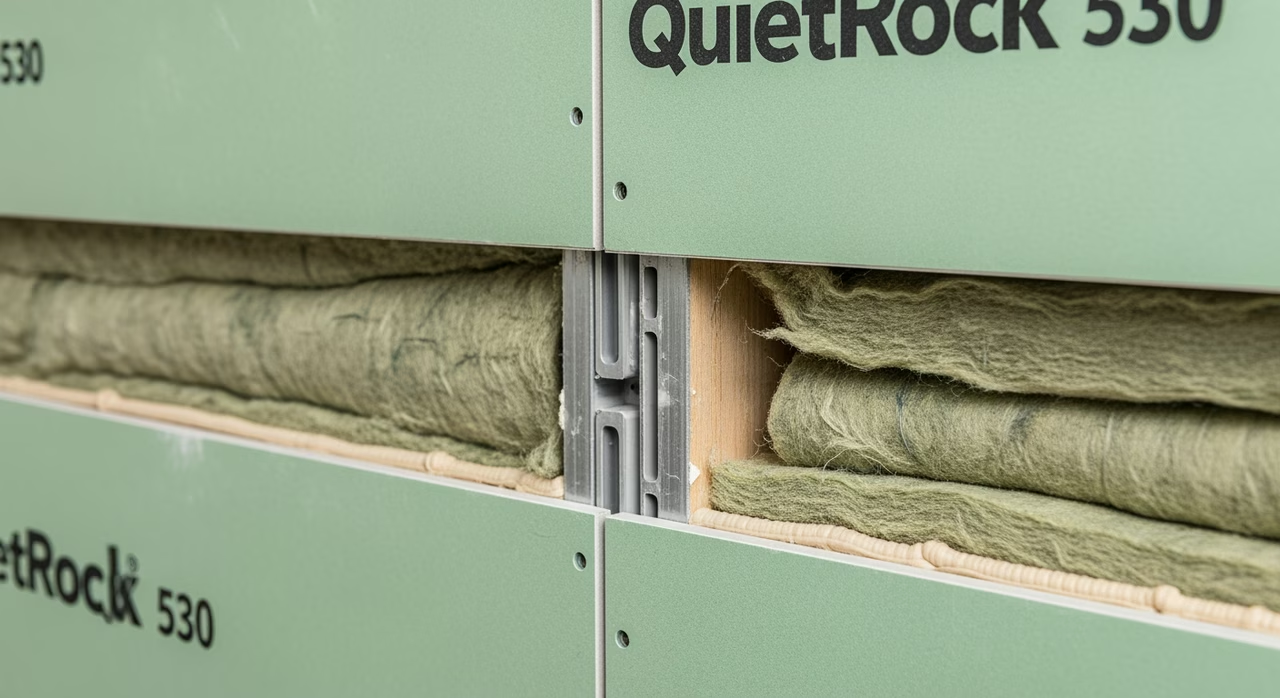
Tier 1 — basic upgrade for shared walls in existing homes ($3–5/sqft of wall surface): adding mineral wool to the cavity (Roxul Safe'n'Sound), resilient channel decoupling (1/2" RC-1 channels) from one face, and a single layer of 5/8" Type X drywall. Improves STC from ~35 to ~45–48. Best for in-suite quiet-room upgrades, home-office walls, and budget-sensitive condo work. Tier 2 — OBC-compliant multiplex/condo upgrade ($8–12/sqft): mineral wool, resilient channel, double 5/8" Type X drywall sandwiched with Green Glue Compound damping layer between, acoustic sealant at all perimeter joints and around all penetrations (electrical, plumbing). Achieves STC 53–58, exceeds OBC 9.11 requirement. Best for legal-suite multiplex conversion, premium condo soundproofing, and serious neighbour-noise problems. Tier 3 — recording studio or premium quiet room ($50–80/sqft): room-within-room construction with completely independent inner shell, RSIC AcoustiClips and Resilmount mounts, double 5/8" QuietRock 530 drywall both sides, 6" sound-decoupled floor with floating Maxxon Acousti-Mat substrate, sealed door with sound-rated jambs, acoustic ventilation. Achieves STC 65+ and IIC 65+. For musicians, podcast/voice studios, home theatres at premium, and whole-home owners willing to invest in true quiet.
Materials we use
Insulation: Roxul Safe'n'Sound mineral wool (NRC 1.05 absorption, fire-rated, denser than fibreglass for sound), Owens Corning EcoTouch fibreglass for budget builds. Damping compound: Green Glue Compound (the industry standard for double-drywall damping; STC improvement of 9–12 points over single layer). Resilient channel: standard RC-1 from Bailey or Dietrich; for premium, RSIC AcoustiClips. Drywall: 5/8" Type X for fire-rating compliance, QuietRock 530 for premium acoustic-laminated drywall (STC 53–55 single-layer). Sealant: Tremco Acoustical Sealant or OSI Pro-Series acoustic — applied at all wall-floor and wall-ceiling joints, around all electrical boxes (plus putty pads), around all plumbing penetrations. Membrane (specialty): Tecsound 70 (1.5 lb/ft² mass-loaded vinyl from Soprema, used for premium wall and ceiling assemblies). Floor isolation: Maxxon Acousti-Mat under engineered-wood or LVT; QT Floor underlay for laminate; concrete topping with floating substrate for ultimate IIC.
Project value
Single shared wall (Tier 1, 8' x 10' = 80 sqft): $400–$800. Single shared wall (Tier 2 OBC compliant, 100 sqft): $1,000–$1,500. Whole condo unit shared walls and ceiling (typical 800 sqft suite, 400 sqft of shared surface, Tier 2): $5,000–$8,000. Multiplex conversion full unit-to-unit OBC compliance (whole semi-detached converted to 2-unit duplex, ~1,000 sqft of shared assembly): $10,000–$18,000. Premium home recording studio (~150 sqft Tier 3 room within room): $12,000–$20,000. Whole-home premium quiet renovation: $15,000–$25,000+.
Common Toronto scenarios
(1) Condo upstairs noise complaint — owner adds Tier 2 ceiling treatment (RC + double drywall + Green Glue) plus replaces flooring above with Acousti-Mat substrate. (2) Multiplex legalization — owner upgrades demising walls and floor between units to STC 50 / IIC 50 OBC compliance during conversion. (3) Home-office quiet room — owner builds Tier 1 walls and acoustic door for video-call quality. (4) Music studio — owner builds Tier 3 room-within-room in basement for recording. (5) Aging semi neighbour problem — owner Tier 2 upgrades the entire shared wall surface from basement to attic (~600 sqft). All five are standard renovation work, no specialist licensing, performed by our crews.
Sequencing with other renovations
Pairs naturally with basement finishing (treat ceiling between basement and main floor at framing stage), full home renovation (treat shared walls during drywall phase), kitchen renovation in semis (treat shared wall between kitchen and neighbour kitchen), and condo renovation (Tier 2 ceiling and demising walls during gut). Acoustic work is best done early — after framing and electrical rough-in but before drywall — because retrofitting requires removing existing drywall first.
Serving Toronto, Mississauga, Brampton, Vaughan, Markham, Richmond Hill, Oakville, Burlington, Etobicoke, Scarborough, North York, and all GTA communities. Call 289-212-2345 for a free acoustic-renovation consultation.

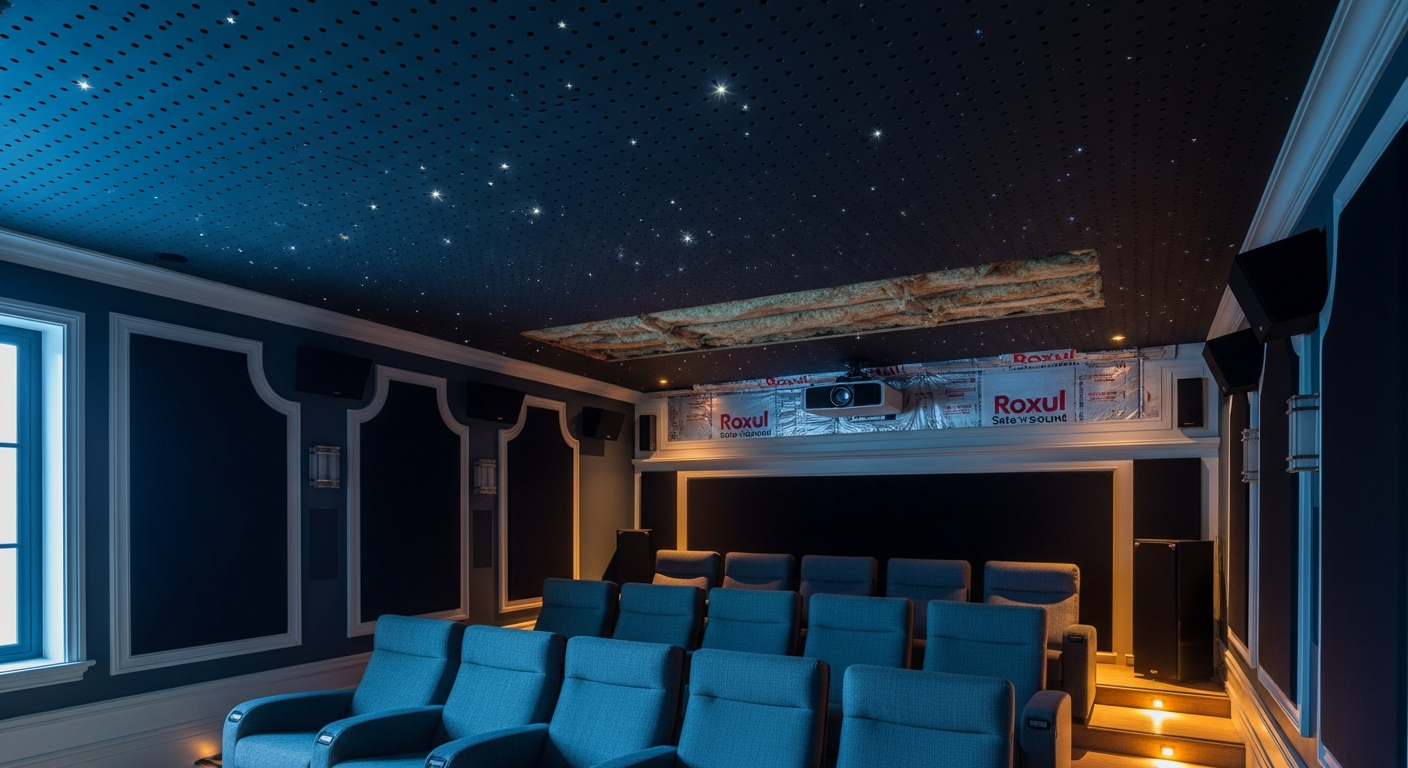
Acoustic soundproofing is the single most cost-effective renovation a Toronto homeowner can commission for daily quality of life — and one of the most commonly missed details in production-spec new builds. Whether the goal is a quiet home office in a busy Annex semi, a full home-theatre room in a Lawrence Park detached, or a dedicated recording studio in a Yorkville condo, the engineering principles are the same: decouple the structure to break the direct vibration path, add mass to absorb sound energy, seal every penetration and edge with acoustic-grade caulking, and use absorptive materials where reflection is a problem.
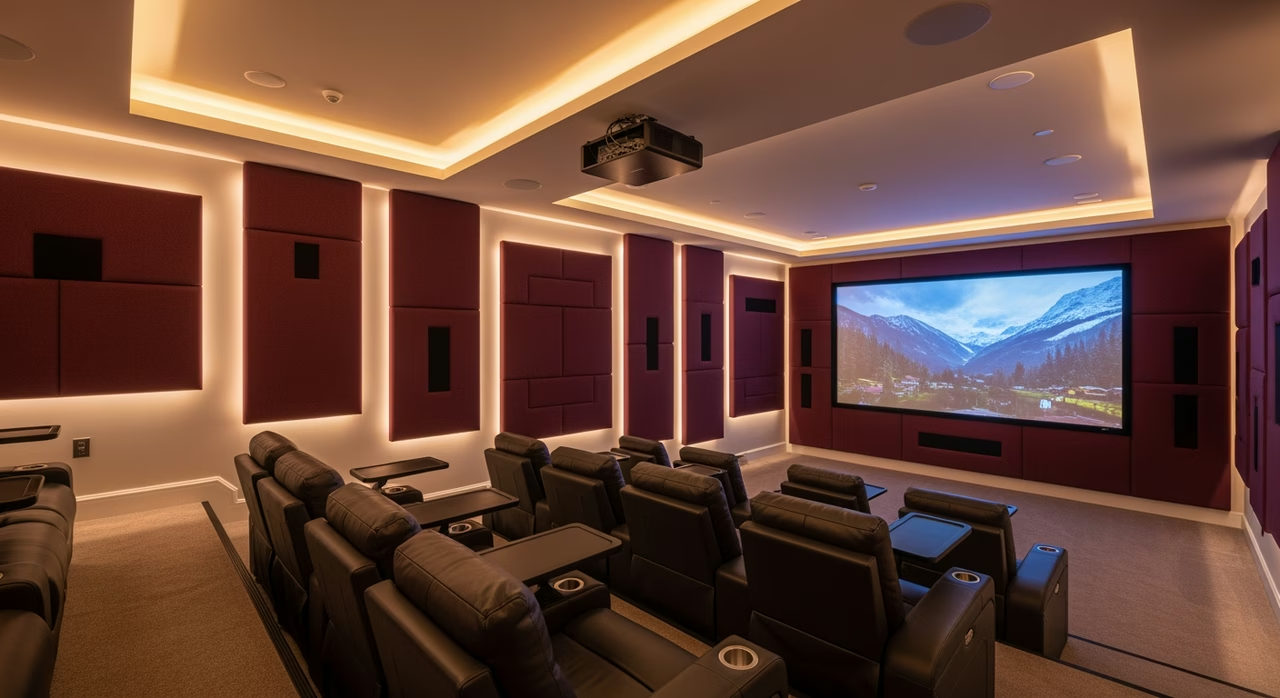
At RenoHouse the 2026 GTA market pricing for soundproofing renovation lands in three tiers: a single-room QuietRock-plus-Green-Glue retrofit targeting STC 50 at $5,000 to $8,000, a full home-theatre or media-room build with decoupled wall construction targeting STC 55-plus at $16,000 typical mid, and a recording-studio-spec room-in-room construction with floating floor and full acoustic treatment at $30,000 to $45,000 or more.
Understanding STC (Sound Transmission Class) and how to hit your target
The Ontario Building Code, Section 9.11, sets the minimum sound transmission rating for party walls in multi-residential buildings at STC 50, which is the rating that means a normal conversation in one unit is just barely audible as a murmur in the next. Most production-spec walls in Toronto detached and semi-detached homes are built to STC 30 to 35, which means you can hear your neighbour's television clearly through a shared wall. Getting from STC 35 to STC 50 typically requires adding mass (an extra layer of 5/8-inch type-X gypsum board), adding a damping compound between layers (Green Glue is the dominant product, applied as a thick bead in a serpentine pattern), and sealing every edge with acoustic caulking. Getting from STC 50 to STC 55-plus typically requires decoupling — installing resilient channel (RC channel) or building a separate stud wall offset by an inch from the original — plus mineral-wool insulation in the cavity and an additional mass layer.
For a recording-studio-spec installation we build "room within a room": a completely independent structural envelope mounted on neoprene isolation pads, with an independent floor, walls, and ceiling that share no rigid connections to the surrounding building. This achieves STC 65 to 70-plus and is the only way to truly silence external noise.
What's involved in a Toronto soundproofing renovation
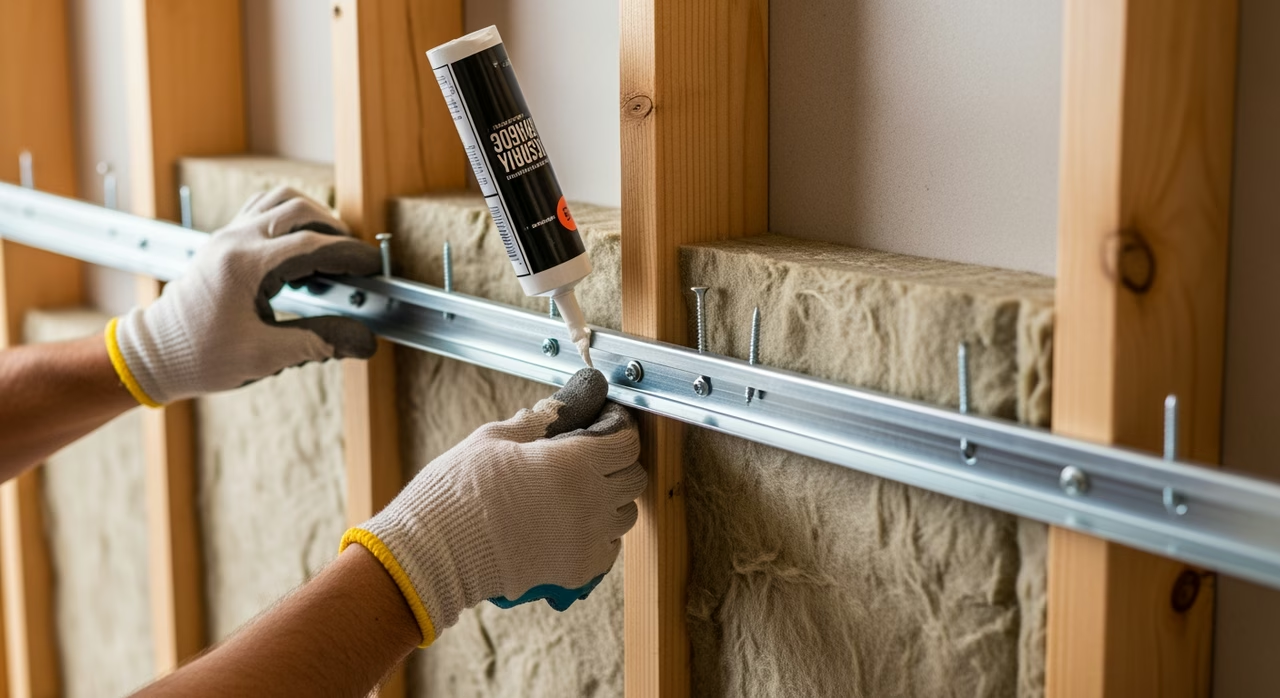
A standard mid-tier RenoHouse soundproofing scope includes the following: selective demolition of existing drywall on the wall(s) in scope (with MOL Reg 278/05 asbestos DSS on pre-1990 housing stock), installation of resilient channel (RC1 or RC2) onto the existing stud framing — screws into channel only, never into studs through the channel, which destroys the decoupling effect; or alternatively, framing of a separate stud wall offset by one inch with mineral-wool batt insulation in both cavities; installation of mineral-wool batt insulation (Roxul Safe'n'Sound or equivalent, typically R-15 in a 2x4 cavity, R-23 in a 2x6 cavity); application of a continuous bead of acoustic-grade caulk at all perimeter joints (the Tremco family is the standard); installation of the first layer of 5/8-inch type-X gypsum board screwed to the RC channel or the offset studs; application of Green Glue damping compound in a thick serpentine bead between layers; installation of the second layer of 5/8-inch type-X with offset seams from the first layer; taping, mudding, and sanding all joints; and finally, paint.
For ceilings and floors we apply the same principles. Floor decoupling typically uses a floating floor on neoprene isolation pads (Mason Industries or equivalent), with two layers of plywood subfloor over an acoustic underlayment such as Mass-Loaded Vinyl. Ceiling decoupling uses RC channel and double-drywall with Green Glue, or a fully suspended ceiling on isolation hangers.
Permits, compliance, and trade requirements
Most acoustic soundproofing renovations do not require a Toronto Chapter 363 building permit because the work is interior, non-structural finishing. The exceptions are: any structural framing changes (adding new walls, floor systems, or ceiling systems that bear load), modifications to fire-separation rated assemblies (which is common between condo units and between a primary dwelling and a secondary suite), and modifications to HVAC ductwork that may require flex-duct silencers or vibration isolators. Where the soundproofing scope includes new circuits, dedicated audio-power circuits, or upgraded lighting, ESA permits are required and a 309A Master Electrician must supervise.
OBC Section 9.11 governs sound transmission between dwelling units; Section 9.10 governs fire-resistance ratings and is critical when soundproofing modifies a rated assembly.
Cost factors, target STC, and the rebate stack
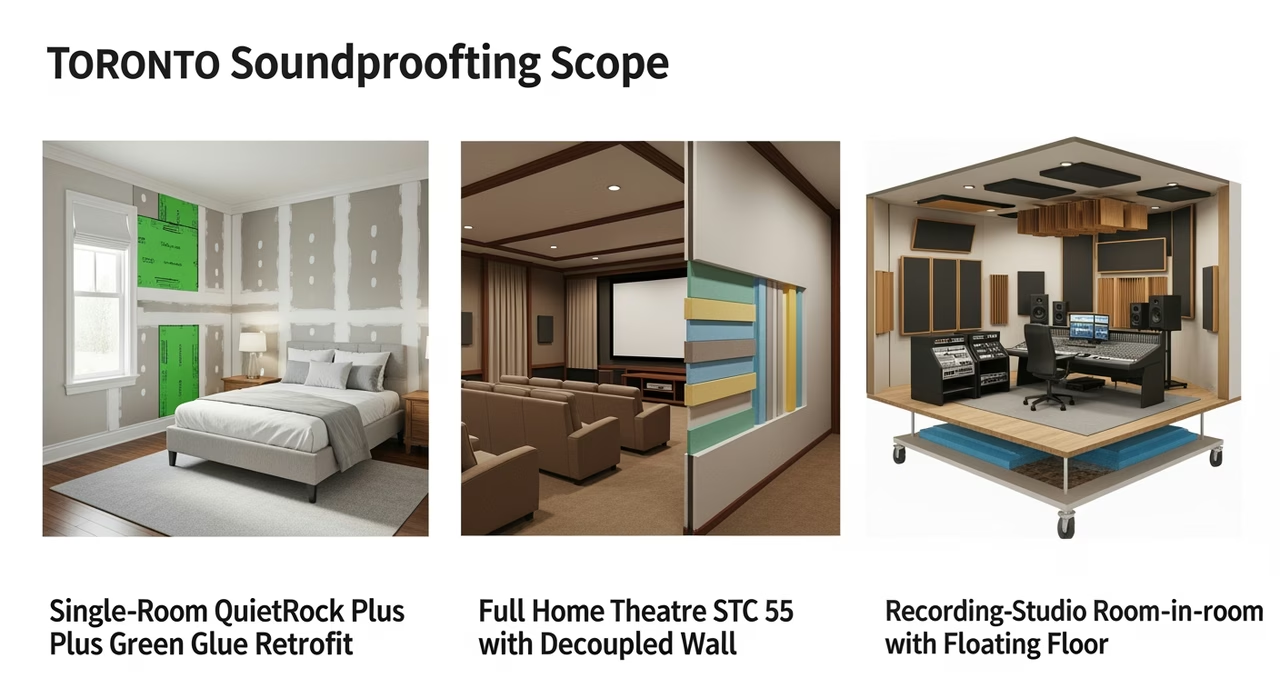
The biggest cost drivers on a Toronto soundproofing renovation are target STC rating (STC 50 versus 55 versus 65), the number and area of surfaces in scope (single wall versus all six surfaces of a room), the type of decoupling system (RC channel versus offset stud wall versus full room-in-room), and the depth of acoustic treatment for reflection control (fabric-wrapped panels, bass traps, diffusers). A single-room STC 50 retrofit on one wall typically lands at $5,000. A full home theatre with all six surfaces decoupled to STC 55-plus and finished with acoustic treatment lands at $16,000 to $25,000. A recording studio with room-in-room and bass treatment can land at $30,000 to $45,000-plus.
Soundproofing does not currently qualify for the Greener Homes Loan or Save on Energy rebates but the mineral-wool insulation added during the work can sometimes be claimed under Enbridge Home Efficiency Rebate Plus where the cavity insulation is upgraded.
Why RenoHouse builds soundproofing across the GTA
We have completed acoustic soundproofing renovations in Toronto (Annex, Yorkville, Forest Hill, Rosedale, Cabbagetown, Riverdale, Lawrence Park, Bayview, Hoggs Hollow, Bloor West), Mississauga, Vaughan, Markham, Richmond Hill, Oakville, Burlington, Aurora, King City, Caledon, Brampton, Etobicoke, North York, and Scarborough. Every project carries a $5 million liability policy, full WSIB coverage, a fixed-price written scope, manufacturer specifications and STC ratings for all materials used, and a two-year workmanship warranty.
Our typical timeline runs three to seven days for a single-room STC 50 retrofit, 14 to 21 days for a full home-theatre build, and 21 to 35 days for a recording-studio room-in-room. Call 289-212-2345 for a no-obligation on-site assessment, STC-target consultation, and fixed-price written scope.
Toronto/GTA neighborhood considerations
- Forest Hill / Rosedale / Lawrence Park (heritage): Pre-1940 plaster-and-lath party walls — STC 30-35 baseline (sound bleeds badly). Heritage scope cannot strip plaster from exterior side; build interior-side RSIC-1 resilient-channel + Type X 5/8" + Green Glue (STC 56-60). Heritage Permit not needed for interior work, but visible window changes (acoustic glass) do trigger it.
- North York / Scarborough / Etobicoke (60s-70s): Postwar single-stud 2x4 party walls — STC 33 baseline. Tear down 1 side, add 1.5" RSIC-DC04 staggered-stud or double-stud + R-13 Roxul Safe'n'Sound + 5/8" Type X + Green Glue noiseproofing → STC 55-62. Cost $14-$22/sqft wall.
- Mississauga / Brampton / Vaughan (90s+): 90s subdivision party walls 2x6 single-stud + R-19 fiberglass — STC 38-42 baseline. Upgrade: add resilient channel + 2nd layer 5/8" Type X + Green Glue → STC 56-60. Cost $10-$16/sqft.
- Caledon / King City / Aurora (rural large-lot): Home theatres + music studios common — room-within-room with floating-slab Mason Industries isolators (SLF / WMSW) + perimeter Auralex isolation. STC 70-75 achievable, NRC 0.85+ with quad-trap bass treatment.
- Downtown condos: Toronto Bylaw 591-2017 noise — quiet hours 11PM-7AM. Concrete slab + carpet pre-1995 inadequate for hard-floor swap; condo board mandates IIC 65+ underlay (e.g., Pliteq Genie Mat RST05) before approving laminate/engineered. STC 50 wall minimum per Condo Act.
Standards: Ontario Building Code 9.11 Sound Control — STC 50 minimum between dwelling units (party walls, floor-ceiling). STC 55+ industry best practice for new builds. ASTM E90 lab-test, ASTM E336 field-test (FSTC). NRC 0.70+ for treated music/theatre rooms. IIC 50 minimum for impact-isolation between condo units.
Why Trust RenoHouse
On-Time Completion
We respect deadlines for acoustic soundproofing renovation projects. 95% of jobs finish on or ahead of schedule.
Certified & Insured
Proper licensing, full insurance coverage, and WSIB protection. Your property and our team are completely protected.
Satisfaction Guarantee
We're not done until you're 100% happy with your acoustic soundproofing renovation. That's our promise.
Sound Familiar?
These are the most common problems our clients face.
Condo upstairs neighbour's footsteps audible at 11pm every night?
Multiplex conversion under Bylaw 474-2023 needs OBC 9.11 STC 50 unit-to-unit compliance?
Old Toronto semi with chronic neighbour-noise problems through the shared wall?
Building a home recording studio or podcast room and need true STC 60+ isolation?
Working from home in a busy neighbourhood and need a quiet office for video calls?
Confused about Tier 1 basic ($3-5/sqft) vs Tier 2 OBC ($8-12/sqft) vs Tier 3 studio ($50-80/sqft)?
Ready to get started?
Free estimate, no obligation. We respond within 1 hour.
What Our Clients Say
“RenoHouse replaced all our windows in just two days. The new windows are beautiful, energy-efficient, and the team left everything spotless. Highly recommend!”

Michael R.
Oakville
“New windows transformed our home. Quieter, warmer, and our energy bill dropped noticeably. Excellent installation crew.”

David K.
Vaughan
“Professional from start to finish. They replaced 8 windows in one day and cleaned up perfectly. Highly recommend RenoHouse!”

Sandra W.
Burlington
Our Acoustic Soundproofing Renovation Work
Professional acoustic soundproofing renovation results from RenoHouse projects across the Toronto GTA.
Acoustic Soundproofing Renovation
Toronto GTA
Quality Workmanship
Licensed & Insured
Like what you see? Let's talk about your project.
🧮 Acoustic / Soundproofing Renovation — Cost Estimator
GTA / Ontario — 2026 market pricing
⚙️ Add-ons & Options
📊 Where the cost goes (typical breakdown)
📋 What affects your price:
💡 Estimates use 2026 GTA/Ontario market data. Actual cost depends on site conditions, material selections, and project scope. Book a free in-home quote for a precise number.
Frequently Asked Questions About Acoustic Soundproofing Renovation
Reference points: STC 25 (normal speech clearly understood — typical bare-wall partition), STC 35 (normal speech audible — typical batt-insulated 2x4), STC 45 (loud speech faintly heard — better interior wall), STC 50 (loud speech faintly heard, normal speech inaudible — OBC 9.11 mandate between dwelling units), STC 55 (only very loud sounds carry — premium townhouse), STC 60+ (recording-studio level). For multiplex unit-to-unit walls and floors: minimum STC 50 / IIC 50 by OBC. For condo neighbour problems: typically Tier 2 (STC 53–58) solves most issues. For home recording: Tier 3 (STC 65+).
Single shared wall Tier 1 basic ($3–5/sqft, 80 sqft wall): $400–$800. Single shared wall Tier 2 OBC compliant (100 sqft, $8–12/sqft): $1,000–$1,500. Whole condo unit shared walls and ceiling (Tier 2, ~400 sqft surface): $5,000–$8,000. Multiplex unit-to-unit OBC compliance (whole semi-to-duplex conversion, ~1,000 sqft assembly): $10,000–$18,000. Premium recording-studio room-within-room (Tier 3, ~150 sqft): $12,000–$20,000. Whole-home premium quiet renovation: $15,000–$25,000+.
Tier 1 ($3–5/sqft): mineral wool + resilient channel + single 5/8" drywall. Improves STC ~35 to ~45–48. Best for in-suite quiet rooms, home offices, and budget condo work. Tier 2 ($8–12/sqft): mineral wool + RC + double 5/8" Type X drywall with Green Glue between layers + acoustic sealant detailing. Achieves STC 53–58, exceeds OBC 9.11. Best for multiplex/condo and serious neighbour-noise problems. Tier 3 ($50–80/sqft): room-within-room with AcoustiClips/Resilmount, double QuietRock 530 each side, floating floor, sealed acoustic doors, acoustic ventilation. Achieves STC 65+ / IIC 65+. For studios and premium.
Standalone in-suite soundproofing typically does not require a building permit — no structural changes, no electrical or plumbing modifications, no fire-separation alterations. Combined with multiplex conversion, the whole project is under the building permit (which includes the soundproofing scope per OBC 9.11). Combined with renovation that affects load-bearing walls, electrical, or plumbing — those triggers require a permit, and the soundproofing is part of the permitted scope. Condo work also requires condo board approval; we handle the noise-bylaw timeline and freight-elevator booking.
Insulation: Roxul Safe'n'Sound mineral wool (industry-standard, NRC 1.05 absorption, fire-rated). Damping compound: Green Glue Compound (between double drywall, 9–12 STC point improvement). Resilient channel: RC-1 (standard) or RSIC AcoustiClips (premium). Drywall: 5/8" Type X (fire-rated standard) or QuietRock 530 (premium acoustic-laminated). Sealant: Tremco Acoustical Sealant. Mass-loaded membrane (premium): Tecsound 70 (1.5 lb/ft² from Soprema). Floor isolation: Maxxon Acousti-Mat under engineered-wood or LVT, QT Floor under laminate. Resilmount mounts for premium wall decoupling.
Limited improvement only. Adding a layer of 5/8" drywall to one face with Green Glue between (single-side overlay): improves STC by 6–9 points (e.g., 35 → 41–44) — meaningful but not OBC compliant for multiplex use. For OBC STC 50 compliance, the wall must be opened: existing drywall removed, mineral wool added (or upgraded), resilient channel installed, double drywall with Green Glue applied. Realistic budget for retrofit: 1.4x to 1.8x the cost of soundproofing during new construction or open-frame renovation.
Impact noise is rated by IIC (Impact Insulation Class), the floor analog of STC. OBC requires IIC ≥ 50 between dwelling units. Solutions: (1) Floor side — add Maxxon Acousti-Mat or QT Floor underlay under flooring (IIC improvement 8–15 points), or floating concrete topping for premium IIC 60+. (2) Ceiling side (work from below) — RC + double drywall with Green Glue + mineral wool (IIC improvement 8–12 points combined with STC). Most condo-noise problems require treating BOTH sides — neighbour upgrades floor underlay, you upgrade ceiling assembly — for adequate impact mitigation.
No. Acoustic and soundproofing work is standard renovation construction — framing, insulation, drywall, sealant — performed by general carpentry and drywall trades. No special licensing is required. RenoHouse self-performs all soundproofing work with our own crews. The materials are specialty (Green Glue, Tecsound, QuietRock, AcoustiClips) but the installation methods are standard. We've delivered Tier 1 through Tier 3 projects across Toronto since 2013.
Single wall Tier 1: 1–2 days. Single wall Tier 2 (with Green Glue cure time): 3–4 days. Whole condo unit Tier 2 (walls + ceiling): 1–2 weeks. Multiplex full unit-to-unit OBC compliance (semi-to-duplex): 2–4 weeks (combined with the rest of the conversion). Tier 3 room-within-room recording studio: 3–6 weeks (specialty doors and ventilation add lead time). Permit and condo-board approval (when applicable) adds 2–4 weeks before construction.
Most Toronto condo boards have noise bylaws restricting renovation hours (typically Mon–Fri 9am–5pm or 10am–4pm, no weekends), require freight-elevator booking, and require renovation insurance and approval of plans. Soundproofing renovations are usually straightforward to approve because they REDUCE noise transmission to neighbours — many boards welcome them. We handle the renovation form submission, schedule freight-elevator bookings, and follow the approved hours. Our condo-renovation experience covers all major Toronto buildings.



You Might Also Need
Customers who looked at acoustic soundproofing renovation also asked us about these complementary services.



We Serve All GTA
Professional acoustic soundproofing renovation services available across the Greater Toronto Area.
“Renovated our entire main floor — kitchen, living room, flooring, paint, lighting. They coordinated everything perfectly. One contractor for the whole project.”
— Anthony G., North York
Get a Free Acoustic Soundproofing Renovation Estimate
Contact us today for a free, no-obligation quote for your acoustic soundproofing renovation project in Toronto GTA. We'll get back to you within 1 hour.