RenoHouse

What Are Drywall Finishing Levels?
For homeowners embarking on a renovation or new build in the Greater Toronto Area, understanding drywall finishing levels is absolutely crucial. It's not just about slapping up some drywall and painting it; the quality of the finish dictates everything from how your paint looks to the overall aesthetic of your space. As a renovation contractor with over 20 years of hands-on experience across Toronto, Mississauga, Vaughan, and beyond, I’ve seen firsthand how a misunderstanding of these levels can lead to disappointment, budget overruns, and ultimately, a less-than-perfect result.
The industry standard for drywall finishing, recognized across North America, comes from the Gypsum Association's GA-214 "Recommended Levels of Finish for Gypsum Board." This isn't just a guideline; it's the professional blueprint that contractors like myself use to specify and achieve consistent quality. It provides a common language to ensure that what you expect as a homeowner is what your contractor delivers. Without this standard, "smooth" could mean anything from "tape lines barely showing" to "mirror-like perfection."
Why does this matter to you, the homeowner? Because the finishing level directly impacts the final appearance of your walls and ceilings, especially under different lighting conditions and with various paint sheens. It affects cost, time, and the longevity of your painted surfaces. When you get a quote for drywall work in the GTA, simply asking for "drywall installation" isn't enough. You need to specify the *level of finish* you require, and a reputable contractor will always discuss this with you. Failing to do so is a recipe for mismatched expectations and potential disputes. Let’s break down each level so you can make informed decisions for your Toronto home.
Level 0: No Finish
Level 0 is exactly what it sounds like: no finishing compound, no tape, just bare drywall sheets fastened to the studs. This is the rawest form of drywall installation.
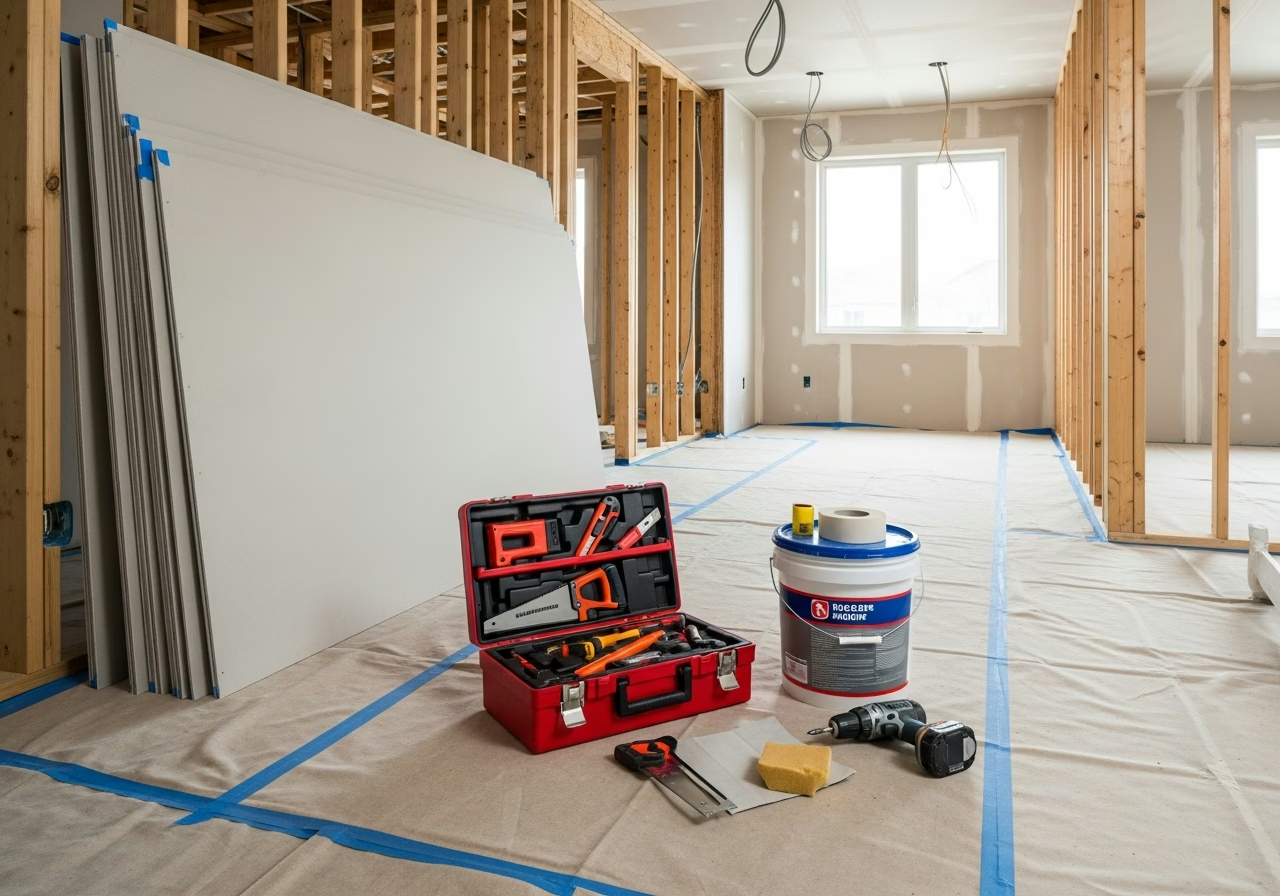
Level 0 is rarely specified for any visible areas. Its primary use is in temporary construction, or in areas that will remain completely concealed or unfinished within a larger structure. Think of spaces that will be covered by other materials, like:
- Behind permanent fixtures or equipment that entirely obscure the wall.
- In future demolition zones.
- Areas that will eventually be clad with another structural material, such as stone, brick veneer, or heavy paneling that doesn't require a smooth substrate.
- Sometimes, in the initial stages of a large commercial build before final decisions on interior partitions are made.
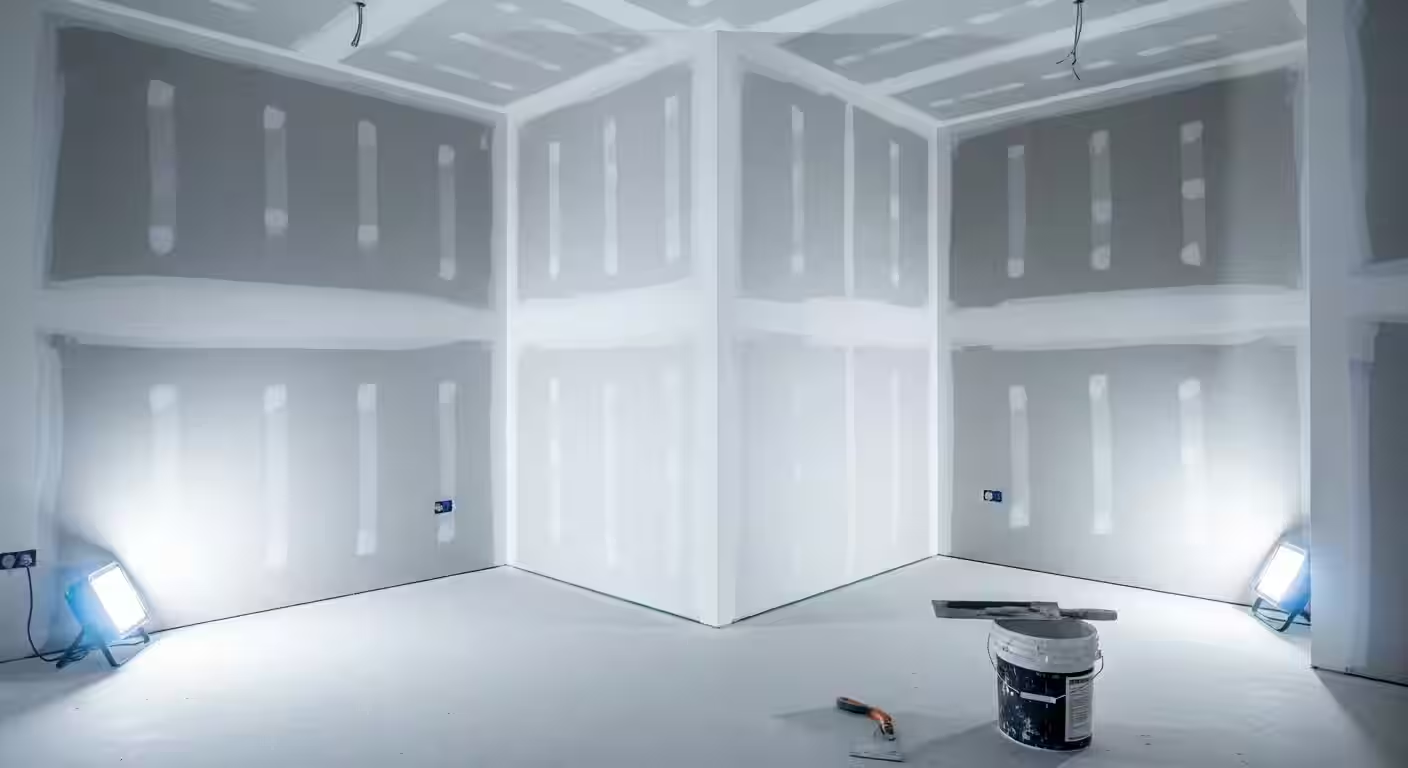
You will see exposed drywall sheets with visible fasteners (screws or nails), untaped joints, and potentially small gaps between sheets. The surface will be uneven, dusty, and absolutely not ready for any kind of paint or decorative finish. It's purely a structural or temporary enclosure.
Cost:Since Level 0 involves no finishing labour or materials beyond the drywall installation itself, its "cost" is essentially just the cost of hanging the drywall. In the GTA, the labour and materials for simply installing drywall sheets might run you $2.50 - $4.00 per square foot, depending on the complexity of the space, ceiling height, and type of drywall (e.g., standard vs. moisture-resistant). This does not include any finishing work.
Level 1: Embedded Tape Only
Stepping up from Level 0, Level 1 offers a very basic level of finish, primarily focused on embedding joint tape. This is the first step towards a sealed surface.
What It Is:At Level 1, all drywall joints and interior angles have joint tape embedded in joint compound. The tape is covered with a thin layer of compound, but that's it. Fastener heads and corner beads are *not* covered. The goal here is to create a continuous surface and prevent cracks at the joints, not to achieve smoothness or aesthetic appeal.
When Used:This level is reserved for areas where the drywall will be completely hidden from view, or where fire-rating and structural integrity are the sole concerns, with no expectation of a finished look.
- Plenums and Service Corridors: Areas above ceilings or behind walls dedicated to mechanical, electrical, or plumbing systems.
- Attics: Unfinished attic spaces where drywall might be used for fire separation or air sealing, but will never be seen.
- Shafts: Elevator shafts, pipe chases, or utility shafts.
- Mechanical Rooms: Boiler rooms, HVAC rooms, electrical rooms within commercial or multi-unit residential buildings.
- Areas that will be covered by ceramic tile: While some tile installers prefer a Level 2 or 3 for a perfectly flat substrate, a Level 1 can sometimes suffice if the tile adhesive and grout will completely obscure the surface imperfections. However, for large format tiles, a flatter surface is always better.
You will see visible tape lines, tool marks, and exposed fastener heads and corner beads. The surface will be rough and uneven, unsuitable for any paint or decorative finish. It provides a uniform surface for fire rating or air sealing, but zero aesthetic value.
Cost Per Sqft GTA (2026):Given its minimal labour and material requirements for finishing, Level 1 is the most economical finished level. Expect to add a small premium over the cost of just hanging the drywall.
- Typical GTA Cost: $0.75 - $1.25 per square foot *on top of the drywall installation cost*. So, if drywall hanging is $3.50/sqft, a Level 1 finish would bring the total to roughly $4.25 - $4.75/sqft for labour and materials. This is for the finishing portion only, not the total installed drywall cost.
Level 2: One Coat Compound
Level 2 is a slight improvement over Level 1, offering a bit more refinement but still far from a "finished" wall.
What It Is:All joints and interior angles have tape embedded in joint compound, and then a separate, thin coat of compound is applied over all fastener heads and corner beads. This means the tape is covered, and the fasteners/beads are *also* covered with *one* coat. The surface is not sanded, and tool marks are still visible.
When Used:This level is suitable for areas where appearance is secondary, but some level of surface uniformity is desired, or where the surface will be covered by a heavy texture or non-critical application.
- Garages: The most common application for residential properties in the GTA. It provides a cleanable surface, but imperfections are expected.
- Storage Areas/Warehouses: Commercial or industrial spaces where aesthetics are not a concern.
- Utility Rooms: Laundry rooms or furnace rooms in basements where a basic, functional finish is sufficient.
- Areas to be Covered by Heavy, Non-Critical Textures: Such as spray-on acoustic ceilings or very thick wall textures that can mask minor imperfections.
- Underlayment for Non-Critical Wall Coverings: Sometimes used as a substrate for wall coverings like heavy fabric, where the texture of the covering will hide minor surface flaws.
Visible tool marks and ridges from the compound application are common. Fastener heads and corner beads will be covered, but not smoothly. The surface is still not smooth enough for paint, especially lighter colours or anything with a sheen. It's a functional finish, not a decorative one.
Cost Per Sqft GTA (2026):Level 2 requires more labour and material than Level 1 due to the additional coat over fasteners and beads.
- Typical GTA Cost: $1.25 - $2.00 per square foot *for the finishing portion*, on top of drywall installation. Total installed cost might range from $4.75 - $6.00/sqft.
Level 3: Three Coats + Texture-Ready
Level 3 is where we start approaching a surface that can accept some form of decorative finish, though with significant limitations. It's often referred to as "texture-ready."
What It Is:All joints and interior angles have tape embedded in joint compound. Two separate coats of compound are applied over all joints and interior angles, and three separate coats of compound are applied over all fastener heads and corner beads. The surface is then sanded lightly to knock down major ridges, making it ready for a textured finish.
When Used:This level is a common choice when a textured finish is explicitly planned, or for areas that will be covered by heavy wallpaper.
- Textured Ceilings (e.g., Popcorn, Knockdown): If you're planning a textured ceiling in your basement or a particular room, Level 3 is often sufficient because the texture itself will hide the minor imperfections.
- Heavy Wall Coverings: Walls intended to receive heavy-grade wallpaper, fabric wall coverings, or other thick decorative finishes that can obscure minor surface variations.
- Non-Critical Commercial Spaces: Some offices or retail environments where a basic painted finish with a heavy texture is acceptable.
- Basement Finishing (Budget-Conscious): In some budget-driven basement projects in the GTA, Level 3 might be chosen if a textured paint or heavy primer is used, and expectations for a perfectly smooth wall are low.
While fastener heads and corner beads will be fully covered and relatively smooth, minor tool marks and ridges may still be visible, especially under critical lighting. The surface will be noticeably smoother than Level 2, but not perfectly flat or uniform. It's specifically designed to receive a textured finish, not a smooth paint job. If painted with a flat paint, minor imperfections will likely show through.
Cost Per Sqft GTA (2026):Level 3 involves more compound application and some light sanding, increasing both labour and material costs.
- Typical GTA Cost: $2.00 - $3.50 per square foot *for the finishing portion*, on top of drywall installation. Total installed cost could be $5.50 - $7.50/sqft.
Level 4: Three Coats + Sanded
Level 4 is the workhorse of residential drywall finishing. This is the most common level specified for standard residential applications in the GTA and beyond. It provides a good balance of quality and cost-effectiveness for typical paint finishes.
What It Is:All joints and interior angles have tape embedded in joint compound. Two separate coats of compound are applied over all joints and interior angles, and three separate coats of compound are applied over all fastener heads and corner beads. Crucially, the entire surface of the drywall is then sanded thoroughly to remove all tool marks and ridges, creating a relatively smooth and uniform surface.
When Used:This is the standard for almost all general-purpose residential and commercial spaces where smooth, flat, and eggshell paints will be applied.
- Standard Residential Living Areas: Living rooms, bedrooms, dining rooms, hallways, kitchens (walls), and family rooms in homes across Toronto, Mississauga, and Vaughan.
- Offices and Retail Spaces: Most commercial interiors where a standard painted finish is desired.
- Areas with Flat, Eggshell, or Satin Paints: These paint sheens are relatively forgiving and work well with a Level 4 finish. The slight imperfections that might remain are usually masked by the paint's characteristics.
- Under Wallpaper (Light to Medium Grade): For wallpaper that is not extremely heavy or textured, a Level 4 finish provides a sufficiently smooth substrate.
A Level 4 finish is considered "paint-ready" for most standard paints. The surface will be smooth to the touch, and joint lines, fastener heads, and corner beads should be imperceptible under normal viewing conditions and typical lighting. However, under *critical lighting* (e.g., strong natural light raking across the wall, or high-gloss paints), very minor imperfections, such as slight variations in texture or barely perceptible ridges, *may* still be visible. This is acceptable for Level 4 and is not considered a defect.
Cost Per Sqft GTA (2026):Level 4 involves significant labour for multiple coats and thorough sanding. This is where the bulk of drywall finishing budgets in the GTA are allocated.
- Typical GTA Cost (Labour + Materials for Finishing): $4.00 - $6.00 per square foot. This range covers the finishing work (taping, mudding, sanding, ready for primer).
- Total Installed Drywall Cost (including hanging + Level 4 finish): Expect to pay anywhere from $7.00 - $10.00 per square foot for a complete drywall installation with a Level 4 finish in the GTA. Factors like ceiling height, number of corners, cut-outs, and accessibility will influence where within this range your project falls.
Level 5: Skim Coat / Premium
The pinnacle of drywall finishing, Level 5 is the "showroom quality" finish. If you're aiming for perfection, especially with high-gloss paints or dramatic lighting, this is the only choice.
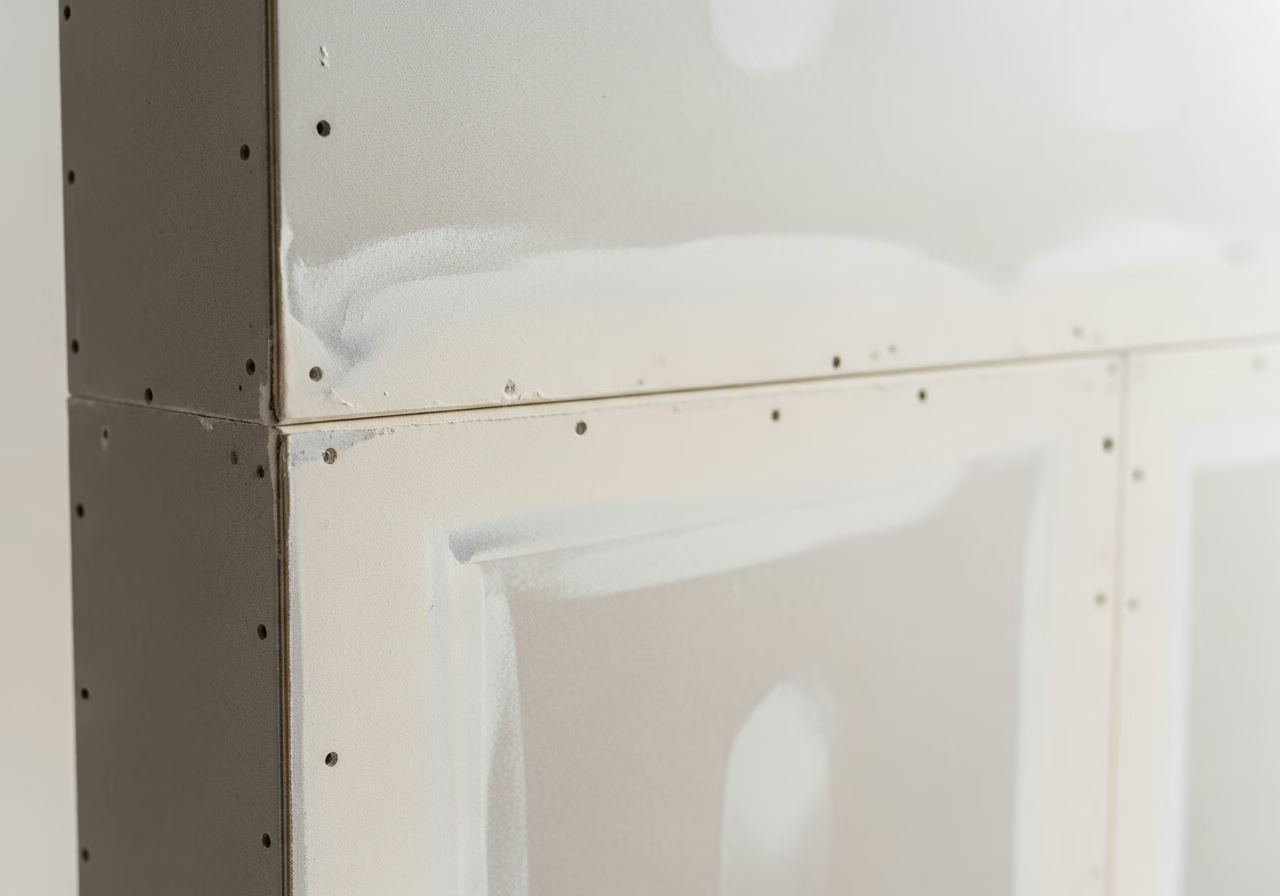
Level 5 encompasses all the steps of Level 4, but with one critical addition: a skim coat of joint compound is applied over the *entire surface* of the drywall. This very thin, uniform layer of compound effectively fills any remaining microscopic pores, inconsistencies, or texture variations, creating a perfectly smooth and monolithic surface. After the skim coat dries, it is meticulously sanded to achieve a glass-like finish. Some contractors may refer to this as a "full skim coat" or "smooth wall finish."
When Used:Level 5 is specified for premium applications where the highest aesthetic quality is paramount, and the walls will be subjected to intense scrutiny.
- High-End Residential: Luxury homes, custom builds, and high-end renovations in Toronto's most prestigious neighbourhoods (e.g., Forest Hill, Rosedale, Yorkville) where flawless walls are expected.
- Areas with Gloss or Semi-Gloss Paints: These paints are highly reflective and will mercilessly highlight *any* imperfection, no matter how small. A Level 5 finish is essential to achieve a truly smooth, luxurious look.
- Critical Lighting Conditions: Spaces with large windows, extensive natural light, or strong artificial "raking light" (light that hits the wall at a sharp angle, casting shadows from even tiny imperfections). Art galleries, showrooms, and modern, minimalist spaces often require Level 5.
- Dark Paint Colours: Dark, saturated paint colours can also accentuate minor surface variations, making Level 5 a wise choice for these applications.
- Feature Walls: Specific walls designed to be a focal point, especially if they will have dramatic lighting or a high-sheen finish.
A Level 5 finish should result in a perfectly smooth, seamless surface, free from any discernible imperfections, tool marks, or texture variations. When primed and painted, it should look like a single, continuous surface, even under the most critical lighting and with the most reflective paints. It is the ultimate expression of drywall craftsmanship.
Cost Per Sqft GTA (2026):Achieving a Level 5 finish is significantly more labour-intensive and requires a higher skill level and more material. The skim coat itself is an additional, critical step that demands precision.
Need professional drywall repair?
Call RenoHouse at 1-289-212-2345 or get a free estimate today.
Get Free Estimate →- Typical GTA Cost (Labour + Materials for Finishing): $7.00 - $12.00 per square foot. This range reflects the additional compound, meticulous application, and extensive sanding required.
- Total Installed Drywall Cost (including hanging + Level 5 finish): For a complete drywall installation with a Level 5 finish, expect to pay anywhere from $10.00 - $16.00+ per square foot in the GTA. The higher end of this range is common for complex projects, high ceilings, or highly detailed work.
---
Drywall Finishing Levels 0-5 Comparison Table (GTA 2026)
| Level | Description (GA-214) | Where Typically Used (GTA) | Typical GTA Finishing Cost (2026) / sqft | Paint Compatibility | Relative Time Required |
|---|---|---|---|---|---|
| 0 | No tape or compound. | Concealed areas, temporary structures, behind heavy non-structural cladding. | N/A (Just drywall install: $2.50-$4.00/sqft) | None | Fastest |
| 1 | Tape embedded in compound. No compound on fasteners/beads. | Attics, mechanical rooms, service shafts, plenums. | $0.75 - $1.25 | None (Fire/Air barrier only) | Faster |
| 2 | Tape embedded, one coat over fasteners/beads. No sanding. | Garages, warehouses, utility rooms, under heavy textures. | $1.25 - $2.00 | None (Accepts heavy texture only) | Fast |
| 3 | Tape embedded, two coats on joints, three on fasteners/beads. Light sanding. | Under heavy textures (e.g., popcorn ceilings), heavy wallpaper, budget basements. | $2.00 - $3.50 | Heavy textures, heavy wallpaper (flat paint will show flaws) | Standard |
| 4 | Tape embedded, two coats on joints, three on fasteners/beads. Thorough sanding. | Standard residential (living rooms, bedrooms, kitchens), offices. | $4.00 - $6.00 | Flat, eggshell, satin paints, light-medium wallpaper. (May show flaws with gloss/raking light) | Slower |
| 5 | All of Level 4, plus a thin skim coat over entire surface, then meticulously sanded. | High-end residential, luxury commercial, glossy/semi-gloss paints, critical lighting. | $7.00 - $12.00 | All paints, especially high-gloss, semi-gloss, dark colours. | Slowest / Most Intensive |
*Note: "Typical GTA Finishing Cost" refers to the labour and materials for the finishing work *only*, on top of the cost of hanging the drywall sheets. Total installed costs are higher.*
---
Which Level Do You Need?
Choosing the right drywall finishing level is a critical decision that balances aesthetics, budget, and functionality. It's not a one-size-fits-all answer for your Toronto home. Here's a decision tree to guide you, based on key factors:
Start Here:- 1. Is the area completely concealed, or will it be covered by another structural material (e.g., stone veneer, permanent fixtures)?
* No: Proceed to step 2.
- 2. Will the drywall be fully hidden (e.g., in an attic, mechanical room, or service shaft) or covered by heavy tile/paneling where aesthetics are irrelevant, but fire rating/air sealing might be needed?
* No: Proceed to step 3.
- 3. Is this a utility space like a garage, workshop, or storage room where a basic, durable, but not aesthetically critical finish is acceptable? Or will it be covered by a very heavy texture?
* No: Proceed to step 4.
- 4. Are you planning to apply a heavy wall texture (like a knockdown or popcorn ceiling), or a very thick/textured wallpaper that will obscure minor imperfections?
* No: Proceed to step 5.
- 5. What type of paint sheen will you be using, and what are the lighting conditions like?
* Paint Sheen:
* Flat, Matte, Eggshell, or Satin: These are forgiving finishes.
* Semi-Gloss or Gloss: These are highly reflective and highlight *every* flaw.
* Lighting Conditions:
* Normal Lighting: Standard windows, overhead lights, lamps.
* Critical Lighting: Large windows with direct sunlight, strong artificial "raking light" (light hitting the wall at a sharp angle), or very bright, uniform lighting (e.g., art gallery, showroom).
* Viewing Distance:
* Normal Residential Viewing: Walls viewed from a typical distance (a few feet away).
* Close Scrutiny/High-End Expectations: Walls viewed up close, or in a luxury setting where perfection is paramount.
Decision based on Paint Sheen & Lighting:
* For Flat, Matte, Eggshell, or Satin paints under normal lighting and viewing distances (standard residential):
* You most likely need Level 4. This is the standard for most homes in the GTA. It offers a great balance of quality and cost.
* For Semi-Gloss or Gloss paints, OR under critical lighting conditions (raking light, large windows), OR for dark/saturated paint colours, OR for high-end residential/commercial spaces where absolute perfection is demanded:
* You absolutely need Level 5. This is the only way to ensure a flawless finish that won't reveal imperfections under scrutiny.
Key Considerations for Your GTA Home:- Resale Value: For primary living areas, Level 4 is the minimum expected in the GTA. For luxury homes, Level 5 can significantly enhance perceived value.
- Your Personal Tolerance for Imperfection: Some homeowners are more sensitive to minor flaws than others. If you're particular about finishes, lean towards Level 5, especially in main living spaces.
- Budget: Level 5 is a significant investment. Ensure it aligns with your overall renovation budget. Don't compromise on finish quality in high-visibility areas if you're using expensive paint or unique lighting.
GTA Pricing Breakdown 2026
Understanding the cost of drywall finishing in the Greater Toronto Area involves more than just a per-square-foot number. It's a complex interplay of labour, materials, project scope, and local market conditions. As a seasoned contractor, I can tell you that while the ranges I've provided are accurate for 2026, several factors can push you to the higher or lower end of those scales.
Let's focus on the two most common and critical levels for homeowners in the GTA: Level 4 and Level 5.
Level 4: The GTA Standard (Typical Finishing Cost: $4.00 - $6.00 per sqft)- What this means: This cost covers the labour and materials for taping, applying two coats over joints, three over fasteners and beads, and thorough sanding, getting the surface ready for primer. It *does not* include the cost of hanging the drywall sheets themselves.
- Factors influencing the range:
* Ceiling Height: Standard 8-foot ceilings are easier. 9-foot, 10-foot, or cathedral ceilings increase labour costs due to scaffolding, lifts, and extended reach.
* Location within GTA: While the ranges are generally consistent, projects in downtown Toronto or affluent areas like Forest Hill or Rosedale might see slightly higher labour rates due to logistics (parking, access) and higher demand for skilled trades. Mississauga and Vaughan generally fall within the mid-range.
* Project Size: Larger projects (e.g., an entire home renovation) often benefit from economies of scale, potentially leading to a slightly lower per-square-foot rate than a small repair or single-room job.
* Type of Drywall: Specialty drywall (e.g., moisture-resistant, soundproof, fire-rated) can be more challenging to work with, slightly increasing finishing costs.
Level 5: The Premium Finish (Typical Finishing Cost: $7.00 - $12.00 per sqft)- What this means: This includes all Level 4 steps PLUS the meticulous application of a full skim coat over the entire surface, followed by extensive, fine sanding. This is a significant additional labour and material investment.
- Factors influencing the range:
* Meticulous Sanding: The sanding for Level 5 is far more intensive and fine-tuned than Level 4. It's about achieving absolute smoothness, often with fine-grit sandpaper and strong lighting to detect even the slightest imperfection.
* Quality Control: Level 5 projects demand constant quality control, often with the contractor and client inspecting the work under "raking light" (a light held parallel to the wall to highlight shadows from imperfections) before priming. This adds time.
* Complexity: As with Level 4, complex layouts, high ceilings, and intricate architectural details will push the cost towards the upper end. A perfectly flat, expansive wall for a high-gloss finish is the ultimate test.
* Contractor Expertise: Only highly skilled and experienced drywall finishers can consistently deliver a true Level 5. Their expertise commands a higher rate.
* Location: For high-end custom builds or luxury renovations in prime Toronto locations, expect to be at the higher end ($10-$12/sqft for finishing alone) due to the demand for top-tier craftsmanship.
Total Project Cost Example (GTA):Let's consider a typical 1000 sqft basement renovation with 8-foot ceilings:
- Drywall Hanging (Labour & Materials): $3.50/sqft x 1000 sqft = $3,500
- Level 4 Finishing: $5.00/sqft x 1000 sqft = $5,000
- Level 5 Finishing: $9.00/sqft x 1000 sqft = $9,000
As you can see, the difference between Level 4 and Level 5 can be substantial – in this example, $4,000 for a 1000 sqft space. This is why it's crucial to understand your needs and budget upfront.
Hiring Tips: Confirm Your Contractor Quotes the Right Level
This is where your knowledge of GA-214 becomes your superpower as a homeowner. Many disputes arise because the homeowner *assumed* a certain level of quality, while the contractor quoted a more basic finish. Here’s how to protect yourself and ensure you get the finish you expect in your Toronto GTA renovation:
- 1. Educate Yourself First: You're already doing this by reading this guide! Understand the differences between Level 4 and Level 5, and which one is appropriate for each area of your home.
- 2. Be Specific in Your Request for Quotes: When contacting contractors, don't just ask for "drywalling." State clearly, "I need a Level 4 finish for the bedrooms and living room, and a Level 5 finish for the main floor powder room where I plan to use a high-gloss paint."
- 3. Insist on a Detailed Written Quote: Your quote should explicitly state the drywall finishing level for each area. If it just says "drywall finishing," push back and ask for clarification based on the GA-214 standard. A reputable contractor will be happy to specify.
- 4. Ask for Examples/References: A good contractor in the GTA should be able to show you examples of their Level 4 and Level 5 work. Better yet, ask for references from past clients who can speak to the quality of the drywall finish.
- 5. Discuss Paint Sheen and Lighting: Bring up your paint choices (especially if you're considering semi-gloss or gloss) and the lighting conditions (e.g., large windows, pot lights close to walls). This helps the contractor understand your expectations and recommend the correct level. If they don't bring it up, you should.
- 6. Understand the Inspection Process: Ask how the contractor will ensure the specified level is achieved. For Level 5, this often involves inspecting the walls with a "raking light" (a light held parallel to the wall) after sanding and before priming. This technique highlights even the smallest imperfections.
- 7. Don't Just Go for the Cheapest Bid: A significantly lower quote for "drywall finishing" might indicate that the contractor is quoting a Level 3 or even Level 2, while you're expecting Level 4 or 5. Always compare apples to apples. If one quote is drastically lower, clarify *exactly* what finishing level they are providing.
- 8. Clarify Primer Requirements: A good finish needs a good primer. Ask if the quote includes a high-quality PVA (Polyvinyl Acetate) drywall primer, which is essential for sealing the porous drywall and joint compound and providing a uniform base for paint.
- 9. Walk Through Before Payment: Before making final payments, walk through the completed drywall work with your contractor. Use natural light and, if possible, temporary artificial light to inspect the surfaces. Point out any areas that don't meet the agreed-upon finishing level.
By following these tips, you'll ensure clear communication and a much higher likelihood of achieving the drywall finish you desire for your Toronto home renovation.
FAQ
1. What's the biggest cost difference between Level 4 and Level 5 drywall finish?
The biggest cost difference comes from the additional labour and material required for the full skim coat and meticulous sanding in Level 5. A Level 5 finish effectively adds an entire extra step (or more, if multiple skim coats are needed) of compound application and highly detailed sanding over the *entire surface* of the drywall, not just the joints and fasteners. This can easily double the finishing cost per square foot compared to Level 4, as seen in our GTA pricing breakdown. It's a significant jump in both time and skill.
2. Can I paint over a Level 3 finish with flat paint?
You *can* paint over a Level 3 finish with flat paint, but it's generally not recommended for visible areas. While flat paint is the most forgiving sheen, a Level 3 finish is only lightly sanded and still has visible tool marks and minor imperfections. Flat paint will mask some of these, but under any direct or raking light, you will likely still see subtle ridges, inconsistencies, and joint lines. For best results, even with flat paint, Level 4 is the minimum standard for residential living spaces.
3. How much longer does a Level 5 finish take compared to Level 4?
A Level 5 finish typically adds at least 30-50% more time to the finishing process compared to Level 4, and sometimes even more for complex projects or those requiring multiple skim coats. This extra time accounts for the application and drying time of the full skim coat, plus the significantly more intensive and precise sanding process to achieve a flawless surface. It's not just an extra coat; it's an extra *stage* of work demanding extreme attention to detail.
4. What factors other than finishing level affect the overall drywall price in the GTA?
Beyond the finishing level, several factors influence the total cost:
- Ceiling Height: Taller ceilings require scaffolding/lifts and more labour.
- Complexity of Layout: More corners, bulkheads, arches, niches, and cut-outs for lights/outlets increase labour.
- Type of Drywall: Standard 1/2" drywall is cheapest; 5/8" fire-rated, moisture-resistant (greenboard), soundproof (QuietRock), or specialty panels cost more per sheet and can be heavier to install.
- Accessibility: Difficult access (e.g., tight stairwells, no elevator for upper floors) or limited working space can increase labour.
- Project Size: Larger projects usually have a lower per-square-foot rate due to economies of scale.
- Demolition/Disposal: If old drywall needs to be removed and disposed of, this is an additional cost.
- Location within GTA: While generally consistent, downtown Toronto projects can sometimes incur higher costs due to parking, logistics, and union rates for larger commercial jobs.
5. Is a Level 5 finish necessary for a new build home in Toronto, or just for renovations?
A Level 5 finish is not strictly necessary for all new builds, but it's increasingly common for high-end custom homes and luxury properties in the GTA. For standard new builds, Level 4 is the typical choice. However, if the new home features extensive natural light, dramatic lighting schemes, or the owners plan on using high-gloss paints and expect a truly flawless finish, then Level 5 is highly recommended and often specified by architects and designers for premium projects. It's a choice driven by aesthetic goals and budget, regardless of whether it's a new build or a renovation.
6. Do condo renovations typically require a higher finish level than house renovations in Toronto?
Not necessarily a *higher* level across the board, but condo renovations often have specific considerations. Due to smaller spaces, more direct natural light from large windows, and often more contemporary, minimalist designs, there's a greater emphasis on smooth, clean lines. This means that while Level 4 is still standard, Level 5 is more frequently requested for feature walls or entire units in high-end condo renovations in downtown Toronto where glossy finishes and critical lighting are prevalent. Also, noise transfer between units might lead to using sound-rated drywall, which doesn't directly affect the finishing level but adds to the overall drywall scope.
7. Does the finishing level affect the requirement for primer?
No, the finishing level does not affect the requirement for primer. Regardless of whether you have a Level 1 or Level 5 finish, primer is always essential before painting. Drywall and joint compound are highly porous and absorb paint differently. Primer seals the surface, ensures uniform absorption, promotes better paint adhesion, and helps achieve a consistent colour and sheen. Skipping primer, especially on newly finished drywall, will result in patchy, uneven paint application, regardless of how perfectly smooth the finish is.
8. Is drywall finishing covered by a warranty in the GTA?
Yes, reputable contractors in the GTA typically offer a warranty on their drywall finishing work. This usually covers defects in workmanship, such as cracking along joints, blistering of tape, or excessive shrinkage that appears within a certain period (e.g., 1-2 years). However, the warranty generally doesn't cover issues arising from structural movement, water damage, or improper paint application by others. Always clarify the specifics of the warranty with your contractor *before* signing a contract. A clear understanding protects both you and the contractor.
Conclusion
Understanding drywall finishing levels, from the bare bones of Level 0 to the pristine perfection of Level 5, is an essential part of any successful renovation or new build in the Toronto GTA. The Gypsum Association's GA-214 standard isn't just industry jargon; it's your assurance of quality and a critical tool for clear communication with your contractor.
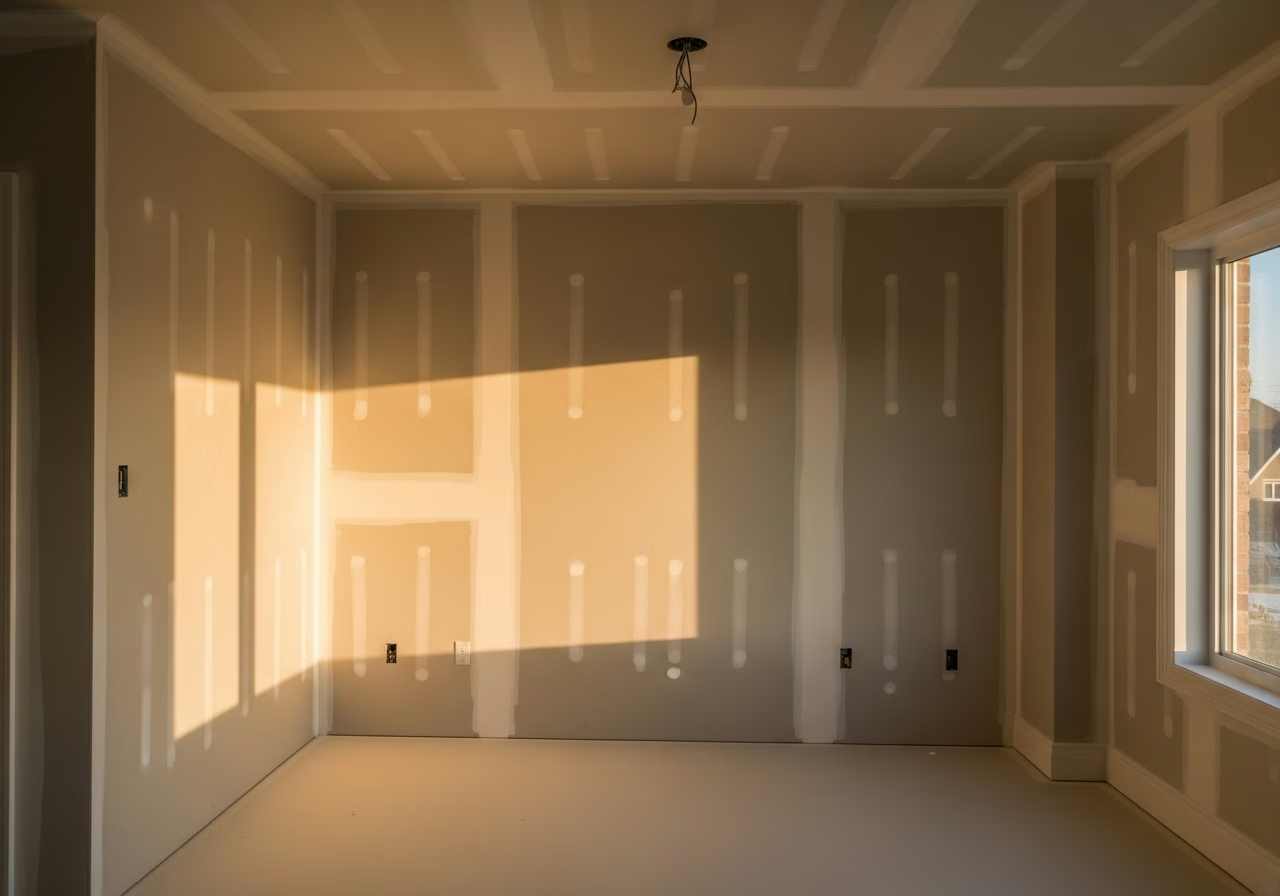
As we’ve explored, the right finishing level directly impacts your budget, timeline, and most importantly, the final aesthetic of your home, especially when considering paint sheens and lighting. Don't let your investment in beautiful paint or stunning lighting be undermined by an inadequate drywall finish. Ask the right questions, specify your needs clearly, and ensure your contractor is quoting the level of quality you expect.
For over two decades, we at RenoHouse have been transforming homes across Toronto, Mississauga, and Vaughan, delivering exceptional drywall finishes that stand the test of time and scrutiny. Whether you're aiming for a standard Level 4 or the ultimate Level 5 perfection, our experienced team understands the nuances of each level and is committed to delivering flawless results.
Ready to discuss your project and ensure your walls are perfectly prepared for the finish you envision? Contact RenoHouse today for a detailed, transparent quote, and let us bring your vision to life with the highest standards of craftsmanship.