RenoHouse

# Hardwood Flooring Refinishing Etobicoke: Costs and Process
Quick answer. Hardwood floor refinishing in Etobicoke costs $3.50–$7.00 per square foot in 2026, putting a typical 600–800 sq ft job at $2,100–$5,600. The price range depends on floor condition, stain changes, and whether you opt for dustless sanding — a worthwhile upgrade in the older bungalows and two-storey homes common across Etobicoke, Rexdale, and Long Branch.What Hardwood Refinishing Costs in Etobicoke (2026 Prices)
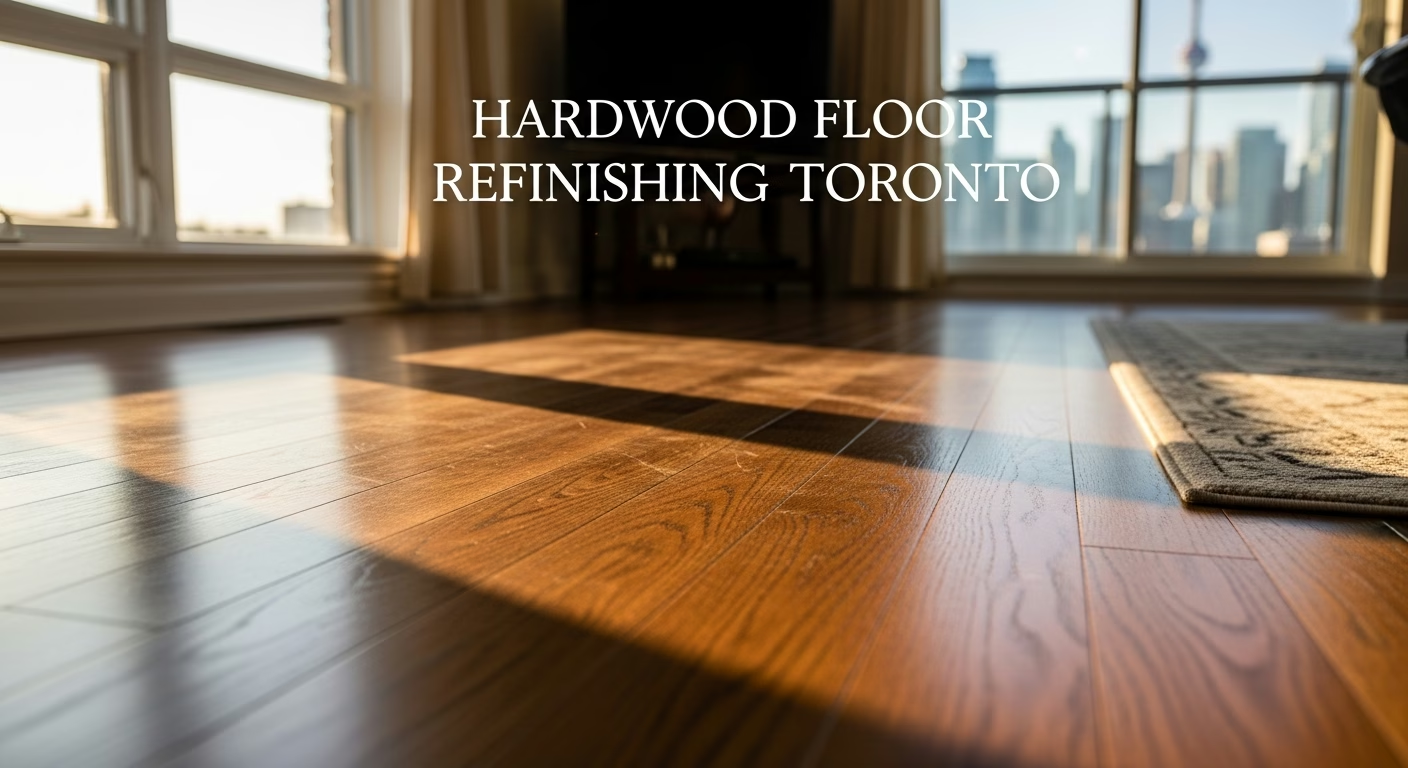
Standard sand-and-refinish work — removing the worn finish, sanding to bare wood, and applying two to three coats of polyurethane — runs $3.50–$5.50 per square foot in the Etobicoke and west Toronto market in 2026. That price covers labour, materials (sandpaper, finish coats), and basic dust containment. For a 700 sq ft main floor, budget roughly $2,450–$3,850. For a broader look at refinishing costs across the city, the hardwood floor refinishing cost guide covers wider Toronto pricing context.
Changing the stain colour adds complexity. The contractor needs to sand deeper to ensure even colour absorption, then apply stain before sealing. Expect $4.50–$7.00 per sq ft for a stain-change job. Homeowners in Humber Valley Village and Mimico who want to move from orange-toned oak to a grey or espresso stain should plan for the higher end of that range.
Dustless sanding adds $0.75–$1.25 per sq ft but is worth considering in occupied homes or the tight semi-detached houses common in Runnymede and Swansea. The contained vacuum system captures 90–95% of fine dust before it settles into HVAC systems and adjacent rooms.
Factors that affect your final quote:| Factor | Typical impact (2026 GTA) |
|---|---|
| Floor area under 300 sq ft | Minimum job charge $600–$900 |
| Stain colour change | Add $1.00–$1.50/sq ft |
| Dustless sanding system | Add $0.75–$1.25/sq ft |
| Edge sanding in tight spaces | Add $0.50–$0.75/sq ft |
| Board repairs / replacement (per board) | $15–$35/board |
| Oil-based vs water-based finish | Oil-based ~$0.50/sq ft less, but longer cure time |
Spot repairs — fixing cupped, cracked, or damaged boards before sanding — run $150–$400 depending on extent. In older Etobicoke homes built pre-1970, subfloor moisture problems sometimes surface once the worn finish is stripped. Addressing those issues (shimming, fastening loose boards) adds $200–$600 to the project but prevents the new finish from failing prematurely.
The Refinishing Process: What Happens in Your Home
Refinishing hardwood floors is a multi-day process. Most Etobicoke jobs run two to four days from start to a walkable finish — longer if you are changing stain or using oil-based polyurethane, which requires 24 hours of drying between coats.
Need professional renovation?
Call RenoHouse at 289-212-2345 or get a free estimate today.
Get Free Estimate →No permits are required for floor refinishing in Toronto. However, if the project involves replacing a significant portion of boards and the home sits within a heritage-designated area — some properties near Humber River and the old Lakeshore communities fall under heritage policies — confirm with Toronto Building before starting any work.
Refinish or Replace? Signals Your Floor Needs Attention
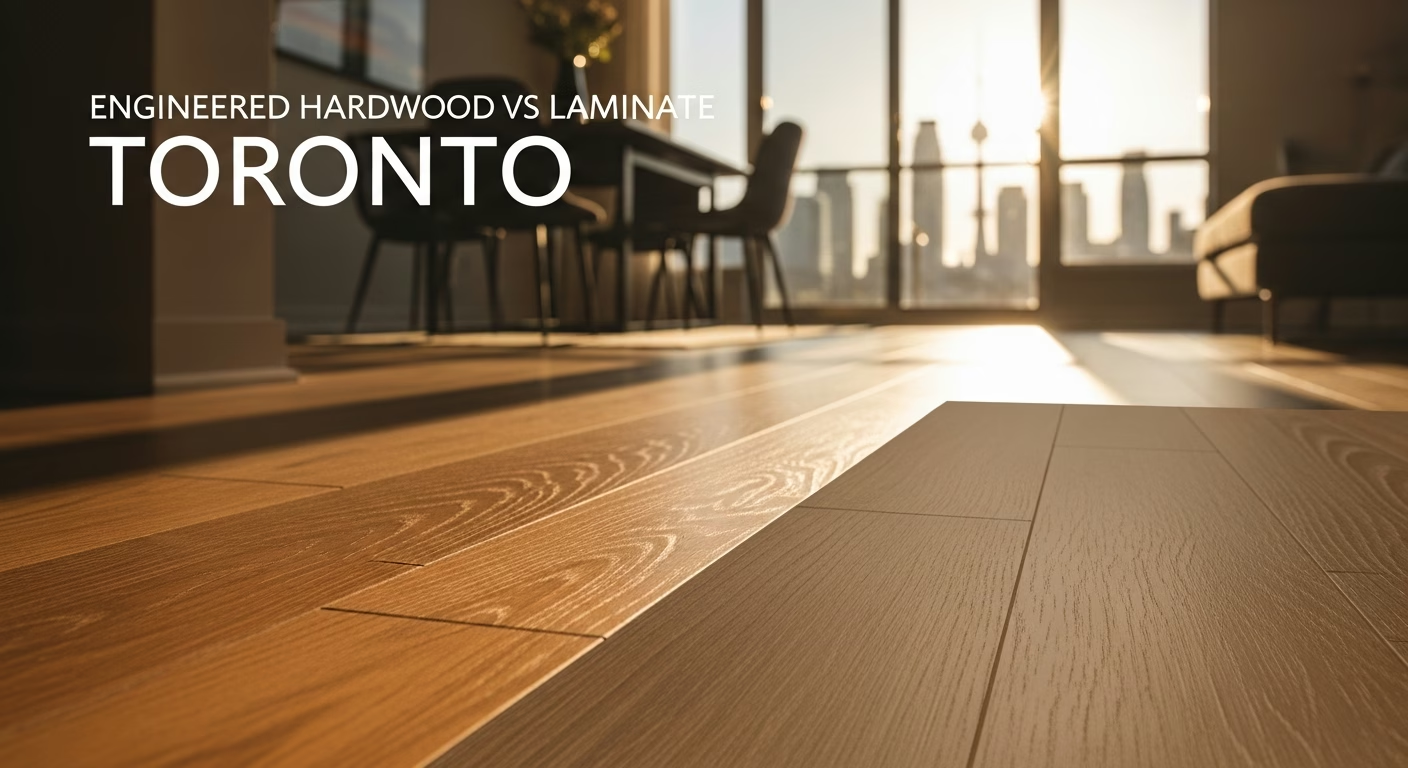
The core question homeowners in Etobicoke face is whether sanding and refinishing is worth it or whether a full replacement makes more sense. Refinishing is almost always cheaper — new solid hardwood installation runs $8–$14 per sq ft installed in the 2026 GTA market — and preserves original character wood that is difficult to match today. If you are weighing refinishing against a full replacement, the engineered hardwood vs laminate guide covers installation costs for alternative materials in detail.
Refinishing is the right call when:- The floor has light to moderate surface scratches, worn finish, or minor dullness
- The boards are structurally sound with no significant warping or rot
- The wood is at least 19 mm thick with 3+ mm remaining above the tongue groove
- You are seeing discolouration or pet staining that sanding can remove
- The finish has worn through in high-traffic areas such as kitchen entries and hallways
- Boards are cupped, buckled, or show signs of active moisture intrusion from below
- More than 15–20% of the floor area has structural damage
- The wood has been sanded three or four times and is too thin for another pass
- You are switching from solid hardwood to a different flooring material entirely
A word on engineered hardwood: many Etobicoke homes from the 1990s and early 2000s have engineered products with thin wear layers of 2–3 mm. These can typically be refinished once, sometimes twice. A reputable flooring contractor will measure the wear layer before quoting a refinish job rather than assuming.
Watch for contractors who quote over the phone without an inspection. Floor condition varies enormously between a 1950s post-war bungalow in Alderwood and a 1980s two-storey in Islington-City Centre West. A proper quote requires looking at the actual floor, checking thickness, and identifying any board-level repairs needed before pricing the work.
Frequently Asked Questions
How long does hardwood floor refinishing take in Etobicoke?
Most residential jobs in Etobicoke take two to four days: one day for sanding and stain (if applicable), then one day per finish coat with drying time in between. Water-based finishes allow furniture back in 48–72 hours. Oil-based finishes add a day or two to that timeline. Larger homes — over 1,000 sq ft of hardwood — may extend the total timeline to five days.
Does hardwood refinishing in Toronto require a permit?
No permit is required for sanding and refinishing existing hardwood floors under Toronto Building bylaws. If your project involves structural subfloor repairs or you live in a heritage-designated property, confirm with Toronto Building (416-338-0338) before work begins. ESA permits are not involved in floor refinishing unless electrical fixtures or in-floor heating elements are being modified alongside the flooring work.
How many times can hardwood floors be refinished?
Solid hardwood floors (typically 19 mm thick) can usually be refinished four to six times over their lifespan, depending on how aggressively each sanding removes material. Engineered hardwood depends entirely on wear-layer thickness — a 2 mm wear layer allows one refinishing; a 6 mm wear layer allows two to three. A contractor can measure wear-layer thickness with a gauge during the initial assessment, before any sanding begins.
What finish is best for high-traffic areas in a Toronto home?
For main-floor areas, hallways, and kitchen entries in Toronto-area homes, a commercial-grade water-based polyurethane such as Bona Traffic HD or equivalent performs well in 2026. It dries fast, has low VOC output, and delivers a hard, clear surface that does not yellow over time. Oil-based polyurethane provides a warm amber tone preferred in older character homes but requires longer ventilation and cure time. Both are durable options; the choice is largely aesthetic.
Need a quote in the GTA?
RenoHouse serves Etobicoke and the broader GTA — including Mississauga, Brampton, North York, Scarborough, and Oakville — for hardwood floor sanding, refinishing, and repair. With 12+ years of local experience and a 4.9-star reputation across nearly 500 GTA reviews, the team provides free, on-site quotes so you get an accurate number for your specific floors. Call 289-212-2345 or request a free quote through the website to schedule an assessment.