RenoHouse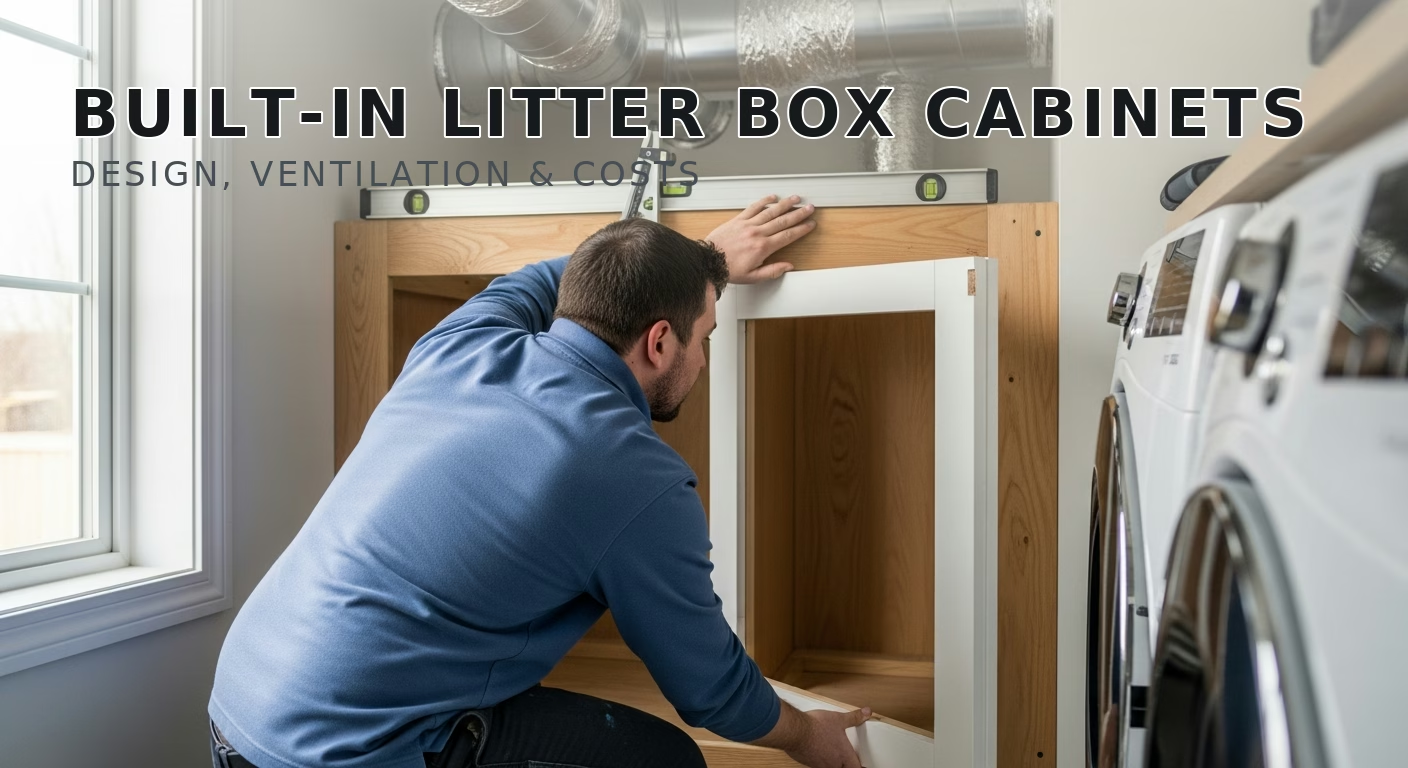

# Litter Box Built-In Cabinet Toronto: 2026 Design Guide
Quick answer. A built-in litter box cabinet is the single most-requested cat-related renovation in Toronto in 2026. The reason is straightforward: an open litter box smells, looks bad in photos, and turns whatever room it's in (mudroom, bathroom, laundry, hall closet) into a "cat room." A purpose-built cabinet hides the box, vents the smell, contains t...A built-in litter box cabinet is the single most-requested cat-related renovation in Toronto in 2026. The reason is straightforward: an open litter box smells, looks bad in photos, and turns whatever room it's in (mudroom, bathroom, laundry, hall closet) into a "cat room." A purpose-built cabinet hides the box, vents the smell, contains the tracking, and integrates the cat's daily routine into a finished design.
The Toronto cost in 2026 is $1,200–$2,400 for a single-box cabinet, $2,000–$3,800 for a two-box arrangement. This guide covers the construction details, ventilation, real CAD costs, and where to locate it.
For the broader pet renovation context, see our pillar Pet-Friendly Renovation Toronto: Complete 2026 Guide. For other cat infrastructure, see Cat-Friendly Built-Ins and Shelves Toronto.
The Short Answer
A 2026 Toronto litter box cabinet has:
- A closed cabinet, 30"x36" minimum interior, 24"+ deep.
- A side-entry hole (8"x10") for the cat.
- Ventilation: passive grille or active fan ducted to HVAC return.
- Removable interior lining (PVC, vinyl, or removable HDPE).
- Easy access via hinged door or sliding drawer for cleaning.
Cost: $1,200–$2,400 custom built. $300–$600 for off-the-shelf retrofitted into existing cabinet.
Why Build It In
The case for building it in:
- 1. Smell containment: a closed cabinet with a vent reduces odour by 70–90% compared to an open box.
- 2. Aesthetic: kitchen-style cabinetry hides the box completely.
- 3. Tracking control: a recessed mat inside the cabinet catches litter before it reaches the floor.
- 4. Resale: properly integrated, the cabinet looks like ordinary millwork.
- 5. Multi-cat households: cleaner separation from human zones.
The case against:
- Higher upfront cost than buying a covered box.
- Cleaning access is slightly more involved.
- Custom millwork commitment — can't easily relocate.
Where to Locate It
Best Toronto locations:
- 1. Mudroom or laundry room — top pick. Hard floors already, ventilation easy.
- 2. Hall closet (cat door + cabinet inside) — works in pre-war semis.
- 3. Powder bath repurposed with a side-entry — works if powder room has alternative.
- 4. Basement — works but cats may avoid stairs as they age.
- 5. Custom under-stair cabinet — premium look, requires good detail design.
Avoid:
Need professional home renovation?
Call RenoHouse at 289-212-2345 or get a free estimate today.
Get Free Estimate →- Kitchen (food + waste = bad).
- Bedroom (smell at night).
- Living room main wall (no matter how well-built, the smell occasionally escapes).
Cabinet Construction
Box Construction
- Plywood carcass: 5/8"–3/4" Baltic birch or hardwood plywood.
- Interior surface: melamine or HDPE-laminated for moisture resistance.
- Door: hinged inset or overlay, full overlay for kitchen-cabinet match.
- Bottom: removable lined floor for spill cleanup.
Cat Entry
The entry hole specifications:
- Size: 8"x10" minimum, 10"x12" comfortable for large cats.
- Height off floor: 6–10". Some cats step over a small lip; some prefer floor-level.
- Edge finish: rounded, sanded smooth (cats squeeze through, sharp edges injure).
- Optional flap: vinyl or rubber flap reduces odour escape but some cats avoid flapped openings.
The entry can be on:
- The end panel (most common).
- The front (treats the cabinet like a small piece of furniture, with the cat entering past the visible door).
- A side panel through a wall (if the cabinet is between two rooms).
Ventilation
Three options:
Option 1: Passive grille (cheapest, $40–$120): a 6"x6" or larger grille on the back or top of the cabinet. Air circulates through the room. Works for one cat, lightly used. Option 2: Active fan (mid-tier, $200–$500 installed): a small inline duct fan (Panasonic WhisperGreen or AC Infinity Cloudline) pulls air from the cabinet through a duct to a wall or ceiling vent. Best for multi-cat households. Option 3: HVAC return integration (premium, $400–$900 added): the cabinet vents into the return-air ductwork. The return then pulls litter-box air through the furnace filter, where odour is trapped. Requires a clean HVAC system and MERV 13+ filter.The 2026 RenoHouse spec is Option 2 for most homes — the active fan ducts to outside or to the closest exhaust vent (powder room, laundry).
Cleaning Access
Options:
- Hinged door: opens fully, lift box for cleaning. Simplest.
- Pull-out drawer: box slides out on heavy-duty drawer slides. Premium feel.
- Top-loading lid: cabinet top hinges up. Less common but works for tight spaces.
The pull-out drawer is the easiest to clean (you don't bend over).
Litter Containment Mat
Inside the cabinet floor:
- Marine-grade vinyl or PVC sheet lining.
- Sloped slightly toward the entry (collects scattered litter at the cat's feet).
- Or a removable plastic tray sized to the cabinet floor.
Litter Box Selection
The cabinet is sized to the box. Standard options:
| Box | Size | Best for |
|---|---|---|
| Standard plastic (Petmate Booda) | 18"x21" | One cat |
| Jumbo (Nature's Miracle Hi-Sider) | 24"x18" | Large cats |
| Top-entry box | 16"x18" | Inside cabinet — defeats purpose |
| Self-cleaning (Litter-Robot 4) | 22" diameter | Tech-forward households |
The cabinet interior should fit the box plus 2" of side clearance plus the litter mat.
Multi-Cat Sizing
For 2+ cats:
- Two boxes side by side: cabinet size 36"–48" wide, two entry holes (or one shared centre entry).
- Two stacked boxes: only works with vertical access, rarely used.
- Two separate cabinets in different rooms: better for cat behaviour (cats prefer privacy).
The veterinary rule: one box per cat plus one extra. Two cats = three boxes (sometimes split between two cabinets).
Real Toronto Builds
Build 1: Roncesvalles Mudroom — $1,400 single-box cabinet
- 30"x36" cabinet built into mudroom corner.
- Side-entry hole, 10"x12".
- Passive grille on back wall.
- Plywood with melamine interior.
- One cat.
Build 2: Leaside Laundry Room — $2,800 two-box dual cabinet
- 48"x36" cabinet under laundry counter.
- Two boxes inside, single side entry.
- Active inline fan ducted to laundry exhaust.
- Pull-out drawer access.
- Two cats.
Build 3: Forest Hill Reno — $3,800 premium under-stair cabinet
- Custom under-stair triangular cabinet.
- Two boxes, two entries.
- HVAC return integration with MERV 13 filter.
- Pull-out drawers, soft-close.
- Toe-kick toe-kick LED nightlight.
- Three cats.
Permit and Code Considerations
- Passive vent: no permit.
- Active fan ducted to exterior: technically a building code matter (mechanical ventilation), but in practice no permit for residential bathroom/laundry-style fans.
- HVAC return integration: HVAC permit may apply if cutting new ductwork. Cost: $200–$400.
Common Mistakes
- 1. Cabinet too small — cat refuses the box.
- 2. No ventilation — cabinet becomes a smell amplifier.
- 3. Wood interior with no liner — urine soaks in, cabinet rots.
- 4. Door too small to access for cleaning — owner avoids cleaning, cat avoids box.
- 5. Entry hole too narrow — cat squeezes, hates it, goes elsewhere.
- 6. Locating in a room cats avoid (basement, far from main living) — box is unused.
Maintenance
- Daily: scoop, wipe interior tray.
- Weekly: empty fully, wipe with mild enzyme cleaner (Nature's Miracle, Anti-Icky-Poo).
- Monthly: clean ventilation grille or fan filter.
- Yearly: replace interior liner if damaged.
Smart Litter Box Integration
For Litter-Robot 4 and similar self-cleaning units:
- Cabinet must be 28" tall internally to fit the unit.
- Power outlet inside cabinet.
- WiFi signal must reach (some basement cabinets need a mesh extender).
- Ventilation more important — self-cleaning units throw waste into a closed bag, but the rotation can release odour.
Resale Considerations
A litter box cabinet integrated into kitchen-style millwork reads as ordinary cabinetry to non-cat buyers. Add a removable shelf and bowl insert and the next owner has a closed pantry cabinet.
A free-standing "cat condo" piece does not have this versatility and can read as eccentric in listing photos.
Related Reading
- Pet-Friendly Renovation Toronto: Complete 2026 Guide
- Cat-Friendly Built-Ins and Shelves Toronto
- Pet-Friendly Renovation Cost Toronto
- Air Quality and Pet Allergies Renovation Toronto
Designing a built-in litter box cabinet for your Toronto home? Contact RenoHouse.
Sources & References
Authoritative sources cited in this guide:
- Ontario Building Code — OBC official text
- Toronto Building Permits — City permit portal
- Tarion New Home Warranty — Ontario new-build warranty regulator
- HCRA — Home Construction Regulatory Authority — Ontario builder/vendor licensing
Continue Reading