RenoHouse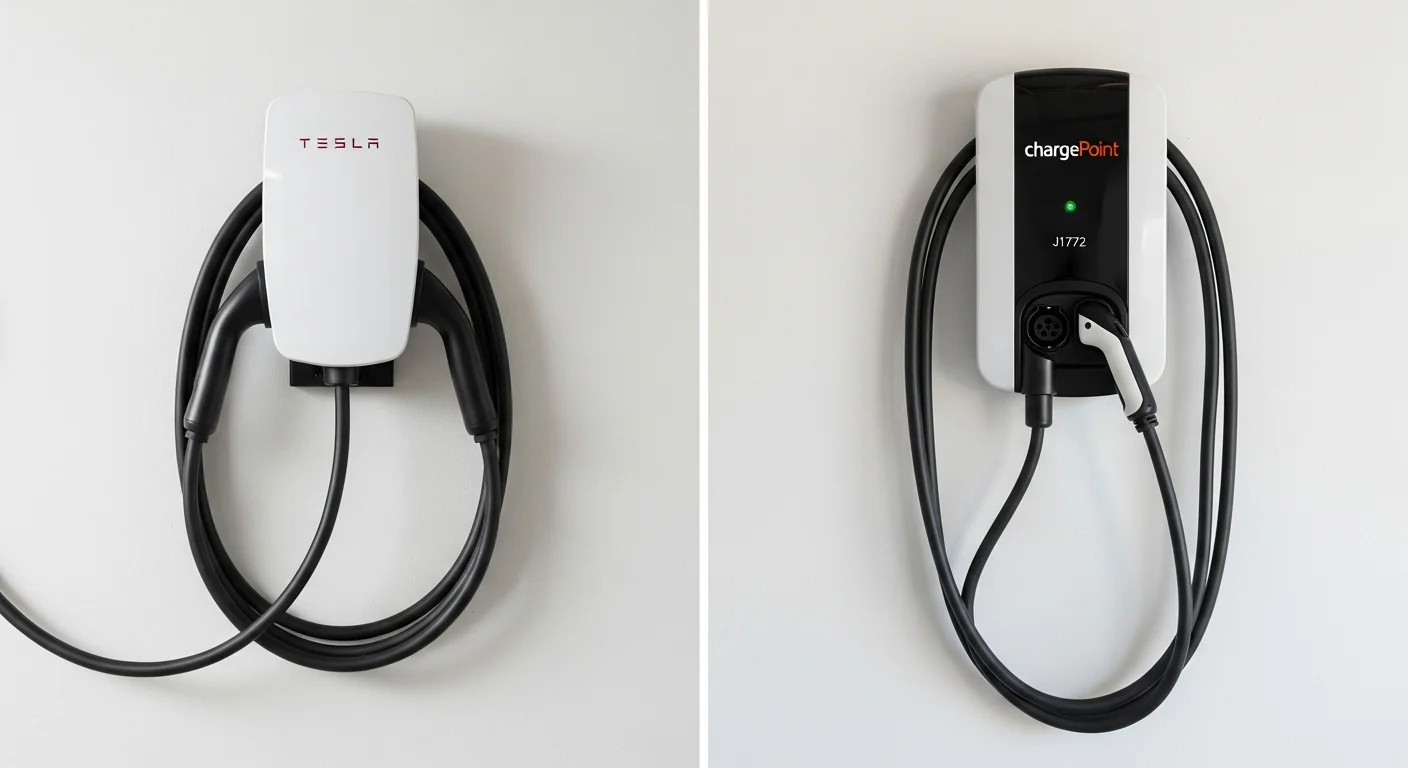

Tesla Wall Connector vs. Universal J1772: Which to Install in Your Toronto Home
The electric vehicle wave is no longer a future promise—it's parked in driveways across Toronto and the GTA. From Etobicoke bungalows to Cabbagetown Victorians, homeowners are trading gas pumps for charging plugs. But with this new technology comes a crucial decision: which Level 2 charger should you install? The debate often boils down to two main contenders: the sleek, proprietary Tesla Wall Connector and the versatile, universal J1772 charger.
As contractors who specialize in these installations, we see homeowners grapple with this choice every day. It’s not just about what car you own today, but also about future-proofing your home, navigating Toronto's electrical code, and understanding the real-world differences in performance. This guide cuts through the marketing fluff to give you a straight-up comparison, helping you make the right call for your property.
The Core Difference: Proprietary vs. Universal
Before we dive into specs and costs, let's clarify the fundamental difference. Think of it like the old Apple Lightning cable versus the now-ubiquitous USB-C. One is designed for a specific ecosystem, while the other is an open standard.
* Tesla Wall Connector (NACS): This charger uses Tesla's proprietary plug, now called the North American Charging Standard (NACS). It's compact, button-free (the charge port opens automatically for Teslas), and designed to integrate perfectly with Tesla vehicles. While other manufacturers like Ford and GM have committed to adopting NACS in the future, for now, it's primarily a Tesla-native experience.
* Universal J1772 Chargers: The J1772 is the standard plug type for every other electric vehicle sold in North America, including the Ford Mustang Mach-E, Chevrolet Bolt, Rivian R1T, and Hyundai Ioniq 5. Chargers from brands like ChargePoint, Wallbox, and Grizzl-E use this connector. It's the universal language of non-Tesla EVs.
Head-to-Head Comparison: Tesla vs. J1772 Chargers
Let's break down the key features in a side-by-side table. For the J1772 side, we'll use the popular ChargePoint Home Flex as a representative example.
| Feature | Tesla Wall Connector (Gen 3) | Universal J1772 (e.g., ChargePoint Home Flex) |
|---|---|---|
| Connector Type | NACS (Tesla) | J1772 |
| Max Amperage | 48 Amps (on a 60A circuit) | Up to 50 Amps (on a 60A or 70A circuit) |
| Typical Speed | Up to 70 km of range per hour | Up to 60 km of range per hour |
| Compatibility | Tesla vehicles natively. Non-Teslas require an adapter. | All non-Tesla EVs natively. Teslas require an adapter. |
| Aesthetics | Sleek, minimalist, glass faceplate. | Varies by brand. Often more industrial, but some are very stylish. |
| Smart Features | Wi-Fi, power-sharing with other Tesla chargers, charging stats in Tesla app. | Wi-Fi/Bluetooth, scheduling, usage reports, smart home integration (Alexa). |
| Hardware Cost | ~$600 CAD | ~$750 - $950 CAD |
| Best For | Dedicated Tesla households wanting maximum speed and ecosystem integration. | Multi-EV households, future-proofing, or owners of non-Tesla EVs. |
Charging Speed: Does 48A vs. 32A Really Matter?
One of the biggest selling points for the Tesla Wall Connector is its ability to deliver 48 amps of continuous power, provided it's installed on a dedicated 60-amp circuit. This translates to faster charging. But how much faster, and does it matter for your daily routine?
* 48A Charging (Tesla Wall Connector on 60A circuit): Adds about 60-70 kilometres of range per hour.
* 32A Charging (Common J1772 setup on 40A circuit): Adds about 40-50 kilometres of range per hour.
For the vast majority of homeowners, charging happens overnight. Whether your battery is full at 3 a.m. or 5 a.m. makes no practical difference. A 32A setup is more than enough to fully recharge even a long-range EV battery overnight. The primary benefit of 48A charging is for quick top-ups. If you arrive home and need to leave again in an hour or two, that extra speed can be useful.
The bigger consideration here is your home's electrical capacity. To get 48A, you need a 60A breaker and wiring to support it. Many older Toronto homes, especially those with 100A main service, may not have the capacity for this without significant upgrades. A load calculation is essential, and often a more modest 40A circuit (for 32A charging) is a more practical and affordable solution. This is a key part of our assessment when providing a quote for an EV charger installation.
Compatibility and Adapters: The Elephant in the Room
This is where the decision gets personal. How you handle adapters will depend on your current and future vehicles.
For Tesla Owners:Your car came with a J1772-to-Tesla adapter in the trunk. It's a small, simple device that clicks onto any J1772 plug, allowing you to charge at any universal station. If you install a J1772 charger at home, you'll simply use this adapter every time. It's a minor, 5-second inconvenience.
For Non-Tesla Owners (or Multi-EV Households):If you own a Ford, Rivian, or Chevy, a J1772 charger is plug-and-play. If you install a Tesla Wall Connector, you must buy a third-party NACS-to-J1772 adapter (from a brand like Lectron). These are larger, more expensive, and introduce another potential point of failure. This is a significant consideration if you plan to switch vehicle brands later or have friends and family with other EVs who might need to charge.
Need professional renovation?
Call RenoHouse at 289-212-2345 or get a free estimate today.
Get Free Estimate →Ford, GM, Rivian, and others have announced they will adopt Tesla's NACS port on their vehicles starting in 2025. This complicates the decision. While J1772 is the standard *now*, NACS may become the dominant standard in a few years. However, for the next 5-10 years, millions of J1772 cars will be on the road, making a universal charger a very safe bet for compatibility.
Installation in Toronto: Code, Permits, and Costs
Let's be clear: installing a Level 2 EV charger is not a DIY project. It involves high-voltage electricity and requires a licensed electrician to ensure it's done safely and to code.
- 1. ESA Permit: In Ontario, any new circuit for an EV charger legally requires an inspection and permit from the Electrical Safety Authority (ESA). A reputable contractor will handle this entire process for you. It's your guarantee of a safe installation and is crucial for your home insurance.
- 2. Load Calculation: Before any work begins, a proper load calculation must be performed on your home's electrical service. This determines if your main panel can handle the added load of the charger. For a 1960s Etobicoke bungalow with 100A service, adding a 60A circuit for a charger might require an electrical panel upgrade or the installation of a load management device.
- 3. Typical GTA Installation Costs:
* Factors That Increase Cost:
* Longer Wire Runs: More distance from the panel to the charger means more copper wire and more labour.
* Finished Walls/Ceilings: Fishing wires through drywall and plaster is more time-consuming.
* Trenching: If the charger is in a detached garage, a trench may need to be dug for the conduit.
* Panel Upgrade: If your panel is full or lacks capacity, an upgrade can cost $2,500 - $5,000+.
Popular J1772 Alternatives: ChargePoint and Wallbox
If you're leaning towards a universal charger, two brands consistently stand out:
* ChargePoint Home Flex: A top-tier choice known for its reliability and excellent mobile app. It's Energy Star certified, which can sometimes qualify for rebates. Its key feature is adjustable amperage (from 16A to 50A), allowing the installer to perfectly match the charger's output to what your home's circuit can safely handle.
* Wallbox Pulsar Plus: This is one of the most compact smart chargers on the market, making it great for tight spaces. Its standout features are power sharing (allowing two Wallbox chargers to intelligently share one circuit) and optional solar integration, which is perfect for homeowners with solar panels.
The Verdict: Which Charger is Right for Your GTA Home?
So, after all that, what's the final word? Here’s our honest contractor's take.
You should install a Tesla Wall Connector if:* You are a committed Tesla-only household and don't foresee buying a non-Tesla EV.
* You prioritize the seamless Tesla experience (automatic charge port opening) and minimalist aesthetics.
* You want the absolute fastest Level 2 charging speed (48A) and have confirmed your home's electrical panel can support a 60A circuit.
You should install a Universal J1772 Charger if:* You own a non-Tesla EV, or you have both a Tesla and another brand of EV.
* You want maximum future-proofing to accommodate any vehicle you might buy or any guest who might visit.
* You prefer the specific app features, smart home integrations, or design of a brand like ChargePoint or Wallbox.
* You are a Tesla owner who doesn't mind using the small, free adapter that came with your car.
For most people, especially those who aren't die-hard Tesla loyalists, the J1772 charger offers more flexibility and is the safer long-term bet. The minor inconvenience of using an adapter for a Tesla is a small price to pay for universal compatibility.
Ready to Power Up Your Driveway?
Choosing the right EV charger is the first step. The second, and most important, is ensuring it's installed safely and professionally. At RenoHouse, our licensed electricians have installed hundreds of chargers across the GTA.
Whether you've decided on the sleek Tesla Wall Connector or a versatile universal EV charger, we provide a seamless, code-compliant installation process. We handle the load calculations, wiring, and all ESA permitting.
Get a fast, no-obligation quote today. Simply send us a photo of your electrical panel and desired charger location on Telegram, and we'll get back to you with a detailed estimate, often within the hour.