 RenoHouse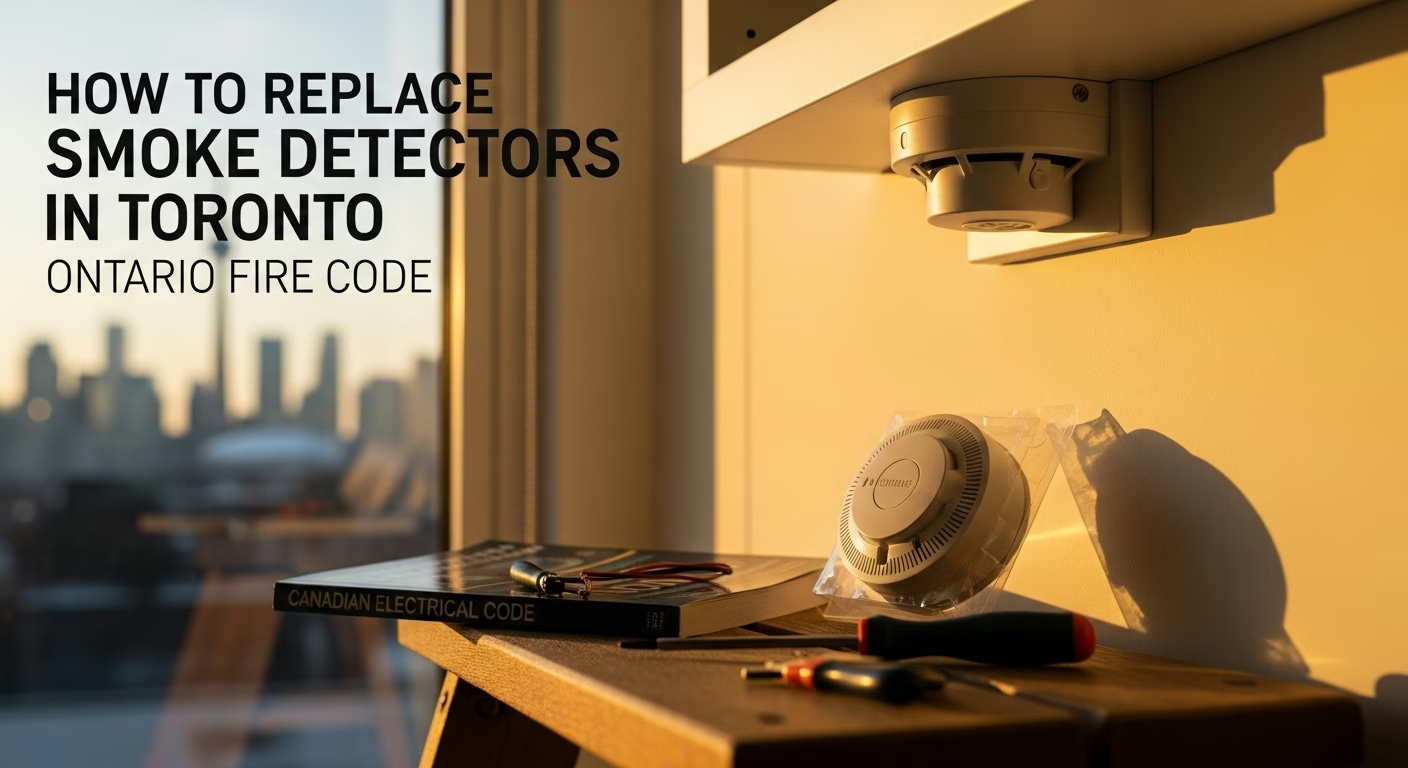

# How to Replace Smoke Detectors: Ontario Fire Code Rules
Quick answer. Replacing a battery-powered smoke detector takes under 10 minutes and costs $20–$60 per unit at GTA hardware stores in 2026. Hardwired or interconnected alarms require an ESA-licensed electrician and run $150–$350 per location installed. Ontario Fire Code mandates at least one smoke alarm on every storey and outside every sleeping area — non-compliance can void your home insurance and trigger disclosure obligations on resale.What Smoke Detector Replacement Costs in the GTA (2026)
Prices vary significantly depending on detector type, brand, and whether the work is DIY or professionally installed. In Toronto, Mississauga, Vaughan, Brampton, and surrounding municipalities, here is what to budget.
Battery-only smoke detectors are the least expensive option. Units from Kidde or First Alert cost $20–$60 at Home Depot or Canadian Tire. If you are swapping like-for-like on an existing mount, no tools beyond a screwdriver are needed. Total cost per detector: $20–$60.
Hardwired smoke detectors (120V AC with battery backup) are required in most post-2006 Ontario homes and in any home that has undergone significant renovation. The detectors themselves run $40–$120 per unit. Professional installation by an ESA-licensed electrician — required by law for line-voltage work — adds $80–$200 per location, depending on whether new wiring is needed. Full-home replacement covering 6–10 locations in a typical GTA detached house typically runs $600–$1,800.
Combination smoke and carbon monoxide alarms add $60–$150 per unit for the hardware. Ontario's Fire Code also requires CO alarms adjacent to sleeping areas in homes with attached garages or fuel-burning appliances, so many homeowners replace both simultaneously. This is generally the smarter move and avoids a second service call.
Smart or wireless interconnected alarms cost $100–$200 per unit but do not require rewiring. In homes where running new wire between detectors is cost-prohibitive — older Scarborough bungalows and North York semis are common examples — wireless interconnection is a practical middle ground.
| Type | Unit Cost (2026) | Install Cost (professional) | Notes |
|---|---|---|---|
| Battery-only | $20–$60 | DIY possible | Simplest swap; no permit |
| Hardwired (120V AC) | $40–$120 | $80–$200/location | ESA permit required |
| Hardwired + interconnected | $60–$150 | $100–$250/location | Mandatory in new builds and post-reno |
| Wireless interconnected | $100–$200 | $40–$80/location | No rewiring; strong retrofit option |
| Combo smoke + CO | $60–$200 | Same as type above | Strongly recommended province-wide |
How to Replace Smoke Detectors: Step-by-Step
The process differs for battery-only versus hardwired units. Before starting either, note the manufacture date stamped on the back of the existing detector — Ontario Fire Code and most manufacturers recommend replacement after 10 years.
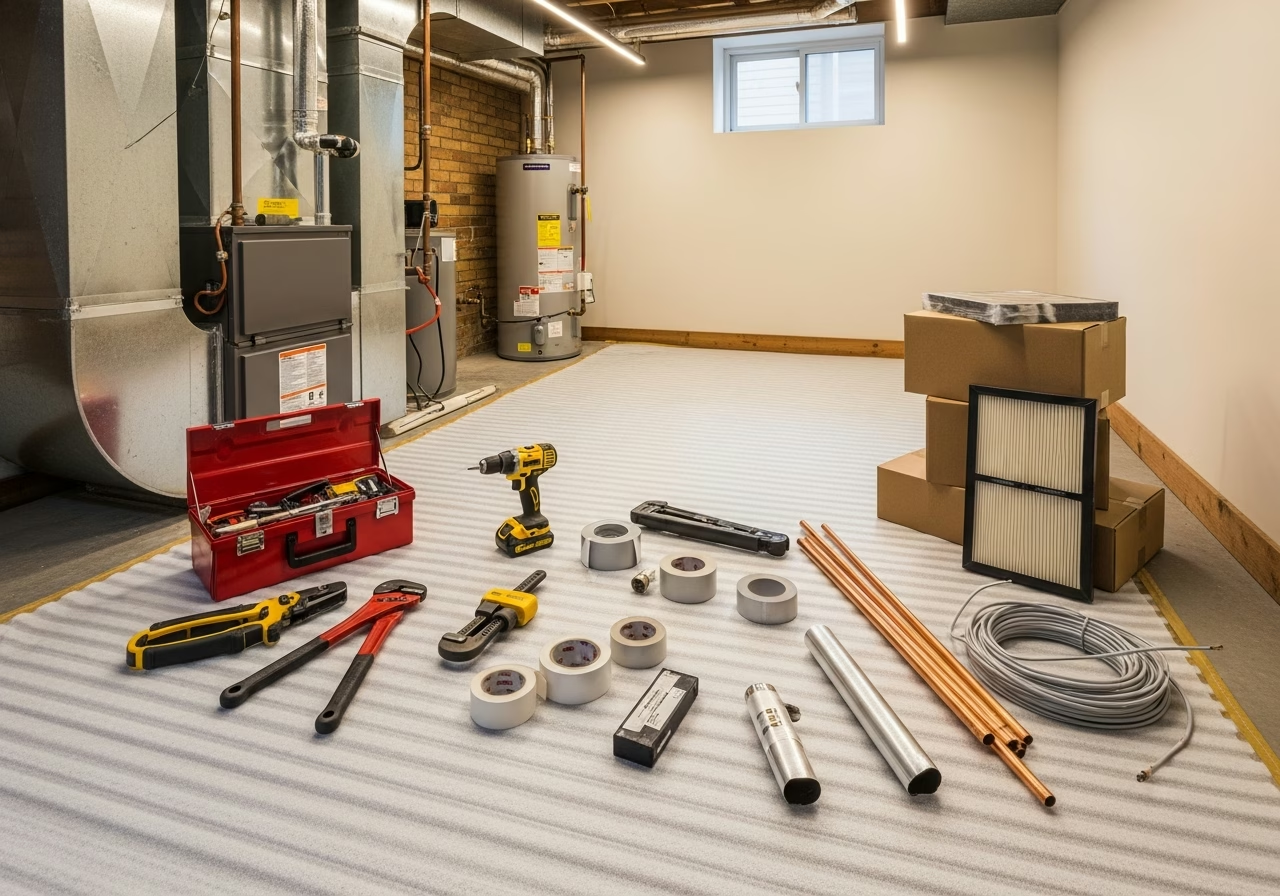
- 1. Twist or slide the detector body counterclockwise off the mounting bracket. Most use a quarter-turn release.
- 2. Disconnect the battery and note the voltage (typically 9V or AA).
- 3. Check the mounting bracket. If it is in good condition and the new detector is the same brand and model, reuse it. Otherwise, unscrew the old bracket and install the new one with the provided hardware using studs or drywall anchors.
- 4. Attach the new detector to the bracket, insert the battery, and press the test button. A loud alarm confirms function.
- 5. Log the replacement date on the inside of the unit or in your home maintenance records.
Steps 1–3 are the same, with one critical addition: turn off the circuit breaker controlling the smoke alarm circuit before disconnecting the wiring harness. Most hardwired detectors use a quick-connect harness — press the tab and pull to disconnect. The new detector's harness plugs directly into the old connector, provided you are using the same brand. Mixing brands on an interconnected circuit can cause false alarms or a failure to interconnect across the system.
Need professional renovation?
Call RenoHouse at 289-212-2345 or get a free estimate today.
Get Free Estimate →If you need to run new wire — adding a detector in a previously uncovered location, converting battery-only to hardwired, or installing interconnection wiring for the first time — this is electrical work under the Ontario Electrical Safety Code. An ESA permit is required. In Toronto and across the GTA, a licensed electrical contractor must complete the work and request an ESA inspection. Unpermitted wiring work can result in insurance denial in the event of a fire.
Placement rules under the Ontario Fire Code (as of 2026):- One alarm on every storey of the dwelling, including the basement
- One alarm outside each sleeping area, in the hallway adjacent to bedrooms
- Inside each bedroom in newer homes and following significant renovations
- Installed on the ceiling or on a wall between 15 cm and 30 cm from the ceiling
- Not within 30 cm of a corner, and not directly above a cooking appliance
Toronto Fire Services enforces these requirements during fire inspections, and real estate transactions in Oakville, Richmond Hill, Markham, Whitby, and Ajax increasingly flag missing or expired detectors during home inspections.
Battery vs. Hardwired vs. Wireless Interconnected: Which to Choose
The right choice depends on your home's age, existing wiring, and renovation history.
Battery-only detectors are acceptable in homes built before 1997 that have not had major electrical work done. They are straightforward to replace yourself and require no permits. The practical downside is that dead or missing batteries remain the leading cause of smoke alarm failures in Ontario house fires. Sealed lithium 10-year batteries — available in units like the Kidde i9010 — eliminate the dead-battery problem and are worth the $15–$20 premium per unit.
Hardwired with battery backup is the code requirement for new construction throughout Ontario, including new builds in Caledon, Clarington, Georgetown, King City, and Ajax. When one alarm sounds, all alarms on the interconnected circuit sound — critical in larger homes where a basement alarm might not be audible from a third-floor bedroom. If your home already has hardwired alarms, always replace with hardwired units of the same brand to maintain interconnection compatibility.
Wireless interconnected systems are the pragmatic solution for older Etobicoke and Scarborough homes where hardwired interconnection was never installed. These communicate by radio frequency, so when one triggers, all trigger. Installation does not require an electrician unless you are replacing an existing hardwired unit. Certain models also send phone notifications — useful for homeowners in Mississauga or Vaughan who travel or own rental properties.
One common mistake: replacing only the detectors that have started chirping and leaving the rest. If any unit in a home is 10 years old, all units likely are. Replace the full set at once and record the date. This is more cost-effective than piecemeal replacement and ensures uniform sensor reliability throughout the home.
Frequently Asked Questions
How often should smoke detectors be replaced in Ontario?
Ontario Fire Code does not specify a mandatory replacement interval, but the National Fire Protection Association and all major manufacturers recommend replacing smoke detectors every 10 years. The manufacture date is stamped on the back of every unit. If yours reads 2015 or earlier, replace them now. Ionization sensors degrade over time and may not reliably detect slow-smouldering fires after the 10-year mark.
Do I need a permit to replace smoke detectors in Toronto?
For a direct swap of battery-powered detectors — same mounting location, no new wiring — no permit is required. For any hardwired work, including adding new detectors or running interconnection wiring, an ESA electrical permit is required under the Ontario Electrical Safety Code. Failing to pull a permit can affect your insurance coverage and creates disclosure obligations when selling your home anywhere in the GTA.
Can I replace a hardwired smoke detector myself?
You can replace a hardwired detector with a new unit of the same brand if you are only swapping the device into an existing wiring harness and no new wiring is involved. Turn off the breaker first, use the matching connector, and restore power before testing. If you need to add detectors, change locations, or run any new wire, that work must be done by an ESA-licensed electrician and pass inspection. In Ontario, this is not optional.
What is the difference between ionization and photoelectric smoke detectors?
Ionization detectors respond faster to fast-flaming fires such as burning paper or a kitchen grease flash. Photoelectric detectors respond faster to slow-smouldering fires, including overheating wiring or smouldering upholstery. The Ontario Office of the Fire Marshal recommends either type or dual-sensor models. Combination units containing both technologies are available in the $40–$80 range at GTA hardware stores and are the safest all-around choice for residential use.
Need a quote in the GTA?
If your home's smoke detectors are past the 10-year mark and you want hardwired or interconnected alarms installed to Ontario Fire Code standards, Reno House coordinates the full job — supply, ESA-permitted installation, and inspection. Call 289-212-2345 or request a free quote at renohouse.ca. With 12+ years serving Toronto, Etobicoke, Mississauga, Vaughan, Brampton, and the broader GTA, and a 4.9-star reputation across 498 reviews, the work gets done right and documented properly.


