RenoHouse

Toronto homeowners face a unique set of challenges that most Canadian cities don't share all at once: winters that plunge below –20°C, summers that push 35°C with crushing humidity, and a clay-heavy soil profile that channels water straight into your basement. Combine that with aging housing stock — more than 40% of homes in the GTA were built before 1980 — and you have a recipe for sky-high energy bills, chronic moisture problems, and costly structural damage.
Energy costs across Ontario have climbed steadily, with natural gas up roughly 7–8% year-over-year and electricity rates now averaging $0.17/kWh on time-of-use plans. A poorly insulated Toronto home can lose 25–40% of its heating energy through the attic alone, while an unprotected basement is one spring thaw away from a flooded rec room, mold growth, and a five-figure insurance claim.
The good news? In 2026, federal and provincial rebate programs are more generous than ever, the City of Toronto's Basement Flooding Protection Subsidy has been expanded, and modern insulation and waterproofing technologies can pay for themselves within 3–7 years through energy savings alone.
This guide covers everything a Toronto-area homeowner needs to know: insulation types and costs, spray foam insulation, basement waterproofing, sump pump selection and installation, foundation crack repair, mold removal, attic upgrades, rebates, and how to choose the right contractor — whether you're in Mississauga, Brampton, Vaughan, Richmond Hill, Markham, or Ajax.
---
Insulation Types for Toronto Homes
Choosing the right insulation for your Toronto home starts with understanding R-values, moisture performance, and where each material works best. The Ontario Building Code requires minimum R-values that vary by application — R-24 for above-grade walls, R-31 for basement walls in new construction, and R-50 or higher for attics.
Spray Foam (Open-Cell and Closed-Cell)
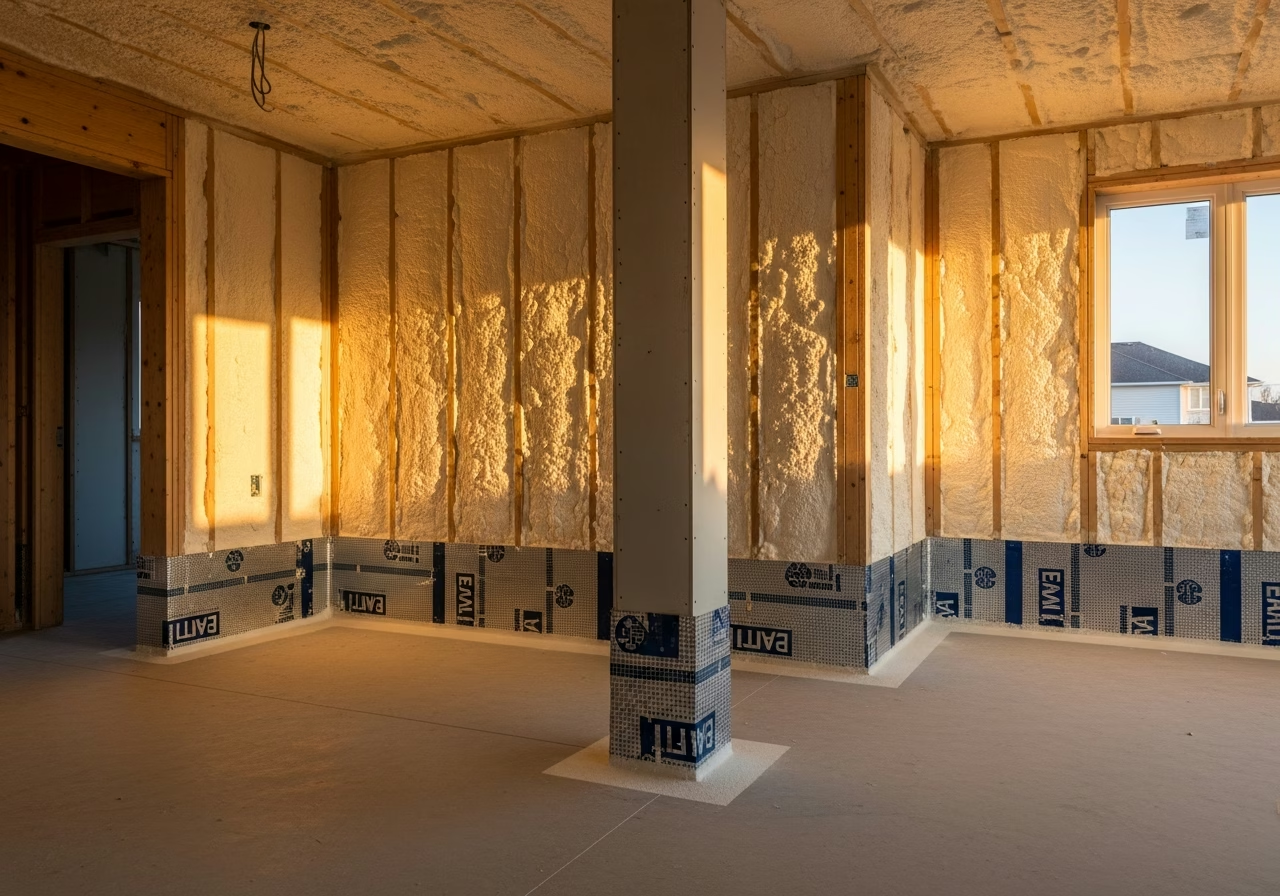
Foam insulation in the spray-applied category is the premium choice for Toronto homes. Open-cell spray foam delivers roughly R-3.6 per inch and costs $1.50–$2.25/sq ft installed. Closed-cell spray foam provides R-6.0–R-7.0 per inch, doubles as a moisture and air barrier, and costs $2.75–$5.00/sq ft. Closed-cell is ideal for basement rim joists, crawl spaces, and any area exposed to moisture — which in Toronto means almost everywhere below grade.Batt Insulation (Fiberglass and Mineral Wool)
Fiberglass batts remain the most affordable option at $0.30–$1.50/sq ft, offering R-3.1–R-3.7 per inch. Mineral wool (Roxul/Rockwool) is slightly more expensive at $0.80–$2.00/sq ft but delivers R-3.8–R-4.2 per inch plus superior fire resistance and sound dampening. Batts work well in standard 2×4 and 2×6 wall cavities and are a solid budget choice for attics where moisture isn't a primary concern.
Blown-In Insulation
Blown-in cellulose ($1.00–$2.00/sq ft) and blown-in fiberglass ($1.75–$3.50/sq ft) are the workhorses for attic top-ups and retrofitting enclosed wall cavities. Cellulose is treated with borate for fire and pest resistance. For Toronto attics, blown-in cellulose is often the most cost-effective way to reach the R-50 target — a professional crew can insulate a standard 1,200 sq ft attic in a single day.
Rigid Foam Board
Extruded polystyrene (XPS) and expanded polystyrene (EPS) boards cost $0.75–$2.50/sq ft and deliver R-4.5–R-5.0 per inch. They're commonly used on exterior foundation walls during basement waterproofing projects and as continuous insulation under siding. Polyisocyanurate (polyiso) boards offer R-6.0–R-6.5 per inch but lose performance in extreme cold — a real consideration for Toronto winters.
Quick Comparison: Insulation Types
| Type | R-Value/Inch | Cost/Sq Ft | Best For | Moisture Barrier |
|---|---|---|---|---|
| Closed-Cell Spray Foam | R-6.0–R-7.0 | $2.75–$5.00 | Basements, rim joists, crawl spaces | ✅ Yes |
| Open-Cell Spray Foam | R-3.6 | $1.50–$2.25 | Walls, attics (dry areas) | ❌ No |
| Fiberglass Batt | R-3.1–R-3.7 | $0.30–$1.50 | Walls, attics (budget) | ❌ No |
| Mineral Wool Batt | R-3.8–R-4.2 | $0.80–$2.00 | Walls, soundproofing, fire zones | ❌ No |
| Blown-In Cellulose | R-3.2–R-3.8 | $1.00–$2.00 | Attic top-ups, enclosed cavities | ❌ No |
| Rigid Foam (XPS) | R-4.5–R-5.0 | $0.75–$2.50 | Exterior foundation, under siding | ✅ Yes |
---
Spray Foam Insulation
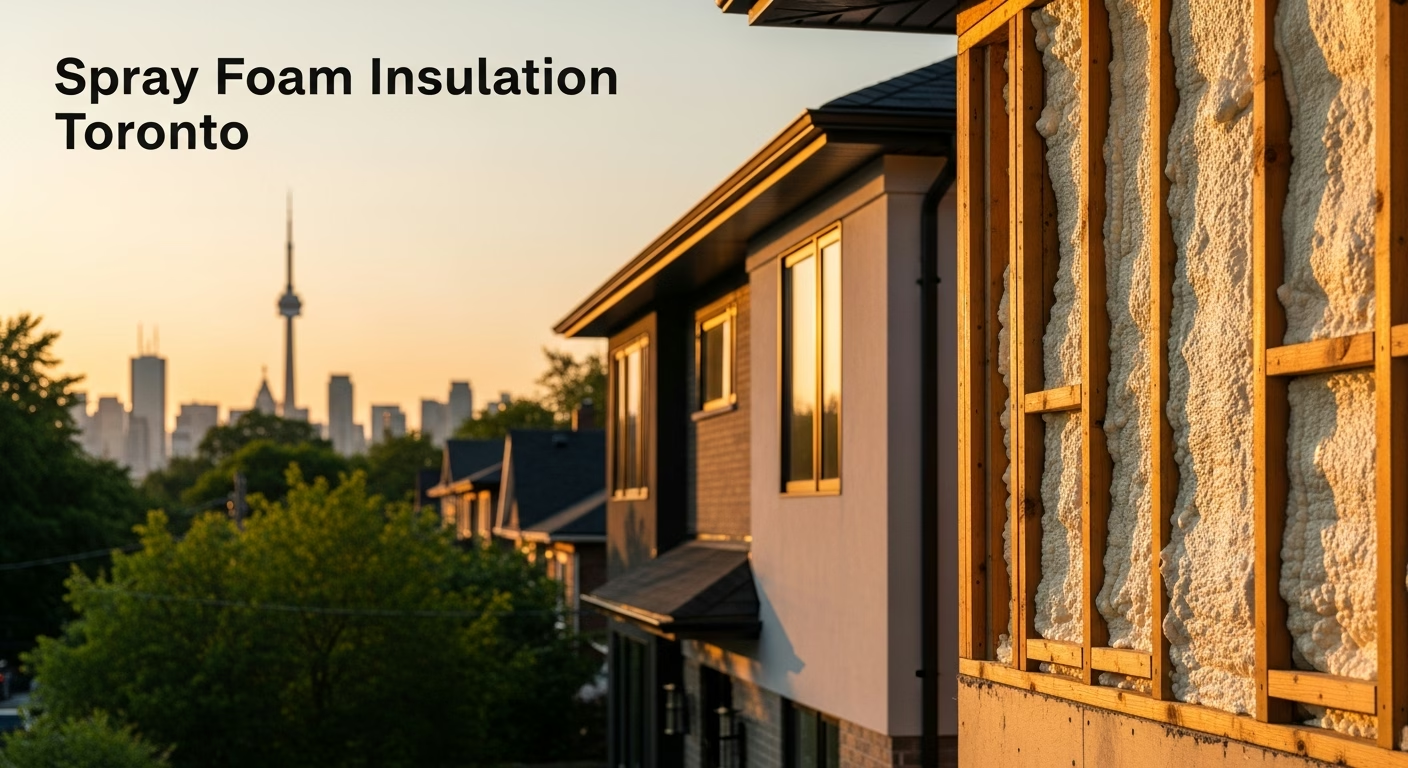
Spray foam insulation has become the go-to choice for Toronto homeowners who want maximum energy performance and moisture control in a single application. It's the only insulation type that simultaneously acts as an air barrier, thermal barrier, and — in the case of closed-cell — a vapour retarder.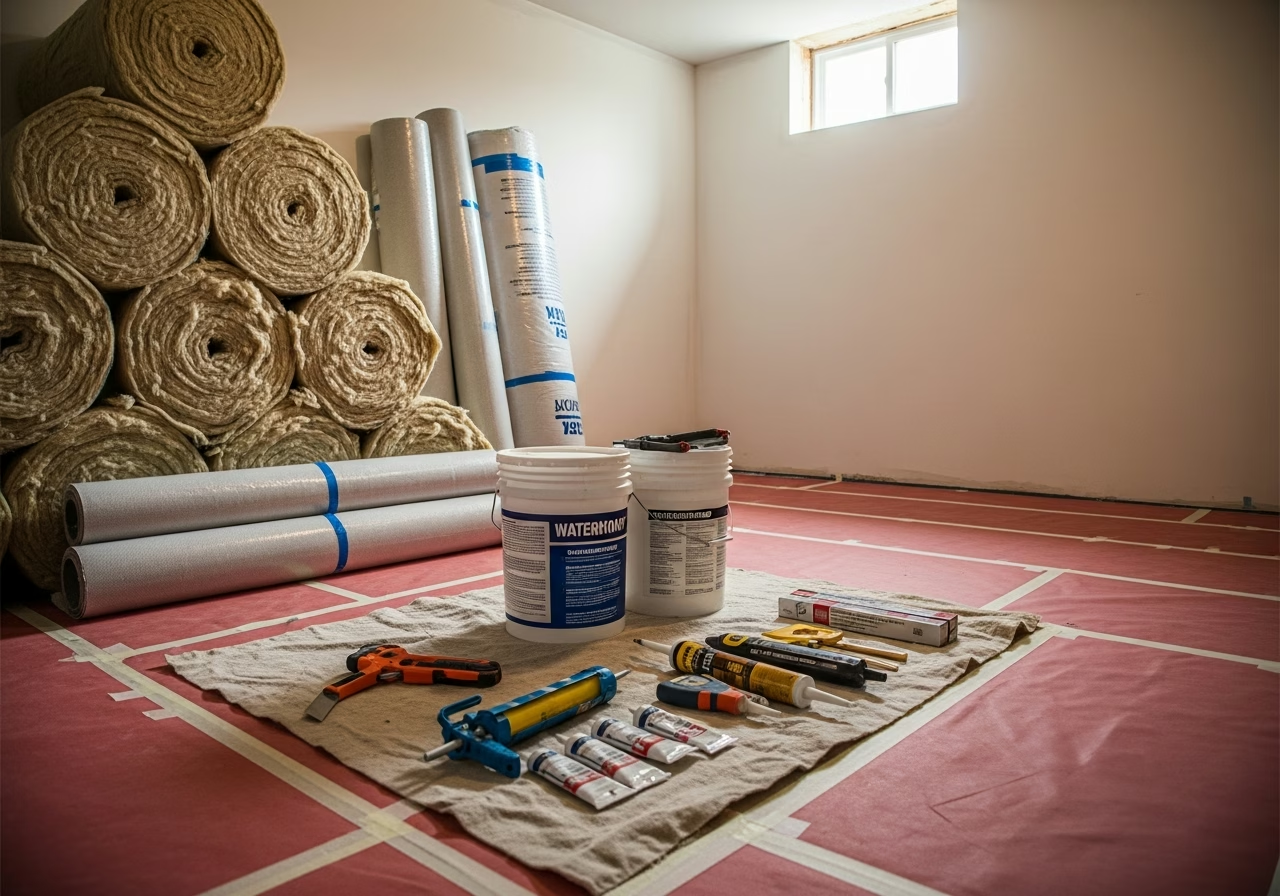
Open-Cell vs. Closed-Cell Spray Foam
Open-cell spray foam has a spongy texture, expands roughly 100× when applied, and delivers R-3.6 per inch. It's breathable, which makes it excellent for above-grade walls and attic rooflines where you want to allow some moisture diffusion. In Toronto, open-cell is typically sprayed at 3.5–5.5 inches for wall cavities. Cost: $1.50–$2.25 per square foot for 2-inch thickness. Closed-cell spray foam is dense, rigid, and delivers R-6.0–R-7.0 per inch. It has a perm rating below 1.0 at 2 inches, making it an effective Class II vapour retarder. This is critical for Toronto basements and crawl spaces where moisture drives through concrete foundation walls. Closed-cell also adds structural rigidity — roughly 250 PSI racking strength. Cost: $2.75–$5.00 per square foot for 2-inch thickness.Where to Use Spray Foam in Toronto
- Basement rim joists: The #1 heat loss point in most Toronto homes. Closed-cell spray foam at 2–3 inches seals the gap between the foundation and the framing, eliminating drafts and condensation.
- Attic rooflines: Open-cell foam sprayed directly to the underside of the roof deck creates an unvented "hot roof" assembly — ideal for homes with HVAC equipment in the attic.
- Exterior walls: Both open- and closed-cell work here. Closed-cell at 2 inches plus fiberglass batts filling the rest of the cavity ("flash and batt") is a cost-effective hybrid approach.
- Crawl spaces: Closed-cell only. Toronto's moisture-heavy soil demands a vapour barrier, and spray foam bonds directly to irregular surfaces.
Ontario Building Code Requirements
Under the Ontario Building Code (OBC 2024 updates), spray foam insulation must be covered with a thermal barrier — typically ½-inch drywall — in habitable spaces. In attics and crawl spaces, an ignition barrier (e.g., 1.5-inch mineral fibre) is usually sufficient. All spray foam installers in Ontario must use CCMC-certified products and carry a valid TSSA (Technical Standards and Safety Authority) licence.
Spray Foam: What to Expect During Installation
A typical Toronto home (1,500 sq ft basement + rim joists) takes 1–2 days to spray. The home must be vacated during application and for 24 hours afterward to allow off-gassing. Professional installation includes protecting HVAC systems, masking windows and fixtures, and ensuring the application area is within the manufacturer's temperature and humidity specs.
Typical project costs in the GTA:| Application | Area | Cost Range |
|---|---|---|
| Basement walls (closed-cell, 2") | 800 sq ft | $2,200–$4,000 |
| Rim joists (closed-cell, 3") | 150 sq ft | $600–$1,200 |
| Attic roofline (open-cell, 5.5") | 1,200 sq ft | $3,000–$5,500 |
| Full home (walls + attic) | 2,500 sq ft | $6,000–$12,000 |
---
Basement Waterproofing
Basement waterproofing is not optional in Toronto — it's a necessity. The GTA sits on Halton Till and glacial clay deposits that retain water like a sponge. When spring snowmelt or summer storms saturate this clay, hydrostatic pressure pushes moisture through foundation walls and up through floor slabs. The result: water infiltration, efflorescence, structural damage, and the conditions that lead to mold growth.Interior vs. Exterior Waterproofing
Interior waterproofing manages water that has already entered the basement. It typically involves installing a drainage membrane along the foundation walls, a weeping tile (perforated drain pipe) along the interior footing, and routing water to a sump pit. This is the less disruptive and more affordable option.- Cost: $5,000–$10,000 for a standard Toronto basement (1,000 sq ft)
- Per linear foot: $50–$100
- Best for: Existing homes, minor to moderate seepage, tight lot lines
- Cost: $10,000–$35,000+ depending on depth, access, and landscaping restoration
- Per linear foot: $90–$280
- Best for: Serious water intrusion, foundation repair projects, new construction
Toronto Clay Soil: Why It Matters
Toronto's Leda clay expands when wet and contracts when dry, creating cyclical stress on foundation walls. This is why step cracks and horizontal cracks are so common in older Toronto homes with concrete block foundations. Any waterproofing solution must account for this soil movement — rigid coatings alone will crack. Modern systems use flexible membranes combined with dimple board drainage mats to handle both water and soil pressure.
Weeping Tile Systems
Original weeping tile in Toronto homes built before 1970 was often clay pipe that has since collapsed, clogged, or separated at joints. Replacing it with modern 4-inch perforated PVC pipe wrapped in filter fabric is a core part of any serious waterproofing project. Interior weeping tile replacement costs $50–$80/linear foot; exterior runs $100–$200+/linear foot including excavation.
When to Waterproof
Act immediately if you notice:
- Water pooling on the basement floor after rain
- White mineral deposits (efflorescence) on foundation walls
- Musty odours that persist even with dehumidification
- Cracks in foundation walls wider than 1/8 inch
- Hydrostatic pressure pushing water up through floor cracks
Homeowners in flood-prone Toronto neighbourhoods — including parts of Etobicoke, East York, North York, and areas near the Don and Humber rivers — should treat waterproofing as a baseline investment. The average basement flood in Toronto costs $20,000–$40,000 in damage and lost belongings, and repeated claims can make your property uninsurable.
---
Sump Pump
A sump pump is the last line of defence between Toronto's water table and your finished basement. Every interior waterproofing system drains to a sump pit, and every home in a flood-prone area should have one — ideally with battery backup.
Types of Sump Pumps
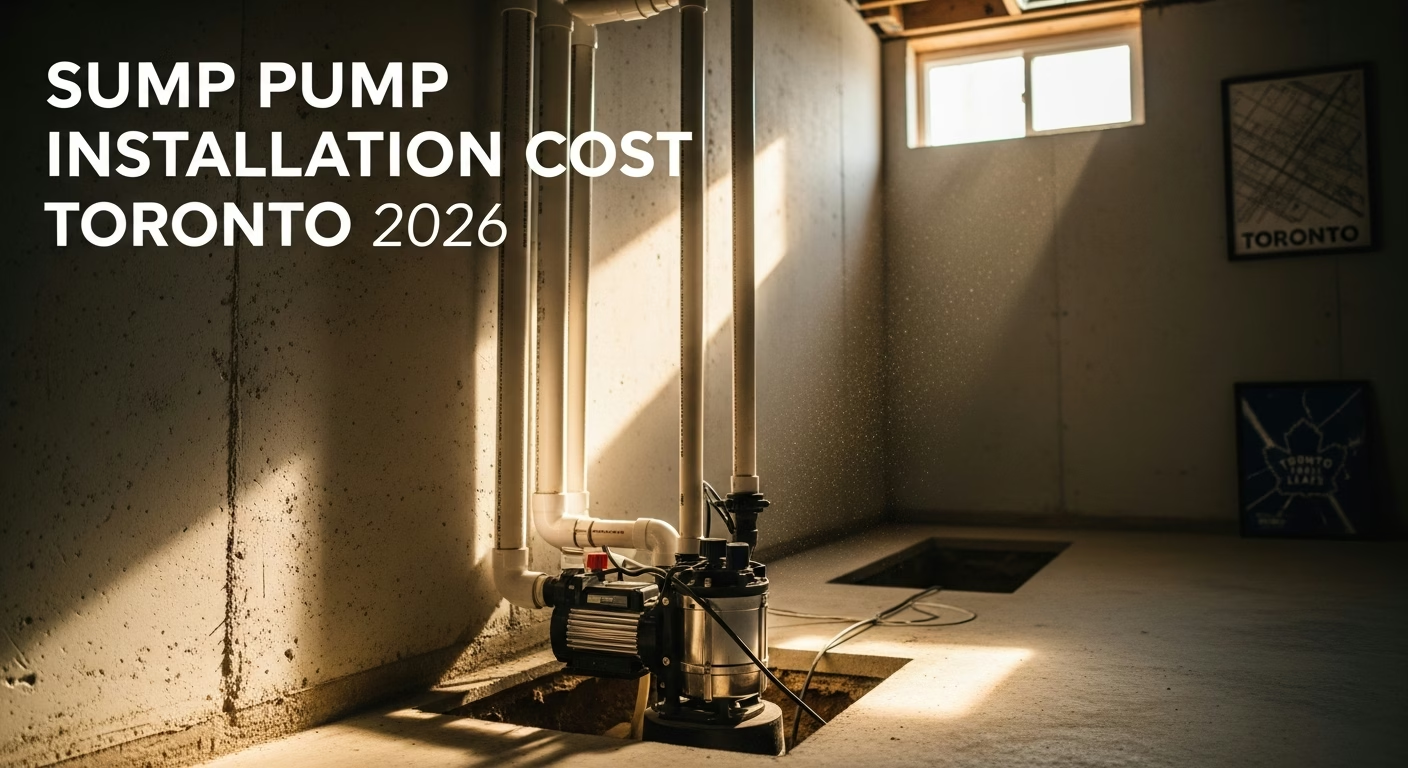
Pedestal sump pumps mount above the pit with only the intake pipe submerged. They're affordable ($150–$300 for the unit), easy to service, and loud. Best for utility basements where noise isn't a concern. Submersible sump pumps sit inside the pit, fully submerged during operation. They're quieter, more powerful (1/3 HP to 1 HP), and handle larger volumes. Unit cost: $200–$650. This is the standard choice for Toronto homes with finished basements. Battery backup sump pumps activate when the power goes out — which in Toronto happens most often during the exact summer storms that flood basements. A battery backup system adds $300–$800 to the installation cost but can save you from a catastrophic flood. The City of Toronto now offers a $300 subsidy for battery backup systems under the expanded Basement Flooding Protection program. Water-powered (municipal pressure) backup pumps use your home's water pressure to operate without electricity. They're reliable but waste water — roughly 1 gallon of municipal water for every 2 gallons pumped. They're a good secondary backup but not a primary solution.Sump Pump Installation
Professional sump pump installation in the Greater Toronto Area costs $1,200–$3,500 depending on complexity:
| Scenario | Cost Range |
|---|---|
| Simple replacement (existing pit) | $800–$1,500 |
| New pit + submersible pump | $1,500–$2,500 |
| New pit + pump + battery backup | $2,000–$3,500 |
| Dual pump system (primary + backup) | $2,500–$4,500 |
Installation involves cutting through the concrete floor slab, excavating a pit (typically 18" diameter × 24" deep), lining it with a sump basin, installing the pump, running discharge piping to the exterior (minimum 4 feet from the foundation), and connecting to the electrical system (dedicated GFCI circuit required by code).
Sump Pump Maintenance
A sump pump is a mechanical device that will fail if not maintained. Toronto plumbers recommend:
- Quarterly: Pour a bucket of water into the pit to test the float switch and discharge
- Annually: Clean the pit of debris, check valves, and test battery backup
- Every 5–7 years: Replace the pump (average lifespan of a submersible unit)
- Before spring: Inspect discharge line for ice blockages — a frozen discharge pipe is the #1 cause of sump pump failure in Toronto
Toronto Basement Flooding Statistics
The 2013 Toronto flood caused over $1 billion in insured losses — the most expensive natural disaster in Ontario's history at the time. The 2021 and 2024 storms continued the trend. Insurance Bureau of Canada data shows that water damage is now the #1 cause of home insurance claims in the GTA, surpassing fire. A properly installed sump pump with battery backup reduces your flood risk by up to 90%.
---
Foundation Crack Repair
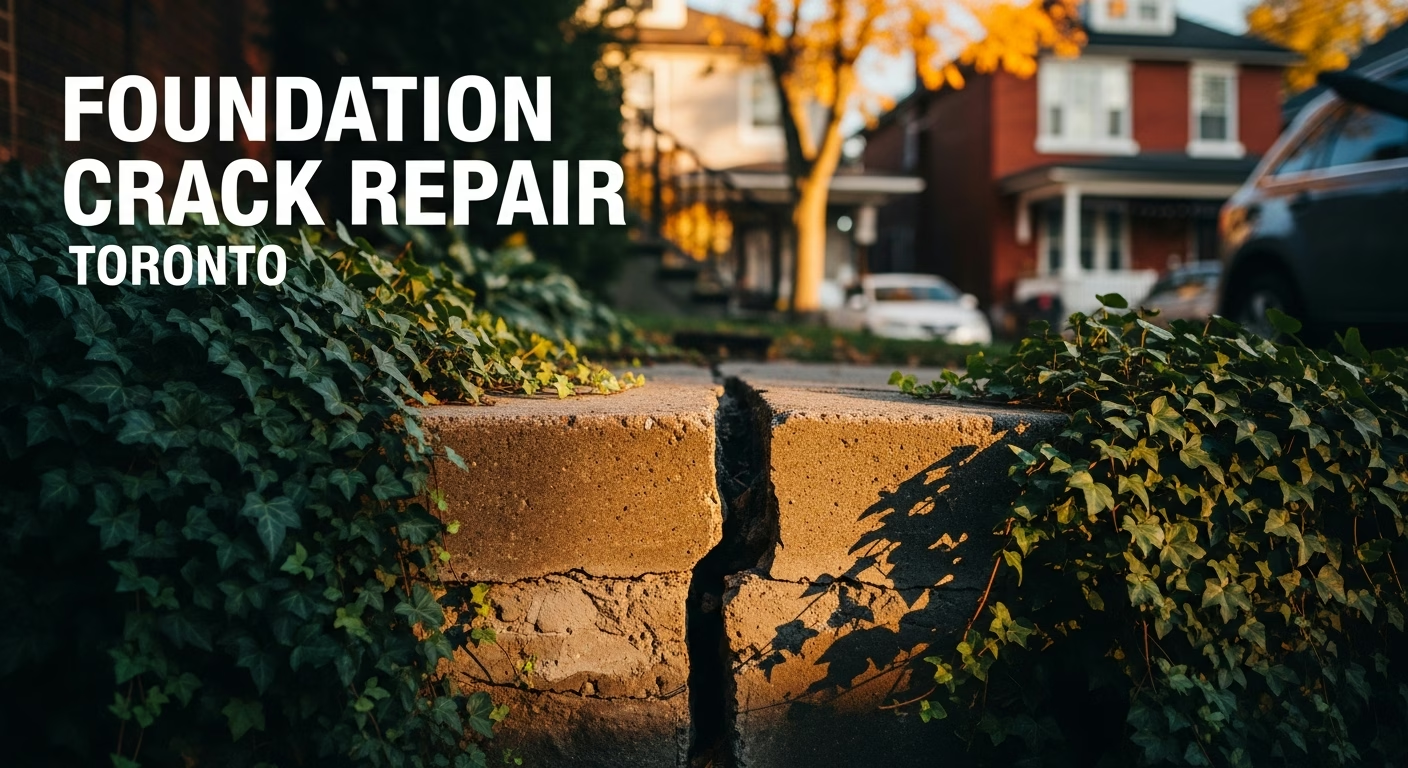
Foundation crack repair is one of the most common — and most misunderstood — maintenance issues for Toronto homeowners. Not every crack signals structural failure, but every crack is a potential water entry point.Types of Foundation Cracks
Hairline cracks (less than 1/16 inch): Normal shrinkage cracks in poured concrete. They appear within the first 1–2 years and are cosmetic. However, even hairline cracks can admit water under hydrostatic pressure. Vertical cracks: Run straight up and down, usually caused by concrete shrinkage or minor settling. These are the most common and least concerning structurally, but they leak. Found frequently in Toronto homes built in the 1960s–1980s with poured concrete foundations. Diagonal cracks (45-degree angle): Indicate differential settlement — one side of the foundation is sinking more than the other. These require structural evaluation. Common in Toronto areas with variable soil conditions, especially where clay meets fill. Horizontal cracks: The most serious type. They indicate lateral pressure from soil (hydrostatic or frost pressure) pushing inward on the foundation wall. If a horizontal crack is accompanied by inward bowing, the wall may need structural reinforcement with carbon fibre straps or steel I-beams. Step cracks: Follow the mortar joints in concrete block foundations. They indicate settlement or lateral movement and are extremely common in older Toronto homes (pre-1960).Foundation Repair Methods
Epoxy injection: Fills and structurally bonds non-moving cracks in poured concrete. The epoxy cures to a strength greater than the surrounding concrete. Cost: $600–$1,500 per crack. Best for dry, stable cracks. Polyurethane injection: Flexible foam that expands to fill cracks and stop active water leaks. It accommodates minor seasonal movement, making it ideal for Toronto's freeze-thaw cycles. Cost: $600–$1,000 per crack. Best for leaking cracks. Exterior excavation and repair: The crack is exposed from the outside, sealed with hydraulic cement and waterproofing membrane, and protected with drainage board. Cost: $2,000–$5,000+ per section depending on depth and access. Required for severe or structural cracks. Carbon fibre reinforcement: Thin carbon fibre straps are epoxied to the interior face of bowing walls to arrest movement. Cost: $500–$800 per strap. Used for horizontal cracks with less than 2 inches of inward displacement. Foundation underpinning: For severe settlement, steel push piers or helical piers are driven to stable bearing soil and the foundation is lifted. Cost: $1,000–$3,000 per pier (most homes need 6–10 piers). This is major foundation repair and requires engineering.When to Call a Structural Engineer
Consult a licensed structural engineer (P.Eng.) if you observe:
- Horizontal cracks with any inward bowing
- Cracks wider than 1/4 inch
- Cracks that are actively widening (monitor with a pencil mark and date)
- Doors and windows that no longer close properly
- Sloping floors
A structural assessment in Toronto typically costs $500–$1,500 and is money well spent before committing to a repair method.
---
Mold Removal
Mold removal (remediation) is a critical concern for Toronto homeowners because the city's climate creates ideal conditions for mold growth: cold winters drive condensation on interior surfaces, humid summers keep relative humidity above 60%, and basement moisture from clay soil provides a constant water source.Signs of Mold in Your Toronto Home
- Visible growth: Black, green, white, or grey patches on walls, ceilings, or framing — especially in basements, bathrooms, and attics
- Musty odour: A persistent earthy or damp smell, even when surfaces appear dry
- Health symptoms: Unexplained allergies, respiratory irritation, headaches, or sinus problems that improve when you leave the home
- Water stains: Brown or yellow ceiling/wall stains indicate past or present moisture intrusion — and likely hidden mold behind the surface
- Peeling paint or wallpaper: Moisture trapped behind finishes is prime real estate for mold colonies
Health Risks
Mold exposure is linked to asthma attacks, allergic rhinitis, hypersensitivity pneumonitis, and in immunocompromised individuals, serious fungal infections. *Stachybotrys chartarum* ("black mold") produces mycotoxins that can cause neurological symptoms with prolonged exposure. Health Canada recommends professional remediation for any mold area larger than 1 square metre (10 sq ft).
The Mold Remediation Process
Professional mold removal in Toronto follows IICRC S520 standards:
- 1. Assessment and testing: Air sampling and surface swabs identify mold species and spore counts. Cost: $300–$600 for testing.
- 2. Containment: The affected area is sealed with polyethylene sheeting and placed under negative air pressure using HEPA-filtered air scrubbers to prevent cross-contamination.
- 3. Removal: Contaminated materials (drywall, insulation, framing) are removed and bagged for disposal. Non-porous surfaces are cleaned with antimicrobial solutions.
- 4. HEPA vacuuming: All surfaces in the containment zone are HEPA-vacuumed to capture residual spores.
- 5. Drying: Industrial dehumidifiers and air movers dry the area to below 15% moisture content.
- 6. Clearance testing: Post-remediation air sampling confirms spore counts have returned to acceptable levels.
- 7. Reconstruction: Removed materials are replaced — new drywall, insulation, paint.
Mold Removal Costs in Toronto
| Scope | Cost Range |
|---|---|
| Small area (< 50 sq ft) | $500–$1,500 |
| Medium area (50–200 sq ft) | $1,500–$4,000 |
| Large area (full basement/attic) | $4,000–$6,000 |
| Severe infestation (structural) | $6,000–$15,000+ |
| Testing (pre or post) | $300–$600 |
The average Toronto mold remediation job costs approximately $3,500. However, if the mold is caused by an ongoing moisture source — leaking foundation, failed waterproofing, poor ventilation — the source must be fixed first, or the mold will return within months.
When to Test for Mold
Test when you smell mold but can't see it, when you're buying or selling a home, after any water damage event (flood, pipe burst, ice dam leak), or when occupants have unexplained respiratory symptoms. DIY test kits from hardware stores are unreliable — invest in a professional Certified Mold Inspector (CMI) for accurate results.
---
Need professional renovation?
Call RenoHouse at 1-289-212-2345 or get a free estimate today.
Get Free Estimate →Attic Insulation
Your attic is where Toronto homes lose the most heat — up to 25–40% of total heating energy escapes through an under-insulated attic. The Ontario Building Code targets R-50 for attic insulation in new construction, but most Toronto homes built before 2000 have R-20 to R-32, and many older homes have as little as R-8.
R-50: The Toronto Target
R-50 requires roughly 16–17 inches of blown-in cellulose or 14 inches of blown-in fiberglass. For batts, you're looking at two layers of R-24 + R-28, which is awkward to install around joists, wiring, and ductwork. This is why blown-in insulation dominates attic work in Toronto — it conforms to every obstacle and delivers consistent coverage.
Blown-In vs. Batt Attic Insulation
| Factor | Blown-In Cellulose | Blown-In Fiberglass | Batt (Fiberglass) |
|---|---|---|---|
| R-Value per inch | R-3.2–R-3.8 | R-2.2–R-2.7 | R-3.1–R-3.7 |
| Cost (1,200 sq ft attic) | $1,500–$3,000 | $2,000–$3,500 | $800–$2,000 |
| Installation time | 2–4 hours | 2–4 hours | 1–2 days |
| Settling | 10–20% over time | Minimal | None |
| Moisture resistance | Low (absorbs) | High | Medium |
| Fire resistance | Good (borate-treated) | Excellent | Good |
For most Toronto homes, blown-in cellulose to R-50 is the sweet spot — it's the most affordable per R-value, qualifies for rebates, and can be installed over existing insulation in a single visit.
Ice Dam Prevention
Ice dams form when heat escaping through the attic melts snow on the roof, which then refreezes at the eaves. The resulting ice dam traps meltwater, which backs up under shingles and leaks into the home. Toronto's freeze-thaw cycles (November–March) make ice dams a chronic issue.
Proper attic insulation to R-50, combined with effective air sealing (around light fixtures, plumbing stacks, attic hatches, and duct penetrations), keeps the roof deck cold and uniform — the key to preventing ice dams. Many contractors offer a combined "insulation + air sealing" package for $2,000–$4,500 that addresses both issues.
Attic Ventilation
Even a well-insulated attic needs ventilation. The 1:300 ratio (1 sq ft of net free ventilation area per 300 sq ft of attic floor) is the standard. A balanced system with soffit intake vents and ridge or roof vents creates continuous airflow that removes moisture and keeps the attic cold in winter. Improper ventilation is the #1 cause of premature shingle failure and attic mold in Toronto.
---
Energy Rebates and Incentives (2026)
Toronto homeowners have access to several overlapping rebate and financing programs that can significantly reduce the cost of insulation and waterproofing projects. Here's what's available in 2026:
Ontario Home Renovation Savings (HRS) [HRS retired Dec 31 2025]
Enbridge Gas customers in Ontario can receive rebates for insulation, air sealing, and heating upgrades through the Home Renovation Savings (HRS) program.
| Upgrade | Rebate Amount |
|---|---|
| Attic insulation | Up to $1,600 |
| Basement insulation | Up to $1,250 |
| Exterior wall insulation | Up to $1,250 |
| Air sealing | Up to $600 |
| Smart thermostat | Up to $75 |
| Combined maximum | Up to $5,000+ |
Enbridge also offers the Home Renovation Savings (HRS) program for income-eligible households, which provides free insulation, draft proofing, and a smart thermostat at no cost.
Canada Greener Homes Initiative
The original Canada Greener Homes Grant closed for new applications in 2024, with the final document submission deadline on December 31, 2025. However, the Canada Greener Homes Loan remains active in 2026, offering interest-free loans of up to $40,000 with a 10-year repayment term for eligible energy retrofits including insulation, windows, and heat pumps.
A new 2026 phase of the Canada Greener Homes Affordability Program is being launched to cover the full cost of specific energy retrofits for eligible lower-income participants — including insulation and heat pumps.
Toronto Home Energy Loan Program (HELP)
The City of Toronto's HELP program offers low-interest loans of up to $125,000 for energy-efficient home renovations, including insulation, windows, heating systems, and renewable energy. The loan is attached to the property tax bill and repaid over up to 20 years, making it transferable if you sell. Applications are open in 2026.
Eligible improvements: Attic insulation, wall insulation, basement insulation, air sealing, windows, doors, heating/cooling systems, solar panels, and more.Stacking Rebates
You can combine Ontario HRS rebates with the Canada Greener Homes Loan and HELP financing on the same project — meaning a single attic insulation upgrade could receive up to $1,600 from Enbridge plus interest-free federal loan financing, with any remaining cost covered by the HELP low-interest loan. A combined rebate of $3,200+ on a single insulation project is achievable when programs are stacked.
---
Cost Comparison Table
| Service | Cost Range (Toronto) | Timeline | ROI Period |
|---|---|---|---|
| Attic insulation (blown-in, R-50) | $1,500–$3,500 | 1 day | 3–5 years |
| Spray foam — basement walls | $2,200–$4,000 | 1–2 days | 4–6 years |
| Spray foam — rim joists | $600–$1,200 | Half day | 2–3 years |
| Spray foam — full home | $6,000–$12,000 | 2–3 days | 5–8 years |
| Basement waterproofing (interior) | $5,000–$10,000 | 3–5 days | N/A (protection) |
| Basement waterproofing (exterior) | $10,000–$35,000 | 1–3 weeks | N/A (protection) |
| Sump pump installation | $1,200–$3,500 | 1 day | N/A (protection) |
| Sump pump + battery backup | $2,000–$4,500 | 1 day | N/A (protection) |
| Foundation crack repair (injection) | $600–$1,500/crack | 2–4 hours | N/A (protection) |
| Foundation crack repair (excavation) | $2,000–$5,000/section | 2–5 days | N/A (protection) |
| Mold removal (small) | $500–$1,500 | 1–2 days | N/A (health) |
| Mold removal (large) | $4,000–$6,000+ | 3–7 days | N/A (health) |
| Backwater valve | $1,500–$3,000 | 1 day | N/A (protection) |
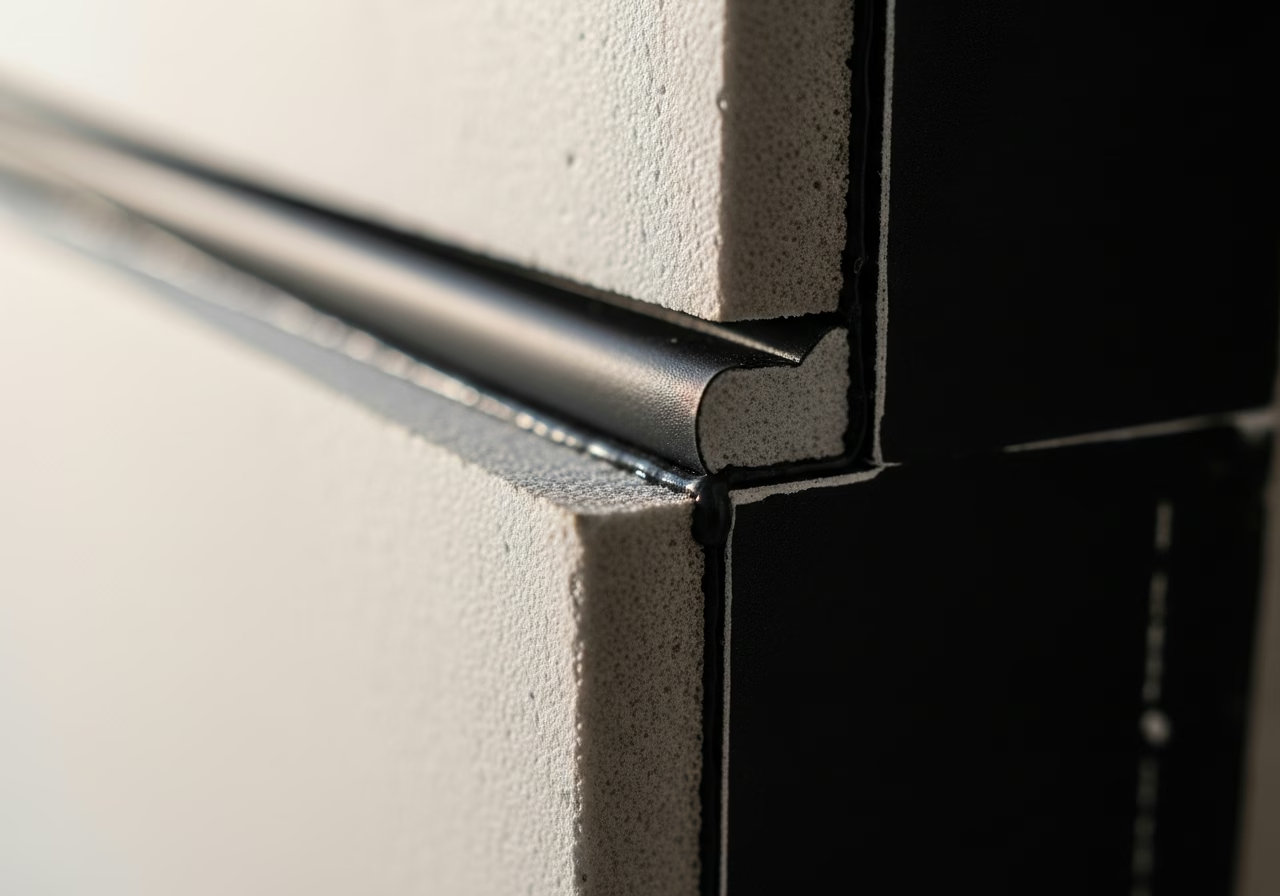
*Note: "ROI Period" for insulation reflects energy savings payback. Waterproofing, sump pumps, and crack repair are protective investments — their ROI is measured in damage prevention and property value.*
---
Toronto Backwater Valve Subsidy
The City of Toronto's Basement Flooding Protection Subsidy Program offers homeowners up to $3,400 per property to install flood protection devices. As of October 2025, the city proposed expanding this program with enhanced subsidies that could take effect as early as May 2026.
Current Program (2026)
| Eligible Work | Maximum Subsidy |
|---|---|
| Backwater valve installation | Up to $1,250 |
| Sump pump installation | Up to $1,750 |
| Sump pump battery backup | $300 (new in 2026) |
| Severance of storm/sanitary connections | Up to $1,000 |
| Total maximum per property | Up to $3,400 |
Proposed Expansion (May 2026)
The City has proposed increasing the maximum total subsidy to $6,650 per property, with individual caps adjusted for inflation (approximately 28% increase). Additional enhancements include:
- Allowing a second backwater valve subsidy for homes with multiple sewer connections
- Adding $300 subsidy for sump pump battery backup retrofits
- Extending the application window from 1 year to 2 years after work completion
Eligibility
- Must own a single-family, duplex, triplex, or fourplex residential property in Toronto
- Work must be performed by a licensed plumber
- A building permit is required for backwater valve installation (City of Toronto standalone drain permit)
- Apply online through the City of Toronto website within 2 years of completion
Why You Should Install a Backwater Valve
A backwater valve is a one-way valve installed on your main sewer line that prevents sewage from backing up into your basement during heavy rain events. Given Toronto's combined sewer system (storm water and sanitary sewage share the same pipe in older neighbourhoods), sewer backups during major storms are common and devastating.
The valve costs $1,500–$3,000 to install but can save you from $20,000–$100,000+ in sewer backup damage. With the city covering up to $1,250 of the cost, your net investment is often under $2,000 — making it one of the highest-ROI home improvements available.
---
How to Choose a Contractor
Hiring the right contractor for insulation, waterproofing, or foundation work in Toronto can mean the difference between a 25-year solution and a callback nightmare. Here's what to verify:
Licensing and Insurance
- WSIB (Workplace Safety and Insurance Board): Confirm active coverage. If a worker is injured on your property without WSIB, you could be liable.
- Liability insurance: Minimum $2 million commercial general liability for waterproofing and foundation work.
- TSSA certification: Required for spray foam insulation installers in Ontario.
- Licensed plumber: Required for sump pump installation and backwater valve work (Ontario College of Trades or OCOT successor).
Red Flags
- No written contract or vague scope of work
- Requesting more than 10–15% deposit upfront
- No physical office or showroom (P.O. Box only)
- Pressure to sign immediately or "today only" pricing
- No references from Toronto/GTA projects
- Not pulling required permits
What to Ask
- 1. How many similar projects have you completed in the Toronto area?
- 2. Can you provide 3–5 references from projects in the last 12 months?
- 3. What warranty do you offer on materials and labour?
- 4. Will you pull all required permits?
- 5. What is your timeline, and what happens if you exceed it?
- 6. Do you carry WSIB and liability insurance? (Ask for certificates)
- 7. Who will supervise the work on-site daily?
- 8. What is your payment schedule?
Get Multiple Quotes
For any project over $3,000, get at least three written quotes. Compare not just price but scope — a $5,000 waterproofing quote that doesn't include sump pump, discharge line, or weeping tile replacement is not comparable to a $8,000 quote that does. Read the fine print on warranties: "lifetime warranty" means nothing without a financially stable company behind it.
Toronto-Area Contractor Associations
- Better Business Bureau (BBB): Check ratings and complaint history
- HomeStars: Toronto-specific reviews from verified homeowners
- Basement Systems: Network of certified waterproofing contractors
- Canadian Spray Foam Association (CUFCA): Certified spray foam installers
---
10 Mistakes to Avoid
1. Insulating Before Air Sealing
Air leaks account for 25–40% of heating/cooling loss. Adding insulation over leaky penetrations (pot lights, plumbing stacks, electrical boxes) is like putting on a sweater with holes. Always air seal first, then insulate.
2. Choosing Interior Waterproofing When You Need Exterior
Interior waterproofing manages water — it doesn't stop it from entering the foundation. If your foundation walls are deteriorating from moisture contact, or you have serious structural cracks, exterior waterproofing is the only real solution. It costs more upfront but addresses the root cause.
3. Skipping the Sump Pump Battery Backup
Toronto's worst flooding events happen during thunderstorms — which also cause power outages. A sump pump without battery backup is useless exactly when you need it most. The $300–$800 investment (partially subsidized by the city) is the cheapest insurance you'll ever buy.
4. Ignoring "Small" Foundation Cracks
A 1/16-inch crack can admit several litres of water per hour under hydrostatic pressure. It can also widen with Toronto's freeze-thaw cycles. Fix cracks early with a $600–$1,000 injection before they become $5,000+ excavation jobs.
5. DIY Mold Removal for Large Areas
Disturbing mold without proper containment releases millions of spores into your home's air system. For any area larger than 10 square feet (approximately 3 feet × 3 feet), hire a certified mold remediation company with HEPA containment equipment. Your health is not worth saving $1,500.
6. Not Checking for Rebates Before Starting
Apply for rebates and schedule your EnerGuide evaluation before starting work. Most programs require a pre-retrofit assessment. If you insulate first and apply later, you may be disqualified from thousands of dollars in rebates.
7. Over-Insulating Without Ventilation
Adding R-50 to your attic without ensuring proper soffit-to-ridge ventilation can trap moisture, leading to condensation on the roof deck, mold growth, and premature shingle failure. Insulation and ventilation are a system — never address one without the other.
8. Hiring the Cheapest Contractor
The lowest bid on a waterproofing or foundation job is often the one that cuts corners — thinner membrane, no filter fabric on weeping tile, undersized sump pump. A failed waterproofing job doesn't just waste money; it causes more damage than no waterproofing at all (water gets trapped behind the system). Pay for quality work with real warranties.
9. Draining Sump Pump Too Close to the Foundation
Your sump pump discharge must exit at least 4 feet from the foundation and drain away from the house, preferably to a downhill grade or municipal storm connection. Dumping water 12 inches from the foundation wall just recycles it back into your weeping tile system — an expensive loop.
10. Ignoring the Backwater Valve Subsidy
The City of Toronto will cover up to $1,250 of your backwater valve installation. Many homeowners don't know about this program or assume the application is too complicated. It's a simple online form submitted after the work is done. Free money for essential flood protection — don't leave it on the table.
---
Frequently Asked Questions
1. What is the best insulation for a Toronto basement?
Closed-cell spray foam insulation at 2–3 inches (R-12 to R-21) applied directly to the concrete foundation walls is the best option for most Toronto basements. It provides insulation, air sealing, and a moisture barrier in a single application. If budget is a concern, rigid foam board (XPS or EPS) with taped seams and framed walls with batt insulation is a solid alternative at about half the cost.
2. How much does basement waterproofing cost in Toronto?
Interior basement waterproofing in Toronto costs $5,000–$10,000 for a standard 1,000 sq ft basement, including weeping tile, drainage membrane, and sump pump. Exterior waterproofing costs $10,000–$35,000+ depending on the depth of the foundation, soil conditions, and the extent of landscaping that needs to be restored.
3. How long does a sump pump last?
A quality submersible sump pump lasts 7–10 years with proper maintenance. Pedestal pumps can last 15–25 years because the motor isn't submerged. Battery backup systems typically need battery replacement every 3–5 years. We recommend annual maintenance and quarterly testing to maximize lifespan.
4. Is spray foam insulation worth the cost?
Yes, for most Toronto applications. Spray foam costs 2–3× more than fiberglass batts upfront but delivers 30–50% greater energy savings due to its air-sealing properties. A typical Toronto home saves $500–$1,200/year on heating and cooling after spray foam installation, resulting in a 4–7 year payback period. It also adds property value and improves comfort year-round.
5. Do I need a building permit for waterproofing in Toronto?
Interior waterproofing generally does not require a building permit in Toronto. However, installing a backwater valve requires a standalone drain permit, and any work that involves structural modifications to the foundation (underpinning, wall reinforcement) requires a building permit and engineered drawings. Always confirm with your contractor and the City of Toronto Building Division.
6. How can I tell if a foundation crack is structural?
Structural cracks are typically horizontal (indicating lateral soil pressure), diagonal at 45 degrees (indicating differential settlement), wider than 1/4 inch, or actively growing. They may be accompanied by wall bowing, sticking doors/windows, or sloping floors. Non-structural cracks are usually vertical or stair-step patterns, narrow (under 1/8 inch), and stable. When in doubt, spend $500–$1,500 on a licensed structural engineer's assessment — it's always cheaper than guessing wrong.7. Can I remove mold myself?
For small areas (under 10 square feet), you can clean mold from hard surfaces using a detergent solution, then dry thoroughly. Wear an N95 mask, goggles, and gloves. Do not attempt DIY remediation for larger areas, mold on porous materials (drywall, insulation, carpet), or suspected toxic mold (*Stachybotrys*). Professional remediation with HEPA containment is required to prevent spreading spores throughout your home.
8. What R-value do I need for my Toronto attic?
The Ontario Building Code requires R-50 for attic insulation in new construction, and this is the target for retrofits as well. Most Toronto homes built before 2000 have R-20 to R-32 in the attic. Topping up to R-50 with blown-in cellulose is one of the highest-ROI energy upgrades available — costing $1,500–$3,000 and saving $300–$600/year in heating costs.
9. What rebates are available for insulation in Ontario in 2026?
The main programs are: Ontario Home Renovation Savings (HRS) (up to $5,000+ for insulation and air sealing), Canada Greener Homes Loan (interest-free loans up to $40,000), and Toronto HELP (low-interest loans up to $125,000). The City of Toronto Basement Flooding Protection Subsidy covers up to $3,400 for sump pumps and backwater valves. These programs can be stacked — a single attic insulation project can qualify for $3,200+ in combined rebates.
10. Should I waterproof from the inside or outside?
Interior waterproofing is sufficient for most Toronto homes with minor to moderate water seepage, especially when combined with a sump pump and dehumidification. It's less expensive ($5,000–$10,000) and doesn't require excavation. Exterior waterproofing is necessary when the foundation walls themselves are deteriorating, when there are serious structural cracks, or when water intrusion is severe. For homes in Mississauga, Brampton, Vaughan, Richmond Hill, Markham, and Ajax, the choice depends on your specific soil conditions, foundation type, and the severity of the problem — get quotes for both approaches.---
Protect Your Toronto Home — Start With a Free Assessment
Whether you need basement waterproofing, insulation upgrades, sump pump installation, or foundation crack repair, the first step is understanding exactly what your home needs. Every Toronto home is different — the age of the foundation, the soil conditions, the existing insulation, and the history of water problems all factor into the right solution.
Ready to take action? Here's what to do:- 1. Book a free in-home assessment — A qualified contractor will inspect your basement, attic, and foundation and provide a detailed scope of work with pricing.
- 2. Schedule your EnerGuide evaluation — This is required for most rebate programs and costs $300–$600 (partially rebated). Do this before starting any insulation work.
- 3. Apply for rebates — Ontario HRS, Canada Greener Homes Loan, and Toronto HELP can cover a significant portion of your project cost.
- 4. Don't wait for the next storm — Toronto's flooding events are becoming more frequent and more severe. Every spring without waterproofing is a gamble.
📞 Contact us today for a free consultation on insulation and waterproofing for your Toronto-area home. Serving Mississauga, Brampton, Vaughan, Richmond Hill, Markham, Ajax, and the entire GTA.
👉 Related reading: Complete Basement Renovation Guide Toronto 2026
Sources & References
Authoritative sources cited in this guide:
- Ontario Building Code — OBC official text
- Toronto Building Permits — City permit portal
- Tarion New Home Warranty — Ontario warranty regulator
- HCRA — Home Construction Regulatory Authority — Ontario builder/vendor licensing
Continue Reading