RenoHouse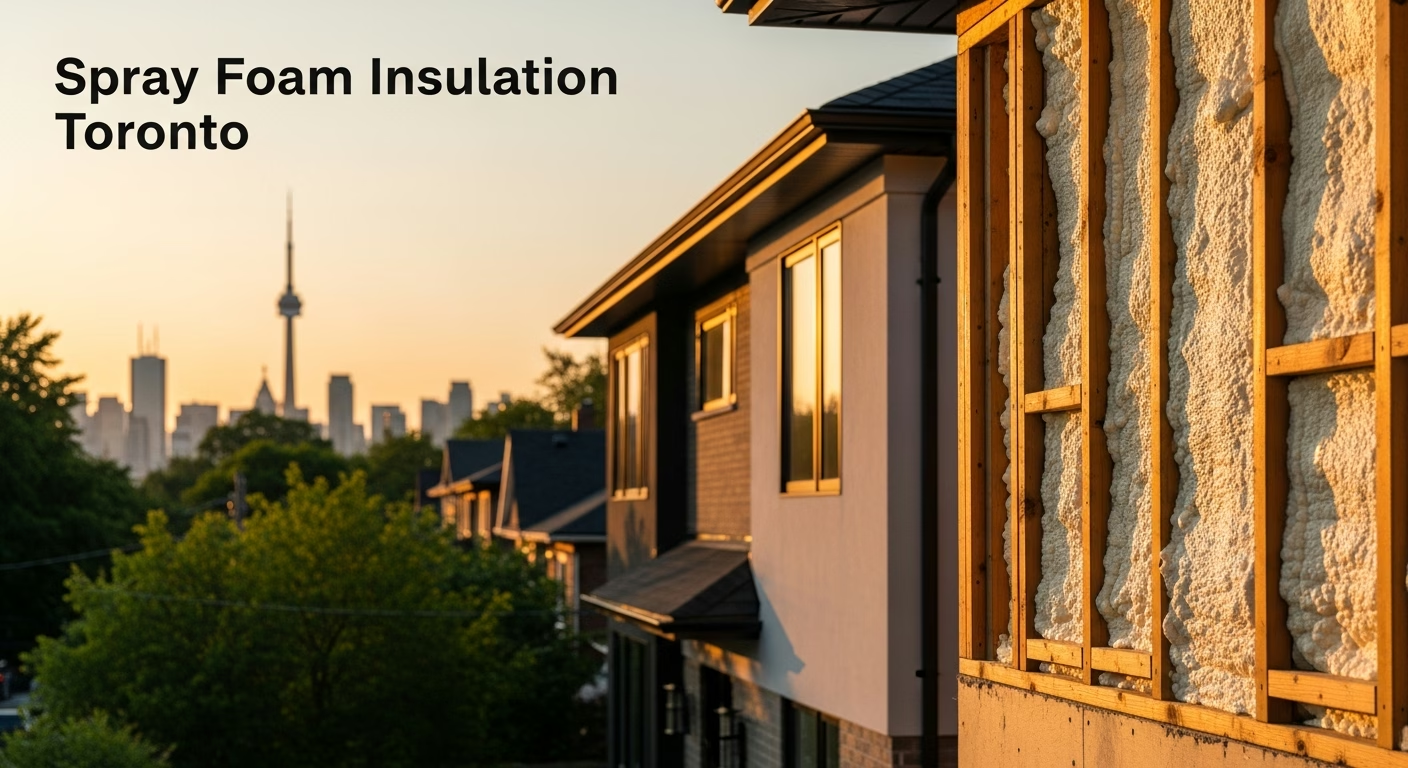

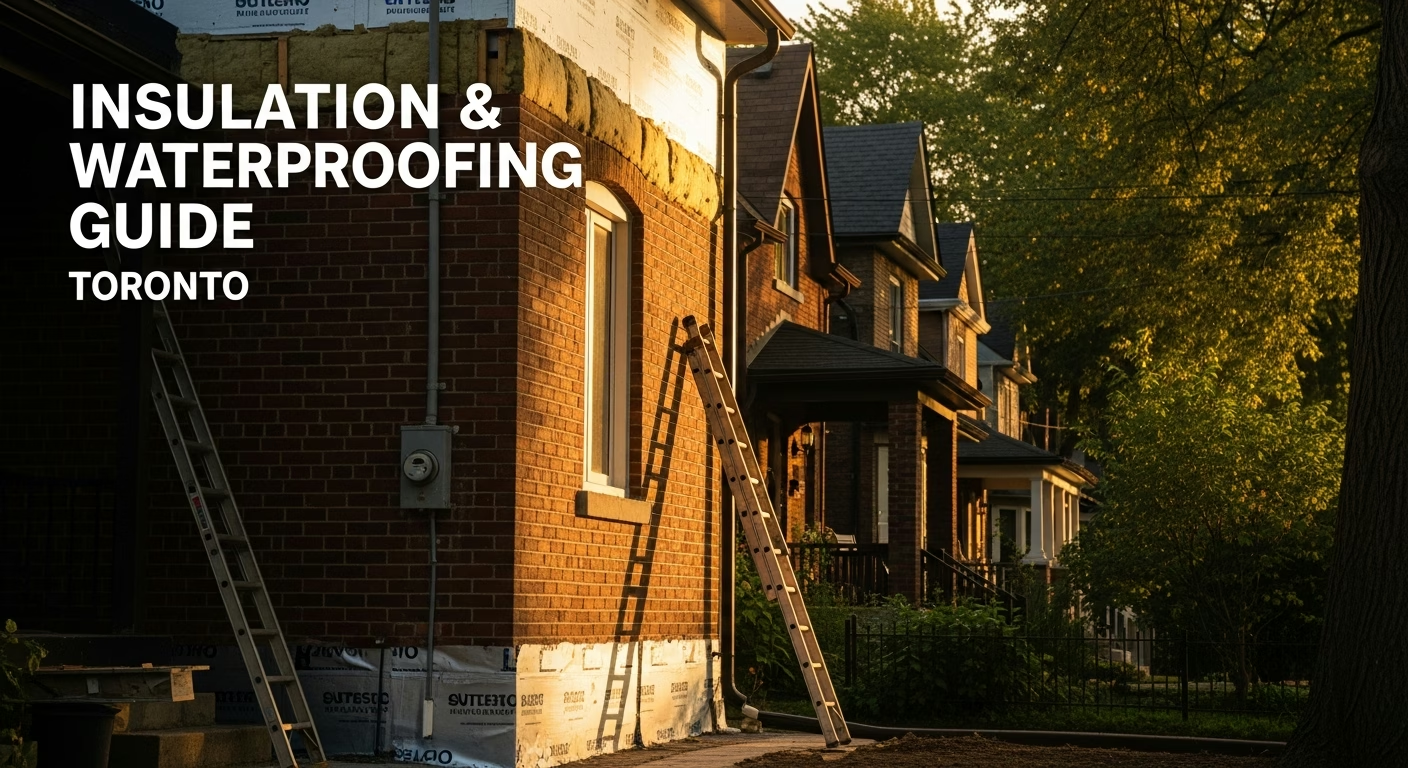
When it comes to insulating a Toronto home for maximum energy efficiency, spray foam is the premium choice — and for good reason. It seals air leaks that traditional fibreglass batts miss, delivers higher R-values per inch, and can act as both insulation and moisture barrier in one application. For a comprehensive look at all insulation and waterproofing options, check out our Insulation & Waterproofing Guide for Toronto Homeowners.
In 2026, open-cell spray foam insulation in Toronto costs $1–$2 per square foot per inch of thickness, while closed-cell runs $2–$4 per square foot per inch. A typical Toronto home insulation project using spray foam ranges from $3,000–$12,000 depending on the area, thickness, and foam type.
This guide explains the differences between open and closed cell, where spray foam makes the biggest impact in Toronto homes, Ontario Building Code requirements, and how to access energy rebates that can offset a significant portion of the cost.
Open Cell vs. Closed Cell: The Complete Comparison
The two types of spray foam insulation have very different properties, costs, and ideal applications:
| Property | Open Cell | Closed Cell |
|---|---|---|
| R-Value per inch | R-3.5 to R-3.7 | R-6.0 to R-7.0 |
| Cost per sqft per inch | $1.00–$2.00 | $2.00–$4.00 |
| Density | 0.5 lb/ft³ | 2.0 lb/ft³ |
| Moisture barrier | No (vapour permeable) | Yes (vapour retarder at 2"+) |
| Air barrier | Yes (at 3.5"+) | Yes (at 1"+) |
| Structural strength | None | Adds racking strength |
| Water absorption | Absorbs water | Does not absorb water |
| Expansion rate | 100× (fills large cavities easily) | 30× (precise application needed) |
| Best climate zones | Moderate, interior applications | Cold climates (Toronto), exterior, below grade |
Open-Cell Spray Foam
Open-cell foam is softer, spongier, and more affordable. The "cells" of the foam are not completely closed, allowing air and moisture to pass through slowly.
Best applications in Toronto homes:- Interior walls (sound dampening — excellent noise reduction)
- Attic underside (between rafters) when combined with exterior air barrier
- Cathedral ceilings
- Interior partition walls for soundproofing
- Below grade (basement walls below soil line) — it absorbs water
- Rim joists — moisture can pass through and cause condensation
- Any area exposed to bulk water or persistent moisture
- Attic (1,000 sqft, 5.5" deep): $5,500–$11,000
- Interior walls (soundproofing, 500 sqft): $1,750–$3,500
Closed-Cell Spray Foam
Closed-cell foam is dense, rigid, and impervious to water. The cells are completely sealed, trapping insulating gas inside. It's the superior choice for Toronto's cold, wet climate in most applications.
Best applications in Toronto homes:- Rim joists (the #1 recommended use — highest ROI)
- Basement walls
- Crawl spaces
- Exterior wall cavities
- Flat roofs / commercial buildings
- Any area exposed to moisture
- Higher R-value means less thickness needed to meet code
- Built-in vapour retarder eliminates need for separate poly sheeting
- Won't absorb water if the foundation leaks
- Adds structural strength to walls (up to 300% increase in racking strength)
- Rim joist only (average home, ~80 linear feet): $800–$2,000
- Basement walls (1,000 sqft, 2" thick): $4,000–$8,000
- Full exterior walls (2,000 sqft, 2" thick): $8,000–$16,000
Where to Use Spray Foam in Your Toronto Home
1. Rim Joist — The Highest-ROI Application
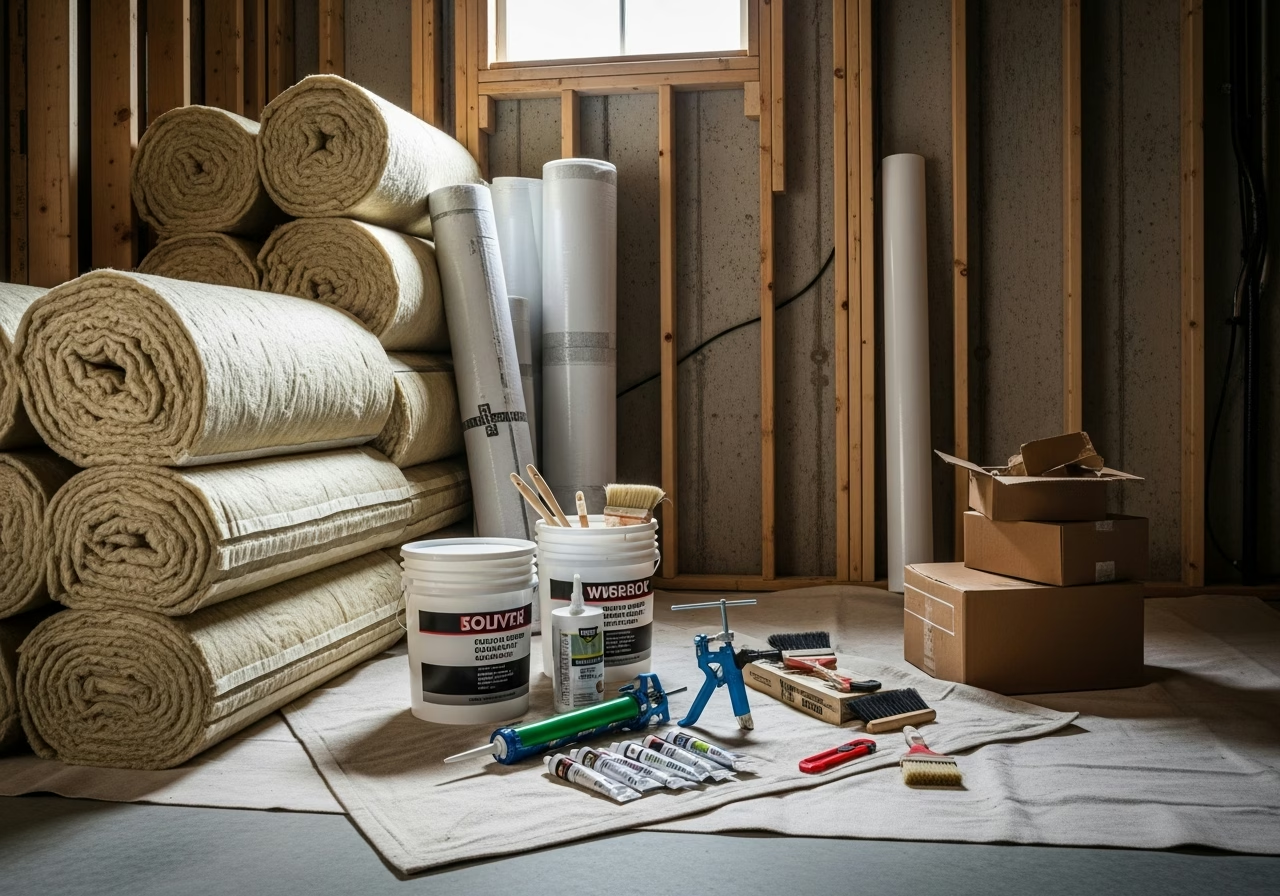
The rim joist (also called band joist) is the perimeter of the floor framing where it sits on top of the foundation wall. In most Toronto homes, this area is either uninsulated or poorly insulated with loose fibreglass — and it's one of the biggest sources of air leakage and heat loss.
Why spray foam is ideal here:- Seals both air and thermal barrier in one shot
- Irregular surfaces make batts nearly useless
- Prevents condensation that leads to rot and mould
- Small area = affordable project
2. Basement Walls
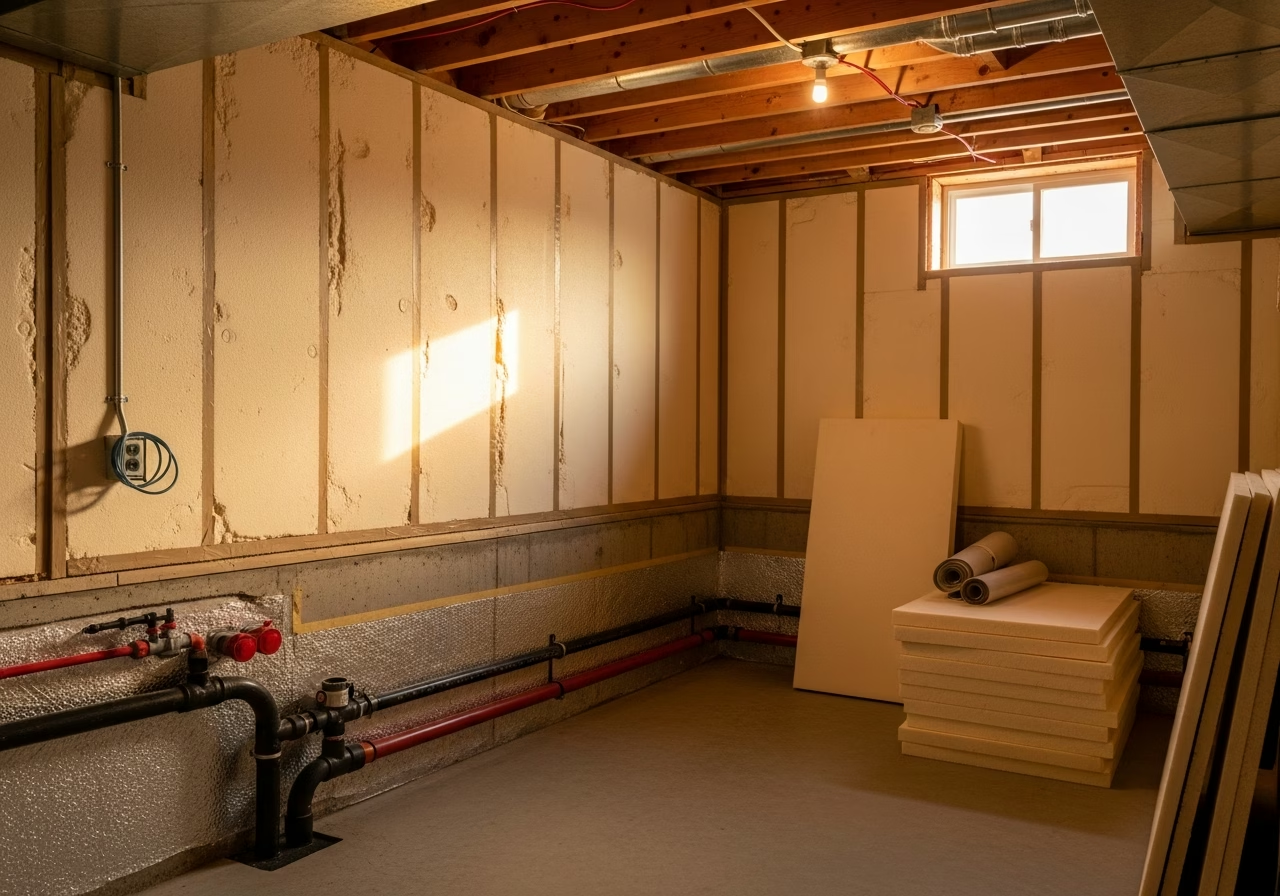
Toronto's below-grade insulation presents a unique challenge — you need insulation that handles moisture without growing mould. Closed-cell spray foam is the best solution for basement walls because it insulates AND acts as a moisture barrier.
Need professional renovation?
Call RenoHouse at 1-289-212-2345 or get a free estimate today.
Get Free Estimate →3. Attic — The Biggest Energy Savings
The attic is where most Toronto homes lose the most heat — warm air rises, and without proper insulation and air sealing, it pours straight out through the attic.
Two approaches:- Attic floor (traditional): Spray foam on the attic floor creates the thermal boundary at the ceiling plane. The attic remains cold (unconditioned). Best for homes with no HVAC equipment in the attic.
- Roof deck (conditioned attic): Spray foam on the underside of the roof deck brings the attic inside the thermal envelope. Best for homes with HVAC ducts, furnace, or water heater in the attic.
4. Exterior Walls
Spray foam in exterior wall cavities provides superior R-value and air sealing compared to fibreglass batts, but it's significantly more expensive and usually only practical during renovation or new construction (the walls need to be open).
When it makes sense:- Gut renovation where walls are already open
- New construction
- Older homes with no wall insulation (can sometimes be injected through small holes)
Ontario Building Code R-Value Requirements (2022)
| Building Component | Minimum R-Value | Spray Foam Thickness Needed |
|---|---|---|
| Attic / ceiling | R-50 | 14" open-cell or 8" closed-cell |
| Exterior walls (above grade) | R-24 | 7" open-cell or 4" closed-cell |
| Basement walls (below grade) | R-20 | 3" closed-cell + batt, or 6" open-cell (not recommended below grade) |
| Rim joist / header | R-20 | 3" closed-cell |
| Exposed floors (over unheated space) | R-31 | 9" open-cell or 5" closed-cell |
Energy Rebates for Toronto Homeowners
Spray foam insulation qualifies for several rebate programs that can significantly reduce your net cost:
Canada Greener Homes Grant
- Up to $5,000 for eligible home energy upgrades
- Insulation upgrades typically qualify for $600–$1,800 depending on the improvement
- Requires a pre-retrofit EnerGuide evaluation ($400–$600, partially reimbursable)
- Also requires a post-retrofit evaluation to confirm improvement
Ontario Home Renovation Savings (HRS)
- Up to $5,000 for insulation and air sealing upgrades
- Stacks with the Greener Homes Grant
- Available to Enbridge Gas customers in Toronto
- Requires a home energy assessment
Combined Savings Example
A typical spray foam insulation project (basement + rim joists):
- Project cost: $6,000
- Greener Homes rebate: -$1,200
- Enbridge rebate: -$1,500
- Net cost: $3,300
- Annual energy savings: $400–$800
- Payback period: 4–8 years (after rebates)
Health & Safety Considerations
During Installation
Spray foam installation creates chemical fumes (isocyanate vapours) that can cause respiratory irritation and sensitization. Important safety measures:
- Vacate the home during installation and for 24 hours after
- Professional installers wear full respirators and protective suits
- Ensure proper ventilation before re-entering
- Children, pregnant women, and those with respiratory conditions should stay away longer
After Curing
Once fully cured (24–72 hours), spray foam is chemically inert and poses no ongoing health risk. It does not off-gas VOCs after curing and is safe for continuous occupancy.
Fire Safety
Spray foam is combustible and must be covered with a 15-minute thermal barrier (typically 1/2" drywall) when installed in occupied spaces. This is an Ontario Building Code requirement. In some unoccupied spaces (attics, crawl spaces), an intumescent coating may be acceptable instead.
Choosing a Spray Foam Contractor in Toronto
Must-have qualifications:- 1. CUFCA certified (Canadian Urethane Foam Contractors Association) — the industry standard
- 2. Licensed and insured — minimum $2 million liability insurance
- 3. Uses certified products (look for CCMC evaluation numbers)
- 4. Provides a written warranty — minimum 10 years for material and workmanship
- 5. Experienced with Ontario Building Code — knows R-value requirements and thermal barrier rules
Frequently Asked Questions
How much does spray foam insulation cost in Toronto?
Open-cell spray foam costs $1–$2 per square foot per inch of thickness, while closed-cell costs $2–$4 per square foot per inch. A typical Toronto project ranges from $3,000–$12,000. Rim joist insulation alone runs $800–$2,000 and offers the highest ROI. After available rebates ($1,500–$3,000+), your net cost can be significantly lower.
Is spray foam insulation worth the cost over fibreglass?
For most Toronto applications, yes. Spray foam provides 2–3× the R-value per inch, eliminates air leaks that fibreglass misses (air leakage accounts for 25–40% of heating costs), and closed-cell foam acts as a moisture barrier. While spray foam costs 2–4× more than fibreglass upfront, the energy savings are significantly greater, and the payback period is typically 5–10 years after rebates.
Can I spray foam my basement walls in Toronto?
Yes — and closed-cell spray foam is the best insulation choice for Toronto basement walls. It insulates, acts as a vapour barrier, and doesn't absorb water like fibreglass. Apply 2" of closed-cell spray foam (R-12 to R-14) directly to the concrete wall, then frame a 2×4 wall with fibreglass batts to meet the R-20 code requirement. Cover with drywall for the required thermal barrier.
Is spray foam safe to have in my home?
Once fully cured (24–72 hours after installation), spray foam is chemically inert and safe. During installation, chemical fumes require that you vacate the home for 24 hours. Ontario Building Code requires spray foam in occupied spaces to be covered with a 15-minute thermal barrier (typically drywall) for fire safety.
How long does spray foam insulation last?
Spray foam insulation lasts the lifetime of the building — 50+ years with no degradation in performance. Unlike fibreglass, it doesn't settle, compress, or absorb moisture over time. The R-value remains constant throughout its life. This longevity is part of what makes the higher upfront cost worthwhile.
Sources & References
Authoritative sources cited in this guide:
- Ontario Building Code — OBC official text
- Toronto Building Permits — City permit portal
- Tarion New Home Warranty — Ontario warranty regulator
- HCRA — Home Construction Regulatory Authority — Ontario builder/vendor licensing
Continue Reading
- Insulation & Waterproofing Guide Toronto
- Spray Foam Insulation Toronto: Cost Guide
- Spray Foam vs Blown Cellulose vs Batt: Toronto Attic Comparison 2026
Related Services