RenoHouse

# KNX Smart Home Stretch Ceiling for Toronto Luxury: Hard-Wired Bus Control Explained
Quick answer. KNX is the European luxury bus standard for integrated lighting, shading, HVAC, and access control. For Toronto luxury homes — Bridle Path, Forest Hill, the wealthier pockets of Vaughan and Thornhill — KNX delivers true integrated control at a scale Lutron Caseta and even RA3 cannot match. KNX integrates with stretch ceiling LED via DALI gateways (for digital DALI-2 driver control) or 0–10V actuators (for analog drivers). Budget for KNX in a custom build with stretch ceilings runs $40,000–$120,000 for the lighting and control layer alone, including programming. ESA-licensed Master Electrician handles all 120V work; a certified KNX programmer (rare in Toronto, more common in Russian-Canadian and European-trained integrators) handles the bus.This article is part of our LED backlit stretch ceiling pillar. For Lutron RA3 comparison see our Caseta integration article (RA3 mentioned throughout). For broader smart-home context see our Toronto smart home installation pillar.
What KNX Actually Is
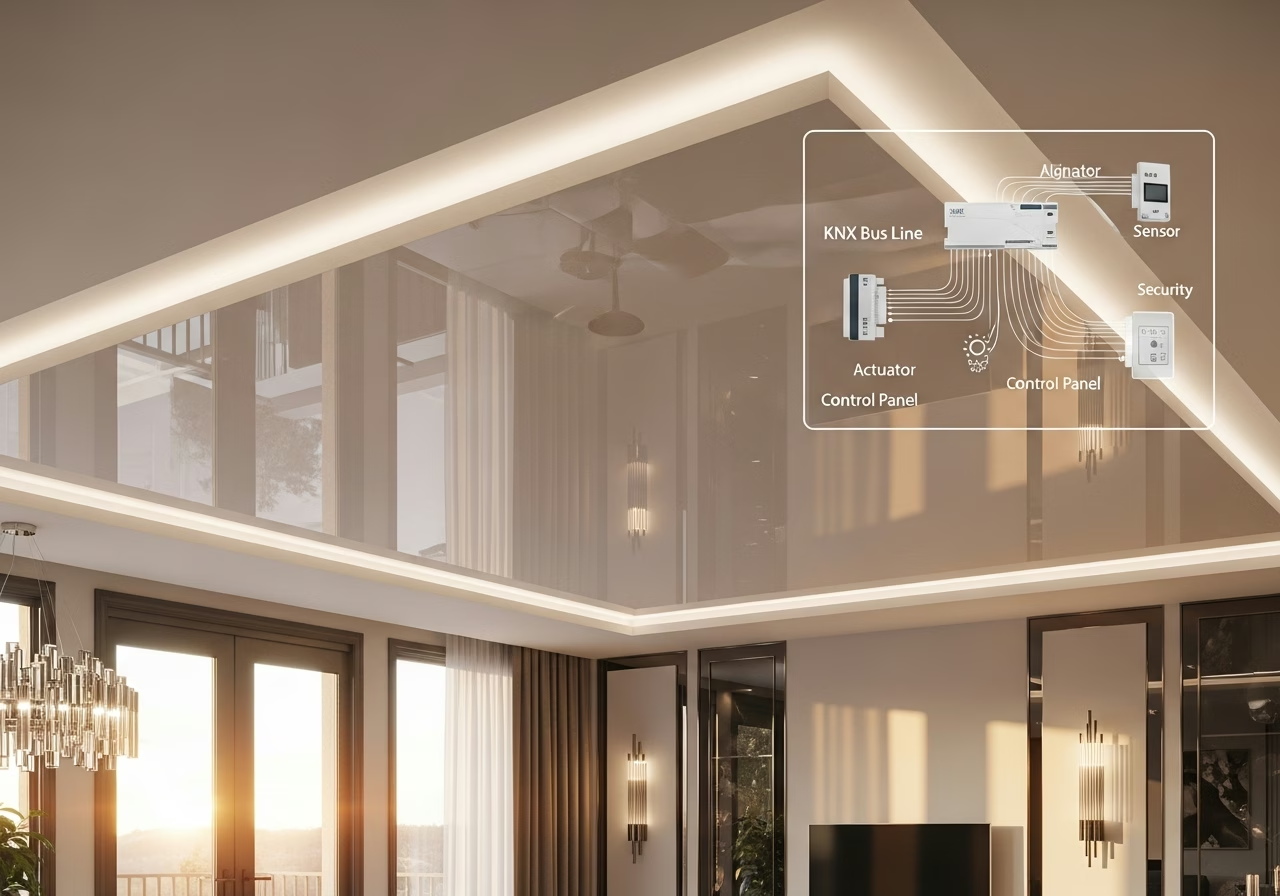
KNX (originally EIB, the European Installation Bus) is a wired control protocol standardised by ISO/IEC 14543-3 and EN 50090. It runs over a two-wire twisted-pair bus at 9.6 kbit/s, in parallel with the 120V or 230V power lines. Every KNX device — dimmer, switch, sensor, keypad, gateway — is addressed individually on the bus and programmed via the ETS (Engineering Tool Software) platform.
Key characteristics:
- Hard-wired, not wireless. Reliability is essentially perfect over the device lifetime.
- Decentralised, not server-based. Devices communicate peer-to-peer; there is no central hub that can fail and take down the system.
- Vendor-neutral. Over 500 manufacturers (ABB, Gira, JUNG, Siemens, Schneider, Hager, Theben, Zennio, MDT, Insta) make KNX-certified devices that all speak the same protocol.
- Lifetime architecture. Russian-Canadian and European luxury homes routinely run 20+ year KNX systems with periodic device upgrades.
KNX is the standard you spec when you are building a once-and-done smart home that will outlast multiple ownership cycles.
Why KNX for Stretch Ceiling
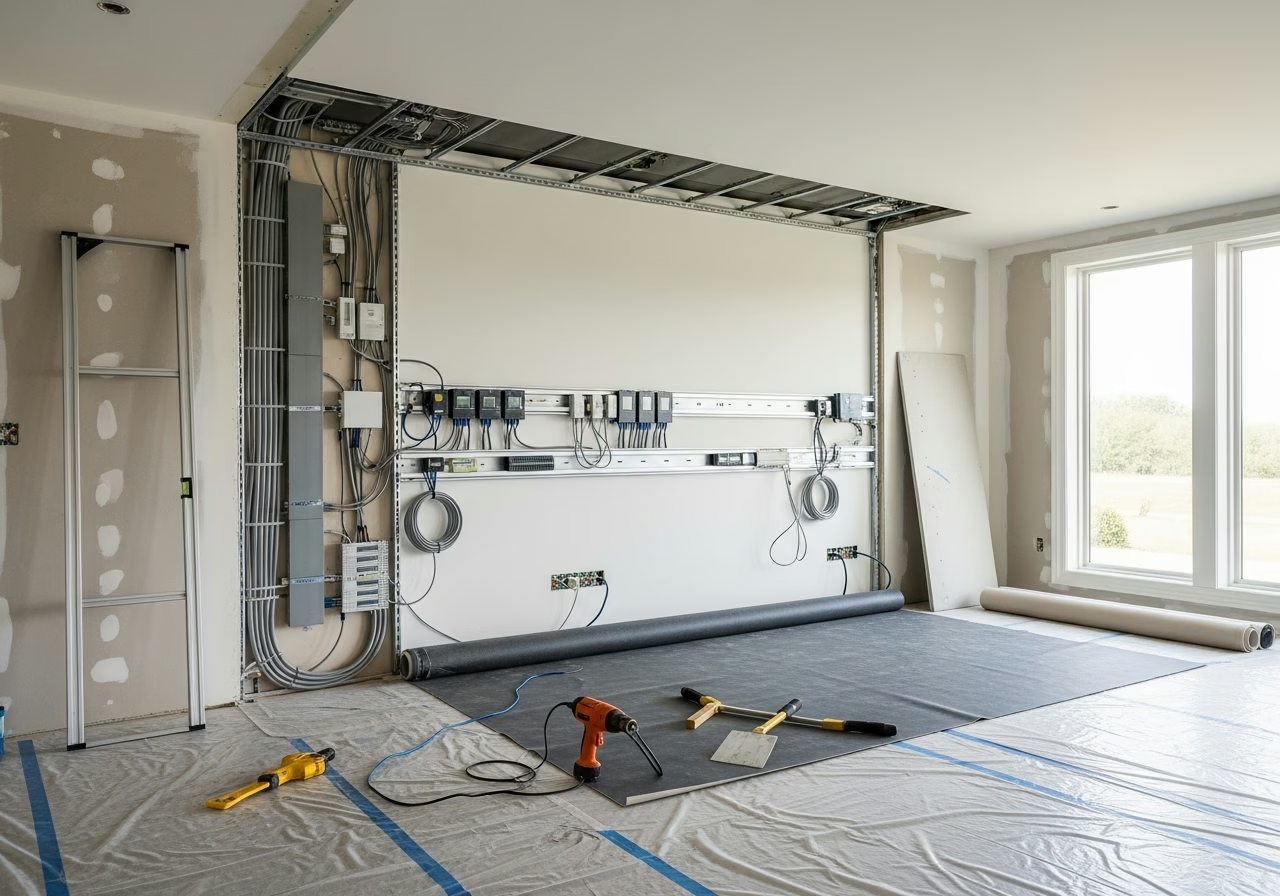
Stretch ceiling LED in a KNX-equipped home benefits from:
Need professional renovation?
Call RenoHouse at 289-212-2345 or get a free estimate today.
Get Free Estimate →- Per-driver dimming control via DALI gateway — every LED driver is individually addressable.
- Integrated scenes across lighting, shades, HVAC, audio — "Movie" scene closes blinds, dims lights, sets temperature, lowers projector screen, all from one keypad.
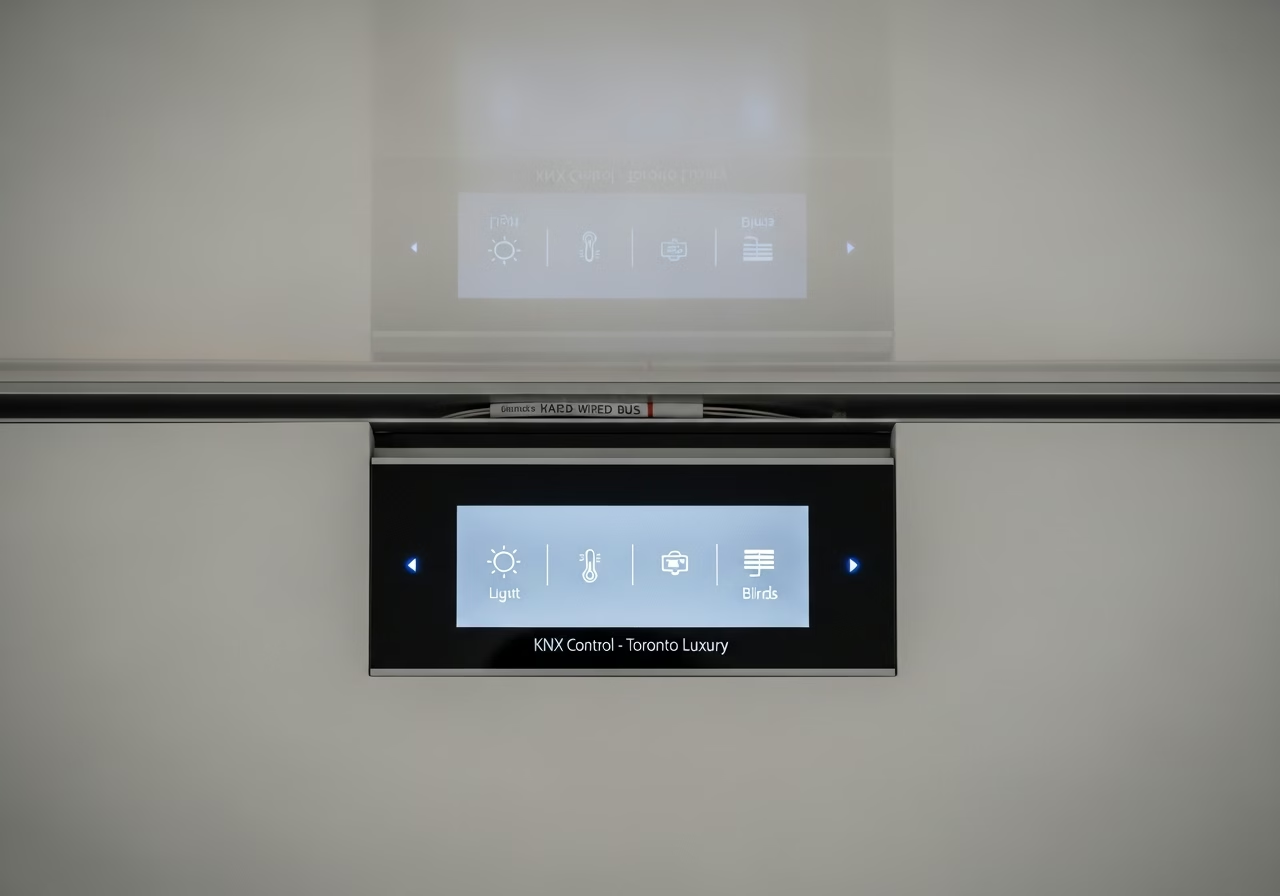
- Premium keypads — engraved aluminium, brass, or glass keypads from Gira, JUNG, Lithoss, Lutron RA3 (yes, RA3 keypads can integrate with KNX via gateway). Aesthetically a step above any wireless system.
- No software dependencies — KNX runs forever, even if Apple discontinues HomeKit or Amazon kills Alexa.
- Programmer continuity — once programmed, the home is documented in ETS files that any KNX-certified integrator can pick up and continue maintaining. No vendor lock-in.
KNX + LED Driver Topology
Three patterns dominate for KNX-integrated stretch ceiling LED:
Pattern A: KNX-DALI Gateway + DALI-2 Drivers
The premium spec. A KNX-DALI gateway (Theben DALI Gateway, Siemens N141, Zennio LUMENTO) connects the KNX bus to a DALI-2 lighting bus. Each LED driver is DALI-2 certified and individually addressed. Dimming, colour temperature, and tunable white control are all digital. This is what we spec for new-build Toronto luxury homes.
Pattern B: KNX 0–10V Actuator + Analog Drivers
A KNX 0–10V actuator (Hager TXA606D, MDT JAL-0810.02) outputs 0–10V dimming signals to standard analog LED drivers. Cheaper than DALI, less precise. Used for retrofits where DALI rewiring is impractical.
Pattern C: KNX Switch Actuator + Hue or Lutron Bridge
A KNX switch actuator triggers Philips Hue scenes or Lutron RA3 scenes via Ethernet bridge. Hybrid system — KNX provides the master scene control, Hue or RA3 handles the lighting layer. Used in retrofits where the lighting is already on Hue or RA3 and KNX is added for shade and HVAC integration.
Hardware We Spec for a KNX + Stretch Ceiling Toronto Build
For a 4,000 sqft Toronto custom home with backlit stretch ceilings in 6 rooms and cove LED in 4 additional rooms:
| Component | Cost |
|---|---|
| KNX power supply (640 mA) | $400 |
| KNX-DALI gateway (Theben) | $1,200 |
| DALI-2 drivers (10 zones, mid-spec) | $3,500 |
| LED strip (RGBWW or tunable white, premium 95+ CRI, 60m total) | $4,500 |
| Aluminium channel + frosted lens, 60m | $600 |
| KNX keypads (engraved aluminium, 6 rooms) | $3,600 |
| KNX motion sensors (6 rooms) | $900 |
| KNX bus cable + termination | $400 |
| KNX programmer (ETS configuration, 30–50 hours) | $6,000–$10,000 |
| Installer labour (stretch ceiling cove integration) | $4,500 |
| ESA Master Electrician multi-circuit tie-in | $4,000 |
| Lighting layer subtotal | $29,600–$33,600 |
Add HVAC integration ($8,000–$15,000), motorised shades ($12,000–$30,000), audio ($8,000–$25,000), access control ($5,000–$15,000) — total integrated KNX scope $62,000–$118,000.
When KNX Is the Right Answer
KNX makes sense in Toronto when:
- New-build or full gut renovation — you can pull KNX bus cable while drywall is open.
- Multi-system integration — lighting, shades, HVAC, audio, access all under one bus.
- 20+ control zones — wireless protocols (Caseta, Hue) become fragile at scale.
- European-trained client expectations — Russian, Israeli, German clients often arrive with KNX expectations.
- Aesthetic premium — engraved aluminium and glass keypads matter.
- Multi-decade horizon — the home is intended to be a generational asset, not a 5-year flip.
When KNX Is Overkill
For most Toronto residential — even premium $1.5M–$3M detached homes — Lutron RA3 is more than sufficient and easier to find a programmer for. RA3 hits about 80% of KNX's capability at 50% of the programming cost, with a faster and more accessible programmer pool. Reserve KNX for the top tier — custom luxury builds where the homeowner specifically wants the European bus standard.
Finding a KNX Programmer in Toronto
KNX certification is real — programmers complete a multi-day course and pass a certification exam. In Toronto the certified programmer pool is small but growing. We work with two KNX-certified Russian-Canadian integrators and one European-trained integrator for high-end builds. ETS5 or ETS6 files are deliverables — we always specify the homeowner receives the programmed files at handover.
ESA Compliance
Every KNX 120V tie-in and dimmer output in Ontario requires an ESA-licensed electrician. The KNX programmer is not the electrician — these are separate roles. RenoHouse coordinates both: the ESA-licensed Master Electrician for 120V wiring and the KNX-certified programmer for the bus configuration.
Honest Positioning
KNX is the European luxury standard for integrated stretch ceiling lighting, and we install it for Toronto custom homes that genuinely warrant the investment. For most projects, Lutron Caseta or RA3 is the better answer. We recommend KNX only when:
- New build or full gut.
- Multi-system integration scope.
- 20+ zones.
- Client specifically wants KNX (often European or Russian-Canadian).
- Budget is over $50,000 for the lighting and control layer.