RenoHouse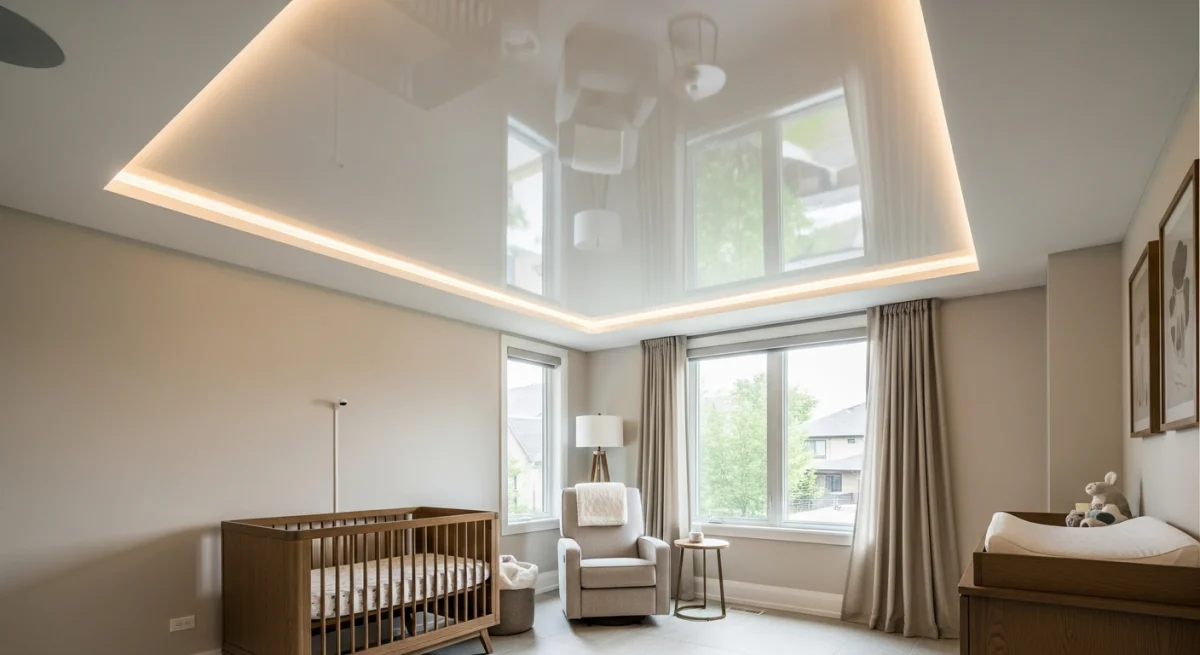

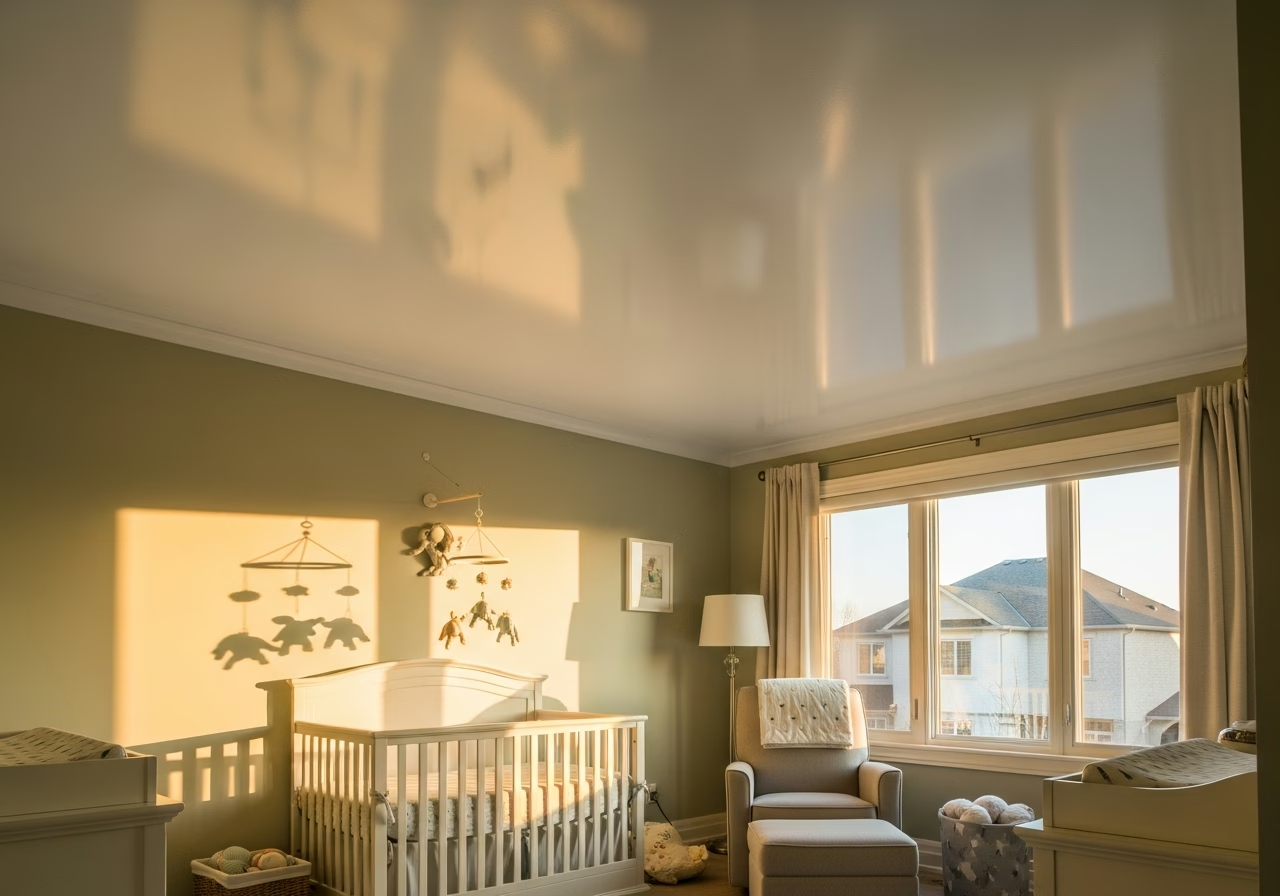
The nursery is the most safety-sensitive stretch ceiling room in any Toronto home. Newborns and infants spend 14 to 18 hours per day in the nursery, breathe at higher rates per body weight than adults, have developing immune systems, and have effectively no ability to communicate discomfort. Every material choice and install decision in a nursery should err on the side of conservative.
This article walks through nursery-specific stretch ceiling material selection, why we recommend cold-stretch fabric over PVC for nursery installs, ink and certification considerations for printed designs, sleep-stimulation concerns with fiber-optic ceilings, and the 30-day ventilation buffer we require before nursery occupation.
Material: Cold-Stretch Fabric, Not PVC
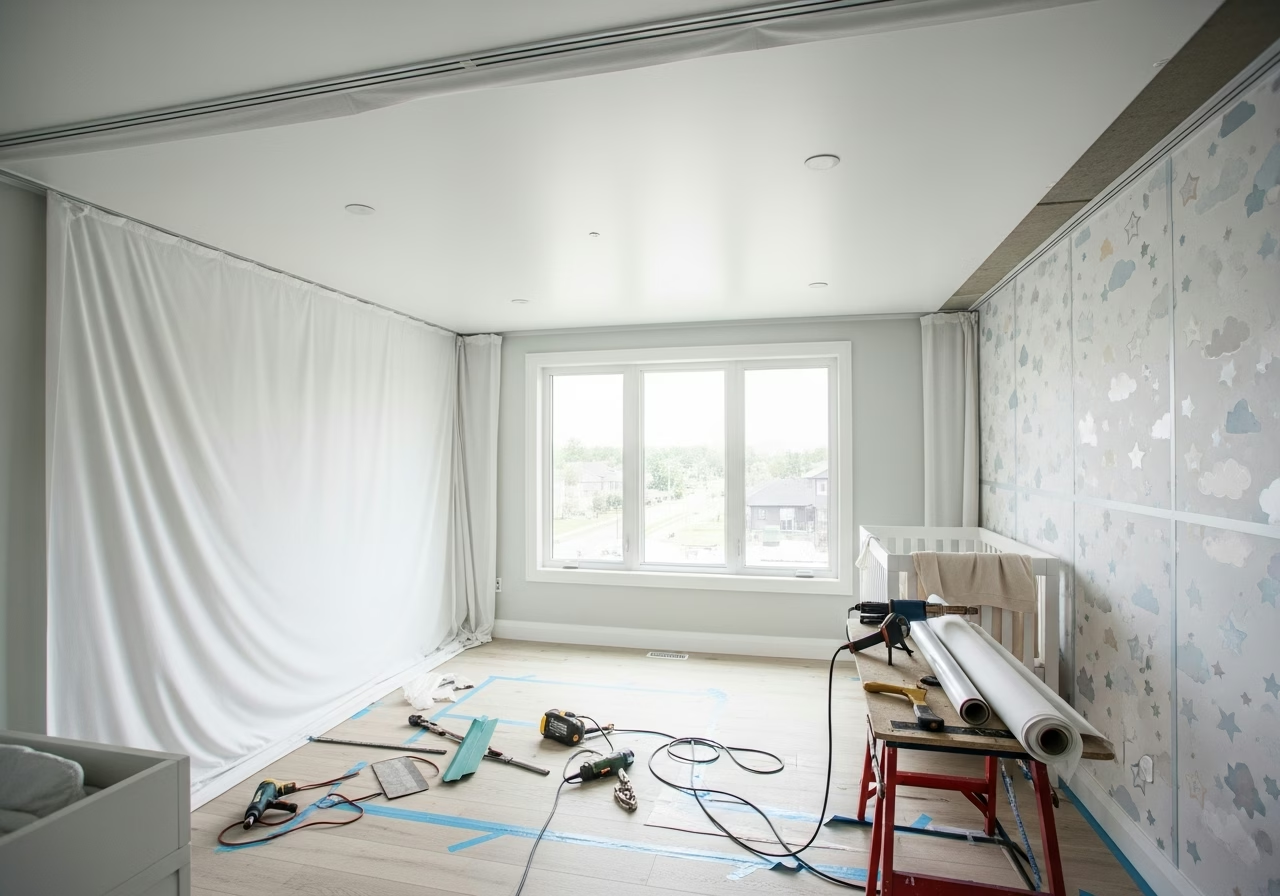
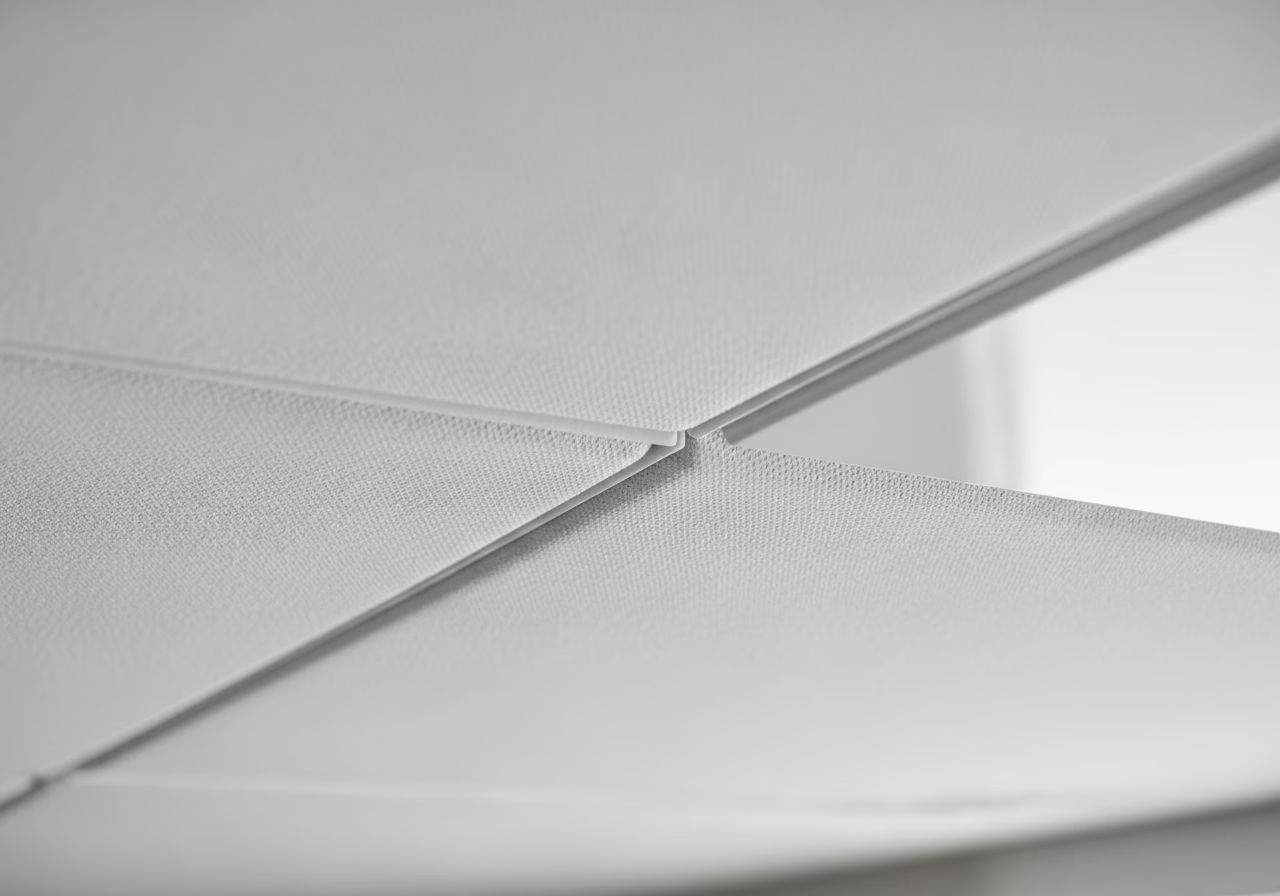
For nursery installs we recommend cold-stretch polyester fabric (Clipso, Newmat, Descor) over hot-stretch PVC. The reasons are specific to infant occupancy:
No heat-phase off-gassing. PVC stretch ceiling install raises ambient room temperature to 50 to 70 degrees Celsius for 30 to 45 minutes. Even premium A+ certified PVC films release some plasticizer and stabilizer compounds during this heat phase. The off-gassing returns to baseline within 24 hours of install for premium films. For nursery installs, we want zero possibility of residual off-gassing during infant occupancy. Cold-stretch fabric has no heat phase, no plasticizer release. Higher quality certifications. Premium polyester fabrics (Clipso, Newmat) carry A+/M1 indoor air quality certifications that exceed standard PVC certifications. Test reports confirm extremely low VOC and formaldehyde emissions across the operating life of the membrane. Longer warranty, lower replacement risk. Clipso fabric carries a 10 to 15 year warranty versus 10 years for premium PVC. The longer warranty reduces the chance of a mid-childhood replacement install with a new round of off-gassing concerns. Better acoustic. Plain Clipso fabric NRC 0.10 to 0.15 versus PVC NRC 0.10. Modest but the right direction. Microperforated fabric (NRC 0.55 to 0.70) is overkill for most nurseries but is available for parents who want sound reduction between the nursery and adjacent rooms.The cost premium for fabric over PVC is roughly 2x. A 100 to 130 sqft nursery in Clipso fabric runs $2,800 to $4,500 versus $1,400 to $2,400 for premium PVC. The premium is worth it for nursery applications.
When PVC is Acceptable
If budget constraints make Clipso fabric impractical, premium A+ certified MSD or Pongs PVC can be used for a nursery with the following protocol:
- Install at least 30 days before nursery occupation. Three to four weeks of ventilation with windows cracked and HEPA air purifier running.
- A+ certified film only. No grey-market or budget films. Provide test certificate.
- Continuous ventilation for first 14 days post-install. Window cracked, HEPA air purifier running, room door open to allow air exchange with the rest of the home.
- Air quality test on day 14. Independent indoor air quality testing for VOCs, formaldehyde, plasticizers. Confirm baseline before infant moves in.
- Avoid PVC nursery install during summer heat. Higher ambient temperatures slow off-gassing dissipation; install in cooler months.
For asthma-sensitive families, allergy-prone parents, or any concern about indoor air quality, Clipso fabric is the better choice and the cost premium is justified.
Print Themes and Inks
Printed stretch ceilings in nurseries are common. Popular themes:
- Soft daytime cloud sky. Universally appealing, gender-neutral.
- Hot air balloons / pastel. Whimsical, ages 0 to 5.
- Forest / woodland animals. Subtle ages 0 to 8.
- Stars and moon (printed, not fiber-optic). Calming for older infants and toddlers.
Avoid for nurseries:
- High-contrast graphics or bold patterns. Too stimulating for infants under 6 months.
- Cartoon characters with copyright licensing. Cost premium and limited reprint flexibility.
- Custom photo prints with parent self-imagery. Subjective but most sleep consultants advise neutral imagery for sleep-conducive nursery design.
Ink specifications for nursery prints:
Need professional renovation?
Call RenoHouse at 289-212-2345 or get a free estimate today.
Get Free Estimate →- Eco-solvent or HP Latex inks only. Both certified for low-VOC indoor use.
- No regular solvent inks. Too high VOC load for infant exposure.
- Print cured at least 7 days before install. Allows ink to fully cure and off-gas before delivery.
- A+ certified base membrane (Clipso fabric or premium PVC).
No Fiber-Optic for Newborns
Fiber-optic star sky ceilings are popular for older kids' rooms but we do NOT recommend them for nurseries with infants under 12 months. The reasoning:
- Light stimulation disrupts sleep. Newborn sleep cycles are short and fragile; any constant light source in the nursery disrupts circadian development.
- Pediatric sleep recommendations. Pediatric sleep specialists consistently recommend full-dark nurseries for infants. A twinkling fiber-optic ceiling is incompatible with this guidance.
- No "off" doesn't help. Even when the projector is off, the fiber pinpoints in the membrane visibly catch ambient light from outside the nursery (hall light, baby monitor LED) and create faint stars. Older kids enjoy this; newborns get distracted from sleep.
For toddler rooms (2+ years) fiber-optic star sky becomes appropriate with strict timer programming (off 20 to 30 minutes after bedtime). For nurseries, plain matte fabric or printed daytime sky is the right choice.
Lighting for Nurseries
Nursery lighting requirements:
- Dimmable. Critical for nighttime feeding and diaper changes; full-bright lights at 3 AM disrupt both parent and infant sleep.
- Warm 2700 K. Wrong for adult bedrooms (too warm), right for nurseries. Warm light supports melatonin, cool light suppresses it.
- Lutron Caseta or similar. Programmable scenes: "Day" (full bright), "Bedtime routine" (40 percent), "Night feeding" (10 percent dim warm).
- Optional motion-activated dim red. A small red LED in the nursery (under the changing table or behind a piece of furniture) gives enough light for diaper changes without disrupting melatonin. Specify a motion sensor with 30-second timeout.
Pot lights: 4 to 6 in a typical 100 to 130 sqft nursery, 90+ CRI, dimmable, 2700 K. Pass-through cost $40 to $80 each.
Acoustic for Shared Nurseries
If the nursery shares a wall with the master bedroom (most Toronto townhouse and 2-bedroom condo configurations), acoustic stretch ceiling reduces airborne sound transmission to the master by 5 to 10 dBA. Microperforated Clipso Acoustic-810 with 100 mm Rockwool plenum delivers NRC 0.65 to 0.75.
Cost premium: $5 to $10 per square foot. Worth it for shared-wall nurseries to reduce baby crying transmission to parents (or vice versa, parent voices into the nursery).
30-Day Pre-Occupation Buffer
Regardless of material choice (Clipso fabric or premium PVC), we recommend the nursery install be completed at least 30 days before the infant moves in. This ventilation buffer accomplishes:
- Full off-gassing cycle. Even low-VOC materials emit some compounds in the first 30 days post-install. Full ventilation removes these before infant exposure.
- Membrane stabilization. Cold-stretch fabric reaches final tension over 7 to 14 days; PVC stabilizes within 24 hours but the surrounding paint, ductwork, and adjacent finishes also need to settle.
- Air quality verification. We can return on day 21 to perform an indoor air quality test (optional, $200 to $400) and confirm baseline VOC, formaldehyde, and plasticizer levels.
- Smoke alarm and CO detector verification. All life-safety devices should be tested 7 to 14 days before infant occupation to confirm functionality.
For new-construction homes or first-baby renovations, the 30-day buffer fits naturally into the broader nursery prep timeline (paint, furniture, decorating). Plan it from the start.
2026 Installed Pricing
For a typical Toronto nursery stretch ceiling:
- Standard nursery 100-130 sqft, plain matte Clipso fabric: $2,800 to $4,500.
- Premium A+ PVC alternative: $1,400 to $2,400 (with 30-day ventilation buffer).
- Printed Clipso fabric (cloud sky, soft theme): $3,800 to $5,800.
- Acoustic Clipso Acoustic-810 + 100 mm Rockwool: $4,500 to $7,200.
- Add Lutron Caseta dimming control: $400 to $700.
- Add motion-activated dim red night light: $200 to $400.
For a comprehensive nursery install with acoustic perforated Clipso fabric, dimming control, and 30-day buffer, total is roughly $5,500 to $8,500 \u2014 a meaningful investment for a 12 to 24 month period of intensive nursery use, but the materials remain perfectly serviceable for the toddler and elementary years afterward.
What to Avoid
- Hot-stretch PVC install with infant in adjacent room. Move the household out for the install day plus 24 hours minimum.
- Fiber-optic star sky in a nursery for newborns. Wait until age 2+.
- High-contrast or fluorescent printed designs. Too stimulating for infants.
- Solvent ink prints. Use eco-solvent or HP Latex only.
- Skipping the 30-day pre-occupation buffer. Even with premium A+ materials, the buffer is a safety margin.
- Cool white LED in the nursery. Disrupts melatonin. Always 2700 K warm.
Honest Install Trade-Offs
Cold-stretch Clipso fabric install: 4 to 6 hours for a 130 sqft nursery, no heat phase, no propane gas, no off-gassing concerns during install. The room is comfortable to be near during install, though we still recommend pregnant family members not be in the immediate work area during install for general renovation-dust reasons.
If choosing PVC despite our recommendation: 2 to 3 hours install, 50 to 70 degree heat phase, mandatory ventilation, 30-day buffer before infant occupation.
Membrane warranty: 10 to 15 years from Clipso (transferable). We layer a 10-year RenoHouse-coordinated warranty including any tension or installation issues.
Related Reading
For older kids' room printed designs (galaxies, dinosaurs, themes), see the kids' room stretch ceiling guide. For master bedroom installs that often pair with nursery installs in family renovations, see the master bedroom stretch ceiling guide. For the full stretch ceiling room-by-room pillar including the safety considerations summary, see the by-room guide.
Get a Nursery Stretch Ceiling Quote
We coordinate vetted installer crews experienced in nursery installs across Toronto, Vaughan, North York, Thornhill, Richmond Hill, Markham, Oakville, and Mississauga. Free in-home measurement, A+ certified Clipso fabric specification, optional indoor air quality testing post-install, full 30-day buffer scheduling. $2M general liability, WSIB clearance, English or Russian-speaking crews available.
Request a nursery stretch ceiling quote.Continue Reading
- Kids
- Star Sky Ceiling for Kids
- Printed Stretch Ceiling Cost in Toronto 2026: Custom UV-Print Design Pricing Honestly