RenoHouse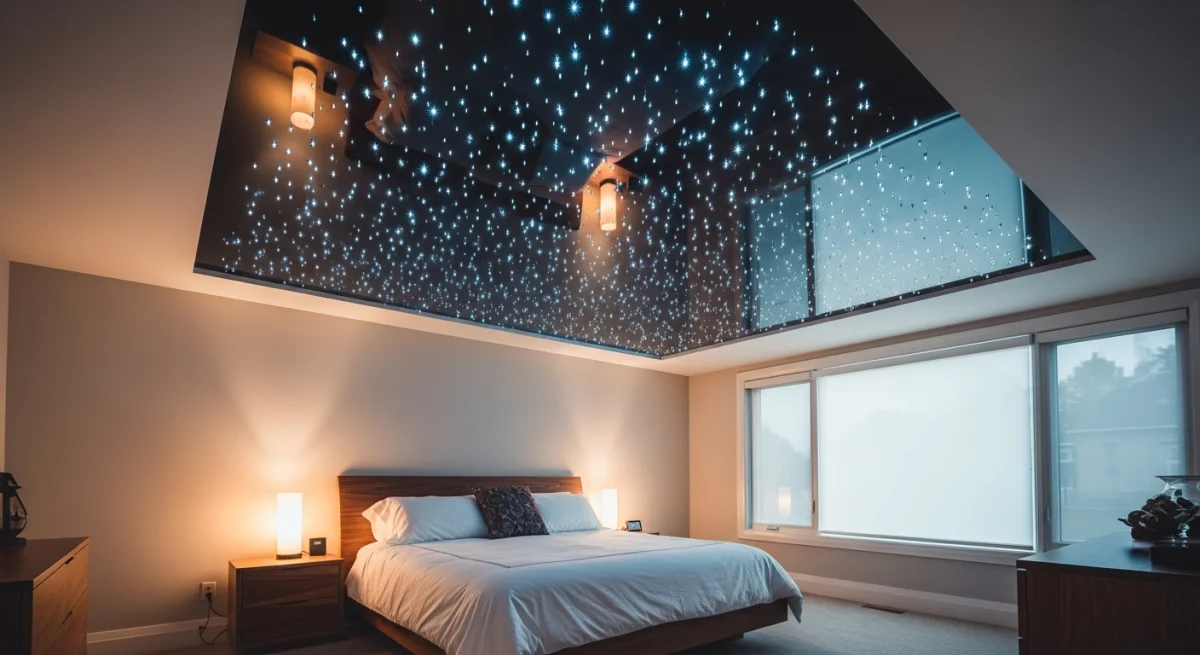

# Star Sky Ceiling for Toronto Restaurants and Commercial Spaces
A star sky ceiling in a Toronto restaurant earns its keep on Instagram. The ceiling becomes the photograph, the photograph becomes the geotag, and the geotag becomes 200 free reservations a month. Yorkville cocktail bars, Queen West private dining rooms, King Street West rooftop lounges, and a handful of Bloor Street steakhouses have all installed star sky ceilings between 2023 and 2026, and the consistent feedback from operators is that the ceiling pays itself off in under 18 months on social media reach alone.
This guide covers commercial-specific design, code requirements, supplier coordination, and the operational considerations that distinguish a hospitality star ceiling from a residential one.
This article is part of our star sky cluster. For the broader category overview see Star Sky Ceiling Toronto 2026 Complete Guide. For the home theatre application see Star Sky Ceiling for the Home Theatre.
Why Restaurants and Lounges Choose Star Ceilings
Three operator motivations drive the decision:
1. Photographable rooms outperform on social. Instagram's algorithm rewards visually distinctive imagery. A standard restaurant ceiling generates 0.3–0.8 percent engagement on guest photos. A star sky ceiling generates 4–9 percent. The difference is real money in reservation volume. 2. Differentiation in a saturated market. Toronto has 8,000+ restaurants. A unique ceiling is a defensible point of difference that competitors cannot copy quickly — fiber optic installs require 4–8 weeks of lead time and skilled crews. 3. Premium pricing justification. Operators charging $90+ per cover need the room to feel like a $90 cover. Star ceilings deliver that perception at a one-time capital cost rather than ongoing per-cover labour.Commercial Design Differences from Residential
Higher Star Density
Restaurants typically run 120–180 stars per square metre, denser than even home theatres. Reasons:
- Diners are looking up across the room, not from a pillow at close range
- Photography flattens depth perception — denser stars photograph as more dramatic
- The room is bigger and the eye expects more visual richness
- Some ambient light from candles, table lamps, and entry zones means individual stars need to be brighter
For a 400 sqft private dining room: 4,500–6,500 stars. We use Universal Fiber Optics XL engines or coordinated multi-engine setups.
Brighter Headline Stars
The diameter mix shifts brighter:
- 60 percent 0.5 mm
- 20 percent 0.75 mm
- 12 percent 1.0 mm
- 8 percent 1.5 mm
The 8 percent headline-star fraction is roughly double a residential bedroom. The result reads as a denser, more dramatic sky that holds up against ambient room light.
Active RGB Cycling
Residential clients usually disable RGB. Restaurants embrace it. A subtle lavender-to-deep-blue cycle over a 30-minute period creates dynamic ambiance without distracting diners. Faster cycles work for cocktail lounges; slower cycles for fine dining.
Themed Programming for Events
Private dining rooms book private events — birthdays, anniversaries, proposals, corporate dinners. Themed scene programming (rose-pink for engagements, bright multicolour for birthdays, deep blue for corporate gravitas) gives operators a reservation upsell and an event-night memorable touch.
We program 6–10 named scenes for typical commercial installs.
Need professional renovation?
Call RenoHouse at 289-212-2345 or get a free estimate today.
Get Free Estimate →Code Considerations for Toronto Commercial Installations
Commercial stretch ceilings in Toronto are subject to fire code requirements that residential installs are not.
CAN/ULC-S102 Flame Spread Rating
Commercial stretch ceiling membranes must meet CAN/ULC-S102 with a flame spread rating of 25 or less and smoke developed of 50 or less. Most premium PVC and Clipso fabric membranes meet this — but verify in writing with the manufacturer's certification. Cosmolight, Universal Fiber Optics, and major PVC suppliers ship certified product on request.
A non-certified residential-grade membrane in a commercial space is a fire code violation that voids insurance and may trigger a closure order at inspection.
Sprinkler Integration
Commercial spaces typically have sprinklers. Stretch ceilings can integrate with sprinkler systems through:
- Pop-down sprinkler escutcheons — sprinkler heads sit above the membrane on a frangible escutcheon that releases under heat
- Pre-action wet sprinkler heads — heads project through the membrane on flexible drops
- Membrane-rated fire sprinkler heads — purpose-built for stretch ceiling applications
Coordination with the building's fire engineer is mandatory. The fiber optic engine and harness routing must avoid sprinkler heat sensors. We use ESA-licensed and fire-rated electrical partners for all commercial installs.
Emergency Egress Lighting
Emergency exit signs and egress lighting must remain visible during a power failure. Star sky engines lose power during an outage, but emergency lighting is on a separate emergency circuit. Design must ensure emergency illumination is not blocked by the membrane — typically by routing emergency fixtures around the starfield zone or through dedicated emergency penetrations.
Building Permits
A commercial stretch ceiling install in Toronto typically requires a building permit if the project involves:
- Changes to the existing ceiling assembly
- New electrical circuits for the star engine
- Modifications to fire protection (sprinklers, smoke detectors)
- Changes to occupancy classification or fire separation
We work with permit expediters who handle Toronto Building Department submission. Lead time is 4–8 weeks depending on the borough.
Membrane Choice for Commercial Spaces
PVC works in most casual restaurants. Fabric (Clipso, Barrisol) works better in fine dining and lounges where:
- The room has acoustic challenges (high ceilings, hard surfaces)
- The membrane is exposed to grease vapor (less common with star ceilings, since they are usually in dining rather than kitchen zones)
- The aesthetic targets a "hand-crafted" rather than "polished" feel
For star sky applications specifically, PVC is the more common choice because the deep matte black or navy required for the starfield is more available in PVC stocks. Fabric in matte black is a 6-week special order.
Engine and Modules for Commercial Spaces
Our default specification for a 400 sqft Toronto restaurant private dining room:
- Engine: Universal Fiber Optics XL with RGB and DMX
- Star count: 5,000 in a 60/20/12/8 diameter mix
- Modules: 2 shooting star modules, 1 RGB cycling module
- Membrane: Certified PVC matte black, fire-rated
- Smart control: DMX-512 with named scenes
- Wall control: Lutron commercial keypad with engraved scene buttons
Total project: $28,000–$42,000 depending on plenum complexity, sprinkler integration, and permit fees.
ROI for Commercial Operators
Operator-reported figures from three Toronto restaurants we installed for in 2024–2025:
Restaurant A (Yorkville fine dining, 350 sqft private dining room):- Project cost: $34,000
- Reported reservation increase: 28 percent within 4 months of install
- Estimated incremental revenue (higher cover count + premium pricing): $11,500/month
- Payback period: 13 months
- Project cost: $52,000
- Reported Instagram tag volume increase: 4.2x within 6 weeks
- Reservation increase: 22 percent over 6 months
- Payback period: 16 months
- Project cost: $68,000
- Booking rate increase for star-ceiling room: 67 percent
- Premium pricing accepted: $400/event upsell
- Payback period: 11 months
Numbers are operator-reported and not independently audited, but they are consistent with industry data on photographable interior features.
Operational Considerations
Daily Operation
Commercial star ceilings run 8–14 hours per day. The Cosmolight Galaxy V8 and Universal Fiber Optics XL are rated for continuous operation. LED life at 14 hours/day is approximately 9–10 years before output drops below 70 percent.
Cleaning and Maintenance
Restaurant ceilings accumulate grease vapor and dust over years. Recommended maintenance:
- Soft dust with a microfiber pole brush every 2–3 months
- Spot-clean any visible discoloration with neutral pH cleaner
- Full inspection annually
- Engine LED replacement every 8–10 years
- Fiber harness inspection at engine replacement
Full care guidance in Star Sky Ceiling Maintenance and Care.
Repair During Service Hours
A failed engine is repairable in 30 minutes by a trained technician without taking the membrane down. We offer 4-hour emergency response for commercial clients within Toronto and York Region. A failed shooting star module can be left disabled until next maintenance — the rest of the ceiling continues to function.
How RenoHouse Manages Commercial Star Ceiling Projects
Commercial installs require coordination across architects, mechanical engineers, electricians, fire engineers, and the building's existing trades. RenoHouse runs:
- Permit submission and expediting
- Coordination with mechanical and fire protection trades
- ESA-licensed electrical install
- Universal Fiber Optics XL or Cosmolight Galaxy V8 supply through verified Canadian distributors
- Russian-Canadian fiber optic installer crews experienced with commercial code
- 5-year commercial warranty layer (residential 10-year warranty does not apply to commercial use)
- 4-hour emergency response within Toronto and York Region
To start a commercial design consultation, visit our Star Sky Ceiling Installation page or read the pillar guide.
Continue Reading