RenoHouse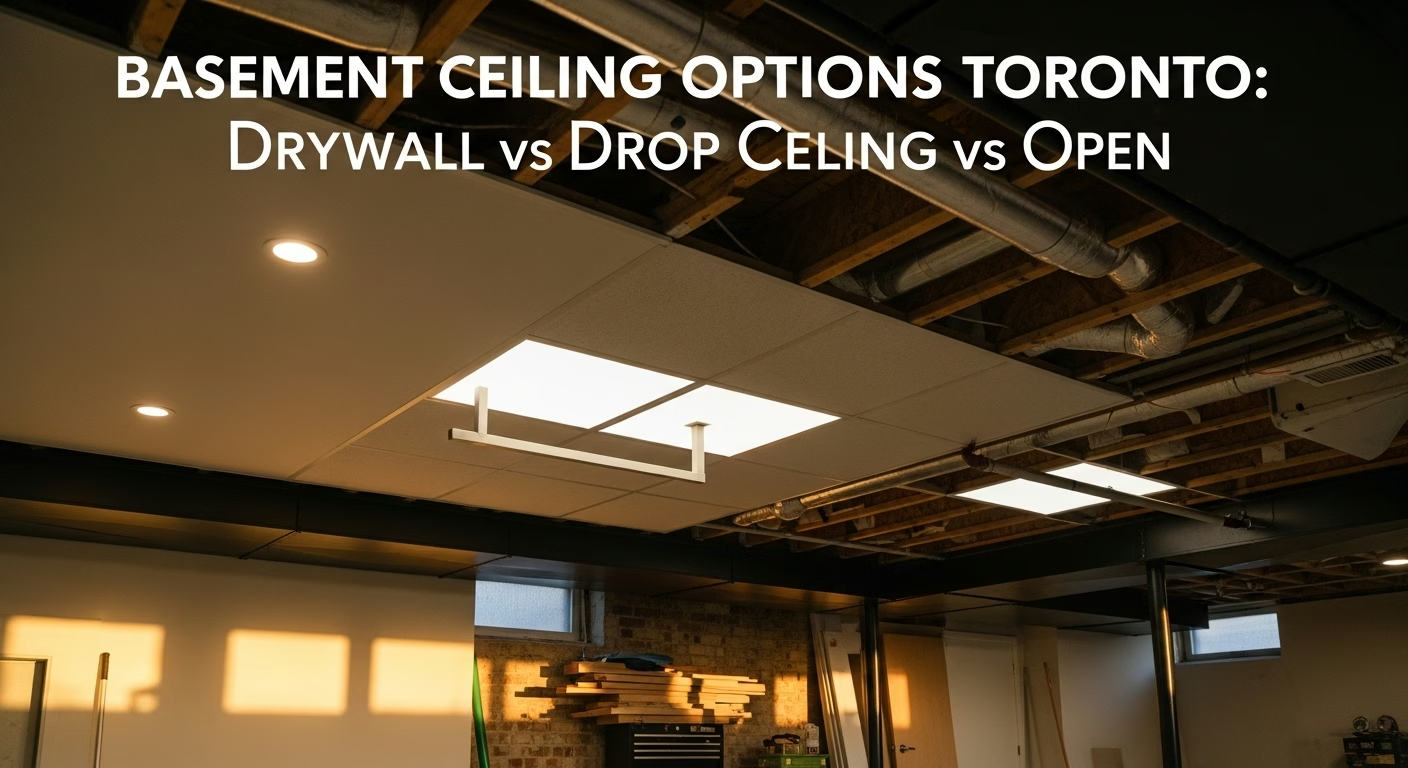

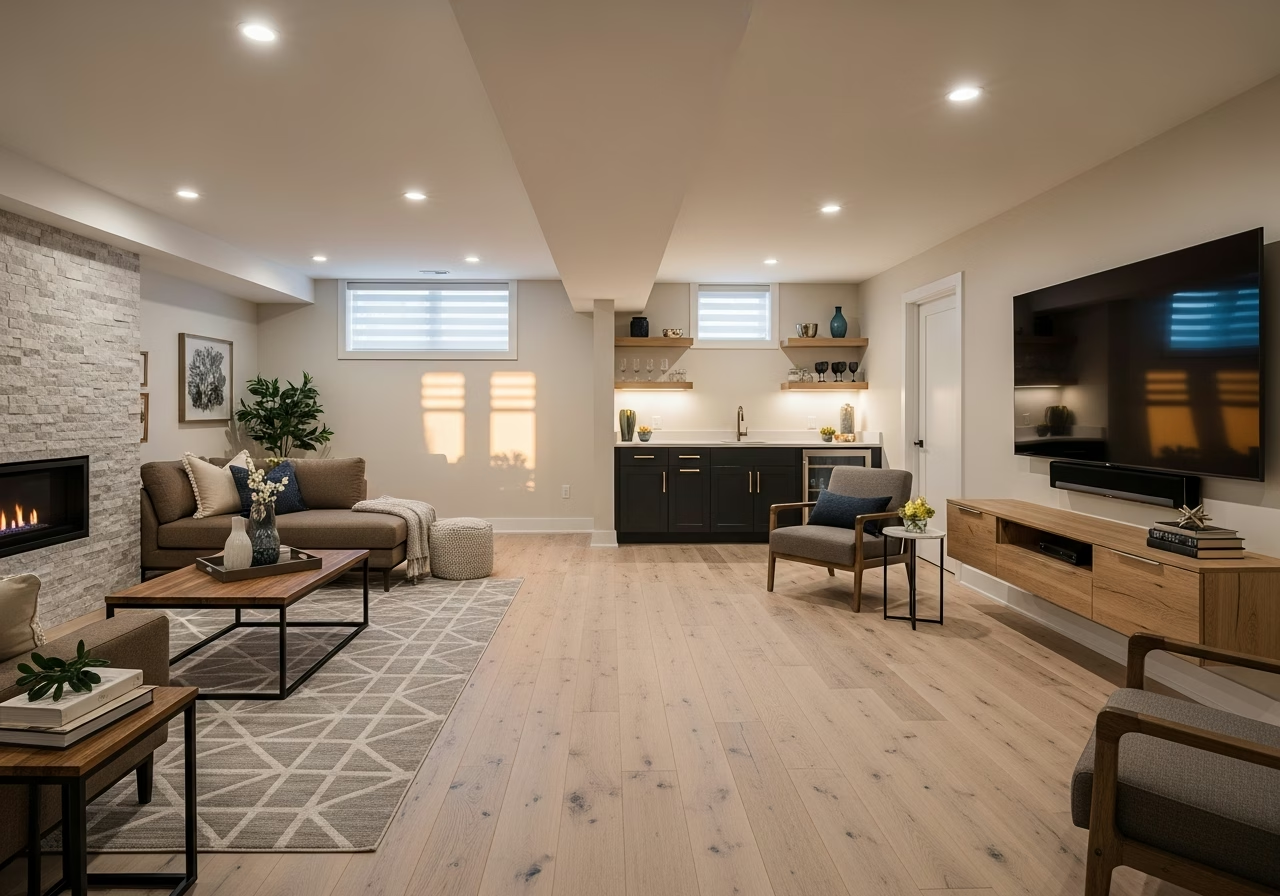
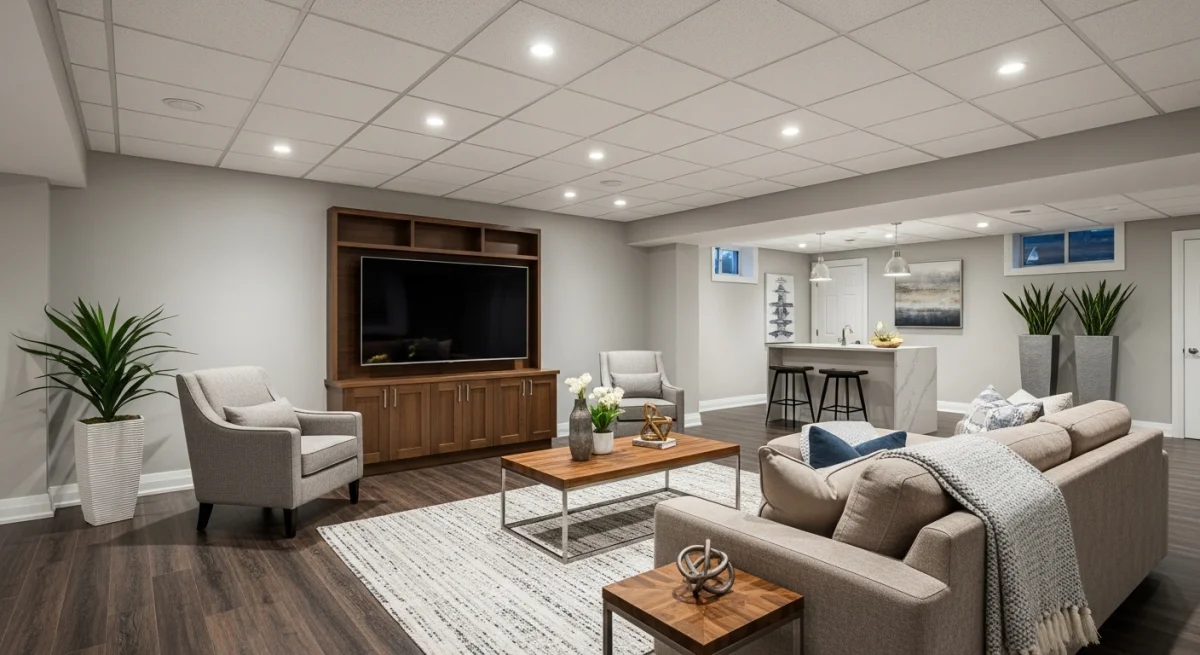
The ceiling is one of the most important decisions in a basement renovation — and in Toronto, where ceiling height is often tight, it's also one of the most constrained. Your choice affects the look, the cost, accessibility to utilities above, soundproofing, and whether your finished basement meets Ontario Building Code height requirements. For a complete overview of basement renovation costs and planning, see our Complete Basement Renovation Guide Toronto 2026.
Toronto homes built from the 1950s through the 1990s typically have unfinished basement ceilings between 7 and 8 feet from slab to joist bottom. Once you account for the thickness of the ceiling system and flooring, the finished ceiling height determines whether your basement can be used as a living space, a bedroom, or a legal apartment. Every inch matters.
Let's break down the three main options: drywall, drop (suspended) ceiling, and open (exposed) — with real 2026 costs, pros and cons, and Toronto-specific considerations.
---
Drywall Ceiling
A drywall ceiling gives your basement the same finished look as the upper floors of your home. Drywall (gypsum board) is screwed directly to the underside of the floor joists and finished with mud, tape, and paint.
Advantages
- Clean, modern appearance: Smooth, flat, seamless — the most professional finish.
- Maximum height preservation: Consumes only ½ inch, preserving the most ceiling height.
- Best for legal suites: Type X board provides the 1-hour fire-rated separation required for basement apartments.
- Excellent sound attenuation: Combined with mineral wool insulation, drywall provides superior soundproofing.
Drawbacks
- No access to utilities: Reaching plumbing or wiring requires cutting drywall and patching afterward.
- Higher labour cost: Taping and mudding quality depends on the drywaller's skill.
- Challenging around obstacles: Ductwork, pipes, and junction boxes are difficult to work around neatly.
Cost
| Component | Per Sq Ft (CAD) |
|---|---|
| Materials (drywall, mud, tape, screws) | $0.75–$1.50 |
| Labour (install, tape, mud, sand) | $2.00–$4.00 |
| Paint (2 coats) | $0.50–$1.00 |
| Total installed | $3.00–$6.00 |
Add $1.00–$2.00/sqft for fire-rated Type X installation (required for secondary suites).
When to Choose Drywall
Choose drywall when ceiling height is tight (every half-inch counts), when you want the cleanest look, when building a legal apartment (fire rating required), or when superior soundproofing matters.
---
Drop/Suspended Ceiling
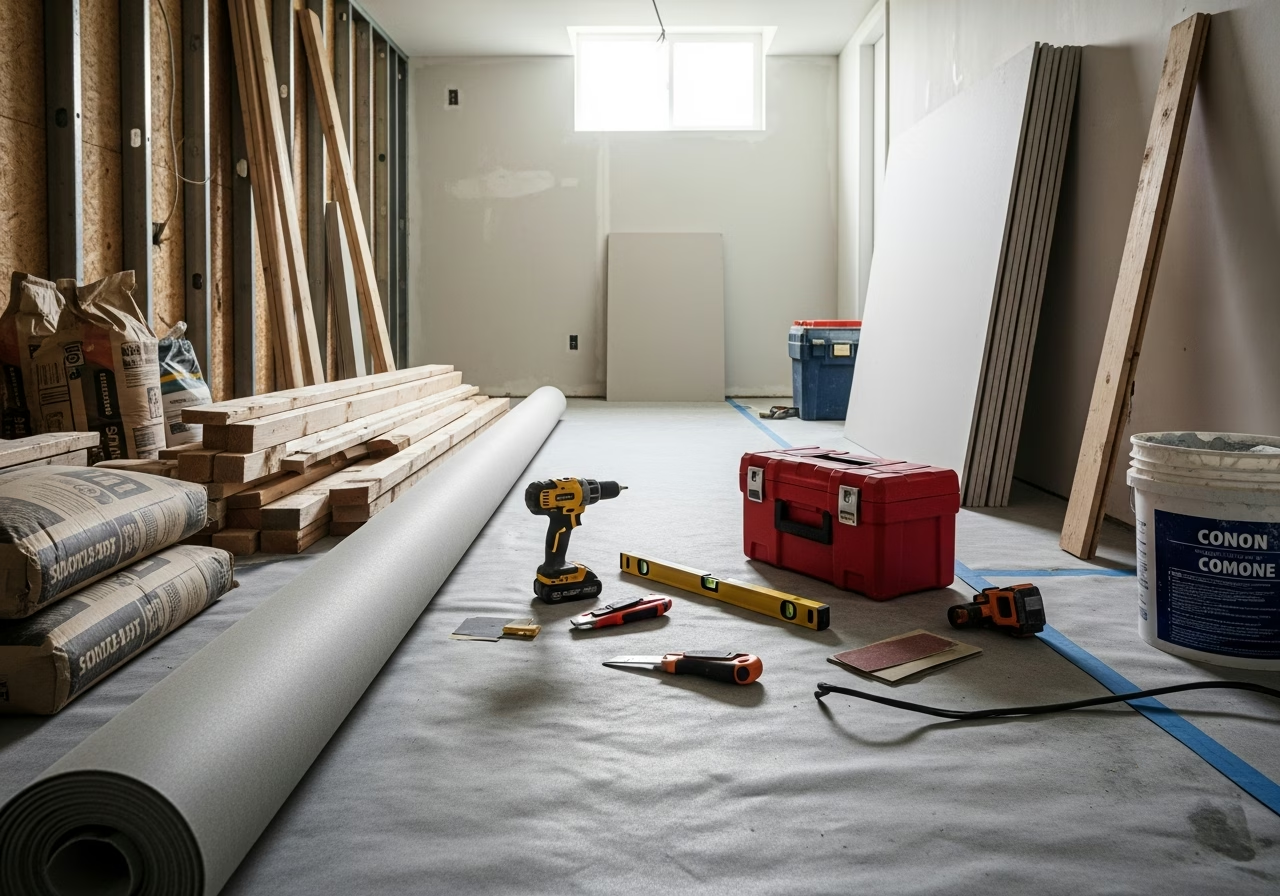
A drop ceiling (also called a suspended ceiling) consists of a metal grid hung from the joists by wires, with lightweight acoustic tiles that sit in the grid. It's the classic basement ceiling solution — and for good reason.
Advantages
- Easy utility access: Pop out a tile, access plumbing or wiring, pop it back. No cutting or patching.
- Hides imperfections: Uneven joists and old pipes hidden behind the grid.
- DIY-friendly: One of the most accessible basement DIY projects.
- Acoustic performance: Tiles absorb sound (NRC 0.50–0.70 for premium tiles).
Drawbacks
- Height loss: Grid hangs 3 to 6 inches below joists — critical in tight Toronto basements.
- Institutional look: Standard tiles can look commercial. Premium options help but the gap vs. drywall remains.
- Not fire-rated: Standard tiles don't meet secondary suite requirements.
- Moisture sensitivity: Choose moisture-resistant tiles for basements.
Cost
| Component | Per Sq Ft (CAD) |
|---|---|
| Grid system (main rails, cross tees, wall angle) | $0.75–$1.50 |
| Standard acoustic tiles (2×4 or 2×2) | $1.00–$3.00 |
| Labour (if professional) | $1.50–$3.00 |
| Total installed | $2.50–$6.00 |
Premium flat-panel or coffered-look tiles can push material costs to $5.00–$8.00/sqft.
When to Choose Drop Ceiling
Choose a drop ceiling when access to utilities is a priority (older homes with many plumbing and electrical runs above the ceiling), when you have adequate ceiling height to spare (7'10"+ from slab to joist), or when budget is tight and you're DIY-ing.
---
Open/Exposed Ceiling
An open (exposed) ceiling leaves the joists, ductwork, pipes, and wiring visible — painted in a uniform colour (typically black, dark grey, or white) for an industrial or loft-style look.
Advantages
- Maximum height: Zero height loss — full slab-to-joist distance preserved.
- Industrial aesthetic: Popular for modern basements, gyms, and entertainment spaces.
- Full utility access: Everything remains accessible without disassembly.
- Low cost: Main expense is paint and prep labour.
Drawbacks
- Sound transfer: No barrier = significantly more noise between floors.
- Messy if not done well: Every wire, pipe, and duct is visible. Cluttered ceilings look chaotic.
- Not permitted for apartments: Doesn't meet fire separation requirements.
- Lighting limitations: Requires track, pendant, or surface-mounted fixtures only.
Cost
| Component | Per Sq Ft (CAD) |
|---|---|
| Prep (clean, remove old materials, organize wiring) | $0.50–$1.50 |
| Paint (spray application, 2 coats) | $1.00–$2.50 |
| Total | $1.50–$4.00 |
Spray painting is strongly recommended — brushing or rolling around joists, ducts, and pipes takes 3–4x longer and produces inferior results. A professional spray job runs $1,500–$3,000 for a typical basement.
Need professional renovation?
Call RenoHouse at 1-289-212-2345 or get a free estimate today.
Get Free Estimate →When to Choose Open Ceiling
Choose an open ceiling when height is critically limited, when you want an industrial/modern look, when the space is a gym, workshop, or entertainment area (not a bedroom or apartment), or when budget is the primary concern.
---
Cost Comparison
| Ceiling Type | Cost/Sq Ft (CAD) | Height Loss | Access to Utilities | Fire Rated? | Sound Isolation |
|---|---|---|---|---|---|
| Drywall | $3.00–$6.00 | ½ inch | ❌ None | ✅ Yes (Type X) | 🟢 Best |
| Drop Ceiling | $2.50–$6.00 | 3–6 inches | ✅ Full | ❌ No* | 🟡 Good |
| Open/Exposed | $1.50–$4.00 | None | ✅ Full | ❌ No | 🔴 Poor |
*Drop ceiling can be fire-rated only with additional drywall above, adding cost and complexity.
---
Ceiling Height Requirements
The Ontario Building Code sets minimum ceiling height requirements for habitable basement rooms:
- General habitable rooms: Minimum 6 feet 5 inches (1.95 m) clear ceiling height over at least 75% of the floor area.
- Bathrooms: Minimum 6 feet 5 inches (1.95 m) at the centre of the fixture area.
- Beams and ducts: Localized obstructions (beams, ductwork, pipes) may reduce headroom below the minimum in limited areas, but the general living space must meet the 6'5" threshold.
- Secondary suites: The same 6'5" minimum applies. If your basement doesn't meet this height, you cannot legally finish it as living space without underpinning (lowering the slab).
Measuring Your Ceiling Height
Measure from the top of the finished floor (not the concrete slab) to the bottom of the ceiling system (not the joist). This finished-to-finished measurement is what counts for code compliance.
Example: Your slab-to-joist distance is 7'4". You install LVP flooring (5mm) and a drywall ceiling (½" board). Your finished ceiling height is approximately 7'3" — well above the 6'5" minimum.
If your slab-to-joist height is less than 7 feet, ceiling choice becomes critical. Drywall preserves the most height. A drop ceiling may push you below code.
---
Soundproofing
Noise transfer between the basement and main floor is a common complaint — especially in homes with basement tenants, home theatres, or kids' playrooms. Here are your options:
Insulation Between Joists
The most effective single improvement. Mineral wool insulation (Roxul Safe'n'Sound) friction-fit between the joists provides excellent sound absorption. Cost: $1.50–$2.50/sqft.
Resilient Channel + Drywall
Resilient channel decouples the ceiling from the joists, dramatically reducing impact noise (footsteps). Adds $1.00–$2.00/sqft over standard drywall.
Double Drywall with Green Glue
Two layers of 5/8" drywall with Green Glue damping compound achieves STC 55–60. Adds $2.00–$3.00/sqft. The gold standard for basement apartments and home theatres.
For most Toronto homeowners, mineral wool plus standard drywall provides the best cost-to-performance ratio.---
Lighting Options
Your ceiling type determines which lighting solutions are available:
Drywall Ceiling
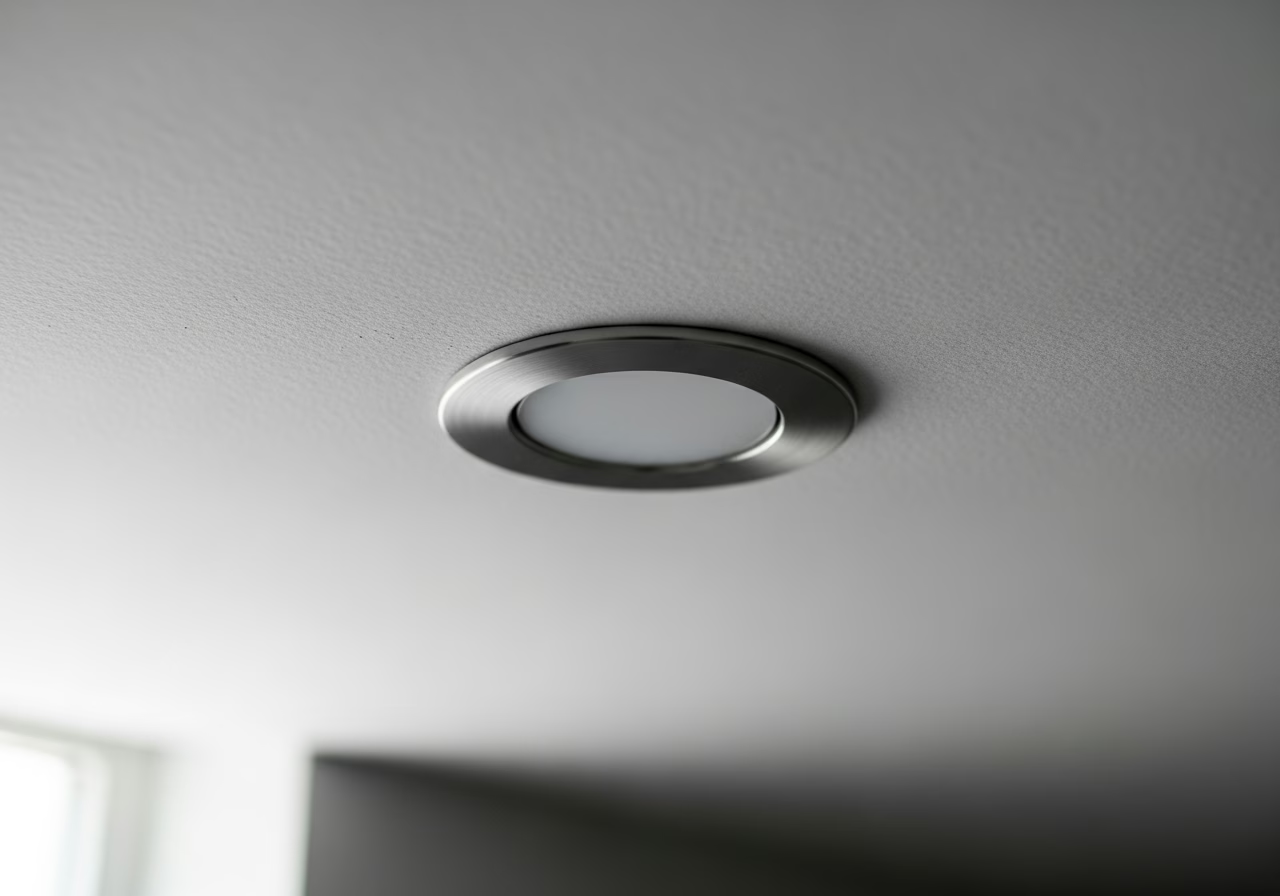
- Potlights (recessed): LED potlights ($75–$150/fixture installed). Plan 1 per 25–30 sqft.
- Flush-mount fixtures: Good for very low clearance areas.
Drop Ceiling
- Lay-in LED panels: Replace tiles with flat LED panels ($80–$200/panel). Clean, modern integration.
Open Ceiling
- Track lighting: Mounts to joists ($150–$400 per track). Adjustable and versatile.
- Pendant lights / LED strips: Industrial-style accents or ambient lighting.
Plan your lighting layout before the ceiling goes in — running electrical after drywall is significantly more expensive.
---
FAQ
What is the cheapest basement ceiling option?
An open/exposed ceiling is the cheapest option at $1.50–$4.00/sqft — mainly the cost of paint. Drop ceilings and drywall are comparable at $2.50–$6.00/sqft, though a basic DIY drop ceiling can be done for less.
Does a drop ceiling reduce ceiling height?
Yes. A standard drop ceiling grid hangs 3 to 6 inches below the joists. In Toronto basements where ceiling height is often tight, this can be a significant concern. Low-profile grid systems reduce the loss to 2–3 inches but are more expensive.
What is the minimum ceiling height for a basement in Toronto?
The Ontario Building Code requires a minimum finished ceiling height of 6 feet 5 inches (1.95 m) over at least 75% of the habitable floor area. This applies to all finished basement living spaces and secondary suites.
Is drywall or drop ceiling better for a basement?
It depends on your priorities. Drywall is better for ceiling height preservation, appearance, fire rating (required for apartments), and soundproofing. Drop ceiling is better for utility access, ease of repair, and DIY installation. If ceiling height allows and you want the best finished look, drywall is the superior choice.
How do you soundproof a basement ceiling?
The most effective approach combines mineral wool insulation between joists ($1.50–$2.50/sqft) with resilient channel ($1.00–$2.00/sqft) and drywall. For maximum sound isolation, add a second layer of drywall with Green Glue compound between layers, achieving STC ratings of 55–60.
Sources & References
Authoritative sources cited in this guide:
- Ontario Building Code — OBC official text
- Toronto Building Permits — City permit portal
- Tarion New Home Warranty — Ontario warranty regulator
- HCRA — Home Construction Regulatory Authority — Ontario builder/vendor licensing
Continue Reading
- Ceiling Tiles: Types, Cost & Installation Guide for Toronto Homes
- Basement Stretch Ceiling in Toronto: Low-Headroom Strategies (OBC 9.10, 5 cm Drop)
- Basement Renovation Guide Toronto| Costs, Timeline & Ideas
Related Services