RenoHouse

Choosing flooring for a Toronto basement isn't the same as choosing it for your main floor. Below grade, moisture is a constant factor — and the wrong flooring choice will cost you thousands to redo within a few years. This guide compares the top basement flooring options with real 2026 costs, Toronto-specific considerations, and honest pros and cons. For a complete look at basement renovation planning, see our Complete Basement Renovation Guide Toronto 2026.
Your basement sits on a concrete slab that's in direct contact with the earth. Even in a "dry" basement, moisture vapour migrates upward through the concrete — you can't see it, but it's there. Toronto's clay soil, high water tables in many neighbourhoods, and spring snowmelt make this an even bigger concern in the GTA than in drier climates.
The good news: modern flooring materials have evolved dramatically. You have excellent options that look great, feel comfortable underfoot, and handle moisture without warping, buckling, or growing mould.
---
Why Basement Flooring Is Different
Before comparing products, understand what makes basement installation unique:
- 1. Concrete subfloor: Unlike upper floors with wooden subfloors, basements have a concrete slab. This affects installation method, underlayment choice, and which products are compatible.
- 2. Moisture vapour transmission: Even if your basement has never flooded, moisture vapour passes through concrete continuously. A simple plastic sheet test (tape a 2×2 foot piece of polyethylene to the slab for 48 hours — if condensation appears underneath, you have moisture) tells you the level.
- 3. Temperature: Basements in Toronto are typically 3–5°C cooler than upper floors. Flooring that feels cold underfoot (ceramic tile without radiant heat) can make the space uncomfortable.
- 4. Ceiling height: Every inch matters when headroom is limited. Thick subfloor systems eat into ceiling height. Floating click-lock products installed directly over a thin underlayment preserve the most headroom.
- 5. Flood risk: Sump pump failure, sewer backup, or a burst pipe can put water on your basement floor. Choosing waterproof flooring means you clean up and move on — rather than tearing out and replacing.
---
Vinyl Plank (Best Overall)
Luxury Vinyl Plank (LVP) is the number one recommended basement flooring in Toronto in 2026, and it's not close. For a deep dive into vinyl plank options and brands, see our Vinyl Plank Flooring Guide.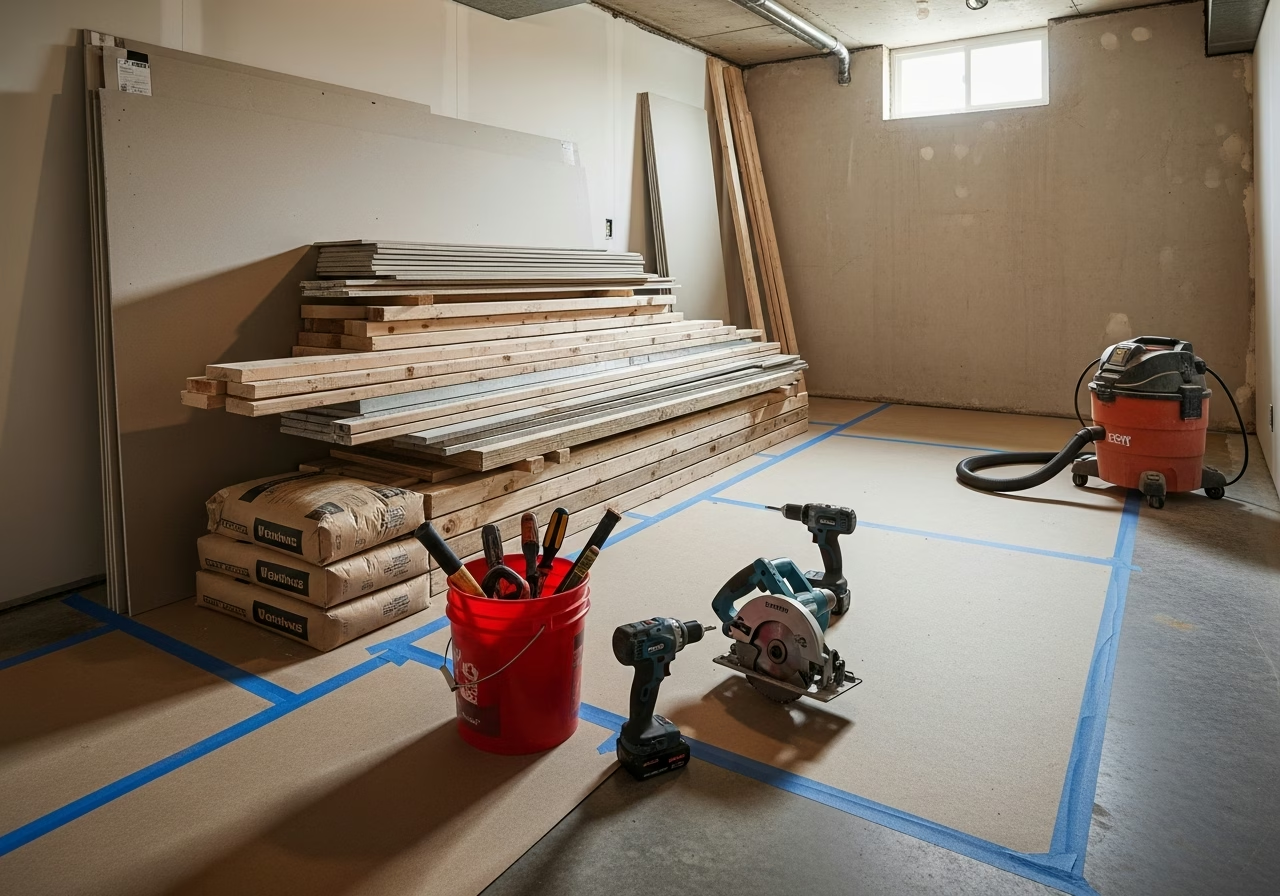
Why LVP Wins for Basements
- 100% waterproof: SPC (Stone Polymer Composite) vinyl can sit in standing water without damage. If your basement floods, you pull up the planks, dry the slab, and reinstall them.
- Concrete-compatible: Installs directly over concrete with a thin vapour barrier underlayment. No plywood subfloor needed.
- Warm underfoot: Especially WPC cores with attached cork or foam underlayment.
- Thin profile: 4–7 mm thickness preserves ceiling height.
- Click-lock floating installation: No glue, no nails. Floats over the concrete — accommodating minor slab irregularities.
- Radiant heat compatible: Most SPC products work with in-floor heating systems.
Cost
| Component | Per Sq Ft (CAD) |
|---|---|
| Material (mid-range SPC) | $2.50–$5.00 |
| Installation | $1.50–$3.00 |
| Underlayment (if not attached) | $0.30–$0.75 |
| Total installed | $3.50–$8.00 |
What to Look For
- SPC core (not WPC) for basements — denser, more moisture-resistant, and more dimensionally stable on concrete.
- 20 mil+ wear layer for durability in high-traffic areas.
- Attached underlayment with vapour barrier — simplifies installation and prevents moisture from being trapped between slab and flooring.
- Realistic wood-grain texture — embossed-in-register (EIR) products look remarkably like real hardwood.
Top Picks for Toronto Basements
- Lifeproof (Home Depot): Affordable SPC with attached underlayment. Excellent value.
- Coretec by Shaw: Premium SPC, superior texture and click-lock system.
- Torlys EverWood: Canadian brand engineered for our climate.
---
Porcelain Tile
Porcelain tile is the second-best option for Toronto basements, and in some situations it's the first choice — particularly for basement bathrooms, laundry areas, and apartments where a high-end look is desired.
Why Porcelain Works
- Waterproof: Porcelain absorbs less than 0.5% moisture — virtually impervious to water.
- Extremely durable: Won't scratch, dent, or fade. Rated for commercial traffic.
- Premium appearance: Large-format porcelain (24×24, 12×24) creates a clean, modern look. Wood-look porcelain tiles are now remarkably realistic.
- Radiant heat friendly: Tile is the ideal conductor for in-floor heating — it transfers heat more efficiently than any other flooring material.
Drawbacks for Basements
- Cold underfoot: Without radiant heat, porcelain tile in a basement is uncomfortably cold in Toronto winters.
- Hard and unforgiving: Standing or walking on tile for extended periods is less comfortable than LVP.
- Rigid installation: Thinset mortar bonds directly to the concrete slab. This is permanent — removal is destructive and expensive.
- Crack risk: If the concrete slab shifts or cracks, the tile cracks too. An uncoupling membrane (Schluter DITRA) prevents this but adds $2–$3/sqft.
Cost
| Component | Per Sq Ft (CAD) |
|---|---|
| Material (mid-range porcelain) | $3.00–$8.00 |
| Installation (thinset + labour) | $4.00–$8.00 |
| Uncoupling membrane (recommended) | $2.00–$3.00 |
| Total installed | $7.00–$16.00 |
---
Need professional renovation?
Call RenoHouse at 1-289-212-2345 or get a free estimate today.
Get Free Estimate →Engineered Hardwood
Engineered hardwood offers the warmth and beauty of real wood with better moisture tolerance than solid hardwood. It's a viable basement option — but with important caveats.
Why It Can Work
- Real wood surface: The top layer is genuine hardwood (oak, maple, walnut) — it looks and feels like the real thing because it is.
- Dimensional stability: The plywood or HDF core resists expansion and contraction better than solid hardwood.
- Can be refinished: Most engineered hardwood can be sanded and refinished 1–2 times, extending its life.
- Click-lock or glue-down: Floating click-lock installation is available for concrete subfloors.
Caveats for Basements
- Not waterproof: Engineered hardwood handles humidity fluctuations, but standing water will damage it. A sump pump failure or flood means replacement.
- Moisture testing required: The concrete slab must test below 3 lbs per 1,000 sqft per 24 hours on a calcium chloride test. If moisture levels are higher, you need a vapour barrier or should choose a different product.
- Higher cost: For an area that may eventually get wet, you're paying a premium for a product that can't fully handle it.
Cost
| Component | Per Sq Ft (CAD) |
|---|---|
| Material (mid-range engineered) | $5.00–$12.00 |
| Installation | $2.00–$4.00 |
| Vapour barrier underlayment | $0.50–$1.00 |
| Total installed | $7.00–$16.00 |
Our Recommendation
Engineered hardwood is a viable basement choice only if: your basement is thoroughly waterproofed, your moisture test passes, and you accept the risk that a flood event means replacement. For most Toronto homeowners, LVP delivers a comparable look at lower cost with zero moisture risk.
---
Flooring to Avoid
Some flooring types are categorically wrong for Toronto basements:
- Solid hardwood: Expands and contracts dramatically with humidity changes. Will cup, crown, and buckle in a below-grade environment. No reputable installer will put solid hardwood in a Toronto basement.
- Wall-to-wall carpet: Traps moisture against the concrete, creating a breeding ground for mould and mildew. Even "basement-rated" carpet on a rubber pad is problematic in Toronto's climate. If you want softness, use area rugs over LVP.
- Bamboo flooring: Despite marketing claims, bamboo is highly susceptible to moisture damage. Not suitable for below-grade installation.
- Unfinished concrete: While technically waterproof, bare concrete is cold, dusty, and uninviting. At minimum, seal it with an epoxy coating.
---
Cost Comparison
| Flooring Type | Material/Sq Ft | Installed/Sq Ft | Waterproof? | Comfort | Best For |
|---|---|---|---|---|---|
| LVP (SPC) | $2.50–$5.00 | $3.50–$8.00 | ✅ Yes | 🟢 Warm | Whole basement |
| Porcelain Tile | $3.00–$8.00 | $7.00–$16.00 | ✅ Yes | 🔴 Cold* | Bathroom, laundry |
| Engineered Hardwood | $5.00–$12.00 | $7.00–$16.00 | ❌ No | 🟢 Warm | Dry basements only |
| Laminate | $1.50–$4.00 | $3.00–$7.00 | ⚠️ Some | 🟡 Neutral | Budget (with risk) |
| Epoxy Coating | $3.00–$8.00 | $5.00–$12.00 | ✅ Yes | 🔴 Hard | Utility, workshop |
*With radiant heating, tile becomes comfortable.
---
Subfloor Preparation
Proper subfloor prep is essential for any basement flooring installation on concrete:
- 1. Moisture test: Perform a calcium chloride test or relative humidity test (ASTM F2170) before choosing materials. Results determine which products are safe to install.
- 2. Level the slab: Concrete slabs are rarely perfectly flat. Low spots and ridges must be addressed with self-levelling compound ($1–$2/sqft). LVP tolerates minor irregularities (3/16" over 10 feet), but tile requires a flat surface within 1/8" over 10 feet.
- 3. Crack repair: Fill any cracks with hydraulic cement or flexible crack filler. Large structural cracks should be assessed by a foundation specialist before covering with flooring.
- 4. Vapour barrier: Use a 6-mil polyethylene barrier or underlayment with integrated vapour barrier for floating floors.
- 5. Clean the surface: Remove paint, adhesive residue, and dust for proper underlayment adhesion.
---
FAQ
What is the best flooring for a Toronto basement?
Luxury Vinyl Plank (LVP) with an SPC core is the best basement flooring for most Toronto homes in 2026. It's 100% waterproof, installs easily over concrete, feels warm underfoot, and costs $3.50–$8.00/sqft installed. It handles Toronto's humidity swings and basement moisture conditions without warping or mould growth.Can you put hardwood flooring in a basement?
Engineered hardwood can be installed in a basement if moisture levels are controlled and the space is properly waterproofed. Solid hardwood should never be installed below grade — it will expand, contract, and buckle in a basement environment. Even with engineered hardwood, a flood means the floor must be replaced.
Is carpet OK in a basement?
We don't recommend wall-to-wall carpet in Toronto basements. Carpet traps moisture between the fibres and the concrete slab, promoting mould and mildew growth — especially in GTA humidity levels. Use washable area rugs over waterproof flooring instead.
How much does basement flooring cost in Toronto?
Basement flooring costs range from $3.50–$8.00/sqft for vinyl plank (best value), $7.00–$16.00/sqft for porcelain tile, and $7.00–$16.00/sqft for engineered hardwood, all fully installed. A typical 800 sqft basement costs $2,800–$6,400 for LVP or $5,600–$12,800 for tile.
Do I need a subfloor in the basement?
You don't need a traditional plywood subfloor for most modern basement flooring. Click-lock LVP and engineered hardwood float over the concrete with just a thin underlayment (with vapour barrier). Tile adheres directly to the concrete with thinset. However, the slab must be reasonably flat and dry — proper prep is essential.
Sources & References
Authoritative sources cited in this guide:
- Ontario Building Code — OBC official text
- Toronto Building Permits — City permit portal
- Tarion New Home Warranty — Ontario warranty regulator
- HCRA — Home Construction Regulatory Authority — Ontario builder/vendor licensing
Continue Reading
- Best Flooring for Toronto Basements— Moisture-Resistant Options
- Best Flooring Options for Toronto Basements (Moisture-Proof
- Flooring Guide Toronto— Types, Costs, Installation & Best Options
Related Services