RenoHouse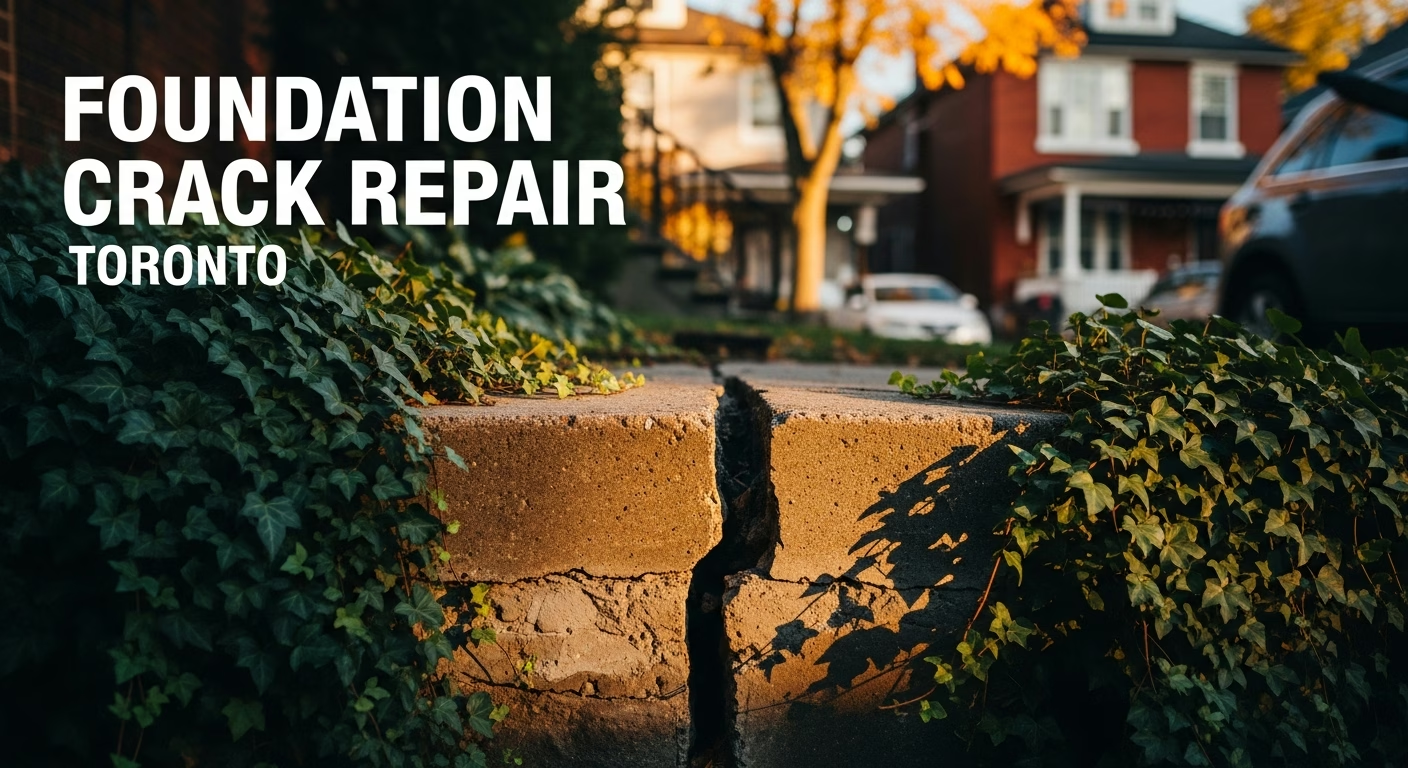

Finding a crack in your foundation is one of those homeowner moments that immediately raises the alarm. But here's the reality: most foundation cracks in Toronto homes are not structural emergencies. Some are completely normal settling cracks that need only a simple seal. Others, however, can signal serious structural movement that requires immediate professional attention. For a broader look at all waterproofing and insulation topics, visit our Insulation & Waterproofing Guide for Toronto Homeowners.
In 2026, foundation crack repair in Toronto ranges from $400–$800 for a basic epoxy or polyurethane injection to $3,000–$10,000+ for exterior excavation repairs or structural reinforcement. The key is knowing what kind of crack you have — that determines both the urgency and the cost.
This guide walks you through how to identify crack types, what each repair method costs, why Toronto's clay soil makes foundations move, and the warning signs that mean you need a structural engineer — not just a patch.
Types of Foundation Cracks
Not all cracks are created equal. The direction, width, and pattern of a crack tells an experienced eye a lot about what's happening to your foundation.
Vertical Cracks (Up and Down)
What they look like: Straight or slightly diagonal lines running top-to-bottom in the foundation wall. What they mean: Usually the least concerning type. Vertical cracks are most commonly caused by concrete shrinkage during the initial curing process. Concrete naturally shrinks as it dries, and vertical hairline cracks often appear within the first few years after construction. Severity:- Hairline (< 1.5 mm wide): Cosmetic — monitor but not urgent
- 1.5–5 mm wide: Should be sealed to prevent water infiltration
- Growing wider over time: Needs professional assessment
Horizontal Cracks
What they look like: Cracks running sideways across the foundation wall, often at a consistent height. What they mean: This is the most serious type. Horizontal cracks indicate lateral pressure pushing against the foundation wall from the outside — typically from soil pressure, hydrostatic water pressure, or frost heave. In severe cases, the wall may be visibly bowing inward. Severity: ⚠️ Always a structural concern. Horizontal cracks, especially with any inward bowing, require immediate professional assessment by a structural engineer. Repair cost: $3,000–$15,000+ depending on severity (carbon fibre straps, steel beams, or wall replacement)Stair-Step Cracks
What they look like: Cracks following the mortar joints in concrete block or brick foundations, creating a stair-step pattern. What they mean: Stair-step cracks indicate differential settlement — one part of the foundation is settling more than another. Common causes include poor soil compaction during construction, tree root activity, or changes in soil moisture. Severity: Moderate to serious. Small stair-step cracks (< 3 mm) in block walls may be monitored. Larger cracks or those that continue to grow need structural assessment. Repair cost: $1,000–$5,000+Diagonal Cracks (45-Degree Angle)
What they look like: Cracks running diagonally, typically wider at one end than the other. What they mean: Usually caused by differential settlement — similar to stair-step cracks but in poured concrete walls. The wider end indicates the side that has settled more. Severity: Moderate. If the crack is stable (not growing) and less than 5 mm wide, it can usually be repaired with injection. Growing cracks need investigation. Repair cost: $400–$1,500Crack Reference Summary
| Crack Type | Direction | Typical Cause | Severity | Cost Range |
|---|---|---|---|---|
| Vertical hairline | Up/down | Concrete shrinkage | Low | $400–$800 |
| Vertical (widening) | Up/down | Settlement | Medium | $800–$2,000 |
| Horizontal | Sideways | Lateral soil pressure | High | $3,000–$15,000 |
| Stair-step | Diagonal (block) | Differential settlement | Medium–High | $1,000–$5,000 |
| 45-degree diagonal | Diagonal | Differential settlement | Medium | $400–$1,500 |
Repair Methods & Costs
Epoxy Injection ($400–$800 per crack)
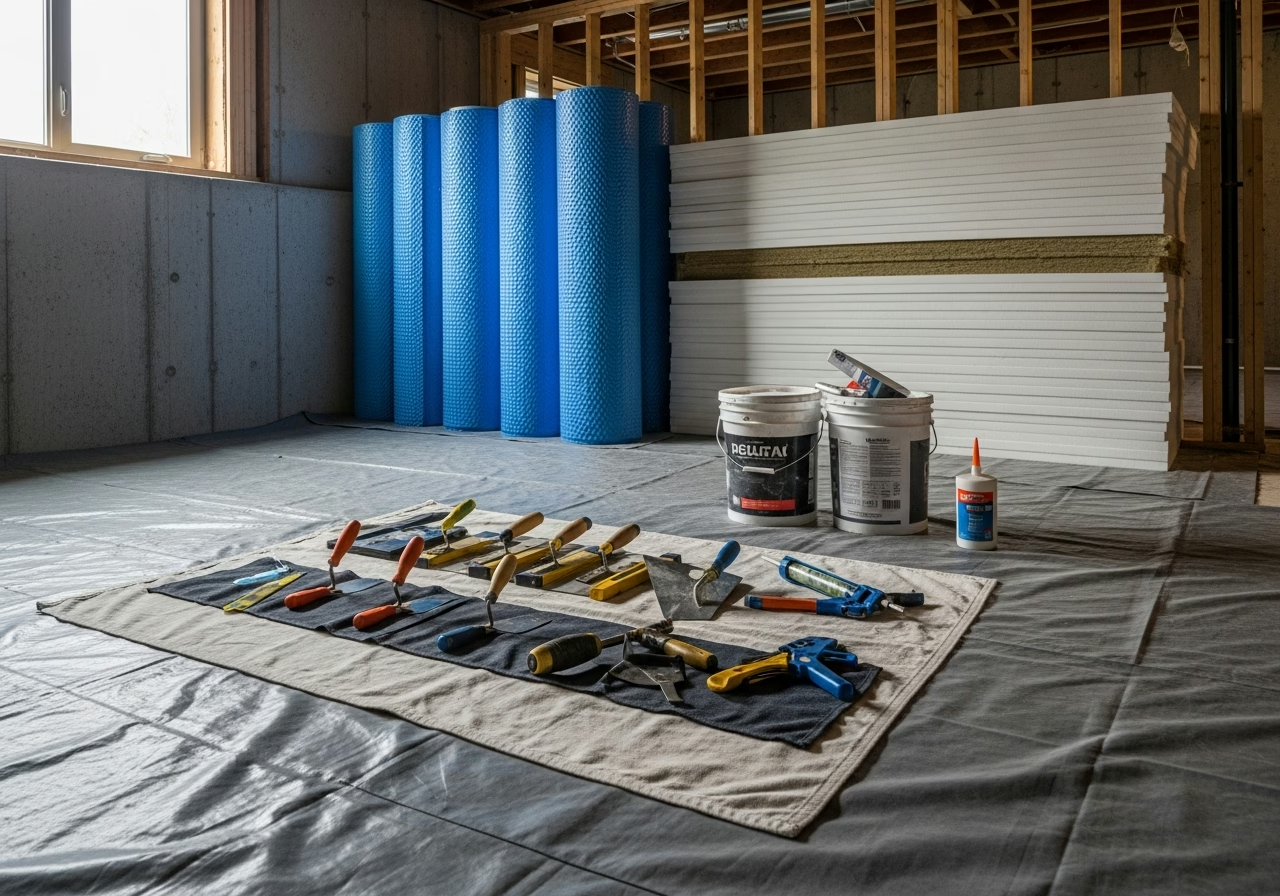
Epoxy injection is the standard repair for structural cracks in poured concrete foundations. The epoxy bonds the concrete together, restoring structural integrity.
How it works:- 1. Injection ports are installed along the crack at 15–20 cm intervals
- 2. The surface between ports is sealed with a paste
- 3. Two-part epoxy is injected under low pressure, filling the crack from front to back
- 4. Once cured, epoxy is stronger than the surrounding concrete
Polyurethane Injection ($500–$1,000 per crack)
Polyurethane foam injection is designed specifically for waterproofing. The foam expands to fill the crack and remains flexible, accommodating minor foundation movement.
How it works:- 1. Similar port installation as epoxy
- 2. Polyurethane resin is injected; it reacts with moisture and expands
- 3. The foam fills the entire crack, even irregular voids
- 4. Remains flexible after curing
Exterior Excavation & Waterproof Membrane ($3,000–$10,000)
For persistent leaks or multiple cracks, exterior waterproofing provides the most comprehensive (and expensive) solution.
How it works:- 1. Excavate soil around the affected foundation wall (down to the footing)
- 2. Clean and repair the exterior foundation surface
- 3. Apply waterproof membrane (rubberized asphalt or liquid polymer)
- 4. Install dimple board drainage mat
- 5. Repair or replace exterior weeping tile
- 6. Backfill with clean gravel and soil
- Depth of excavation (deeper = more expensive)
- Length of wall being treated
- Access limitations (decks, landscaping, driveways in the way)
- Weeping tile replacement needs
Carbon Fibre Straps ($1,500–$5,000)
For horizontal cracks with inward bowing (up to about 5 cm), carbon fibre straps provide a minimally invasive structural reinforcement.
Need professional renovation?
Call RenoHouse at 1-289-212-2345 or get a free estimate today.
Get Free Estimate →- 1. Wall surface is ground smooth in vertical strips
- 2. Carbon fibre straps are epoxied to the wall from floor to sill plate
- 3. The straps prevent further inward movement
- 4. Minimal disruption — no excavation needed
Steel I-Beams ($5,000–$15,000)
For severe bowing (> 5 cm) or when the wall needs to be pushed back into position, steel I-beams or wall anchors are the heavy-duty solution.
Cost: $5,000–$15,000+ depending on the number of beams and whether the wall is straightened.Why Toronto Foundations Crack: Clay Soil
Toronto is built on heavy clay soil (Leda clay and glacial till), and this is the single biggest factor in foundation problems across the city.
How Clay Soil Affects Foundations
Clay soil has a property called shrink-swell — it expands dramatically when wet and contracts when dry. This creates cyclical pressure on foundation walls:
- Wet season (spring thaw, heavy rain): Clay swells, pushing against foundation walls (hydrostatic + lateral pressure)
- Dry season (summer drought): Clay shrinks away from the foundation, creating gaps that fill with debris and water
- Freeze-thaw cycles (winter): Water in the soil freezes and expands, then thaws — repeating dozens of times per season
This constant push-pull movement is why foundation cracks are so common in Toronto homes, especially those built before modern foundation waterproofing practices became standard.
High-Risk Toronto Neighbourhoods
Certain areas are more prone to foundation movement due to soil type, water table, and home age:
- North York (former Borough) — Heavy clay, many 1950s–1970s homes on shallow foundations
- Scarborough — Mix of clay and glacial till, variable conditions
- Etobicoke — Clay near Humber River, sandy near lakefront
- East York — Dense clay, older housing stock
- Old Toronto core (Annex, Trinity-Bellwoods, Leslieville) — 100+ year old foundations on stone or rubble, very different repair approach
Structural vs. Cosmetic: How to Tell
Here's a practical decision guide:
Likely Cosmetic (Monitor, No Urgency)
- Vertical hairline crack (< 1.5 mm) that hasn't changed in years
- Small shrinkage cracks at window and door corners
- Surface-only cracks in parged (stucco-coated) concrete
- Cracks that appeared within the first 2 years after construction
Probably Needs Repair (Schedule Soon)
- Any crack admitting water into the basement
- Vertical cracks wider than 3 mm
- Stair-step cracks in block walls
- Diagonal cracks wider at one end than the other
Possible Structural Emergency (Call an Engineer Now)
- Horizontal cracks of any width
- Any crack with visible inward bowing of the wall
- Cracks wider than 10 mm
- Cracks that are rapidly growing (use pencil marks + dates to track)
- Doors and windows sticking or not closing properly
- Visible leaning or tilting of foundation walls
- Floors that have become noticeably uneven
Hiring the Right Professional
For basic crack injection, a waterproofing contractor is sufficient. For anything structural, you need a structural engineer first, then a foundation repair contractor.
- Identifies the cause
- Recommends the right repair method
- Is required by many insurance companies
- Gives you leverage when negotiating with contractors
- Can be critical for home resale (buyer's inspector will want documentation)
- Recommends expensive repairs without explaining the crack type
- Won't provide references or show similar completed projects
- Insists on immediate deposit for "emergency" that isn't one
- Doesn't mention the need for a structural engineer on serious cracks
Frequently Asked Questions
How much does foundation crack repair cost in Toronto?
Basic crack injection (epoxy or polyurethane) costs $400–$1,000 per crack in Toronto. Exterior excavation repairs range from $3,000–$10,000. Structural reinforcement with carbon fibre straps runs $1,500–$5,000, and steel I-beam reinforcement costs $5,000–$15,000+. A structural engineer assessment adds $300–$700 but is essential for serious cracks.
Are foundation cracks normal in Toronto homes?
Yes — small vertical hairline cracks are extremely common and usually caused by normal concrete shrinkage. Toronto's clay soil also causes seasonal foundation movement that can produce minor cracks over time. The key is distinguishing between cosmetic cracks (vertical, hairline, stable) and structural cracks (horizontal, widening, with bowing). When in doubt, get a professional assessment.
Should I fix foundation cracks before selling my home?
Absolutely. Unrepaired foundation cracks will be flagged by the buyer's home inspector and can significantly impact your sale price — far more than the cost of repair. A $500 injection repair now prevents a $5,000–$10,000 negotiation reduction at sale. Keep all repair documentation to provide to buyers.
Can I repair a foundation crack myself?
For cosmetic surface cracks (hairline, no water leakage), DIY caulking or hydraulic cement patching is acceptable. However, for any crack that leaks water or is wider than 2 mm, professional injection is strongly recommended. Improper DIY repair can mask ongoing problems and make future professional repair more difficult and expensive.
How do I know if a foundation crack is getting worse?
Mark both ends of the crack with a pencil and write the date. Measure the width at several points and record it. Check monthly. If the crack extends beyond your marks, widens by more than 1 mm over 6 months, or shows signs of fresh concrete dust (active movement), it's getting worse and needs professional attention.
Sources & References
Authoritative sources cited in this guide:
- Ontario Building Code — OBC official text
- Toronto Building Permits — City permit portal
- Tarion New Home Warranty — Ontario warranty regulator
- HCRA — Home Construction Regulatory Authority — Ontario builder/vendor licensing
Continue Reading
Related Services