RenoHouse

# Crawl Space Mold Removal Toronto 2026: Find It, Remove It, Then Encapsulate
Quick answer. Encapsulating a crawl space over visible mold is a contractor sin. The vapor barrier traps the contamination under the membrane, but the spores remain in the joists, subfloor, and any cellulose insulation above. Within months the homeowner notices a musty smell that is now harder to track down because the source is sealed.Encapsulating a crawl space over visible mold is a contractor sin. The vapor barrier traps the contamination under the membrane, but the spores remain in the joists, subfloor, and any cellulose insulation above. Within months the homeowner notices a musty smell that is now harder to track down because the source is sealed.
This post lays out the proper Toronto sequence: inspection, third-party air sampling, CCMI-certified remediation, post-remediation verification, and only then encapsulation. For the full project context, see the pillar Crawl Space Encapsulation Toronto Complete Guide. For the cost breakdown, see Crawl Space Encapsulation Cost Toronto. For the common mistakes that compound mold issues, see Crawl Space Encapsulation Mistakes Toronto.
Why Toronto Crawls Get Mouldy
Three Toronto-specific drivers:
- Vented dirt floors. A vented crawl pulls humid summer air into a cool space, condensing on joists and subfloor.
- Pre-1950 housing stock. East York, Beaches, Junction, Roncesvalles, and Cabbagetown have stone or rubble foundations with porous mortar joints that wick moisture.
- Spring runoff on clay soil. Toronto's clay soil holds water against the foundation in March-April, pushing hydrostatic pressure into the crawl.
The result is a crawl space at 70% to 90% relative humidity for half the year, which is well above the 60% threshold where typical mold species (Aspergillus, Penicillium, Cladosporium) flourish.
Honest Positioning
RenoHouse is a renovation contractor. Minor surface mold (under 10 sq ft of contaminated material on hard surfaces) we handle with HEPA vacuuming, antimicrobial treatment, and documentation. Significant mold (over 10 sq ft, or any contamination of porous materials like fiberglass batts or cellulose) we refer to a CCMI-certified mold remediation firm with post-remediation verification (PRV) by a third-party industrial hygienist.
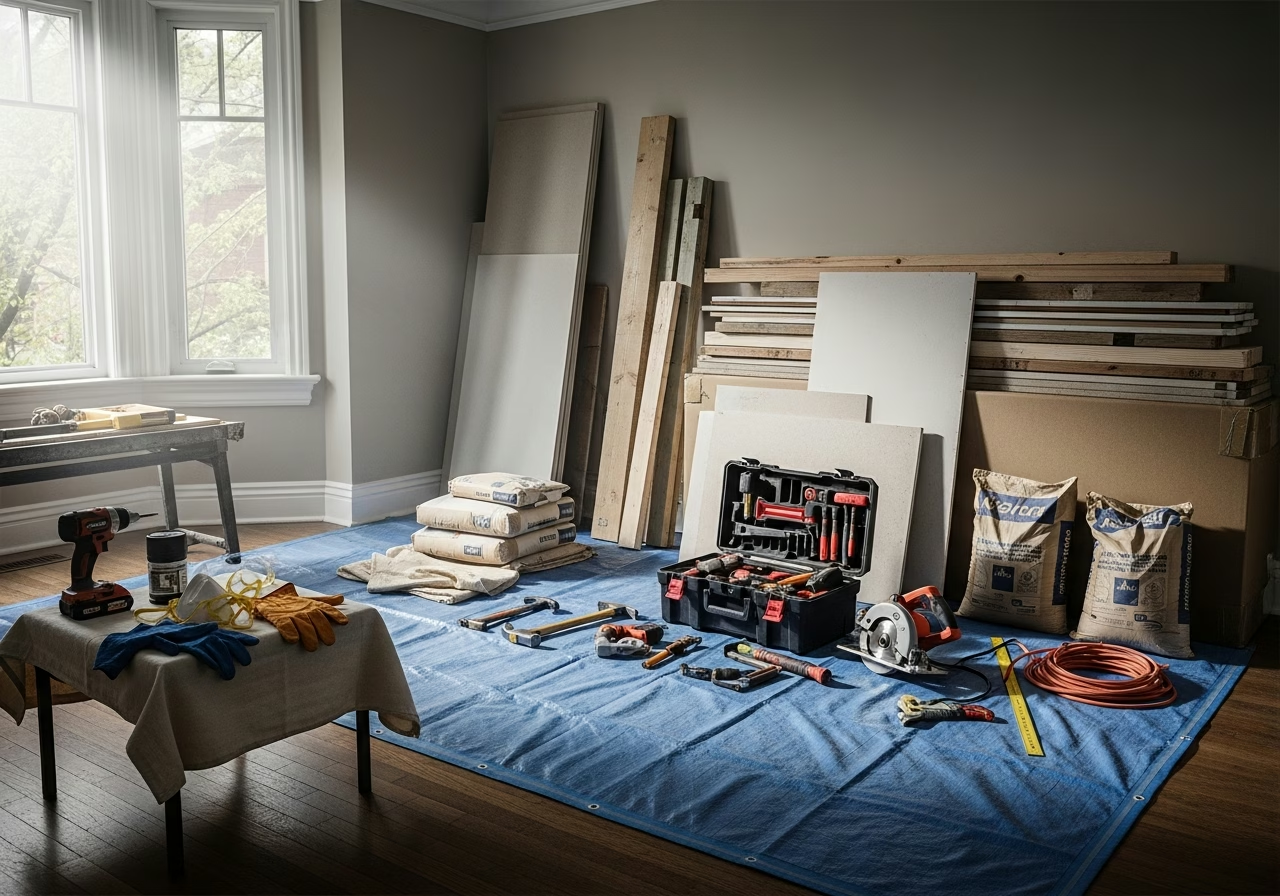
Why the threshold matters: at 10 sq ft and up, the IICRC S520 standard and most Ontario insurance carriers require containment, negative-air machines, and HEPA filtration during removal. That is specialty work outside standard renovation scope.
The Toronto Sequence
Step 1: Visual and Moisture Inspection
We start with a flashlight and moisture meter. We document:
Need professional home renovation?
Call RenoHouse at 289-212-2345 or get a free estimate today.
Get Free Estimate →- Visible mold colour and pattern (black, white, green, fuzzy vs flat).
- Joist and subfloor moisture readings (above 18% by weight is a problem).
- Any rotted sill plate or band joist material.
- Any pest activity (rodent droppings often indicate moisture and mold together).
- Photos of every area, time-stamped.
Step 2: Third-Party Air Sampling (When Warranted)
If visible mold exceeds 10 sq ft, or if the homeowner has unexplained respiratory symptoms, we recommend a third-party indoor air quality firm. Toronto firms we have worked with:
- Pinchin Ltd
- EHS Partnerships
- CCMI-certified independent inspectors
The IAQ firm takes air samples (spore traps) inside the crawl, in living areas above, and outdoors as a baseline. Lab turnaround is typically 3 to 5 business days.
Step 3: Remediation Plan
Based on the sampling results, the remediation firm builds a scope. Typical Toronto crawl mold remediation includes:
- Containment with 6-mil poly walls and zip-door access.
- Negative-air machine with HEPA filtration running for the duration.
- Removal of all contaminated porous materials (fiberglass, cellulose, deteriorated wood).
- HEPA vacuuming of every surface.
- Antimicrobial treatment (typically a quaternary ammonium or hydrogen peroxide product).
- Encapsulant coating on remaining wood surfaces if specified.
- Bagging and disposal under WHMIS for the contaminated waste.
Step 4: Post-Remediation Verification (PRV)
Before encapsulation begins, the IAQ firm returns for clearance sampling. PRV protocol:
- Visual inspection (no remaining visible mold).
- Surface tape lifts on remediated areas.
- Air sample inside the crawl (must be at or below outdoor baseline for spore counts and species mix).
- Written clearance letter with lab results.
The clearance letter is what we file and what becomes part of the resale documentation pack.
Step 5: Encapsulation
Only after PRV is signed do we begin vapor barrier and insulation work. The encapsulation seals the now-clean substrate so the mold cannot return.
Mold Remediation Cost in Toronto
Indicative ranges for a typical 1,200 sq ft Toronto crawl:
- Minor surface mold (under 10 sq ft): $500 to $1,500 added to encapsulation scope.
- Moderate mold (10 to 100 sq ft, mostly hard surfaces): $2,500 to $5,000 by a remediation firm.
- Significant mold (over 100 sq ft, porous material removal, full containment): $5,000 to $12,000.
- IAQ firm air sampling and PRV: $800 to $1,500.
These are pass-through costs at the remediation firm's invoiced rate.
Common Mistakes
Five mistakes we have seen Toronto homeowners and other contractors make:
- 1. Bleaching mold and sealing. Bleach does not kill mold roots in porous wood. The mold returns under the membrane.
- 2. Encapsulating without PRV. No clearance letter, no warranty.
- 3. Leaving contaminated insulation in place. Old fiberglass batts holding mold spores must come out.
- 4. DIY remediation in a low crawl. Without containment and negative air, spores spread to the rest of the home.
- 5. Ignoring the moisture source. Remediation without addressing the water intrusion or humidity problem just resets the clock.
For the comprehensive fault list, see Crawl Space Encapsulation Mistakes Toronto.
Pairing with Pest Exclusion
Mold and rodent activity often co-occur in Toronto crawls. Our standard sequence pauses for pest control (Orkin, Terminix, Abell) trap-out and exclusion before mold remediation begins, so the remediation firm is not working in an active rodent space. See Crawl Space Pest Control Rodent Toronto.
Pairing with Asbestos Abatement
If the crawl contains pipe wrap or vermiculite (Zonolite) from pre-1985 construction, asbestos clearance must precede mold remediation. See Crawl Space Asbestos Vermiculite Toronto and the pillar [Asbestos Abatement Toronto Complete Guide](/blog/asbestos-abatement-toronto-2026-complete-guide).
Get a Mold Inspection
Free crawl space inspection with moisture readings and visible-mold documentation at /services/home-renovation/crawl-space-encapsulation. If sampling is warranted, we bring in Pinchin or EHS as a pass-through cost on the project.
Sources & References
Authoritative sources cited in this guide:
- Ontario Building Code — OBC official text
- Toronto Building Permits — City permit portal
- Tarion New Home Warranty — Ontario new-build warranty regulator
- HCRA — Home Construction Regulatory Authority — Ontario builder/vendor licensing
Continue Reading