RenoHouse

Understanding when you need a building permit is one of the most important — and most overlooked — steps in a Toronto kitchen renovation. Getting it wrong can result in fines, forced removal of completed work, and serious complications when you sell your home. For a complete overview, see our Kitchen Renovation Guide Toronto.
This guide explains exactly when permits are required, when they're not, how to apply through the City of Toronto, and what happens if you skip this critical step.
When You Need a Permit
The City of Toronto requires building permits for any work that changes your home's structure, major mechanical systems, or life-safety features. For kitchen renovations, a permit is needed when you:
Structural Work
- Removing or modifying a load-bearing wall — Even partial removal (creating a pass-through or widening a doorway) requires a structural engineer's report and a building permit.
- Adding a beam or header — The structural support replacing a removed wall needs engineering and permit approval.
- Modifying floor joists — Cutting, notching, or reinforcing floor joists for plumbing or HVAC routing.
Plumbing Work
- Relocating the sink — Moving a sink more than a few inches requires modifying drain and supply lines, which triggers a plumbing permit.
- Adding a second sink — Installing a prep sink or pot filler where none existed before.
- Moving or adding a dishwasher connection — If the dishwasher moves to a new location requiring new plumbing runs.
- Modifying the plumbing stack — Any work affecting the main drain stack, especially in condos and multi-unit buildings.
Electrical Work
- Adding new circuits — If you're adding dedicated circuits for a new oven, dishwasher, or fridge.
- Upgrading the electrical panel — Moving from a 100-amp to a 200-amp panel, or adding breaker spaces.
- Relocating outlets or switches — Moving electrical receptacles to new locations (not simply replacing existing ones).
- Installing hardwired lighting — Adding new pot lights, under-cabinet hardwired lights, or pendant lights on new circuits.
Gas Work
- Moving a gas line — Relocating a gas stove or oven to a different position.
- Converting from electric to gas — Adding a gas line where one didn't exist.
- Any gas pipe modification — Must be done by a licensed gas fitter (TSSA-certified) and requires a permit.
Other Triggers
- Adding or modifying a range hood vent — If the ductwork penetrates an exterior wall or roof.
- Window modifications — Enlarging, adding, or relocating a kitchen window.
- Converting a room into a kitchen — Adding a kitchen to a basement or non-kitchen room requires plumbing, electrical, and possibly structural permits.
When You Don't
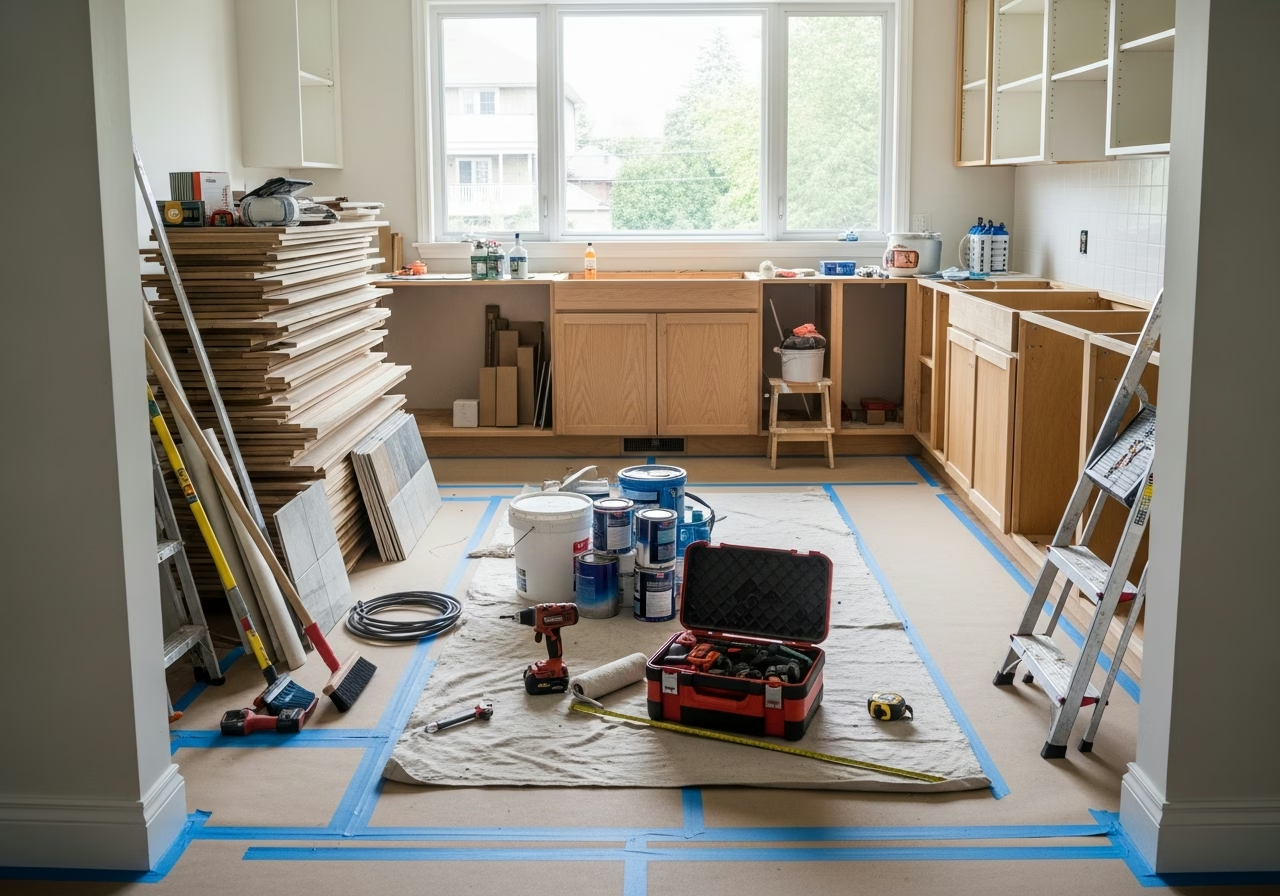
Many common kitchen updates are considered cosmetic and do not require a City of Toronto building permit:
- ✅ Painting or refinishing cabinets
- ✅ Replacing cabinet doors (same configuration)
- ✅ Installing new countertops (same location)
- ✅ Replacing a backsplash
- ✅ Swapping faucets or sinks (same location, same plumbing connections)
- ✅ Replacing appliances (same type, same location, same connections)
- ✅ New flooring
- ✅ Replacing hardware (knobs, pulls, hinges)
- ✅ Painting walls and ceiling
- ✅ Replacing light fixtures (on existing circuits, same locations)
- ✅ Installing a backsplash
- ✅ Adding open shelving
How to Apply
The City of Toronto has streamlined the permit process through its online portal. Here's the step-by-step process:
Step 1: Prepare Your Documentation
Depending on the scope, you'll need:
- Completed application form — Available online at toronto.ca/building-permits
- Floor plans — Before and after drawings showing proposed changes
- Structural engineer's report — Required for load-bearing wall removal (hire a P.Eng.)
- Mechanical drawings — Plumbing and/or electrical plans if those systems are being modified
For simple renovations (e.g., relocating a sink), basic drawings on graph paper are often accepted.
Step 2: Submit Online or In-Person
Online (preferred): Submit through the City of Toronto's online application portal. Create an account, upload documents, and pay fees online. In-person: Visit Toronto Building at City Hall (100 Queen St W), North York Civic Centre, Scarborough Civic Centre, or Etobicoke Civic Centre.Step 3: Review and Approval
- Simple permits (minor plumbing, electrical): 10–15 business days.
- Standard permits (structural, multiple trades): 4–6 weeks.
- Complex permits (zoning variances): 8–12 weeks or longer.
Step 4: Receive Your Permit
Once approved, the permit must be displayed visibly at the work site during construction.
Need professional kitchen & bathroom renovation?
Call RenoHouse at 1-289-212-2345 or get a free estimate today.
Get Free Estimate →Permit Costs
City of Toronto building permit fees are based on the type and value of the work:
| Permit Type | Approximate Cost (CAD) |
|---|---|
| Plumbing permit (minor) | $200 – $400 |
| Electrical permit (ESA) | $100 – $300 |
| Building permit (structural) | $400 – $1,000+ |
| Combination (plumbing + electrical + structural) | $500 – $1,500 |
- Structural engineer's report: CAD $500 – $1,500
- Architectural or design drawings: CAD $500 – $2,000
- Expediting fees (if available): varies
For a typical kitchen renovation involving a sink relocation and added electrical circuit, budget CAD $400–$800 for permit fees.
Inspection Process
Building permits come with mandatory inspections at specific stages of construction. You cannot cover up or finish work until the relevant inspection is passed.
Common Kitchen Renovation Inspections:
Plumbing rough-in inspection — After new plumbing pipes are installed but before walls are closed up. The inspector verifies pipe sizes, slope, venting, and connections. Electrical rough-in inspection — After new wiring is run but before drywall. The inspector checks wire gauge, box placement, circuit loading, and code compliance. Structural inspection — After a beam or header is installed to replace a load-bearing wall. The inspector verifies it matches the engineer's specifications. Final inspection — After all work is completed. The inspector verifies that the finished work complies with the Ontario Building Code and the approved drawings.Inspection Tips:
- Book inspections online through the City's portal or by calling 311.
- Inspectors typically arrive within a 4-hour window — morning or afternoon.
- Don't proceed to the next stage until the current inspection passes.
- Keep your permit and approved drawings on-site and accessible.
- Fix deficiencies promptly — The inspector will leave a notice specifying what needs to be corrected.
Most kitchen renovation inspections in Toronto are completed within 2–3 business days of booking. Plan your contractor's schedule around inspection availability to avoid costly delays.
What Happens Without a Permit
Renovating without a required permit is risky and can have serious consequences:
During Construction
- Stop-work order — All work must cease until a permit is obtained.
- Fines — Up to CAD $50,000 for individuals, $100,000 for corporations.
- Forced removal — The City can require you to remove completed work.
When Selling Your Home
- Title search issues — Buyers' lawyers check for missing permits. Red flags during due diligence.
- Insurance denial — Unpermitted work causing damage may void your claim.
- Reduced sale price — Buyers negotiate steep discounts or walk away entirely.
Safety Risks
Improperly wired circuits cause fires. Unpermitted gas work risks carbon monoxide poisoning. Load-bearing wall removal without engineering can cause structural failure.
The bottom line: Permit fees are a tiny fraction of your budget. If your contractor suggests skipping permits, find a different contractor. For budgeting, see our condo kitchen renovation costs.FAQ
How long does it take to get a kitchen renovation permit in Toronto?
Simple permits (minor plumbing or electrical) are typically issued within 10–15 business days. Permits involving structural changes take 4–6 weeks. Complex projects with zoning variances can take 8–12 weeks. Submit your application as early as possible — ideally 6–8 weeks before your planned construction start date.
Does my contractor pull the permit or do I?
Either the homeowner or the contractor can apply for the permit. Most reputable Toronto contractors pull permits as part of their service. However, the permit is issued to the property owner, and you are ultimately responsible for ensuring all required permits are obtained. Always confirm who is pulling permits before signing a contract.
Do I need a permit to replace kitchen cabinets?
No, replacing kitchen cabinets in the same configuration does not require a building permit. However, if the cabinet replacement involves moving plumbing (e.g., relocating the sink), adding electrical (e.g., new under-cabinet outlets), or modifying walls, those specific aspects require permits.
Can I retroactively get a permit for work already done?
Yes, the City of Toronto allows you to apply for a permit after the fact, but it's more complicated and potentially more expensive. The City may require you to open up walls for inspections, which means additional construction costs. It's always cheaper and easier to get the permit before starting work.
What happens at a final building inspection?
The final inspection is the last step in the permit process. A City inspector visits your completed kitchen to verify that all work matches the approved drawings and meets Ontario Building Code requirements. They check structural elements, plumbing connections, electrical installations, and general safety. If everything passes, the permit is closed and you receive a completion certificate. If deficiencies are found, you'll need to make corrections and schedule a re-inspection.
Sources & References
Authoritative sources cited in this guide:
- Ontario Building Code — OBC official text
- Toronto Building Permits — City permit portal
- Tarion New Home Warranty — Ontario warranty regulator
- HCRA — Home Construction Regulatory Authority — Ontario builder/vendor licensing
Continue Reading
- Renovation Permits Toronto— What You Need, Costs & How to Apply
- Kitchen Renovation Guide Toronto| Costs, Timeline & Ideas
- 7 Kitchen Renovation Mistakes Toronto Homeowners Make (And How to
Related Services