RenoHouse

# Outdoor Kitchen Gas Line Toronto 2026
Quick answer. An outdoor kitchen — BBQ, side burner, pizza oven, sometimes a beverage tap or a power burner — is one of the most ambitious outdoor renovations a Toronto homeowner can undertake. The gas line portion is also the most complex of the residential outdoor gas projects we coordinate, because it serves multiple appliances on a manifold, the co...An outdoor kitchen — BBQ, side burner, pizza oven, sometimes a beverage tap or a power burner — is one of the most ambitious outdoor renovations a Toronto homeowner can undertake. The gas line portion is also the most complex of the residential outdoor gas projects we coordinate, because it serves multiple appliances on a manifold, the combined BTU input is high enough to push some homes into an Enbridge meter upgrade, and the line routing has to dodge cabinetry, water lines, and electrical for the cabinet lights and outlets.
This RenoHouse cluster post explains how the gas portion of an outdoor kitchen comes together in 2026 Toronto: appliance sizing, manifold design, code compliance, and realistic CAD pricing.
Our role. RenoHouse coordinates TSSA G2 licensed gas-fitter subcontractors for every outdoor gas project. We do not employ in-house gas fitters. The G2 sub designs the manifold, sizes the pipe, performs the install, and does the pressure test. RenoHouse coordinates the cabinetry, the hardscape, the permit, and the Enbridge call.Typical Outdoor Kitchen Appliance Loads
A Toronto outdoor kitchen typically has 2 to 5 gas appliances, each with its own BTU input. Typical loads:
- Built-in BBQ (28" – 42" wide): 50,000 – 110,000 BTU/h
- Side burner (single): 12,000 – 25,000 BTU/h
- Side burner (double): 24,000 – 50,000 BTU/h
- Power burner (wok / paella): 40,000 – 70,000 BTU/h
- Pizza oven (Alfa, Ooni Pro, Forno Bravo, Napoli): 30,000 – 75,000 BTU/h
- Outdoor smoker: 20,000 – 40,000 BTU/h
- Patio heater stub on the same manifold: 30,000 – 50,000 BTU/h
Combined input on a typical mid-size outdoor kitchen: 120,000 to 250,000 BTU/h. With a diversity factor (not all appliances run at the same time at full input), the design load is usually 70 to 85 percent of the simultaneous total. The G2 sub does this calculation when sizing the line.
Manifold Design
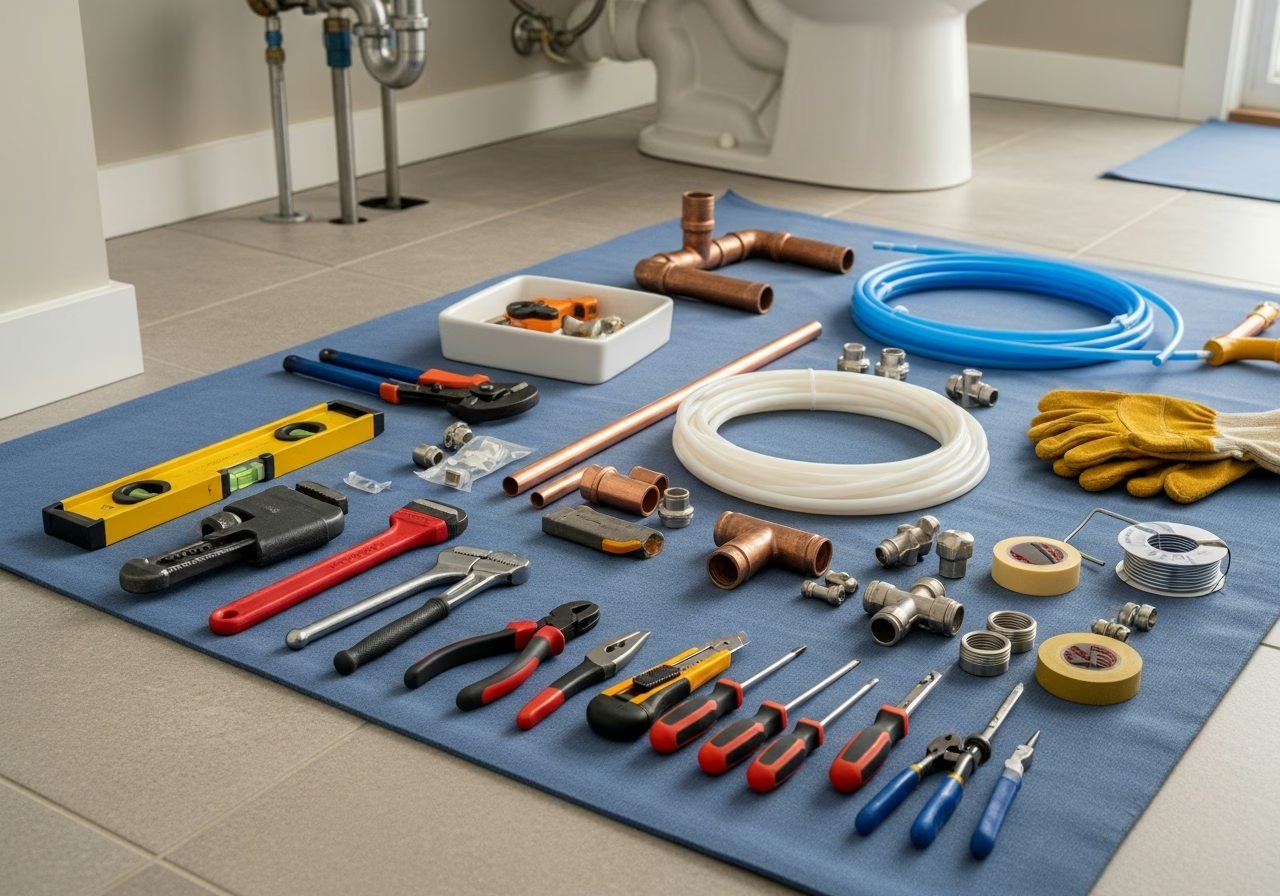
The gas line into an outdoor kitchen typically terminates in a manifold — a section of larger-diameter pipe with branch tees to each appliance. Each branch has its own shut-off valve so any appliance can be serviced or replaced without taking the whole kitchen down.
A typical manifold layout:
Need professional plumbing?
Call RenoHouse at 289-212-2345 or get a free estimate today.
Get Free Estimate →- 1" or 1-1/4" main line from the meter to the kitchen
- 1" manifold inside the cabinet
- 1/2" or 3/4" branches with shut-off valves to each appliance
- Approved flexible appliance connectors (CSA-rated) from each shut-off to the appliance inlet
- Each appliance has a manufacturer-supplied regulator if required
The manifold is usually mounted inside the kitchen cabinet structure, accessible through a service panel. The CSST or black iron run from the building exit to the kitchen is buried per code (18" minimum cover, 24" under any vehicular traffic). For full burial detail, see Gas Line Burial Depth Toronto Code.
Enbridge Meter Upgrade Is Common
A combined input over 200,000 BTU/h, when added to existing furnace (typically 60,000 – 100,000), water heater (40,000), and possibly a gas range (50,000) and dryer (20,000), can push a home over the rated 250 cfh of a standard residential meter. Enbridge will swap the meter to a 425 cfh or 630 cfh model at no charge, but the swap takes 2 to 6 weeks to schedule.
The G2 sub does the load calculation and initiates the Enbridge service call when needed. RenoHouse coordinates the timing so the trench is open and ready when Enbridge arrives. For full Enbridge coordination detail, see Enbridge Gas Connection Coordination Toronto.
CSST vs Black Iron for Outdoor Kitchen Manifolds
For outdoor kitchen runs, CSST is often the better choice because:
- The run is usually long (40 to 80+ feet from the meter to the kitchen)
- The route has multiple changes of direction (around foundation, under deck, into the kitchen cabinet)
- Fewer fittings means fewer leak points
- Faster install on complex routes
Black iron is still preferred for the manifold itself inside the cabinet because it is rigid, easy to thread tees onto, and durable in a wet outdoor environment. A typical outdoor kitchen uses CSST for the buried run and black iron for the manifold.
For the full material comparison, see CSST vs Black Iron Pipe Outdoor Toronto.
Coordinating with Cabinetry, Hardscape, and Electrical
An outdoor kitchen brings together several trades. Sequence matters:
- 1. Site plan and load calculation. G2 sub confirms feasibility and Enbridge needs.
- 2. Permit and Enbridge call. Permit pulled, Enbridge scheduled if needed.
- 3. Hardscape pad and base cabinet rough framing. Done before gas trenching so the line route into the cabinet is known.
- 4. Gas trench and rough install. CSST or black iron from the meter to the cabinet location, with a stub into the cabinet for the manifold.
- 5. Pressure test and inspection. Documented test before backfill.
- 6. Backfill, hardscape finish, cabinet finish. Stone, stucco, or composite finish goes on the cabinet boxes.
- 7. Manifold install and appliance connections. G2 sub completes the manifold inside the cabinet and connects each appliance.
- 8. Final leak test and commissioning. Each appliance fired and verified.
Skipping or mis-sequencing any of these (especially backfilling before the pressure test, or finishing the cabinet stone before the manifold is built) creates rework that can cost thousands.
Realistic 2026 CAD Pricing
For the gas portion only of a Toronto outdoor kitchen (TSSA G2 sub labour, materials, permit, pressure test, manifold, branch valves, and appliance connections — but not the appliances, the cabinets, or the hardscape):
- 2-appliance outdoor kitchen, 30–40 ft run: $2,800 – $4,200
- 3-appliance outdoor kitchen, 40–60 ft run: $3,500 – $5,000
- 4-appliance outdoor kitchen, 50–80 ft run, with patio heater stub: $4,200 – $5,800
- 5+ appliance high-end outdoor kitchen with pizza oven and power burner, 60–100 ft run: $5,500 – $7,500
- Enbridge meter upgrade: $0 (no charge from Enbridge if capacity-driven)
- Long run with hard interlock removal and re-lay: add $800 – $2,000
The total outdoor kitchen project (gas + cabinetry + hardscape + appliances + electrical) typically runs $35,000 to $90,000 in Toronto. The gas portion is 5 to 15 percent of that.
Cross-Linked Reading
- Pillar: Outdoor Gas Line Installation Toronto 2026: Complete Guide
- Gas BBQ Line Installation Cost Toronto
- Gas Patio Heater Installation Toronto
- Composite Decking Toronto 2026
- Standby Generator Installation Toronto 2026: Complete Guide
Get a Coordinated Quote
For a coordinated outdoor kitchen quote — gas line, cabinetry, hardscape, electrical, and appliances under one project plan — head to /services/plumbing/outdoor-gas-line-installation.
Sources & References
Authoritative sources cited in this guide:
- Toronto Sewer Use Bylaw 681 — Toronto plumbing/sewer regulations
- Ontario Building Code 7 (Plumbing) — OBC plumbing standards
- Health Canada — Drinking Water — Health Canada drinking water guidelines
- CSA B149.1 Natural Gas Code — Canadian gas installation code
Continue Reading